Category: Business
The importance of security can never be understated in today’s age of big-time security breaches, where cyber-criminals strike at will. However, the enterprise app development team needs to make sure that the security does not impede usability, or in other words, security is not self-defeating.
Most apps and solutions tap into the corporate database and handle sensitive data, including personally identifiable information. The implications of a breach can be ruinous and even sound the death-knell of the company. However, at the same time, today’s demanding workforce and highly pampered customers seek intuitive and easy-to-use apps. Customer satisfaction is critical to the survival of the app.
The conventional approach to security is akin to adding more number of locks to the door of a house. While it makes it difficult for thieves to penetrate such a house, it also makes it difficult for the occupants themselves to enter. In the digital world, forced to log in every time, forced to log in first into the device, then log into the software, and then enter a transaction password, being forced to change all these passwords once every two weeks, being said the password is not long enough or was used previously, and more, all strengthen security, but are major irritants and impede usability greatly.
Here are some ways to balance the security-usability conundrum, or ensure security does not end-up self-defeating the very purpose of the app.
Implement Security by Design
The best approach to security is “security by design” or co-opting security during the development process itself.
When security is embedded into the planning, design and implementation phases, developers may code with security in mind, use secure frameworks, and co-opt security testing a part of the app development process.
Adding security layers at a later stage makes the entire process awkward, and hinders usability. Often tweaks have to be affected, and well-written code redone. The analogy is to manufacturing a door with a single tamper-proof deadbolt lock built-in, as opposed to adding multiple locks after the door is installed, to get the same strength.
Collaborate with all Stakeholders
App developers need to collaborate with security experts and business managers, to assess the security risks and determine the best solutions to solve underlying security issues.
If bringing the security and development team together is a challenge, establishing common ground is an even bigger challenge. Developers seek to make things as easy as possible for their customers or users. The security team remains obsessed with the safety of data, often with the attitude if someone has to wait a few extra seconds to access the data, so be it. They remain oblivious to the implications of the harried customer moving on elsewhere rather than wait or put up with a convoluted system. Google usability studies reveal even a tenth of a second delay in an app’s performance adversely affects the user experience.
A collaborative team effort, where every stakeholder is part of the prototype, design, and testing tasks make finding a common ground and workarounds easy. For instance, with a security team in the mix, developers will no longer have to figure how to securely connect to the enterprise every time they build an app. Inputs from the security team would help them build a secure connection, VPN or otherwise, which may even be reused for other apps. In the same way, security could design a secure way for users to log into these apps.
Opt for Hardware-Based Authentication
Developments in hardware technology offer an effective antidote to security vulnerabilities, without having to compromise on usability. A case in point is Apple’s Touch ID fingerprint scanner and compatible Android systems. By deploying such hardware-based security and authentication, users do not have to wrestle with irritating passwords, and developers are spared the cumbersome work in securing data and authenticating users through the application code. It also leads to faster development lifecycle and a much cleaner code.

Limit Availability of Sensitive Data
If data is not there to be stolen, it won’t be stolen.
Businesses would do well to reconsider their business model and limit the availability of data online only to the minimal extent required. Hypersensitive data may be stored in impregnable silos, using military grade authentication, quite contrary to the much-touted logic of eradicating silos to facilitate big data analytics. Only the data required for analytics may be released, on a need-basis.
Developers could also make use of Security Information and Event Management (SIEM). SIEM collects security log events from numerous hosts connected to the enterprise servers, to identify normal patterns. An abnormal usage pattern triggers alerts, and even lockdowns, safeguarding the data. At the same time, normal, routine usage is allowed unobtrusively. The challenge lies in the complexity of configuring the SIEM.
Leverage the Power of Simplicity
Leverage the power of simplicity. Simple apps, with a minimalist design, and lean coding are not just easy on the users but contain lesser vulnerabilities. Such a set-up also minimize the chance of users doing anything to compromise security. A case in point is Amsterdam-based Usabilla putting in the minimal security necessary, and nothing more for its consumer feedback service. The simplifying services and features encouraged users to follow the right path rather than take actions having potential security implications.
Hire Competent Developers
Often skills gaps, poor planning and poor understanding of the business model by the developer aggravates the usability-security conundrum. Hiring competent enterprise app developers, who have considerable experience and exposure to the business, who are able to work closely with business managers, and who are able to deploy the best tools and techniques of the trade, is the key to develop highly intuitive apps, which are highly secure at the same time.
Stay up to date on what's new

About the Author

Tony Joseph

Tony believes in building technology around processes, rather than building processes around technology. At Fingent, he specializes in custom software development, especially in analyzing processes, refining them, and then building technology around it. He works with clients on a daily basis to understand and analyze their operational structure, discover (and not invent) key improvement areas, and come up with technology solutions to deliver an efficient process. You can reach him at [email protected], Skype: tony_fingent
Featured Blogs







Stay up to date on
what's new



Talk To Our Experts
Infince to Exhibit at The Small Business Expo, New York and Boston
WHITE PLAINS –April 17, 2018– Infince will be exhibiting during The Small Business Expo ( America’s biggest event for entrepreneurs and business owners ), in New York on Thursday, May 3, 2018, and in Boston on Thursday, May 17, 2018. Infince will be located at Exhibitor Booth 521 in New York’s Javits Center and Booth 420 in Boston’s Hynes Convention Center.
Infince delivers the three IT-essentials for business: run-your-business software, secure cloud hosting, and concierge IT services, on a single tightly integrated platform. Created by Fingent, a leading developer of cloud-based technologies, Infince gives a business instant access to a complete, reliable, fully supported, and secure IT infrastructure, even if they don’t have any in-house IT expertise. Perfect for today’s “deskless” worker and employees who BYOD.
Software: Infince offers a turnkey library of free, open source, enterprise software, including customizable CMS, ERP, CRM, and marketing automation software; and enables unified access to popular SaaS services, all of which can be activated or deactivated on demand. This integration greatly facilitates onboarding and offboarding of employees. A business’ internet domain, email server, and website can be set up with a few clicks. Out of the box, each user gets a suite of business office software, email, chat, secure file sharing, and productivity tools, including video meetings.
Cloud: Unlike other cloud providers who have complex configuration options primarily catering to software developers, provisioning cloud resources on Infince is easy-to-do and easy-to-understand. Infince lets a business owner grow and manage their IT infrastructure themselves, in economical bite-sized increments. All employee files and communications are secured and inaccessible to search engine companies.
Services: Infince offers a variety of service options including online help desk and expert application technical support, self-help support, configuration assistance, server management, and affordable custom programming services.
Cost and Pre-requisites: An introductory starter package supporting up to 10 users is offered at $50 per month, and it requires no annual commitment. As a “thin client,” virtual desktop, Infince can be run from anywhere there is available internet service and on any device with supported browsers: from Chromebooks, tablets, and smartphones, to PC’s and Macs.
“Infince is a complete and worry-free cloud offering that lets a business adopt technology quickly, with integrated support, and lets owners stay focused on achieving their core business goals.” said Stephen Cummings, SVP.
Easy to use and simple to deploy, Infince makes it economical for a small business to get big business technology. For more info, see infince.com.
About Fingent: Fingent, the creator of Infince, develops software that equips businesses to operate more effectively, more efficiently, and with more resiliency. Since 2003, Fingent has developed sophisticated web and mobile software solutions that have been key to our clients’ business success — rapidly, on schedule, and on budget. Fingent has offices in White Plains, NY, and Cambridge, MA. For us, it is not just about delivering software, but also about partnering in business efforts to shape a brighter and smarter future.
Stay up to date on what's new
About the Author

Featured Blogs
Stay up to date on
what's new
Talk To Our Experts
The worldwide enterprise mobility market is growing by 24% GAGR, and its value will likely touch $140 billion by 2020. A key contributor to the growth is Android. However, enterprise seeking to leverage the gains of Android-powered mobility, however, needs to roll out intuitive Android apps, through which they can channel the ecosystem to the desired effect.
Here are the benefits enterprises stand to leverage by investing in Android apps
1. Android Cut Costs
Android is open-source. Its Software Development Kit (SDK) is available free of cost. Enterprises rolling out Android apps to power their systems and processes need to spend only on the development costs. They can minimize the software licensing costs, and get their software free of any royalties. The saving is considerable, considering CFOs in today’s highly competitive age are penny-pinchers, and reluctant to invest in anything not directly contributing to the bottom-line. 
2. Android facilitates Easy Integration
Most enterprises have multiple entities, departments, and processes. Having separate and distinct systems or processes for each entity needlessly duplicates the efforts and costs needed to maintain such systems, and also creates disjoints and data silos. Many enterprises strive to run company processes through a single integrated system. Android is the perfect platform for such an approach, as is is resilient, and able to run on any device or form factor. An enterprise can easily develop a CRM on Android and seamlessly link it with an Android developed a marketing automation suite, a Human Resource Information System, and more, creating an integrated whole. Such an approach ends the menace of data silos and facilitates the smooth and seamless flow of information across the enterprise.
A comprehensive Android-based platform is a convenient way to manage all functions of enterprises. The enterprise can roll out several functional apps, each linking to the integrated system. Such apps, which sits over the traditional enterprise systems, and which updates the systems in real-time, may be tailored to suit the workflow and process of the employee or the department. It gives an unprecedented level of flexibility to the employees and makes the enterprise adapt to respond to changes faster. For instance, if a particular situation requires a new workflow or a new level of coordination, all the enterprise needs to do is roll out a new app and disseminate it to the concerned employees or stakeholders.
3. Android Delivers Flexibility
Many-a-times, enterprises are forced to adjust their business operations to cater to the demands of an inflexible system. The ease and low costs to develop Android apps, and the flexibility of the Android platform mean enterprises need not make such sacrifices and can pursue their objectives in the most efficient way possible. Android makes it very easy and viable to develop tailor-made, and even innovative apps to suit any processes or any requirement. Custom apps may also be localized to maximize productivity.

4. Ease of Installation and Use
Developers have it easy with Android, thanks to the availability of Android tools which offer easy ways to improve, fix, and update apps thanks to the facilities that Android tools provide them.
Android applications are flexible and resilient to be published and pushed in multiple ways. It may be hosted in an app store, or even distributed through APKs. Enterprises can easily ensure their employees, customers or other targeted stakeholders can access and download the app in a very simple way, without any hassle. Unlike other stacks, which require a lot of learning curve and even set-up assistance, Android’s simple and easy nature makes it a DIY proposition.
Android brings very few complications or compatibility issues. Custom built Android apps, designed with end-user requirements in mind offer very little complication and syncs seamlessly with any business software, including legacy systems. The open source nature also means the availability of several connectors to link enterprise applications with popular packages such as Salesforce, MailChimp, and more.
Bizness Apps – “Mobile Apps For Businesses Made Easy” [Source : Flikli]
5. A Fillip for BYOD
The Bring your own Device (BYOD) concept is a rage in enterprises. A big reason for its popularity is the win-win proposition it offers to both the enterprises and the employees alike. Enterprises save on hardware and training costs, whereas employees get the convenience of working in their own familiar devices, with the associated productivity benefits. However, the success of BYOD depends on the availability of highly functional apps, through which employees can access their work. Logging in to the corporate intranet through a mobile browser every time is highly cumbersome and in any case, an inefficient way to work, frittering away much of the gains of mobility.
Android apps allow the employee to work seamlessly. It allows the enterprise to set policies to ensure BYOD does not compromise the integrity of enterprise data and processes.
With BYOD, employees, especially those on the move, can access enterprise applications securely through the API, and from their usual device. This expedites the decision-making process, makes work seamless, and saves the executives’ effort.
6. Valuing the Stakeholders
Forward-looking enterprises of today share some common traits, and being responsive is one such trait. Enterprises which are responsive to its stakeholders, promote an open culture, and encourage feedback, gain a positive image, and reap rich indirect benefits out of it. A collaborative software development approach, with end users and other stakeholders having a major say syncs with such a culture and environment.
Android is the perfect medium for such a culture and approach. The large and vibrant Android community makes it the perfect option to receive customer feedback. Users of an Android app can easily share their feedback and even rate the app in the Play Store. Several freely available tools make collaboration easy.
7. Improved Customer Engagement
While mobile apps revolutionize the internal workings of an enterprise, its potential to boost customer engagement stands underrated.
Mobility is clearly the future, with more people already accessing the Internet through their smartphones than through traditional computing devices such as PCs and tablets. Among the various mobile platforms, Android is the dominant player, with 84% of the total mobile market share. Android’s dominance is unlikely to end anytime soon either. Enterprises investing in customer-facing Android apps, and promoting customers to download it to their smartphones, stand the chance of establishing a secured and reliable engagement channel with the maximum number of customers.
Stay up to date on what's new
About the Author

Featured Blogs
Stay up to date on
what's new
Talk To Our Experts
The term “blockchain” is now commonly used as a synonym for cryptocurrencies, thanks to the tremendous popularity of Bitcoins. However, Blockchain is only the underlying technology behind Bitcoins. The potential of blockchain is open in many sectors, from banking to logistics, from healthcare to public administration, and more.
Blockchain transactions move data incrementally in peer-to-peer networks, with transaction records kept in transparent ledgers. The technology brings about a paradigm shift in the way enterprises approach data, and how developers write, market, and sell software.
Establishment of New Standards
Blockchain enables smart contracts, which allows any user to store, verify, and execute code on a blockchain. Several projects are now ongoing, holding the potential to replace the traditional processing, storage, and computing elements of the computing stack.
The Hyperledger Fabric, for instance, provides the foundations for identity, privacy, and processing. Developers may build robust components atop the fabric. Ethereum offers a similar blockchain, in either public or private mode. Both allow developers a choice of using enterprise-friendly programming languages to develop smart contracts. Ethereum has its own language which resembles JavaScript. Unlike what conventional languages offer, this Ethreum language allows users to define their own understanding of “consensus” and “currency.”
Blockchain standards are still fluid, with several new standards and protocols coming up by the day. A churn is imminent in the space, but the underlying reality of new standards and protocols is here to stay. The soaring popularity of the blockchain means these new blockchain standards, offering infinite greater possibilities compared to conventional programming, will soon become the norm in software development.
Understand the Blockchain in Two Minutes [Source: IFTF]
Transparent, Multi-Functional Databases
Blockchain adopts a distributed database where data records are accessible to everyone and is but protects against unauthorized access. These databases, built on peer-to-peer technology is more robust and secure and again eliminate the “middleman” provider.
A user having access to the application developed using the Blockchain development technology may view the data or add a record to the database, but cannot modify or delete any data record. Such robust databases improve the integrity of the entire process manifold. The benefits are especially huge in protecting the integrity of information in several sensitive industries, where even a minor change can have big implications.
Several major industries are already exploring the possibility of integrating blockchain databases into their core systems. For instance, GE’s Aviation Division plans to adopt these databases in aviation. The new blockchain-based software could manage GE’s aviation inventory, sales tracking, and record keeping, with a high level of transparency and integrity.
Innovations in this field even allow adding a blockchain layer to existing databases such as MongoDB and RethinkDB. Such interesting approaches allow enterprises to leverage the benefits of blockchain database without overhauling or uprooting their incumbent databases.
Usually, transparency runs counter to integrity. Greater the transparency, greater the risk of the information being tampered. Blockchain databases facilitate both and offer added advantages of cost-effectiveness and improved functionality. At the same time, there is improved accountability and better transaction support.
Empowerment of New Small sellers
In today’s business ecosystem, any transaction between two parties is done through a third-party middleman, whose primary role is to enforce reliability and trust. For instance, most online financial transactions are done through PayPal, Moneybookers or other intermediaries, who acts as the depository for people sending and receiving money. Likewise, freelance software development largely takes place either through software development firms or through third-party portals such as Upwork. Without such a third-party firm or portal, there is no reliable way for a buyer to contact and get work done from a seller, and for the seller to ensure he gets paid for the work done. The system is loaded against individual programmers, who rarely have the means or the time to market themselves and conduct the extensive administrative requirements vital to establish trust and integrity.
Blockchain offers a level playing field, offering a tremendous advantage to small players. Small sellers can now compete effectively with biggies, and eliminate the middleman firm or portal in the process. The peer-to-peer network of blockchain enables self-executing contracts, which facilitate payments between customers and developers, eliminating the middleman. The net result is an encouragement of small teams and individual developers, radically altering the hierarchy of the software industry.

The blockchain ecosystem is also throwing up various resources, which facilitate such decentralization and de-institutionalization of online transactions. A case in point is Game Protocol, a “decentralized gaming ecosystem” offering crowdfunding and other development tools to host games in the marketplace. The tool also accepts cryptocurrency transactions, allowing enterprise software developers to sell their products directly to the market without the help of an institutional or a virtual middleman who takes a cut of the proceeds.
New File storage Protocols
The Blockchain technology also offers a host of innovative file storage approaches.
The InterPlanetary File System (IPFS) project, which straddles storage and communication systems, offers a radical improvement to the incumbent HTTP communication protocol. The HTTP protocol downloads a single file from a single machine at a time, whereas the IPFS downloads pieces of a file from multiple decentralized machines simultaneously, similar to how torrents operate. The process also co-opts the concept of Git or shared depositories and comes with several handy considerations such as convenient file naming and solid use cases. The protocol offers client libraries for popular incumbent languages, such as C++, Swift, Phyton, and JavaScript.
Filecoin offers another innovative storage mechanism. The protocol rather than adopt the conventional blockchain method of tracking transactions between blocks of spare storage around data centers and the Internet builds on traditional storage mechanism and adds a blockchain layer to it. Users may bid for the space on offer, and track usage,
The bottom-line of all these innovations is a radical shift in the approach to programming. Many of these new innovations are sure to become the dominant norm in the near future. Top software developers would need to radically alter their approach and co-opt these new concepts.
Stay up to date on what's new
About the Author

Featured Blogs
Stay up to date on
what's new
Talk To Our Experts
Disclaimer: The contents of this article reflect the opinion of the author and do not represent Fingent’s view about Facebook’s or Google’s policies
The latest advertising policy from Google and Facebook on cryptocurrencies has been hailed by users, media and even those in the cryptocurrency industry. It is easy to understand why.
Advertising, in itself, is unpopular.
The constant badgering of advertisements on social media, together with the exaggeration of product benefits has led to a lack of trust between advertisers and consumers. With every other cryptocurrency promising to be the next Bitcoin, users on Facebook and Google will be happy to see fewer advertisements promising instant riches and get rich quick schemes. Indeed, cryptocurrencies and ICOs have been viewed, as a fool’s gold.
Like any nascent tech sector, the cryptocurrency area is extremely unregulated, offering an avenue for fraudsters to take advantage of investors.
“Pump and dump” schemes, a testament to greed and naiveté, have made few people wealthy at the expense of many who bought into the utopian “get rich quick” dreams and “mathematical guarantees” offered by cryptocurrency promoters. Platforms like Facebook and Google provide scamsters with the opportunity to micro segment and target thousands of unsuspecting users, at a very low cost. Gullible investors often invest their life’s savings without understanding how currencies are programmed or how the market for these works. In this context, banning cryptocurrencies and related advertisements, to reduce the risk of consumers being scammed by such groups, appears to be a sensible measure.
But on the other hand there is also a fair argument to be made this ban is unfair.
For one, the policy impinges on doing legitimate business. Advertising is protected by the First Amendment. The Federal Trade Commission (FTC) can regulate the communication of deceptive information. The action by Facebook and the proposed action of Google to ban cryptocurrencies is violative of the freedom to advertise because no federal agency in the US has banned these, and both Google and Facebook are not federal agencies but private entities. As of the time of writing this article, the Securities and Exchange Commission (SEC) has not declared cryptocurrencies illegal. The Commodity Futures Trading Commission (CFTC) considers bitcoin as a commodity and treats it on par with other commodities. It has allowed the launch of bitcoin futures. It has also approved a platform for trading and clearing of virtual currency derivatives.The IRS treats bitcoins as property. Some states are in the process of enacting legislation. The Uniform Law Commission is considering legislation to regulate transactions in cryptocurrencies as transactions in financial assets.
However, at present, there is no law requiring social platforms or search platforms to ban cryptocurrency advertisements.
The moot point for Facebook and Google to consider is whether cryptocurrencies are legitimate or not.Since there is no authority that has banned cryptocurrencies in the US, it is quite unfair to ban ads on cryptocurrencies.
Since the federal or state agencies are ambivalent about cryptocurrencies it is also startling to see forward looking companies such as Google or Facebook to effect a ban ostensibly to safeguard their customers.
But, they forget that in trying to safeguard one set of customers they are denying important information to another set of customers.
Customers, who look up to Facebook and Google for information on certain products and services such as those related to cryptocurrencies. By this action, both have now bunched cryptocurrencies with weapons, drugs and counterfeit products. In fact, by banning ads on cryptocurrencies, they are perhaps forcing customers to seek information on cryptocurrencies in other channels of communication, which may not have as robust a policy on deceptive advertising as Facebook. One wonders why, with all the resources at the disposal to these behemoths, both companies do not consider it worthwhile to weed out scams or to stop issues like cryptojacking and educating consumers about the risks across all categories instead of imposing blanket bans.
The policies framed by the two internet giants are not specific and very broad.
The operative part of Facebook’s policy is “financial products and services that are frequently associated with misleading or deceptive promotional practices.” One could argue that most advertisements are deceptive promotional practices. Many cryptocurrencies are simply advertising their products and services with straightforward call to action without indulging in any hyperbole. A blanket ban that affects legitimate businesses is unfair.
Then there is a matter of core values and principles.
Facebook and Google have used technology to connect people across national borders. Cryptocurrencies can help people conduct business across national borders without middlemen, providing financial inclusion. Like the early days of Facebook and Google, Blockchain technologies like Cryptocurrencies are a product of innovation and its full effect is yet in the making. To deny full expression to this technology by the two advertising behemoths is unfair. It looks as though Google and Facebook have taken the path of least resistance by resorting to a blanket ban.
Unsurprisingly, there is the insinuation of strategic motives behind these bans.
On one hand, while technology has made both Google and Facebook iconic brands and large advertising platforms, it is hard to believe that both companies consider it not worth their while to use technology to detect deceptive ads! So does the blanket ban have to do with competition and strategy rather than to ostensibly safeguard user interests?Is it their inability to compete with financial services offered by competitors, that has resulted in the ban? Is Facebook under pressure to follow the official Chinese line on the ban. Or, perhaps the aim is to put up walls till they are able to get around deciding their own crypto strategies. We may never know. Also, both Google and Facebook, plagued by issues about privacy breaches, may not want to find themselves in the dock again for having provided their platforms to scamsters. Nonetheless, to say that all ICOs are scams, impacts people who run legitimate businesses, and is a case of throwing the baby with the bath water.
In summary, while the intention to prevent fraud, curb ponzi schemes and protect consumers is good, who should make decisions about the legitimacy of a business, and the restrictions that should be placed on an industry? Should it be a corporate like Facebook and Google who makes such decisions or should it be those representing society.
Unfortunately, lawmakers are often light years behind technology and work in a reactive mode rather than being proactive.
References:
- Facebook’s policy: https://www.facebook.com/business/news/new-ads-policy-improving-integrity-and-security-of-financial-product-and-services-ads – (last accessed March 25, 2018)
- Google’s new restricted financial products policy : https://support.google.com/adwordspolicy/answer/7648803 ( last accessed March 25, 2018)
- Marketwatch.com: https://www.marketwatch.com/story/heres-how-the-us-and-the-world-are-regulating-bitcoin-and-cryptocurrency-2017-12-18 (accessed March 25, 2018).
Stay up to date on what's new
About the Author

Featured Blogs
Stay up to date on
what's new
Talk To Our Experts
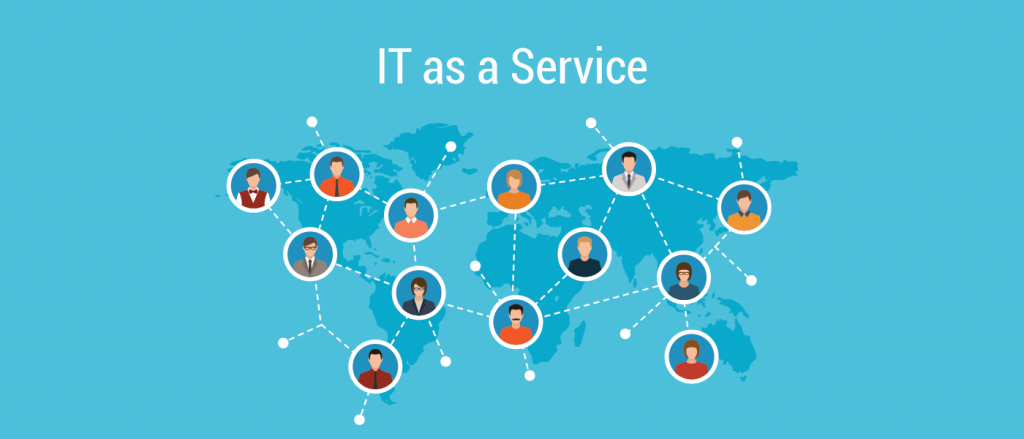
IT-as-a-Service (ITaaS) is now a key driver of digital transformation in enterprises. ITaaS treats information technology as a commodity and provides the enterprise with scalable and flexible hardware, software, and support. Enterprises may subscribe to the quantum of resources they require, with easy scalability up and down to suit the changing business requirements.
Such a model offers tremendous benefits for the enterprise.
Scalability and Flexibility to Suit Today’s Business needs
The subscription-based model offered by ITaaS, with a monthly fee paid by the business depending on the number of users and systems in-use of the business, perfectly syncs with today’s business requirements.
For businesses in the growth pace, and for startups, the ready scalability on offer ensures steady growth of IT capabilities to match business growth, without sapping the enterprise energy and resources on provisioning for the same.
Even entrenched enterprises with a dedicated IT department, complete with on-premises servers find the scalability offered by ITaaS handy to augment resources when needed. The ITaaS provider, could, for instance, service end-users and application faults, leaving the in-house IT team to support the core infrastructure components.
The unbridled scalability also comes with flexibility. ITaaS is platform agnostic and offers a flexible delivery model. At the same time, it retains an element of standardization and predictability. The net result is enterprise consumers getting the best of both worlds, resilient to operate in any condition, and the highest levels of service.
ITaaS is delivered from the existing on-premise server rooms, through colocation from a hosted data center environment, or through a cloud-based model. It is possible to mix and match these delivery modes as well.
Implementing ITaaS, however, requires an overhaul of the existing IT ecosystem. While this comes with the usual pangs of change, it also presents an opportunity to overhaul the setup and make it more efficient. Several wasteful practices, and ad-hoc processes, accumulated over the years, may easily be done away with, in favor of the highly efficient ITaaS. Enterprises nevertheless do face some challenges in integrating cloud solutions with legacy systems., and making sure the applications are ‘cloud-friendly’ in terms of latency, and file structure.
As high as 91% of CIOs welcome the flexibility offered by ITaaS, confirming the fact the benefits of ITaaS are for real.

Expert Support Just a Call Away
The unprecedented scalability on offer is also backed up by 24×7 support, and access to expert technical resources. IN today’s age of talent crunch, such resources may not be easy to come by in-house, and even I available, may not make financial sense.
Most ITaaS operators also provide self-service support portals, allowing users to open support tickets, check the FAQs, follow guides and read knowledge base articles, all without involving the IT department. This greatly enhances functional efficiency and accelerates troubleshooting times. This perfectly syncs with the emerging and hugely popular work from home concepts.
Minimal Upfront IT Investment
In today’s age of heightened competition, many CFO’s prefer to keep purse-strings close to their chest, and are reluctant to invest in anything more than what is absolutely necessary. They usually strike down IT investments which do not generate direct returns on investments, regardless of the scope of indirect benefits. IT as a Service, by allowing the enterprise to invest only for the exact amount of resources required, is music to the ears of such CFOs.
With ITaaS, the enterprise is spared from investing in unneeded infrastructure for future contingencies or be straddled with excess resources no longer required in the foreseeable future. Enterprises are also spared from the costly capital expenditure. With ITaaS, excess capacity, often considered part of the cost of doing business, is totally being eliminated. ITaaS expenditure is transparent, and easily attributable to the operational domain for which it is used. The costs for each transaction can be clearly attributed, and assigned to the end users. Shifting the costs from capital expenditure to operational expenditure also brings significant tax advantages to the table.
ITaaS also contributes to financial stability for the enterprise. With ItaaS, IT expenditure becomes a regular and predictable exercise, rather than one-off capital shocks.
Easy Availability of New Technology
The world of technology is in a state of flux, with new technologies emerging by the day. ITaaS offers enterprise the opportunity to experiment with the latest technology and implement what works for them. Enterprises are spared from spending a fortune up front on an uncertain technology.
More importantly, ITaaS guarantees up to date hardware, and also regular software patches and upgrades. Enterprises are free from the hassles of having to upgrade their IT infrastructure and can focus their attention on their core business process, or serve their customers.
Maintaining up to date systems is important both from a reliability and functional standpoint.
IT-as-a-Service improves network security in a big way.
Enterprises ignore network security at their own peril. The latest Verizon data breach report reveals 70% of all cyber attacks exploiting known vulnerabilities, and some vulnerabilities date back to 1999! ITaaS delivers a coordinated patch regime, ensuring systems are less vulnerable to attacks. ITaaS providers deploy service agents on the IT infrastructure estate of the company, to highlight known vulnerabilities and out-of-date software. The ecosystem also gets the benefits of regular system backups, pre-deployment testing, and patch updates.
ITaaS also enables continuous monitoring of service, Unified monitoring solutions track utilization, key metrics related to network health, and undertake trend analysis. These solutions cross-correlate code-level and transaction-level performance with the health of the supporting infrastructures, to flag issues as soon as it emerges. Such proactive monitoring identifies the symptoms and indications of a fault before it escalates into a major issue.
The 2017 Global Technology, Media and Telecommunications Predictions Report by Deloitte estimates global spending on IT-as-a-Service to touch $550 billion by the end of 2018. Enterprises currently spent about 25% of their IT budgets on pay-per-use services, on average. Deloitte Global expects the figure to jump to about 35% this year, and to 50% by 2022.
ITaaS is clearly the future, with enterprises no longer having to overpay for things they don’t need. However, the extent to which it serves enterprise needs depends on the extent to which CIOs can align ITaaS with business needs.
Stay up to date on what's new
About the Author
Featured Blogs
Stay up to date on
what's new
Talk To Our Experts
It’s always sad to see good tenants vacating your property, when they are not satisfied or happy with their experience. Whenever a tenant vacates, in addition to the vacancy loss, you also need to refund the security deposit, execute move-out maintenance work, advertise the property and bear other costs.
Let’s assume the monthly rent is $1,000.
Vacancy loss(if vacant for a year) = $12,000
Move-out maintenance work = $3,000 (approx. based on the amount of work)
Advertisement cost = $600 yearly (assuming $50 monthly fee)
On an average, your expenses would shoot up beyond $15,600 annually if your tenants vacate, hurting your yield and ROI from the property.
Just because a tenant has signed a lease, it does not mean that he or she will stay for long. Whether you are an established property manager with a whole portfolio of clients and properties, or if you are starting out in the real estate industry, ‘tenant retention’ is a key factor in improving your returns.
Keeping your tenants for a long period is just as challenging and important as finding them. Why?
Well, first it costs you about a thousand dollars or more every time your tenants move out for advertising, renovation and the loss of rent, while the property is vacant. Every minute that your unit sits empty, it’s costing you money! In addition, you need to bear the cost and effort of moving in new tenants such as agent commission, lease signing & processing fee etc.
Here are 5 quick tips on getting your ideal tenants to stay for the long term!
1) Provide flexible rent payment options
Once you have succeeded in getting the property leased, the next major objective is to receive monthly rent and other payments. Analyzing and considering the convenience, age, and preference of target tenants is an important factor.
- Requesting tenants to pay rent online via an autopay or auto-deduct system is the best way to collect rent. It eliminates the possibility of tenant forgetting to pay rent. One-quarter of the U.S. residential sector is already represented by the Millennial generation and majority of them have never used a paper check in their entire life. Online renter’s portal will help them to make rent payments online with their credit or debit card or an electronic check transaction (ACH) securely. Rent payment at stores via PayNearMe is another trending option to pay rent cash, at their nearby local 7-Eleven or ACE Cash Express stores any hour of the day or night.
- Online payments might be an effective option, but senior or technology averse tenants may not find this convenient. They will most preferably choose traditional methods to pay cash directly to the owner or pay at the bank. They may also prefer stacking the physical receipts for tracking payment history. In such case, it’s always good to send them a reminder by post well-ahead of rent payment due date. They might not check their email inbox, but they surely will check their mailbox. In case you turn up at the property and find out that they have not arranged for cash, an alternate option is to ask their debit/credit card to swipe the same on your mobile device. Swipe Card Reader like udynamo or Authorize.Net mPOS also used by many.

2) Quick turnaround time for maintenance
Maintenance happens all the time, even if the property is vacant. Fixing the wear and tear on a periodic basis is important in addition to snow clearing and pool cleaning.
But maintenance requests from leased properties are a super high priority. Swift action to multiple maintenance requests from various properties can be effectively handled via maintenance management software. In addition to getting a bird’s-eye view of everything that’s going on with every maintenance work, effective response depends on various activities such as attend a maintenance request call, figure out the exact category of work required, finding out the most suitable vendor and availability, getting prompt response from vendors, updating the tenant on progress, flexibility for vendors to capture and share work progress and raise online invoices and get paid for the work.
The tips below will help you to expedite, manage and monitor maintenance works with increased tenant satisfaction.
- Provide and make tenants aware of various options to raise maintenance request. Raising requests from anywhere, at any point in time makes it convenient for tenants. Online tenant portals and a phone call can source in most of the requests. In case the tenant does not have internet or does not want to spend time on hold, toll-free number and IVR (Interactive Voice Response) would be the best options to reach out to the maintenance support staff/property managers.
- Communication is the key. Tenants should be able to give a clear idea of the maintenance required and maintenance support staff should be able to capture the right details & communicate the same to the vendors.
- Scheduling is another key aspect where most of the time is often spent in finding out the apt vendors with matching skill, availability and if they are willing to take up the work. In most cases, vendor reassignment iterations consume time.
- A better solution would be to have an auto-vendor assignment and reassignment system that could automatically search from the list of vendors who are available on the field, with the matching skillset, closest to the property, rating and assign work to them on the fly.
- Mobile apps go a long way to make daily activity for vendor much easier. They get notified of the work assigned to them, they get the information on maintenance required, notify tenants that they are on the way to their home, take photos of work before and after completion, clock the time duration of work, raise change requests and materials required, raise invoices and get feedback or rating.
3) Appreciating consistent on-time rent payments
Just like we encourage kids each time they do something good by rewarding them, tenants appreciate it when you reward their promptness. An appreciation mailer or even a small reward like the ones listed below will positively improve your relationship with the tenant.
- Reward points or talk time balance for maybe 3 consecutive on-time payments that they could redeem as cash or as vouchers which can be used at stores nearby.
- Small discount on rent, for the month in which the tenant’s birthday falls along with a greeting card as well.
- Mail or notification or organize a small tea party for tenants who have their lease anniversary with 12 consistent on-time payments.
- Reduction in the total rent amount when paid 6 months in advance.
- Referral programs or promotional offers will prompt tenants to take up a portion of your job to find the prospective tenants for your vacant properties.
4) Keep tenants informed
Avoid last minute surprises for tenants. We often tend to forget what the tenant might be thinking all the while we are struggling to keep up with the rent collection, lease renewals, move-in/move-out, maintenance activities etc.
Keeping tenants aware of terms and policies, do’s and don’ts, right steps to proceed with lease renewal, moveout, maintenance progress, rewards etc. is equally important.
Provide status of activities via email, SMS and online portal notifications in addition to post and IVR if possible, which would enable tenants to be on top of maintenance status, payments, lease details and other important items.
- Maintenance – Keep the tenant up to date on the exact maintenance status and the next expected step or time for work completion. Most importantly, keep tenants informed of the vendor visit.
- Payments – Payment history, the status of payment made and checking the balance due are critical information that needs to be notified and reminded as well.
- Educate tenants who are unaware of the benefits of paying rent on time like increased tenancy credit score, rewards, various rent payment options etc.
Consequences of late payment should be communicated clearly well in advance when it comes to late fees and eviction.
5) Feedback from tenants who are moving out
Capturing and trying to bring into effect the feedbacks from tenants who are moving out helps a lot. Good tenants might move out due to small reasons, which could have been resolved easily like providing a child-friendly environment or mobility facilities for the disabled.
When it comes to property managers, building good relationships with tenants is the key factor that requires investment of genuine time, effort and communication techniques.
Start practicing a few of the tips above and see how it creates a positive impact on your business. Looking for more real estate technology articles? The following articles might be of interest to you
Stay up to date on what's new
About the Author

Featured Blogs
Stay up to date on
what's new
Talk To Our Experts
Mobile phone user base around the world has been growing at an unprecedented rate. The mobile market shows a lot of growth potential and with that, the growth in the use of the app-based technology. 96% of the Gen Z is hooked to smartphones, which implies that most of the interaction with the digital world happens via apps. Whether it be communicating, shopping, surfing news or listening to music, mobile apps made life easier for customers. This is why it makes sense for businesses to reach their customers where they are easily available, on their mobile phones.
Benefits of Apps for businesses:
-
Mobile apps can help businesses manage their internal operations more efficiently
A business is only as good as the system it is created for its operation. Perhaps the pinnacle of technology innovation is how successful it is in making our everyday tasks easier and more efficient. When customer satisfaction increases, sales typically do too. In fact, according to SalesForce, 70 percent of buying experiences are influenced by how customers feel they’re being treated. The more interested and pleased people become with your product and your business, the greater will be the consumer demand. When customer satisfaction increases, sales typically do too. Employees can also stay in continuous communication due to wireless networks and mobile platforms, improving the efficiency of the organization. There are several ways mobile communication can increase productivity. However, it is important to keep in mind the security risks that come with it. Thus, it is crucial to choose legitimate and qualified platforms and systems.

-
Customizable User Interface
Apps give the sellers an opportunity to customize the user experience based on their customer’s search history and preferences over the app. Using app analytics platforms like Appsee or Firebase can immensely help businesses improve their in-app experience. These platforms provide an in-depth analysis of user behavior as well reports on crashes of your app. Fixing the crashes ensures ease to the customer and promises an increase in the number of app usage sessions for the business.
-
Ease of access
Gone are the days when one liked to open the browser, type in the website URL, log into his/her account and then proceed with scanning and ultimately with the purchase. People want a user interface which is convenient, quick, and easy to access-a criterion that mobile apps fulfill. Mobile apps offer ease to customers, by being readily available to them with just one click.
-
Ease of making payments
In countries like the US where credit card networks are much developed, mobile wallet adoption rate has seen an encouraging growth. With a push to digital wallets such as PayPal or Apple Pay along with brand-specific wallets such as Walmart Pay, payments over the apps have become a lot easier for users. Using these platforms, customers are good to go without the hassle of logging in and out, again and again to their bank accounts, as is the case with buying the websites.
Bizness Apps – “Mobile Apps For Businesses Made Easy” || Business Explainer Video by Flikli
-
Increased Security
As per the Global Consumer Fraud Survey by ACI Universal Payments, the rate of card frauds in the US spiked. This survey also shows that close to 40% of the card users have reduced their frequency of card use. This highlights a worrying point that the increase in the use of credit or debit cards and even online banking, increases the vulnerability of users to hacking and phishing. Apps enable the customers to surpass the need of quoting their financial details again and again by providing an easy in-app pay option by incorporating digital wallets on their platforms. Using apps combined with digital wallets helps to keep customer’s financial information safe and secured. With the increase in frauds in traditional ways of transacting, more and more customers will look to shift their preferences to app-based technology.

-
Value Addition for Customers
Reward the app users with accruing reward points, for maximum app usage, which can be redeemed for further in-app purchases. Such loyalty programs ensure customer retention and help the businesses to clock higher sales. The Starbucks loyalty program is one such example.
-
Ease of giving and receiving feedback
Since it is easier for the customers to provide feedback over the apps, businesses stand to gain a lot in terms of increased user visits by incorporating those feedbacks and improving customer satisfaction which is of prime importance in highly competitive markets.
Massive investments are being made in app-based technologies because everyone has realized that mobile phone users of today prefer apps over everything else, because of their sheer convenience. So it makes sense for businesses to be where they can fight off their competition and build a better market for themselves. There are still a lot of untapped potential and opportunity which can be seized only if they make while there is still time.
Staying ahead of the curve should be the mantra, which can only be done by adapting to the changing times and adopting new technologies.
Stay up to date on what's new
About the Author
Featured Blogs
Stay up to date on
what's new
Talk To Our Experts
With data now being a critical source of competitive advantage, enterprises are cutting across size and geographies seeking newer methods to identify and analyze the data they generate. Most enterprise decision makers are now familiar with intuitive graphs, pie-charts, and other forms of visualizations that try to make sense of sales, revenue, and other aspects of company operations. However, the usefulness of such data visualizations depends on the effectiveness of the data, or how the data is used to come up with conclusions. A balanced approach in data visualization and analytics is thus pivotal in formulating an effective data strategy.
Many enterprises confuse data analytics with data visualization. Both allow users to make sense of data and obtain the relevant metrics that helps in better decision making. In today’s age of information overload, where data generated is multiplying every 3 years, interpreting them turns out to be the need of the hour. On the other side, we have these forecasts and projections hinting at an exponential growth in revenue for the big data software market in the coming years. The confusion, however, stems from the fact that both data visualization and analytics represent data in visual interfaces.
While there is considerable overlap between the two, data analytics deals with data at a much deeper level, compared to visualization. An end-to-end business intelligence solution consists not just of the front end dashboard, which transforms data into a visual context, but also tools and algorithms at the backend.
Related Reading: Find out how enterprises are relying on business intelligence platforms to leverage data for driving innovation and growth.
Difference between Data Visualization and Data Analytics
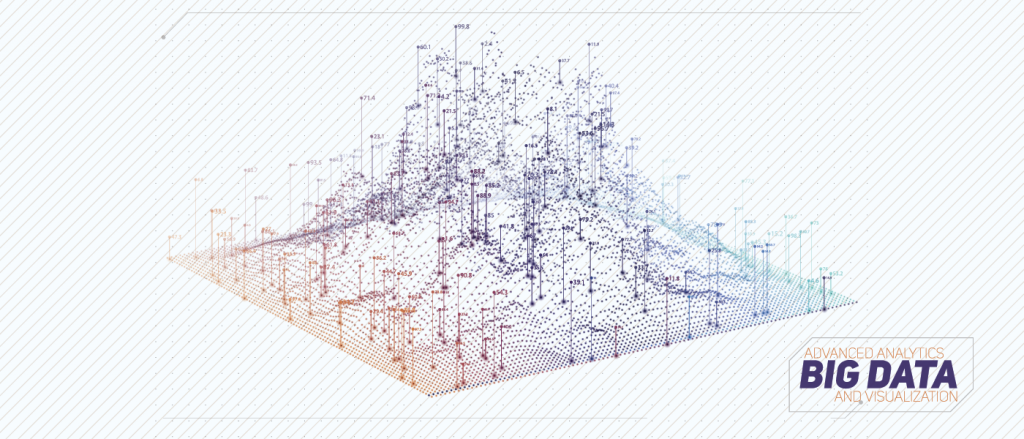
Data visualization represents data in a visual context by making explicit the trends and patterns inherent in the data. Such pattern and trends may not be explicit in text-based data. Most tools allow the application of filters to manipulate the data as per user requirements. The traditional forms of visualization, in the form of charts, tables, line graphs, column charts, and many other forms, have of late been supplanted by highly insightful 3D visualizations.
Data analytics go a step deeper, identifying or discovering the trends and patterns inherent in the data. Data visualizations, while allowing users to make sense of the data, need not give the complete picture. Visualizations are only as effective as the data used to prepare the visualization in the first place. Feeding visualization engine with incomplete data will render half-baked, obsolete, or erroneous visualization.

Moreover, today’s enterprises gather data from multiple sources, and store data in multiple repositories, including many silos. In such a state of affairs, gathering comprehensive data for visualization is a tough ask. While visualization tools mostly deal with raw and unstructured data, end-to-end analytic tools employ data mining algorithms to cleanse the data, evaluates the cleansed data using different evaluation models and software tools, subject it to algorithms, and then decides how to display the results.
Data Integration as the first step of the process
The essential prerequisite of effective analysis is consolidating all data in one central place for effective analytics. While there are analytical engines capable of collecting data from multiple silos, consolidating data in one place enables a “single version of the truth,” preventing duplicating and contradicting data from distorting the visualizations. Until recently, many companies use to aggregate data manually, on an ad-hoc basis, as it was easier this way than invest time and effort in a solution for the same.
However, the sheer increase in the volume of data in recent times makes manual aggregation impossible. A number of software tools and platforms cater to the need, by providing automated solutions. The add-on benefit of such automated solutions is data cleansing, to eliminate misnamed, outdated, and messy data, inevitable in a set-up which involves disparate sources and users.
Data Analysis as the second step of the process
The logical step after aggregating and cleansing data is subjecting the data to analysis or performing calculations on the data. As today’s business environment has grown complex, data analysis also involves complex calculations. The need for speed introduced multi-stage formulas that perform a number of calculations simultaneously. Visualization tools focus on reporting data rather than analyzing it, and as such, most tools are limited, with restrictions in the possible aggregations per formula.
In contrast, truly end-to-end analytical solutions allow users to create complex formulas, working in separate sources. The software undertakes the required pre-calculations automatically, making life easy for the user. Businesses seeking to thrive in today’s fast-paced business environment need analytic tools which update data and facilitate collaboration in real-time. The leading analytics tool in the market today, such as IBM Cognos play into this need, by streamlining available data and leveraging plug-and-play interfaces to derive colorful dashboards.
Companies in the retail sector have already leveraged the power of data analytics to streamline their business processes and thus maximize revenue. Analytics and visualization have aided them discover patterns and actionable insights pertaining to customer behavior helping managers plan and develop initiatives. Find out how retailers are harnessing data analytics to aggregate their customer data for accentuating efficiency and profitability.
Comprehensive business intelligence analytics suites offer predictive modeling and other types of advanced analytics based on complex algorithms compiled using languages such as R and Python. Advanced data visualization, data warehousing and dashboards make up some of the key technologies used by business intelligence platforms currently. The best solutions offer unmatched flexibility to the user, with the ability to combine data any way the user requires or prefers.
Moreover, the latest analytical platforms apply modern tools such as natural language processing (NLP) and chatbots, making it easier for users to perform the required calculation or input their queries with ease. The latest advances, such as location-based intelligence increases the potential of analytics and actionability of the insights in a big way.

Data Analytics or Visualization: Which comes last?
While the most effective visualization is based on the data subject to analytics, visualization need not always be the end of the process or the culmination of the project. Many situations adopt data analytics and visualization in a cyclical spree.
Consider the case of Zao, who runs a host of machine learning and predictive modeling applications to gauge the success of targeted email campaigns. Data visualization enters early in the process, with the analysts pulling out specific variables into a graph to identify any possible correlation, or to identify metrics such as mean and median averages, data spread and standard deviation metrics, to get a sense of the scope of the data.
Both data visualization and analytics deal with data. Visualization tools generate a beautiful and easy to comprehend report, but only robust backend capability, which handles the messy data and processes the data by applying advanced algorithms, gives an accurate report. Data analytics offers the complete picture, while visualization summarizes the available data in the best possible way. The best solutions co-opt both.
Your data is growing at exponential rates. The insights from data can help the managers and business owners make decisions that can improve turnaround times, efficiency and more.
https://www.youtube.com/watch?v=H0jlHlEbURc
[Source: IBM]
Related Reading: Get an insight into the hows of using data analytics to scale and grow your business.
We have a team of business analysts and data visualization experts who can provide you with the visualization of data. We can help you implement data analytics software that provides rich, visual solutions that bring together data from multiple sources to show what’s really going on.
Stay up to date on what's new
About the Author

Featured Blogs
Stay up to date on
what's new
Talk To Our Experts
In 2017, technology played a crucial role in disrupting most of the brick & mortar based business models, and the real-estate industry was no different. Meanwhile, the national unemployment rate fell to a 16-year low of 4.3 percent in July 2017, and recruiting and retaining employees became increasingly difficult. In this environment, many companies have started riding the digitalization wave and consider technology to be a growth-driver.
Businesses are leveraging upcoming technology to boost their operational efficiency, staff productivity, stakeholder relationships, and in-turn sales, but they still have miles to go with respect to reaching a point of consolidation. It is, therefore, important to understand some of the major shifts in this space, to stay ahead of the curve.
Chatbots for superior customer service
Chatbots, also known as conversational agents, are essentially digital employees that can not only answer simple customer service questions instantly, but also seamlessly hand a customer over to live staffers when necessary.
According to a study by the Aspect Software Research, 44% of consumers said they would prefer to interact with a chatbot over a human customer service representative. Surprising? Not really. Chatbots can leverage internal and external databases to personalize interactions and provide specific data to each prospect, thereby resulting in higher lead conversions. They are available 24/7 to handle customer queries and can be programmed to push promotions or products depending on customer requirements. Also, by taking on routine, repetitive tasks, chatbots free time for real estate agents and other staff to focus on more complex tasks.

The universality of Mobile
In 2017, NAR reported that 58 percent of buyers found their home on mobile. Mobile usage is expected to continue to rise in 2018 as more and more Millennials and Generation Z buyers enter the market, and therefore it is not enough to have just a mobile-friendly website. The mobile app market is exploding; in 2017, there were 197 billion app downloads, and that number is expected to triple in the next three years. Real-estate agents are investing more in apps while looking to access IDX data from their phones or tablets. Estate agents are also looking to use mobile marketing to build an online presence, connect with local neighborhoods and create communities for a more targeted approach to lead generation.
Virtual walk-throughs to make the difference
AR and VR are two technologies that can take customer experience and involvement to the next level. A recent Goldman Sachs research report predicts that the VR and AR market in real estate will reach at least $80 billion by 2025. Real estate owners and developers can use a combination of AR and VR, known as mixed reality, to enable their clients to remotely view properties around the world. They can create a 360-degree immersive experience for the potential client and offer multiple finished site options. This can also help both agents and customers save time by speeding up the buying process. However, like any new technology, companies need to consider the return on investment from potential investments in these technologies. In addition, companies would benefit from understanding the flexibility and scalability of these technologies at various stages of use.
Can IoT have an impact?
Not only has IoT managed to become the buzzword after the “Cloud”, it has also managed to bring a revolution with Smart Homes that are intuitive and customizable enough to match the taste of the homeowner. Such homes come with everything that is electronic inside your house, connected to the internet and controllable with your handheld mobile devices. The emerging markets are using the potential of Smart Homes to increase comfort and to consolidate data to make homes eco-friendlier. By having IoT enabled homes, real estate companies will get another chance to rewrite how luxury is experienced daily. The sky is the limit for interior experts to make breathtaking functional homes using IoT.
Did anyone say Big Data & Analytics?
Big Data & Predictive Analytics is the key to every future product that a company would roll out because they know what their user specifically likes or dislikes and they have enough data points to ascertain their assumptions as facts. It will play an essential role in helping real estate companies improve deals and investments, mitigate risk, better understand tenants and their needs, and open up new profitable business possibilities. Such data would also help real estate companies target users with new real estate products which can increase sales exponentially. It would help build a loyal customer base as well.
We are still in the nascent stage of Predictive Analytics for real estate, but the opportunities for companies that embrace this technology in the right way is infinite.

Marketing automation and project management tools
According to a study, salespeople spend just one-third of their day actually talking to clients. They spend 21% of their day writing emails, 17% entering data, another 17% prospecting and researching leads, 12% going to internal meetings, and 12% scheduling calls. The automation of various tasks such as scheduling and the use of CRM tools can enable real estate agents to spend more time building relationships and less time on routine administration tasks. Tools like HubSpot and GetResponse can also help companies leverage online leads. The decisive driver for this trend is above all the possible simplification and acceleration of management processes.
Is Blockchain the future?
The Blockchain is basically used to validate all transactions and add the transactions to the stack. (If this sounds too complicated, head over to a Medium post here to read about Blockchain in more depth).
Imagine a user gets to sign all his documents digitally and doesn’t have to keep a physical record! Now, all this is possible using Blockchain, but this technology is in its nascent stage. As more buyers turn to cryptocurrency for their financial transactions, building owners will need to accept cryptocurrency to stay relevant. There are also emerging services that provides landlords and tenants a way to pay and receive rent in cryptocurrency.
To Sum Up
We discussed many of the technology trends in the real estate industry, but let’s not forget about the flying saucers. Well! Yes, we are talking about drones. Drones are presently being used for security and surveillance purposes, and they are also being used by real estate companies – More and more real estate professionals are turning to drone photography and videos to better market their listings. Drone photography is especially useful for large, unique properties that don’t photograph well from the ground.
We must ensure that we embrace new technology as soon as possible because the time required for a new tech to become a common tool is really short. Therefore real estate companies should quickly leverage that little time to capitalize on their market share perfectly.
Stay up to date on what's new
About the Author
Tony Joseph
Tony believes in building technology around processes, rather than building processes around technology. At Fingent, he specializes in custom software development, especially in analyzing processes, refining them, and then building technology around it. He works with clients on a daily basis to understand and analyze their operational structure, discover (and not invent) key improvement areas, and come up with technology solutions to deliver an efficient process. You can reach him at [email protected], Skype: tony_fingent
Featured Blogs
Stay up to date on
what's new

