Category: Technology
Businesses, especially small businesses, these days are increasingly adopting cloud service technologies. Why?
It’s the flexibility, scalability and value features of the cloud that are apparently driving this growth in its adoption. The basic aim is to allow employees to work better and promote an efficient work environment, with their offices available everywhere, now that telecommuting is becoming more prevalent as a trend.
Here are some facts that prove how rapidly telecommuting is becoming mainstream:
- By 2020, cloud spending in terms of IT and services is likely to exceed half a trillion dollars.
- 70% of software revenues are based on cloud code – SaaS, PaaS or on-premise as ISV’s base on-premise on cloud platforms.
- Tweet: Almost 50% of large enterprises are looking to double up software and services development staff for cloud projects.

But, as a general fact,
do all businesses stand to gain from using cloud services?
Will all businesses reap equal and extensive benefits from using the cloud?
Is it beneficial for you to use the cloud?
The answer to all these questions depends on the size of the business as well as preferences in terms of data, storage, security and the like.
Before you jump on the bandwagon, you need to analyse your business scenario and your preferences to make an intelligent decision.
Is cloud migration the right way to go for you?
Cloud migration (or moving your apps and services to the cloud), is more of a long term trend. While it may have several benefits of its own, there are several factors that you need to consider before going for it.
When should you consider moving to the cloud?
- If your applications are experiencing an explosive increase in traffic and it is practically difficult for you to scale and arrange resources on the fly, in order to meet the rising demand.

- If you are a software solutions provider and your clients are increasingly demanding faster application development and deployment, and you want to facilitate that while cutting down on infrastructure overheads.
- If your clients are looking to expand their business and diversify geographically and you think it might be a challenge for you to accommodate a multi-region infrastructure system, including its due maintenance, time and human resources.
- If you are looking to reduce your operational costs and increase the effectiveness of your IT.

- If you are looking to set up a disaster recovery system for an entire data center, while still having adequate control over resources and keeping costs under check.
- If you are planning to expand your development team and make it widely distributed so as to allow even remotely located employees to work easily.
These are just some common situations where you could consider cloud migration. There may be more. If you can relate to at least some these, then you can probably start planning.
Small and medium businesses are more likely to be experiencing one or more of the above scenarios. They are the ones who are constantly undergoing rapid and drastic changes in terms of scale, profits and business size. Hence, the obvious features of the cloud like scalability and accessibility can come in very useful.
Large enterprises may have more sustained developments in their business, in which case, they may not necessarily need the cloud. There are other options for them which we’ll be getting into, in a while.
The flipside
Now let’s see some possible consequences that follow cloud migration. You might want to consider the flip side of things as well, before getting into it.
- If your application uses, stores and sends back a lot of sensitive data, then you might not be able to use the cloud. Even compliance regulations restrict you from maintaining such data, in sources like the cloud.
- If you are using proprietary software or technology, and you are looking to move to the cloud, then you have a problem. It might not be legally possible for you to move or deploy such software into the cloud.
- You might have to deal with transparency and control issues, as your hardware is being controlled by someone else.
- You might encounter latency or dormancy issues with certain operations when using the cloud.
- If you want to retain ownership of certain data in your application, then cloud might not be the thing for you. When you migrate your data to the cloud, you have no control of where your data gets stored.
- Shared resources can lead to occasional disturbances in terms of performance and efficiency.
- Your application’s design or architecture might not be suitable as such to fit the cloud architecture. Hence you might need to make certain modifications.

Again, these are only some limitations of cloud migration to get you started on the thinking process. The most common ones are listed above. You may have to deal with other minor issues as and when you migrate.
To make a judgment…
On a normal case, where you already have a setup, which is satisfactory to your employees as well as customers, and you don’t really need much scaling and maintenance at the moment, then you could very well continue as such. It would not be worth these limitations for you to disturb the existing smooth process.
If you are a startup company in the manufacturing industry, it might not be feasible to maintain in-house servers and applications for internal uses. You also might not encounter a lot of the above-mentioned issues as you don’t use the cloud to serve customers directly. In such cases, opting for cloud services might be the best way to go.
For those of you who own large business enterprises in the software industry, it might be better to go for a hybrid model – one which combines the best of cloud services as well as in-house servers or private servers. For applications that involve a lot of sensitive data, or for proprietary software, you could use your own servers, and for other applications, you could use cloud services. That way, you don’t have to compromise on security or data ownership issues while at the same time, attain the flexibility and scalability of the cloud.
You also have the option of private clouds. More on that soon.
The cloud computing model
From a broad perspective, you could go for one out of three cloud computing models – Iaas (Infrastructure as a Service), SaaS (Software as a Service) and PaaS (Platform as a Service).
In case of IaaS models, you don’t have to take care of storage, networking, CDN and virtualization. They can all be left to the IaaS provider.
In PaaS, the application platform, the development, and the database are all handled by the providers.
SaaS models take care of business management, CRM, security as well as tools.
It is important to choose the model once you have decided to for the cloud.
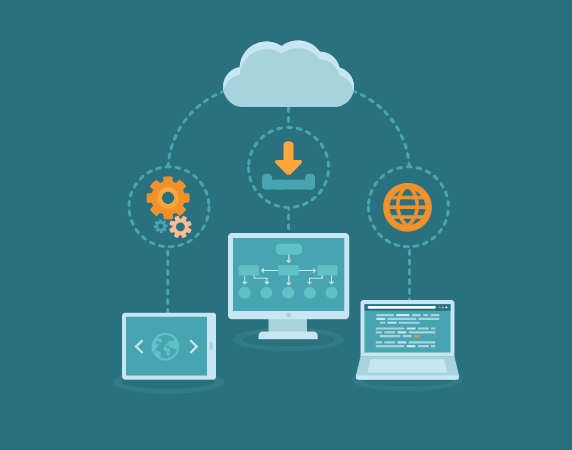
The cloud options
Large enterprises also have the option of choosing a private or a hybrid cloud model.
Private cloud is where you can create your own cloud using specific platforms like Openstack. That way you can access the benefits of the cloud, while still retaining data security and ownership. It is apt for businesses using secure and confidential information and core systems.
A public cloud is where all of your resources are hosted by a separate cloud service provider. It supports more number of customers and is better suited for companies having lesser confidential information, as all the resources are publicly shared and virtualized.
A hybrid cloud model is one in which your resources are spread over private and public clouds. Specific resources can be used in the private cloud, whereas those which do not need a high level of security can be hosted by the public servers. Large software enterprises can benefit from using this model as they can have the best of both worlds. It is a perfect blend of reliability, availability, security and reduced operations costs.
It is extremely important for business enterprises, whether large, medium or small to analyze their business and choose the appropriate cloud solution. If your business scenario demands cloud migration, then your next steps should be in choosing the right model. Once you know exactly what kind of cloud services you need, you can be sure you are doing the right thing.
Still confused? Talk to our experts and find the perfect solution.
Stay up to date on what's new

About the Author

Featured Blogs







Stay up to date on
what's new



Talk To Our Experts
Augmented Reality is a hot emerging technology that modifies a real-world plain-sight view by superimposing a real-time computer-generated sensory image, sound, video, GPS data, or graphics, in a semantic context. Through such superimposition, Augmented Reality offers a composite view of the environment and an enhanced perception of reality.
Augmented Reality is riding high on a wave of expectations, and many experts tip the technology to transform many walks of life, including the workspace, like never before. Augmented Reality blurs the line between the physical and digital realms. It brings computer-generated graphics to life, making what the employee actually sees interactive and manipulative. The potential applications are endless, limited only by imagination.
1. Better Management of Work
Augmented Reality tool such as HoloLens allows supervisors and managers to remain in better control of the situation, as they are fed with real-time information in the actual context. Instead of taking time out to analyze the situation in a computer or smartphone, they gain real-time insights in the course of their work. They can also make changes and issue instructions using hand or head movements, and voice commands.
Augmented Reality enables trial-and-error, without the usual costs and time associated with the process. An interior designer, could, for instance, use an AR headset to test color schemes, or a jewelry designer could visualize an idea and share it with the customer, before committing to make it. An architect designing a new office could view a real size hologram from all angles, to optimize the settings. A salesman could share his product line with clients in 3D.

2. Better Insights
Using AR powered glasses could offer field technicians insight into the working of machinery, annotating the parts, making explicit fluid and other levels not easily discernable, identifying parts which have failed or not working to the set parameters, and more. Overlaid animations would guide the technician on what to do next. What hitherto took specialists with considerable years of experience and training could easily be handled by a novice technician.
Lockheed Martin is already applying such technology to good effect, employing AR to aid design and make production floor personnel familiar with procedures. DHL is using similar AR technology to make sure employees load carts in the most efficient way possible.
3. Improved Productivity and Efficiency
Augmented Reality delivers optimal and accurate information, in the ideal format, at the precise time, to increase efficiency and productivity manifold. While conventional technology may bring in all details about a customer who walks in at the computer console, AR technologies bring it in front of the worker’s eyeballs. Workers no longer need to stop what they are doing to seek the required information or worry whether the information they gathered is accurate. Gestures and voice replace the inconvenient keyboard, mouse clicks or swipes.
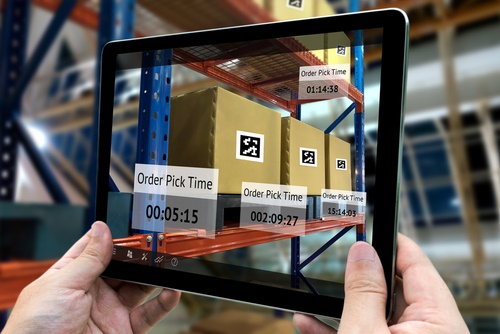
Moreover, the field of view information offered by AR may change dynamically along with the task being performed. For instance, a worker in the warehouse may be guided to the area where a requested item is stored. In a factory, it could notify workers of resource levels or problems on the assembly line on the fly. Conservative estimates peg a 32% efficiency increase when deploying AR.
4. Enhanced Training
AR transforms training, taking it to a whole new level. It enables enterprises to speed up the training process and make it more effective.
Google Expeditions, a virtual reality platform, offers an AR overlay, already allow students to take guided tours deep into the Amazon jungle, or watch a Viennese opera. Implementing similar tools in the workplace would allow trainees to learn the basics and delve into the advanced, in double quick time, with a real feel of things. New hires could be placed in a real-world situation, and be exposed to all possible scenarios, without the disruption and risks characteristically associated with on-the-job training. Augmate’s InstructAR platform is an early step in this direction, aimed at imparting tech and manufacturing training using AR.
Hyper-training with augmented reality facilitates shorter learning curves, better-trained employees, and an all-around more efficient workplace. Boeing trainees assemble a mock airplane 30% faster and 90% more accurately using AR-animated instructions, compared to relying on PDF guides.
5. Furthers Organizational Creativity
Augmented Reality opens the doors for limitless creativity and innovation in the workplace. AR tools may be used to simulate different cause-effect scenarios, to determine an optimal course of action, without having to go through the underlying risks. In an ultra-fast business world brimming with change, such options help business drive much-needed agility and adaptability.

The potential of Augmented Reality to drive innovation is unlimited, especially when blended with employee collaboration, field tests, and presentations. AR can immerse a remote team, bringing employees together from across the globe in a way that feels more real than ever before, boosting collaboration at a global scale.
Augmented Reality also helps enterprises devise innovative ways to effectively deal with contingency scenarios, such as how best to tackle hazardous workplace conditions, how to plan for a contingency such as a live wire falling to the ground in the construction industry, guiding the workforce on protocols in the eventuality of emergencies such as a fire, and much more. AR can take the remote workforce further than existing tools can.
6. Deepen the Engagement
Marketers leverage AR in many innovative ways, from embedding a product brochure with personalized messages to offering a snap preview of a new location, and more. Blippar, a New York-based advertising company has taken the lead in offering augmented reality games with everyday objects, offering ample scope to deepen customer engagement. One innovative Pepsi ad allows users to aim a ball to a goalpost with their eyes, and “kick” it with a quick gesture. The rich data collected on customer habits and behaviors are spin-off benefits.
While AR technology has been in existence for some time now, growth has been sluggish over the years, mainly owing to the limitations in enabling technology. The popularity and easy availability of wearable devices have however changed the scenario, and AR is all set to go mainstream in the near future.
Augmented Reality is all set to enter the boom phase. IDC estimates shipping 99.4 million Augmented Reality headsets by 2021, a tenfold increase from the 10.1 million shipped in 2015, indicating a compound annual growth rate of 58%.
As the adage goes the early bird catches the worm. Your business will surely be better off by introducing Augmented Reality technologies for both internal and external facets of operations. When you partner with us, you can leverage our highly skilled, talented, and experienced team to develop state of the art, cutting edge AR solutions. Get a free consultation.
Stay up to date on what's new
About the Author

Featured Blogs
Stay up to date on
what's new
Talk To Our Experts
The mantra of success in today’s hyper-competitive and tech-neutral age is offering unmatched value, topped up by incredible experience, to customers. With the focus on the end product, most enterprises overlook the fact that the software development team are often the front lines in delivering superior service. The software developing a glitch when an urgent work is pending, searching in vain for an essential feature overlooked by the development team, a convoluted process to achieve a simple thing are an all-too-common experience which frustrates a customer or the end user of the software.
Often such drawbacks are not because of any deep-rooted incompetency or incapability, but a result of lack of focus, or not paying attention to development process it deserves. The name of the game in keeping software developers happy, engaged and productive, all factors which have a proven correlation with end customer satisfaction.
Facilitate the Developer
The basic requirement to make developers happy is facilitating them. It is innate human nature that creativity and mentally intensive tasks such as writing quality code thrive only in an environment of freedom, where one can express their suggestions without fear of repercussions.
An open and transparent culture, with free flow of information, and without data silos is the basic and essential requirement.

Developers need to be empowered to take their own decisions, without having to run to their project manager for every small thing. Allowing developers to engage with the customer or end users directly, and freedom to make any changes that do not alter the scope of the project, goes a long way in empowering them and making them happy.
Side by side with creativity, human beings need very high levels of precision, focus and concentration to be able to write quality code. They require a comfortable atmosphere, with ready access to resources required to do their job well.
Another essential requirement, almost indispensable, is flex-time, and freedom to work from home. Creativity and inspiration never follow a 8 to 5 schedule.
Empowerment often creates a level playing field, allowing small startups to compete effectively with large behemoths, where the salary may be higher, but where organizational morass has set in, with an entrenched bureaucracy stifling creativity and freedom. There, developers may have to spend more time in paperwork, playing by the “rules of the game,” or worse, pampering egos, than do what they are meant to do – writing high-quality code.
Offer Perks
Lucrative salaries attract top talent, but perks ranging from on-site massages to unlimited coffee breaks, the ability to work from home, and more are the real motivating factors that attract top talent. The trick lies in understanding what developers want and design the perks likewise. HR plays a crucial role in this dimension, by talking to developers, and understanding what motivates them, especially during the recruitment stage. Flexibility, topped up by innovation in the delivery of perks and other benefits help the enterprise scale new heights in job satisfaction. Happy, engaged software developers produce high-quality results, which impacts everyone else involved in the development, delivery, marketing and sales of the product.
Forge a Shared Culture
The time-honored management concept of “hire for a fit” has never been more relevant than now. Competency aside, what matters above everything else is a cultural and emotional fit or shared values. Shared values, in essence, mean the company and the employee being on the same page with regards to striving to delight the customer, and seeking excellence in whatever work is done. On the software development front, this translates to the engaging the end user enthusiastically from the start to finish, resolving any questions and issues with calm professionalism. A solid project management system, complete with a collaborative platform, helps.
Create a Learning Organization
Peter Senge, the management guru advocates creates a “learning organization,” where the workforce continuously enhances their capabilities and keeps themselves relevant. From the individual, it requires inculcation of the attitude “Learning is a journey that has no end,” and the enterprise has to play the role of a facilitator, both by providing learning opportunities and forging a culture that encourages and value learning. Developers especially like playing with flashy new technologies. A competent developer, confident of his or her knowledge, is sure to add immense value to the end customer.

Forge a Clear Career Path
A brilliant artist or a top developer needn’t necessarily be a good manager / a leader. A well-deserved promotion up the corporate ladder may actually do more harm than good, both for the individual, who find his expression of creativity stifled and for the enterprise, who is stuck with a bad manager. The onus is on the enterprise to forge a career plan for their power-employees, with lateral promotions, or flexibility to continue the same job with a higher position if the situation so requires.
The stakes are high. The problem with an inferior product rarely ends with dissatisfied customers. In today’s hyper-connected age marked by the dominance of social media, customers can and do vent their feelings, resulted in a spiraling effect of bad image and lost potential customers.
The scramble for top talent has made developers, a pampered lot. A software developer who is even just a little bit better than the competition has the potential to generate a result that will bring exponential non-linear returns on the investment. Just as in professional sports, even a one percent advantage makes a big different in the end result. However, enterprises needn’t necessarily enter the talent rat-race. They can just as well enter into a partnership with us, who have a ready team of highly intuitive and professional app developers, ready to do your bidding. We have a track record of delivering several highly customized and dynamic mobility and other solutions to customers across the globe, cutting across industries and sectors.
Stay up to date on what's new
About the Author
Featured Blogs
Stay up to date on
what's new
Talk To Our Experts
To cloud or not to cloud? That is the question. The need of the hour is to not just go beyond the hype thrown about by cloud providers to understand cloud services are indeed a better deal compared to on-premises hosting, but also distinguish between the various cloud options. Among the various cloud hosting options, Amazon Web Services (AWS), with its global presence offers the best all-around compute, database, storage, analytics and deployment services, ranks among the best options.
In 2017, AWS was ranked among the four largest public cloud providers in the world, along with Google Cloud, Microsoft Azure, and IBM Softlayer. AWS is also ranked as one of the leading information technology (IT) companies in the world, by revenue. Specifically, in the infrastructure as a service market, AWS has been noted to have a majority of the market worldwide. Amazon’s share of the IaaS segment was estimated at 44.2 percent. For Amazon, AWS’s IaaS revenue raked in 9.7 billion U.S. dollars in 2016.
Costs
Many business owners consider only the raw face value costs and remain oblivious to the total cost of ownership. For on-premise, the basic cost is the cost of the hardware and software required to put a solution in place. For the cloud, the basic cost is the recurring monthly service cost. However, there are other costs to consider for both models.
On-premises solutions are electricity hogs. Running the servers on a 24×7 basis, complete with cooling, consume much more energy than what normal PCs consume. An average in-house server consumes about $731.94 per year worth of electricity in the USA, including both direct IT power and cooling.

The savings on electricity alone would most likely compensate for the bandwidth costs cloud services attract. Amazon’s EC2 offers about 1GB of free outbound bandwidth per month anyway, allowing small users to get their bandwidth requirements for cloud storage gratis.
Another cost to consider is the replacement cost. Organizations replace on-premise systems every five years, on average. Stretching a server lifespan beyond this point carries the risk of unexpected failure and costly migration fees as the legacy software delves much further obsolescence than it would have after five years. Even where cloud services have higher recurring costs, the replacement cost makes it very cost effective in the long run. The economies of scale of the cloud service providers offset what it would otherwise cost them the same five-year replacement costs
AWS saves customers a sizable amount. Since AWS already has a staggering infrastructure in place, unmatched by just about anyone on the planet, the cost to provision for a new account is marginal. As such, AWS customers end up paying much less than what they would do for other solutions, both on-premises, and cloud. The cost savings extend to applications as well. The AWS Marketplace offers several highly intuitive products priced on an hourly basis, with no upfront cost.
Learn more about how to optimize cost with AWS.
Bandwidth
The cloud brings a lot of potential savings, both in direct cost and by eliminating indirect costs. The elephant in the room is bandwidth, though. Unless there is adequate bandwidth, performance issues will sap the vitality of the system.
However, it is a fallacy to assume on-premises solutions do not have any bandwidth issues. It still requires an efficient and well-designed network of switches and cabling to serve bandwidth-hungry applications inside office walls. Moreover, cloud services are getting smarter with how bandwidth is used, offering viable solutions even for those with a small pipeline to the internet. For instance, Office 365 handles massive searches across a 365 mailbox server-side, downloading in real time only pertinent emails that need to be opened. Outlook keeps a local cache of email mailbox.
It is also important to remember all cloud hosting providers are not equal. The safe bet is to opt for market leaders such as AWS who has the capability to throw in virtually infinite storage, bandwidth, and computational power when needed. Increasing bandwidth on surges in traffic is easy with a few mouse clicks or swipes, and scaling down is likewise, to avoid paying for unnecessary resources. The cloud eliminates the vexatious and unpredictable task of provisioning. With AWS, it gets even better. There is no uncertainty and IT departments can be assured of elasticity at any time of the day or night, without any hassles.
Reliability and Uptime
The cloud offers much better reliability and uptime than on-premises servers. AWS offers 99.95% guaranteed uptime, and also robust backup protocols which ensure nothing uploaded to their servers will ever be lost. At a macro level, on-premises servers face 14 days of downtime in a year, whereas the average rate of downtime for cloud servers is just 30 hours a year. The total cost of downtime for businesses run into a whopping $26.5 Billion USD every year.

On-premise exchange servers are maintenance-heavy, requiring heavy infrastructure. Practical considerations mean the best practices are not always followed. In contrast, cloud giants such as AWS have dedicated teams and unlimited resources to throw into their core competencies, and they leverage the benefits of economies of scale, which they pass on to their customers. The vast technical backbones that power cloud data centers are technologies that are out of most individual users.
Robust Security
AWS makes affordable to small and medium enterprises many features, and the high quality of service, previously affordable only by big corporations. For instance, security has major implications, and often it is weak security that makes enterprises opt for on-premises solutions. AWS offers the same high-grade security features for a small proprietorship and a Fortune 500 firm since the security protocols in place for SAWS are for the system as a whole. And such security systems are far superior to anything on-premises systems can come up with.
The intuitive AWS Management console makes it easy to monitor and control the account, including add or decrease space, launch EC2 instances, add or remove a service, and more.
The success of moving to the cloud depending on getting the bandwidth and other configurations right, and also deploying cloud-optimized apps that allow employees to access their required functionality through the cloud.
Related Reading: Choose the right Cloud service model for your Business
Fingent is your perfect partner for delivering cutting edge applications hosted on AWS. With our wealth of experience cutting across industries, we are best poised to deliver the most optimal solutions, fully customized to our requirements, in the most cost-efficient manner.
Stay up to date on what's new
About the Author
Featured Blogs
Stay up to date on
what's new
Talk To Our Experts
The noted English poet A L Tennyson’s words “Let the great world spin forever down the ringing grooves of change” captures the impact railways and locomotives brought about in the 19th Century, transforming the world from a grouping of feudal villages to an interconnected urban and industrialized world. Today, the world is in the throes of yet another mobility induced revolution, propelled by artificial intelligence, IoT and a myriad of other technologies that promote convergence and connectivity. This new disruption will be just profound, and likely to change lives forever.
A portent of things to come is Venture investors placing $5.7 billion into transportation businesses in 2016, twice the level of investment in the previous two years combined. The big thing in transportation that happened during the period, Uber and its cousins such as Lyft and GrabTaxi would seem rudimentary compared to the technologies on the anvil.
Autonomous Vehicles
Think artificial intelligence, and the first thing that pops up into most minds is the driverless car. Autonomous vehicles, which facilitate hands-free and feet-free driving are soon set to go mainstream. What works in favor of such vehicles is the ever decreasing cost of production. LiDAR laser sensors that Google uses on its autonomous vehicles cost $70,000 three years ago, it now costs just 10% of this amount now. New technologies now cost even less.

The opportunities that arise from autonomous vehicles are endless. Improved fuel efficiency and greater safety owing to the elimination of “human error” from the equation are the direct benefits, but the indirect benefits are much more. Autonomous cars can plot the best route to the destination, saving time and money, and deliver freedom from traffic jams. Cities can reclaim public spaces devoted to parking. The smaller mass and weight of the autonomous cars enable propulsion by compact, efficient, and environmentally friendly powertrains, reducing energy consumption considerably.
Collaborative Consumption
Collaborative consumption brings most of the benefits of the cloud to the mobility space. Instead of investing in owning and maintaining a vehicle, technology makes it increasingly viable to rent a vehicle on demand, hassle-free, and reliable.
The fleet of autonomous, shared vehicles, fully integrated to the road infrastructure and connected to the internet will create incredible value.
At a macro level, the automobile market is worth $20 trillion, but the utilization rate of this asset class is just 4% to 5%. Uber-inspired on-demand mobility technology would increase efficiency to a potential 10% utilization and at the same time considerable capital which can be diverted to other productive uses.
At the individual level, users are free of the hassles of maintaining the vehicle, navigating traffic, speeding tickets, finding parking space, charging or fuelling up the vehicle, and several other non-productive tasks, time which they can put to better use realizing their core competency.
From a business perspective, the simultaneous rise of fully autonomous networks of long-haul trucks can operate for extended time periods, covering longer distances, with lower costs. The direct benefits are quicker deliveries and decreased costs.
There would be direct cost savings as well. As collaborative consumption gain traction, average costs per passenger mile is expected to dip from around $1 per mile today to about 30¢ per mile.
Revamped Public Transportation
The rise of autonomous vehicles and connected vehicles would also revamp and revolutionize public transportation as we know it today. The sci-fi take “Beam me up, Scotty” may just become closer to reality as individuals can access a reliable, fast and transportation at just a few swipes of their smartphones and get to their destination in the most comfortable, fast, and cost-effective way possible.

Uber-like solutions for public transportation, combined with autonomous vehicles, would mean public transport vehicles becoming flexible enough to cater to real-time demands of mobility, rather than individuals being forced to adapt to timings of public transportation.
Fully autonomous cars, accessible on demand, anytime, anyplace, would make last-mile connectivity hassles a thing of the past, and would in many cases deliver seamless end-to-end transportation in a single vehicle, putting an end to public busses and trains.
As seamless multimodal transportation becomes the new norm, commuters would achieve seamless interoperability, enabling them to reach their destination using multiple, connected modes of transportation, on a single fixed price charged on a single payment system, with minimal walking and wait times. The integration of robotics to the mix may also allow them to travel hands-free, as their luggage, be it files or handbag reaches the same destination at the same time, through its own route.
Efficient Multimodal Network Solutions
Several start-ups are already working to improve transparency and reduce friction in public transportation. Some of the methods already popular include crowdsourcing transit data, moving ticketing to the smartphone, and calculating prices for multiple trip options. Infusing artificial intelligence to make predictive analysis, linking IoT data to automatically calculate the demand for routes, and more are rich possibilities for the future.

A case in point is the Caltrain, the fastest and most cost-efficient way to travel between San Francisco to San Jose. The trip, however, involves long wait times and cumbersome schedules. Effective integration of data from users’ calendars, user’s geo-location, and travel preferences would allow smart apps to plan highly efficient trips, using real-time data. Integrating such data with sharing services extending from cabs to e-bikes offers an effective solution to “last mile” challenges as well.
At the backend, technology would be put to increasing use to develop and manage the vehicle-operating and traffic network information system that helps direct and control the movement of autonomous vehicles and shared mobility fleets.
In the new scheme of things, enterprises that can capture aggregate, and analyze mobility-related data in real time can aspire to gain a foothold in the “virtual” value chain. Enterprises would do well to forge a strategic partnership with tech solution provider companies who have the talent and the expertise to deliver cutting-edge solutions that allow businesses to stamp their digital competency so essential for success. We have the right talent and wealth of experience to serve your needs well.
Stay up to date on what's new
About the Author
Featured Blogs
Stay up to date on
what's new
Talk To Our Experts
Small and medium businesses are discovering the value of mobile apps, both for the sake of engaging with customers better, and also for their internal business processes. As the practicality of mobile apps increases, way over “branding” for which apps were used not too long ago, the task of creating app has never been easier before.
Non-game app downloads are estimated to grow by 23% on average every year, until 2020, to touch $182 billion in revenue. The increased adoption of smartphones in emerging markets would result in an even greater popularity and adoption of an app. In fact, the number of downloads from mobile app store downloads is expected to double from 2015 levels, come 2020.
The Wind is Blowing in Favour of Apps
Several macro and micro level factors favor the development of enterprise apps.
App development kits are now very affordable and deliver high-quality apps in double quick time. No code and low code kits facilitate the development of apps without requiring any technical or coding expertise. Such kits automate several critical processes and offer intuitive templates which reduce the developer’s work greatly.

The success of any app depends on a sizable user base. The popularity of social media plays into the popularity of apps as well, with consumers now more open to engaging with brands on a day-to-day basis, even if they are not overtly loyal to the brand, or make regular purchases. As long as the app is entertaining and offers something of value, users will continue their patronage. Marketers can leverage the interesting or informative content with a strong call-to-action.
Customer demographics favor mobile apps. An average individual spends 174 minutes on mobile devices each day. Sales conducted through mobile devices are increasing at an exponential phase, and the figure is likely to get better with every passing year as the millennials show a greater affinity to purchase using mobile devices.
Apps Unlock Many Possibilities
The potential functionality possible with apps is also on the rise, making apps more viable than ever before. Enterprises increasingly find making a one-time investment in developing apps, say allowing customers to complete a booking, as well worth the effort, considering the increased business and savings from process efficiency such an app would bring about. If nothing else, apps enable push notifications that place the brand name and the marketing pitch directly in front of the smartphone owner.

The Red Hat Mobile Maturity Survey 2015 reveals about 35% of IT decision makers considering mobile apps as the best way to evolve the business, whereas 37% of them reveal the ability to automate routine tasks as the major motivation for developing apps. About 24% of decision makers developed apps to upgrade web-based processes to mobile. About 90% of enterprise increased their investment in mobile apps in 2016, with the average amount of investment rising by as much as 24%. In addition, a mobile app unlocks various possibilities, such as a field executive being able to present data or portfolio offline to a client, and close the sale immediately, without the risk of losing the prospect to a competitor.
All benefits notwithstanding, the underlying motivation behind enterprises adopting apps in a big way is the positive ROI it generates. About 74% of respondents in the Red Hat Survey attested to ROI from mobile app integration proving the value of implementation, and 78% of companies attest to mobile apps contributing to their success.
The Ease of Making Apps
Small businesses can now easily make both consumer dedicated and internal facing apps. Several services facilitate the creation of professional-looking apps, offering advanced features and functionality such as push notifications, location-based services, social media integration, e-commerce capabilities, mobile optimization, and more. Many services offer highly intuitive templates which allow even technically challenged users to create apps on the fly.

Several popular tools such as Xamarin, Appcelerator, IBM MobileFirst, and others make it easy to develop functional and working apps in double quick time. Rapid app development tools, backed up by databases, such as AlphaAnywhere, no code app creators such as AppPress, cloud-based drag and drop editors such as EachScape, template dominated development providers such as iBuildApp, ready-to-use sample app such as ViziApp, and scores of other options offer a host of ready-made options for enterprises.
Nevertheless, according to Gartner demand for enterprise mobile apps is outpacing development resources 5-to-1.
Enterprises seeking to ride the app wave by simply conjuring up an app and sitting back are in for a rude surprise. The success of an app depends largely on how well it is developed. A big reason for the widespread adoption of mobility is the device being easy to use and fun. Success apps are no exception. The best apps are highly focused. The UX especially make-or-break an app. Users seek powerful apps, yet prefer simplicity. There is also a need to consider the enterprise side of the equation, which is getting all stakeholders on board to reconcile what users want with enterprise requirements, and also ensure the app delivers positive ROI. Mobile apps cannot afford to remain static either, and require constant attention, upgrades, and feature enhancements, to stay relevant amidst an ever-fickle user base.
Only apps designed after understanding the needs of users and facilitating the same in the simplest and easiest way succeed. It takes the right blend of experience and talent to conceive such apps, and we have such experience and talent. Partner with us for your enterprise app development process, and leverage our highly resourceful team, who come with a wealth of experience cutting across industries.
Stay up to date on what's new
About the Author
Featured Blogs
Stay up to date on
what's new
Talk To Our Experts
B2B ecosystems constitute the backbone for several critical functions in the enterprise including supply chain optimization, sales, marketing, product development, knowledge management, and even innovation. Such B2B ecosystems thrive on the exchange of information and uninterrupted collaboration.
The growth in popularity of mobile devices is all-pervasive. It is not just retail customers who prefer mobile devices for shopping, but also internal enterprise users, who prefer to get things done through the convenience of their smartphones. The proliferation of the BYOD culture, where employees access the corporate network through apps downloaded on their mobile devices and get the job done even when on the move, has further fueled the growth of mobile services in the enterprise.
In such a state of affairs, the business-to-business (B2B) segment is also seeing a surge in mobile services, side-by-side with the much-publicized business-to-customer (B2C) segment. With mobility now becoming central in the scheme of things for B2B ecosystems, here are key trends in the future of B2B enterprise mobile services.
Mobility Solution Management to Mature from EMM to Seamless Integrated Experience
Enterprises are moving to enterprise mobility management (EMM) solutions to gain control over their ever expanding mobility ecosystem. EMM facilitates laying down policies and structures for mobility management, offering a unified, integrated place for the management of devices, apps, and content, and also to enforce security.

In today’s fast paced tech world, organisations have started moving beyond such traditional EMM functionality as well. Enterprise apps, dealing with distinct processes such as procurement, sales, and more, are still independent to one another, existing in silos, without any functional integration between them, and not factoring in conditions relevant to the user. This is changing, with mobile devices now slowly but surely becoming a central node in a connected ecosystem. In such a changed scenario, B2B app users transition from a broken to integrated frictionless experience, with the mobile experiences evolving in terms of channel, context, and construction.
In response to the changing scenario, EMM is evolving from simple device management, to incorporate advanced features such as user credential distribution, single sign-on (SSO), access control, and more, deeply integrating itself into the core IT of the enterprise. Advanced EMM also offers software development kits (SDKs), enabling app developers to offer content control, encryption, data loss prevention policies, and other security-enhancing features.
Artificial Intelligence to Become Well-Entrenched
All the hype surrounding artificial intelligence and automation notwithstanding, most mobile devices still rely on direct user instructions, forcing business users to move in and out of apps to get things done. However, the spread of AI technologies means many tasks now done manually, even with the convenience of apps, will soon be automated, requiring no human intervention, or at best only validation. The proliferation of new AI inspired technology such as Google Glass and more would also decrease the dominance of apps in the scheme of things, offering users more touch points to get things done in a much easier way. The key to such next generation B2B enabling devices is present and upcoming technology innovations.
Rise of Rapid Application Development and Containers
The latest trends in mobile app development, such as the use of low-code and no-code option for rapid application development, the use of containers, and other trends will apply equally in B2B space, just as it shakes up the B2C space. Mobile app development is increasingly becoming agile as well, with greater thrust on design reuse, modular approach, and more.
In the quest for efficiency, the thrust of application development will not just be on creating new apps and solutions, but also on ensuring online workflows work seamlessly with offline mobile contexts. There will be a greater focus on innovation as well, by applying in-vogue and emerging concepts such as mechanisation, machine learning, natural language, immersive analytics, and more. There will be increased integration of voice, video, and images in B2B apps as well. The application of MVP (model-view-presenter) architecture will improve user experience significantly, and drive the application of new technology to spur innovation.
B2B Enterprise Seek Increasing Value from Mobility
In an interconnected ecosystem, the real value of mobility goes beyond the value of a particular function or app. The true value realizes when the app completes a piece of the jig-saw, or enabling well-timed business moments that enables the continuation of a relationship, and or opens up additional value. In such a scenario, the focus shifts from data models to service models, where customer or client experience is the overriding concern as opposed to the data or asset the enterprise holds. What the enterprise has is no longer relevant. Rather, what they do with the available resources makes all the difference.
Enterprises are now forging a tighter integration, and even merging mobility with IT team, to ensure the agility brought about by mobility rubs off on the rest of the enterprise.

In the quest for operational excellence, improved engagement with customers and clients, and also a competitive advantage in an increasingly tough business environment, B2B enterprise mobile services are embracing big changes. Those who miss out stand to lose out big time. For instance, mobility-lagging organizations face the risk of key employees becoming frustrated with the lack of productivity enhancing apps, and resigning.
In such a scenario, it pays to rope in a strategic partner who is competent in the mobility space and has solid experience helping enterprises roll out highly successful mobility campaigns and implementations. We are the right partners for you, as evident from our list of satisfied customers, cutting across sectors.
Stay up to date on what's new
About the Author
Featured Blogs
Stay up to date on
what's new
Talk To Our Experts
Technology is always in a constant state of flux, and 2017 promises to be no different. Successful are those companies who keep an ear to the ground, and discern the latest trends, to gain early mover advantage. Here are the top tech trends unfolding in 2017.
1. The High Demand for Enterprise Mobility Apps
If there is a sure shot winner in 2017, its enterprise app development. As enterprises discover the tremendous potential that mobility brings in terms of productivity improvement, unlocking new possibilities, improving coordination between field staff and the main office, enabling on-the-move executives to remain connected, facilitating real-time decision making, and much more, they are scurrying to develop mobile app solutions for all their critical functions.

Gartner estimates the demand for mobile apps to outstrip supply by a whopping ratio of five to one. The challenge posed by the extremely fluid technology space, where technology changes by the day, is worsened by the severe talent crunch. New app development technologies that promote low-node and no-code options are becoming popular, but there is no short-cut to seasoned expertise to roll out intuitive apps that tick all boxes of customer satisfaction. Here is a list of top enterprise developers.
2. User Experience Becomes All-Supreme
The competition for eyeballs has never been so intense before. With more and more players scrambling to gain the attention of a finite number of customers, enterprises are not just offering multiple points of contact, such as websites, mobile optimized websites, mobile apps, and more, but they also ensure all these channels come fully optimized for the device, to deliver an immersive user experience.
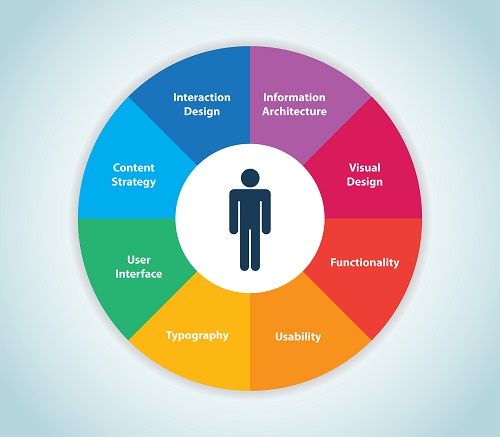
Users able to navigate the website or app easily, finding what they are looking for without putting in much of an effort, are likely to stay long. This raises the stakes of web development and web designing, to offer powerful yet simple user experience, optimized for the device. Web development now becomes a strategic activity, packing in the optimal list of features, in a simple easy-to-navigate design, and ensuring good UX at the same time. This trend of rolling out simple, yet powerful UX will gain further ground in 2017.
3. Collaborative Tools Gain CentreStage
The cloud and mobility are well entrenched, offering executives a world of convenience to work from anywhere, at any time. However, online collaboration still requires supporting infrastructure. Among the various solutions that have come up to facilitate collaboration, Microsoft SharePoint leads the pack, and is likely to continue its domination in 2017. Microsoft SharePoint is basically a collaboration and document management platform, enabling groups to set up a centralized space to share documents.

In 2016, Microsoft launched SharePoint Hybrid, which is in a sense the best of both worlds, an enterprise platform residing partly on-premises and partly within the Cloud. There is now also the provision to link on-premises version of SharePoint with Office365. As the New Year unfolds, further advancements are in the offing, especially in facilitating better content collaboration, mobility, intelligence and trust. As the cloud become even more popular, the cloud version of SharePoint will likely see big improvements.
4. The Return of the ERP
Enterprise Resource Planning (ERP) is in a revival of sorts, after years of lull. ERP may seem as anarchism in today’s fast paced world, considering deployment of ERP required complex rollouts running into years. What pushes the case for ERP is top ERP vendors reinventing themselves and delivering a far faster and smoother rollout. The game changer is cloud based ERP, or a SaaS offering, allowing enterprises the unprecedented flexibility of picking and choosing the modules they like for their ERP implementation. SaaS-based ERP is likely to gain considerable ground in 2017, as a means for enterprises to remain organized on a structured and connected way. Success would depend on the ERP solution that continues to deliver traditional service, and leverage the available big data to the hilt.
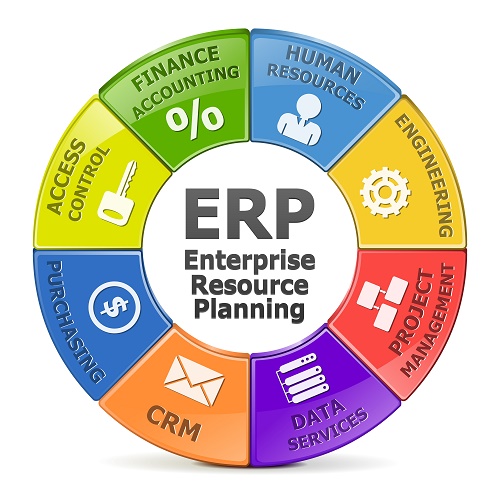
Among the many ERP vendors, SAP, the time-tested old warhorse leads the pack, as the most popular ERP suite preferred across sectors and company size.
5. Artificial Intelligence and Augmented Reality Goes Strong
That Artificial Intelligence (AI) has awesome potential is never in doubt. AI powered tools such as Google Translate, Amazon’s Alexa home assistant, and more have already become well entrenched and hugely popular offerings. More and more such apps would go mainstream in the coming year, with the power of Artificial Intelligence tapped for everything from driver-less cars to medical research.

Side by side, virtual reality will continue its golden run, but it eventually stands to be supplanted by Augmented or Mixed Reality. Virtual Reality based products such as Oculus Rift, Sony’s PlayStation VR and HTC Vive are the rage now, but in 2017, AR based products such as Pokémon Go, which allow superimposing information or content of any kind on real world settings will take over.
6. Internet of Things Gets a Reality Check
The Internet of Things received it first big challenge in September 2016, when some malware took control of millions of internet-connected devices and launched what has been the largest-in-class attack to date. The attack left large swathes of internet inaccessible for days. Undoubtedly, 2017 will see several such attacks, much more potent, bringing a reality-check to the hype surrounding the Internet of Things. There will be a major focus on security as well in the IoT scheme of things.

IT stakeholders are still like hares caught in headlights, when it comes to cyber attacks. To counter security threats, encryption has now become mainstream, to the extent the New York Times is now accepting news tips via the encrypted app Signal. However, it would require much more innovation to truly secure networks, and it remains to be seen whether any path-breaking security paradigms emerge in 2017.
7. Convergence Inches Closer to Reality
2017 will also witness a convergence of the internet and television, or live TV, allowing us to see television when we want it, rather than fix our schedule around television shows. YouTube is already putting together a live TV package, and players such as Hulu and Amazon are positioning to enter the fray.

Mere knowledge of the top tech trends is useless unless the enterprise is capable enough to leverage the trends, to roll out cutting edge solutions that confer early-mover status and significant competitive advantage. This is where most enterprises, faced with talent crunch and an already overburdened IT team, falter. We can help you here. Our team of highly experienced and talented developers is always on the top of the game, having successfully executed several mobility and other solutions for enterprises cutting across sectors and industries.
Stay up to date on what's new
About the Author
Featured Blogs
Stay up to date on
what's new
Talk To Our Experts
Digital technologies have permeated and disrupted almost all sectors, and logistics companies are no exception.
Optimization and efficiency, combined with speed and seizing the moment are the keys to success in today’s highly competitive advantage. Technology is the key enabler allowing companies to realize these aspects.
Leveraging Technology for Strategic Planning
A report by transport and logistics analysts Oliver Wyman reveals transportation and logistics companies increasing revenue, yet having reduced profits, over a 10-year period, and come with the recommendation to “standardize and streamline structures and processes, developing industry oriented and innovative solutions, thinking and acting in terms of networks.” Technology is the key enabler in this regard.
On average, transportation companies invest about 5% of their annual revenues in digital operations, with the main focus on digitizing their customer interface. The thrust these days is especially on mobile apps and solutions, to offer a personalized experience for their customers, and track the movement of vehicles accurately. However, side-by-side companies are also increasingly using digital technology to unlock new business models, focused on the creation of value-added services and innovative solutions.
The Use of Big Data to Improve Operations

The need to cut cost and take real-time action, in a competitive environment where margins are wafer thin, require logistics companies to take greater control over their supply chain and ensure the processes take place seamlessly, at great speed. Towards such ends, logistics companies are increasingly applying Big Data technology, to capture and analyze data, to streamline their operations and optimize the supply chain.
Computers apply algorithms to crunch Big Data, unlocking insights and opportunities not possible before. Such insights enable streamlining operations and optimization of the supply chain.
- Data based automation, especially automated load building and optimizing the inbound and outbound movement of cargo, enable optimal usage of available resources, reduction of waste, and facilitate lean operations.
- Effective real-time fleet management solution facilitates “uberization” of trucks and other delivery vehicles, where empty containers may be utilized immediately by matching it to the nearest load. Mobile solutions enable greater transparency into the operations.
- A comprehensive data based inventory and supply chain management system unlocks silos, and facilitates end-to-end visibility to inventory, orders and shipments across the supply chain. Such transparency allows improved tracking of inventory movement, facilitates the reduction of network-wide inventory levels, and enable managers to respond dynamically and in real-time to any events or issues that disrupt or hinder the supply chain.
- Analytical data makes explicit greenhouse emissions and carbon footprints of truck and machinery operations, allowing companies to take steps to become carbon-neutral, thereby contributing to the cause of “Green logistics.”
- The combination of machine learning with supply chain management enables turning reams of passive data into actionable business intelligence. Logistics companies apply the wealth of data related to the movement of their goods and trucks to identify patterns related to customer trends, identify what works well, unearth market insights, and gain competitive advantage.
Digital Improves Security
Supply chain disruption is the number one global business risk for logistics companies. Technology enables fortifying the supply chain in many ways.

- Digital locks make the inventory more secure, offer a robust layer of security, in addition to physical security.
- Optimal route planning, combined with real-time tracking of cargo movement through mobile apps enable routing of cargo by avoiding congestion points and trouble spots, to minimize risks and interruption.
Internet of Things (IoT) Enhances Operations
The earliest applications of RFID and nascent IoT technology have been in asset tracking and warehouse management. For instance, rather than simply tracking inventory of pallets and crates, enterprises use sensors, beacons, RFID and other technology to gather information on the state of the connected item, such as when the “thing” requires maintenance, the expected life of the “thing,” and more.
IoT contributes to highly integrated warehouse management solutions, enabling precision movement and accurate tracking of movement of goods. The applications of IoT instruments in logistics are virtually endless, ranging from tracking transportation goods in a temperature controlled way to ensuring the correct package reaches the correct location at the specified time and more.
The trends in the immediate future include connected and ‘autonomous’ trucks, warehouse robotics, and smart warehouse solutions, all of which will improve efficiency manifold, speed up operations, and improve accuracy.
Technological Innovations Unlock New Possibilities
Logistics companies use technology not just to improve efficiency of operations, but also transform the way operations take place in itself. The use of robots in large warehouses, and to handle hazardous goods is already widespread, as is the driverless, remote-controlled vehicles.
The next big thing is the use of drones, especially for last mile delivery. The U.S. Government is already piloting a drone-based traffic monitoring system. Countries such as Spain, France, and The Czech Republic and others have several research projects looking into the use of drones for traffic management. The widespread use of drones would speed up things considerably, reduce the hassles, strain and inefficiency associated with maintaining an army of delivery boys, and also reduce costs considerably.

A start has already been made, with Amazon Prime Air already making legit deliveries using drones, in less than 30 minutes from the time customers place an order. When the technology becomes widespread, logistics will change like never before.
Improved Customer Satisfaction
Proactive transportation and logistics companies go beyond improving their operational efficiency and retaining greater control over their operations, to enhance customer satisfaction.
Technology propels a shift to a customer obsessed operating model, enabling the delivery of personalized and customer-focused logistics, with faster cycle times.
Hyper-connectivity facilitates not just big data, but also speed data. Speed and timeliness, manifesting in seizing the moment enable companies to match customer expectations and deliver competitive differentiation over its competitors.
It requires considerable expertise in both business operations and the latest cutting edge technology to roll out successful technological solutions acceptable by the rank and file. By partnering with us, you can piggy-bank on our vast and extensive experience in delivering highly intuitive apps and other solutions for transportation and logistics firms. Our rich talent pool, combined with extensive experience allow us to add value to your strategy, and roll out seamless apps that make your processes highly efficient, allowing you to cut costs, unlock new possibilities, and take customer satisfaction to new levels.
Stay up to date on what's new
About the Author
Featured Blogs
Stay up to date on
what's new
Talk To Our Experts
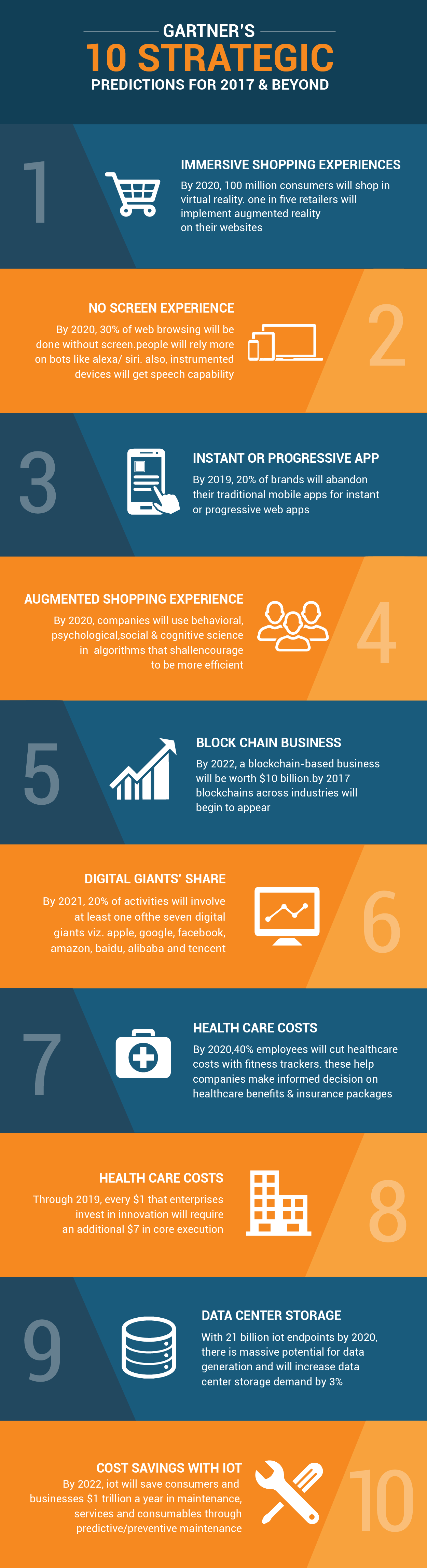
Here are the ten emerging and strategic business and technology trends that will shape the way individuals and businesses will derive value from technology in 2017. Vice president and Gartner Fellow, David Cearley, mentioned 3 themes, viz., intelligent, digital, and mesh that will be the disruptive technology forces for the coming years.
Stay up to date on what's new
About the Author
Featured Blogs
Stay up to date on
what's new

