Category: Business
As a company grows and faces new challenges, a continuous evaluation must be done on the current work processes and IT solutions so as to analyze whether they can address these challenges. Performing a periodic gap analysis in ERP implementation helps assess the direction in which a company is headed. Moreover, it can also determine whether the company is equipped with the right kind of tools to get there.
Some of the common issues that companies normally need to look into are:
- Streamlining day to day operations so as to improve productivity and profitability
- Recognize the need for collaborating with business partners
- Generate more insights for decision making
- Meeting regulatory requirements
- Adapting and scaling the business
Most companies rely on a combination of manual and automated workflows, legacy applications, and databases to run their business. These systems may serve their purpose for quite some time, but will eventually run out of options for scalability leading to productivity gaps. In today’s highly competitive markets, inefficient systems can seriously affect the productivity, profitability, and growth of a business.
Dealing with separate systems can become a hindrance to growth and profitability. At the same time, companies can benefit from ERP systems to help define best practices, optimize workflows and achieve a better view over the various business processes.
By automating business processes, companies benefit from the increased accuracy, accelerated data flow and streamlining of day to day activities. This, in turn, gives the staff more time to focus on areas that require personalized attention.
The Need for GAP Analysis in ERP Implementation
Considering the rapidly evolving ERP market and ever-changing needs of companies, it is very essential that gap analysis is done on a frequent basis. This can assess the relevance of legacy systems and ascertain whether the organization’s demands have outrun the capabilities of these systems. GAP analysis helps in providing precise analytical data to compare the costs involved in an upgrade versus the value addition that the upgrade brings in.

Performing the GAP Analysis
GAP analysis is the technique of listing out the steps to be taken for a company to move from its current state of operations to a desired future state. The analysis begins with highlighting the company’s current situation, listing factors to achieve the objectives, and also planning out the key steps to put into effect for bridging the gap between the current situation and the desired future state.
Besides, undertaking an ERP implementation also imply conforming to common market forces and regulatory requirements. The following checklist will help analyze whether the existing system meets your unique business requirements. In addition, this will also guide you determine whether to enlist the services of a consulting organization to perform a detailed evaluation for accurately assessing the value that a state of the art ERP system would bring about.
Does your organization need to comply with government regulations?
Many companies in various industries must comply with various regulations constituted by the government. Some of these regulations include:
- Sarbanes-Oxley Act for all public companies
- OSHA Hazard Communication Standard
- ANSI
- European Union REACH (Registration, Evaluation, Authorisation, and Restriction of Chemicals) legislation for chemical companies
- The Bioterrorism Act
- HACCP (Hazard Analysis and Critical Control Points) for food and beverage producers
Most companies find that managing these government regulations are burdensome and costly. The higher costs are attributed to the fact that many of these are managed manually. Moreover, manual compliance processes not only increase the cost but also leads to inaccuracies and time delays.
Do you need to streamline your operations to improve productivity and profitability?
In today’s competitive world, organizations need to continuously improve their processes and streamline their operations to reduce costs and increase productivity. Manual systems can be time-consuming and slow down the business processes due to rekey of information into multiple systems. Furthermore, to add to the trouble, there are a lot of inaccuracies as well.
Do you need to enhance your decision-making capabilities?
With the increasingly competitive market, it is essential that your company has all the required info to guide you in making the right strategic decisions. When data is spread across various systems and spreadsheets, it becomes increasingly difficult and time-consuming to create reports that are needed to support key decisions.
Do you need to collaborate with partners?
As your company grows and the market conditions fluctuate, it may become unavoidable to not team with partners in various industries across different geographical locations. During such collaborations, effective and hassle-free communication becomes vital to meet customer expectations, maintain loyalty and remain profitable at the same time.
Does your processes and systems scale with your business?
Scalable systems are an absolute necessity considering the competitive markets that thrive today. You will need technology solutions that not only cover your present needs but also accommodate the growth of your business in the future.

Are you planning to grow your business globally?
If the answer is yes, then you will definitely need systems that address the following:
- Global currencies
- Multiple Languages
- Global regulatory specifications
The Output of GAP Analysis
- The GAP analysis will give a complete overview of the system
- It will inform the organization or business, how much value the ERP system will precisely bring into the various business processes
- At times, it may also lead to the conclusion that the implementation of an ERP isn’t needed for the organization when analyzing the value being added
Conclusion
Modern day companies face adverse competition due to rapid market shifts. In the midst of new technological innovations, the adoption of an ERP system is a big step for the growth of a company and its productivity as well. GAP analysis remains an indispensable part of this entire process and companies should focus on it more and give the importance that it deserves. The value adds by giving you a detailed retrospective of your business processes and the current systems are much more than the costs involved in the same.
Stay up to date on what's new

About the Author

Featured Blogs





Stay up to date on
what's new



Talk To Our Experts
What kind of business software works for your business?
Business software marketed by developers for enterprises are available in two categories: tools and solutions. So, which one is compatible with your business and why should you rely on that instead of the other?
Finding a solution to this question will give you a clear picture of the kind of software that you need for your business. Picking a business software tool or solution has its differences. Both aids in managing and optimizing the workflows so that the business processes run as you envision.
The end results are usually the same but what differs is how the two functions and what features you have at your disposal. Knowing about this will guide you in preferring a business software for managing your operations. This article details some useful tips to help you choose between a business software tool and solution.
Why do you need a Business Software?
In managing your business, what are the criteria or standard rules that you normally carry out? Extensive paperwork, registers, accounts books or any novel ways that you have invented. They were reliable once upon a time as the scale of business operations were much confined, then.
But, in this ever-connected world, such methods have become rather unconventional. Today the entire world is shifting digitally and enterprises have been at the forefront of this rapid revolution. Digital tools and software have become the standard for carrying out almost all kinds of business operations.
It transformed all the vital processes in the domain of business and management. For instance, a direct example would be the software and tools used in a supermarket to generate bills and invoices as well as track their warehouse status real-time.
Business software steers clear of conventional approaches to managing a business in favor of digital tools. They combine powerful processing with quick and feasible results, enabling businesses to do more in less time.
If you look at the overall spending for migrating to such new and innovative approaches, it will give you a rough idea of the growing prevalence of enterprise software.
https://www.statista.com/statistics/203428/total-enterprise-software-revenue-forecast/
The total spending that enterprises have accumulated for specialized business software have ratcheted in 2018 alone. The coming years and the end of this decade will witness an explosive growth and demand for enterprise software by information technology and related companies worldwide.
Simply stated, depending on a business software will give your businesses the following plus points:
- Simplify operations to manage any of your business projects
- Easy scalability that grows with your business
- Rich features that integrate all key functions
- Anywhere, anytime access via any digital device
- Robust and swift data processing
- Integrates work and enhance focus
Business Software – Tools and Solutions
When approaching a business software, you will stumble across two categories such as tools or solutions. You cannot just go and opt for one without a clear idea about the differences between the two. They are essentially software but have their own differences in the features, functionality and user experience.

Basically, a tool is just one application specialized for managing your enterprise operations. A tool is a bundle of features and services that let you manage all operations within its confines. So, you will limit connectivity, for when, if the processes do not move as expected.
Software solutions are made for enterprises with large-scale operations and have preloaded features and guidance that will let you navigate your business processes with ease. Solutions usually come as a contract where you sign up for the services of a solutions provider.
You are allowing an external agency to give solutions for all your key managerial operations. This takes the workload off your shoulders and the people, which gives you more time and energy to focus on important matters related to your business.
Addressing the Pros and Cons of Tools and Solutions
Tools
Pros – A business software tool has the major advantage of affordability. Developers can customize the software so that it suits the business while incurring only lesser costs. Therefore, software tools are particularly apt for small businesses which have only a limited range of operations. They come with an intuitively designed interface and are easier to use.
Cons – Software tools are just an application designed to do a specific task but limited in its functionality. How you gain positive results rests entirely on how well you use the tool and its key features. There is no external support that will help you trudge through difficult processes and operations. Besides, there is no guarantee that a software tool works for your business to earn the desired result.
Solutions
Pros – Solutions are the perfect means to tackle the large-scale management processes of big enterprises. Packed in software solutions are some leading and highly dependable features like expert guidance and coverage across the entire aspects of management. Solutions can make a ready change in how the operations are managed, which has the immediate effect of driving growth and innovation.
Cons – Software solutions are typically costlier compared to tools. Businesses relying on a solutions provider need to pay exorbitant charges to keep their management processes up and running constantly. It is not within the reach of smaller businesses and is only meant for large enterprises and corporations.
What Business Software Should You Choose – Tools or Solutions?
So, when deciding between the two, which one will you opt for in assisting your business? Firstly, the needs are to be clearly addressed. Failing to do so will result in ending up with a business software that does not correspond to the business you are doing.
Selecting among both business software – tool or solution will give you the results that you are looking for. But to truly help in dealing with your daily business management processes, it is vital to choose the right one.

Tool
Opting for a software tool is an excellent option if you run a small or medium scale business. If you run a new startup or are already figuring out the ways to manage your small business, then a tool would best suit your requirements. When picking a tool for your business, you need to consider the following questions.
- What use will it have on my business and who uses it?
- Has it got any integration features with other business systems?
- What are the needs of employees and does it serve their needs?
Request a demo of the software from the vendor before you move forward with the purchase. This gives you an overall idea of the software, which helps you understand whether it has the features and functionality that you are looking for.
Meanwhile, a demo could also give your employees a hands-on experience with the software to find out whether it goes smoothly integrated into their work practices as well. Moreover, considering the pricing of the software by comparing across different vendors will help you choose one that fits in with your budget.

Solution
A solution encompasses a much broader range and extends beyond the limitations offered in a tool. It is particularly for business process change and has a service provider that takes over the managerial functions of the enterprise. If you run a large-scale enterprise, then a software solution will benefit your business more than any other.
Basically, the reliance on solutions helps in driving better management and relieves the workload on your employees. A typical example of software solutions is ReachOut Suite, a field services management software for managing work orders. Technicians can easily carry out field works with efficiency due to the centralized cloud-based system of ReachOut, which are accessible via mobile devices.
When choosing a software solution for your business, you should address all your requirements with the vendor. This is the preferred option than opting for a trial or demo of the product. In this way, the vendor or a software development company can work out with your estimate and give you solutions tailored for tackling all your management problems.
Summing Up
It all gets down to your need because that essentially determines everything. A tool can serve you well and help deal with issues related to managing your crucial business operations. It can aid in your business functions for making it easier within its stand-alone solution. Besides, they are affordable too, helping you decrease expenditure along with a boost in performance.
Solutions, however, are a complete offering specially designed for solving management problems of large enterprises. And so, the pricing is larger, but you get what you need, which is expert guidance and overall efficiency in the process. This unifies and liberates work in your business, helping you solve issues, maintain operational efficiency and opt for business process change.
Stay up to date on what's new
About the Author

Featured Blogs
Stay up to date on
what's new
Talk To Our Experts
Nearly 2.6 billion people across the world today have access to a high-powered smartphone, at all times, and seven out of every ten people will have access to a smartphone by 2020. Android phones constitute a bulk of such devices. Businesses are slowly but steadily discovering the merits of rolling out an outstanding Android app to improve branding and customer engagement. A well-designed app allows the brand to communicate the brand message effectively, and develop a sustainable relationship with the customer.
Here are the ways in which a standout business app allows an enterprise in branding and customer engagement.
Delivers a Streamlined Experience
Enterprises need to be able to assess and refine the usability of the app and identify pain-points such as why high volumes of app downloads are not converting into customer registrations or conversions. They need to quantify the impact of the app experience on the customer’s overall brand perception. 
Making things simple and easy for the customer is a sure-shot way to raise the value of the brand in the eyes of the customer. Brands need to identify pain points in customer interactions and work to mitigate it in all earnest. Rolling out an app invariably helps the enterprise streamline their engagement with the customer.
The best apps are highly focused, based on delivering a specific or much sought-after functionality for the user. For instance, the app could make it easy for customers to interact with the brand, offering an easy way to search the FAQ, do self-service, get in touch with customer support, and more. Such an app plays into today’s overriding sentiment of instant gratification.
An app could also be used as a single point access to the social media pages and other digital assets of the brand.
The best app encourages active feedback and co-opts such feedback in newer versions of the app, with a central focus on improving customer experience and delivering more value to users. An app not updated frequently creates potential compatibility issues when the mobile operating systems are revised, and moreover, users are reluctant to risk downloading or using something seemingly abandoned.
How Business App Offers Proactive Communications
Unlike a website which the user has access every time by typing in the URL, an app once downloaded remains in the user’s phone, and may be accessed conveniently, even when offline. 
When a customer installs an app, the business may send notifications directly to the app, bypassing the often-ignored email inboxes. Such push notifications gain high visibility and also allow the brand to reach out to the customer on a 24×7 basis.
Push notifications are invaluable in grabbing customer’s attention, even when users do not actually use the app. Push notifications boost app engagement by a whopping 88%, with Android users way more receptacle to such notification compared to iOS users. The best push notifications, with the highest click-thru rate, are personalized and contextual, such as being based on the product last viewed by the user, including the user’s name, and co-opting other nuances.
Today’s consumers want information within seconds, and service in double quick time. Very few take the pains of seeking out the brands’ website or social media page. If the customer can be persuaded to download an app as a one-time effort, the brand can easily push the required information and engage with the customer proactively. Customers can get the required information or make the purchase equally easily, creating a win-win situation.
Delivers Deep Customization
The most successful customer-facing apps personalize the user experience. The business co-opts emerging technologies like near field communication (NFC), artificial intelligence (AI) and machine learning to understand the user’s choices and preferences.
Smart marketers leverage the apps location tracking capabilities, beacon and geofencing technology to send location-specific, contextual, and timely data-driven content to customers. A case in point is leveraging beacons to push location-based offers and promotions, promote loyalty programs, and facilitate mobile-based proximity payments.
The Pew Research Center estimates nine out of ten smartphone users in the USA enable location services on their mobile phones.
Complements Brick and Mortar Buying
Many retail businesses now offer apps to can enhance customers’ in-store experiences. The app could, for instance, allow the user to scan the barcode of the product, to check availability, different variants, price, product reviews, and other information. Some businesses also offer the possibility of adding the item to the cart and even ordering the item online, sparing the hassles of queuing up at the till or even carting the item home by oneself.
Customer facing apps go a long way in delivering a consistent and seamless omnichannel experience for the user and integrate the physical and digital world.
Businesses could take a cue from 2016 Coachella music and arts festival, where fans who downloaded the app received out location-based notifications about artists and vendors to attendees, and offered beacon-enabled mobile payments to attendees, sparing the need for a physical wallet.
Another success story worth benchmarking is Domino’s Pizza’s new mobile app which allowed customers in the UK to order delivery or in-store pickup. The app has been downloaded more than 10 million times and resulted in a 24.4% increase in e-commerce sales.
Brands, however, cannot afford to rest on their laurels of having successfully coaxed customers to install their apps. The app itself needs to be updated regularly, co-opting new content and features. App developers also need to remember users are doing the brand a favor by installing the app on their smartphone. The brand should not misuse the generosity by taking up too much space causing the system to hang, or offering vulnerabilities which allow potential hackers access to the smartphone. It takes the services of a sound a competent developer to create sound and robust apps which offers real value to users.
Stay up to date on what's new
About the Author

Featured Blogs
Stay up to date on
what's new
Talk To Our Experts
Every year, Clutch, the popular B2B ratings and research firm publish a report on the leading players in the software segment. Constantly updated, these listings review companies excelling in software development and curate them accordingly on how they rank within Clutch’s assessment criteria. This time, Clutch has come up with a new report listing the top custom software development companies currently serving the market.
From about 5997 firms, Clutch based their evaluation on client reviews, market presence, experience and the ability to deliver. Among the multitude of firms reviewed, Fingent Corporation ranks among the top custom software development companies. In the Clutch Leaders Matrix, Fingent manages to keep the right balance and stays on top with an overall score of 39.3.
Market presence, clients and experience each scored remarkably well with 9.5 and 9.75 points. Fingent’s 50 percent service focus in custom software development reflects its proficiency in conceiving tailored solutions to businesses of all kinds. Itransition, its main competitor stays side by side scoring 39.4 in the ability to deliver, 9.4 in market presence and 10 for clients and experience.
Why Clutch Listed Fingent as a Top Custom Software Development Company
Striking the right balance in terms of service focus, client reviews and experience is the key. Fingent manages to ticks all boxes with its proficient custom software solutions that cover each of these critical aspects. Clutch base their assessment by keeping these factors in the spotlight, which is the sole reason why Fingent came on top.
Clutch undertakes a different approach to identify leading software companies. Several credible factors go through stringent evaluation such as valid feedback from current and previous clients, ability to deliver high-quality solutions to clients consistently, solid market presence, services offered and many others. Moreover, the ratings also focus on the company’s passion in work, intent on client satisfaction and commitment for delivering quality and innovative results consistently.
Fingent puts more emphasis on driving value to their customers and strives constantly to achieve this in the plethora of solutions they offer. Deep expertise in software combined with a varied client base across multiple industries enables it to come up with new ways to blend in industry standard practices and innovative approaches together. Apart from that, the company believes in building good levels of trustworthiness with their clients and work towards fulfilling it in everything they do.
For instance, a majority of clients states that working with Fingent allowed them to reduce their quality control costs largely, that at times amounted to about 70 percent.
Technical Competency
Solid technical proficiency stands as the fundamental ground in which most software development companies operate. Fingent’s team of skilled professionals dispersed globally have strong background and experience in the cutting-edge technologies of today to resolve every challenge they face. With its diverse talent pool, Fingent’s services extend to further include the entire web and mobile development segment such as enterprise software development, web application development, mobile application development, SaaS development, etc.
Seamless Collaboration
Collaboration could work across different levels and each of these influences the results considerably. Companies building software solutions need effective collaboration with their clients on a consistent basis to guide the development process across individual levels so that the finished product resembles exactly what they envisioned. Besides, these collaboration exists among the development team, administration departments, designers and those in the top of the organizational hierarchy.

Fingent’s qualified development teams push the software development process a step forward by integrating effective collaboration across all levels. These facilitate improved collaboration with the clients so as to adhere close to their requirements, spice up communication among the stakeholders and brings the development teams to adopt proven methodologies for ensuring successful delivery of the project within the stipulated deadlines.
Cost Effective
The costs of building a software are proportional to the amount of functionality offered in it. Some development companies build software by trimming down the functionality and features, which adversely affects its quality and usability. Fingent’s approach is unique, as it applies modern design principles without sacrificing on any key functionality to deliver highly dependable and efficient software within affordable pricing.
Leveraging state of the art cloud, mobile and web technologies enable Fingent to come up with tailored solutions at reduced costs. There is better streamlining of the software development across its entire lifecycle with the adoption of lean principles as well as simplification of business processes utilized by the clients.
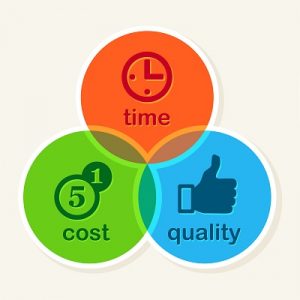
Summing up, the deep expertise and leveraging of latest technologies bring about more accuracy in quotes, which include all aspects of development from scratch to the finished product. Adhering to proprietary technology and custom practices enable Fingent to bring out solutions quickly and on budget. $25 to $49 per hour is the average development cost for standard projects at Fingent.
Strong Establishment
A firm establishing background nurtures a work environment that prompts growth across its entire development workforce. Fingent since its beginnings in 2003 has quickly expanded and in the years that followed evolved into a reputable company build on the foundation of trust, value, and efficiency. Deviating from conventional methodologies and practices, Fingent’s uniqueness lies in its approach of following up its projects even after deployment in the form of continued support.
Based in New York, USA, Fingent grew in scope and client base that resulted in widening its operations on a global footprint. There are branches in Boston and UAE as well as two research and development centers in India to scale up infrastructural and talent base for serving the growing client base. Fingent’s impressive clientele counts among the industry’s leading names that range from Fortune 500 companies to budding startups.

Multinational conglomerates like Sony, Johnson & Johnson, NEC, PWC etc. are some of the partnering clients that leverage Fingent’s expertise in carving out robust software solutions to resolve their individual challenges. This growing client base stretches across 14 countries and 4 continents. Moreover, the company maintains an active 300+ full-time employees, classified into separate teams for improved collaboration and swift delivery of solutions.
Fingent’s tailored solutions seamlessly integrate with the requirements of enterprises to help them optimize their processes and operations from its core. Get in touch with our solutions consultants right away to bring the advantage of robust cost-effective software solutions into your business for redefining it all together.
Stay up to date on what's new
About the Author

Featured Blogs
Stay up to date on
what's new
Talk To Our Experts
DevOps is a markedly different way of doing things compared to traditional software development, with an overriding focus on high velocity. Enterprises adopting the DevOps approach use tools, techniques and practices in a way to deliver services and applications at a fast pace, without compromising quality.
While DevOps is the flavor of the season owing to its obvious advantages, very few enterprises are actually able to execute it right. For the majority of the enterprises, their efforts fall short of expectations. A recent Ponemon Institute survey reveals 74% of surveyed enterprises believing that Hybrid Cloud and DevOps enablement capabilities as essential, or important for their enterprises, but only one in every three enterprises believing they actually have the ability to execute it. Likewise, a whopping 80% of enterprises believe microservices and container enablement to be essential, very important, or important for their enterprise, but only one in four of them believing they have the capability for it.
Here are the key reasons why enterprises struggle with DevOps and hybrid cloud.
The Trappings of Culture
Legacy systems and entrenched work culture pose a big challenge to the successful implementation of DevOps.
Quali’s 2016 annual survey on DevOps and cloud computing ranks company culture as the biggest barrier to DevOps. For DevOps to succeed, enterprises need to inculcate a collaborative culture where stakeholders have shared goals, and are willing to take the initiative. This includes identifying employees ready to be DevOps champions in the organization and entrusting ownership of DevOps initiatives to them. There is a need to sell the initiative to the rank and file employees, convincing them of what is in it for them, and buying their support. The buy-in should be backed up by robust training programmes on the new methods and initiatives adopted.
The Menace of Shadow IT
Shadow IT is a major reason why cloud implementations, and by extension, DevOps end up more costly and less effective than expected.
Many employees, owing to practical exigencies, deploy ad-hoc tools and create silos, incompatible with the rest of the enterprise systems. Such end users bypass the enterprise level IT and cloud management technologies, and communicate directly AWS, Microsoft Azure or other clouds, using native APIs or their own public cloud accounts. The net result is a patchwork mess.
With shadow IT in vogue, the enterprise cloud becomes complex and opaque, and almost impossible to manage. Several CSOs find themselves unable to implement the required security protocols and watch helplessly as things go out of control. They are unable to identify the location of their machines or worse, even their data. They have little or no control over the network layer and even the application layer. Such lack of visibility and control expose the enterprise to cyber-attacks and other shocks.
In an ideal cyber-world, enterprises have a single integrated user interface through which they can view and control the entire environment. The Ponemon Institute survey reveals 68% of respondents lacking such capability.
The Problem of Legacy System
Quali’s survey on the major impediments to DevOps lists testing automation, legacy systems, complexity, and budget constraints in the pecking order of the major impediments to DevOps, after culture. For a majority of the enterprises, success depends not just on delivering on new innovations but also the extent to which they can modernize or upgrade their incumbent software and systems.
About 44% of enterprises find their traditional IT environments too complex for the cloud. Installing new hardware or software to coexist with older systems is always difficult. However, the hybrid cloud model, where some applications reside within the traditional data center and other applications are hosted on public cloud platforms such as Amazon Web Services or Microsoft Azure, offer a viable solution. Such a hybrid-cloud based model co-opts legacy infrastructure and applications in the DevOps plans. 
Hybrid IT usually develops organically, without the involvement of IT or security, as shadow IT sets in. It requires management with an iron first to end turf wars and demolish silos.
Enterprises which succeed in DevOps display a high level of hybrid cloud maturity. They use an integrated cloud management platform (CMP) for provisioning, capacity rightsizing, automation, cloud governance, workflow orchestration, self-service, single-pane-of-glass visibility, and cost management. Newer CMP 2.0 platforms go a step ahead and reduce the friction and complexity associated with microservices, containers, cloud-native applications, and DevOps.
Challenges of Integration – Hybrid Cloud and DevOps
Developers deploy different tools for their DevOps efforts. The most popular tools in use include Jenkins, Docker, Puppet, and Chef. the favorite tool of the developer may however not be the best to integrate various systems and applications running within the enterprise. The net result is a fragmented toolset adoption, which leads to loss of control, and also adds to the costs.
Lack of central governance and automation are key stumbling blocks towards the smooth implementation of DevOps.
A sound DevOps plan requires:
- A clear and solid architecture based on on-premises, cloud, and containers, early on in the process.
- An action plan co-opting milestones and well-defined deliverables
- Standardized and automated cloud sandboxes and other tools.
- Due attention to test automation
Cost-Benefit Analysis
While DevOps and the cloud offer many benefits, implementation comes at a price. Many DevOps initiatives can be pricey, and failing to factor in the price upfront can lead to the project stalling midway, and a half-baked implementation, which may make things worse than before.
While many open source solutions abound, does not mean free. The enterprise still has to pay development and often support costs as well. Most enterprises also underestimate the cost to integrate the existing enterprise ecosystem and resolving the ensuring operational complexity.
The average DevOps and microservices enablement costs of an enterprise is $34 million per year, which works out to about 23% of the average per-capita annual enterprise cloud management budget.
Related to the budget is top management support. Getting top management buy-in upfront is an important prerequisite for DevOps success. Top management listens to numbers, and as such, the benefits need to be quantified, in terms of dollar spend. Done right, DevOps offer innumerable benefit to the enterprise, but done wrong, the investment and the effort go down the drain!
Stay up to date on what's new
About the Author
Featured Blogs
Stay up to date on
what's new
Talk To Our Experts
Transparency is the flavor of the season, as businesses understand the tremendous benefits and value addition it offers to stakeholders. One sector which especially benefits from a fresh breath of transparency is the real estate industry.
Emerging technology drives transparency in reality, at all levels. The widespread application of real estate disruption gives stakeholders, from fund managers to real estate agents and from investors to end users’ critical insights into not just static information regarding the legality surrounding the property, but also live and actionable information on the actual performance and status of the building.
Integrated Big Data
Information with regards to ownership prices, occupancy levels, and more are critical when making investment decisions in real estate, especially in new markets. However, the availability and quality of such information have traditionally been insufficient and suspect.
Technology is slowly but surely offering solutions to such handicaps. Fund managers, for one, are increasingly making data-driven decisions, relying on high-quality real-time data available to them.
The sophistication of cloud platforms and associated applications has become a game changer for the industry. Hitherto, reality-based data came in multiple systems and several silos, making integrations impossible, especially in a timely manner. However, of late, several real estate stakeholders see the benefit of moving to larger single platforms with unhindered connectivity to other systems.
Internet of Things (IoT)
The Internet of Things enables investment managers to monitor the efficiency of properties at a deep level. Traditionally, real estate managers and stakeholders make their investment and operational decisions based on static data, much of which was obsolete by the time it reached the hands of the relevant stakeholder. The deployment of IoT sensors and related technology systems now allow stakeholders to measure everything from CO2 emissions to the performance of HVAC systems, and from the exact number of footfalls in a commercial building to the state of the walls, and much more, with a high level of preciseness and relevancy. Several new-gen buildings are now fully digital, with all information monitored and processed from a central cloud-based database, accessible anytime, anywhere.
Drones
The deployment of drones enables inspecting buildings at a much deeper level, compared to what human eyes or static cameras can offer. The deep insights offer new perspectives on the real asset to investment managers and other stakeholders Drones can enter hard to access places and make explicit the exact status of key installation such as pipes and roofing. It also enables potential buyers to get a real feel for the facility or land, as opposed to ground level cameras.
Blockchain and Digital Tools – Real Estate Disruption
Technology now allows stakeholders to develop comprehensive real-time database regarding the use and ownership of buildings and other real assets.
Here, Blockchain enables a big push. The Blockchain distributes multiple copies of the database across a network of computers, removing the need for intermediaries who store the information. The model also ensures the integrity of the database and enhances security manifold. The net effect is a fresh level of transparency for transactions. Blockchain also transcends national borders and propel open data, which could help semi-transparent markets leapfrog the normal process of transparency.
Leading global level real estate companies such as JLL have complemented the technology push, by introducing tools based on emerging technologies. Online marketplaces, online property management tools, increasing digitalization of local agent practices, self-service apps for clients, precise digital mapping, building inspection using drones, e-contracts, and much more are manifestations of such a trend.
Macro-Level Initiatives
At the macro level, transparency in real estate prices increases accountability and quality of governance and promotes an overall productive business environment. Several countries across the world are now making a push towards transparency. The push for transparency is in part, the fallout of the Panama Papers revelations, which broke out in early 2016. With real estate been associated with money laundering, black money and several other vices, organizations and watchdogs such as Transparency International began to place the sector under greater scrutiny. As such, stakeholders of the industry have no option but to make the fight against corruption a priority. Transparency is increasingly seen as the tool which enables such a fight.
A good case in point in India’s RERA (Real Estate Regulatory Authority) which aims at making explicit the full price of the property, regulating brokers, rendering clarity on building classifications, and several other particulars, aimed at curbing corruption and “black” money. Likewise, UKs proposed beneficial ownership register and European Union’s Fifth Anti-Money Laundering Directive are other cases in point.
Technology is central to transparency initiatives. The United States, one of the most transparent property marketers in the world, has adopted technology in real estate faster than anywhere else, and other countries are fast catching.
Dubai, with a slew of tech initiatives such as building classification project, improved regulatory procedures, new and enhanced online apps for managing contracts and broker information, and unified lease forms offer a good case study on how to apply technology to infuse transparency in the real estate sector. Another good case study is Netherland, which has pushed innovation around blockchain and open data initiatives.
Transparency in real estate markets not only benefits the direct stakeholders through increased dynamism and productivity gains but also has a profound impact on economic development and the quality of life of citizens. Among other things, it confirms and protects ownership, and keeps a tab on the enforcement of building regulations. The improved efficiency brought about by tech-based tools also allow real estate agents, asset management companies, and other providers deliver better service at lesser costs, enabling them to remain competitive in a highly challenging market.
JLL’s Global Real Estate Transparency Index (GRETI) which tracks transparency in real estate markets reveals the top 10 most transparent markets attract 75% of global investment in the commercial real estate space. It also predicts capital allocations to commercial real estate growing from $700 billion to over $1 trillion within a decade, with increasing transparency a key driver to such gains.
Stay up to date on what's new
About the Author

Featured Blogs
Stay up to date on
what's new
Talk To Our Experts
- ReachOut Suite corresponds to convenient and affordable field service management software that refine and streamline the entire service cycle.
- Trusted by service businesses of all kinds from pest control to HVAC for its innovative digital field service management capabilities.
- ReachOut is ranked number one by project-management.com on their recent review of the top five field service management software.
ReachOut Suite, a field service management software has been listed number one among the top field service management software (FSM) by project-management.com, a leading web resource of project management.
The review team at project-management.com arrived at their conclusion after going through a plethora of FSM software that leads in their respective domains. ReachOut Suite has stood apart from other FSM software in the market with its unique array of features. What makes it different from the rest is the adoption of a SaaS model combined with the latest cloud and mobile technologies.
Embedded inside ReachOut are features that automates critical tasks in field service management such as schedule management, inspection, ticketing etc. Streamlining of processes on a whole new level take place giving service businesses a novel approach to deal with their daily chore of scheduled works. The review team especially noted this crucial aspect of the software, which remains a key reason why ReachOut Suite was mentioned on the top of the list.
Besides, the customer ticketing system, inspection and audit management were the other notable features that gave ReachOut an edge over others. Actually, the project-management.com team based their assessment not only on the features but in regards to the functionality for different aspects of FSM. This was kept in priority and all the listed software went through a meticulous evaluation of this very aspect of functionality.
ReachOut managed to tick all the boxes regarding employee productivity improvement, customer satisfaction, communication and better utilization of resources. The 24/7 customer support provided along with can quickly tackle any queries, support, and grievances of the customers. Project-management.com especially lauded the functional capabilities of ReachOut in extending to the diverse areas of field service management alongside its rich customization features and the ability for white labeling.
Comparison with other Field Service Management Software
ReachOut Suite underwent an extensive review alongside four other leading FSM software currently popular. Scheduling and management software that was reviewed in the list include:
- Jobber
- ServiceTitan
- HouseCall Pro
- Service Fusion
These software were evaluated based on their features, functionality, compatibility, and user-friendliness. Each of them excelled in specific areas such as the two modules of ServiceTitan for office and the field. HouseCall Pro integrates a convenient mobile application and web backend whereas Jobber equals when it comes to work order management.
They are ranked in terms of their performance and how much productive that they actually prove to be among service businesses of all kind. ReachOut was highlighted in the review also for the affordability of the platform. And comparing to the other FSM software listed, ReachOut edges it out when it comes to the actual pricing.
ReachOut Suite has stayed true to its affordable promise by offering a pricing model. By signing up, businesses can get their first three users forever free with accessibility across all its features. Adding users and upgrading the packages are as simple as ever when scaling up is necessary.
Conduct Inspections and Manage Work Orders Easily – ReachOut Suite.
Stay up to date on what's new
About the Author

Featured Blogs
Stay up to date on
what's new
Talk To Our Experts
Experts from Fingent offer insights on various topics ranging from enterprise app development, the compatibility of Odoo for businesses and tips to scaling down enterprise app development cost. We also focus on the significance of the academic research in driving innovation. Let’s dig in!
Enterprise App Design: Does iOS Fare with Android in terms of Security? | ReadWrite
With Apple constituting a major share of the world smartphone market, iOS tend to be the most preferred platform in enterprise app development. But there are stronger competitors in the current market competing directly with iOS. Google-owned Android have fared remarkably well in the mobile market largely due to its swift integration with Google’s extensive services, flexibility, and support.
So, will iOS fare with android in terms of security?
How Academic Research is Driving Innovation and Growth | Emerald Insights
The acceptance of academic research among enterprises has been low, not because of its lack of value, but due to underutilization. Propelling innovation within an enterprise rests chiefly on relying on information derived from external sources. In this case, academic research from universities seems a valuable cache of information that enterprises can depend on for using in all their crucial processes and operations.
How Compatible is Odoo for Your Business | This Host Rocking
Having an ERP system integrated into your workplace can guarantee efficiency and productivity. So, what can you gain from integrating one into your business? An ERP solution can lift the burden of operations by shifting to a software-based model. It allows you to streamline, organize and integrate your core business processes.
Tips to Scale down on Enterprise App Development Costs| DZone
Enterprise apps are extremely popular now. However, developing apps can turn out to be a costly endeavor. Here are some tips to keep costs in check, while still developing high-quality apps. Developing large scale enterprise apps can be incredibly expensive, so take a look at how you can cut costs with these tips.
What you didn’t know about creating iPhone apps | BEST IN AU
Developing apps for iOS is something you can learn from a certified developer training program or by using tutorials on the web. But mere technical knowledge is inadequate if you fail to comply with the regulations of the App Store. Knowing about these can ensure that your app never gets rejected from the App Store citing compliance issues. Besides, it can provide a certain amount of guarantee about your app’s success and popularity. Here are some crucial things they never say but you should understand when making apps for iPhones.
Stay up to date on what's new
About the Author
Featured Blogs
Stay up to date on
what's new
Talk To Our Experts
The rapid diffusion of digital accessibility among all generation of consumers has led to an increased prominence for customer-focused strategy in many businesses. There are several cases of companies on the brink of bankruptcy or acquired by larger corporations even after producing superior quality products. This is because they were unable to cope with the advanced marketing and sales activities of their competitors. Companies such as Toys “R” Us, Abercrombie & Fitch, H.H. Gregg, Aerosoles, Compaq, BCBG, etc. could not get along with the increasing competitive pressures, changing customer behaviors, emerging technologies, and global sourcing.
Thus relying on an optimal Customer Relationship Management software has indeed become the need of the hour for both established businesses and startups alike. It enables them to fully utilize the digital capabilities in having flexible business models, innovative customer interaction, and identifying new sales channels. Moreover, with the increasing relevance of data and user privacy, organizations should remain versatile to change their customer engagements and marketing strategies.
In this context, this blog discusses, compares and guides business analysts in choosing from two different CRM software – SAP CRM and Odoo CRM system. These CRM systems were chosen, keeping in mind the versatile Enterprise Relationship Management (ERP) capabilities they offer for organizations planning to upgrade their business lines. These include Human Capital Management, Financial, Supply Chain Management, Supplier Relationship Management, Warehouse Management, Logistics, etc.
Moreover, this comparison could provide a general methodological framework to compare any other ERP systems to satisfy various requirements. The parameters of evaluating the software are selected based on the key inputs obtained from numerous consultations that we undertook across various industry satisfying business, stakeholder, solution, and transition requirements. These are:
- Functionality and Customizability – The major demands of new generation sales and marketing along with established practices should be supported by the CRM system. As organizations would not like to change their current proven business practices, the system should be versatile enough to have varying levels of customization.
- Usability and Mobility – When it comes to luring and engagement of customers, you need a CRM software that is easy to use and comes with a high degree of mobility. Customer details and their buying parameters at a crucial time could increase the chances of winning an opportunity.
- Time of Implementation – Unlike an ERP, you need to have an urgency in implementing a CRM system, as who knows, you may be missing out a high potential customer that could have changed the future of your company. In addition, the ease of migrating the legacy data to the new system should also be considered.
- Analytics and Business Intelligence – There is a great level of importance for the analytics and reports that provide an insight into the unknown buying patterns and other opportunities. Moreover, the massive data produced by the customers and other entities in social media and other digital platforms should be analyzed and monitored to keep up with the brand name and credibility of the organization.
- Cost and ROI – The investment costs involved in rolling out a CRM system includes the cost of software licenses, implementation, customization, hosting the server, subscription, maintenance cost, and so on. The returns involve tangible and intangible benefits such as an increase in revenue, customer base, brand value, customer satisfaction etc.
- Upgrades and Support – Software upgrades are significant for CRM systems due to the increasing novelty of customer engagements and evolving privacy regulations. Marketing requirements keep changing frequently. As a result, support and upgrading of the software become crucial to keeping up with the market demands. This support could be obtained directly from the vendor, implementation partner or local specialists.
- Scalability – Scalability in business applications ensures smooth functioning in an organization as their business expands. Moreover, the company would be able to invest in applications according to their use without any worry over future expansion.
- Integration with other Modules – It is a daunting task to integrate business software and enable them to talk with each other. There could be restrictions in integration, which creates a superior CRM system unusable in an organization.
SAP Versus Odoo CRM
-
Functionality and Customizability
While looking at the functionality of any CRM system, we need to perform a detailed analysis on the customization part that determines whether it is functional enough for actual usage. Through a quick analysis, we could infer that the functionality in SAP CRM systems seems to be lucrative with the addition of a Hybris suite of applications. These functionalities will cover the sales, marketing, and services related functionality in detail.
Moreover, it can also cover the business process across various industries such as retail, real estate, etc. Odoo, on the other hand, leads in terms of functionality with its modular structure. Users particularly SMEs could simply deploy new modules based on their needs to expand its functionality so that it suits their requirements well.
-
Usability and Mobility
Even though SAP application is robust and superior in terms of features and backend architecture, Odoo scores in extracting data from outside the organizational boundaries to enable greater usability and mobility. In an SAP environment, you require separate systems like the Netweaver gateway in addition to regular security systems such as firewall and reverse proxy setup.
But once the architecture is in place for SAP, we could use the Open APIs, which includes the rich set of OData and SOAP web services to create customized mobile applications. Odoo applications are compatible with mobile devices and as we choose the right template, it turns out to be a very responsive web application.
-
Time of Implementation
The time of implementation is closely linked to the level of customization offered. Odoo is the preferred application when it comes to the time it would take to make an instance into a working application if there are no customizations required.
There are certain restrictions in the level of customization that could be done in both the applications. Based on the complexity, the time to create a Minimum Viable Product (MVP) would vary. In our experience, clearly Odoo applications outpace in which we could Go-Live a CRM application.
-
Analytics and Business Intelligence
Analytics and business intelligence is crucial in closing critical deals and the pace at which it is received. The quality of data generated from SAP CRM systems is of superior quality. But if we cannot access them on the go, it may work toward its disadvantage. SAP Hybris systems could easily be integrated with an in-memory database such as HANA and could identify critical patterns from the big data.
-
Cost and ROI
It is a fact that the cost of SAP systems are much higher compared to Odoo. Odoo application contains a community version, which you could obtain under a free license (GNU AGPLv3). The absence of license fees is a notable boon of Odoo as it allows you to allocate that budget for customization and implementation. The community version can be obtained for a price of $100 for a single user per month (varies with country).
The cost of SAP CRM systems is not available openly. You need to contact their sales representative to obtain a quote based on your company size and feature requirements. Apart from the licensing and customization costs, you need to calculate the implementation and maintenance cost along with. The cost of customization of these features needs to be analyzed further considering the cost of the resources required to make those changes.
For example, the cost of an SAP Hybris developer is $86 per hour whereas it is $49 for a Python developer (for customizing Odoo application) according to payscale.com website. This will have an impact while calculating the cost of the changes. Return on Investment (ROI) varies based on your business and will play a crucial role in selecting the software and also in acquiring the funding. You could use the online tool provided by Forrester Consulting to calculate the ROI of SAP Hybris product.
-
Upgrades and Support
The upgrades and support for Odoo community version are provided solely by in-house developers or via crowdsourced initiatives. There are several modules created by various third-party organizations that could be further customized and integrated into both the community and enterprise versions of Odoo. The enterprise Odoo version and SAP products receive regular upgrades and support from the company to an extent.
-
Scalability
The scalability of Odoo or SAP application is possible from an architecture perspective. Depending on the mode of deployment as if we are having the online version as SaaS product or in-house deployment, it has an impact on the possibility of scalability. You could tweak your licenses to easily increase your per-user usage of Odoo enterprise applications in the cloud.
-
Integration with other Modules
Both Odoo and SAP application provides APIs that could be easily integrated with other applications or ERP systems.
Summing Up
In conclusion, it is hard to give a clean verdict on which application is the ideal CRM platform to choose as it depends solely on your requirements. The choice is entirely yours, as Odoo edges out with it’s affordable, modular and highly customizable application. SAP, on the other hand, is the proven industry leader and is built to fit in with enterprise requirements with its backward compatibility feature. Fingent has wider experience in evaluating the requirements to suggest an appropriate CRM application that could transform your sales activity by making it more productive and quick.
Benefits of an Integrated CRM – Odoo Experience[Source: Odoo]
Stay up to date on what's new
About the Author

Tony Joseph

Tony believes in building technology around processes, rather than building processes around technology. At Fingent, he specializes in custom software development, especially in analyzing processes, refining them, and then building technology around it. He works with clients on a daily basis to understand and analyze their operational structure, discover (and not invent) key improvement areas, and come up with technology solutions to deliver an efficient process. You can reach him at [email protected], Skype: tony_fingent
Featured Blogs
Stay up to date on
what's new
Talk To Our Experts
The cloud is growing at an exponential pace, with more and more businesses being sold to the innumerable benefits it offers. One software segment which has seen almost wholesale migration to the cloud is ERP. New cloud-based ERP software already had two-thirds of the global market share by 2017, and the figure is higher now. This is a big leap from 2009 when about 80% of the midmarket enterprises preferred an on-premises ERP.
Here are the key reasons why more and more businesses find it expedient to migrate their ERP to the cloud.
1. Reduced Cost and Effort
Despite the benefits on offer, implementation of the traditional on-premises ERP has been lackluster. ERP has hitherto been more-or-less limited to large enterprises, mainly owing to the huge implementation costs and the effort involved in deployment. Cloud-based ERP systems, in contrast, have a low implementation cost, and moreover, allow the enterprise to hit the ground running. With a cloud-based ERP, enterprises do not have to bother about setting up hardware, maintaining servers, or upgrade software. Enterprises are even spared of any major downtime. The enterprise may subscribe to immediately operational software, log-in, and start working.
The only cost incurred with a cloud-based ERP is a flat monthly rate fee. Doing away with the setup requirements saves the initial balloon investment or upfront cost in infrastructure. The savings incurred on recurring maintenance and upgrade costs, and doing away with the costly personnel required to maintain the system, offers even more savings. The icing on the cake is the predictability of cloud subscription rates. With on-premises ERP, everything has to be done in-house, and making estimates on the actual costs the enterprise would end up paying is a difficult task.
A 2014 Mint Jutras survey reports respondents with SaaS implementations reaching their first go-live milestone 19% faster compared to respondents with on-premise solutions.
2. Leverage the Latest Technology Offers, Seamlessly and Effortlessly

No enterprise would be ready to sacrifice the painstakingly built on-premises system easily and would try to squeeze the last minute out of it. The invariable result is the enterprise being struck with an aging and even obsolete software when technology has advanced. With cloud-based ERP, the provider always upgrades to offer the latest technology, or risk losing business to a competitor. As such, the enterprise may leverage the latest technology to offer seamlessly, and hardware-free. Odoo is one such well known in the ERP world for its really short implementation durations and flexibility.
3. Remote Anytime, Anywhere access
The inherent advantage of the cloud, which is anywhere, anytime access, is available for cloud-based ERP systems as well. Enterprise users may access their cloud-based ERP system from the field, from remote locations when traveling for a conference or training, when on a holiday, or even when commuting. Employees no longer have to carry around bulky laptops, or restricted in the work by lack of access to a system with the proprietary ERP software installed.
The cloud-based ERP may be accessed securely from any browser. Front-end mobile apps with smart UX and intuitive “need-to-see” designs for different employee segments make access even more smooth, seamless, and straightforward.
Such universal access was unthinkable a few years ago, and even if conceived, required a gargantuan budget to see through. Cloud-based ERP allows universal access to authorized users, without the need for any special equipment. This is invaluable in today’s fast-paced world where opportunities do not last long, and success depends on how quickly the enterprise can seize an opportunity or get things done.
4. Innovation and Flexibility
Cloud-based ERP systems are flexible and encourage innovation. Traditional on-premises solutions are constrained by the deployed build and leave little scope for scalability or flexibility. The extent of innovation possible is also limited to the resources on-hand. With the cloud, the enterprises can easily scale up or scale down the resources, experiment with new things, indulge in automation and even outsource non-core activities. The cloud also makes it easy to integrate the ERP with IoT and other emerging technologies.
Cloud-based ERP leverages the easy networking and scalability that the cloud offers, to deliver the latest capabilities. Social-style collaborative features, smart and intuitive dashboards for smartphone apps, and more are some of the possibilities cloud-based ERP enables.
5. Business Intelligence (BI) Capabilities
Cloud-based ERP facilitates agile, just-in-time business processes, with real-time budgeting, sophisticated modeling, and big data analytics which the business can optimize to further their revenues.
Cloud-based ERP makes extracting data for analytics or for other uses a simple and straightforward affair. Business Intelligence (BI) suites may easily connect with the cloud-based data. In fact, most cloud-based ERP offers built-in analytics features, offering intuitive tools and graphics with drill down menus, powered by real-time data. For instance, an executive may tap into the cloud-based ERP and generate a chart based on real-time data during the course of a meeting. The transparency and immediacy offered by cloud-based ERP are invaluable for the business to base their decisions on accurate insights, and seize opportunities in a timely way. The net result is a quantum improvement in efficiency and effectiveness over the traditional method of waiting on a report in the computer room, which may anyway be based on outdated historical data.
Traditional on-premises software invariably encounters compatibility issues, and breed silos. In contrast, cloud-based ERPs easily integrate with other systems and deliver seamless integration of all facets of business operations. The easy access and analysis of cloud-based data also allow the enterprise to make sense and remain in control, in an era where data is growing at an exponential pace, and enterprise systems are swamped with terabytes of unstructured data, of all hues.
6. Heightened security
Cloud-based ERPs are more secure than traditional, on-premises systems. With awareness on the implications of security at an all-time high, cloud providers now pay serious attention to security. Advanced authentication standards, military-grade encryption, and more are some of the standard features now expected from most cloud-based systems. The cloud provider also offers secure gateways for remote access and deploys advanced document management systems to prevent download of sensitive data from unauthorized users. The cloud-based systems also come in-built with document retention capabilities and make it easier for enterprises to comply with government regulations and standards.
In traditional on-premises ERP deployments, the enterprise is responsible for all security
More and more businesses now find value in ERP. The cloud, by eradicating the traditional pain-points associated with ERP systems and unlocking new opportunities, enable ERP to go mainstream.
Stay up to date on what's new
About the Author
Tony Joseph
Tony believes in building technology around processes, rather than building processes around technology. At Fingent, he specializes in custom software development, especially in analyzing processes, refining them, and then building technology around it. He works with clients on a daily basis to understand and analyze their operational structure, discover (and not invent) key improvement areas, and come up with technology solutions to deliver an efficient process. You can reach him at [email protected], Skype: tony_fingent
Featured Blogs
Stay up to date on
what's new

