Category: Business
Mobile devices with constant connectivity, contextual access to information and products have changed consumer behavior in the past few years. In several recent surveys, it was found that an average of 42% of in-store sales is generated through online shopping searches. Thanks to technology, the distinction between online shopping and in-store shopping are disappearing as retailers implement technology solutions that enrich and satisfy the needs of modern consumers.
1. Integration with Location Based Services
A recent study conducted by Chadwick Martin Bailey and iModerate Research Technologies showed that more than half of smartphone users make use of them in stores to compare prices, find other store locations, look for discounts etc. It also showed that up to 38% of them checked for the availability of a product through an app. This shows how much influence technology has on purchase decisions made by consumers. They basically search for a product and find a store which has it before actually setting out on purchasing it.
Hence, integration with such product searches is essential in order to drive customers to your store. One of the biggest athletics brands in the world ‘Reebok’, used location-based services to drive conversions in a pop-up store in Paris by participating in a two-day long immersive fitness event in collaboration with the fitness center, LesMills. At the end of two days, there was a conversion rate of 35% or an increase of 350 purchases in 2 days.
2. Tracking Consumer Engagement Using QR Codes
QR Codes allow advertisers to provide more information to their target audiences online. Information about the company or the product allows customers to engage directly with the retailers using their smartphones. QR codes now virtually being everywhere from product brochures to restaurant menus, provide an effective way for customers to interact with the brand better.
Moreover, QR codes help facilitate transactions seamlessly that will greatly enhance the shopping experience of customers. It can push your store to embrace an omnichannel retail strategy that will prove more effective in targeting customers and converting into successful sales. Besides, it leaves you sufficient data about customers, which will help track and implement better strategies and experience.
3. Focusing on Maintaining Customer Loyalty
Customer loyalty is an important retention strategy for retail stores. Maintaining a consistent experience is the first step to keep up loyal customers in visiting your store than going for another. In the face of stiff competition, loyalty programs through privilege cards, incentives, rewards, email newsletter offers, etc. are effective in driving footfalls to the store. Privilege cards allow retailers to develop personalized email campaigns that provide value to the customer based on their purchase history.
4. Measure Campaign ROI Using Digital Coupons
Coupons have always been something that customers look up to. Almost 80% of them use coupons. Digital coupons have a further advantage of being available on a mobile device. Retailers can create digital coupons, that can be used in a store and provide them to customers. Since the stores are well equipped with the technology to read or scan the coupons right from the mobile device, so the customers don’t even have to take a print out.
Read : How product ordering system integration with CRM helps in purchasing?
5. Online PR with Special Events
Special events like a sale or the launch of a new product can be organized and better publicized by using an app sending push notifications. Discounts or giveaways can be offered too. Such events always help in increasing sales while mobile apps help in giving them a much wider reach among the customers. For example, the two-day event held by Reebok and LesMills mentioned earlier made use of mobile technology to transmit messages to LesMills app users, informing them about offers and discounts according to where they are.
Summing Up
Mobile apps are clearly a great way to drive consumers to your store. It brings in more convenience and offers personalized services, which by the way stands at the helm as the driving force behind increased sales and customer loyalty. The modern consumer needs a redefined shopping experience and gets ahead of conventional practices like queueing up for checkout.
Mobile technology can do just that by enabling the customer to make and complete their purchases hassle-free. Just like Reebok, there are many other brands which have made use of mobile technology to boost their in-store sales. In this age where technology is inevitable in almost every industry, it is now evident that even the retail industry is no exception.
Do you have any insights on improving the customer experience at retail stores? Tell us your insights below.
Related Reading : How a Smart Product Ordering System Helps Retailers and Wholesalers
Stay up to date on what's new

About the Author

Tony Joseph

Tony believes in building technology around processes, rather than building processes around technology. At Fingent, he specializes in custom software development, especially in analyzing processes, refining them, and then building technology around it. He works with clients on a daily basis to understand and analyze their operational structure, discover (and not invent) key improvement areas, and come up with technology solutions to deliver an efficient process. You can reach him at [email protected], Skype: tony_fingent
Featured Blogs







Stay up to date on
what's new



Talk To Our Experts
The need to be “smart” is no more an option for businesses. Keeping up with the competition has never been harder nor has the pace of technology ever been faster than it is today. Hence, the question that arises is this: Is there a need to switch to smart product ordering systems? Won’t existing systems do the job just as well?
These are some reasonable questions for businesses to ask today and this blog will help you answer them.
Why Change?
Getting right to the point, let’s consider what has changed in the retail space that necessitates a change to smart product ordering systems. Rising demands from the empowered digital customer, the need for personalization, customized products and value-based experience, increased customer base and emerging markets, changing trends and consumption patterns – all these factors demand an ordering system that is technology-driven and agile.
Oracle Corporation and Capgemini recently conducted a study of 589 top supply chain executives in connection with the order fulfillment process. The study surmises that “order fulfillment processes are, in fact, becoming more intricate and that inventory management and delivery performance is slipping.” This has steep consequences as the report continues: “Customer satisfaction and retention are put at risk and businesses are forced to allocate additional spending on resources and labor to address the situation. This, coupled with the rising price of raw materials and mounting transportation costs, are seen as a growing threat to the bottom line of businesses everywhere.”

The writing is on the wall. Smart product ordering systems are vital to the survival of businesses. There is no getting around it. Though this is the verdict, it is a big decision with a significant impact on your processes, employees and your business. This calls for a deep-dive into what these smart product ordering systems are, the benefits and the impact it has on retailers and wholesalers like you. Let’s walk you through it.
What are Smart Product Ordering Systems
An order management system (OMS) is the backbone of a retail operation. It orchestrates the complete process right from processing customer orders, to fulfillment and shipping. This involves tracking the status of the order at all points and seamlessly connecting the information to the relevant systems and resources in the organization. While this is the function of a traditional OMS, a smart product ordering system does more, much more.

A smart product ordering system is intelligent and empowers your order management with the power of automated technology. Here is listing a few benefits to retailers and wholesalers:
-
Organizes and streamlines the order fulfillment process
A smart product ordering system will create a unified system for all your data and processes. Having information on inventory levels, orders, sales forecasts and analytics continuously updated in one centralized location would help you make intelligent and instant decisions in real time. This streamlines the entire process giving you the ability to strategize better and never miss a beat on the pulse of your business.
-
Fulfilling an Omnichannel Demand
Retailers and wholesalers have the power of multiple shopping platforms at their disposal. While this incrementally improves visibility and sales, it also requires a much more intelligent omnichannel order management system to handle these orders. A smart product ordering system helps you find the best way to fulfill your orders by evaluating all these channels and supply sources. By synchronizing information on warehouse and store locations, shipment costs and inventory details, the system automates sourcing and allocation decisions without the need for constant manual intervention.
-
Insights and analytics
Powered by Artificial Intelligence, the opportunities for a smart product ordering system is endless. With insights on customer behavior and analysis of historical data, businesses will have the ability to gauge buying and purchase decision patterns, channel preferences, inventory planning, marketing campaigns, staffing, and every aspect of their business.
-
Consistent Customer Experience
Today’s consumers expect a completely unified experience. They look for consistency in their shopping experience with no room for a slip in the product, price, service, delivery and after-sales support. This becomes further complicated when catering to an omnichannel demand. Accenture’s KMI Insights To Conquer The-Omni Channel Imperative report says that “what leaders are getting right is not single-threaded. They are creating experiences that are truly centered on the customer, and they are thoughtfully connecting the dots across their organization from product to people to process to platforms in order to delight their customers and their employees.”
This is what customers expect. They want a seamless experience in all touch points. However, with “buy online, pick up in store” and other options available in an omnichannel business, it is becoming increasingly difficult to “connect the dots.” A smart product ordering system takes the complexity out of the process by fully automating order fulfillment. From ensuring that the product is personalized and available where the customer wants it, to streamlining the order shipment and delivery process, the customer experience is enhanced by the intelligent product ordering system.
Read: How product ordering system integration with CRM helps in purchasing?
The Possibilities
Think about what a smart product ordering system can practically do for the customer experience and your business.
- Shopping enhanced – a smart product ordering system will provide insight into the buying patterns of your customers and enable a personalized shopping experience. Your inventory numbers are clearly reflected in your product catalog. This way, customers aren’t left dissatisfied with a lack of products after they purchase them online. The system will also be able to capture the point of exit, abandoned cart items and search history to enable an effective conversion. Automation of order entry inputs through Smart OCRs enables Intelligent Indexing, training the system to find the shipping address and other information automatically for the next purchase.
- Processing made easy – By synchronizing the order information with your inventory and shipping process automatically, the smart product ordering system ensures intelligent sourcing and allocation. By simultaneously syncing these details with your sales and marketing functions, the system enables accurate sales forecasting and effective marketing insights for the future.
- Payment in a click– Integrations with billing and accounting systems ensure that the checkout process is seamless. A smart product ordering system will be able to recall customer details and enable quick payment verification thereby reducing the time to check out and enhancing customer experience.
- Shipping and Delivery streamlined – By optimizing sourcing and allocation, and automatically updating shipping and delivery partners with the order details, a smart product system will make sure there are no glitches in delivery.
Imagine how organized your business could be if you had the right smart product ordering system. And yet many retailers and wholesalers do not have the capabilities to make this happen. According to the Capgemini study mentioned at the outset, 38% of respondents said that the company lacked the software capabilities to handle multi-channel orders. 34% said that they lacked the software integration needed to fulfill orders across channels.
This is where we can help you. Fingent works with retailers and wholesalers to equip their business with the software capabilities to ensure a seamless order fulfillment and customer experience. Let us know if you have any questions and we would be happy to help.
Stay up to date on what's new
About the Author
Tony Joseph
Tony believes in building technology around processes, rather than building processes around technology. At Fingent, he specializes in custom software development, especially in analyzing processes, refining them, and then building technology around it. He works with clients on a daily basis to understand and analyze their operational structure, discover (and not invent) key improvement areas, and come up with technology solutions to deliver an efficient process. You can reach him at [email protected], Skype: tony_fingent
Featured Blogs
Stay up to date on
what's new
Talk To Our Experts
Custom Software Development Vs Packaged Software – Tips to select the right solution for your business
Custom software and off-the-shelf solutions come with their own pros and cons. Organizations should assess their requirements closely and opt for one that suits their workflows and processes.
In this video, Dileep Jacob, Head of Operations at Fingent shares his insights on helping businesses choose between off-the-shelf and custom software offerings. He elucidates on how custom software and off-the-shelf solutions bring efficiency improvements within an organization. The benefits and limitations of the two platforms are dealt with to help pick the best choice for your business.
Conclusion
Businesses find it difficult to choose between off-the-shelf or custom software solutions. This video presents a clear picture of the key differences between the two together with their pros and cons to help businesses like yours pick the right choice. Fingent’s decade-long expertise in custom software development can assist you to make an informed decision by piecing together the best solution and guide in your decision making.
Questions? Comments? Concerns? Contact us today to learn more about how we can help drive your business success with custom software solutions. We will quickly get back to you with the information you need.
Stay up to date on what's new
About the Author

Featured Blogs
Stay up to date on
what's new
Talk To Our Experts
 INFINCE was showcased at the NY Business Expo held on October 30, 2018, at the Jacob K. Javits Convention Center in New York. The New York Business Expo is an annual B2B trade show for small and mid-sized businesses. The expo brings together business owners and executives of small companies who converge on this day-long event with conferences, sessions, and networking.
As a part of the exhibition, Stephen Cummings, the Senior Vice President at Fingent, took to the stage to deliver a session on running profitable small businesses in the age of digital technologies. He elaborated on how small-scale businesses can be empowered with technology to become competitive and highly productive to thrive in today’s market.
“Every company today, one way or another, depends on information. Successful companies are resilient and adopt the right mix of technology and processes as their appetite for information technology grows. We’ll present ways a small business can take advantage of recent advances in technology to compete more effectively, even against much larger companies.”
– Stephen Cummings, SVP, Fingent
Small Businesses and Technology
Technology should remain accessible to businesses of all kinds, whether big or small. Stephen highlighted on this very aspect in his 45-minute presentation. Technology comes with its own jargons that prevent smaller businesses from taking advantage. However, the onus is on bringing technology to businesses with smaller investments and workforce, so that they can thrive competitively.
There is a perceivable gap in adopting technology among small businesses. He attributes it to the increasing costs and lack of adequate tech support, Besides, on-premise IT infrastructure was dissuaded in favor of alternatives like the cloud, where small companies can get computing resources at reasonable costs. This is where Stephen put forth INFINCE, Fingent’s own enterprise cloud platform to the spotlight.








About INFINCE
INFINCE is cloud technology optimized for small businesses and a platform to run IT without any hassles. Stephen highlighted on some of the key traits of INFINCE that makes it different from other cloud platforms. Quick deployment is one such, where a company can set up and run INFINCE within minutes. INFINCE is also economical as it integrates optimal cloud configurations that cut down cost without sacrificing on performance.
INFINCE’s concierge IT services together with 24/7 support help small companies deploy the right technology. With it, small businesses get the advantage of a true enterprise cloud with all the functionalities at half the cost. In addition, the huge array of productivity tools and utility apps integrated with INFINCE helps automate marketing, improve customer engagement, open up collaboration across all levels and monitor workforce productivity through its streamlined dashboards.
About Fingent
Fingent is a global IT company specializing in developing custom software solutions that help businesses succeed. Starting operations in 2003, Fingent has grown over the years with more development centers spread across three countries. By building sustainable business practices across different industries, Fingent has become the preferred partner for leading enterprises like Sony, Johnson & Johnson, PwC etc. The industry expertise combined with a robust workforce have enabled us to consistently deliver strategic solutions for a global clientele.
Find out more about the NY Business Expo here
Stay up to date on what's new
About the Author
Featured Blogs
Stay up to date on
what's new
Talk To Our Experts
AI continues to positively disrupt businesses around the world by empowering them with automation and data-driven insights.
In this video, Deepu Prakash, Head of Process and Technology Innovation at Fingent shares his expertise on deploying AI within the context of the modern business environment. He puts forth five crucial steps that you can begin right now to shift your company into an AI-driven model systematically.
Stay up to date on what's new
About the Author
Featured Blogs
Stay up to date on
what's new
Talk To Our Experts
So, You– one of the key decision makers of your company, have a cool idea, a plan or a requirement for a software application, a mobile application for your business, a website, or need to automate an ineffective business process. You might have an overview of what you need, but can’t do it yourself, or you don’t know any good connections doing the job.
What would you do?
How will you choose that perfect custom software development company which can provide the best solutions among the millions of other custom software development firms out there? I am sure that you know there is a lot of difference between finding a software firm and finding the best software development company for your requirements.
The majority of the established firms out there are masters of their art providing excellent solutions and service. They are all well-experienced in creating software or applications from scratch to enterprise levels. Most of these have spent a considerable period in the industry, know the trends and are constantly striving in a market that is highly competitive and advancing day by day. So, how do you select that one provider from these many experts out there in the market? It’s indeed a very tricky job and should be done with caution. However, you will find great use of the points given below to select your right software outsourcing partner.
Identify your Needs
How can you choose the best when you don’t know what you want? Identify your business needs properly, talk to your employees, evaluate the problems and analyze the solution. Form an outline of the solution you want to meet the objectives. Depending on the nature of your project, the requirements and reputation choose offshore or onshore providers.
Check the Company’s Technical Skills and Expertise
Gather information about the company – the skill , knowledge of the team members and their portfolio working in the latest technologies in similar domain as yours, company’s experience handling projects in the particular niche/ domain, company’s skill in decoding your requirements into apt solution, the communication effectiveness, adherence to deadlines, and the like. Look for teams providing direct access to developers who can communicate well with you. Software houses with teams experienced in agile or hybrid agile methodologies are always better choices. Have casual getting to know each other kind of chats, but gather solid information in the course of your interaction, that clearly showcases their efficiency in previous works.
Check their Reputation with Others
Of course, you want to partner with the best custom software development company, but would you go for a company that is not polite and nice to work with? How scalable are their solutions? Know the company’s flexibility to get on with different atmospheres by looking at their client base and client relationship history. Check the clients’ and customers’ testimonials/reviews on platforms like Clutch, GoodFirms, etc. or connect with one of their clients through social media channels to know their opinion about the company, talk to real people via online forums, discussions and other social media to know their opinion, direct or indirect experience with this company. Doing these will sometimes leave you confused with overwhelming responses from different people, nevertheless, take an average of pros and cons and decide what cons can you overlook for better pros of the company that aligns with your requirements.
The Budget
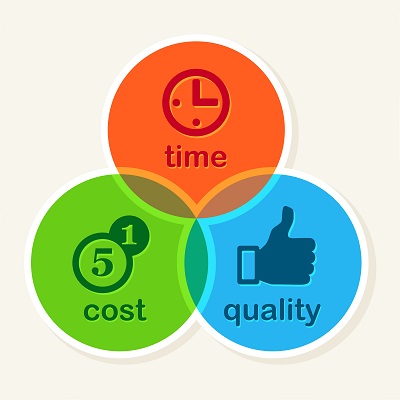
Cost is always as important as the company’s expertise. Determine whether the cost of the project falls in your budget. Unless confident on the guaranteed ROIs, you don’t want to go bankrupt buying an over expensive software that automates parts of your business. That said, you don’t have to compromise on the quality of the software for low costs either. Certain companies price their solutions for the sheer fact of overcharging to seem like a bigger and better company. Do not forget to look for hidden or additional costs in the contract, like additional fees for documents management, annual setup/ maintenance in addition to monthly support charges, in-person training, etc.
Support your Core Business Functions with Efficient KPO Solutions.
Size of your Software Project
Is your project small, medium, large or huge? Not all companies undertake any size of custom software development projects. Certain software development companies commit only to big fishes, providing them giant, multi-year, million dollar projects. These are usually famous brands and industry experts. Whereas many smart small to medium size companies take multi-year projects. Such companies’ growth curve over a small period of time shall showcase their competency and potential. Has the company been growing fast or diminishing in size or stagnant over this period?
How Passionate are they to Develop the Solution
The company to which you outsource must understand your requirement in a way you understand and aspire to. Are they as passionate as you about this project? Are they completely dedicated to making a quality product or are they just doing a duty for money they take? These are evident from the way they suggest added features which can be included, future scopes for the product, or deny with an idea that is not quite useful. However, make sure they back their opinion with proper facts and reasons that convince you about their dedication and is not just to ‘make the task easy’ for them.
What happens in the Case of Divorce?
Jon Lincoln, business development specialist at Etfile says that, “Some vendors try shady tactics by holding your data hostage (as if they own it!) or charge an exorbitant amount to sway you from leaving”. Get proper agreement on safety and security issues and how you get your data back in case you leave the vendor. Expect some charges especially if the data was encrypted, but it shouldn’t make you bankrupt in any case.
Quality of After- Sale Support and Services:
Even the most perfect solutions guarantee only 99.9999% up-time. Unfortunately, there are no 100% perfect solutions. Even though too small, there is always a fraction of the chance that things might go wrong after delivery, especially in the case of software. So make sure your vendor company provides direct access to the technical team and offer good support, maintenance, cloud-based updates and upgrades and troubleshooting services for a fair period of time after sales.
Evaluate your Software Package Now!
Take a Test Drive
Most companies these days provide a free trial to ensure the quality of the features, benefits, and usability. Ensure that the software meets your requirements, have necessary features and functionality. During the trial, feel free to ask your vendor all the questions and doubts you may have.
Your first stepping stone to establishing your goal is choosing the right custom software development company. A fault here might lead to devastating results. So, take no chance, do thorough research and study based on the factors mentioned above. Based on our experience developing and deploying custom software for a wide range of industries and organizations of varying sizes, we believe that the Best Company is that which deliver a solution blending with your business process to the highest degree, within the stipulated cost and time and without a compromise on quality!
Stay up to date on what's new
About the Author
Tony Joseph
Tony believes in building technology around processes, rather than building processes around technology. At Fingent, he specializes in custom software development, especially in analyzing processes, refining them, and then building technology around it. He works with clients on a daily basis to understand and analyze their operational structure, discover (and not invent) key improvement areas, and come up with technology solutions to deliver an efficient process. You can reach him at [email protected], Skype: tony_fingent
Featured Blogs
Stay up to date on
what's new
Talk To Our Experts
This month we are covering how creating and fostering mobile-driven digital ecosystem help grow your customer base and provide services effectively. We will also be discussing how zero code platforms ease the pain of mobile app development. Lastly, we cover what happens when Machine Learning meets the business world.
Zero-Code Platforms Ease the Pain of Mobile App Development | Business.com
Enterprises find themselves plagued with issues like apps not performing as expected, apps scoring low on user experience and more. But with the benefits of zero-code being obvious to more and more businesses, more platforms are on its way to becoming mainstream.
Where Do You Fit in the Mobile-Core Digital Ecosystem?| Clutch
With the global proliferation of mobile users, enterprises must now focus on mobile-centric solutions. Such a rapid increase in global mobile usage points to a paradigm shift in the future of digital communications.
Mobile devices now act as the medium for facilitating all kinds of communications and services within an ecosystem. In addition, their improved connectivity options and versatility makes them ideal for all kinds of digital ecosystems.
When Machine Learning Meets the Business World| DZone
Let’s discover what happens when Machine Learning meets the business world. Take a look at how it will transform businesses as well as how it will minimize risks.
Stay up to date on what's new
About the Author

Featured Blogs
Stay up to date on
what's new
Talk To Our Experts
iOS App Development: Grow Your Business With An iOS App
With smartphones and tablets emerging as the device of choice for most people, apps are in a boom phase. Businesses are joining the bandwagon in a big way, rolling out apps that offer a world of convenience to their customers and employees alike. However, while doing so, they need to be wary of losing focus.
Apps are not just another channel to execute the entire gamut of organizational functions. The most effective apps serve specific purposes, and in the process empower the business.
Businesses also need to take a serious look at iOS application development, considering iOS apps have proven to be very engaging. An average iPhone user spends about 75% of her time on apps, probably owing to iOS applications being able to leverage the advanced features and functionality of Apple devices.

Here are some ways in which you can empower your business, using iOS application.
Roll Out Customer-Facing Apps
Customer facing iOS app is a good idea, considering Apple devices, such as the iPhone, has more than a 15% share of the total smartphone market. Such apps not only promote sales but help in engaging with customer better. Marketers may send out push notifications on key milestones, keep track of customer behavior, issue special offers when a customer is in the vicinity of a store, and do more. Customers may be given several self-service options, from keeping track of loyalty points to access of neutral product reviews, and more.
Empower Internal Teams
Imagine the world of convenience when the salesperson, on meeting with a potential or existing customer, pulls out the iPhone, opens an app that draws on data from the CRM, and gather all details about the customer, right from his purchase history to open inquiries, his preferred channels of communication, and so on. The salesperson also gets highly customized tools and relevant insights, such as market surveys, reports, and more. iOS apps facilitate similar empowerment across all functional area, be it accounts, HR, logistics, and other teams.
Forge Deep Relationship with the Ecosystem
More and more businesses seek to develop apps that help the company forge deeper relationships with their ecosystem partners, such as suppliers, contractors, and others. An app that makes explicit real-time stock levels and issue alerts would prompt suppliers to make timely deliveries, and improve the efficiency of their business as well. Contractors could log into another intuitive iOS application to get a list of open projects, deadlines, billing, and more. Channel partners could also gain from first-hand access to a ton of resources, and all the information they require, without having to make follow-ups, or spend time seeking information.
Facilitate the “Internal” Customer
An iOS app could likewise benefit the “internal customer” of the enterprise. Employees could, for instance, use an internal employee app to make leave requests, access their payroll details, stay updated on everything from upcoming team meetings to office parties, and more. Such apps eliminate complicated and time-consuming paperwork, be it filing trip sheets, expense reports, or appraisal forms. With the bulk of information readily available at their fingertips, employees can focus wholeheartedly on their core tasks, improving their productivity manifold.

Streamline Internal Processes
Many enterprise apps streamline internal workings and deliver big productivity gains. Employees starting a task could hook up to an iOS application that guides them through the specific process flow, helping them complete the task without being bogged down by doing things the wrong way, or seeking instructions. The app could also facilitate electronic submissions of documents and bills associated with the task, and make sure the next in line gets a notification to process the same. The benefits are multifold and include reduced paperwork, better productivity, faster turnaround time, and cost-cutting. Still better, employees are empowered to do the task from anywhere, at any time.
Promote “Smart” Work
Apps can help employees work smarter instead of harder. A case in point: the average employee attends 62 meetings a month, wasting a whopping 31 hours in the process. A collaborative app that enables managers to set targets, notify team members of their targets and deadlines, allow team members to submit their results, and do more can eliminate a good chunk of such meetings, and save considerable time. Such app based internal communications is also a good way to overcome silos, a big stumbling block for the free flow of information.

Transform Organizational Processes
Rolling out iOS applications could even eliminate certain traditional functions altogether. For instance, a training app that delivers instructional videos, handbooks, and other resources to the employee’s iPhone could completely eliminate the need for training sessions. The cost saved in terms of arranging training resources and the trainer’s time alone would repay the investment in the app many times over. Employees could also leverage such apps to unlock training and development opportunities not available before. The impact on employee performance and commitment are worth its weight in gold.
All the possibilities come to pass only when the app development is done right. iOS developers would do well to customize enterprise apps by giving it a distinct look and feel that resonate the brand image, offer appropriate options such as choice of languages, flexibility to enable or disable certain features, location mapping and more. The ability to customize the app and the presence of value-added features make the employee feel more connected and enhance the worth of the app.
Development of iOS apps is a far more straightforward process, compared to developing Android apps, as Apple provides standardized SDKs, APIs, and IDE needed for the application development. However, Apple’s app store discards apps that do not meet its guidelines, and as such iOS app development requires a much more concentrated and focused effort. A partnership with a reputable company to develop the iOS application helps pass the iTunes test and ensure the effort invested in the app development process does not go waste.
Stay up to date on what's new
About the Author

Featured Blogs
Stay up to date on
what's new
Talk To Our Experts
Write once, run anywhere – the alluring catchphrase of Java still seems relevant. Since Sun Microsystems unveiled Java, it has remained the most popular programming language in use. Object-oriented and class-based, Java stood its ground even when the development space became saturated with a plethora of new languages. However, with time, programming languages do get phased out once newer and better platforms take over.
And then came Kotlin. The search for a tenable Java alternative reached fruition with Kotlin, a statically-typed programming language running on the Java Virtual Machine (JVM). Essentially, Kotlin stripped Java of its complexities and came up with a refined alternative that is as versatile as its predecessor.
The Czech software company JetBrains unveiled Project Kotlin in 2011 with the objective of coming up with a better alternative to Java. They looked to Scala, another Java alternative with support for functional programming, but were taken aback by its slow compilation times.
Kotlin Goes Public
In 2016, JetBrains launched Kotlin v1.0, its official stable release to the public. Kotlin immediately gained traction among the Android development community. They lauded its refined framework and faster compilation times, complete with added tool support, as a significant advantage over Java. Things gained momentum when Google announced Kotlin as a first class language for developing Android apps at the I/O 2017.
What followed was an outburst of mainstream apps all written fully or partially with Kotlin. Kotlin had everything that developers couldn’t find in Java or any of its alternatives like, JRuby or Groovy. It is concise and 100 percent interoperable with Java. Added to that, Kotlin came with extensive compatibility with Android Studio in which IntelliJ IDEA, JetBrains’ own Java IDE serve as the backbone.
With interest in Kotlin skyrocketing, global adoption rates point to a widespread disruption. From freelance developers to software development houses, the adoption of Kotlin has increased manyfold. In the Stack Overflow Developer Survey Results of 2018, Kotlin is just behind Rust as the most loved programming languages. In the near future, Kotlin could become the de facto standard in Android development.
Kotlin’s Development Philosophy Strikes a Balance
Andrey Breslav, Kotlin’s lead language designer at JetBrains highlighted that the goal of Kotlin is to serve as a general-purpose language, which is concise, adaptable and fully interoperable with Java. By giving these extended set of functionalities, JetBrains intends to push the developer to migrate into Kotlin. Plain old Java has numerous flaws and the developers at JetBrains couldn’t conceive things as they wanted. For them, greater interoperability and productivity in the language is the need of the hour to quickly compile and execute code.
When working with Kotlin, we could easily pinpoint its structural similarities with its parent language, Java. The brains behind Kotlin did not just want to create a new language, but one which is in all ways a “better language” than Java. Platforms like Scala, although they offered extensive feature list and functionality, failed when it comes to build times and tool support. Kotlin managed to tick all the right boxes and struck a balance on how an ideal Java alternative should be.
Kotlin borrows some elements from Scala to bring out a more upgraded version. In fact, one could find that Kotlin does contain certain instances from other programming languages as well. Pascal, an early procedural and imperative programming language remained fairly influential in the development of Kotlin. Certain elements of it, like parameter lists and variable declarations with the data type following the name of the variable could be found in Kotlin too.
Bringing Full-Scale Interoperability with Java
What distinguishes Kotlin from other languages is its full interoperability with Java and the Android runtime. It is easier to call existing Java codes from Kotlin and Kotlin codes from Java. Developers could use all the Java frameworks to build highly responsive and feature-rich apps. Both the platforms, Kotlin and Java, identify each of their classes as their own, which enables seamless interchange and compatibility. This interoperability with Java could be demonstrated with a few lines of Java code as listed below:
MainActivity.kt
class MainActivity : AppCompatActivity() {

override fun onCreate(savedInstanceState: Bundle?) {

    super.onCreate(savedInstanceState)

    setContentView(R.layout.activity_main)

    // accessing "getSum"  method from a java class

    val result = SumHelper.getSum(1, 2)

}

}
SumHelper.java
public class SumHelper
{

public static int getSum(int val1, int val2){
       return val1+val2;
}
}
Fig 1. Kotlin – Java Interoperability
This extensive interoperability of Kotlin with Java owes it to the fact that JetBrains worked on all the limitations of Java and sought to bring out something more refined. Together, the team worked on a new version that is different but still has Java as its backbone. Besides, Kotlin fully supports Java 6 and 7, the current versions used by Android developers.
Java Lacks Key Elements that Current Developers Need
Java has been around for more than two decades. Developers still continue to build great apps using its highly versatile and robust framework. Like every language, Java too has its limitations chiefly because it is old. Even though numerous updates were released over the years, they failed to address some essential problems associated with coding using Java.
When it comes to Android development, Java lacks support for key elements like lambdas, streams, method references, etc. Null Pointer Exception continues to be a fundamental flaw of Java, particularly in the way it handles them. Null references in code often referred as the Billion Dollar Mistake is the key reason why several apps written in Java still undergo occasional crashes.
Moreover, Java is verbose and takes a lot of code to get even a simple program up and running. The APIs involved in Java get rather complicated as the developer is forced to go through multiple steps, which take more time. Kotlin, on the other hand, requires lesser coding than Java by reducing both redundant and boilerplate code, making development a whole lot faster.
A Class Declaration in Java
public final class PersonJava {

private final String name;

private final int age;

private final String email;

private final long phone;

public PersonJava(String name, int age, String email, long phone) {

this.name = name;

this.age = age;

this.email = email;

this.phone = phone;

}

public String getName() {
return name;

}

public int getAge() {
return age;

}

public String getEmail() {
return email;

}

public long getPhone() {
return phone;

}

}
In Kotlin
data class PersonJava(val name: String, val age: Int, val email: String, val phone: Long)
Fig 2. Side by Side Comparison of Kotlin and Java Code
Lesser code means developers can write a program in lesser time and the code has greater readability combined with fewer chances of bugs or manual coding errors. Memory leaks are also a frequent problem with Java due to the way it implements anonymous inner classes and nested classes.
Kotlin Edges out over Java in Conciseness
With Google’s official endorsement, Kotlin has become the most commonly used language for Android development. The simplicity and robustness of Kotlin means both proficient and novice developers can write and debug applications with ease. Generally, Kotlin requires fewer steps or ceremonies when writing code, which simplifies the process altogether. Compared to Java, Kotlin has:
- More concise class declarations because of primary constructors and properties
- Robust type interface eliminates the need for repeating the same types again
- Function parameters with default values mostly do away with delegating overloads
- Availability of top-level functions substitute static utility classes
Being more concise than Java, Kotlin edges it out when it comes to ease of coding. It takes a redefined approach to programming to untangle several complicated workflows that developers face when using Java.
Meanwhile, Kotlin’s less verbose coding decreases the time taken to code and enhances the readability while also reducing the chances for any errors or bugs. Writing lesser code means developers can reduce the number of boilerplate codes while improving their productivity and avoiding tediousness.
Kotlin is Nothing but an Improvised Version of Java
A notable benefit of Kotlin over Java is that it does not sway from being completely independent of the latter. In fact, Kotlin is an improvised form of Java, with all its limitations sorted out. Kotlin still relies on Java libraries but refines them all together to improve their functionality.
In the existing Java ecosystem, Kotlin manages to integrate each of its elements like the Java libraries, APIs and frameworks. In fact, Kotlin incorporates Java’s procedural and functional programming aspect at the right balance. Besides, its lightweight framework combined with modern features make it a refined version of Java that is in every way better than the original.
Android Development Gets Swift and Efficient with Kotlin
Kotlin aims at being pragmatic and productive at the same time all the while serving itself as a general purpose language fully compatible with Java. Owing to its compactness, Kotlin has proved itself a workhorse among the Android development community. It steers clear of all the limitations of Java with its full interoperability with the existing ecosystems of libraries and code. Here are a few reasons why Kotlin remains the ideal platform for Android development currently.
Developer Friendly:
Novice developers can easily learn and adapt Kotlin owing to its simplicity. It takes less time to learn to code with Kotlin due to its uncomplicated learning curve. Developers already proficient in Java would appreciate the familiarity of its coding process and streamlined approach to programming. Meanwhile, the availability of existing Java libraries, frameworks and lesser coding, amps up the speed of coding, allowing developers to conceive applications faster than before.
Excellent IDE Support:
IntelliJ IDEA, JetBrains’ own platform serves as the base for Android Studio and thus offers extensive IDE support to Kotlin allowing developers to seamlessly build apps. This ready integration with the IntelliJ IDEA framework enables access to its wide range of productivity tools. Configuring Kotlin plugin could be undertaken within minutes in Android Studio. Besides, every single process of coding in Kotlin from writing, navigation, debugging and unit testing happens effortlessly with the improved support offered through the IDE.
Enhanced Versatility:
Kotlin was designed to address some of the fundamental flaws in Java and it did well. Integrated into its framework is a built-in null checking feature that helps avoid frequent errors. Kotlin’s compiler also includes a feature that automatically corrects mistakes in the code simultaneously while it is being written in the console. These rich features negate several issues in Android development giving developers a clean and versatile platform to work with. Besides, it allows developers to streamline the production process through its features like search and auto-completion of code.
Open source:
JetBrains announced open source status under Apache 2 for Kotlin in 2012. The Java to Kotlin converter tool can seamlessly convert an existing Java project into Kotlin to save on time and work. Besides, it is completely free to use for any developer wishing to expand their skill set or get acquainted with its refined framework.
Summing Up
Every new language introduced into programming has the potential to disrupt it. Developers, when faced with limitations while working on their existing language readily adopt a new language that mitigates these issues. And Kotlin proved to be just that with Java. Its swiftness and concise nature proved instrumental in its widespread adoption among the Android development community.
For them, Kotlin seemed a better Java and its great interoperable support combined with expressive nature meant they could code just like they did with Java but in a fast and efficient manner. That does not mean that it will completely phase out the former. Java will still be around as a versatile language for years.
In times to come, newer versions of Kotlin gets released, which would be more developer friendly and complete with added features and support. More apps will utilize Kotlin to develop Android apps and there will come a point where it will ultimately substitute Java. Moreover, the steep adoption rates signal an increasing prominence of Kotlin for Android development in the near future.
How to Kotlin [Source : Google I/O ’18]Stay up to date on what's new
About the Author
Featured Blogs
Stay up to date on
what's new
Talk To Our Experts
Opting for the Best Property Management Software
Leasing out condos or premium apartments to buyers does not end with the handover. Instead, it goes a long way almost in a cyclical manner to oversee the operations and management via close monitoring. Dynamically managing multiple residential or commercial real estate establishments could, in fact, prove to refine it all together as well as endow a consistent experience to the tenants.
The landowner or a real estate company benefits from able to supervise every cent of property they own and leases. It equates to improved productivity enabling the owner to gain a competitive advantage by striving for customer satisfaction at every fronts. This could be a rather not brief definition of property management. And with technology like software integrated into it, we can christen it aptly as property management software.

Investing in an apt property management software elevates and rethinks how realtors or landlords manage their swathes of property. Whether small modular condos, high rises or dedicated commercial hubs, property management using software takes it to the next level. The need to switch becomes more prominent as conventional methods have often failed to demonstrate exemplary levels of property management.
Software alters it into a convenient dashboard, where the owner could simply manage, monitor and operate day to day activities linked to a piece of real estate. Ensuring timely rental payment, maintenance and upkeep, searching tenants for occupying could all be effectively carried out using a property management software. The key is to opt for the right one since the wrong choice would end up curtailing existing practices by cutting out efficiency.
Clinging to Conventional Practices Risks Lagging Behind
As it turned out, property management involves a lot of hurdles that leave the owner frustrated and stressful at times. The job profile when it comes to managing multiple portfolios of real estate assets dispersed across varied locations coupled with maintenance requests, tracking lease expires, routine inspections, ensuring regulatory compliance, responding to inquiries concerning vacant properties and lot others would be equally challenging.
Extensive documentation remain a core aspect when it comes to property management. Besides, the above-mentioned aspects when not managed appropriately could add up to the inefficiency of the job, which reflects in the productivity and performance. Property management software is new and adopting it will definitely warrant less clutter involved in the process. Still, adhering to conventional practices like paperwork or documentation proves time consuming and cumbersome.
The right property management software makes life easy for property managers, improving their productivity and contributing to improved customer satisfaction in a big way. In fact, the right software becomes a valuable source of competitive advantage, enabling the firm to gain a one-up on competition through efficiency improvements and by spawning innovative business practices.
However, the trick is to have the right property management software on hand. Here are some ways to identify and deploy such software.
Good Property Management Software Distinguishes with Ease of Use

The whole purpose of deploying software is to ease things. Software with poor UX, and or convoluted processes, which is a pain to operate, defeats the very purpose. The best software has a smooth interface and navigation, and simple, yet powerful dashboards.
Handy property management software automates routine processes related to rental collections, renewals, and other repetitive functions.
It offers basic functionality like search with multiple fields such as tenant name, property id, or any other relevant identifier, to access the required information easily, and throws up what is required in an easy-to-consume way.
The software is now delivered as mobile apps, making it very easy and convenient to get access to the latest and relevant information on the field and capture field-based inspections as well. Responsible design or a mobile-first design approach improves the ease-of-use of such mobility solutions.
Good Property Management Software Feature Robust Technical Stack
Enterprises vary with regards to their technical maturity. Some enterprises may be perfectly at ease experimenting with newer but unproven technology, which may offer huge benefits but also come with the risk of crashes. Other enterprises prefer stability over potential. Either way, the cloud is fast becoming indispensable.
Cloud-based software spares the cost and hassles of installing software or managing the databases on in-house servers. The data resides on the Internet, enabling anywhere, anytime access, from any device. Besides, it spares enterprises from cost-center activities such as taking backups, updating the code at regular intervals, and other administrative hassles.
Property management firms placing their key data such as rental information, financial reports, documents and everything else on the cloud can streamline operations, thus saving time and reducing costs.
Sync with Technical Capabilities Enhance the Dynamism of the Suite
Smart solutions, especially mobile-based solutions leverage the latest that technology has to offer to enhance the capabilities of the property management suite. A case in point is a messaging system to engage with landlords, tenants and service providers on a direct, real-time basis, to close and resolve issues or deals quickly, and with clarity.
Such a system could either be custom developed or more easily achieved by seamless integration with Skype or some other messaging tools. Similarly, many property management suites integrate with QuickBooks for accounting.
Likewise, good property management suite improves internal processes, making the overall business more efficient. The easy tracking capabilities on offer make stakeholders, especially service providers, more accountable. An optimized navigation system renders role-clarity to employees and agents.
The Feature List is a Double-Edged Sword

A lengthy bucket list of features is no indication of having the right software. In fact, an application with too many features may become bloated and deliver poor user experience. The trick towards deploying the right software is ensuring it has all the relevant features required for seamless operations, nothing more, and nothing less. All things aside, a decision to opt for a reliable property management software starts with assessing the needs.
A realtor or property management company owner first need to consider, whether software indeed can prove to be an advantage and uplift their business process. They need to figure out up front what they want the software for, in terms of their biggest challenge, and prioritize the functionality list towards resolving such challenges.
One could ask themselves some noteworthy questions in the interest of choosing the right software such as:
- What are some key issues faced and how would software resolve each of them?
- Is mobility an option for the work – which require the software to come in a compact and handy mobile app version?
- Are self-service portals needed in the software to serve the needs of customers like residents or clients?
- Is the software having accounting features and capable of dealing with large volumes of maintenance requests?
For instance, if the biggest challenge is managing rentals, make sure to co-opt features that alleviate specific challenges to this end. Other features, such as compliance reporting or communication capabilities are handy add-ons, and should not be the core focus of the suite.
Mobile apps especially work well for specific purposes, with different apps for different objectives of stakeholders. For instance, a property manager could have apps helping them keep track of rental expiry, invoice and payment tracking, maintenance schedule and more. An app for a field service executive could have features such as open service tickets, directions to get to the property, and more.
Apps for tenants could integrate features to initiate maintenance requests, pay rent and fees online, auto-renew lease, and more. Above all, it should integrate stringent security measures such as two-factor authentication or high-end encryption to protect vital customer and company data from any intrusion attempts both internal or external. A comprehensive property management suite could integrate all functionality, leading to seamless integration and better coordination.
Work Orders are Core to an Intuitive Property Management Suite
Intuitive property management software facilitates creating and managing work orders, either through a ticketing system, or some other method. Successful deployments integrate the entire workflow connected with the process, right from raising the issue, assigning work to the relevant service provider, keeping track of work execution, and invoicing. This spares property managers from the hassles of manual monitoring and tracking.
Advanced systems come with the ability to incorporate images and videos, facilitating visual work orders, property viewing, and more. Such innovative functionality helps property managers get more work done without the time-consuming activity of making site visits.
Reporting Capabilities are Integral to Software for Property Management
Another crucial consideration for sound property management software, regardless of the functionality, is the reporting capabilities on offer. The ability to generate dynamic reports easily saves property managers time and enables them to stay on top of the game. The greater insights on offer contribute to improved customer satisfaction as well.
The best software for property management facilitates dynamic reports, in the format of choice, rather than straight-jacketing the reports to a few fixed forms. An intuitive software integrates report with analytic capabilities, allowing property managers to gain insights from raw data in easy-to-consume actionable format.
The property manager’s life will become considerably easier if the software integrates full double-entry accounting, with flexible reports. A spin-off benefit of such functionality is the ability to meet various financial and regulatory compliance requirements.
The Best Property Management Software is Optimized for the Budget
Many enterprises get carried away by the potential on offer and ignore the crucial cost competently. There is no free lunch, and even supposedly free open source software comes at a price to develop and customize. The costs for server space and hosting, and ensuring security is another crucial consideration to decide up front. Successful property management firms engage smart developers who can optimize the features and functionalities within the constraints of the available budget, without sacrificing quality.
Professionally managed real estate investment market is worth $8.5 trillion globally as of last year, but it has traditionally lagged behind in technology. However, innovative companies are changing things and technology is all set to improve the owner-tenant experience significantly via a major technological disruption soon.
Selecting the right software is both a science and an art. Apart from the science of carefully evaluating the feature list and the technical specs, comes the challenging, yet often underestimated “art” of identifying vendors who “fit.” Any software, no matter how robust or comprehensive requires continuous support for upgrades and bug-fixes.
Moreover, implementation is often a challenging exercise, involving training end users and documentation. Choose a software vendor who is competent and has proven their worth in all these facets.
Stay up to date on what's new
About the Author

Featured Blogs
Stay up to date on
what's new

