Category: Business
For a long time now,there has been a seemingly prevalent trend in the world of business. Leading companies or market leaders often fail to stay on top of their industries, as technology or market conditions suddenly change.
For example, Xerox was once the market leader in copier machines, but later on, Canon took over the small-copier space. Wal-mart took over the once popular Sears.
In the software industry too, there was once a time when Apple computers brought in and popularized the idea of personal computing and literally established the standards for user-friendly computing as well. But they went behind by almost 5 years, in the introduction of portable computers from the market leaders in this space.
As you can see, this has been a consistent pattern in most industries. Established companies often invest heavily and aggressively in technologies that are essential to retain their existing customers, but seldom foresee the directions of their future journey together. They fail to focus on investing in certain other advanced technologies that might be important for their future customers. Hence even though they are successful in retaining their current customers and dominating the market, their slack on meeting future demands of customers brings them down.
Why does this happen?
The real reason for losing the wave
From a broad perspective, it may be the result of several issues combined, like a lack of proper planning and execution, short-term investment issues and internal issues too, such as bureaucracy, monotony, inefficiency and the like. But the main reason for this pattern is actually right at the heart of the paradox. All established companies fall prey to one of the most popular and undeniable principles of management – being close with customers.
Even though most business managers have everything under control, customers have a certain dogmatic power over a company’s investments. Businesses always make it a point to direct their activities to what customers want. Whether it’s the introduction of a new product, or new technology or venturing into new channels of distribution, the first priority of businesses is to look up to what customers want – is it something that their customers would want? Is it going to be profitable? Is the market big enough? – the questions are many.
This is how most businesses fall into the cycle. It’s fine as long as the customers are satisfied. But the problem arises when the customers reject a certain new technology or product, because it doesn’t meet their needs as effectively as the company’s current product or technology. In the end, they find themselves being burned by the very technologies or products that their customers led them away from.
From an ongoing study of technological changes, it has been consistently found that most established companies stay ahead in their respective industries, in developing new technologies that address the performance needs of their next-generation customers. However, industry leaders don’t really focus on being in the forefront of commercializing new technologies that don’t meet the initial demands of mainstream customers and focus on appealing to emerging markets alone.
In order to remain on top, businesses need to identify those technologies that serve the next-generation needs of customers, and pursue them only while keeping themselves protected with the technologies and processes that serve mainstream customers as well. There is only one solution for it – creating organizations that remain independent from the mainstream business.
Striking that fine balance, takes time, effort, and most importantly many failures. We might be able to see more businesses in future, embracing this approach.
Stay up to date on what's new

About the Author

Featured Blogs







Stay up to date on
what's new



Talk To Our Experts
Up until recent times, small businesses had often struggled to grow and scale their operations. This was mainly because it involved heavy investments in IT, and small businesses couldn’t really afford it.
Large businesses always used IT to their advantage – to run as well as maintain day-to-day business operations.
Hence, there has always been a huge difference in the way IT is used for growth and daily operations by small and large businesses.
Thanks to new innovations in IT, this huge gap is now much smaller. Small businesses now have better opportunities to improve and scale more effectively, without being tied down by the past constraints.
Here are some ways in which IT innovations are changing the game for businesses these days:
- Faster revenue generation – Business enterprises can generate more revenue and grow in a number of ways. They could consider introducing new products and earning new opportunities or they could use their already existing client base to tap new clients. Both of these methods call for an effective and timely socialization or onboarding process for their new clients and partners. Inefficient onboarding processes are often one of the main reasons that keep small businesses from scaling effectively.
With new IT innovations like cloud computing, onboarding processes are no longer the burden of IT. As a matter of fact, an organization’s IT team can enable their business managers to set up their own secure connections easily. Such fast and easy data connections can literally shorten the duration of onboarding processes to a matter of a few days. This in turn, leads to shorter time for conversion of a new client into solid revenue. Thus, it facilitates faster growth of the business as well. - Easier advertising – Traditional ways of advertising often involved the television, newspapers, the radio and even magazines. These demanded pretty large sums of money, not to mention the hours spent in brainstorming ideas as well. All of these had their own limitations in reach too. Now with the latest social media outlets, businesses can get their sales in front of potential customers, in a matter of minutes, that too without burning a hole in their wallets. Social media channels like Facebook, Twitter and Pinterest can really help businesses in establishing their names out there effectively without having to rely on bulky advertisements. Businesses can even have mobile applications to get their products in the hands of their possible customers directly. Put together with interactive promotional offers and contests, they can have their sales shooting up in no time.

- Better business networks – Large businesses used to have their networks built around other large businesses as well as a number of established vendors and suppliers so as to make their products available to a large mass. However, small businesses often had their networks limited to other small businesses alone.
Such limited networks hinder an organization’s ability to scale effectively. Thanks to the latest technology innovations, this is not the case anymore. With the right software solutions, any business entrepreneur can collaborate with any supplier – big or small, and integrate them into the supply chain, even if the suppliers do not have the necessary technology for it. Finding and building connections can be entirely automated these days, making the business networks much wider. - Increased ROI – Growth for small business always meant heavy investments in IT. In order to keep up with their competing big players, they simply had to make IT investment a priority. But they could never afford it.
With cloud-based technologies these days, this problem is solved to a great extent. Small businesses can now have access to advanced IT capabilities without making any huge investments in IT infrastructure or hiring an entire IT department. Scaling with the help of cloud technologies can also eliminate the costs involved in maintenance and hardware, while allowing them to sustain their improvements, without getting broke. This helps them bring up their ROI and grow effectively too.
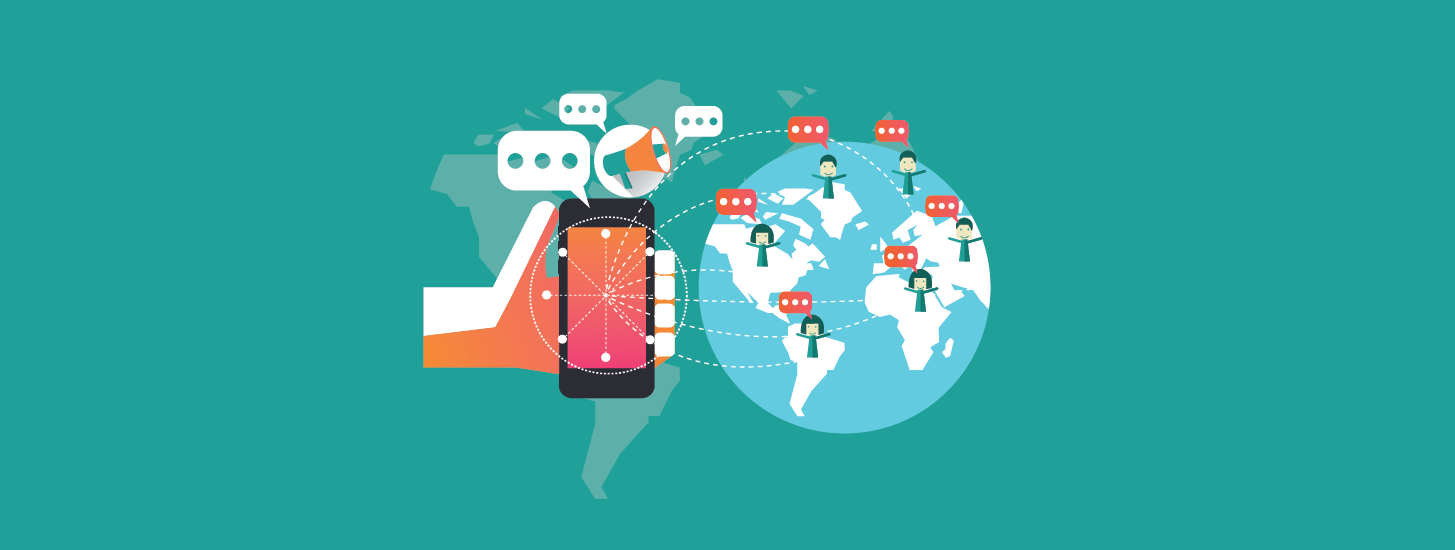
Growth is no more a pain point for small businesses. IT has literally changed the game for them and has almost leveled their playground with large businesses, equipping them with a number of opportunities and tools to compete and win.
In what other ways do you think IT is changing the game for small businesses? Share with us in the comments below.
Stay up to date on what's new
About the Author
Featured Blogs
Stay up to date on
what's new
Talk To Our Experts
We have all heard of a lot of business professionals talking about “aligning IT with their business”. Have you ever wondered about the relevance or meaning of that statement?
While alignment means to bring something in line with something, it implies that the technology that a business adopts should be in line with its business, thus putting the business in the frontline.
Now, not that such “alignment” is not important, but in the current business scenario, it just won’t be enough. When business takes the lead, it is supported by IT, but the strategies are still in the hands of the business. It basically sets the pace. This takes away the effectiveness of IT to a large extent.
“IT can do way more than just being in line with business”
Over the years, IT has proved how it can improve the efficiencies of people and organizations, which literally leads to growth. Thus, the real need at the moment is for IT to lead the way, take control of business goals and initiate growth efforts.
The role of the CIO in empowering IT
Most businesses adopt technology for their business, with the intention of automating work and increasing efficiencies. Why? Because of the idea that there is a better, faster and more efficient way of doing work and that IT can enable it.
But halfway through adoption, many organizations today lose this sync and the effectiveness of IT gets affected. It somehow fails to deliver the expected efficiency increase.
It is up to the CIOs to clearly define the connection between IT and business growth, and lead his team, with a progressive attitude.
Benny Kirsh, while he was CIO at Kyphon, led the IT team, that literally drove the deployment of a quality assurance system for the compliance of FDA regulations. This leadership initiative of his, helped in reducing the time-to-close complaints by 35% and also increased the on-time training of users by 42%. It basically included an automated documentation system along with version control, providing a compliant working environment, thus helping in reducing discrepancies during FDA audits. Overall, the whole system helped in increasing the sales as well, while at the same time eliminating expensive FDA issues too.
Thus, Benny Kirsh was able to lead his IT team towards being proactive and resolving issues, while also encouraging them to come up with new ideas on ways to generate more revenue.
Likewise, CIOs need to work in close coordination with their IT teams, guiding and leading them towards new innovations and implementations to spur business growth rate. They need to create awareness among team members, about the importance of IT and how it can impact business.
An innovation culture
The CIOs who lead the IT team of an organization need to be true leaders so as to facilitate IT to drive the growth of the business. As mentioned before, it is up to them to inculcate habits of being proactive and creative as well, among their team.
Now true leaders are not the ones that simply sit down and pass orders. They get into the heart of things, take risks and put themselves in with the rest of the crowd. Once, a particular effort towards innovation becomes even a tad bit successful, newer ideas and concepts can be easily initiated and taken forward. But in order to get there, it requires more than just a system of assignment and accomplishment of duties.
IT must be made to be a part of business. CIOs need to bring about a culture of innovation by allowing, and as a matter of fact, encouraging their teams to play with new technologies and induce creativity. Discussions and whiteboarding sessions may also be used to make people think out of the box. It is important to create a work environment that encourages the generation of new business ideas.
IT has to be given the space to read, learn and come up with new ideas. Otherwise, they will only stick to completing their tasks, thus limiting the scope. It is all about the culture and CIOs need to take care of it.

IT is more than just a “cost-center”
IT in a business enterprise is often considered for certain specific goals alone. This is what limits their effectiveness as mentioned before. They are more than just a cost center. They have the potential to drive the business as a whole. When made a part of the organization culture, IT tends to bring more efficiency. Even in-house tools can do the trick.
For example, a simple comprehensive data analytics tool such as a dashboard can improve performances and efficiency drastically. They can help save a lot of time and money and impact a great deal in decision making as well. Have a look at Corporate Dashboards: Means to Save Time, Money and Reputation to know more.
Such tools along with the right culture for innovation can work out in the best way for your business. Rewards and appraisals in between for the best innovations can also go a long way.
Be open to every new innovation and let IT take your business forward.
Stay up to date on what's new
About the Author
Featured Blogs
Stay up to date on
what's new
Talk To Our Experts
Remember? Smartphones have been out only for 8 years, and the number of networked devices today already outnumbers the number of humans on Earth. Similarly, the number of connected devices on the Internet of Things will soon outnumber the people by over 7 to 1, accounting to over 50 million connected devices by 2020, ranging from cars (90% of cars expected to be online by 2020) to cows. And this is a 285% increase over the 13.4billion connected devices in 2015. See how fast the Internet of Things is unfolding.
IoT impact on business
True that IoT promises a ‘Smart’ everything, but it delivers more than wickedly intelligent solutions for businesses as is evident from the following predictions:
- The Largest Market: In 2019 IoT market will be double the size of tablet, PC, smartphone, wearable and the connected car markets combined.
- Increased global spending: By 2019, Internet of Things devices, connectivity solutions and services will account to $1.7trillion value added to the global economy, from $656 billion in 2014.
- Increased revenue: In 3 years, device shipments will grow to 6.7billion for a Compound Annual Growth Rate (CAGR) of 61%. IT or Software firms and infrastructure companies will have the massive share of this revenue.
- Increased efficiency and decreased cost: High productivity in low cost will be the major outcome of the widespread IoT.
While it seems a smart idea for an ultra-connected world, its benefits and implications for business are not often so clear to all. Studies show that many small business owners still haven’t taken IoT seriously or started to plan their business around it. So, as a business owner, what and why should you learn about the Internet of Things? How tweaking your business on a micro-level for the Internet of Things will help it operate and grow on a macro level?
IoT benefits for Businesses
Here’s how businesses will realize the benefits from a totally connected world:
- Real-time operations make things more efficient, improves productivity
Imagine if the point-of-sale devices on a retail shop are connected to the warehouse and analytics systems, the process of managing and replacing the stock becomes automatic, without the need for a staff to manually look into the matters. The cycle thus becomes very efficient and time-saving. This efficiency in long run will bring numerous cost benefits to businesses. Businesses can similarly automate every corner of their processes with smart devices, machines or systems that are connected and can interact with each other to accomplish tasks. This will eliminate the need for manual interventions at every phase, having to be physically present at locations, or having to make time-consuming trips, thus making operations smart, fast, and efficient. - New Business opportunities
The Internet of Things will require businesses to change their existing processes and practices to be more efficient. This will in turn require many new devices (that can connect to the internet), equipments, and services, which will help businesses navigate smoothly through this change to the ultra-connected landscape. Industry experts say that hundreds and thousands of unique business opportunities will rise from the IoT growth. To name a few would be, solutions addressing real-time demands, needs and threats, personalized services for customers, improved customer services, accurate and effective forecasting, improved process optimization and the like. - IoT is no joke with these influential investors
Highly influential and powerful groups have been supporting the Internet of Things massively, including the British government that has invested £73 million in IoT already. Internet of Things has turned the next big investment area for the industry giants, who are scrambling to invest and grab their shares from this market. Though the market poses high-security concerns and challenges, investors have their eyes fixed on the gigantic money-making opportunities here. Global investments in IoT services are forecasted to touch $ 235 billion in 2016, a 22% increase from the previous year. Giants like, Google, Apple, IBM and other deep-pocketed investors behind it probably hint how their businesses are set to bloom with IoT. - Greater consumer impact
The Internet of Things will make things extremely convenient, efficient and will provide tangible benefits for consumers- something that will directly affect every business. The positive impact of IoT on customers, in addition to its impact on internal operations in the business, will simply make processes great. For instance, keyless access control devices fitted in rental houses allow customers to inspect rental properties of their interest conveniently, by allowing access to houses with unique codes sent to their mobile through the real-estate app. The customer thus has no overhead of waiting for agents to deliver the keys, nor does the agent have the headache of taking all the customers through the house-inspection process. - Automation will replace some jobs
For businesses, it would be better to say that the kind of jobs will transform, and it is not simply vanishing jobs! Automation would replace some jobs and at the same time, create more requirements for skilled personnel who know about the Internet of Things, the latest technologies, its vulnerabilities, and security factors. Of course, the parts that can be mechanized will get automated, but will require more smart human brains wherever required.
- Smarter ways of Marketing
We will see less of those lazy, old-school advertisements, where there is no actual respect for the customer or his money. The big brands will start creating smart, relevant, valuable ads that are highly personalized to each individual and is worth to them. For instance, in a futuristic IoT connected mall, a model in a shop’s billboard may call out your name to let you know about an offer on ‘something’ you are interested in. Similarly, there are tremendous ways marketing can get really valuable and personal. - Don’t worry, IoT isn’t appearing overnight to make your business obsolete
The Internet of Things is not a trend appearing overnight, that will come and make your businesses practices outdated in a few hours’ time! Rather it is developing with your business gradually, over time. Remember how your business was 10 years before? Since then, you have probably invested in technologies like, mobile/smart devices, wireless internet, cloud storage, analytical software, virtual servers and more. If you did, then you are adapting to the changing trends and being a part of it positively. Developments will be gradual; you just need to pick up the pace, think in advance, and plan for the future.

As we see, Internet of Things is ultimately about services and a lot many solutions and not just about the ‘number of connected devices in the network’. IDC predicts that in 2018, when 22 billion devices get installed in the network, it also drives the development of more than 200,000 new IoT apps and services.
Think such an app or solution can give your business a forward thrust in the current scenario? Don’t waste your time thinking, take your thoughts forward, make an IoT plan for your business now and give it life. Contact us if you need further help figuring this out.
Image credits: IP Watchdog, IoT revolution expo
Stay up to date on what's new
About the Author

Featured Blogs
Stay up to date on
what's new
Talk To Our Experts
In the wake of the age of mobility, and increasing demands for high-quality web and mobile applications, DevOps is fast becoming the most reliable and preferred strategy for most organizations. It’s cross-functional collaboration and speed are making it more like a go-to strategy, as it enables quick delivery of software solutions, which is precisely what is needed in the current business scenario. Moreover, as businesses are in the process of digital transformation around the world, an agile environment is only a necessity, as a lot of business aspects linked to the transformation process like growth, customer loyalty, and satisfaction, competition differentiation etc., need to be taken care of well. DevOps helps in creating such a responsive IT environment, enabling organizations in rapid development and deployment of high-end software solutions.
But how far is DevOps successful? How can an organization judge for itself whether it’s DevOps initiative was, or will be successful? Sure, a lot of organizations are following it, but given the transformational scenario that most organizations are in, it could be difficult to measure its success, because DevOps by itself is not exactly a formal framework and it doesn’t provide a lot of guidance. Organizations simply have to learn into it.
There are some metrics or elements that accurately help in measuring the success of DevOps. Most organizations make the mistake of measuring a number of elements, which often may not be necessary and retreat to ones that can be easily collected. But, the issue is that some of these metrics that matter for DevOps may not be as familiar to organizations. For example, the speed of deployment, rate of change and the like are metrics that are only applicable to DevOps, which in turn is a comparatively new concept for organizations.
So what are the metrics that should be considered for DevOps?
The elements that matter
Importantly, we need to consider people-centric metrics, and process and technology centric metrics as well for DevOps. Out of these, people-centric metrics are probably the most difficult to collect, but often prove to be the most useful. They can actually be one of the most powerful influencers on a DevOps program. Hence, internal metrics like staff training and retention rates should be strongly considered.
When it comes to
When it comes to process metrics, we need elements that help to measure the effectiveness of interlinked processes throughout the delivery process. It helps to see if the collaboration is effective. It also helps to identify deficiencies within the processes that need more work.
Technology metrics are those such as uptime and capacity to support expected web traffic, which basically help in reviewing the technologies used in the DevOps process. It also includes insights derived from failures or errors like failed releases, code defects and the like.
Another important thing to note while determining metrics is to sustain a comprehensive or holistic approach. Sticking to just one or two aspects of measurement like operational or developmental metrics, may not provide the required results. As a matter of fact, there are chances of it having a negative impact on behavioral improvements in the organization.
To start off, here are a few dimensions which can be used to measure the effectiveness of DevOps:
- Collaboration and sharing – This literally forms the base of a DevOps program and is hence the most important measure. They help in judging the acceptance or resistance to the program, on an ongoing basis, which is a valuable indicator of the effectiveness of DevOps. As mentioned before, some of the metrics in this dimension might be easier to collect such as staff retention rates, training, and turnover, while others like employee morale might be more difficult. Another aspect to look into here, is how metrics in other dimensions are affecting elements in this dimension. For example, how far are MTTR (Mean Time To Repair) changes affecting employee morale, retention, absenteeism and the like. Automated surveys and other means to get employee feedback are other areas that may be considered for this dimension.
- Efficiency – This dimension mainly focuses on developmental and operational aspects. The capacities and capabilities. Moving from the traditional ratios like server to admin, businesses are now using customer-centric ratios like FTE (Hours worked by a Full-Time Employee) to customers. This value is expected to increase in the coming years, as more enterprises are now moving to automation and the cloud. Other metrics such as examining costs on an application basis and cost of release are good measures in improving data center efficiencies.

- Quality – This dimension focuses on elements related to service delivery. For example, metrics like percentage of applications rolled-back because of code defects. Now this metric could initially be high for organizations that have just begun on their DevOps initiative. This is probably due to extra time required for the purpose of making the new processes effective, and other related things. These metrics might give other useful insights when combined with other indicators. For example, the rate of rollbacks when combined with the change volume indicator, could provide more important insights.
These are some other metrics in this dimension:
Cycle time – time required to complete a stage or several stages within a project
MTTR – average time taken to restore a service or repair a defective part

- Business value – This dimension is focused on external things – like the impact of DevOps on meeting business goals. It includes elements like customer value or loyalty, time to market and the like. The lead time too provides businesses with an analogous metric that helps to know how well DevOps is meeting the need to deliver high-quality software services fast. This is specifically important as a long lead time may mean more defects in code and issues in testing.
The Net Promoter Score (NPS) is another important metric, which is a simple method to measure customer loyalty. Even though this measure has been traditionally used for marketing purposes for a long time, customer loyalty is also affected by the fast and timely delivery of software services through high-quality web and mobile apps.
All these metrics contribute towards analyzing the effectiveness and success of DevOps. Keeping track of these, can help an organization in deciding whether to continue with the program or do the needful to make it further effective.
Image credits: Prashant Arora’s blog
Stay up to date on what's new
About the Author
Featured Blogs
Stay up to date on
what's new
Talk To Our Experts
If you thought “digitizing” your business was all about incorporating some kind of technology into your processes, and that replacing your people and papers with technology would do the trick, then you are in for some new information. That’s right.
Digital business transformation has more to it than you probably imagined. It is more about doing things in different ways and producing new and improved business designs, all with the common goal of blurring the lines between the physical and virtual worlds.
Digitization is not just dehumanizing or mechanizing work
Most people understand digitization to be either an extension of automation or pretty much the same thing. But according to Gartner, the goal of digitization is to create and deliver new value to customers and not just improving the quality of already existing services.
For example in a hospital, nurses and doctors use clipboards and forms for access to patient details, to jot down further medicine details and the like. Merely replacing these paper forms with tablets and other devices is not digitization in itself. Internally, there are improvements in terms of efficiency and effectiveness, when compared to paper-based manual transcription and for patients too, the quality of already existing care is improved.
Though there are a thousand benefits to the entire health organization by doing just that, like better accuracy and speed while entering data into the Electronic Health Record systems, it does not actually count for digitization as here the patients do not experience any additional value.
Instead, what if the entire care and control system is redesigned with the help of smart machines and the Internet of Things (IoT)?
The smart devices can be programmed to do most of the data collection, analysis and monitoring of the patients themselves, which leaves only the talking, the touching and empathizing to be done by the nurses – basically what we humans do best. The devices can monitor the patient’s health conditions continuously and keep checking for any vital signs of discomfort or variations, and alert the nurses and doctors well ahead in case of an issue.
Technologies like, hands-free conversational interfaces, can be used for data entry in hospitals, rather than typing in the data manually, thereby utilizing what comes naturally to human beings to make work easier. All these technologies help them in being proactive in their approach, thereby delivering more effective care and the end result is thus, better outcome for the patients as well as the doctors.
So, it is evident now, that digitization is not just dehumanizing or mechanizing work. It is rather a way or means for people to go back to their more “natural state”.
Digitization is not just dehumanizing or mechanizing work. It is rather a way or means for people to go back to their more “natural state”
Letting humans revert to what they are best at
With all the smart devices that can think for themselves in place, you might wonder, “so what is the need for people or what is our role in an organization?”
It is not about completely eliminating people from the scenario or taking them out of the processes. It is more about redefining their roles and getting them to do what they are best at. That way, they don’t have to be stalled with other tasks like data entry and paperwork, that bring down their efficiency and productivity.
Janelle Hill, vice president and analyst at Gartner says, “We now have the ability to use machines to support and augment people to help them realize their potential, not have them bogged down in paperwork and systems data entry. We need to think about how to identify the right work for the people.”
A digital business environment provides innumerous opportunities for innovation and improvements, which can help organizations in winning over customers with additional value and gaining the competitive advantage. Such value though, can be created only through a complete rethinking and redesigning of work itself. People need to be assigned work they are good at, while leaving the rest to be done by the smart machines. Thus, the full value of digitization can only be achieved through proper definition of work and not merely by inserting digital technologies into the existing processes.
“People need to be assigned work they are good at, while leaving the rest to be done by the smart machines. Thus, the full value of digitization can only be achieved through proper definition of work and not merely by inserting digital technologies into the existing processes.”
Source: Gartner
Stay up to date on what's new
About the Author
Featured Blogs
Stay up to date on
what's new
Talk To Our Experts
If you are thinking, “Oh compliance management. That’s the stuff that financial institutions and agencies have to deal with. It’s not for me”.
Well, you’re wrong.
If you are in business, then it’s vital for you as well. Of course, it is extremely important for those of you in the finance industry, undoubtedly. But that’s not the only industry that is prone to risks now, is it?
All businesses, big and small, regardless of what industry it belongs to, are exposed to risks. And considering the growth and advancements in technology these days, you can imagine how much the business risks have also increased. In 2016, business interruption (including supply chain interruption), and market conditions (like volatility, intensified competition and stagnation) are likely to be the top two corporate hazards. Cyber incidents are also going to be a matter of serious concern for businesses this year, not to mention the rising sophistication levels of cyber attacks. Hence, clearly it is not enough anymore, to just have a risk management strategy in place.
You need to protect your company from all possible risks like these, and that too covering all possible aspects of your business, which is best taken care of by compliance management software.
Compliance is a good thing
Yes, even though it can be a headache sometimes, it is the reason why you can have those painkillers safely and be sure that it will be effective. It the reason why you can drive those cars freely, without worrying about its safety mechanisms.
Any consumer product that you use is a result of a good number of audit and compliance procedures and a good set of regulations, standards and norms. They basically make your world a better, safer place to live in, right?
Similarly, your business needs to comply with the respective regulations and standards applicable for your kind of business. It is not just for the consumers. As long as you stick to the rules or standards, any changes taking place in the business environment, wouldn’t affect you. I’m talking about the business risks I mentioned before. Being compliant, thus makes you safer.
A good compliance management system includes the controls, functions and policies necessary to keep your business from trouble, in a cost-effective manner. It keeps up with the changes, thereby making sure you don’t fall behind.

Benefits to business
Risks are something you cannot run away from. You need to be prepared for them. This is where compliance management software will help you. Here are some benefits:
- Process standardization: It saves you the time and effort involved in keeping up with new regulations. It also helps you avoid the confusions and hassle involved in the process.
- Productivity increase: It increases the efficiency of your business, as your processes get better and more clearly defined. As it becomes a part of the culture of your organization, your employees perform tasks more efficiently.
- Improves trust factor: It helps you in building on your brand loyalty and goodwill. Customers tend to trust companies who have given a lot of value to compliance regulations and are transparent in their processes. Hence, prioritizing compliance means, prioritizing your customers.
- Builds reputation: It provides you with better chances of getting third-party contracts.
- Reliable audits: It enables easier and more accurate audits, and clarifies reporting procedures
- Efficient management systems: It enables better, more efficient management systems as well.
Put together with a proper, broad risk management program, compliance systems enable better overall risk management. They help you keep yourself updated about the new regulations and ensure that they are all complied with.
It’s the CEO’s job
If you take any aspect of your business, you will find compliance to be an integral part of it. For example, in marketing and advertising, you need to make sure that the claims you make about your product or service is true and does not violate any rules. Your marketing message should also not be an inappropriate one.
Similarly, in information security, software, health and safety, environment and even matters like employee equality, you have several compliance regulations by various authorities to keep up with. Hence, rather than implementing compliance where needed alone, you need to make it a part of your organization culture. It is indeed a difficult task and it is up to the CEO to ensure that.
We all know what non-compliance can lead to, especially since the infamous Volkswagen scandal. There were also similar instances in the past, where companies have faced serious charges for non-compliance. As your company’s CEO you need to be well aware of the consequences of non-compliance and make sure you foster a culture of regular compliance from day one. Protecting your business from risks is basically in your hands. Talk to our software compliance experts right away to find out the perfect compliance management solution for your business.
Stay up to date on what's new
About the Author
Featured Blogs
Stay up to date on
what's new
Talk To Our Experts
“To win in the marketplace you must first win in the workplace.”
-Doug Conant, former Campbell Soup CEO
Employee detachment has become rampant in companies these days. According to the whitepaper, “What Drives Employee Engagement and Why It Matters,” 45% of the American workforce is only partially engaged in their work environment while a whopping 26% are completely unplugged! And shockingly, surveys reveal that there is a significant correlation between employee engagement and the company’s productivity, turnover, absenteeism, quality of service, and productivity.
So, who is an Engaged employee?
An engaged employee is one who would sincerely contribute for the company like he would do for his own. One who is passionate about his firm and takes ownership for the quality of his work. One who works as hard on a Friday evening as he would work on a Monday morning, and who wouldn’t ditch his company for another offer with a slightly higher package.
How do you keep your employees engaged?
According to the best-selling book, “Drive: The Surprising Truth About What Motivates Us,” science knows it better about motivation than companies. The book says that the “carrot and stick motivators” (rewards/hikes and punishments) often prove detrimental to employees and does more harm than good. It’s not always about appealing employees with mere raise in salary or share promises, as most businesses do. It’s about making happy employees, who feel valued enough, empowered and safe in organizations, and drive continuous innovation throughout the years. Companies should make sure that their employees are engaged, developing their skills, been taken care of, supported and motivated because, without their engagement, your business isn’t headed towards innovation, is rather headed for extinction.
How Corporate Learning Management Systems can help improve employee engagement
While surveying across a range of industries, demographics and experience levels, the access to learning new things and training opportunities for employees was found as the second most effective way to ensure employee engagement and retention. Companies focus on learning as a key aspect to improving their employee engagement and the urge for people to learn and create new has been recognized through Corporate Learning Management systems.
LMS to Upskill Employees and Their Capabilities
In organizations, HR and talent managers continue to be highly focussed on corporate training, maximizing the effectiveness of an employee. The HR team in any organization, small or large, will have insufficient resources to implement thorough training sessions for employees. The right custom LMS solutions can help address these challenges easily.
By 2018, the LMS market is expected to reach $8billion, according to MarketsAndMarkets.
While it is true that big companies have more resources to spend on advanced Corporate LMS, these are affordable for businesses of any size. If you plan to buy LMS software for your business, here are the details on how it’s being used by companies.
The benefits of Corporate LMS Solutions
- Corporate LMS impart employees the ability to evolve, adapt and employ new technologies in their work. Moreover it’s an easy to use platform and employees wouldn’t find it difficult to use.
- Many agree that it has helped track their progress, standardized training and helped reach more workers.
- 70% of employees are found to work harder on learning new skills. Companies deploying LMS software are found to show 30-50% higher employee retention rates compared to those which haven’t.
- Testing, employee training and recordkeeping turned out to be the most used LMS features. The corporate LMS software has a positive/very positive impact on them.
- The LMS system can be easily accessed and is easily afforded by a high-quality LMS.
Major Challenges to Corporate LMS:
- Integration: 32% of users say that the major obstacle they face is integrating the LMS with other systems. Businesses should make sure that they choose LMS solutions that seamlessly integrate with their other talent management systems, like employee performance management, succession systems and career development planning.
- Customization: 22% users said lack of customization is another major challenge, which has been a major obstacle for the vendors too. This can be minimized if the LMS solutions move to more flexible options in cloud.
Researches and analyses prove that engaged employees are the greatest asset of any organization, as they drive greater productivity, profitability and quality. Still we see a larger portion of the working crew completely disconnected from their goals. You saw what can improve the situation and know what needs to be done immediately. It’s high time to move employee learning and training goals to the front burner. So, why wait, start finding easy, interesting, effective and intuitive ways to engage your employees now, before someone else does!
Image courtesy: elearningindustry
Stay up to date on what's new
About the Author
Featured Blogs
Stay up to date on
what's new
Talk To Our Experts
Whatever the kind of business you run, the one thing that you need to take care of, no matter what industry you are in, or what kind of customers you have, is the numbers. I’m talking about the revenue, expenses, overheads, purchases, sales figures, inventory and profits. All of these numbers are equally important for your business and you need to pay equal attention to them. Having proper resources to obtain the detailed and accurate financial data anytime you require is critical for the CEOs, managers and other high-level authorities in any business.
Such accurate data is extremely essential for the smooth running of your business as well as for planning its growth. But sometimes, it can be a hard task to achieve, considering the amount of work that managers and CEOs like you, deal with nowadays. And while this holds good in case of any size of business, small business owners especially, often need to focus on the day-to-day affairs and activities of their business, making it harder for them to see the bigger picture. At the end of the day, if you don’t keep a close eye on your business, things will go haywire and slowly you will find your business slipping away from you.
Now, if you are thinking of diversifying your business, or moving into a new market or even selling your business, then you might need a lot more than those daily figures I mentioned above. As a matter of fact, it is when your business is ready for the next phase or stage of growth that the bigger numbers come in handy.
So what can you do to crack this situation and take steps to ensure a successful future?
The answer is Financial Management software. Let’s see how it can help your business.
The numbers that matter
When your business is at the turning point to a new direction, like for example, when you are raising equity for a new venture, there are some numbers that are more important.
The basic point here is that anyone who is looking to invest in your business will obviously want to ensure that their money is in safe hands. And for the same reason they will want to know information related to your company’s finances like:
- History of financial statements
- Personal financial statements
- Business plan
- FICO (Fair Issac Corporation) score
- Tax returns
- Commercial collateral
- Business forecast for the next 4 to 5 years
- Guarantor details

Putting together this kind of information can be a pretty time-consuming task, that can take weeks or maybe even months. And at the end of it, you need to present it all in the right manner. So, manually doing all these might not be quite feasible for a busy small business. This is where Financial Management software comes in handy. It can help you keep track of all finance related information over several years. It can give you all the required information easily with the help of insightful reports that can be generated, and can be presented perfectly as well.
That said, here are some other benefits of financial application platforms for small businesses:
- Turns your numbers into useful insights – The right financial management software will help you visualize your business, as it is, and also what it used to be and what it could be in future. This helps you analyze and monitor your business, to ensure that it is on the right track. Hence, numbers this way actually make more sense to you, than when put in the form of endless tables and figures. It also helps you identify the strong points and weak points of the business clearly.
- Cheaper than a CFO – Small business owners often consider hiring a Chief Financial Officer (CFO) for their diversification or fundraising purposes. Although this may seem like the easier way to go about it, the fact is that CFOs don’t come cheap. Most of the time, the cost of their knowledge, skills and expertise might be way more than what your business can afford. Financial software, on the other hand, cost way less and yet have all kinds of benefits.
- Take it home – OK let’s face it. Reviewing finances is not so much of a fun task. You may want to cut yourself some slack and take your time for it. But, ordinary finances have to be taken care of from the office front as that’s where everything is stored, right? Cloud-connected software on the other hand, allows you to take your finance documents home with you or anywhere else you want. You can do the work at your convenience, that too, without having to stay overtime.
- Accumulated business knowledge – While hiring a CFO, you get the knowledge and skills of just that one person. A financial software solution can provide you with the value of accumulated business knowledge of many such CFOs. It’s basically a knowledge chest, which gives you all the information and insights relevant for analysis, over a period of time. And you know what that kind of analysis is worth for your business.
- Save time – When it’s time for you to gather all the financial information required for your fundraising, or for turning your venture into a new market, or even something as simple as your annual tax filing, think of the stress that you face. You will be spending days and nights in your office, because it requires a lot of time. With a financial application platform, you can do the same job in much less time and with much less effort, not to mention stress. It is all already there in the cloud, all you need to do is generate a few reports with a few clicks. That way you get way more time to concentrate on more important activities of your business.
- Learning in the process – Financial analysis is a tough job to do and you can’t pick up the details in a few hours or minutes. A good financial application platform can help you learn in the process of managing your finances, by explaining everything, from the output to the process to the terms, in a clear cut manner. It also keeps everything transparent, which helps you understand things better.
Now, it’s not enough to just get a financial management software deployed, import all your accounting data and see the results. You also need to act on them. Meaning, you need to take appropriate decisions based on those results. A good software system, will provide you with all the necessary information and will give you an overview of your business. It will help you make better, more informed strategic decisions. Take a look at, guidelines for choosing the right financial software for your business.
Most small businesses lack the understanding and knowledge that is very essential for their business to grow. But it’s something that comes as a consequence of running a small business with all its pressures and hassles. Hence, it is a huge issue that stops many small businesses from growing. The right financial software can give you all the relevant insights and show you the bigger picture. It allows you to plan the growth of your business, almost like a virtual CFO.
Talk to our experts to set up the perfect financial management software for your business.
Stay up to date on what's new
About the Author

Tony Joseph

Tony believes in building technology around processes, rather than building processes around technology. At Fingent, he specializes in custom software development, especially in analyzing processes, refining them, and then building technology around it. He works with clients on a daily basis to understand and analyze their operational structure, discover (and not invent) key improvement areas, and come up with technology solutions to deliver an efficient process. You can reach him at [email protected], Skype: tony_fingent
Featured Blogs
Stay up to date on
what's new
Talk To Our Experts
Learning Management Systems (LMS) have been in use in the education industry for quite some time now. They basically make use of software to administer, track and monitor the functioning of e-learning courses. Schools, colleges, and universities have been using LMSs to provide online courses that compliment traditional on-campus courses. These days LMS software is also used by Corporate Talent and Development (T&D) departments, to provide online training to employees and to automate record-keeping. According to findings by E Learning Industry, the LMS industry is expected to be worth over $7 billion by 2018.
Over the past few years, the use of LMSs among various industries have increased and for the same reason they have undergone their share of evolutions and changes as well. As is the case with any kind of technology, old systems can no longer serve the purpose of educational organizations today and hence, they have to evolve.
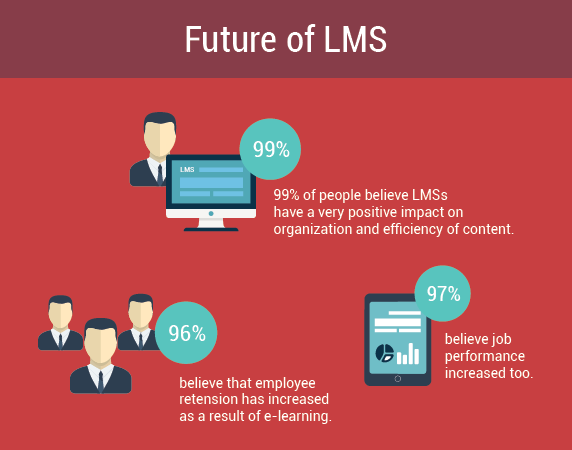
Learning Management Systems are not simple pieces of software anymore. Software analysts have done considerable research about the evolving LMS industry and have identified several trends. Let’s take a look at some of the major trends in the industry this year;
- Open Software-as-a-Service (SaaS) Solutions – Cloud-based SaaS solutions have always allowed LMSs to be easily set up and used, thanks to their established standards and ease of access. But even such service delivery models have drawbacks. They may allow for easy access and setting up but they allow for only very minimal customization. Open source platforms, on the other hand, may offer customization capabilities but they may incur expenses for frequent administration and downtime. A delivery model that utilizes the best of both worlds is one that is Open Saas, with substantially reduced setup costs and customization as well. This year we will likely see the rise of Open SaaS solutions that can bring down the overall costs of ownership and also provide service delivery to fit the unique needs of different businesses.
- Gamification – Gamification, that is, the use of gaming elements and mechanics beyond the traditional gaming experience and integrating it with learning and education systems, is something that has proven to increase retention and learning speed among students. For the same reason, as a general trend in the education industry, we’ll be seeing an increase in this technique. In LMS, we are likely to see the increased integration of gamification with it and furthermore, improvements in the interface and portal design as well. By increasing engagement through gamification, LMSs seek to allow both students and employees approach their learning from a strategic point of view, with time management skills and a point or reward-based incentive systems. It provides a lot more than entertainment, and aims to increase the overall learning potential through incentivized processes and behaviors.
- Socializing – We are all familiar with the effect that social networks have on our people. I mean, they have been nothing short of successful in luring an entire generation into the habit of sharing information and scheduling stuff through the internet. Every single day, people get into their own social circles online and see what their counterparts are up to, share their own little world with them and literally keep themselves updated on the happenings of each passing day. Such being their effect, on the mere matters of everyday life, why not leverage them for learning and training or education purposes as well?
Indeed. They are made use of by LMSs in getting across learning material to users and allowing them to share knowledge within their own social circles. LMSs seek to utilize the comfort and familiarity that users experience through the social media channels, and encourage them to share and learn in a comprehensive way. With the increasing popularity of this trend, it would only be a matter of time before LMSs start delivering personalized and adaptive training and talent management services to users through these social networking portals. - Blended learning – Again, a general trend that we will continue to see trending in the education industry this year. Blended learning also helps businesses in training and improving the skills of their employees as well. By integrating the digital and practical learning experiences, it augments classroom learning, with supplementary learning materials, advanced scheduling capabilities and the like, and provides the users with much needed hands-on experience. LMSs facilitate these practices and make way for more effective learning sessions, be it for students or employees of an organization. It also makes scheduling tests and exams much easier, as all of this can be organized and monitored through a single portal. What’s more, it keeps the overall costs of training and development well within the budget. With many such benefits, this method has already proven to be successful, which is why we’ll be seeing more of this in the coming years.
- Increased business utility – The use of LMSs in business organizations had been on for some time now, although it hadn’t quite gained momentum. This year, it is definitely going to increase, as businesses have realized that investing in education and personal development of their employees, benefits not just the employees alone, but almost all areas of their business. From customer engagement to management, LMSs can help in managing all important aspects. Training the employees, can reduce employee turnover and improve morale. Customers and business partners can also benefit from LMSs by making use of the tracking and information dissemination capabilities. They can even help you devise your own e-commerce strategy or customer service portal.
Learning Management Systems have come a long way from the time they were introduced into the industrial landscape. They have become more than just complimentary educational programs. This year definitely looks like a revolutionary one for LMSs, as it is likely to take over the business field as well. There can be many more trends in the LMS industry this year. What do you think we can add on to this list? Let us know in the comments below.
Source: Software Advice
Stay up to date on what's new
About the Author
Featured Blogs
Stay up to date on
what's new


