Category: Digital Transformation
How does a Warehousing Management System Simplify Operations and Help Your Business Scale?
A Warehousing Management System is a software application that controls and manages the operations in a warehouse. It can either be a standalone system or part of the Enterprise Resource Planning (ERP) system.
Additionally, most consumers today want to buy anywhere and return anywhere. So, businesses must have the ability to respond quickly with Warehousing Management Software that optimizes the fulfillment capabilities.
A modern WMS solution:
- Guides inventory receiving and put-away,
- Optimizes picking and shipping consignments, and
- Advises inventory replenishment.
Simply put, the solution offers visibility into a business’s entire inventory and manages the whole supply chain fulfillment right from the distribution to the store.
While many companies have ERP or Order Management System (OMS) systems that include warehousing functionality, companies can outgrow their warehousing and distribution functionality capabilities by implementing warehousing management software.
In the past, many small and mid-sized companies wanted to increase the functionality of the warehousing management system. However, the entry-level costs were excessive. Today, with cloud-based platforms, the deployment and operational costs have reduced drastically.
Read more: How Transportation Management Systems Benefit Third Party Logistics (3PL) Service Providers

This article discusses the various benefits of a warehousing management system that can support your growing company.
Why is a Warehousing Management System better than a traditional order management system?
There’s no denying that both OMS and ERP systems have warehousing and distribution functions. However, they often lack critical functions such as accepting ASNs (Advanced Shipping Notice) or managing the inbound receiving docks.
Additionally, the traditional system can become obsolete if your company runs several distribution centers. It will not be easy to manage multiple warehouse inventories if you don’t have a warehousing management system. It is also true when retail companies need small parcel shipping for omnichannel commerce like a “ship from a store” or to “manage inventory in stockrooms” in addition to the central warehouse. In such cases, a warehousing management system is a must as they are built from scratch with multiple distribution centers in mind.
A WMS manages activities and functions across the warehouse and will help give you better control over managing the labor to improve the levels of efficiency. Warehouse management software improves inventory visibility, makes it easy to track shipments, monitors expiration dates, and performs cycle counts.
Most OMS and ERP systems are not effective in reporting employee productivity and throughput by job function. The most significant benefit of being barcoded throughout the DC processes or using voice technologies is identifying the work performed by an employee by job function. On the other hand, a warehousing management system improves the company’s gain as the cost of labor increases.
Additionally, most OMS or ERP systems are selected and implemented to improve other departments such as contact centers, accounting, marketing, etc. Warehousing management software will ensure the distribution center organization grows, controls costs, gains efficiency, improves customer service, and extends the life of the OMS or ERP.
Read more: Logistics Management Software – Everything You Should Know

What are the benefits of a Warehousing Management System?
1. Receiving and marking
Typical functions of a WMS include ASN and EDI transactions, carrier scheduling of dock appointments, and receiving and putting-away personnel. Additional functions include:
- Identifying forward and bulk locations after receiving the product and quantity on hand
- Creating barcodes for pallets and carton labels
- Ability to record any vendor or carrier damage claims upon receiving
- The capability of both paper and paperless receiving
- Identifying special processing of product before put-away process
- Eliminating the put-away process by cross-docking from receiving to packing
- Resolving any issues through status reporting of incoming receipts to warehousing and merchandising staff
Quality Assurance(QA):
- Store product specifications for QA
- Support vendor compliance programs and report a vendor scorecard, on-time delivery, errors in shipment and receiving, and more.
- Store vendor, product, SKU sample testing criteria
- Marking direct, retail, and wholesale customer print and ticket formats
2. Put-away
After receiving the inventory, products have to be either cross-docked to packing stations or shipping to fill backorders or put-away. A warehousing management system can help identify storage type, open bin/slot locations, cubic capacity, and more, along with profile characteristics and cube required. Many warehousing management systems will have “directed put-away” options based on products. Storage parameters, system rules, and velocity functions may be available in a few smaller warehouse management systems.
3. Slotting
Slotting products is one of the most significant benefits of warehousing management software. It assigns SKUs to pick locations based on various factors such as size, sales, velocity, weight, category, and more. Sometimes, slotting functionality is available through add-on modules from some WMS vendors at an additional cost.
The slotting functionality reduces picker travel time and recommends changes in bin or slot size requiring less replenishment, thereby improving productivity.
Velocity reporting enables personnel to re-slot primary locations to get more space or change fast-selling items to the “hot pick” slot locations. Advanced operations can use dynamic slotting functionality.
4. Automates restoring of forward pick
A WMS automates refilling of primary or forward pick storage from bulk before the next set of orders is directed to the floor for picking. It reduces warehouse backorder costs and lost time.
Sales velocity data helps plan the size of the forward pick storage according to the item to reduce the number of replenishment tasks. Also, a product’s demand replenishment functions trigger recommended stock movement in an automated way.
Read more: How Robotics in Logistics Helps Improve Supply Chain Efficiency

5. Assembly
Most warehousing management software provides several functions such as work orders, kitting, assembly control of labor and material costs, and more. Other functions such as a single-level bill of material (BOM) or a multi-level BOM and managing component inventory assignment through the work order process are also available.
Other options such as tracking inventory usage and sales at the finished kit and component level, tracking labor usage by work order and assembled product, and also about work in progress reports are available. While ERPs may have a comparable function, it is not the case with OMS.
6. Packing
Packing is as crucial as picking in fulfillment of small parcel eCommerce. To gain customer satisfaction, consider the “pack confirm” verification process in your operations. You can pull aside all missed picks, and incorrect order quantities for correction through the “pack confirm” process. Many warehousing management systems can print-on-demand customer documents, assembly directions, and shipping labels and support the insertion of promotional materials.
Watch video: How custom-developed web app, enabled smarter locker management.
Today, most businesses struggle to keep pace with customer demands. Thanks to the ongoing COVID-19 pandemic, the demand has only increased. At Fingent, we provide you with custom software solutions that streamline business processes and save time and money. We help you develop custom warehousing management software for businesses that deal in logistics, shipping, transportation, eCommerce, third-party logistics (3PL), and more. If you want to discover our services further, please chat with our consultant.
Stay up to date on what's new

About the Author

Featured Blogs







Stay up to date on
what's new



Talk To Our Experts
Custom Accounting Software Development: Understand the Steps, Cost, and Benefits!
Small business accounting software is a system that helps maintain a count of business revenues, cash reserves, loan allocation, cash flow, and payment data. There are several pre-packaged commercial accounting software available to meet business requirements. However, custom development of accounting software helps address a business’s specific needs.
View infographic: What are the advantages of custom software over commercial off-the-shelf solutions?

Custom accounting software is developed keeping in mind the specific needs and goals of your company. Typically, a custom accounting software system helps businesses streamline business operations such as cash flow tracking, tax calculating, internal auditing, financial transactions, business analysis, and reporting.
Small business accounting software solutions help reduce human resource costs and increase overall productivity. Most start-ups adopt accounting programs to boost competitive advantages to develop into mid-size and large companies.
Read more: Custom Software Development is the Ideal Way to Build Business Apps in 2021

Benefits of custom accounting software
1. Improves efficiency
There’s no denying that technology works faster than humans. All you need to do is input the data correctly and command it to perform the function. The software will perform all the tasks within the stipulated time frame. Simply put, custom accounting software does all the finance-related work while the business owner can concentrate on your business.
2. Reduces human errors
Regardless of your business’s size, you need an accounting system. Otherwise, managing all the accounts can be a daunting task. In the process, there will be some chances of human errors. A custom accounting software will perform all the functions with technical efficiency and helps in reducing human errors.
3. Saves time
Custom accounting software allows you to perform more tasks in less time and enables business growth. With small business accounting software, your resource hiring and maintenance costs will come down as the software allows you to handle more accounting jobs in less time.
4. Better financial monitoring and reporting
When financial operations are handled manually, the financial reports are usually prepared at the end of the year. Organizations can reduce this mundane task with the help of custom accounting software. It can generate the report at any time and help you identify any problems beforehand.
5. Faster data processing
When it comes to accounting, you must have experienced and efficient people to register and process all the data before using it. Custom accounting software makes this process easier and faster.
Significance of small business accounting software
Business accounting includes a wide range of operations to capture the entire financial situation of an organization. Done manually, it is time-consuming and a daunting task. However, custom accounting software has helped automate all the processes, allowing business owners more time to concentrate on other vital business aspects.
Without accounting, it’s impossible to do business. The accounting team makes it possible to evaluate the progress of the organization. It gathers information, creates arrangements, and evaluates the financial data of the organization. Small business accounting software simplifies financial reporting and management of operations.
Steps involved in custom accounting software development
Step 1. Define an idea
So, you got an excellent idea for your small business accounting software? That’s great! The idea itself is enough to kickstart the project. Next, you need to solidify it into an actionable strategy. Your team should take the initiative, perform analysis, identify the additional functions and features that will be feasible for the system.
Step 2. Design the UX/UI of your system
After assessing the project, the next step is to start on the prototypes and designs. The cost of software development tools is often based on the number of features the solution requires. As a business owner, you can ask the developer to design the app according to your business needs.
You will be able to decide what to add and delete during the initial phase. Once the software’s framework and future design are accepted, you can switch to determining the accounting software’s functionality.
Step 3. Decide the features and functionality
Some of the critical features you need to include in the software are:
- Account management
- Inventory management
- Invoice processing
- Multi-user support
- Budgeting
- VAT calculations
- Third-party app integration
- Sales order
- Payroll management
- Credit tracking
- Payment management
- Advanced analytics
- Billing management & record keeping
- Generate reports
Step 4. Develop the software
Designing accounting software is a complex and time-consuming process. However, using a questionnaire development approach can help develop appropriate accounting software.
Designers and QA engineers need to compose test cases before the actual development work. This will prevent any bugs in the future. At Fingent, our developers know the trending designs and develop applications using configuration management techniques to ensure proper software development methodology. Before that, we guarantee to address all the steps and innovations.
Step 5. Deploy and maintain
After the development of the software, the project is implemented and ready to use. The application may need tracking and improvements to stay relevant. Therefore, a support and maintenance team is a must for small business accounting software. The team must resolve issues and cope with problems in case of any crashes.
Cost of custom accounting software development
The development cost depends on several factors, such as the software’s features and techniques. The more features and tools you require, the more money you may need to spend from your pocket.
Additionally, you will have to consider the production period- the longer it will take, the more expensive it will be. The cost would also rely on the developers you employ to create your software.
Read more: Offshoring Software Development: Here’s All You Need to Know

Choosing the right partner for custom software development
Custom accounting software development may seem challenging, but it proves worthy in the long run as it allows your business to stay out of chaos. When businesses go for custom software development, they can build new capabilities on top of existing enterprise applications. Custom software solutions appeal to tech leaders and companies of all sectors globally. In today’s dipping economy, software development companies like Fingent help businesses restart or rebuild what they lagged with custom software solutions.
Read more: Points to Consider Before Choosing the Best Software Development Company
Being the top custom software development company, Fingent helps you identify the right tech stack and skills required to develop your software. Are you wondering how to boost your company’s growth and operating efficiency? Talk to our expert right away and get your questions answered.
Stay up to date on what's new
About the Author

Featured Blogs
Stay up to date on
what's new
Talk To Our Experts
Top 5 Misconceptions about AR and VR in eLearning
In this tech-savvy era, computer-based realities are a new way to perceive a surrounding. Two of the most trending reality technologies are Augmented Reality (AR) and Virtual Reality (VR). Over the last few years, AR and VR have taken strides to become the most prominent consumer technologies. With developments in technology and broader accessibility, we started to discover more ways AR and VR can benefit various industries such as entertainment, automotive, transportation, oil & gas, aircraft, etc. AR and VR have helped many industries since their onset. Both technologies have a massive potential in immersive learning. The COVID-19 pandemic forced physical classrooms to go virtual globally. Since then, the education sector is witnessing the extensive application of reality technologies such as AR and VR to promote immersive learning.
Read more: How Virtual Reality Improves the Standards of Medical Education and Training

What is immersive learning?
Immersive learning refers to a learning strategy – a future training method – that uses an artificial or simulated environment that puts learners in a highly interactive learning environment. Augmented and virtual reality technologies play a crucial role in today’s immersive learning scenario by offering a new way of using an eLearning screen.
Role of AR and VR in eLearning
Augmented Reality or AR is an interactive experience that enhances or augments real-world objects and projects computer-generated images and animations into it – like Snapchat lenses, Pokémon Go (game), and so on. It overlays or adds digital elements or imagery –in the form of text, graphics, audio, and other visual extensions – to a live view. On the other hand, Virtual Reality or VR is a ‘computer generated’ experience created inside a simulated environment. It immerses the user in a replicated/imagined world using a head-mounted device (HMD), shutting down the physical world. With the help of special manipulators, users gain the potential of intuitive and multifunctional interaction with virtual elements in VR.
Read more: Top 7 Ways AR and VR Can Impact Employee Safety Training

Both the technologies create new and interactive experiences for users through their immersive environment and accessibility in 3-dimension. Especially in the eLearning industry – which is all about using advanced technologies to enhance the learning experience – the alternate reality technologies AR and VR have been warmly accepted by modern learners because of the diverse benefits they offer. Few benefits include:
- Makes the learning more engaging and exciting
- Better online training mock-ups
- Makes learning a practical experience
- Customizes learning paths in courses
- Provides visual feedback in assessments with advanced learning analytics
Though AR and VR are trending immersive learning strategies, they are new in the Learning and Development space, and therefore, several myths are revolving around the topic. This blog will debunk five common AR and VR myths in eLearning.
Myth #1: AR and VR are the same
Many people believe that AR and VR are the same and can be used interchangeably. People often get confused between these two computer-based realities. Though both AR and VR play a massive role in immersive learning, the fact is that both these technologies have two entirely different concepts. Virtual Reality (VR) entails a complete immersion experience that displays a virtual environment to a person that blocks out the physical world by using a virtual opaque headset. At the same time, Augmented Reality (AR) adds digital elements or animations to the user’s real world using the camera on a smartphone.
Myth #2: AR and VR based apps are difficult to use
Even with an increasing number of users worldwide, some organizations still believe that AR/VR apps are more difficult to use than any other apps. This doesn’t seem right because such applications mainly meant for learning use high-end technology, making them more user-friendly. Skilled augmented/virtual reality developers ensure that the user interface is simply leading to the applications’ success perspective.
Read more: Accelerating AR/VR Adoption Among Customers

Myth #3: AR and VR are very expensive
Many organizations consider other training methods, as they believe learning through AR and VR is too expensive. When used right, AR and VR techniques can reduce costs and provide organizations with a high ROI in the long run. Many believe that VR apps can only be used with expensive gears and headsets. There are many affordable options and multiple authoring tools that businesses can consider to make AR and VR learning easy at a relatively low cost.
Myth #4: AR and VR are mainly for gaming and entertainment purposes
Because of the popularity gained by AR and VR with its practical use in the entertainment and gaming industry, people tend to think that AR and VR are primarily focused on these industries for entertainment purposes. But the fact is that AR and VR are not just limited to games. Though gaming and entertainment are the most prominent applications for computer-based realities, many industries embrace AR and VR in their marketing and advertising efforts, with widespread success.
Usage of AR/VR is trending in diverse sectors such as Manufacturing, Education, Event Management, Tourism, Automotive, Real Estate, Healthcare, Retail and E-commerce, Media and Entertainment, Defense and Military, and more. For instance, a global leader in medical imaging solutions, AccuVein uses AR to project an image of veins over skin for all medical imaging purposes.
Read more: Impact Of Augmented Reality In Education Industry

Myth #5: AR and VR may not stay for long
Many people say that AR and VR are just fads. The truth is that, as AR and VR offer many innovative ways to interact with the data around us and visualize it, reality technologies are expected to enrich users in the future years too.
Research & Markets reports that the global AR and VR market is projected to reach $1,274.4 billion in 2030, rising from $37.0 billion in 2019, and is predicted to progress at a robust CAGR of 42.9% during the forecast period (2020-2030). Key factors leading to the AR and VR market’s growth include the rising penetration of smartphones and tablet computers, increasing technology adoption among enterprises, and vendors’ surging focus on price reduction.
AR and VR lead among the emerging technologies and are being updated continuously. AR/VR development is a highly appreciated career today.
So, AR and VR are not fads and are going to stay for a long time.
Misconceptions are lifted for about every potential revolutionary technology, just like myths about AR and VR are prevalent in the mainstream now. AR and VR are emerging as crucial reality tech in 2021. Especially during this COVID-19 pandemic, which has turned our lives upside down, organizations need innovative eLearning techniques now more than ever. These computer-based realities can help enhance the learning experience more safely, engagingly, and productively.
Watch Video: How AR can be a powerful learning tool in the future
Fingent’s AR/ VR development team allows you to leverage the power of immersive learning with AR and VR and enjoy the experience! Contact us to know more.
Stay up to date on what's new
About the Author
Featured Blogs
Stay up to date on
what's new
Talk To Our Experts
Identify the best approach to legacy system modernization
With changing customer behavior, enterprises have changed their norms and business applications. Now, retailers have to fulfill orders in a multichannel, multitouch eCommerce environment; consumer banks have to provide secure and user-friendly apps, and travel brands have reconfigured their approach to stay relevant in the face of disruptors.
All these changes require legacy system modernization.
What are legacy systems?
A legacy system may be different for each company, depending on their business. While many organizations prefer to leverage new software tools and run them on old systems, others update their applications one at a time. That said, few companies are still using both old software and old systems.
Read more: Four Ways to Future-Proof Legacy Applications

Legacy systems are considered old when the software fits the early 2000s, not 2020-21. However, not all legacy software or systems are defined solely according to their age.
What is legacy systems modernization?
Simply put, modernization means updating all or some of the IT stack to enhance your business processes and goals.
However, here are three definitions that will help you understand that legacy system modernization is more than just updating the system.
- Legacy software: The application(s) that your business depends on from the last year to the past decade or more.
- Legacy software modernization: Replacing and updating all inefficient systems, processes, and applications either partly or entirely.
- Re-platforming: Modernization begins with the platform on which your business applications are built. Moving your e-commerce platform from Shopify to Magento is an example of re-platforming.
There’s no denying that business leaders drive innovation at their companies. But they need the latest technologies to enable and support this innovation. They need fast applications, systems that support connectivity, and platforms that bring all these together. Most older IT companies fail to meet these modern needs. So, legacy system modernization is a must in such cases.
That said, digital transformation has pushed application leaders to find effective ways to modernize legacy systems.
Why do you need legacy system modernization?
Legacy system modernization is more than just updating the system. It is about bringing the entire organization to meet the digital environment.
Some of the reasons to consider legacy modernization are:
- It helps create and maintain a competitive advantage by building a solution that will help you stay ahead of competitors.
- Provides reliable processes with reduced risks, improves the system’s functioning, and improves performance.
- Ensures satisfied customers and happier employees by meeting UX and performance standards.
Watch video!
- It helps you scale in the future by transforming your IT stack into an agile platform for future change.
- Secures your IT infrastructure from internal security breaches and external threats
- From accounting software to CRMs, legacy systems introduce simpler integration with several new enterprise software used by various businesses.
- Addresses the financial inefficiencies of legacy system
- It helps realize growth opportunities, exceed customer expectations, and gain new customers by staying ahead of the enterprise software curve.
Have a look at some of the points in more detail.
Company finances
Integrated, up-to-date, and user-friendly software and systems will save your company on downtime, transactions, and more. For instance, Javelin Strategy & Research observed that mobile and online banking transactions cost only $0.10 while offline processing cost around $4.25 for financial institutions.
Older software and systems can help you spend less on technology, but they end up incurring other overhead expenses.
Software integration
Most organizations rely on third-party APIs to realize maximum enterprise value. For example, Zillow, a real-estate listing site, relies on the Google Maps API for full functionality.
Making sure your new software system is ready for integration will help meet the expectations of your customers, employees, and stakeholders.
Gartner recommends how to approach legacy modernization
Here is a three-step evaluation process provided by Gartner on how to approach the legacy system’s modernization.
Step 1: Use six drivers to evaluate your legacy systems
There are six main drivers for the modernization of your legacy system. These are the issues or concerns that the legacy application has created due to its architecture, functionality, or technology.
Three of these drivers are from a business perspective, such as business value, business fit, and agility. So, if your legacy system does not meet the new requirements, it will have to be modernized to fit properly and should be updated to provide more business value. Systems that are not agile enough to meet digital business demand are more likely to risk liability.
Step 2: Evaluate modernization
Once you identify the problem and select the opportunity, look at the modernization options. Here are seven options provided by Gartner. These options are ranked based on the ease of implementation- the easier it is, the less risk and impact it will have on the system and the business processes, the difficult, the more risk and impact it will have.
- Enhance and extend the application features by encapsulating its data and functions by making them available via an API.
- Be it cloud, virtual or physical, rehost the application component to other infrastructure without changing its code, functions, or features.
- Make minimal changes to the code but not the code structure, features, or functions to migrate to a new runtime platform.
- Restructure and optimize the existing code but not its external behavior to improve non-functional attributes and remove technical debt.
- Modify the code materially to shift it to new application architecture and exploit newer capabilities.
- Rebuild the application component from scratch while retaining its scope and specifications.
- Eliminate the former application and replace it while taking into account the new requirements and needs.
Step 3: Select a modernization approach that has the highest effect and value
The last step is to choose the modernization approach by mapping the seven modernization options concerning their effect on architecture, technology, functionality, costs, and risks.
It is important to weigh all the options to identify the extent to which they will all have the desired effect with less effort and maximum positive impact.
Read more: Business Process Re-engineering: Facing Crisis with Confidence
How can Fingent help update your legacy system?
Whether you are looking to re-architect your enterprise software or re-platform your entire system, or simply looking for new solutions that integrate with what you have going, we have you covered. We offer business process re-engineering and platform modernization services.
With expertise in various industries and a full-cycle in-house software development team specializing in legacy modernization, we can make your entire process efficient and personalized. Talk to our expert to know more about this.
Stay up to date on what's new
About the Author

Tony Joseph

Tony believes in building technology around processes, rather than building processes around technology. At Fingent, he specializes in custom software development, especially in analyzing processes, refining them, and then building technology around it. He works with clients on a daily basis to understand and analyze their operational structure, discover (and not invent) key improvement areas, and come up with technology solutions to deliver an efficient process. You can reach him at [email protected], Skype: tony_fingent
Featured Blogs
Stay up to date on
what's new
Talk To Our Experts
How can companies ensure cloud security amid cyber threats and malicious online activities?
The explosion of the cloud has changed the face of the business process as we know it. Nearly 90% of companies rely on the cloud. And yet, there has been some skepticism around cloud security. With recent breaches and technological attacks, maintaining cloud security has become the foremost concern for businesses worldwide.
Security experts at Fingent understand your concern, and so we have put together this blog about the importance of cloud security and the best practices which will ensure that you are secure on the cloud.
Why is cloud security important?
According to a report by Cisco, cloud data centers process 94% of all workloads. Despite the popularity attained by cloud technology, most of these companies are skeptical about cloud security. There is a reason for this. Statista reports the number of data breaches in the U.S alone increased to 156 million in 2020. It has also been reported that hackers attack every 39 seconds. This can be fatal to businesses in the following ways:
1. Managing remote work
Remote work lets you hire talent from across the globe. However, this arrangement entails inherent security risks. Using personal devices may expose your data to malware and phishing attacks. If a malicious virus enters through them into your cloud system, the damage done could cut your company off at its knees.
Read more: Why It’s Time to Embrace Cloud and Mobility Trends To Recession-Proof Your Business?
2. Security breaches
If your company chooses to run your application on a public or hybrid cloud, you are entrusting a third-party to take care of your data. This means you no longer have any control over data security. So it is critical to stay on top of things and ensure that your cloud computing provider is serious about this responsibility. Even when you know your provider will ensure top-tier security, it is your responsibility to verify that your data is secure as a client.
3. Comply with regulations
Data protection standards were put together to ensure the integrity and security of customer data. When you store your customer data on the cloud, it is your responsibility to keep it secure, especially if your organization belongs to a highly regulated industry like finance, insurance, banking, or legal. A data breach will destroy your reputation and brand because external parties will hold you accountable.
4. Build access levels
Unintentional leaks of data will compromise your business integrity and give your competition a leg up. Limiting data access only to those employees who need it can prevent errors that lead to data leaks.
5. Disaster recovery
Disasters such as flooding or fire can strike without warning. Unless your data is secured and protected, you could lose all your data. This may undermine customers’ confidence in your organization, delivering a death blow to your otherwise successful business.
Read more: How Secure is Your Business in a Multi-Cloud Environment

Best practices to ensure cloud security
- Carefully choose a trusted provider
- Review your cloud security contracts and SLAs
- Understand your partnership of shared responsibility
- Control employee access
- Secure user endpoints
- Maintain visibility of your cloud services
- Implement a strong password security policy
- Highest levels of encryption
“Cloud computing is a challenge to security, but one that can be overcome” – Whitfield Diffie, an American cryptographer.
True to Whitfield Diffie’s words, cloud security measures can be taken to encrypt the system that will help achieve adequate cloud security.
1. Carefully choose a trusted provider
Partnering with a trusted provider is the foundation for cloud security. Choose a partner who delivers the best in-built security protocols and follows industry best practices’ highest levels. You need to ensure that you confirm their security compliance and certifications.
Learn more: Take a look at how InfinCE, an infinite cloud platform, ensures secured work-collaboration within an organization and helps enhance company efficiency & growth!
2. Review your cloud security contracts and SLAs
In an event, SLAs and contracts are the only guarantees of service and course of assistance. 62.7% of cloud providers do not specify that customer data is owned by the customer, creating a legal grey area. Read through the terms and conditions, annexes, and appendices to ensure who owns the data and what happens if you terminate the services. Also, seek clarity on visibility into any security events and responses.
3. Understand your partnership of shared responsibility
When you tie-up with a cloud service provider, you enter into a partnership of shared responsibility for security implementation. Understanding the shared responsibility involves discovering which security tasks you will handle and which your provider will handle. It is important to ensure transparency and clarity in your partnership of shared responsibility.
4. Control employee access
Implementing strict control of user access through policies will help you manage employees who attempt to access your Cloud services. Cloud security best practice starts from a place of zero trust. Afford user access to data and systems only to those who require it. To avoid confusion and complexity, create well-defined groups with assigned roles. This will allow you to add users directly to the group rather than customizing access for each employee.
5. Secure user endpoints
Since most of your users access your cloud services through web browsers, it is crucial to introduce advanced client-side security to keep it protected from exploits. Implementing endpoint security solutions that include firewalls, antivirus, intrusion detection tools, and more will help to protect your end-user devices.
6. Maintain visibility of your cloud services
Remember, you cannot secure something that you cannot see. Using multiple cloud services across various providers and geographies can create blind spots in your cloud environment. Make sure you implement a cloud security solution that provides visibility of your entire ecosystem. You can then implement granular security policies to mitigate a wide range of security risks.
7. Implement a strong password security policy
Strong password security may sound basic, but it is an important element in preventing unauthorized access. Have a strong and strict password policy. To defend against most brute force attacks, enforce a rule that users update their password every three months. You may also implement multi-factor authentication. This would require a user to add two or more pieces of evidence to authenticate his/her identity allowing you to trust your users while ensuring that they are authorized users.
8. Highest levels of encryption
Your data may get exposed to increased risk while sending it back and forth between your network and the cloud service. You must consider using your own encryption solutions for data, both in transit and at rest. Encryption keys will help you maintain complete control over your data.
Read more: 6 Proven Ways for Businesses to Combat Cloud Security Risks
Don’t wait till it’s too late!
You never know when a stealthy hacker could attack your business and make you go under. All organizations, independent of their size, can benefit from these best practices and improve their cloud usage security.
At Fingent, our experts go above and beyond to ensure that your business is hacker-proof and secure. If you need to discuss cloud security options, do not put it on the back burner! It could creep up on you and set your whole business afire, ruining your competitive edge and spelling doom for the future. Call our experts and discuss your options today.
Stay up to date on what's new
About the Author
Featured Blogs
Stay up to date on
what's new
Talk To Our Experts
How to gain maximum value from technology investments for your business?
The slow economy stemmed from the COVID-19 pandemic is forcing organizations to identify and cut all unnecessary costs. Unfortunately, technology investments also fall prey to these budget cuts. It happens when businesses invest in technology without adequate planning.
According to a survey, 29.2% of respondents holistically examine their technology usage while searching for efficiencies. It may mean canceling or delaying new projects and purchases or reducing or canceling maintenance and support contracts for existing investments.
Research by Accenture reveals that while 47% of the companies are building their future growth strategies on mobility and technology, considering inefficient technology as one of the top hindrances to their growth. It is clear that IT-led innovation is the need of the hour, and 82% of companies are investing specifically in technology for improved growth.
Simply put, now, it is crucial to improve the return on investment of resources, optimize costs, and select the right solution when making sourcing decisions.
Read more: Navigate The Business Impact Of COVID-19 With These Hot Technologies

Here, we share a few tips to help you gain full value from your technology investments.
Ways to optimize costs
Gartner reveals that optimizing costs is essential for businesses and is one of the best ways to control spending and attain cost reduction while maximizing business value.
Optimizing costs should take into account:
- Automating and digitizing business operations
- Simplifying and standardizing applications, platforms, processes, and services
- Obtaining the best terms and pricing for business purchases
While this means ensuring that technology investments generate the maximum possible value, it also means cutting costs and considering how each technology investment drives business value.
Some technology may be expensive, but it doesn’t mean that it isn’t providing value to the organization. Expensive technology may already be optimized because of the value it generates, while inexpensive technology may be unused and wasted. Therefore, it is important to make the right decisions regarding purchasing hardware, software licenses, or cloud services contracts.
Once you have identified and mitigated what you do not need and what you need, there are no more costs to reduce. It is time to look at how to optimize technology assets.
Ways to get the most out of your tech investments
Despite the cutbacks and search for savings, many organizations continue to invest in technology projects and accelerate their digital transformation initiatives. However, even with the economic slowdown coupled with pandemic-related uncertainties, organizations that have performed well during 2020 are looking to increase resilience by reducing risks and demanding shorter ROI periods on investments.
That said, the key to maximize ROI is preparation. It is essential to know that you’ve selected the right solution and are ready for implementation. Several surveys done in the past suggest that the software chosen is rarely the reason for any IT project’s failure. And a few leaders even agree with this, revealing a lack of investment in preparation, project management, and implementation. Even the simplest of IT systems require some amount of work to install and configure. So, the more complex your environment is, the more careful you will have to be.
Read more: 11 Practices Followed by Leaders to Build Resilience and Ensure Rapid Business Recovery

Key factors to consider while developing a technology strategy to improve corporate performance are:
Investment profile: Your management team must identify your IT investment percentage (allocated to build significant capabilities) versus the foundational investment. Ideally, foundational investments should not be more than 40% of the total annual investments.
Organization focus: You must identify whether a significant portion of your internal resources aims to drive innovation or growth. Also, find out if you have the proper operating processes in place to drive these investments.
Tenure: You will have to figure out if your workforce has the right experience and skills to achieve the target.
Investment economics: Move over traditional measures and instead identify newer ways to evaluate your projects and investments.
A few technologies worth investing
Following are some of the technologies worth investing in the present business scenario:
- Artificial Intelligence (AI)
- Blockchain
- Internet-of-Things (IoT)
- Cloud
- Cybersecurity
- Self-driving technology
- Streaming media
Tips for getting maximum value from technology investments
To get maximum value from your technology investments, you should:
- Be prepared with clear objectives and outcomes. You must ensure that your vision aligns with that of the new technology vendor.
- Ensure that you have people, processes, and governance for leveraging the technology when deployed, reducing the time to both value and ROI.
- Identify and assess your data sources’ quality to develop appropriate metrics for accuracy and completeness of data and check for any improvements.
- Invest in the implementation and system or process integrations to make sure they are carried out successfully. If you are using any third-party service provider for the implementation, ensure that you hire a reliable and trained team like Fingent.
- Identify users and key stakeholders and invest in their time to maintain the system.
- To reap benefits early in the project and demonstrate the value of initial investments, take a phased approach. Phasing could be by business unit, geography, or environment depending on the organizational structure and business goals. This will ensure that the project is manageable.
- Provide both initial and ongoing training in phases to allow end-users to familiarize themselves with the features and functionalities they have learned about before undergoing further training. That said, make sure the new users are also appropriately trained.
- Ensure that third-party consultants have completed their vendor training or certification programs before allowing them to use your tools. Also, check if you are using the latest version of the tool. If needed, arrange for additional training.
Read more: Fingent Speaks: What it Takes to Build a Successful Digital Transformation Strategy
Be smart with your tech investments
With technology and digital transformation becoming more pervasive across all industries, technology investment can make a huge difference in winning or losing a business. By focusing on the tips discussed in this article, companies can maximize value from their technology investments.
Technology wins only if it can appease users. A bad customer experience forces the customer to switch from vendor A to vendor B. Not only should you identify and invest in the right technology, but make an emotional connection to craft human experiences that drive customer satisfaction and differentiate you from your rivals.
Fingent helps you make a fortune out of tech investments by helping you leverage the latest technology trends. Our business technology consulting services focus on helping businesses tackle technology problems, attain business objectives, and derive value from tech and IT investments. Chat with an expert to learn more.
Stay up to date on what's new
About the Author
Tony Joseph
Tony believes in building technology around processes, rather than building processes around technology. At Fingent, he specializes in custom software development, especially in analyzing processes, refining them, and then building technology around it. He works with clients on a daily basis to understand and analyze their operational structure, discover (and not invent) key improvement areas, and come up with technology solutions to deliver an efficient process. You can reach him at [email protected], Skype: tony_fingent
Featured Blogs
Stay up to date on
what's new
Talk To Our Experts
How to plan a successful COVID-exit strategy and get your business on track?
If the 2008-09 global recession was due to financial meltdown and economic vulnerabilities, the 2020 economic crisis stemmed from the global pandemic and subsequent health emergency. Both incidents hold lessons that business owners and leaders should follow to fast-track their organizations’ recovery in 2021.
Read more: 11 Practices Followed by Leaders to Build Resilience and Ensure Rapid Business Recovery
Economic growth in 2021 is likely to improve compared to the growth rate in the second half of 2020. However, it will still be uneven. Additionally, the timing and growth will vary for different products and services and geographic markets.
Given the uncertain recovery of the economy, leaders and business owners need to plan a successful strategy to lead their teams and organizations over the year. The focus should be a forecast of their companies’ revenue potentially earned in every quarter of the year.
That said, the COVID-exit strategy is not straightforward. Leaders and business owners will have to make a few difficult choices.
- How much should my organization change, and how fast?
- How far should I go to change my current strategy and adopt faster and more agile approaches?
These are some of the questions that you’ll probably need to figure out. However, remember that if your organization does not move quickly, it will lose itself in the crowd.
One of the best ways to transform is to apply the “all-in” approach to transformation. It means to go ahead with full speed. Whether your organization’s transformation should be about portfolio moves or performance improvements misses the point. If you want to succeed, you must consider both and make your transformation go big. This approach will help your organization emerge stronger and sustain the competitive edge for a long time.
This article discusses how leaders can build a successful COVID-exit strategy and begin a holistic transformation.
Three fundamental steps that organizations can consider
If your organization is successfully managing portfolio and performance moves simultaneously in a transformation, you can invest in three foundational steps:
- Getting an honest view of the business’s full potential across both portfolio and performance moves.
- Understanding the impact of those moves.
- Creating a program with a proper structure and sequence to maximize value creation.
While understanding the full business potential, leaders must know the importance of setting a high aspiration. According to McKinsey & Company, companies that put their gross transformation targets at 75% of trailing earnings are more likely to create value sustainably.
Incrementalism may be risky for organizations trying to break out from the COVID-19 crisis. Management teams seek safety to confront the current situation and avoid the discomfort of going in for the big moves. In reality, leaders must use this time and opportunity to challenge assumptions and overcome social barriers that block bold moves.
Read more: Top 5 Organizational Imperatives for Business Leaders to Become Winners in the New Normal

Successful digital transformation requires leaders to answer these questions
- Which line(s) of business does my company no longer own naturally?
- Which trends accelerated by COVID-19 could transform my business?
- What are the new efficiencies and business models developed by my company to meet the COVID-19 necessities?
- How can my organization benefit from the advantages of those new efficiencies and business models in the next normal?
- How has my organization’s health changed, and what elements and capability building will be required to maximize the impact of the COVID-exit?
While you are trying to balance portfolio and performance moves, you will also need to consider the sequencing. Portfolio and performance initiatives must go hand-in-hand. You must consider each move by defining the magnitude, timing, and risk of impact.
Read more: Fingent Speaks: What it Takes to Build a Successful Digital Transformation Strategy
According to McKinsey & Co., stand-alone portfolio moves capture less than half of value creation, especially in areas such as deal premiums, performance upside, or growing new business. However, if your strategy is ill-conceived, even stand-alone performance moves can take time and maybe outweighed by acquiring the wrong business lines.
Two cases of “all-in transformation”
While you must consider both portfolio moves and performance improvements, which of these should you execute first? The answer depends on the organization and context.
How and when you implement your transformation elements must be guided by your organization’s various circumstances and potential at any given time.
We’re listing two cases of “all-in transformation” here. Both the examples highlight the significance of sequenced transformation in unlocking business value. In both cases, the organizations identified the required potentials, set high aspirations, and deliberately sequenced the portfolio and performance moves to achieve the results. However, the companies differed in how they advanced from there.
First case:
In the first case, the value creation and its sequencing were as follows:
- The company streamlined its cost structure, focused on resource allocation, and carved out a few of its competing lines after consolidating business units and simplifying the executive team. This reorganization enabled about 10% of total transformation value creation.
- Next, the company improved the effectiveness of its sales force which generated high revenue growth. It also implemented automation and simplifications to reduce overheads and adopted a strategic procurement approach to reduce external expenditure. These operational improvements enabled about 75% of transformation value creation.
- Lastly, the company invested in optimizing firms it had acquired and integrated a similar set of core capabilities.
Second case:
The second case, though an all-in transformation program, took a separate route.
- After a significant merger, the company re-evaluated its core business portfolio and divested non-core business. This approach enabled the organization to focus on financial flexibility by using the proceeds to buy back stock. Overall, this performance move allowed the company about 75% of value creation.
- By streamlining its operations, focusing on revenue growth and margin improvements, the company’s performance transformation enabled about 25% of value creation.
Read more: 7 Ways for Your Business to Overcome the COVID-19 Aftermath
From these examples, leaders need to understand that they cannot choose between a portfolio-first or performance-first approach while planning their exit strategy. The order is not important, but leaders will have to accept that they are going all in, set high aspirations right from the start, and let the realization of full potential determine what happens. Avoiding an ad hoc approach to value creation may have significant implications over the long-term. Research reveals that organizations that go for the “all-in” transformation approach are more likely to show lasting improvements and are nearly three times more likely to be ahead of their competitors.
The takeaway
After a year of uncertainties, CEOs and business leaders are aware that the COVID-exit path will not be easy. However, if companies adopt an all-in transformation approach, they can expect more dynamism and flexibility during the journey.
Read more: 10 Services Offered by Fingent to Prepare Your Business for the Future of Digital Innovation

At Fingent, we use cutting-edge digital solutions and rapid innovation to help businesses reinvent the future. We’re closely monitoring the situation and helping businesses return to work with our technology consulting and innovation capabilities. Feel free to get in touch with us to know how we can transform your business digitally.
Stay up to date on what's new
About the Author
Tony Joseph
Tony believes in building technology around processes, rather than building processes around technology. At Fingent, he specializes in custom software development, especially in analyzing processes, refining them, and then building technology around it. He works with clients on a daily basis to understand and analyze their operational structure, discover (and not invent) key improvement areas, and come up with technology solutions to deliver an efficient process. You can reach him at [email protected], Skype: tony_fingent
Featured Blogs
Stay up to date on
what's new
Talk To Our Experts
Right ERP software helps CFOs contribute to organizational decisions more logically.
Selecting the Right ERP Solution: Crucial Points a CFO should Keep in Mind
The CFO is one of the most significant decision-makers in an enterprise today. CFO is the protector of your business’s financial records and has an ultimate say while making financial decisions for the company. However, in this digital age, the role of a CFO is evolving. A CFO takes a more holistic approach in the current scenario and guides the organization towards success by leveraging digital intelligence. CFOs must be equipped to keep their company afloat during an unexpected crisis such as the pandemic, identify new investment opportunities and help the business prosper in the face of intense competition. A tall order but not impossible.
To achieve this, CFOs must look at their existing systems to upgrade or replace those slowing down the organization. CFOs are responsible for ensuring that any new technology they adopt has what it takes to turn the business into an effective market disruptor.
This article covers a CFO’s top 5 considerations when choosing an ERP solution.
Read more: How Organizations can Gain a Competitive Edge by Implementing Digital Core ERP

1. Obtain hands-on knowledge on the process
CFOs might find it tempting to leave the ERP process knowledge to technical teams, but this could mean that they miss out on learning the crucial aspects of the ERP that will affect the organizational costs. Technology assists CFOs in controlling accounting and tax standards and in engaging with the business to drive value jointly.
Read more: SAP S/4HANA: Transforming The CFO into a Business Value Creator and Role Model

Technical jargon can be overwhelming for CFOs. But they need to clarify their questions with their ERP service provider.
To get you started, here are some important software concepts related to ERP implementation.
- Installation: Know what is required of your current server.
- Customization: Make sure the ERP software suits your organization’s specific requirements. Compared to other ERP systems, SAP requires minimum customization. It has many customizable solutions that are suitable for all types of businesses.
- Configuration: Ensure your software is in harmony with your workflow. Thankfully, SAP is suitable for any size organization.
Apart from this, confirm the ERP is hosted on the cloud because it is easier to handle and more secure to manage. Those who have migrated to cloud-hosted ERPs reap the benefits during the pandemic, where remote working is the only option to ensure business continuity. Making sure the solution is rewritten for the cloud will help CFOs keep up with any future changes.
2. Invest in a service provider with vision and efficiency
Your ERP solution’s longevity is determined by your service provider’s efficiency and capability. Do not hesitate to clarify certain aspects of your service provider and the services they have to offer you. Find out if their financial situation makes it a viable option for a long-term contract.
You also need to identify if your service provider can give you access to all the information you need for years to come. Additionally, consider if your vendor is relevant to the current market scenario and can stay relevant in the future. To that end, it may be helpful to enquire about their research and development plans to ensure they will provide you with high-end products now and in the future.
Read more: Why Choose Fingent as Your Odoo ERP Partner

3. What are the aspects of integration?
ERP is one of the multiple systems that determine your organization’s performance. To achieve optimum results, you will have to enquire about integration with other aspects such as EPM, SCM, HCM, and CX, to make way for a smoother workflow. How? When you have various platforms working together harmoniously, you can avoid data inconsistency between two systems.
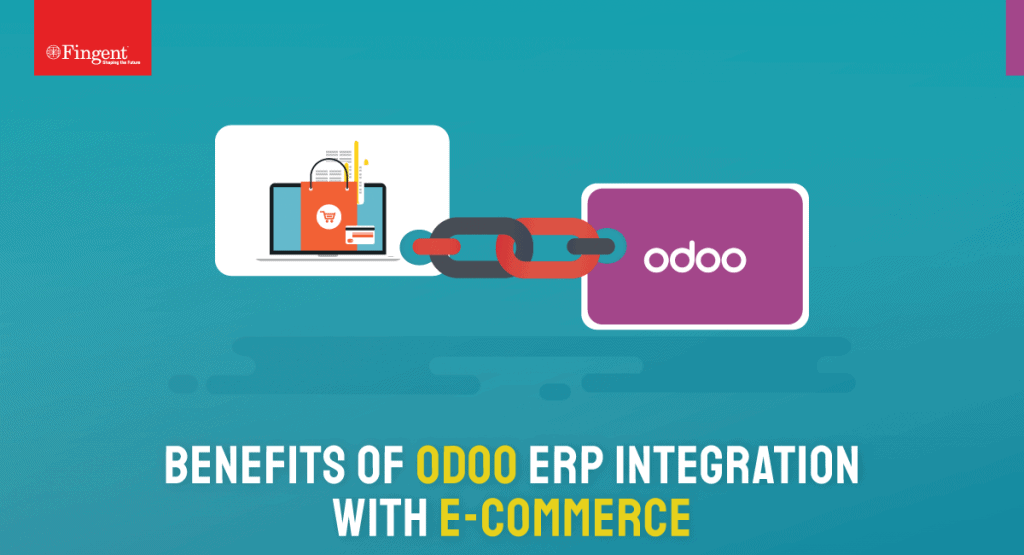
Read more: 5 Reasons to Integrate Your E-commerce Application with Odoo ERP
To avoid cumbersome processes after ERP implementation, you must consider if the vendor you are planning to hire can provide you the best support required. Talk to them to ensure that all the different platforms function as one unit. The most relevant integration for a CFO is integrating ERP with EPM (Enterprise Performance Management). Picking the right vendor will help you with such critical integrations.
4. Choose the right ERP
ERP that fits one company does not match the other because each company has its own unique needs. Whether a business is small, medium, or large, a CFO must be aware of the need for financial planning tools. Hence, as a CFO, you must confirm your ERP caters to the size of your business. Additionally, your current ERP must be scalable to accommodate employees from various departments. In other words, you will need a scalable ERP system for your entire operation to work smoothly.
Read more: 5 Tips For Getting The Best Out Of Your ERP System
5. Identify the needs of all departments to ensure teamwork
The ultimate aim of a CFO is to ensure that the ERP they select is delivering excellent results. Hence, it is crucial to have all your employees on board and understand the ERP system.
To achieve that, you need to identify the needs of each department in your organization and make sure that ERP meets all those needs. This allows for an enhanced workflow among all employees. Include your organization’s CIO and other leaders during the planning and implementation of ERP software. They can spread a positive outlook toward the new system among the rest of the employees.
Read more: How Fingent Helps CFOs Gain New Insights and Reliably Enable Key Decisions
Are you ready to steer your business to success?
Understandably, implementing ERP will take time and effort. Besides, as a CFO, you will have to identify the potential and tangibly justify the cost of ERP. However, choosing the right vendor can make implementation hassle-free and result-oriented.
It is no surprise that successful implementation and deployment of ERP hinges on the right partnership with the right vendor.
As an Official Ready Partner for Odoo and SAP Silver partner, Fingent is the right provider to assess and understand your unique business requirements and help you become a cloud-powered enterprise. We offer dramatically shorter implementation timeframes. Our ERP allows for rapid configuration, customization, and deployment, significantly reducing the implementation cost. We provide both cloud and on-premises ERP solutions. So, do you feel ready to steer your business to success? Give us a call!
Stay up to date on what's new
About the Author

Featured Blogs
Stay up to date on
what's new
Talk To Our Experts
Instead of reaping one of the highest revenue growth-spurts, the hospitality industry faced the toughest-time in industry history, due to the COVID-19 pandemic.
How the hospitality industry can leverage technology for a stronger resurgence in 2021
While the industry is known as an early embracer of digital disruption, many brands struggle to gain customer recognition. Surveys reveal that even before the COVID-19 pandemic, 72% of the guests were more likely to return to a hotel having tech-led services they expected. With the onset of the pandemic, these expectations have only increased.
A recent survey by Deloitte Digital Study suggests that over 60% of travelers prefer to stay at a hotel having contactless services such as keyless room entries, voice assistants, communication with the staff using phones, and contactless check-ins and check-outs.
That said, 2021 looks promising. Travel bubbles and corridors are forming, facilitating new flows and movement and consequently hope for the hospitality industry. Some players in the industry are even leveraging technology to combat the losses due to the pandemic.
Read more: How Hotels are Using Technology for Competitive Advantage

Here, we discuss five cutting-edge technologies that can help the hospitality industry revive its lost glory in 2021.
1. Chatbots
Many hospitality industry players have incorporated chatbots in their websites, social media accounts, apps, and even phone systems.
Instead of calling a travel agent or visiting several websites to read reviews from travelers, users can simply ask their questions to chatbots. Chatbots can use data from users, interactions, and products to provide personalized deals and recommendations. Additionally, bots can make reservations, compare prices and products, and even request quotes to create convenience for customers.
Chatbots can be customized to understand complex questions, detect upset customers, and immediately direct them to a human agent who can answer them.
Interestingly, chatbots offer a good ROI. They reduce operational costs while enabling support agents and enhancing the overall customer experience.
With advances in technology, natural language processing, and machine learning, chatbots can be trained further to answer more inquiries and recognize more inputs.
Read more: 11 Tech Trends That Will Disrupt Businesses in The Next 2 Years

2. Cloud and Internet of Things
Cloud-based solutions help us access anything we want remotely. Along with IoT (Internet of Things) devices, cloud-based applications can help streamline operational complexities such as assigning staff duties, coordinating housekeeping, and confirming compliance with newly enforced safety and hygiene standards.
IoT helps with the remote monitoring and management of physical things in the hotel or resort premises, such as TVs, door keys, and even thermostats. Voice-based intelligent assistants such as Siri, Google, and Alexa also help control the connected devices remotely.
Simply put, hotels can benefit tremendously if their primary services are internet-based. Technology offers guests better control over their stay and experience and enables the hotel staff to get a more detailed picture of what works and what needs to be upgraded. Enhanced tools can provide guests with a superior experience, personalized communication systems, better assistance, and hygiene standards.
Read more: How Is Augmented Reality Reshaping Travel and Tourism

3. AI-powered systems
The hospitality industry will soon see a surge in the use of Artificial Intelligence or AI-powered systems. The system can include facial recognition with mask detection and thermal camera integration to improve safety and security within the premises.
Geofencing technologies can help brands build location-awareness apps to drive real-time updates and rebuild consumer confidence related to the tourism sector’s safety. It can even allow brands to send out push notifications such as instructions, directions, special offers, or promotions to customers based on their current location or journey map. These lead to a seamless experience when combined with smart queues and touchless check-ins upon the guests’ arrival or prompt them for payment on their smartphones during the check-out.
Read more: 9 Examples of Artificial Intelligence Transforming Business Today

4. Mobile payment technology
Hospitality service providers can leverage mobile technology and data derived from digital payment tools such as Amazon Pay to offer personalized in-store and online purchase experiences to their customers. Typically, mobile wallets apply near-field communication (NFC), Magnetic Secure Transmission (MST), and even sound waves to communicate with the point of sales without touching it for in-store purchases. For online payments, digital wallets can autofill payment information using biometrics or fingerprints to confirm the payer’s identity for added security.
Mobile banking, QR, payment links, and applications are a few additional functionalities that brands can adopt to augment and enhance the mobile payment process.
Leveraging technology to accept mobile payments come with several benefits:
- While traditional payments can take around 30-45 seconds to complete, a contactless transaction is completed within 15 seconds.
- Mobile payment includes two-step authentication, the limited amount that can be expended per transaction, and built-in features to prevent duplicate transactions. Additionally, the mobile payment data is heavily encrypted when stored and transferred.
- Businesses can link the mobile wallet approach to loyalty programs, push notifications, special deals, and other value-added services.
- Touchless/ contactless payment allows customers to keep their hands clean and restricts their exposure to the virus.
5. Data Science
Restaurant chains and groups are excellent data science candidates as they generate a significant amount of data both internally and externally (social media, email, inventory, POS systems, phone calls, etc.). The pandemic is pushing restaurants and hotels to invest in systems and training their staff to make decisions based on data that would otherwise be impossible to process.
A few ways restaurants have used big data to improve their efficiency and increase sales are:
- Using ordering trends and marketing analytics, restaurants can identify their most popular and least popular dishes and how a particular location and season can impact what gets ordered. This helps them optimize their menu and make informed decisions.
- Big data allows hotels/restaurants to recognize patterns and predict factors that affect the inventory counts.
- Through transaction data, loyalty program data, and social listening, restaurants can identify what can improve customer experience and what makes them come back.
Using data to optimize the menu can impact customer retention. Using data to improve customer retention can help modify the menu.
There’s no denying that going digital is the norm today, and the hospitality industry will have to continue to adopt technology to meet the shifting customer demands.
Read more: 10 Services Offered by Fingent to Prepare Your Business for the Future of Digital Innovation

Fingent helps build custom, mobile-first workplace platforms for the hospitality industry that can automate your workflows, reduce your staff turnover, and enable you to deliver superior customer experiences.
Looking to rebuild and reinvent your hospitality business in 2021? Talk to an expert right away.
Stay up to date on what's new
About the Author
Tony Joseph
Tony believes in building technology around processes, rather than building processes around technology. At Fingent, he specializes in custom software development, especially in analyzing processes, refining them, and then building technology around it. He works with clients on a daily basis to understand and analyze their operational structure, discover (and not invent) key improvement areas, and come up with technology solutions to deliver an efficient process. You can reach him at [email protected], Skype: tony_fingent
Featured Blogs
Stay up to date on
what's new
Talk To Our Experts
The post-COVID-19 business scenario will not look the same across industries or countries. It will pose challenges and opportunities to leaders.
Tips for Business Leaders to Attain Success in the New Normal
While traits like empathy, authenticity, clarity, and agility remain crucial during this uncertainty, leaders face challenges to maintain a sense of connection and togetherness within their teams. However, as businesses are beginning to get back on track, leaders will have to leverage new insights and advancements to rebuild the workplace rather than returning to it as usual.
This article discusses five best practices that business leaders can follow and prepare their organization for the future.
Read more: 11 Practices Followed by Leaders to Build Resilience and Ensure Rapid Business Recovery
1. Have a clear purpose
There is a big difference between a “factor” and a “must-have.” A company that has a unique affirmation of its identity embodies everything the company stands for. This purpose helps future-ready companies to attract people to join the organization, stay and thrive. Also, investors understand why it is valuable.
According to a survey, 82% of companies in the U.S said that organizational purpose is essential, but only half of these companies said their purpose drove impact. So, what can bridge the gap?
Leaders can set the purpose in motion and make it real for people. This can be achieved when employees identify and feel connected to their organization’s purpose. For example, Amazon leaves a chair vacant during meetings to represent the customer’s role in decisions. CVS Health stopped selling tobacco products to achieve the purpose of helping people to attain better health.
Research reveals that people who live their purpose at work are four times more likely to report better engagement levels than those who do not.
Simply put, purpose inspires commitment, reveals the untapped market potential, and even navigates uncertainty. So, companies must articulate what they stand for and use their purpose to connect employees and stakeholders in ways that justify their business choice.
Read more: 7 Ways for Your Business to Overcome the COVID-19 Aftermath
2. Create a value agenda
An organization must create a value plan that helps convert its ambitions and targets into tangible elements such as business units, product lines, regions, and capabilities. This allows companies to articulate where value is created and set it apart to drive future success.
Organizations must use the value agenda to focus their efforts and enable their employees to understand what matters. If this is achieved, the results can be significant and hard to replicate.
For instance, Apple ensures it provides the best user experience. The company gives importance to not just the product design but also the product packaging. Apple has a dedicated packaging team to ensure users elicit the right emotional response while unboxing.
Having a clear value agenda will help a company devise better strategic priorities and become agile to shift resources as priorities change.
3. Distinct culture
Future-ready companies need to have a distinct culture that can help them distinguish themselves from others. Culture includes rituals, symbols, behaviors, and experiences that describe how an organization works.
For example, Amazon enforces its “two-pizza rule,” according to which every internal team should be small enough to be fed with two pizzas. This rule supports the company’s approach to meetings: no PowerPoint, shorter meetings, and start with silence to allow participants to go through the pre-meeting memo. These approaches may sound silly, but in reality, it enables the company to reach better decisions faster.
For successful companies, culture forms the backbone and fuels sustained excellence in performance over time. Studies show that companies with strong cultures are three times more likely to achieve higher total returns to shareholders than those without a healthy culture.
Leaders have to consider specific behaviors that employees at all levels adhere to create a robust performance culture.
4. Flatten structure
In recent years, the business environment has become more complex and interconnected. Many companies have adapted to these changes and created a more sophisticated matrix expecting it to solve market complexity. However, this is not how it should be.
Future-ready organizations must prepare themselves to become fitter, faster, flatter, and better at unlocking considerable value. The goal should not be to eliminate hierarchy but to flatten the organization, adopt the most uncomplicated profit and loss management structure, and reinforce business objectives with robust performance management and other mechanisms.
For example, Haier, a China-based company of appliances and electronics, adopted emergent and agile teams instead of the traditional hierarchy. The multinational company has no layers, no conventional bosses, and no middle management.
Another example to consider is Google. It follows a “non-zero-sum” management approach that emphasizes developing a communication line running in all directions rather than reporting relationships. It brings together cross-functional and professional skills while avoiding hierarchical mindsets. Such teams can act fast because they are flexible, are ready to learn from mistakes, and try new approaches.
In simple words, the future-ready organization must include models that are designed around people and activities. As technology advances, bosses will become coaches and enablers rather than micromanagers. When organizations set their priorities and ways of working, responsibilities, and transparent decisions, they can empower their frontline staff to make decisions.
Read more: Five Business Technology Trends CEOs Need to Embrace in 2021
5. Prioritize data-rich tech platforms
Data is of utmost importance, and future-ready companies need to take it seriously. For example, Netflix transformed from a small DVD-provider to a multifaceted global OTT content platform and media production company by leveraging insights from its user data through powerful algorithms.
So, future-ready companies need to understand that data can empower decisions, and the value agenda provides unexpected yet promising opportunities.
To get maximum benefits from the data, future-ready companies must create practical approaches to data governance, redesign processes in a modular fashion, and leverage cloud-based technology by dynamically reallocating their budgets. By utilizing the data effectively, companies can develop new products, services, and even LOBs.
Read more: Navigate Business Impact Of COVID-19 With These Hot Technologies
There’s no denying that the COVID-19 pandemic has left many businesses in grief and economic dislocation. Business leaders must lead with empathy and compassion as they start to re-energize and revitalize their teams. The best leaders establish and reinforce behaviors that can support their organization during this crisis and after.
Read more: Business Process Re-engineering: Facing Crisis with Confidence
Contact us to know more about how Fingent’s leadership supports customers to ensure business continuity and enables employees to engage effectively during the current pandemic.
Stay up to date on what's new
About the Author
Tony Joseph
Tony believes in building technology around processes, rather than building processes around technology. At Fingent, he specializes in custom software development, especially in analyzing processes, refining them, and then building technology around it. He works with clients on a daily basis to understand and analyze their operational structure, discover (and not invent) key improvement areas, and come up with technology solutions to deliver an efficient process. You can reach him at [email protected], Skype: tony_fingent
Featured Blogs
Stay up to date on
what's new

