Category: Digital Transformation
What comes under the scope of digital transformation? How does it differ from digitization and digitalization?
Digital Transformation vs. Digitization vs. Digitalization: Decoding the Concepts
The term digital transformation captivates every enterprise leader. Given the hype from software vendors and analysts, it’s hard to find an enterprise technology today that doesn’t self-endorse as a critical component of digital transformation.
While everyone seems to agree that digital transformation involves employing technology to accomplish business goals, there are differences of opinion among companies on what digital transformation is and isn’t. For a few, it means getting into e-commerce or moving into a cloud database. Some consider digital transformation as the adoption of advanced technologies like the Internet of Things or Artificial Intelligence to become more competitive.
Read more: Why Business Leaders Must Embrace Digital Adoption

With a lot of uncertainty prevailing on digital transformation’s scope and purpose, let’s take a closer look at what digital transformation means and not.
Digitization, digitalization, and digital transformation: Don’t confuse them
An excellent example of digitization is the conversion of paper-based forms and documents into electronic spreadsheets. Digitization enables businesses to cut costs to become more efficient. However, that’s the only competitive advantage it offers, either getting better or cheaper. Exactly what Microsoft Office did during its initial days by helping us compose and save documents easily.
With Big Data, Cloud Computing, and DevOps becoming ubiquitous, digitalization advanced businesses’ need to expand their online presence. A field service provider who never relied on software to run her company is now using an FSM suite to manage accounts, send invoices, create and schedule work orders, and generate reports. A digital strategy- such as a website or a mobile app- is inevitable for a business to stay connected with its customers in this digital world.
In addition to cost reduction and differentiation, digitization and digitalization are intended to simplify what a business does without drastic augmentation.
Digital transformation shifts the focus from the engineering mindset to the experience mindset. Peloton bike that offers an immersive cardio experience is a recent example of digital transformation. Peloton’s latest $2300 exercise bike streams customized workout content to its users through the large 22″ touch screen attached to it. Peloton applies user data tracking, engagement, and experience to replicate the studio-grade experience. This appeals to a vast customer base.
When most of the outdoor gyms were shut down due to the COVID-19 pandemic, Peloton transformed the indoor exercise experience for their customers with personalized content streamed live as well as on-demand.
“Digital transformation can simply be defined as the application of new and emerging technologies to make fundamental changes to your business model.”
Read more: 4 Key Questions to Ask When Your Business Embarks on Digital Transformation

Digital transformation: Three areas of focus
“It’s not the strongest of the species that survives, nor the most intelligent, but the one most responsive to change,” wrote Charles Darwin in 1809. For businesses, keeping up with the change is no longer an option but a condition. How can business leaders seize the opportunity and lead the change?
Read more: Fingent Speaks: What it Takes to Build a Successful Digital Transformation Strategy
1. Build and deliver customer-centric experiences
Digital transformation reimagines and redefines the customer experience. It isn’t easy to find a sector that is not disrupted by technology today.
Dairy farming, one of the most traditional industries that still follows farming practices passed down from generation to generation, is now embracing emerging technology to get smarter.
“Connected cows” – cows wearing pedometers and Fitbit-style necklaces to monitor feeding habits, acid monitors to detect digestive problems, and other cow-monitoring mechanisms to oversee milk production, smooth calving process, and ensure cattle health is an example of digital transformation in a traditional industry. The “connected cows” farming has led to greater crop yields and simplified the management of larger livestock herds.
Doesn’t emerging technology improve the farmer’s experience who first checks out her mobile or PC before heading to the stable in the morning?
2. Make the best of advanced technology
The early IT activities were focused on cutting costs and reducing human efforts by building relatively simple applications. With the growth and complexity of computing platforms and software applications, businesses have been showing the hunger to find the next big thing in technology that can enhance not just what they deliver but how they deliver. The ubiquitous digital assistants such as Apple’s Siri, Google Now, and Amazon’s Alexa can understand and recognize the context and enable businesses to improve customer interactions by not just being responsive but proactive.
Oncologists and pathologists use machine learning to discern patterns in symptoms to detect cancerous tissues or analyze bodily fluids. Mixed reality (MR) technology that breaks the barrier between physical and digital worlds is now getting mature enough to take digital data and place it in our actual environment. Ohio-based Case Western Reserve University uses Microsoft HoloLens devices to study human anatomy where an entire class can view the same life-sized 3D image at once. IoT applications that gather data continuously are programmed to improve the quality and productivity of life, society, and industries.
Robotic Process Automation, Blockchain, Augmented and Virtual realities, Artificial Intelligence- are all emerging technologies that enable digital transformation by enhancing customer experience. With numerous open-source libraries made available by tech providers like AWS, IBM Watson, Google Cloud, and various other vendors, it’s now possible for anyone to experiment and create POCs free of cost. The democratization of technology accelerates digital transformation.
Read more: Digital Transformation in Financial Services: All You Need to Know

3. Culture, organizational structure, and processes
“Transformation isn’t a plan or program; it’s a chain reaction of experiments,” says Joris Merks-Benjaminsen, Head of Digital Transformation at Google.
Fostering an environment of openness, business leaders can create a culture that allows ideas to flourish. Fluid structures, tools, and workplaces encourage employees to think outside the box and embrace change. Predictive models solely based on past experiences will only have a short-term impact. If you can offer more flexibility in the design and logic of a business case, people are more likely to invest their time, effort, and skills in things that matter for transformation.
Enterprise leaders can make way for transformation by:
- Supporting people focus on the future by establishing a stable long-term vision that includes well-defined challenges for them to work on.
- Implementing tools that facilitate cross-team collaboration and encouraging everyone to connect irrespective of hierarchy or position in the org chart.
- Adopting a “test and learn” approach, including “learning from mistakes” and rewarding experimentation. Small gestures of appreciation like awards and incentives inspire employees to practice acts of innovation.
Passionate leadership that cares about the customer and stimulates forward motion by encouraging entrepreneurship will successfully ride the transformation wave.
What digital transformation means today
Before Netflix, we used to scour shop racks in search of tapes, discs, and DVDs. Today, Netflix has transformed our content consumption experience by leveraging AI-driven content recommendations, live streaming, and endless libraries of digital content served upon our personal devices, topped with personalized suggestions, reviews, and attractive subscription options.
Digital transformation is not about how your business can sell more products to more people. It’s about making your customers spend more than they would otherwise. Rather than repositioning your brand as a seller of your products, you should aim at transforming to be a solution provider that helps solve your buyers’ woes and enhance their experience. If the first wave of transformation brought businesses online, the current wave of transformation requires businesses to innovate their selling process and offer new services and products that can solidify customer loyalty.
Need help with your digital transformation goals?
Fingent is setting up practices to actively leverage third-party developer innovation to reduce the time-to-market for our customers and us. One of our products, InfinCE, is empowering small businesses to achieve digital agility without the need to own infrastructure or an IT practice. ReachOut, another product, has digitized several field service businesses through automation of manual operations, digital inspection forms and checklists, and intelligent scheduling.
Fingent’s team is highly experienced in helping businesses solve their digital transformation challenges. We have partnered with businesses worldwide in their digital transformation projects. We can help you define your vision and create robust digital transformation plans that enable your business to transform and grow. To take advantage and get the ball rolling, please get in touch with Fingent.
Stay up to date on what's new

About the Author

Featured Blogs







Stay up to date on
what's new



Talk To Our Experts
Odoo ERP implementation and maintenance enable businesses to handle critical business functions smoothly. Here are a few compelling reasons to choose Fingent as your Odoo ERP partner.
How Fingent’s Odoo ERP services benefit your business
If there’s ever been a lesson that history has taught us, it is to be prepared. Every business has its ups and downs, but the coronavirus took “down” to a whole new level for many organizations. While companies that adopted digital migration were prepared for the impending crisis, others faced a huge blow.
Amidst all this uncertainty, preparation is one constant. Odoo is an excellent tool in your arsenal to prepare you for today and times to come. Odoo ERP implementation has helped many businesses transform their operations effortlessly, and it can help you too. This article helps you see why Odoo ERP is proving invaluable for current businesses and how you can choose the right Odoo ERP partner for seamless implementation.
Read more: What makes Odoo the best ERP solution for your business?

Odoo ERP: The need of the hour
In the current situation, no one can tell when the pandemic and its effects will end. When the world is suffering from the loss of lives and finances, it is important to understand that we can perform only when we know how to live with technology. Given that, some organizations have opted for permanent work from home. With the help of Odoo ERP, companies can centralize their operations and integrate various important modules such as marketing, sales, and e-commerce.
Read more: 5 Reasons to Integrate Your E-commerce Application with Odoo ERP

In today’s crisis, which has been brought upon by the pandemic, businesses can leverage many benefits with the help of centralized cloud ERP:
- Accessibility: Odoo ERP allows all your data to be stored in a centralized cloud source. Authorized users can use the data according to their requirements.
- Affordable: Odoo ERP can integrate over 35 modules, and all significant modules can be interconnected. However, the charges are nominal.
- Times-saving: Odoo ERP allows businesses to access data easily without any hassle saving a lot of time.
How can the right Odoo ERP partner provide seamless transition?
Having the right Odoo ERP partner means having support and training from those who best understand Odoo ERP and your business. Each business is unique with unique process needs, so it pays to ensure that the Odoo ERP partner you select has substantial experience implementing Odoo ERP for businesses in your particular sector. As an official partner of Odoo, Fingent is primed to provide the best service you can get, but you don’t have to take our word for it.
Here are a few questions that you can ask yourself before you make your choice, and some details that will help you see if you should consider us for your needs:
Question #1: What do they know about my business?
Different industries have different requirements. Choosing a partner who is not aware of the many needs of your business is like going to an orthopedic for your cataract issue. Make sure your ERP implementation partner has a strong track record in your industry. Good knowledge about your business will help your ERP partner smoothly accommodate the new software. This will avoid the need to make extensive changes to your business that can be costly and time-consuming.
Apart from this, the partner will recommend specific Odoo ERP software features that will assist your particular business needs. They can also teach you how to make optimal use of the software. When your partner is specialized in your industry, they will be able to quickly modify according to changing industry standards, as happened during the pandemic.
Read more: 6 Ways Odoo ERP Customization Can Benefit Your Business

Fingent has worked with many clients in finance, healthcare, education, real estate, retail, and other sectors, so we have the expertise in handling your specific needs, irrespective of the industry to which you belong. The best of our minds specializing in your sector will be selected to work on your project.
Question #2: What kind of market reputation have they developed?
The Odoo ERP service provider’s reputation can give you a fair idea of whether it is worth investing in them. Go through their case studies of successful implements and testimonials. Ask for referrals and speak to those referrals to confirm the partner’s reputation. Doing so might help you find tips and advice on how you can work with your partner. Ensure the partner you are about to choose is reliable.
Check out the reviews and ratings given to us by our customers. We have received excellent ratings and many awards and recognitions globally. You can have a look at them on our About Us page.
Question #3: Are they well-equipped or under-equipped?
One of the things that make a company unique is its size and budget. Hence, it is important to find out if your partner has the resources to handle businesses that are of your size and scope. If the partner you have identified is a global company, they must have hands-on experience with global ERP implementation.
Question #4: How good are they at communication?
Even when you meet for the first time, do they answer your questions quickly and clearly? If you send them a query, do they take several days to respond? Is their website well-maintained? These are some questions that provide insights into their communication skills. An experienced ERP implementation partner will show interest in your company and the issues you are facing. That would mean they take time to ask you questions and analyze your business needs before providing a solution.
At Fingent, we are committed to providing a great customer experience for our clients. Here are some excerpts of testimonials about this from our client on Clutch. You can follow this link to see their detailed reviews:
“Fingent’s flexibility and great communication stand out. We didn’t have a tech background, but the team made it easy for us to understand and work through everything.” – Owner of a Concierge Services Company.
“Their team is completely committed to our success as a client, and they do that with their dynamic team.” – Kristen Betts, Principal, Substantive Solutions, Inc.
“I’ve never wondered if somebody else could have done it better, faster, or cheaper.” – Albert Navarra, Partner at Sapra & Navarra, LLP.
Read more: A 3 day Odoo CRM implementation story!
Question #5: Which project methodology do they use?
The project methodology is a set of rules and deliverables that are followed during the implementation process. A project methodology explains how you will be informed about the progress, what is the payment method and time, and when you can find out about potential problems.
When you initiate your project with Fingent, you get a dedicated and skilled team at your service that will guide you through the process. We start with an in-depth analysis of your requirements and walk you through the implementation process right through to post-launch support and updates.
Read more: How to Select the Right Engagement Model for Business Software Development

Question #6: Do I understand my business requirements?
It is crucial to know what your business requires. That will help you understand what kind of partner you should select. Hence, make an effort to understand what techno-functional needs you aim to achieve with the Odoo ERP implementation. Know which hardware and software technology you are currently using that may need replacement. Knowing your requirements will help you communicate them to your partner and receive an apt solution that fits those needs.
Our business technology consulting experts will be happy to help you identify and validate your technology needs by analyzing your current state of technology and desired business outcomes.
Test us out!
We understand that making decisions related to implementing new technologies is crucial, and an ERP platform will be the nerve center of your business operations. We are happy to sit with you and answer all your questions and allay your concerns about this. Please give us a call, and let’s discuss your project and needs.
Stay up to date on what's new
About the Author

Featured Blogs
Stay up to date on
what's new
Talk To Our Experts
The logistics and supply chain market is predicted to experience most complexities this 2021, especially with the COVID-19 vaccine distribution. Here are ways to enable smooth logistics operations, even amidst the chaos!
COVID-19 Vaccine Distribution: A Guide for Logistics and Supply Chain Leaders to Make Strategic Decisions
Crunch time and performing in a crisis – logistics and supply chain leaders are familiar with these challenges. The pandemic recovery mode has turned out to be a whole different ball game for logistics and supply chain service providers. It has thrown them a new and unique challenge in the distribution of the COVID-19 vaccine. Now, the world is looking to those same industry leaders for more strategic decisions and ways to shock-proof the supply chain.
Thus far, most companies have relied on a strategy of low-cost supplies and minimum inventory. However, given the combination of the pandemic, trade conflicts, and harsher natural disasters, they are rethinking such an approach. 2021 is facing one of the most complex logistics and supply chain challenges that we have never experienced in the past. This article shows how logistics businesses can enable smooth operations, especially with the vaccine distribution throughout 2021.
How is COVID-19 vaccine distribution affecting the logistics sector?
According to Jabil’s report on supply chain resilience in a post-pandemic world, the coronavirus disease impacted 78% of respondent supply chains, more than any other disruption over the last decade. Supply chain disruptions are not new, but they are usually contained and short-lived. However, COVID-19 has brought in extraordinary challenges. Here are a few of them:
1. Speed to market
Swift development of the COVID-19 vaccine has a ripple effect throughout manufacturing and distribution. Unlike other vaccines, COVID-19 vaccines need to be shipped under ideal conditions. Speed to market and the need to maintain cold chain integrity will be a big challenge for the supply chain sector.
2. Global and pervasive
Unlike traditional vaccines, the COVID-19 vaccine is not location-specific. Supply chain leaders may encounter challenges as they ship to new customers through unfamiliar trade lanes, using new transport systems. In other words, the vaccine supply chain has to meet the demand on a global scale.
3. Full-scale distribution
The COVID-19 vaccine will have to be distributed full-scale from the start. Given the unfamiliar network, the risk entailed in this process doubles.
These unique challenges are forcing industry leaders to rethink traditional approaches. Those in the supply chain dedicated to the COVID-19 vaccine distribution will need to act in real-time and guide others downstream proactively.
Six stages to enable smooth logistics operations throughout 2021
Post the COVID-19 vaccine release announcement, the public’s attention began to shift from research and development to distribution. And rightly so! Here are six stages that supply chain leaders must focus on while making strategic decisions:
Read more: How to Pick the Right Logistics Management Software

1. Planning is everything
The success of any task starts with proper planning. The supply chain encapsulates the procurement of goods, storage, and delivery to a specific location. With appropriate management of time, transportation, and other parameters, logistics companies can earn maximum profits. Adhering to the schedule helps attain better tracking, quality control, and timely delivery.
Despite good planning, supply chain procedures may encounter some challenges. Supply chain providers need to have a backup emergency plan to manage such unexpected situations.
2. Train for efficiency
The success of the plan is determined by those who execute it. In other words, well-trained staff can have a significant impact on the plan’s success. To this end, the team must be well trained in utilizing modern techniques.
Apart from frequent training sessions, companies can increase their teams’ efficiency through brochures and paper notices posted on the workplace walls. Apart from that, make sure that each employee is aware of the new policies. Educate your staff on how to handle the vaccine shipment so that the handler is conscious of packing and labeling.
3. Keep up with the latest technology
Technology is continuously evolving now more than ever. It is essential to keep up with the latest technology to handle challenges and tackle vaccine distribution demands.
- Artificial Intelligence can assist in providing timely updates regarding the movement of goods.
- It helps the client know the details about the supply, warehouse, and delivery. Automation of such information can save a considerable amount of time for the industry and its clients.
- Automation eliminates human error in tracking, which improves overall process management.
- AI can also assist in managing the account details and employee details.
- Automated warehouses can make sorting, packaging, and organizing vaccines much easier.
- Automated voice bots and chatbots can play a significant role in customer services.
Read more: How SAP Helps Realize Voice-enabled Warehouse Operations

4. Warehouse and inventory management
Effective supply chain management is incomplete without proper warehouse management. Warehouse operations vary according to the product. For example, most vaccines require ultra-low temperatures. Ensure that your current warehouse facility is capable of stocking the vaccine at appropriate temperature levels. Proper warehouse inventory will ensure minimum wastage of goods.
Moreover, using vertical storage columns can maximize storage capacity. Implementing efficient tracking software allows warehouse personnel to locate products quickly.
Implementing logistics software solutions or applying robotics logistics such as robotic palletizing, packaging, and automated picking can modernize warehouse operations, improve health and occupational safety in the warehouse premises, reduce physical contacts between workers, and increase efficiency fulfillment.
5. Improved transportation
Efficient transportation can decrease expenses and speed up the delivery of vaccines. Determine the shortest and safest delivery route. Optimize the packaging to reduce the weight of the package and the volume.
The pandemic has accelerated digital shopping. Last-mile delivery has become more critical than ever before. The use of technology can help logistics managers optimize that last-mile and help them keep their customers updated.
Read more: How Robotics in Logistics Helps Improve Supply Chain Efficiency
6. Analyze and improvise
Integration of feedback and analysis makes any logistics network complete and optimal. Predictive data analytics can help industry leaders learn from what happened and improve in the future. You can use it to get a detailed understanding of what caused delays in your supply chain. Once you identify those bottlenecks, you can boost the productivity of your logistics business and efficiency on your future trips.
Building supply chain resilience
Just as the coronavirus spread from place to place, the vaccine must follow suit to support a global recovery. However, the vaccine’s possible routes are determined by the cold chain. Some areas do not have the option of freezer storage. Local logistics and supply chain leaders must ensure that these communities have access to the approved vaccines.
Location intelligence and technological advantage help leaders determine where vaccines need to go and how to get them there. For most logistics firms, the pandemic seems to be a trial-by-fire. By implementing responsible strategies, you can build resilience in logistics and supply chain practices.
To fulfill the increasing demand for last-mile delivery, logistics companies must strengthen smart tech investments and build healthy partnership ecosystems. Fingent is closely monitoring the situation and helping businesses return to work with our technology consulting and innovation capabilities. Contact us, and let’s get you started.
Stay up to date on what's new
About the Author

Featured Blogs
Stay up to date on
what's new
Talk To Our Experts
Cloud security threats: How to protect your data and mitigate risks?
Be it Google G-Suite, Dropbox, Adobe, Salesforce, or Microsoft Office 365, almost every business uses cloud services for their critical business requirements. Despite its rapid growth, cloud computing brings the possibility of severe security threats that can drastically affect an organization. According to Cybersecurity Ventures, cybercrime damages might hit $6 trillion by 2021. 1 out of 4 will experience a data breach, and on average, businesses are investing about $7.2 million on security breaches. These figures prove how devastating security threats can be if they are left unchecked.
While cloud systems, applications, and networks are not located within your control physically, the security responsibility and risk mitigation are definitely within your control.
Some of the latest security threats to cloud data management include:
- Phishing attacks
- Ransomware attacks
- Insider threats
- Asynchronous procedure calls
- Distributed Denial of Service Attacks (DDoS)
- Uneven security gaps
Why is cloud security important?
While cloud service providers protect your data, they can’t protect your data when it leaves the cloud to interact with other systems.
Cloud security is essential to protect your data as well as the integrity of your business. According to a survey, 60% of breaches occur at patches that are available but not applied. You will need a team to continually monitor potential security threats to ensure that your cloud infrastructure is always up-to-date.
Regardless of your organization’s size, it would be best to implement strong network security services to protect your organizational and customer data.
Read more: Why It’s Time to Embrace Cloud and Mobility Trends To Recession-Proof Your Business?
Six ways to protect your data and monitor your cloud environment
1. Set-up multi-factor authentication (MFA)
Stolen credentials make it easy for hackers to access your business data and applications is to steal your credentials. The combination of complex usernames and passwords alone is not sufficient to secure your user accounts from hackers.
So, protect your cloud users with two-factor authentication or multi-factor authentication to ensure only authorized people can access your cloud apps and have access to sensitive information.
Deploying multi-factor authentication is an effective way to keep potential hackers from accessing your cloud applications. Most security experts believe that it is mandatory to implement MFA as it is also one of the cheapest security controls an organization can have.
2. Assign access controls
Not all your employees need to have access to every file, application, or data. By setting up proper authorization levels, each employee can only view or access applications or data required to complete their job.
Assigning access controls will ensure that your employees don’t edit any information accidentally that they are not authorized to access. Additionally, it will also protect you from hackers who have hacked an employee’s credentials.
3. Leverage automation to monitor, log and analyze user activities
Real-time monitoring and user activity analysis can help you identify any irregularities or abnormal moves that are not part of your regular usage patterns. For example, log in from an unknown IP or device.
Such irregularities could indicate a breach in your system, so it is essential to identify them early on to prevent hackers from hacking your system and help you resolve any security issues before they wreak havoc with your security system.
You can leverage data protection solutions to automate the process and support 24/7 monitoring and management.
Note: Every business has different needs for different levels of security services, so you may consider getting a third-party risk assessment before making significant investments. At Fingent, we identify and evaluate any loopholes in your current infrastructure and provide you with apt cloud infrastructure solutions using our unique approach.
Read more: Cloud Service Models Saas, IaaS, Paas – Choose the Right One for Your Business
4. Provide anti-phishing training to your employees
Small Business Trends reports that 1 in every 99 emails is a phishing attack, which amounts to 4.8 emails per employee in a five-day workweek.
Hackers can easily steal employees’ login credentials to gain access to secure information via phishing. In this kind of social engineering attack, the attacker sends fraudulent emails, texts, or websites to trick the victim into sharing access to sensitive information. Providing ongoing training to your employees to recognize a phishing attempt is the best way to prevent employees from falling prey to such scams.
5. Create a comprehensive off-boarding process for departing employees
Ensure that your departing employees no longer have access to your cloud storage, data, systems, customer data, and intellectual properties.
As every employee is likely to have access to different cloud applications and platforms, you need to set up a process that will ensure all the access rights for departing employees are revoked. If you can’t manage this internally, you may consider outsourcing this task to a credible vendor.
Learn more: Take a look at how InfinCE, an infinite cloud platform, ensures secured work-collaboration within an organization, and helps enhance company efficiency & growth!
6. Cloud-to-cloud backup solutions
There is no doubt that there are legitimate risks associated with any cloud application or platform. However, the odds of you losing data due to your cloud provider’s error is low compared to human error.
Say, an employee deletes your data accidentally, and a hacker obtains the account password and corrupts the information, or an employee clears her inbox and folders. In such cases, cloud providers can do nothing much past a specific period. Most cloud providers store deleted data only for a short time.
You can check with your cloud provider about the time frame and whether they charge any fees to restore the data. If your company must abide by strict regulations or be concerned about being liable for corrupted data, you can consider cloud-to-cloud back-up solutions.
Read more: Cloud Migration Strategy: 7 Steps to Accomplish a Flawless Transition

What Next?
There’s no denying that cloud computing is one of the most cost-effective options to maintain a high level of security for your sensitive data. At Fingent, our experts can help design a comprehensive cloud computing strategy that will help achieve your business objectives and provide you with ongoing management to keep your data protected. Contact us now and get started.
Stay up to date on what's new
About the Author

Tony Joseph

Tony believes in building technology around processes, rather than building processes around technology. At Fingent, he specializes in custom software development, especially in analyzing processes, refining them, and then building technology around it. He works with clients on a daily basis to understand and analyze their operational structure, discover (and not invent) key improvement areas, and come up with technology solutions to deliver an efficient process. You can reach him at [email protected], Skype: tony_fingent
Featured Blogs
Stay up to date on
what's new
Talk To Our Experts
How CEOs can prepare their business for 2025?
The unexpected entry of COVID-19 and its consequences blew away the year 2020. Technology rose to the occasion and helped businesses cope with these changes to a certain degree. However, the “new normal” has proven that we can adapt and come through any mishap. A fresh surge in innovation and new technologies promise to help us deal with the new normal of 2021 and beyond. However, with future business technology trends shifting in real-time by consumer behavior, volatile markets have become a daily reality. As businesses emerge from a chaotic year, CEOs need to begin a rebuilding phase in 2021. It is not just a restoration because the rebuilding must form the foundation of a new era. Are you prepared for it?
Fingent supports customers to ensure business continuity during COVID and enables employees to engage effectively during the current pandemic. Our business technology consulting solutions are tailored to address the unique requirements of various industries.
Read more: 11 Practices Followed by Leaders to Build Resilience and Ensure Rapid Business Recovery

This blog explores five such business technology trends CEOs need to follow in the coming year.
1. Transformation of workplace and work culture
Work from home (WFH) has become a growing trend in today’s work environment. While some businesses already practice a regular remote working option, COVID-19 has made WFH mandatory.
As coronavirus’s terror continues, most businesses have already considered the work from home set up as a permanent feature. Some companies have announced work from home for their employees till the middle of 2021. Few others went a step ahead and allowed their employees to work from home forever! According to an estimate by Global Workplace Analytics, 25-30% of the workforce will be working from home multiple days a week by the end of 2021.
This trend may worry CEOs as it involves a massive element of trust. Laying down work-from-home policies and metrics to ensure productivity will help.
2. Bridge gaps and renew relationships
“That unplanned kind of interaction that contributes so much to how we build relationships with people and how we build culture, those things are what are missing,” says Andi Owen, CEO of Herman Miller Inc.
Both CEOs and employees can empathize with Andi Owen’s sentiments. Perhaps one day in the future, face-to-face meetings will return to normal. However, right now is the time to shift strategies toward the digital realm to improve relationships.
Whatever the circumstances may be, businesses must ensure they have a defined work from home policy. For this concept to be practical, CEOs must ensure that the need for inspiration, connection, and a sense of purpose are met in the workspace. Though remote working makes it practically impossible to have in-person meetings, CEOs must ensure that their employees have newer ways to work – where they feel connected and enjoy a sense of purpose, though isolated.
Additionally, businesses will need to adjust their marketing plans. This could include strengthening their online presence to gain and retain customers while keeping their employees engaged and happy. The most successful CEOs will find ways to improve their network even in the most challenging times.
Read more: 6 Ways to Ensure Business Success Through Strong Digital Presence

3. Embrace innovation and a creative approach
In the past, a CEO could be successful by specializing in certain areas while delegating other responsibilities. Some CEOs may shy away from embracing new ideas and technologies because they do not have the resources to commit to significant innovations. However, the pandemic has completely changed the business landscape. If a CEO is not prepared to accept new ideas and practices, it may turn into a business disaster.
A successful business will always have data and technology at its core, but a successful CEO will encourage creativity in his employees and welcome new ideas and practices. He must have a hands-on approach to every sector of the business and communicate with employees, partners, and customers.
Read more: Prepare for the Future of Digital Innovation with these 10 Services From Fingent

4. Better online presence
All the trends mentioned before this – accommodating a work from home culture, strengthening the network, and embracing innovation – require businesses to improve their online presence and digital profile. It means that CEOs should revamp their online presence by following these tips:
- Business websites must become more interactive yet easy to use.
- Improved customer service should be a top priority on your radar.
- In addition to product launches, continue to update your social content on social media.
- To build your audience, look at the suggestions in their feed.
- Include images and short video clips.
- Look for tools to increase time and bandwidth.
Read more: How Custom Website Development Services Can Increase Sales for Your Business

5. Flexibility is the key
As the new year approaches, every business makes some long-term and short-term plans. However, 2020 taught us that the world could change suddenly and dramatically. Upheaval will continue as the pandemic persists, and we must contend with social and economic collateral damage. Businesses thus need to assess their ability to be flexible.
“The supply and demand for office space may change significantly. Many people have learned that they can work at home or that there are other methods of conducting their business than they might have thought from what they were doing a couple of years ago. When change happens in the world, you adjust to it.” – Warren Buffett, CEO of Berkshire Hathaway. The best thing a business can opt for during these historically tumultuous times is to remain flexible.
Retooling for tomorrow
The coronavirus brought in an unprecedented whirlwind of changes. Technology has been so helpful to businesses in coping with a global economic crisis. The pandemic has been the catalyst for new tech trends, and it will continue to drive innovation to the new normal.
CEOs who leverage these technologies born out of today’s crises to their advantage have an opportunity to elevate their business. Though no CEO can predict what will transpire in 2021, you can get ready for the new year by focusing on these business technology trends. Talk to us and let us make your business equipped for a better tomorrow.
Stay up to date on what's new
About the Author
Tony Joseph
Tony believes in building technology around processes, rather than building processes around technology. At Fingent, he specializes in custom software development, especially in analyzing processes, refining them, and then building technology around it. He works with clients on a daily basis to understand and analyze their operational structure, discover (and not invent) key improvement areas, and come up with technology solutions to deliver an efficient process. You can reach him at [email protected], Skype: tony_fingent
Featured Blogs
Stay up to date on
what's new
Talk To Our Experts
How AR and VR augment employee safety training programs in industries
Employee Safety has taken on a new meaning as the world totters and tries to wrap its head around COVID-19. The pandemic spared no prisoners as it touched every aspect of our life, including our work and our businesses. It has changed the way people work and accomplish their jobs and altered the way employers look at employee safety training.
For starters, traditional employee safety training usually takes one of two forms: on-the-job and classroom learning, which might be a problem at this time. Fortunately, the latest training methods that feature immersive technologies such as Augmented Reality (AR) and Virtual Reality (VR) demonstrate their ability to close the current gaps in employee safety training. This blog discusses the impact AR/VR has on employee safety training. Before we discuss that, it is crucial to understand why businesses require augmented and virtual realities now.
Read more: How Augmented Reality Can Simplify Equipment Maintenance
The increasing significance of AR and VR in employee safety training
Adapting to the new normal, most employees will continue to work from home. Others will face new measures and procedures when they return to workplaces. It can pose a challenge to employers as they struggle to find new methods to train new employees while following physical constraints like social distancing.
Before we look at the solution, let’s have a look at a few drawbacks of the traditional classroom training:
Drawbacks of the conventional classroom training
– Ineffective training procedures
Usually, safety procedures are taught with a combination of computer testing and classroom exercises. These methods do not allow repetition training. It is good but not good enough because it lacks effectiveness and does not encourage knowledge retention. Besides, social distancing norms make it difficult to arrange for classroom training.
– Doesn’t engage employees
As traditional learning techniques are not imparted in a realistic environment, they do not simulate the hands-on experience in scenarios that are tough to be recreated. Classroom learning is often not a useful or engaging teaching style for workers who are in highly mechanical roles. With such training, employers cannot risk a technician to perform their jobs effectively and safely on day one.
– Classroom trainings are expensive
According to the 2019 training industry report, on average, companies spent 1,286 dollars in 2019. The same report also mentions that, on average, employees received 42.1 hours of training. It proves that traditional training methods and materials are a significant expense for financials and lost work time. Employers must look for newer ways to train their employees. Thankfully, AR and VR technologies help support employee safety training.
Read more: How Augmented Reality Is All Set to Transform the Workplace

Top 7 ways AR and VR impact employee safety training
Workplace injuries cost businesses more than 59 billion dollars per year. However, companies cannot cut back on employee safety training under any circumstances. In professions where inadequate safety procedures are a huge risk to the employee, employers must ensure that safety training is practical and accessible.
1. No more trial and error
Specific jobs, such as working in power plants or manufacturing units, require that employees be trained before assuming full responsibility. Augmented and virtual reality help make simulations that allow for training that is safe and free of consequences. Employers can create an exact simulation of their operations and enable new employees to practice repeatedly. Such training allows them to see and correct their mistakes before they start using the actual equipment.
2. Risk-free immersive training
AR and VR technologies allow instructional designers, animation engines, and game designers to combine fun with practical learning. It raises levels of engagement in trainees. Besides attractive and fun components, AR and VR appeal to learners because of the risk-free training element. It eliminates the need for employees and trainees to be in the same location during the training session.
3. Increased retention and skill acquisition
Practice is the best way employees can sharpen their skills. It is a well-known fact that we retain much more information when we combine learning with “doing.” Compared to discussions, reading, lectures, or even audio-visual learning, hands-on-practice is the best way to retain information. AR and VR technologies allow for such training that increases knowledge retention and skill acquisition. These technologies enable employees to practice the concepts they have learned immediately.
4. Allows self-paced learning
Each employee is different with varying levels of learning abilities. AR and VR allow each person to learn at their own pace. It means they can work on the same concept multiple times without the risk of injury to themselves or the machinery. This risk-free approach allows for self-paced learning and the ability to take the training until they master a particular concept.
5. Enhance the effectiveness of learning
Most employers have deemed it unsafe for their workers to share headsets to receive safety training in the current situation. Augmented and virtual reality allows employers to develop solutions where an employee can point his phone camera to a portion of the training manual that opens up additional materials or resources on his screen. This technique allows companies to train their employees about specific products, solutions, or services.
Read more: Impact Of Augmented Reality In Education Industry

6. Prepare employees for emergencies
Augmented and virtual reality are ideal for training employees to handle real-life situations. This technology is apt for safety training. It can minimize damage to the equipment and the cost of training. AR and VR allow firms to train employees to handle emergencies or real-time threats such as controlling a shooting situation.
7. Easy to customize training
Each organization and its requirements are different. Employees may encounter unique challenges and problems because of location, weather, or just the project’s complexity. AR and VR provide a considerable advantage in terms of flexibility and costs to offer company-specific training. It can accommodate a more tailored training experience.
The future of AR and VR in employee safety training
The safety risk is a real challenge that all industries face. Whether it is theft or operating potentially dangerous machinery, employees face risks, including physical hazards. Besides, the pandemic has necessitated a transition to a new way of life. There is currently a desperate need for new solutions that allow businesses to continue with some semblance of normalcy. AR and VR technologies provide organizations effective ways to train their employees while still preserving physical distancing norms. The use of augmented and virtual reality in employee safety training will become the new normal!

Want to explore how you can start with Augmented Reality and Virtual Reality technologies? Talk to us right away.
Stay up to date on what's new
About the Author

Featured Blogs
Stay up to date on
what's new
Talk To Our Experts
Technology in Finance: An Overview of the 2025 Landscape
Technology in finance, along with evolving consumer behavior and regulations, are transforming the financial services industry. The COVID-19 pandemic is accelerating the industry’s focus on digital offerings. Government payment schemes, emergency loans, and personal finance management are the need of the hour.
With several bank branches shut and long waiting hours for phone assistance, financial institutions are forced to invest in better IT infrastructure, relevant automation, and technology in finance to deal with the growing consumer demands.
Read more: The impact and significance of digital transformation in financial services.
A study of financial institutions (FIs) by ISMG and OneSpan in North America revealed that providing customers with a top-notch experience is their main priority. 49% of the respondents feel that legacy and manual ID verification are the biggest obstacles to digital opening for FIs, while 35% found that knowledge-based authentication tools were obstacles to onboarding.
Some general FinTech statistics worth knowing are:
- By 2022, the global financial sector is expected to be worth USD 26.5 trillion with a CAGR of 6%.
- 49% of banks and 60% of credit unions in the US believe that FinTech partnerships are worth it.
- Digital payment is one of the most significant FinTech products and holds about 25% of the FinTech market.
That said, many banking and financial institutions are adopting the latest technologies such as artificial intelligence, blockchain, etc., into their operations to benefit their customers, stay competitive, and improve business growth.
Read more: FinTech: Safeguarding customer interest in the post-pandemic world

Here are the top five technologies that transform the financial services industry currently.
1. Artificial Intelligence
The most crucial advantage of Artificial Intelligence in the finance industry is cost savings, which is anticipated to be worth $447 billion by 2023.
AI systems are a game-changer for the finance industry as they can examine vast amounts of data and find patterns and trends that people may miss, and even predict future trends. AI technology makes it possible to automate processes and manage tasks such as comprehending new rules and regulations or generating personalized financial reports for individuals. For example, IBM’s Watson is capable of understanding complex regulations, including reporting of markets’ requirements in the Financial Instruments Directive and the Home Mortgage Disclosure Act.
Chatbots in banking are helping automate simple tasks such as opening a new account or transferring money between accounts and are proving to be a great money-saving tool.
Many financial institutions such as Bank of America and JP Morgan Chase use AI to streamline customer service. Additionally, AI facilitates mobile banking that allows 24/7 access to customers to conduct banking operations. AI is also helping financial institutions boost security and detect and prevent fraud.
2. Blockchain
Blockchain is a promising technology that will impact financial systems significantly. Blockchain technology is inspiring to create several P2P (peer to peer) online financing platforms that help monetary interactions happen in a more decentralized way. Blockchain technology can improve existing systems and processes and create cryptocurrencies.
Five typical applications of blockchain include:
- Make cross-border transaction processes faster, more accurate, and less expensive
- Banks can leverage trade finance to create smart contracts between participants, increasing transparency and efficiency
- Clearing and settlement procedures
- Protect against fraud and speed up the verification process with blockchain-enabled IDs
- Credit-reporting
3. RegTech
RegTech is a regulatory technology that uses cloud computing technology through SaaS (software-as-a-service) to help businesses comply with regulations efficiently and lower costs.
The various areas of RegTech intervention are:
- Data management
- Reframing regulations and implementing new governances
- Real-time reporting
- Data- analytics and decision
- Fraud and risk management
Non-compliance with mandatory government rules leads to fines and crisis. So most FIs want to do everything in their power to avoid non-compliance.
The need for RegTech solutions is growing as FIs grapple to stay compliant with new and existing regulations. RegTech solutions will create a layer that companies will rely upon significantly. Its high accuracy, single dashboard, data analytics, alerts, and insights will help companies optimize resources allocated to compliance and achieve better results.
4. Machine learning
Similar to AI, machine learning helps create a marketing campaign around the consumer. It enables you to understand what kind of services will attract your target market. For example, how people find a financial website, what page they clicked, and what services they need.
Machine learning algorithms and their capability for sentiment analysis will impact trading significantly in the future. It involves using enormous volumes of unstructured data such as photos, video transcriptions, social media posts, presentations, webpages, blogs, articles, and business documents to understand the market sentiment.
Sentiment analysis will transform the future financial markets, and many believe that machine learning will be central to developments.
5. Big Data
According to the IDC Semiannual Big Data and Analytics Spending Guide, currently, banking is one of the top investors in big data and business analytics solutions. Credit card transactions, ATM withdrawals, credit scores, etc., generate massive amounts of data. Deriving actionable insights from this data is crucial to optimize financial processes and make effective business decisions. It will increase the competency of financial institutions in the future.
Big data can help FIs learn more about customers and make business decisions in real-time. Big data analysis allows FIs to identify market trends and streamline internal processes and reduce risks.
Read more: FinTech Innovation: What Is In Store?

The Future of FinTech Adoption
82% of traditional financial organizations plan to collaborate with FinTech companies in the next five years as they fear losing out. 88% of established FIs believe that they may lose to standalone FinTech companies in the next five years if they fail to adopt FinTech innovation.
Financial companies will have to work towards providing a seamless digital experience for their consumers. To avoid the risk of losing out in the market, many FinTech startups, incumbent financial institutions, and technology companies are entering into new partnerships.
Read more: The New Untapped Opportunities for FinTech Companies in the Coming Years

Technology in finance is no different than other disruptive technologies across various industries. It would be wise for even small businesses to consider FinTech as an investment for the future. Fingent has developed end-to-end disruptive technologies and innovative FinTech solutions that will help your business thrive and stay relevant. Contact us for more details.
Stay up to date on what's new
About the Author
Featured Blogs
Stay up to date on
what's new
Talk To Our Experts
How AI is transforming businesses worldwide
Post the PC and the dot-com revolution, the world is witnessing another significant disruption- Artificial Intelligence.
Businesses that implement AI applications will have better access to data across multiple functionalities such as customer relationship management, enterprise resource management, fraud detection, finance, people operations, IT management, and other crucial segments. AI helps businesses find solutions to complex problems in a more human-like way and automate processes. Organizations can redirect their resources towards more creative aspects such as brainstorming, innovating, and researching.
The COVID-19 pandemic required solutions in days, not weeks or months, and business leaders needed to act quickly. AI-based techniques and advanced analytics are helping organizations augment decision making during crises like the coronavirus. While machine learning models were a great choice, developing machine learning models or advanced analytical models would take around four-eight weeks. So, the pandemic accelerated the demand for developing minimum viable AI models quickly.
Despite the many naysayers who believe robots will take over human jobs in the future, AI is already revealing itself as more of an enabler than a disruptor. Here are nine examples of artificial intelligence transforming business.
Read more: How Will Artificial Intelligence Transform The World By 2030

1. Sales and business development
As lockdowns and stay at home orders continue, people are now moving from personal interactions to digital interactions such as online shopping and mobile banking. This shift has created many new and unstructured data that is hard to interpret. That’s where AI comes into the picture and helps understand what consumers feel and need.
AI-powered sales performance solutions can identify which customers are most likely to buy a company’s product or service. This model will help people in sales prioritize their customers and improve their productivity and effectiveness.
2. Demand and Supply
Most companies are interested in matching demand and supply. For instance, a steel company may have information about various factors that may influence steel demand. Typically, these demand measures depend on external data to match up with what the company’s supply chains can generate.
AI solutions help analyze these external data and ensure that the company is not producing more than you need to satisfy the demand and not leaving any request unfulfilled.
COVID-19 crisis is unprecedented, and companies have to make sure that they use data that is representative. Historical data allows you to gain insights into upcoming demand patterns and predict possible outcomes.
3. Back-office tasks
Companies can leverage AI-powered cognitive assistants to perform their back-office tasks such as ordering new credit cards, canceling orders, or issuing refunds. If these assistants cannot handle complex tasks, human assistants can perform those tasks. It will ensure that the team members spend their time solving challenging problems and focus on productive activities.
As long as there are structured tasks, Robotic Process Automation can take care of back-office service operations. RPA is particularly useful for automating the claims processes of banks or insurance companies. Enterprise platforms like SAP offer Intelligent RPA that combines automation and artificial intelligence to augment business process automation.
4. Cash-flow forecasting
As revenue systems dry up, cash flow is likely to be a severe concern for smaller businesses. However, several AI solutions can analyze data (only if representative) for cash-flow forecasting.
Read more: 6 Ways Artificial Intelligence Is Driving Decision Making
5. Document and identity verification
AI can identify and verify documents easily. For example, think of a bank that needs to verify customer data for onboarding and compliance. Human agents manually verify documents such as driving licenses or payslips and other relevant records. It is a costly and inefficient process.
AI is used to identify the type of ID document captured, perform face-matching, determine if the ID’s security features are present, and even determine if the person is physically present.
6. Travel and transportation
The transportation industry forms an integral part of a country’s infrastructure. As many employees may have to self-isolate during the COVID-19 crisis, AI solutions can analyze the number of staff needed by a travel company to run its business in these unprecedented times. For example, a company can request AI to provide information on whether they have enough workers to staff a railroad. Here, AI can help identify demand and supply from the laborers’ standpoint.
AI is already being used in the transportation industry to reduce traffic congestion, avoid accidents, improve passenger safety, lower carbon emissions, and reduce overall financial expenses.
7. Healthcare
From robot-assisted surgeries to safeguarding personal records against cybercrime, Artificial Intelligence is transforming the healthcare industry like never before. The healthcare industry has suffered in terms of medical costs and inefficient processes.
AI-enabled workflow assistants are helping doctors free up 17% of their schedule. Virtual assistants are reducing redundant hospital visits, thereby giving nurses almost 20% of their time back. Also, AI helps pharmaceutical companies research life-saving medicines in a shorter time frame and reduce costs. More importantly, AI is being used to help improve healthcare in underdeveloped nations.
Read more: 7 Major Impacts of Technology in Healthcare
Examples of AI in healthcare:
- PathAI creates AI-powered technology for pathologists to help them analyze tissue samples and diagnose them more accurately.
- Atomwise uses AI and deep learning to improve drug discovery and to speed up the work of chemists.
- Pager is using artificial intelligence to help patients with minor pains, aches, and illnesses.
8. Finance
The financial sector relies on real-time reporting, accuracy, and processing of high volumes of quantitative data, where AI can enhance the processes. The finance industry is rapidly implementing chatbots, automation, algorithmic trading, adaptive intelligence, and machine learning into financial operations. For instance, Robo-advisor, an automated portfolio manager, was one of the biggest financial trends of 2018.
A few examples of how artificial intelligence transforms the financial industry:
- Betterment uses AI to learn about an investor and create a personalized investor profile based on their financial plans.
- Numerai is an AI-powered hedge fund that uses crowdsourced machine learning from many data scientists worldwide.
Read more: Artificial Intelligence and Machine Learning: The Cyber Security Heroes Of FinTech
9. Social Media
With over 3.6 billion active profiles and about $45 billion in annual revenue, social media is invariably in the battle to personalize and provide a better experience for users.
AI can organize massive amounts of data, recognize images, predict shifts in culture, and introduce chatbots. The technology has the potential to make or break the future of the social media industry.
Similarly, machine learning enables social media to identify fake news, hate speeches, and other anti-social activities in real-time.
Final thoughts
With the advancement in technologies, AI is improving possibilities taking businesses to the next level. These examples of artificial intelligence prove that artificial intelligence can transform business models if deployed correctly.
Case Study: Development of AI-enabled chatbots and teaching assistants – How Fingent helped a leading university to create an Automated Intelligence-driven ecosystem
Fingent helps you leverage AI to drive the smart reinvention of your business workflows, processes, and technology. If you are looking to develop an intelligent infrastructure for your business or improve the security process or enhance the customer experience, contact us today!
Stay up to date on what's new
About the Author
Tony Joseph
Tony believes in building technology around processes, rather than building processes around technology. At Fingent, he specializes in custom software development, especially in analyzing processes, refining them, and then building technology around it. He works with clients on a daily basis to understand and analyze their operational structure, discover (and not invent) key improvement areas, and come up with technology solutions to deliver an efficient process. You can reach him at [email protected], Skype: tony_fingent
Featured Blogs
Stay up to date on
what's new
Talk To Our Experts
Manufacturing technologies set to hold the reins in 2021
From big data analytics to advanced robotics to computer vision in warehouses, manufacturing technologies bring unprecedented transformation. Many manufacturers are already leveraging sophisticated technologies for manufacturing such as the internet of things(IoT), 3D printing, Artificial Intelligence, etc., to improve operations’ speed, reduce human intervention, and minimize errors.
As 2021 rapidly approaches, manufacturers will have to move away from Industry 4.0 and embrace Industry 5.0. The latter is all about connecting humans and machines (smart systems). Interestingly, Industry 5.0 may already be here. The ongoing COVID-19 pandemic only accelerates its arrival.
Read more: Digital Transformation in Manufacturing
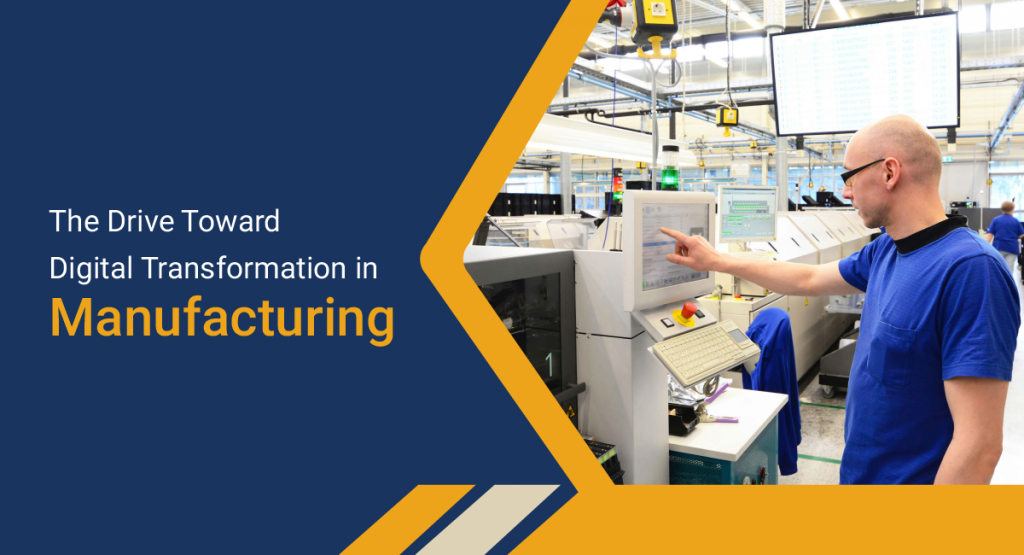
Here are the top 10 technologies that positively impact the manufacturing industry.
1. Robotics
With advances in robotics technology, robots are more likely to become cheaper, smarter, and more efficient. Robots can be used for numerous manufacturing roles and can help automate repetitive tasks, enhance accuracy, reduce errors, and help manufacturers focus on more productive areas.
Benefits of Using Robotics in Manufacturing:
- They improve efficiency right from handling raw material to finished product packing
- You can program robots to work 24/7, which is excellent for continuous production
- Robots and their equipment are highly flexible and can be customized to perform complex jobs
- They are highly cost-effective even for small manufacturing units
Collaborative assembly, painting, and sealing, inspection, welding, drilling, and fastening are a few examples of the jobs done by robots. Today, robots work in several industries, including rubber and plastic processing, semiconductor manufacturing, and research. While they are mainly used in high-volume production, robots make their presence felt in small to medium-sized organizations.
Read more: What Are Cobots and How Can They Benefit Industries?
2. Nanotechnology
Nanotechnology has grown to a great extent in the last few years. It involves the manipulation of nanoscopic materials and technology. Though its widespread use is relatively new, it will be indispensable to every manufacturing industry soon. Further research and experimental designs suggest that nanotechnology can be highly effective in the manufacturing industry.
Applications of Nanotechnology in Manufacturing:
- Create stable and effective lubricants that are useful in many industrial applications
- Car manufacturing
- Tire manufacturers are using polymer nanocomposites in high-end tires to improve their durability and make them wear resistance
- Nanomachines, though not used widely in manufacturing now, are, for the most part, future-tech
3. 3D Printing
Post its tremendous success in the product design field, 3D printing is set to take the manufacturing world by storm. The 3D printing industry was worth USD 13.7 billion in 2019 and is projected to reach USD 63.46 billion by 2025. Also known as additive manufacturing, 3D Printing is a production technology that is innovative, faster, and agile.
Benefits of Using 3D Printing in Manufacturing:
- Reduces design to production times significantly
- Offers greater flexibility in production
- Reduces manufacturing lead times drastically
- Simplifies production of individual and small-lot products from machine parts to prototypes
- Minimizes waste
- Highly cost-effective
Major car manufacturers use 3D printing to produce gear sticks and safety gloves.
Read more: 3D Printing: Fueling the Next Industrial Revolution
4. The Internet of Things (IoT)
IoT in manufacturing employs a network of sensors to collect essential production data and turn it into valuable insights that throw light into manufacturing operational efficiency using cloud software. This connectivity had brought machines and humans closer together than ever before and led to better communication, faster response times, and greater efficiency.
Benefits of Using IoT in Manufacturing
- Internet of Things (IoT) reduces operational costs and creates new sources of revenue
- Faster and more efficient manufacturing and supply chain operations ensure a shorter time-to-market. For instance, Harley- Davidson leveraged IoT in its manufacturing facility and managed to reduce the time taken to produce a motorbike from 21 hours to six hours.
- IoT facilitates mass customization by providing real-time data essential for forecasting, shop floor scheduling, and routing.
- When paired with wearable devices, IoT allows monitoring workers’ health and risky activities and making workplaces safer.
The ongoing pandemic has expanded the focus on IoT due to its predictive maintenance and remote monitoring capabilities. Social distancing makes it difficult for field service technicians to show up on short notices. IoT-enabled devices allow manufacturers to monitor equipment’s performance from a distance and identify any potential risks even before a malfunction occurs. Additionally, IoT has enabled technicians to understand a problem at hand and come up with solutions even before arriving at the job site so that they can get in and get out faster.
Read more: Upcoming IoT trends that can shape the business landscape
5. Cloud Computing
After making its presence felt in other industries, cloud computing is now causing ripples in manufacturing. From how a plant operates, integrating to supply chains, designing and making products to how your customers use the products, cloud computing is transforming virtually every facet of manufacturing. It is helping manufacturers reduce costs, innovate, and increase competitiveness.
IoT helps improve connectivity within a single plant, while cloud computing improves connectivity across various plants. It allows organizations across the globe to share data within seconds and reduce both costs and production times. The shared data also helps improve the product quality and reliability between plants.
Read more: Why It’s Time to Embrace Cloud and Mobility Trends To Recession-Proof Your Business?
6. Big Data
The manufacturing industry is complicated in terms of the variety and depth of the product. As far as opening new factories in new locations and transferring production to other countries is concerned, companies can leverage big data to tackle it.
As the process of capturing and storing data is changing, new standards in sharing, updating, transferring, searching, querying, visualizing, and information privacy are arising. Think of manufacturing software like MES, ERP, CMMS, manufacturing analytics, etc. When integrated with big data, these can help find patterns and solve any problems.
Benefits of Using Big Data:
- Improve manufacturing
- Ensure better quality assurance
- Customize product design
- Manage supply chain
- Identify any potential risk
Explore our use case: Adding New Dimensions to Equipment Maintenance with IIoT, AR, and Big Data

7. Augmented Reality
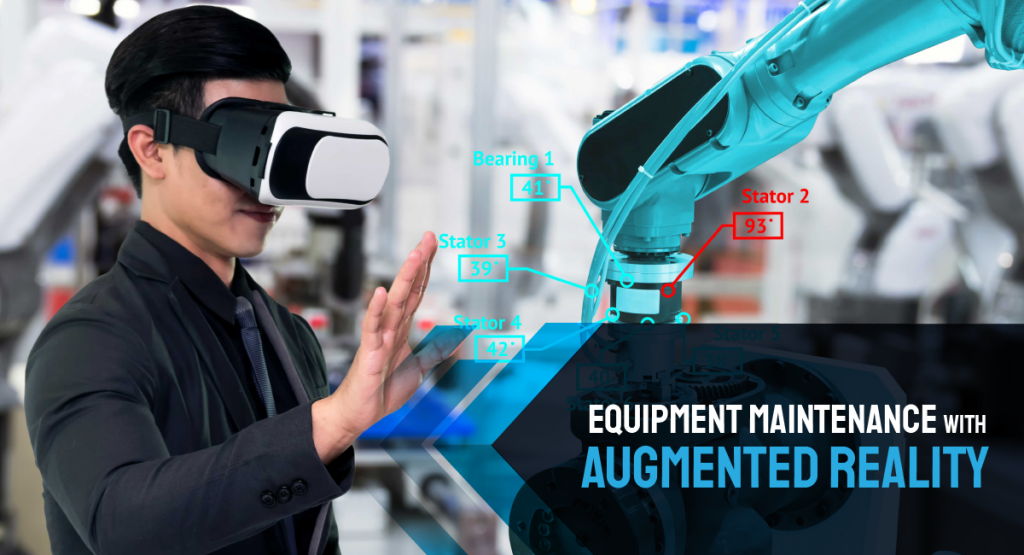
In manufacturing, we can use AR to identify unsafe working conditions, measure various changes, and even envision a finished product. Augmented Reality can help a worker view a piece of equipment and see its running temperature, revealing that it is hot and unsafe to touch with bare hands. An employee can know what’s happening around them, like what machinery is breaking down, a co-worker’s location, or even a factory’s restricted sites. Simply put, AR applications can help inexperienced employees to be informed, trained, and protected at all times without wasting significant resources.
AR has made it possible for technicians to provide remote assistance by sending customers AR and VR enabled devices and helping them with basic troubleshooting and repairs during the COVID-19 crisis. Also, more and more customers are open to allowing manufacturers to implement AR with the long-term goal of creating permanent solutions. After all, it helps both the customers and field technicians by reducing the risk of exposure.
Read more: How Augmented Reality Can Simplify Equipment Maintenance
8. 5G
5G will have a tremendous impact on the manufacturing industry. It will be more transformational for devices that drive automated industrial processes.
The amazing low-latency and connectivity of 5G will power sensors on industrial machines. It will help generate a lot of data that will open new avenues of cost savings and efficiency when combined with machine learning. Currently, China and South Korea are leveraging 5G this way. Soon the US and the UK are expected to compete with them.
Read more: From Remote Work to Virtual Work, 5G is Reinventing the Way We Work
9. Artificial Intelligence(AI)
Manufacturers are already employing automation on the plant floor and in the front office. In the future, AI-powered demand planning and forecasting will continue to develop that will help manufacturers align their supply chain with demand projections to get data that were not possible previously.
A study from IFS shows that 40% of manufacturers plan to implement AI for inventory planning and logistics and 36% for production scheduling and customer relationship management. 60% of the respondents are said to focus on productivity improvements with these investments.
Read more: The Future of Artificial Intelligence – A Game Changer for Industries
10. Cybersecurity
Moving manufacturing operations to the cloud and building and integrating systems using IoT will equally create opportunities and challenges. In an increasingly insecure digital era, there is a pressing need for heightened security.
Manufacturing experts are investing in secure cloud-based ERP like SAP and Odoo to resolve the security challenges. Enterprises-big or small- will soon increase their dependence on cloud-based ERP systems to address security glitches and save costs by paying for usage.
Read more: Top 6 Reasons Why You Should Move to a Cloud-Hosted ERP
White Paper: What difference does RPA bring to your business? How can you embrace this disruptive technology to remain competitive? Download to learn more!
Conclusion
Technologies for manufacturing will decrease labor costs, improve efficiency, and reduce waste, making future factories cheaper and more environment-friendly. Additionally, improved quality control will ensure superior products that will benefit both the consumers and the manufacturers.
COVID-19 has changed the way the manufacturing industry operates. If your business wants to remain competitive, you will have to embrace manufacturing technologies to shape your company’s future. To know more about the forward-thinking strategies that integrate the latest trends and technologies, please connect with us today.
Stay up to date on what's new
About the Author
Featured Blogs
Stay up to date on
what's new
Talk To Our Experts
SAP Analytics Cloud: 7 proven ways it can help your business
From manufacturing to marketing, businesses worldwide face unforeseen challenges as they continue to meet the impact of the COVID-19 pandemic. Many organizations are accelerating digital transformation, establishing variable cost structures, and implementing agile operations to emerge from the pandemic stronger.
While most companies believe that the pandemic will negatively impact their business, some businesses feel that the consequences will be short-term. Although most firms have been affected by the pandemic, a survey shows that two-thirds of micro firms are severely affected by the crisis than 42% of the large companies.
Amidst this uncertainty, companies must consider how the pandemic’s continuation or return in different regions will impact their recovery strategies. Businesses must face this uncertainty by reassessing assumptions, re-evaluating scenarios, and strengthening their ability to respond.
Read more: 11 Practices Followed by Leaders to Build Resilience and Ensure Rapid Business Recovery
Simply put, now is the time for businesses to focus on supporting critical areas of their business that will help them stay relevant in the new environment and plan new strategies for what’s next.
Critical areas for businesses to focus presently
- Workforce
- Finances
- Operations and supply chain
- Strategy and branding
- Tax, trade, and regulatory
- Crisis management and response
What can businesses do?
- Leverage their crisis management team to focus on efforts in the wake of the crisis.
- Shift your focus on bringing back employees to work, assess your company’s response efforts to date, and evaluate areas for real-time course corrections.
- Use the insights the crisis has provided to help chalk out better strategies and capitalize on the opportunity for transformation.
SAP Analytics Cloud has changed the way businesses plan their strategies. It is a robust, agile analytics platform that helps firms arrive at faster and improved business decisions. Moreover, it delivers insights that can be used for enhanced decision-making and optimize resources across all processes.
Read more: How SAP Supports Effective Business Continuity Planning
Combining our functional and industry expertise with SAP Analytics Cloud, Fingent delivers analytics solutions that drive your competitive advantage, reduce costs, and increase revenue.
What is SAP Analytics Cloud?
SAP Analytics Cloud or SAC is one of the best SaaS solutions that combines all the functionalities such as planning, predictive, business intelligence, and more in one user interface. It helps save time and effort while making improved decisions.
SAP Analytics Cloud comes in two modes: Private and Public. As the name suggests, the Private edition hosts only one customer while the Public edition offers multi-tenancy. Also, cost-wise, the public edition is less expensive than the private edition.
Also read: Fingent offers e-Invoicing integration for SAP ERP users in India – Stay compliant with GST India e-Invoicing

Top 7 business challenges solved by SAP Analytics Cloud
1. Planning and consolidating financial strategy in one solution
SAP Analytics Cloud puts together- planning, predictive, Business Intelligence, and augmented analytics competencies into a simple cloud environment that allows you to consolidate your finances, expenses, and revenues at a single source across your whole organization.
2. Discovering useful insights
SAP Analytics Cloud joins hands with machine learning and augmented analytics to help convert insights that deliver value across your business.
Augmented Analytics allows you to explore your data automatically, discover cycles and trends, and identify possible ways to effectively chalk-out your expenses and cost plans. These intelligent insights can be turned into an actionable plan using a personal sandbox environment that helps visualize your performance metrics and simulate potential budget outcomes.
3. Aligning plans across your business
There’s no denying that financial and operational planning is a must when working with multiple teams and stakeholders. SAP Analytics Cloud helps you make smart decisions. It comprises several collaborative enterprise planning tools that allow you to link and align your expense and cost plans across departments such as HR, sales, finance, marketing, IT, and supply chain in real-time. These benefits eliminate the need for sending out unnecessary emails enclosed with irrelevant plans and avoid collaborating without context.
SAP Analytics Cloud allows you to create and assign tasks with the calendar, communicate with your team in real-time with the discussion panel, and collaborate directly on your plans with the data point commenting tool.
4. Improving planning cycles with predictive analysis
Gone are the days of the tedious manual building of your expense forecasts. SAP Analytics Cloud includes exceptional machine learning and predictive analysis technology that can help you build accurate expenses and cost plans much faster.
You can use the predictive features to automate baseline expense planning forecasts based on previous data. You can then monitor plan attainment with real-time, up-to-date predictive forecasts. Its accuracy indicators enable data analysts (without any technical knowledge) to trust the data-driven predictions before including them into their planning process directly.
5. Enhancing strategic business decisions
With SAP Analytics Cloud machine learning technology, you can convert insight into action within seconds. Automated technology helps you avoid agenda-driven and biased decision-making as it provides you with insights that drive your business.
- Search to Insight – Natural language query generates visualizations to answer your questions instantly. Machine learning technology provides you with important trends quickly.
- Smart Insights – Machine learning technology helps you save time and focus more on high-value activities by allowing you to understand the significant contributors of data points without the need to pivot your data manually.
- Smart Discovery – This allows you to identify key influencers and relationships in your data to help you understand how business factors influence performance. Also, it can detect anomalies and help you take corrective measures. With machine learning projection, anyone can simulate the impact of strategic business decisions.
Case study: Automated Integration between SAP SuccessFactors-Employee Central and SAP S/4HANA – Find how Fingent helped the customer gain real-time insights for improved decision-making

6. Data modeling
SAP Analytics Cloud helps you plan and build the right model where your data is stored efficiently. With this end-to-end solution, you can immediately take action and start planning. The data modeling feature allows you to prepare your data for analysis. “Models” and “Stories” are the two key components of SAP Analytics Cloud’s BI function. Models allow you to enhance your data by cleansing, wrangling, establishing hierarchies, defining rules and conditions, and adding formulas. Stories give life to your data by letting you visualize your information through charts and graphs, which will help you gain valuable business insights.
7. End-to-end industry dashboards
SAP Analytics Cloud offers business content packages tailored to individual analytic scenarios. Each package entails aesthetically built dashboards, stories, and data models carefully designed for specific lines of business and end-to-end business scenarios. Also known as Analytics Content Network, this business content library offers tried and tested best practices for leveraging your available data and accelerating your go-live. The content network is customized to work with existing SAP data sources such as SAP S/4HANA or SAP C/4HANA.
Read more: SAP Focused Industry Templates & Automation Solutions
Today, businesses need to forecast changes ahead of time. SAP Analytics Cloud helps to anticipate and plan for the impact of the crisis on business. How a business responds to challenging situations determines its strength and potential to recover.
Fingent is an SAP Silver Partner. With our expertise in cloud computing and SAP services, we can support you through this critical time and help stabilize your business operations and strategize for the future. Get in touch with our expert to discuss your requirements.
Stay up to date on what's new
About the Author

Featured Blogs
Stay up to date on
what's new

