Tag: custom software development
Why your business needs to adopt headless CMS architecture
70% of companies are actively investing in content marketing and almost 60% of marketers rate content marketing as extremely important or very important to their marketing strategy, states HubSpot. Modern customer behavior is driving up the demand for a more flexible, customizable, and scalable CMS that is adept to deliver the experience your customers expect. When compared to traditional CMS, Headless CMS enables organizations to speed up delivery times while iterating quicker. This blog walks you through seven specific business benefits of headless CMS. Let’s begin by understanding what headless CMS is.
What is meant by Headless CMS?
A headless CMS allows us to edit CMS and database without an integrated presentation layer. The integrated presentation layer, which is referred to as a ‘head’, restricts the use of content only to one particular channel such as a website. Once CMS is severed from the head, it could be used across various other platforms such as a mobile, tablet, and smart devices, making it ideal for the current business scenario.
Read more: 5 Convincing Reasons To Adopt The Headless CMS Sanity.io
7 Business Benefits of Adopting a Headless CMS
1. More flexible
Since headless CMS is API driven, it allows you to build your own head or a presentation layer/ frontend. Besides enjoying the ability to pick your programming language, your developers can develop the website without having to conform to any proprietary development constraints. A single piece of content can be reused or combined with various other presentation outputs enabling faster project completions.
A headless CMS allows secure and easy integration with any of your existing business systems. Additionally, since it does not have a fixed structure to code, your developers are at liberty to code for any type of integration. This gives them the flexibility to integrate with more complex systems.
For example, Sanity.io is a popular headless CMS that allows you to embed editable data in running text and cache multiple queries on a single request. It also provides real-time collaboration, content versioning, and live previewing.
2. Supports Omnichannel Selling
For marketers to provide a customer-pleasing experience, each channel used by the business would require access to the current product information and availability. It can be quite a challenge to create iconic content that shines across all touchpoints. Instead, a headless CMS provides the capability to orchestrate a seamless experience across all touchpoints while maintaining consistency and relevance. For instance, Sitefinity empowers brands to deliver a personalized experience across channels.
3. Headless CMS is Future-Proof
A headless CMS enables businesses to future-proof their applications by separating the presentation layer from the data and logic layer. You can structure your content to facilitate future-proofing for new projects. Also, you would not be required to make any technical changes when re-branding one or more channels. Sitecore is a leading headless CMS that offers enterprise-class search and content targeting to boost personalization efforts, among other things.
4. Cost-Effective
It is a lot cheaper for your business team to create a new functionality because headless CMS requires little technical involvement. For example, if your marketing department chooses to create a new series of product mini-sites, they do not have to depend on developers to build CMS-based templates. Instead, the marketing team can directly go to the CMS and start creating the mini-sites as and when required, reducing your up-front costs. Kentico CMS, for instance, comes with tailored custom pricing. Websites of popular brands like Sony and Starbucks are powered by Kentico.
Read more: Top 6 Tech Stacks That Reign Software Development in 2020
5. Offers Better Software Architecture
A headless CMS is architected to decouple CMS platforms and published content. This strengthens security because access to the CMS is restructured internally within the organization. It increases scalability simply by spinning up a new app server and pointing it to the content. It remains available against all odds because even when the CMS application goes offline, web applications will not have an impact. Episerver, the leading WCM platform supports editors to drag-and-drop content to create new digital experiences quickly.
6. Allows you to do more with less
Organizations will no longer need large teams of specialists with particular CMS knowledge, unlike the requirements for a traditional CMS.
7. Lets You Focus on Your Business
Worrying about your CMS can be time-consuming and distracting. A traditional CMS structure can take your attention away from growing your business. Whereas Headless CMS allows you to use your precious time and resources to grow your business. Being a multi-tenant system, it is fully managed and upgraded for you.
Read more: Top 5 benefits of outsourcing software development services
A Step Forward
Apart from these, there are several other reasons why businesses must consider a headless CMS. The important aspect to consider is how you want to manage and store content for products and articles. This can have an impact on websites, application performance, and conversions. Hence, as marketers, it’s time to take a step beyond traditional CMS.
If you’re considering a headless CMS to improve your digital content experience, send us a message immediately.
Stay up to date on what's new

About the Author

Featured Blogs







Stay up to date on
what's new



Talk To Our Experts

“Give me six hours to chop down a tree and I will spend the first four hours sharpening the axe.”
– Abraham Lincoln
Stay up to date on what's new
About the Author

Featured Blogs
Stay up to date on
what's new
Talk To Our Experts
How AI is bringing change to the software testing practice
Artificial Intelligence is penetrating into multiple functions performed by the software industry. In software testing, the technology holds the potential to be a game-changer. Imagine the capability of your software to test and diagnose itself and make self-corrections! This will lead to huge savings on your resources. With this in mind, let’s try and understand exactly how AI will impact the traditional way of software testing.
Before we proceed, let’s get one thing clear – Do we really need AI in software testing?
Do We Really Need AI in Software Testing?
Software testing came into existence as a result of the evolution of development methodologies. It fed the need for robust, error-free software products. Testing was a laborious task for sure. However, automating software testing required traceability and versioning, both of which were critical and needed careful consideration. Something was needed to resolve this.
As businesses move towards digital transformation and the software market continues to grow, businesses expect a real-time risk assessment across all stages of the software delivery cycle. AI in software testing is the right response to these challenges. AI can develop error-free applications while enabling greater automation in software testing. This helps meet the expanded, critical demands for testing. It improves the quality of engineering and reduces testing time allowing the tester to focus on more important things. The verdict is clear then – We Really Need AI for Software Testing!
Five Impressive Ways AI Impacts Software Testing
1. Improves object application categorization
AI is widely used in object application categorization. When tools and testers are created, unique pre-train controls can be created. Once the hierarchy of the controls is categorized, testers can create a technical map to obtain labels for the different controls.
In the near future, AI will become capable of observing users perform exploratory testing on the testing site. And once user behavior is assessed, it can assign, monitor, and categorize the risk preference.
2. Automation of test case writing
Gone are the days of web crawlers. As automation is picking momentum, AI tools have become capable of learning business usage scenarios of test applications.
Related Reading: Unconventional Ways Artificial Intelligence Drives Business Value
They can automatically collect insightful data such as HTML pages, screenshots and page loading time and eventually train ML models for expected patterns of the app. And as soon as they are executed, any variations are marked as potential issues. This makes it easier for the tester to find and validate differences and fix issues.
3. Enhanced accuracy
To date, source analysis requires human resources to accomplish the task. Unfortunately, because of the enormity of the data, even the best experts could overlook, or miss out on observing certain critical defects. Human error and the tendency to lose focus further impairs the experts involved in software testing. It can be disastrous if bugs caused by these errors are caught by consumers before project stakeholders. Product positioning and brand reputation can be jeopardized.
Thankfully, AI can teach systems to learn source analysis and, in the future, apply this acquired knowledge. This ensures that testers have greatly enhanced accuracy. It eliminates the probability of human error and also shortens the time to run a test and increases the possibility of finding defects or bugs.
4. Automation without the user interface
AI-based techniques can be applied for non-functional tests such as performance, security and unit integration. It can also be applied on various application logs which assists in developing auto-scaling capabilities such as bug prediction.
AI algorithms can enhance UI testing, predict the next test, determine the outcomes for subjective and complex tests and much more. In other words, AI could increase the overall test coverage while it increases the depth and scope of the test itself.
5. Reduces cost and decreases time to market
The need for manually repeating a test is time-consuming and extremely expensive. But with AI, such tests can be automated to repeat several times over. Each time the software test is repeated automatically, the source code gets modified to correct any bugs. This eliminates the additional cost of repeating the test and increases the speed of the test from days to hours, which in turn saves more money.
Related Reading: Quality Assurance in Software Testing – Past, Present & Future
Allow AI to Revolutionize your Business
AI has proven to have a significant impact on software testing with its benefits ranging from optimization to extraordinary savings. It enables testers to move beyond the traditional route and dive toward precision-based testing processes. This can prove invaluable to your business. To find out how you can make this happen for your business, contact us.
Stay up to date on what's new
About the Author
Featured Blogs
Stay up to date on
what's new
Talk To Our Experts
Fingent Receives High Praise from Leading Businesses Around The World!
In today’s increasingly digital marketplace, technology is key to gaining a competitive advantage. Of course, with technology advancing at an unprecedented rate, determining how to most effectively deploy the latest technologies is easier said than done. As a top custom software development company, we build high-quality, cost-effective web and mobile solutions that deploy the newest technologies and meet all of your enterprise needs.
We’re committed to delivering the best quality and customer service — and for that reason, we’re a trusted partner to some of the world’s leading enterprises and businesses.
We know how important it is for potential buyers to peruse client testimonials and understand what it’s like to work with us before signing a contract, and that’s why we’ve partnered with the ratings and reviews platform Clutch.
Of more than 300 firms, Clutch ranks us among the top 3 software developers in NY! Clutch determines industry leaders based on market research and client feedback, so we’re immensely grateful to the clients who have left reviews for us. One of our recent reviews was from Wage CALC, a company that provides attorneys and legal professionals with a better way to manage their wage and hour cases with wage & analysis software.
Wage CALC was in need of custom software development services. They were looking for a trustworthy, well-known developer — and they found us on Clutch! Deploying a Microsoft Excel prototype that they’d created, we built their cloud-based app from the ground up.
“I’ve had such an excellent experience with them. Fingent exceeded my expectations.” — Founder & CEO, Wage CALC
The client was impressed that we were able to break down their complex, formula-heavy prototype. They commended our professional and responsive team and were particularly appreciative of how our SVP helped to streamline communication between our team in India and theirs in California.

We received another 5-star review from a large transportation and logistics company that specializes in oil and gas equipment pickup and delivery. There’s a significant technology gap when it comes to processing orders, invoicing, and workflow management within the logistics industry, and we were prepared to change that.
We developed an end-to-end transportation management solution. The solution allows customer service representatives to assign vehicles for order pickup and delivery, while drivers can use a mobile version of the solution to send documentation and process tickets and billing. The company’s accounting team also uses the system to do invoicing, collect payments, and close orders.
“The management system is light years ahead of anything else in our industry.” — IT Director, Transporation Company
The client appreciated our consistency and availability, along with our team’s impressive knowledge and talent.
Meanwhile, The Manifest, Clutch’s partner site listing market experts, ranks us as the #1 custom software development company.
Fingent is not just recognized by the Clutch! A few well-known rating sites like the Software World, have also appreciated Fingent for its expertise in software development and technology solutions.
Learn more on why Fingent is the most trusted Tech Partner for emerging enterprises, and how our expertise can benefit your business. Contact us today — we offer free consultations!
Stay up to date on what's new
About the Author

Featured Blogs
Stay up to date on
what's new
Talk To Our Experts
Testing Types And Strategies: Choosing A Testing Method
Understanding the basics of software testing is crucial for developers and quality assurance specialists equally. To deploy a better software and to find bugs that affect application development, it is important to learn about the different types of software testing.
Types Of Software Testing
Testing is a process of executing a software program to find errors in the application being developed. Testing is critical for deploying error-free software programs. Each type of testing has its advantages and benefits. Software testing is broadly categorized into two types; Functional and Non-Functional testing.
Functional Testing Versus Non-Functional Testing
Functional Testing is used to verify the functions of a software application according to the requirements specification. Functional testing mainly involves black box testing and does not depend on the source code of the application.
Functional Testing involves checking User Interface, Database, APIs, Client/Server applications as well as security and functionality of the software under test. Functional testing can be done either manually or by making use of automation.
The various types of Functional Testing include the following:
- Unit Testing
- Integration Testing
- System Testing
- Sanity Testing
- Smoke Testing
- Interface Testing
- Regression Testing
- Beta/Acceptance Testing
Non-Functional Testing is done to check the non-functional aspects such as performance, usability, reliability, and so on of the application under test.
The various types of Non-Functional Testing include the following:
- Performance Testing
- Load Testing
- Stress Testing
- Volume Testing
- Security Testing
- Compatibility Testing
- Install Testing
- Recovery Testing
- Reliability Testing
- Usability Testing
- Compliance Testing
- Localization Testing
The 7 Most Common Types Of Software Testing
Type 1: Black-box Testing
Black-box testing is applied to verify the functionality of the software by just focusing on the various inputs and outputs of the application rather than going deep into its internal structure, design, or implementation. Black-box testing is performed from the user’s perspective.
Type 2: White-Box Testing
The White-Box software testing strategy tests an application with access to the actual source code as well as focusing on the internal structure, design, and implementation. This testing method is known by different names such as Open Box testing, Clear Box Testing, Glass Box Testing, Transparent Box Testing, Code-Based Testing, and Structural Testing. White-box testing offers the advantage of rapid problem and bug spotting.
Type 3: Acceptance Testing
Acceptance Testing is a QA (Quality Assurance) process that determines to what extent a software attains the end user’s approval. Also known as UAT (User Acceptance Testing) or system testing, it can be testing the usability or the functionality of the system or even both. Depending on the enterprise, acceptance testing can take the form of either end-user testing, beta testing, application testing, or field testing. The advantage of acceptance testing is that usability issues can be discovered and fixed at an early stage.
Related Reading: Quality Assurance in Software Testing – Past, Present & Future
Type 4: Automated Testing
Automated testing is a method in which specialized tools are utilized to control the execution of various tests and the verification of the results is automated. This type of testing compares the actual results against the expected results. The advantage of automated testing is that it avoids the need for running through test cases manually, which is both tedious and error-prone, especially while working in an agile environment.
Type 5: Regression Testing
Regression testing is a testing practice that verifies whether the system is still working fine, even after incremental development in the application. Most automated tests performed are regression tests. It ensures that any change in the source code does not have any adverse effects on the application.
Type 6: Functional Testing
Functional Testing tests for the actual functionality of the software. This type of testing focuses on the results of the system processing and not on how the processing takes place. During functional testing, the internal structure of the system is not known to the tester.
Type 7: Exploratory Testing
As the name indicates, Exploratory testing is all about exploring the application where the tester is constantly on the lookout for what and where to test. This approach is applied in cases where there is no or poor documentation and when there is limited time left for the testing process to be completed.
Related Reading: A Winning Mobile Testing Strategy: The Way to Go
All the methods mentioned above are only some of the most common options of software testing. The list is huge and specific methods are adopted by development vendors based on the project requirements. Sometimes, the terminologies used by each organization to define a testing method also differ from one another. However, the concept remains the same. Depending on the project requirement and scope variations, the testing type, processes, and implementation strategies keep changing.
Like to know more about Fingent’s expertise in custom software development and testing? Get in touch with our expert.
Stay up to date on what's new
About the Author

Featured Blogs
Stay up to date on
what's new
Talk To Our Experts
How Logistics Companies Can Gain Competitive Advantage with Customized Software Solutions?
Fluctuating consumer demands, increasing client requirements, and complex business models are posing critical challenges for logistics companies today. According to predictions made earlier this year, two major drawbacks are to be witnessed in the industry.
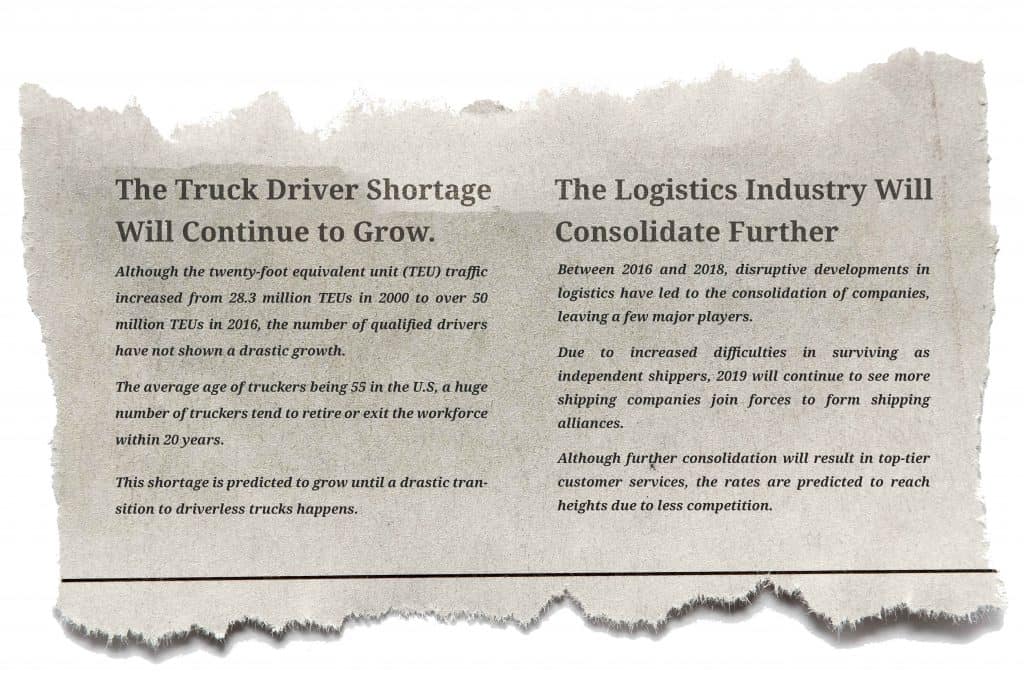
With drastic changes hovering over the logistics industry, the players are bound to stay equipped with the emerging technology trends, or they might get caught off guard. While its turning imperative for logistics companies to transform with smarter technologies, the question of whether to choose a custom software or an off-the-shelf package still lingers in many minds.
Why Choosing Customized Solutions Over Packaged Software Considered Profitable In Logistics?
Purchasing an off-the-shelf software would sound comparatively simple, stress-free and time-effective. But in the long run, it’s always a custom-built solution that pays off.
Most packaged logistics software, although sophisticated and deployed of disruptive technologies, pose standard solutions for the industry as a whole. Of course, they solve the major supply chain hassles. But with every business, possessing unique procedures, workflows, and objectives, “not everyone fits the same mold”.
So what happens when you choose a packaged software solution for your logistics business?
1. A packaged software often comes with hordes of features. This sure sounds exciting at the beginning. But when you have to pay for more than you use, it sure isn’t a happy moment! Off-the-shelf software solutions are often crafted considering the large players of the industry. Their features focus on resolving the common challenges faced by these companies.
However, in a complex industry like logistics, it’s not always necessary for every company to face the same kind of issue. Hence, with packaged software being available as a whole for a single price, businesses usually end up wasting money on features they do not need.
2. Off-the-shelf logistics software utilizes the latest and advanced technologies to cater to the complexities of an industry. But however, at times these sophisticated technologies complexes situations even further. For companies with basic knowledge on latest technologies, would definitely find it difficult to carry out operations successfully with a sophisticated system.
Moreover, they would have to spend extra time and money on training staff, which is not reasonable in a highly competitive industry like logistics. As mentioned before, with plenty of features, packaged solutions often prove to be less user-friendly and more complicated.
3. Although packaged solutions solve a list of logistics hurdles, their features might not provide a complete automated solution. You might find a good Transportation Management System (TMS) that enables real-time tracking and automated reporting, but you might still have to communicate with your customers, and assigned drivers manually.
Also, an efficient packaged TMS system might have an integrated warehousing management system, but might not facilitate an appropriate billing system, leaving the need to adopt alternate transaction processing systems. Hence, in a nutshell, complete automation is often unattainable with packaged software solutions.
4. The most eminent reason to not opt for a packaged solution is that they are rigid. There is hardly any packaged software company that allows customization. It’s not only rare to find a packaged software that caters to all your business-specific needs, but it also proves to be non-scalable in the long run.
Growth in your business and changes in the market will bring about an increase in your technology requirements. This will result in the need for a solution that can be customized with your growing business necessities.
Customized logistics software eliminates all the above-mentioned drawbacks of a packaged solution. Plus, it always comes with continuous technical assistance to simplify the technology transition in your company.
Let’s take a quick look at how a customized Transportation Management System can help you battle logistics challenges better.
Digital Transformation of a Logistics and Supply Chain Company – A Client Success Story
How A Customized TMS Can Enhance Your Supply Chain Efficiency?
Investing in a customized TMS can enable you to create an Uber-like platform for your logistics business. Integrating the latest in web and mobile application solutions, you can create a platform that completely streamlines your driver, client, and cash-flow management.
Enabling centralized data management, transparent billing, delivery match capabilities, along with real-time monitoring and customer insights capturing; a customized software solution can be framed to automate your entire end-to-end logistics operations.
A custom-built mobile application can further enhance productivity with less paperwork, better transparency, easy communication, and improved customer engagement. Implementing a customized solution would also let you add in innovative features that help you automate critical tasks, improve team collaboration, and increase your overall company efficiencies.
Here is a shortlist of benefits that you can acquire with customized logistic software.
1. A customized software solution gives the advantage of integrating with smarter technologies to simplify the minute challenges faced by the industry. For instance, along with assigning and managing truck drivers, a logistics company also faces difficulties in maintaining and verifying driver documents. Integrating with smart apps like Camscanner can simplify these documentation verification complexities.
2. A logistics company with varying client needs might often find difficulties in choosing apt carriers for a given order. A customized solution gives you the benefit to add in features that simplifies such decision making by suggesting the best available carriers for the orders.
3. Although packaged solutions streamline drivers assignment and management, yet they blackout on some eminent functions that logistics companies struggle to maintain. For example, calculating the detention hours/rates of the drivers are likely the most critical task of a logistics company. Through a customized logistics software you can straighten such bends of the industry.
4. With customized logistics software, a logistic company can embrace a completely streamlined and user-friendly accounting system that generates automated invoices as well as tracks any misleads or accounting errors.
Customized logistics software can simplify your logistics operations more than you can imagine. If you are looking for a tech partner to help you add in these features and more to your logistics software, then you have landed on the right page.
Fingent is one of the leading custom software companies providing advanced and user-friendly web and mobile technology solutions for logistics businesses worldwide. Contact us today to know how our custom software solutions can enhance your business abilities.
Stay up to date on what's new
About the Author

Featured Blogs
Stay up to date on
what's new
Talk To Our Experts
Custom Software Development: What To Do and Not To Do
The “build versus buys” debate in software development seems to have tipped in favor of custom software development as more and more businesses recognize the implications of customization on their growth. With rising competition, it has become imperative for each business to differentiate itself from its competitors in every way and custom software development rests at the core of this differentiation.
That being said, software development has seen its fair share of fails even when it is labeled custom. This makes it extremely important that your project is carefully planned out and well-executed. With many years of experience as custom software developers, we have put together a list of do’s and don’ts to help make your custom software development project a success. This blog will discuss 5 of them. Before that, let’s drive home the reasons why custom software is imperative for businesses.
Related Reading: Check out the top reasons why custom software development is important to your business.
Custom Software: The Backbone of Business
Custom software fulfills specific business requirements, which are unique to specific businesses. This helps businesses gain a competitive advantage and leverage the software to build processes that define an effective USP. While this in itself is an uppercut to reckon with, let’s have a look at a few more points that will help deliver the knockout punch in favor of custom software development.
- Solution Matches Need: Since custom applications are developed with your specifications in mind, the final solution will effectively address your needs. Therefore, it simplifies the entire business process saving time and effort.
- Minimal training: Tailored features make it very easy to use and require minimal training to get started on the software. When the software is optimized for each department, the interface requirements will be customized to match the needs and skill level of your employees.
- Works with your Business Model: As the custom solution is built around your business model, it will have the user roles and interoperability functions that your departments need to function effectively.
- Unique Code and Enhanced Protection: By developing a unique code that is specific to your software, custom software minimizes external threats and unauthorized access.
- Long Term Cost Benefits: Custom software helps automate several manual processes and thus saves on manpower. It also eliminates the licensing costs that accrue with off-the-shelf solutions.
- Increased Scalability: Custom software developers work on a long-term basis and can easily scale the software according to the growth of the business.
The Dos and Don’ts
There are several key steps involved in creating custom software. It involves a combination of foresight and creativity. Here are a few time-tested Do’s and Don’ts to help avoid the usual pitfalls that have been known to crop up in this process.
1. Pre-Planning
Don’t: Do not Ignore Preparation
Clients who are looking for a quick solution for their app requirements generally hire developers who agree to unreasonable deadlines. Under such circumstances, the planning and research step is often ignored and that has a ripple effect on the following stages. Not acquiring the necessary materials from the beginning can leave the company unprepared. This can lead to additional changes and the timeline for your project will have to be pushed back, not to mention escalating the costs involved.
Do: Prepare, Prepare!
The planning stage is crucial because it allows the developer to do a thorough SWOT of the idea. At this stage, some have found it helpful to include sketches or outlines and functionality options of the application. It works best to gather all the necessary information at the earliest stage to ensure your project stays on budget. This allows the project to stay on schedule.
2. Ensure its Customization
Don’t: Create for Yourself
You must have heard of the False Consensus Effect, where one thinks that others also think the same way he/she thinks. This can happen while designing the app. It is easy to put our ideas into a design and expect others to like it just because we liked it. That works contrary to the thought of customization.
Do: Keep it User-Centered
Consider carefully what the general user would appreciate. Developers must stick to the requirements drawn up at the planning stage while continuing to give their inputs on the initial ideas. Take pride in creating a user-centered app.
3. Technical Feasibility and Prototype
Don’t: Allow Misunderstandings
Misunderstanding the business’ requirements, miscommunication about the platform and the format can lead to major issues in creating the app.
Do: Keep Lines of Communication Open
Actively communicate with the team about the technical requirements and provide a timeline for building the prototype. It is difficult to visualize what an app would look like and how it will function unless there is a prototype. Ensure that you communicate frequently with management and obtain feedback at every stage of the development.
4. Design and Development
Don’t: Ignore Key Requirements
Design and development are the stages that take the most amount of time. Ignoring key requirements might lead developers to spend valuable time coding for a bad end-product. Functionality demands might be misread which leads to a loss of time and missed deadlines.
Do: Understand the Needs
It is vital to understand the UI/UX needs of the business to gain clarity and minimize work. The app will go through a lot of different changes. When changes are required, ensure that the development team and management are on the same page. Once decisions are made, stick to them.
5. QA Testing
Don’t: Be Negligent
The testing team should not be negligent towards post-development issues such as bugs, form functionalities, and security licenses. This could negatively impact the launch of the application. It could either be delayed or the app might face a post-launch backlash. Ensure that the app is not launched until all aspects have been tested and are up to the standards required.
Do: A thorough QA Test
App testing is a tedious job, but it is an important final stage. Compatibility, interface, security, and performance are some of the factors that should go through a rigorous check. Remember, after this whatever happens with the app will be in full public view.
Achieve Efficiency and Growth with Custom Software Development
Leading companies save time and costs in the long run when they customize their software according to their business model. Whether it’s creating accounting software or an HR solution or a customer-facing application, custom software allows you to choose the features you need for your business and employees. If you want to find business flexibility and growth, custom software is the right answer. It meets the needs of the company while allowing the business to grow without being limited by on-the-shelf software. To find how custom software development can do wonders to your business, call our experts today!
Stay up to date on what's new
About the Author
Featured Blogs
Stay up to date on
what's new
Talk To Our Experts
Find Business Success with Agile Software Development Methodologies
Agile software development methodologies have proven their mettle in recent years and “agile” is becoming a buzz word in software development and project management. It makes sense, therefore, to understand what drives the success of these methodologies and consider if your business could benefit from implementing it.
What is the Agile Software Development Methodology?
Agile Development works on the principles of iteration and incremental development. It does not rely on a linear method approach but focuses on rapid delivery of fully functional application components. The focus is not on tasks, but on time phases called “sprints.” These sprints are of specific duration and begin with a detailed plan of what is to be delivered at the end of a sprint. Continuous testing, feedback, and improvement are vital aspects of the agile methodology.
At the heart of the agile methodology is its focus on individuals and interactions rather than processes and tools. Rather than focusing on comprehensive documentation to prove a project’s worth, the primary measure of progress in agile methodology is delivering working, tested software. This serves as a basis for collaboration between teams and customers, gaining feedback and swiftly responding to change. Value-driven development is given prime importance with the focus on delivering visible results and business value continuously. This way, stakeholders and projects have complete visibility on where the project stands and the business value they can expect at any given point of the project.
Scrum is an important aspect of the agile methodology and deserves a mention in the context of discussing agile methodologies. Using the principles of agile methodology, Scrum advocates a self-organizing and cross-functional team. The Scrum method is supported by two specific roles – the Scrum Master (who acts as the coach to direct teams towards agility and high performance) and the Product Owner (who helps the team build the right product and represents the company and end users).
Why Agile Methodology Trumps Traditional Development Methods
There are many reasons why Agile Methodology is being favored over traditional methods worldwide. We have listed out a few:
Faster and Better Workflow:
Agile Methodology is completely different from traditional Waterfall Methodologies, where projects follow a linear approach and progress from one step to another only after the previous step is completed. The traditional time-consuming method of relying on comprehensive documentation and analysis before the design and commencement of the project is eliminated.
Implementation and development begin almost immediately in agile development and the processes and development is refined in increments based on continuous feedback from customers and project teams. This also cuts out the verification and maintenance stage in the Waterfall Method, where the end product is tested, bugs are fixed, and the code is maintained. In the agile method, this testing and bug fixing is already being done continuously throughout the project, ensuring that the final product is refined and ready to be deployed.
Multilevel and continuous planning:
The absence of detailed analysis before implementation in agile methodology does not mean that the project is initiated without any substantial planning. On the contrary, multi-level and continuous planning is a vital feature of the agile development methodology. The planning follows a just-in-time approach, which aligns the information available with what details are necessary at the time.
The planning usually happens on at least two levels – the release level and the iteration level. At the release level, planning involves identifying and prioritizing the necessary features required in the software. This gives a basis to decide which features must be worked on first. Planning at the iteration level involves which features must be implemented next and the optimal size of batches which can be practically delivered in a single iteration.
Customer Focus:
The most important feature of agile methodologies is that it places the customer at the center of the development process. Teams are directed to think of product design through user stories and use cases, which ensures that customers are always kept at the heart of the process. User stories specify the needs of the end users and the various scenarios that they will use to fulfill that need.
Use cases show how the product developed will help end users achieve the outcome they want in the user story. In this way, the whole development process becomes focussed on what the customer needs. This is the foundation of Customer Experience (CX), which is fast becoming the defining success factor for companies today.
Related Reading: Read on to know how customer experiences reshape a company’s brand identity.
Business Success with Agile Software Development Methodologies
Businesses the world over are embracing and implementing agile methodologies in their efforts to improve their project management capabilities and improve performance. The 9th Global Project Management Survey, which surveyed 3,234 project management professionals from all over the world attests to this fact.
According to the survey, 71% of organizations use Agile approaches in their business. “We believe that agility could also be used in multiple ways— in everything we do,” says Phillippe Husser, a survey respondent and Senior Partner of Progress Direction Michelin. “In fact, the world is changing very quickly around us, so much so that we cannot afford anymore to have projects taking two to five years to deliver, because, during this time, the initial requirements have changed.”
Case in Point: Ericsson
Ericsson is a leading provider of Information and Communication Technology (ICT) to service providers and covers 40% of the world’s mobile phone traffic. The company with around 100,000 employees is a classic case in point to show the successful implementation of agile methodologies even in large-sized companies.
The company used to use a plan-driven software process but switched to agile in 2012. One of their main areas of focus was to develop a XaaS platform and services that the customers would use as a service. The results have been phenomenal.
Steve Dennings, an expert on agile methodology and author of The Age of Agile, summarizes the success points of Ericsson’s adoption of agile methodologies this way: “Now with Agile management, Ericsson has over 100 small teams working with its customers’ needs in three-week cycles. The result is faster development that is more relevant to the specific needs of the customers. The client gets value sooner. Ericsson has less work in progress. And Ericsson is deploying one to two years earlier than it otherwise would so that its revenue comes in one to two years earlier.”
Find Success with Agile Software Development
Agile development and methodology is an integral part of Fingent Technologies and creating agile software products for different industry sectors such as healthcare, finance, education, entertainment and media, real estate and retail amongst others. Get in touch with us so we can discuss how you can get effective in your agile journey and find success.
Related Reading: Check out these custom software development trends that every business should know.
Stay up to date on what's new
About the Author

Featured Blogs
Stay up to date on
what's new
Talk To Our Experts
So, You– one of the key decision makers of your company, have a cool idea, a plan or a requirement for a software application, a mobile application for your business, a website, or need to automate an ineffective business process. You might have an overview of what you need, but can’t do it yourself, or you don’t know any good connections doing the job.
What would you do?
How will you choose that perfect custom software development company which can provide the best solutions among the millions of other custom software development firms out there? I am sure that you know there is a lot of difference between finding a software firm and finding the best software development company for your requirements.
The majority of the established firms out there are masters of their art providing excellent solutions and service. They are all well-experienced in creating software or applications from scratch to enterprise levels. Most of these have spent a considerable period in the industry, know the trends and are constantly striving in a market that is highly competitive and advancing day by day. So, how do you select that one provider from these many experts out there in the market? It’s indeed a very tricky job and should be done with caution. However, you will find great use of the points given below to select your right software outsourcing partner.
Identify your Needs
How can you choose the best when you don’t know what you want? Identify your business needs properly, talk to your employees, evaluate the problems and analyze the solution. Form an outline of the solution you want to meet the objectives. Depending on the nature of your project, the requirements and reputation choose offshore or onshore providers.
Check the Company’s Technical Skills and Expertise
Gather information about the company – the skill , knowledge of the team members and their portfolio working in the latest technologies in similar domain as yours, company’s experience handling projects in the particular niche/ domain, company’s skill in decoding your requirements into apt solution, the communication effectiveness, adherence to deadlines, and the like. Look for teams providing direct access to developers who can communicate well with you. Software houses with teams experienced in agile or hybrid agile methodologies are always better choices. Have casual getting to know each other kind of chats, but gather solid information in the course of your interaction, that clearly showcases their efficiency in previous works.
Check their Reputation with Others
Of course, you want to partner with the best custom software development company, but would you go for a company that is not polite and nice to work with? How scalable are their solutions? Know the company’s flexibility to get on with different atmospheres by looking at their client base and client relationship history. Check the clients’ and customers’ testimonials/reviews on platforms like Clutch, GoodFirms, etc. or connect with one of their clients through social media channels to know their opinion about the company, talk to real people via online forums, discussions and other social media to know their opinion, direct or indirect experience with this company. Doing these will sometimes leave you confused with overwhelming responses from different people, nevertheless, take an average of pros and cons and decide what cons can you overlook for better pros of the company that aligns with your requirements.
The Budget
Cost is always as important as the company’s expertise. Determine whether the cost of the project falls in your budget. Unless confident on the guaranteed ROIs, you don’t want to go bankrupt buying an over expensive software that automates parts of your business. That said, you don’t have to compromise on the quality of the software for low costs either. Certain companies price their solutions for the sheer fact of overcharging to seem like a bigger and better company. Do not forget to look for hidden or additional costs in the contract, like additional fees for documents management, annual setup/ maintenance in addition to monthly support charges, in-person training, etc.
Support your Core Business Functions with Efficient KPO Solutions.
Size of your Software Project
Is your project small, medium, large or huge? Not all companies undertake any size of custom software development projects. Certain software development companies commit only to big fishes, providing them giant, multi-year, million dollar projects. These are usually famous brands and industry experts. Whereas many smart small to medium size companies take multi-year projects. Such companies’ growth curve over a small period of time shall showcase their competency and potential. Has the company been growing fast or diminishing in size or stagnant over this period?
How Passionate are they to Develop the Solution
The company to which you outsource must understand your requirement in a way you understand and aspire to. Are they as passionate as you about this project? Are they completely dedicated to making a quality product or are they just doing a duty for money they take? These are evident from the way they suggest added features which can be included, future scopes for the product, or deny with an idea that is not quite useful. However, make sure they back their opinion with proper facts and reasons that convince you about their dedication and is not just to ‘make the task easy’ for them.
What happens in the Case of Divorce?
Jon Lincoln, business development specialist at Etfile says that, “Some vendors try shady tactics by holding your data hostage (as if they own it!) or charge an exorbitant amount to sway you from leaving”. Get proper agreement on safety and security issues and how you get your data back in case you leave the vendor. Expect some charges especially if the data was encrypted, but it shouldn’t make you bankrupt in any case.
Quality of After- Sale Support and Services:
Even the most perfect solutions guarantee only 99.9999% up-time. Unfortunately, there are no 100% perfect solutions. Even though too small, there is always a fraction of the chance that things might go wrong after delivery, especially in the case of software. So make sure your vendor company provides direct access to the technical team and offer good support, maintenance, cloud-based updates and upgrades and troubleshooting services for a fair period of time after sales.
Evaluate your Software Package Now!
Take a Test Drive
Most companies these days provide a free trial to ensure the quality of the features, benefits, and usability. Ensure that the software meets your requirements, have necessary features and functionality. During the trial, feel free to ask your vendor all the questions and doubts you may have.
Your first stepping stone to establishing your goal is choosing the right custom software development company. A fault here might lead to devastating results. So, take no chance, do thorough research and study based on the factors mentioned above. Based on our experience developing and deploying custom software for a wide range of industries and organizations of varying sizes, we believe that the Best Company is that which deliver a solution blending with your business process to the highest degree, within the stipulated cost and time and without a compromise on quality!
Stay up to date on what's new
About the Author
Featured Blogs
Stay up to date on
what's new
Talk To Our Experts
The Prelude
Software Development has shaped the economic and social face of the world in the last three decades. What was once considered gibberish and confined to the elite minds that put humans on the Moon and cracked the German Enigma is now a popular profession that has created landmarks like the Silicon Valley and icons like Bill Gates and Steve Jobs. With the spurt in revolutionary product ideas in the late 90s, the need to put those ‘ideas’ into execution demanded the best development-skills, and this ‘demand’ has been only growing with time.
This brings us to an aspect of software development that has always been a vital business decision for companies – the most cost-effective engagement model. Business Software development has moved from being a mandatory in-house requirement by relaxing its rigidness and now accepting offshore and even freelance development. Choosing the right engagement model for software development is therefore essential to create state-of-the-art products without which it is impossible to survive in this cut-throat market.
Here is what we think about choosing the right engagement model:
1) The Package Tour aka the Fixed Price Model
Imagine this: You have decided that you want to visit a popular tourist destination, and it’s just to check an item off your bucket-list. The best bet you probably have is to take up a package that includes every attraction in the city; you may even fix the sightseeing spots which interest you before the tour starts!
This is a great option if you have done some meticulous research on the places you need to visit, the distances between them, the time spent in traveling from one location to another, the opening and closing hours of museums and galleries, and so on. The flip side is that you are in no position to experience flexibility. However, you can be satisfied that everything you’d asked for was provided and that you are not paying anything more or anything less than what you had agreed on initially.
Extend this to the realm of software development engagement; if you know your requirements, and your financial and temporal limits, this ‘Fixed Price’ model is the best choice for you. The Fixed Price model can also serve as a litmus test for hiring freelancers or development partners.

The Pros:
- It’s well-defined and well-negotiated. There’s no room for lapses.
- There is a push to get the complete picture of the software even before the development starts.
The Cons:
- There is no room for flexibility. Your eureka moment of a new feature should wait to materialize.
- Any gaps in communication would mean that the delivered product could be unsatisfactory.
The Fixed Price model works best for developing products on a short-term basis with features that are hot in the market, maybe with some additions and features that give it an extra garnish of appeal!
2) The Chauffeur-Driven Hired Car aka the Time & Material Model:
So, you’ve arrived at your destination, and you are feeling a bit adventurous and you are sure that you do not wish to confine your experience to a ‘package’. So, you decide to hire a car with a driver and pay that person for the time spent and distance covered (the experience and expertise of the driver would be an added variable).
In this manner, you are free to add items to your itinerary, and you are free to remove them at your will. You feel free to stop at any place and enjoy as much as you want, as long as cost and time are not concerns.
This is what the Time and Material model feels like for both companies and freelancers alike. Great products are not built because of a moment of realization, but by systematically accumulating and integrating ideas. For this to happen, flexibility is an essential attribute, which in this fast-paced market, in Sherlock’s words, is Elementary, Dear Watson!
This model also ensures continuous communication and a transparent and healthy vendor relationship.
The Pros:
- Super-Flexible
- You Only Pay For What You Get (If only there was an abbreviation like WYSIWYG!).
- There is a definite possibility for networking, not just on professional, but also on social lines.
- Granular Monitoring on a regular basis, especially in Agile Methods.
The Cons:
- You pay until you get what you want.
- In rare instances, in unethical companies, there could be a deliberate delay in development.
We’re yet to come across a situation or an industry where this might not work; who would not want to get into a development method that is so flexible, accommodative and modular.
3) The Self-Driven Car aka the Dedicated Developer Model:

You arrive at your destination, and instead of trusting a package, or instead of hiring a car by the hour, you decide to take a car all by yourself. It doesn’t matter whether you drive your car for an hour in a day or 23 hours and 59 minutes in a day, it’s all yours. Drive it on the road, and (if the car allows) offroad – there’s no stopping you!
However, this comes with a condition – you will need to know where you’re going, and everything about where you will go, maybe not the route map, but at least the time and distance. All this might sound difficult, but at least, the comfort-point you have is that the car you’ve hired is as good as yours, except that it’s not.
Hiring dedicated developers to work like that – you can take them in-house, and you need to pay them a fixed amount on a monthly basis. Once your product is done, you can, without the guilt of firing or the pain of attrition, ask them to leave. This also means that you have saved up on the recruitment costs, and you don’t have to keep paying for a resource you no longer need.
This model brings the best of both the above models – you have agreed for a fixed payment on a monthly basis (with no hard restrictions on the product-features) and you are free to alter the product or the features, or even shuffle the resources based on their skill-sets!
The Pros:
- You are in complete control. It’s almost like having an in-house team.
- You don’t have to go through the hassles of administration and hiring.
- There is a sense of ‘belonging’ for the dedicated developers in terms of both- the product and the organization.
The Cons:
- It needs management skills and a blue-hat vision of the product to get the best out of a dedicated team.
- If you have both in-house and dedicated developers, there is a chance of conflict.
- Or even worse, there can be possible siphoning of talents!
The Verdict:
You might have already sensed that we’re leaning towards the Time and Material model as it gives significant control, and with strategic planning, it could be cost-efficient as well!
Our recommendation is still strong towards the Fixed Price model for smaller products with limited functionalities, and for short-term projects like developing a module for an already robust tool. Conversely, if your project is long-term and extensive, it makes more sense to hire dedicated developers.
Stay up to date on what's new
About the Author
Featured Blogs
Stay up to date on
what's new

