Category: Technology
A Comparison Between Tableau and Power BI: The Most Powerful Leaders In The BI Market.
Business Intelligence or BI tools are a precursor of the world-altering digital technology in this modern technology landscape. Analytics plays a key role in determining which Business Intelligence tool is a better choice. This is because the more flexible the analytics platform offered by a specific BI tool is, the more it provides businesses to customize applications that need updates. Let’s take a deeper look at how Power BI is different from Tableau and which technology promises a better future for your business.
Related Reading: Read on to learn more about Business Intelligence. What it is and how your business can get the best from it.
Tableau And Power BI
Tableau was the first and foremost to come into the market. Though both Tableau and Power BI are well-known to be able to execute fine enough, Power BI has an advantage of making itself accessible to even the no-techy users, making it possess a higher adoption rate than Tableau.
On the other hand, Power BI is ranked higher on one of the key characteristics in terms of its Data Visualization, according to Gartner’s Magic Quadrant.
However, Microsoft’s Power BI has the most user-friendly features in terms of ‘completeness of vision’ or ‘Data Visualization’ capability and has been embedded within Office 365. But Tableau offers advanced functionality and it is best considered for power users.
So to choose a BI tool that is the best fit for your business, it is important to first learn about the analysis needs. In the recent decade, Power-BI and Tableau have emerged as the two powerful BI tools.
Let us look at how companies can choose the best for their business from the following key factors:
Cost
Cost of Tableau is on the higher side when it comes to larger enterprises. The primary reason for this premium cost is the need to build data warehousing. Thus, it is advisable for a startup to choose Power BI initially and then consider Tableau when required.
The professional version of Power BI costs you less than 10$ whereas, on the other end, Tableau would cost you more than 35$ per month per user.
Reporting
Power BI supports Predictive Modelling and Reporting when on the other side, Tableau opts for Data Visualization.
With Power BI, we can create visualizations by queries and natural language. Say, for instance, Cortana PDA (Personal Digital Assistant). Power BI is said to place a 3500 limit when it comes to conducting analysis on data sets.
Tableau can be the best choice when it comes to Data Visualization. With a user-friendly dashboard, Tableau allows an in-depth data analysis. As compared with Power BI, Tableau offers more visualization flexibility.
With Tableau, we are able to create 24 different types of basic visualizations. This includes heat maps and line charts.
Functionality
The functionality associated with Tableau with respect to Data Searching is on the higher side than when compared to that of Power BI.
Tableau tends to answer more queries from users as compared to Power BI.
Large Data Handling Capacities
In case of processing large chunks of data, the capacity of Tableau is over and above that of Power BI.
Power Bi handles data via import functionality and hence is slower to process large volumes of data as compared to Tableau that makes use of direct connections for the same purpose.
Data Connectors
Tableau offers, convenience for data connectors. For example, OLAP (OnLine Analytical Processing), cloud and also big data options such as Hadoop and NoSQL. Tableau can automatically determine the relationships of data that users add from various data sources. It also provides for the creation and modification of data links manually as per the company policies.
Power BI, on the other hand, can connect to user’s external sources such as SAP HANA, MySQL and JSON. It helps users connect to third-party databases and online services like Salesforce.
Thus, if connecting to a specific data house is your business requirement, Tableau is the best choice as Power BI is integrated with Microsoft’s Azure cloud platform.
Related Reading: Business Intelligence or Business Analytics. Find what is best for your business.
Deployment
Power BI is a SAAS model. Tableau, on the other hand, is available both on cloud and on-premises options. The deployment options for Power BI is lower as some business policies do not allow for SAAS deployment. Thus, in case of flexible deployment capacity, Tableau is considered the better option here, even though it is on the higher-end when the cost factor is considered.
User Interface
The user interface of Tableau allows for the creation of a customized dashboard. On the other hand, Power BI has an interface that is easy to use and intuitive. So, if easy to use is your major requisite, Power BI is the choice for your business.
Programming Tools Support
Though both Power BI and Tableau run smoothly with programming languages, Tableau can be integrated better with the R language rather than Power BI. R language provides a wide range of tools used to capture the right model of your data.
Power BI, on the other hand, also can be connected to the R language, but by using Microsoft Revolution analytics and it is made available only for Enterprise users.
Product and Customer Support
Tableau emerged in an early stage than Power BI and hence has a smaller community when compared to Tableau. The knowledge base of Tableau has three subscription categories, namely Desktop, Online, and Server.
On the other hand, Power BI offers a support functionality that is limited to users with a free account, allowing only it’s premium and pro users for faster support.
Licensing
This ultimately depends on whether you want to pay the full cost up front. If yes, then Tableau should be your first choice.
If we could put it this way, Power BI can be your best choice if you are a common stakeholder because of its intuitive drag and drop features, for which a data analyst’s experience is not crucial. Tableau can win if your choice is speed and if you have the capital to support.
Related Reading: Find how SAP HANA is becoming the game changer.
In a nutshell, both Power BI and Tableau have different functionalities which depend on the variant business requirements. The best BI tool for your business can be selected only depending on the business requirements. With the help of expert IT consultants, you can make the right choice for your business. Contact Fingent today!
Stay up to date on what's new

About the Author

Featured Blogs







Stay up to date on
what's new



Talk To Our Experts
Artificial Intelligence (AI) is considered to be one of the most significant disruptive technologies today. More and more businesses are already realizing its benefits. Gartner’s 2019 CIO survey revealed that the percentage of companies implementing AI increased by about 270 percent over the last four years, and 37 percent in 2018 alone.
Leveraging the power of AI to enhance your existing business applications isn’t nearly as complicated as you might think. You don’t need a billion-dollar budget to implement AI-powered applications. In fact, small and midsize businesses (SMBs) today are cutting costs and delivering great customer experiences with AI-powered applications—and they are competing with giant companies at scale.
Here’s a look at how you can enhance your existing business applications with AI:
Enhance CRM Apps with AI
Incorporating AI into your current Customer Relationship Management (CRM) system, for instance by using chatbot or automated live chat support, will allow your company’s helpdesk to provide better, faster and more dynamic responses. It will also help you reduce the man-hours needed to resolve queries and help you build better engagement and customer trust. And because the AI-powered CRM system provides predictive insights, you can automatically recommend similar products or services a customer may be interested in.
Related Reading: Unconventional Ways Artificial Intelligence Drives Business Value
Streamline Supply Chain with Machine Learning
Machine learning (ML) allows your system to discover patterns in the supply chain data using algorithms that automatically identify the factors that contribute to the success of your supply networks, while constantly learning in the process. ML algorithms and the applications running them can analyze large, varied data sets in no time, improving accuracy in forecasting supply and demand. If applied correctly within your SCM work tools, ML could revolutionize the agility and optimization of your supply chain planning.
AI-Powered Recruitment Apps
Artificial Intelligence is expected to replace 16 percent of Human Resource (HR) jobs within the next 10 years, according to Undercover Recruiter. Integrating AI into your existing recruitment processes or tools could help your company’s HR department find the right candidate or the best fit faster and easier, thereby saving you time and money. AI-powered video interview tools, for instance, can utilize biometric and psychometric analysis to evaluate your applicants’ tone of voice, micro-expressions, and body language.
Related Reading: AI To Solve Today’s Retail Profit Problems
Improving Cybersecurity System with AI
Given the data breaches and cyber-attacks that have hit headlines in recent years, integrating AI into your current security system is vital to protect consumer data, improve trust and deliver true business value. About 71 percent of companies in the US plan to spend more budget on AI and machine learning in their cybersecurity software this year.
AI not only improves your company’s existing detection and response capabilities but also allows new abilities in preventive defense. It enhances and streamlines your security operating model by reducing complex, laborious and time-consuming manual inspection and intervention processes. Because the AI-powered cybersecurity system can self-adjust and learn data over time, you can automatically detect and block cyber-attacks and fraud.
Enhancing Space Exploration with AI
Another area where the application of AI has great potential is exploring outer space. NASA has plans to look for life on other planets, such as Mars, in the very near future. In their Mars 2020 initiative, they will use AI to explore Mars in greater depth, which includes looking for alien lifeforms. Most of us are at least slightly familiar with or aware of NASA’s Opportunity rover, which wrapped up a 14-year Mars mission when it quietly went dark in February 2019. Opportunity, also known as “Oppy,” found evidence that Mars at some point was home to water — a huge discovery.
Going forward with Mars 2020, NASA’s Mars Exploration Program will continue its use of AI for space exploration. In ongoing efforts to evaluate whether Mars is (or was at some point) habitable for humans and other animals, the Mars 2020 rover is equipped with a drill it will use to collect samples of rock and soil. It will store these samples in special tubes that will be collected by a later NASA mission. Read more about the artificially-intelligent robotic arm that will make it all happen.
Related Reading: Industry experts weigh in on the adoption of AI and ML in software development
Taking Your Existing Business Applications to the Next Level with AI
New AI frameworks and tools make provisioning AI capabilities more feasible than ever before. Working with a development partner who has the data science and AI technology experience, creating or updating a business application with AI can be started rapidly, take less time to code, and the resulting application placed into service sooner. Nor would it be necessary to staff for these hard-to-find resources for the long term.
Related Video: Artificial Intelligence – How to navigate AI
Stay up to date on what's new
About the Author

Featured Blogs
Stay up to date on
what's new
Talk To Our Experts
5 Technology Trends Every Travel and Tourism Business Needs To Invest In 2019
If we look at the sheer number of customers involved, the travel and tourism sector is one of the world’s largest industries. Back in 2017, it was a USD 1.6 trillion industry worldwide and over 1.32 billion international tourist arrivals were recorded worldwide according to emigration agencies. With such a phenomenal target audience base, businesses that want to flourish in this sector from hotels to travel companies to flight and cruise operators are continuously seeking new differentiators to win customer loyalty and survive profitably in the face of intense competition. And the competition is not just from peers in the industry.
Today, there are thousands of technology companies that have transformed the conventional travel and accommodation experiences for the common man by shifting the power of choice to the consumer from the hands of the service provider. To remain viable, traditional players in this industry have also shifted their investment priorities to technology that helps them provide better services with lower costs.
There has been a paradigm shift in how the travel and tourism industry works. What was once a monopoly of travel agents, today an end customer has the freedom to chart their own travel itinerary, arrange every necessary and ancillary service throughout their journey and ensure hassle-free travel experiences anywhere in the world.
The best part is, they can accomplish all this from the comfort of their homes using just their mobile phones. The proliferation of smartphones and a large digital savvy guest base necessitates players in this industry to continually invest in technology platforms that help them connect with potential customers across all channels, be it booking offices or online portals.
Today, we shed light on the top 5 emerging technology trends that travel and tourism-related businesses need to keep a close watch and invest wisely if they want to remain successful. Here are our picks:
1. Mobile Friendly
Did you know that over 47.96 percent of global web page views have been from mobile devices alone? This implies, that irrespective of which travel or tourism service you offer, you need to ensure that every presence you have for your business on the internet needs to be mobile friendly. Additionally, businesses need to ensure that they offer customers access to critical services on their premises through smartphones. An example would be a hotel offering customers to book ancillary services like spa, cabs, recreational activities, restaurant, and in-room dining services, etc., through a mobile app rather than having to call up the reception to do so.
Check out the video to learn more about how hotels are embracing technology to provide better customer service.
This video is made using InVideo.io
Some of the world’s most premier hotel chains have gone one step further by creating smart room keys that help guests unlock their rooms with just their mobile phones or a wearable device like a smartwatch. Even more, if such services can be offered by integrating the hotel’s technology back-end with popular services that users already use will ensure greater customer satisfaction as they need not download another app on their mobile phones to use the new feature.
Related Reading: Find how realtors are winning tenants with innovative mobile apps.
2. Artificial Intelligence
Gartner predicts that by 2020, consumers worldwide will handle 85% of their interactions with a business without the need of a human agent. For the travel and tourism sector, customer engagement and the subsequent experiences are critical for continued success. AI can be a game changer in this regard. By serving multiple roles ranging from a virtual assistant or chatbot, AI enabled platforms to help businesses keep their businesses open to customer queries 24 X 7 without dedicated human staff.
Considering the fact that the travel and tourism industry is a global sector with business opportunities available without time zone restrictions, AI becomes even more special. By using machine learning, AI systems can study user behavior and offer automated recommendations and services during interactions for booking a cab or tickets to a nearby destination and so on.
AI can also help businesses automate much of their intense manual data management jobs like generating reports for management, staying compliant with local and regional laws, facilitating verification of guest background and biometrics and much more. The list is endless and in the coming years, AI will turn into a significant contributor to profits for key players in the travel and tourism industry.
Related Reading: Read on to know the top artificial intelligence trends of 2019.
3. Immersive Visual Experiences
What if you could offer a virtual tour of your hotel or resort or a popular tourist destination where your business operates, to a potential customer in another country? Well, this is possible today, thanks to the advancements in immersive visual technology like augmented reality (AR), virtual reality (VR) and mixed reality (MR). It can be used for virtual simulations of travel destinations and accommodation facilities and even for interactive content marketing campaigns. With hardware costs going south every year, more users would buy devices that facilitate such experiences.
The popular Oculus Rift that had a hefty price tag of $799 when it launched in 2016 now sells for just $199 and this is an indication that hardware hindrances will not deprive AR, VR and MR technologies of their worth in the coming years. Businesses can offer interactive opportunities for other ancillary service providers to market their services in their properties like for example, a hotel chain, allowing AR-enabled shopping from popular brands for their guests or running promotional campaigns of nearby attractions that guests can explore virtually before making a decision. The possibilities are limitless.
Related Reading: Check out which technology has a better future: AR or VR
4. Internet of Things
Today, technology is moving from the bounds of computers and smartphones and integrating into almost every physical environment surrounding us. The Internet of Things (IoT) paradigm has opened new possibilities for improving customer experiences considerably. The travel and tourism sector too can leverage the potential of IoT to serve their customers more efficiently. From hotels offering a smart room environment controls to guests and airlines facilitating smooth check-in and boarding through beacons within airports, the number of offerings in this segment is numerous.
With the advancement made in hardware sensors, it is possible to gather a large volume of data from a customer or potential customer’s physical surroundings and businesses can use this data to offer personalized services. With an increased focus on data security, today’s IoT platforms will assure end users of personalized services without the risk of unauthorized access by imposters. From an operational standpoint, businesses such as airlines and hotels can use IoT platforms to automate several key operational tasks such as maintenance activities to improve their efficiency, save costs and reduce manual labor risks in the long run.
Related Reading: Read along to know where and why should you invest in IoT.
5. Big Data Analytics
From the huge gamut of data generated by guests and travelers, businesses in the travel and tourism sector can derive insights that help them make the best decisions for growth. This is facilitated by powerful big data analytics platforms that are today available even on a subscription basis. This makes the proposition sweeter for even smaller businesses as they can now compete with the giants in their respective business community by gaining vital knowledge about customer behavior, their spending habits, and their interests.
By analyzing data on past travel experiences, hotels and travel companies can provide personalized recommendations to customers and aid their decision-making process considerably. These systems allow travel companies to suggest the most profitable itineraries for both them as well as the customer making it a win-win situation for everyone. It also allows them to segregate travelers, according to several criteria such as cost preferences, location preferences, interests and much more. This allows them to create personalized marketing and promotional campaigns for each segment and gain more business opportunities.
Related Reading: Check out how big companies are using Big Data to boost business
The travel and tourism sector will undoubtedly rank among the largest in the world when it comes to investment potential. However, the future of this industry will largely be decided by who makes the wisest technology investment decisions among competitors. By converging human interactions and technology, businesses in this sector can serve their customers better and run their infrastructure smarter.
The choices are numerous and it requires an expert advisory partner for travel and tourism companies to realize the full value from their technology investments. This is where our consultants can be your differentiator. Talk to us today to know how your business can survive and succeed in the age of digital disruption by investing intelligently in technology that matters most to your business.
Stay up to date on what's new
About the Author

Featured Blogs
Stay up to date on
what's new
Talk To Our Experts
Step By Step Guide To Help You Choose The Best Infrastructure For SAP HANA
Businesses today are undertaking the move to SAP HANA following the 2025 deadline by the Enterprise giant SAP who assuredly states that after 2025, all its’ systems will be built to run on only a single database, which is SAP HANA.
Why Choose SAP HANA
Along with providing a single and secure environment for all your mission-critical data assets, SAP HANA can ensure an increased improvement in the total cost of ownership as it is capable of managing large chunks of structured as well as unstructured data.
SAP HANA is tailored to enhance business outcomes as it is one of the prime data management platforms that came into being first and also is competent enough to handle all transactions and also memory analytics on a single data copy. Data integration and quality are other 2 key characteristics.
On a second note, if machine learning and predictive analysis along with advanced analytical processing are paramount for your business, then SAP HANA is definitely the best choice as your data management platform.
In this era of digital reinvention, SAP HANA can reduce administrative efforts considerably now and in the future by rapidly improving application development capabilities in today’s digital landscape.
Related Reading: Read on to learn how SAP HANA adoption is the new game changer trend.
Ways To Choose SAP HANA As A Digital Growth Strategy
S/4HANA can be an integral part of a digital deployment and management platform for creating innovation and building business value for your company.
Also, obtaining real-time updates is crucial that SAP HANA provides along with big data analysis. When HANA is implemented into your SAP system, it helps in building an in-memory database which helps in providing faster execution. This can provide a wider digital reinvention strategy now and in the future to increase business outcomes. Let us now look at ways to choose the best infrastructure for SAP HANA and what it can offer to your business:
Related Reading: Find why should you choose SAP and how should you plan your budget for it.
1. Real-time problem solving
Real-time update paves the way into an increased business size. With SAP HANA, the data architectures have moved to complex data structures to provide a business process analysis using these real-time updates. The advanced analytical processing power of SAP HANA gets complex calculations performed in real-time and provides answers to the most pressing concerns in your business.
Also, creating visual insight-filled applications have been made easy with SAP HANA implementation.
2. Big data Analysis
Decisions are well-informed than ever before with the implementation of SAP HANA. Multidimensional analysis that leverages spatial and business data to create applications that overcome the performance of traditional databases.
SAP HANA can be thus used as the enterprise database for market-leading solutions.
3. All-Transactions On A Single Platform
SAP HANA is set up to be incorporated as an in-memory database system. High speed is a major advantage. Data integration and effective analytics contribute to the infrastructure.
Analyzing malicious use of the system and predictive analysis is thus made easier through this high-speed data processing technique.
4. Flexibility
Appliances and Tailored Data-Centre Integration (TDI) are the 2 major types of HANA platforms of SAP. This includes a pre-integration of both hardware and software systems. The integration of hardware can provide increased performance and response times. This also ensures key features such as peak performance, memory space, disk space, average load, CPU space, etc. These values are based on the various business processes, a number of users, other factors such as data retention times and much more.
5. Resilience Power
If long term performance is one among your core requisites, the SAP HANA requires the right infrastructure for faster in-memory execution. A proper environment and infrastructure can support application migration as well with ease before failures can happen.
For this, it is important to ensure that the data is not changing rapidly and unpredictably as it can cause the in-memory to slow down considerably.
6. Scalability
Statistics show that SAP HANA, though slow initially can increase the natural growth of structured data by about 20 percent yearly. Unlike other platforms, SAP HANA can take all the data onto the same platform, thus enabling scalability, in the long run.
This feature as it provides scalability feature for the company, it also provides the company with an added advantage of not having to implement fragmented deployments or other complex settings.
7. SAP Suite Of Comprehensive Services
Big data analytics, a well-optimized and simple data structure, and an incorporated in-memory database together under a single roof ensure a suite of comprehensive business services from SAP HANA that enables users to work with high speed and virtualization capability.
8. S/4 HANA Suite
When a user needs to migrate, the Suite on HANA is readily available. A Suite is a tool that can be used for migrating from databases such as Oracle to SAP HANA. It provides users with optimized objects and code that yields a better and improved business performance and migration.
9. Accelerated Insights
Multi-threading features in SAP HANA ensure the availability of insights for your business. This helps in analyzing what changes are to be made to the existing system or what new features to be incorporated are.
10. Spatial Solutions
The advanced analytical power of SAP HANA can help in real-time calculations. This helps in building a better forecast on how to approach your business for profitable outcomes and also to understand what SAP HANA integration can do to your newly transformed system. Spatial and business data are thus leveraged to gain solutions for a faster business process.
11. Data Protection
Business analytical processes demand protection. SAP HANA is well-structured to store hybrid applications from entry-level to large businesses. This also reduces data center footprints and increases performance.
SAP Insider has introduced ‘Iterative Sizing’ feature to analyze and measure system requirements. They are a 5-step process and is described as follows:
- Create a sizing project and enter relevant data.
- Obtain an initial sizing result for CPU, disk, and memory.
- Apply according to all SAP HANA guidelines.
- Check to verify all hardware configurations as provided in the SAP HANA directory.
- Provide the required SAP HANA vendor.
These 5 steps provide all the required steps to gather information about the infrastructure.
Related Reading: SAP Vs Oracle- Find who is winning in the race.
The quality operations of SAP HANA are essential as a good level of infrastructure build is required for the transfer of data to the server RAM from the disks. This can successfully implement SAP HANA into your business process. To get personalized assistance on choosing the right infrastructure for SAP HANA, get in touch with us today!
Stay up to date on what's new
About the Author

Featured Blogs
Stay up to date on
what's new
Talk To Our Experts
How To Use Mobile App Data For Optimized Business Processes
In this era of technology evolution, each company pays rapt attention to understand mobile data leverage, or in other words, how mobile app data can be used for business growth and to generate revenue from it. This data gives insights on mobile app user buying decisions and other behaviors. This data is vital for marketing, sales, and management services in organizations to understand and learn what to engage users or rather, their audience with.
With more than 6.5 million apps in the major app stores, and consumers spending 70 percent of media usage and other screen time on their mobile phones, more and more businesses are trying to make use of mobile app data to compete for customers.
This crucial mobile app data are used as a learning tool to deploy various estimation models which let us accurately estimate performance for apps in iTunes and Google Play.
Related Reading: Check out the top technologies used to develop Mobile App.
What Is First Party Or Mobile app data?
Mobile app data or in other words, the data you collect from your mobile app is termed as first-party data. This data is derived from mobile applications to analyze and identify unique users, record their behavior online and real-time, and then leverage this data into the existing workflow, CRM, dashboards, communication platforms and many more.
The first party data could be user-centric information wherein each data point can be user profiles, upgrades, installs, processes, location tracking data and even push notifications.
Related Reading: Basic steps of writing a mobile application requirements document.
How And Why Use Mobile App Data?
Mobile App Data track unique users to record their statistics real-time. The tracking strategy can vary from different websites, which could be using JavaScript technology or cookies and apps, which then, will need a software development kit (SDK) as the most critical requisite.
A lot of pressing concerns stem from the thought of how mobile app data are recorded. This takes place when the app triggers data at the action of a user while visiting a web page. This data is then recorded in the mobile analytics platform which is then used to derive insights and so on.
What Does The Mobile App Data Track?
- Page views
- Number of Visits and Time Of Every Visit
- Visitor Information
- Resource Of Data
- The course of activities in real-time
- The behavior of User Online
- Location
- Device Information
- Login/logout Activities and Time Schedules
- Custom Event/ Activity Information
Organizations will now leverage this data to figure out the user activity path in its entirety to understand and learn what users require or demand. This gives them insights to prepare to deliver an improved customer experience.
The following are some key insights derived from mobile application data:
- Reasons behind visits on a specific page or application.
- Issues related to customer interaction.
- Buying decision outcomes.
- Analysis of reasons for app data usage and retention of existing customers.
Related Reading: Find the top security issues in Mobile App development.
Leveraging Mobile Apps To Make Complete Use Of Data
The following are the major ways in which you can leverage from mobile app data:
1. Use Mobile App Data To Gain Insights
As market insights are valuable, these can be obtained from downloading applications, financial information and many more. This is important because it shows whether your client base is growing and where your users are coming from.
Also known as Acquisition Metrics, it gives an idea about the cost per acquisition thus help in identifying the ROI. It also helps in giving insights on the conversion rate of app traffic to download from the store. Thus, depending on this data, you can decide on whether to optimize the descriptions of your mobile app to push more conversions.
2. Devise Strategies With Behavior Patterns From Mobile App Data
It is crucial to understand how users or rather visitors flow through your mobile app. Also known as Behavior Metrics, it is a major requisite to learn the steps that you expect your target audience to move through.
For instance, the ‘Trip Advisor’ mobile app recently witnessed an increase of 27% more conversions that had more than doubled their acquisition of new users. This was performed by allowing users to quickly log in using Facebook across multiple devices.
3. Boosting Ads Based On User Responses
Mobile advertising now accounts for nearly 70 percent of all digital advertising, according to eMarketer—some $135 billion.
Boost organic and paid mobile user Ads by streamlining your mobile app store optimization and maximizing advertising costs. For instance, an in-app referral program can provide an insight as to how many users will decide on buying and also refer a friend to the same.
The volume of ads/share of a particular network also matters, such as ad type, size, orientation, etc. The marketing teams can create positive feedbacks based on audience responses and can lead to more testing. A/B test, as it is commonly known, is used by teams to serve the user’s needs on mobile apps to yield more data.
4. As an Engagement Tool
According to Localytics research and study, 58% of users who download your app won’t use it after 30 days. The mobile app data can thus be used to enhance targeted audience engagement for improved customer retention by paying rapt attention to the targeted crowd by better understanding their behavior online, interests and their rapidly changing buying decisions, etc. Segment users by emails, push notifications, and other advertising strategies.
To unlock greater revenue potential, the mobile app data will provide you with insights such as average session time, sessions by key demographics, and frequency of mobile app launches and intervals between each launch. It helps to identify the characteristics of engaging users who open a specific mobile app frequently and stay in the app for long intervals.
It helps to understand how to engage a user and drive higher levels of customer engagement.
5. Use Data To Derive Analytics
Use your data to test cost-effectiveness, retention, and other analytics. It is important to find out an average customer lifetime, differences in retention rates based on devices and variant segments and also optimize the onboarding process for new customers along with retaining the existing ones.
Also known as Retention metrics, the strategies can be categorized by device, channel configures or the installation dates. It is one of the key players in identifying and measuring the mobile app release updates.
6. Use Data For Mobile Monetization
The mobile app data can also be used to monetize by collecting, segmenting and processing user data. This includes device type, version, screen size, country, IP Address, mobile operator, RAM/ROM, and many more.
It is thus crucial to understand how to leverage mobile app data and streamline businesses. To know more about how to leverage mobile data for your business growth, contact our IT experts today!
Related Reading: How much will your Business App cost? Read along to know it all!
Read More: Mobile App Development : 4 Tips To Consider
Stay up to date on what's new
About the Author

Featured Blogs
Stay up to date on
what's new
Talk To Our Experts
How to improve business efficiency with voice app?
Your company’s apps are losing attention. It’s not 2010 anymore. Simply telling your customers that you have a mobile app doesn’t impress anyone. It’s become a standard expectation. There are more than 2 million apps available for Android in the Google Play store and nearly the same number in the Apple App Store. As your app gets less and less use, your company is more likely to be ignored and your app uninstalled.
Three Traditional Mobile Best Practices That Dull Your Edge
Let’s review what used to work in building engaging mobile apps and why those tactics are no longer enough.
Releasing new features. An app that goes months without updates looks abandoned. So you should push updates for new features and bug fixes regularly. Unfortunately, every mobile app worth its salt is already updating frequently. Simply keeping up is not going to set you apart.
Responding to reviews. Monitoring the reviews end-users leave for your app is a good source of new ideas. Responding directly to end-user feedback by launching fixes is a good idea. It is also a common idea that most other companies have already implemented.
Staying current with security and privacy expectations. Consumer data privacy concerns have never been higher. GDPR (General Data Protection Regulation) in Europe and increasing regulation in the USA (e.g., the California Consumer Privacy Act 2018) means the minimum security standard is going higher. The good news: Apple and Google are doing some of the heavy lifting in mobile app security for you. Fall behind with security and you will lose customers. On the other hand, simply keeping up with security threats and updates will not make you stand out.
If keeping up with those outdated best practices is not enough, what can you do to keep users coming back for more?
Apps That Speak and Listen: Your App Opportunity
Instead of getting lost in the app shuffle, take advantage of the latest developments in voice interaction. Thanks to Apple, Amazon, and Google, we’ve all become used to interacting with technology by speaking. In fact, there are over 100 million smart speakers currently installed in American homes according to an NPR survey. The true number of voice-enabled devices is much larger than that when you factor in mobile devices. Voice interaction with a mobile app gives a new and more intimate customer experience. That’s why you should take advantage of this new capability.
Why does the growth of smart speakers matter for your company’s apps? The popularity of these devices means that you do not have to worry about hardware. You just need to deploy your app to one of those platforms. Voice interactive apps are still new but don’t worry – your company is not going to be the very first.
Before you speak with other executives about launching a voice interactive app, you should have some live examples in hand. Consider Capital One, the financial services company, which launched an Alexa skill (i.e., a voice interactive app made for Amazon’s platform) back in 2016. Other financial companies have since followed their lead. On the Google Home platform, AutoVoice lets you set up tasks and create personalized commands. You can use these apps to control your smart home, order pizza, check your bank balance and more.

How do you jump into the world of voice interaction?
There Are Two Paths To A Talking and Listening App: Which Will You Choose?
There are two ways to join the voice-enabled app revolution. (Hint: One is easier.)
You can either follow the path forged by technology giants like Amazon and Google. Invest heavily in building a top-flight team of developers and launch a testing program. This approach maximizes your control over the app and gives you the most options for integrating it into your systems.
Bear in mind that there are significant downsides to building your app development team internally. Structuring this kind of app development capacity internally takes months if not years and comes at a considerable expense. After all, developers are well paid — PayScale ballparks the median pay for Android developers at $82,000. Quadruple that amount and you will nearly have built your full team.
Working with a custom software development team to build a voice-capable app is a better choice in many cases. Your IT managers set the scope and retain oversight for the project. But there’s no need to use resources for recruiting or training since the team is already in place. By working with Fingent, you will benefit from our expertise in enterprise projects. We’ve collaborated with professional services firms like PwC and technology companies like NEC on development projects. So which path into the voice-enabled app revolution will you choose?
Stay up to date on what's new
About the Author
Featured Blogs
Stay up to date on
what's new
Talk To Our Experts
How Java 12 Cleverly Upsells With New Changes And Features
Diving over the most critical areas of Java programming – The Java language, libraries, JVM and other relevant JDK features, Java 12 have come up with new and prominent features that users will crave acceptance for in these key sections.
With the release of Java 12 on March 2019, it is advised that all users deploy their applications on the newest version of Java. This will help all the tech-breathing community, especially the users in Java language, keep their programming know-how up-to-the-minute and also broaden their views on the entire performance improvements and changes that have come through with the Java 12 release!
Some of the greatest benefits you can expect from the new Java 12 and how you can prepare yourself for accelerated performance are:
- Easier coding process. For instance, the new ‘switch’ statement/ expression.
- Introduction to JVM constants API modeling for the key class-file and run-time entities, to manipulate classes and methods.
- Introduction of a new collector named ‘teeing’ which uses the teeing method to evaluate the average of input parameters.
- Garbage collection has been made easier with reduced pause times and segmentation, regardless of the heap size, than ever before with JDK 12.
- The new AArch 64-bit port, eliminating the need for two to improve efficiency and getting rid of redundant work.
- Promotes a streamlined execution of existing benchmarks and addition of new into a whole new suite from JDK 12.
Related Reading: Find a complete list of JAVA Trends rolling out this year.
To start with, there are differences, enhancements, certain APIs and features removed, and certain others deprecated. Let’s prepare for a deep dive into Java 12 features and changes:
The Unicode 11.0.0 Support
The previous version of JDK 11 supported Unicode 10.0.0. With the release of JDK 12, the most important changes include:
- Addition of 684 new characters (66 emojis, copyleft symbol, half stars for rating systems, Chinese chess symbols, astrological symbols etc)
- 7 new scripts (namely the Hanifi Rohingya, Sogdian, Dogra, Makasar, Medefaidrin etc.)
- 11 new blocks (7 for new scripts and 4 for the existing scripts like Mayan numerals and Chess symbols).
JVM Constants API
The new package java.lang.invoke.constant introduced with Java 12 brings about this new API and is used to model nominal descriptions of the class file and run-time entities, especially the constants that are loaded from the constant pool. This API will contain classes such as ConstantDesc, ClassDesc etc.) that include the information to describe the constants from the constant pool.
Compact Number Formatting Support
This feature provides support for formatting numbers in their compact form. These formats are defined by LDML’s Compact Number Formats. For instance, in the en_US locale, 1000 can be formatted as “1K”. For this, factory methods by NumberFormat are used to obtain instances as described in the above example.
The Z Garbage Collector
The ZGC has started to support class unloading feature with the advent of Java 12. Now, data structures related to the unloaded classes can be freed. This takes place without impacting the garbage collector’s pause times and also does not interfere with the execution of the application threads. This feature is enabled by default.
The Beta Switch Expressions
Pattern matching techniques were used in widespread to resolve issues that existed with the switch statement. This included the default single scope switch block, the flow behavior of switch blocks and also when the switch statement worked as a single statement. The switch statement used the fall-through semantics, which is error-prone.
With Java 12, the switch statement uses the ‘lambda’ expression to return from the switch statement. This removes the need for the usual break statements. Also, the switch is treated as an expression. That is, it can either have a value or return a value.
Related Reading: Check out some cool tips to make Android App development easy.
Promptly Return Unused Committed Memory From G1
JDK 11 was compatible with G1 being able to return some of the committed memory back to the Operating System for other applications to run. But it could do this only during concurrent cycles. With Java 12, G1 is able to retain committed memory for a longer time period, that is, during a full collection.
This happens because during low memory usage which leads to inactivity of the applications, G1 either tries continuing or it triggers a concurrent cycle to evaluate the overall Java heap usage. With this, the unused memory is now returned to the OS on time. This feature promises a more stable memory utilization for the JVM.
Shenandoah: The low-pause-time GC Algorithm
Shenandoah is a garbage collector that aims at reducing pause times because here, pause times are independent of the heap’s size. This feature was implemented and supported by RedHat for aarch64 and amd64.
The Shenandoah algorithm guarantees low response times, that is, the lower end being 10-500 ms.
Default CDS Archives
The class data-sharing (CDS) archive is built with the aim of improving the JDK build process. It is performed with the default class list on the 64-bit platform. It has a better start-up-time, prevents the need to run the default -Xshare :dump class list.
For CDS to be used, an archive that loads the classes when an application starts, is a requisite. With JDK 12, the classes.jsa file in the lib/server directory is now available.
Microbenchmark suite (JEP 230)
The Java Microbenchmarking Harness (JMH) was developed to deliver a rich framework for developing performance benchmarks for Java applications. It simplifies the execution of existing benchmarks and also supports the creation of new ones. It is based on the Java Microbenchmark Harness (JMH) and allows easy testing of JDK performance.
It includes around 100 benchmarks as a start functionality.
One Aarch 64 Port (JEP 340)
Java 12 will now support only one port for the ARM 64-bit processors. This is to get rid of redundant work needed for 2 ports as the JDK 11 had two ports for the same. The main goal is to get rid of the entire arm64 port’s sources, while keeping intact the 32-bit ARM port and 64-bit aarch64 port.
Java 12 makes the world of programming even better with these new and significant changes. In addition to boosting application performance, Java 12 offers a wide new range of added on functionalities. Read our latest articles to find out how Java 12 forms a new paradigm to sweep the application development world! To know how you can embrace the power of the latest JAVA trends for your business, get in touch with our IT experts today!
Stay up to date on what's new
About the Author
Featured Blogs
Stay up to date on
what's new
Talk To Our Experts
6 Chatbot Security Practices You Need To Implement
According to a survey by Oracle, regarding the benefits of using chatbots for their consumer-facing products, which included responses from 800 decision-makers, including chief marketing officers, chief strategy officers, senior marketers, and senior sales executives from France, the Netherlands, South Africa, and the UK, it was found out that “80 percent of companies wanted to have some type of chatbots implemented by 2020!
It is also forecasted that 90% of bank-related interactions will be automated by 2022. Moreover, 80% of businesses will have chatbot automation implemented by 2020. Also, 47% of consumers would buy items from a chatbot when 28% of top-performing companies are already using AI for marketing! With chatbots turning into the trend, it is vital to implement chatbot security measures.
A Back Door Open To Hackers
Chatbots are nowadays mostly used in industries such as retail, banking, financial services, and travel that handles very crucial data such as credit/debit cards, SSN, bank accounts, and other Sensitive PII (Personally identifiable information).
The aggregation of such data is crucial for the chatbot to perform. Thus, it is required that chatbots are not vulnerable to be exploited by any hackers.
A recently released report from MIT Technology Review and Genesys showed that 90% of companies are already using AI strategies to increase revenue. The research also found that on average, between 25% and 50% of all customer queries can be solved through automated techniques. This has made it easier than before to handle complex tasks.
Related Reading: Read on to know more about the top AI trends of 2019.
The HTTPS Protocol For Security Of Chatbots
HTTPS protocol is the basic and default setting required for a good security system. The data that is being transferred over the HTTP via encrypted connections are secured by Transport Layer Security (TLS) or Secure Sockets Layer (SSL).
Related Reading: Check out how Fingent helped create an enhanced and engaging learning experience through chatbots.
Types of Security Issues
Security Issues fall into two main categories:
-
Threats
Threats are usually defined as different methods by which a system can be negotiated or compromised. Threats can include incidents such as Spoofing, Tampering, Repudiation, Information Disclosure, Denial of Service, Elevation of Privileges, and many other threats.
-
Vulnerabilities
Vulnerabilities are defined as methods that a system is compromised and cannot be identified and solved correctly and on time. A system becomes open to attack when it has poor coding, lax security, or because of human errors. The most effective way to solve the issues of a possible vulnerability is to implement SDL (Security Development Lifecycle) activities into the development and deployment methods.
As per the study by the Ponemon Institute, In 2017, the average total cost of a successful cyber-attack was over $5 million, or $301 per employee!
Here are 6 chatbot security issues that you need to consider right away:
1. Encryption
Data while transit can also be misused. There exist different protocols that provide encryption, while addressing these problems of misuse and tampering.
According to article 32 (a) of the General Data Protection Regulation (GDPR), “it is specifically required that companies take measures to de-identify and encrypt personal data. So, chatbots have access only to encrypted channels and communicate through those”.
For instance, Facebook Messenger introduced the new feature called “Secret Conversations” that enabled end-to-end encryption based on Signal Protocol.
2. Authentication and Authorization
Authentication is performed when the user needs to verify their identity. This is often used for bank chatbots.
Generated authentication tokens verify data that are requested through a chatbot. On completing the verification of the user’s identity, the Application produces a secure authentication token, along with the request.
Another step of security measures is an authentication timeout. The token generated is used for only a certain amount of time, after which the application has to process a new one.
Two-way verification is another process where the user is asked to authorize their email address or to receive a code via SMS. This is a crucial process which is necessary to verify that the user of that account is the real user that is using the chatbot.
3. Self-destructing Messages
When Sensitive PII (Personally identifiable information) is being transferred, the message with this data is deleted after a definite period of time.
Personally identifiable information (PII) is any data which can be used to identify a particular person. It includes records such as a person’s medical, educational, financial and employment information. Examples of data elements that can identify and locate an individual include their name, fingerprints or other biometric (including genetic) data, email address, telephone number or even their social security number.
This kind of security measure is crucial when working with banking and other financial chatbots.
4. Personal Scan
When working with personal data, it is necessary to take security precautions and measures.
Apple was the first company that added finger authentication to their iPhones. This technology is now being used widely to verify an individual’s identity. This is performed when initiating a transaction or when you want to access your bank account using a chatbot that a personal scan is required.
5. Data Storage
Chatbots are effective because they retrieve and store information from users.
For instance, if you have a chatbot that performs online payments, this can mean that your clients are providing their financial information to a chatbot.
The best solution in this situation is to store such information in a secure state for a required amount of time and to discard these data later on.
Some other concerns are the following:
- Biometric authentication: Iris scans and fingerprint scans are popular and robust.
- User ID: User IDs involve processing secure login credentials.
- Authentication Timeouts: A ‘ticking clock’ for correct authentication input. This prevents giving hackers an opportunity to guess more passwords.
- Other strategies could include 2FA, behavior analytics, and kudos to the ever-evolving AI trends.
6. Tackling Human Causes
The one and only other factor or cause that cannot be altered is the human factor. With commercial applications in specific, that chatbot security and end-user technique have to be resolved. This will ensure the chatbots from being vulnerable to threats.
Related Reading: Find how artificial intelligence can drive business value.
To know more about secure bot building, get in touch with our IT consultants today!
Stay up to date on what's new
About the Author
Featured Blogs
Stay up to date on
what's new
Talk To Our Experts
How To Wisely Choose Between Business Intelligence & Business Analytics?
With the advent of Big Data, organizations gather Business Intelligence and Business Analytics for presenting and interpreting data. This enables effective data-driven action plan and provides maximum productivity. Let’s walk through to see what they offer and the goals of each.
Business Intelligence
Business Intelligence is all about accessing and examining your organization’s data. This will help in understanding how successful the business is already, also in making decisions that will help in improving business performance, and in creating new strategic methods for growth.
Business Intelligence performs this by implementing specific metrics to large chunks of unstructured or raw data sets. It also involves querying, data mining, online analytical processing (OLAP), and reporting, in addition to business performance monitoring, predictive and prescriptive analytics strategies.
Business Intelligence works in line with studying or analyzing historical data to the data at present to help understand what has to change for improvement.
Related Reading: Read on to learn more about Business Intelligence.
Business Analytics
Business Analytics is also applied to access and examine your company’s data. But, unlike Business Intelligence strategies, it is more focussed on deriving practical and profitable insights to improve business planning and hike up the business performance.
Business Analytics employs statistical analysis and predictive analytics strategies.
Business Intelligence and Business Analytics – Reporting and Analytics
To monitor how each and every sector in business perform, it is important to have Reporting and Analytics functionalities.
Reporting assembles data and delivers it in a plain and recognizable format. So, reporting stresses on presenting relevant data.
Analytics functionality is a process of data exploration. This delivers meaningful insights. These insights are then used to improve business performance. So, analytics stresses on interpreting the data.
What BI and BA functionalities include in common:
- Both BI and BA collect, analyze and visualize data using data mining, dashboards, and other analytics.
- Provides optimization techniques to organizations to discover the pain points in data for a business.
- Organizes data as reports.
Business Intelligence Versus Business Analytics – Where Do The Similarities End?
To be more specific, Business Intelligence implies ‘what’ will happen to your business in the future and ‘how’. It does so by bringing together the advanced statistical analytics along with predictive analytics to arrive at a forecast of what can be expected in the near future.
Business Analytics, on the other hand, implies ‘why’ factors. This is done to help identify and address an organization’s weak point by analyzing historical and current data. It does so by employing statistical analysis, data mining and quantitative analysis to identify past business trends. In a nutshell, the following are the major differences in their functionality.
BI functionalities include the following:
- Creates a summary of historical data for review. This is called Descriptive Analytics.
- Determines the many concerns raised during descriptive analytics. This is termed Diagnostic Analytics.
BA functionalities include the following:
- Makes predictions based on collected data. This is called Predictive Analytics.
- Offers solutions to issues raised during Descriptive Analytics and during data discovery.
Choosing between BI and BA
- If the need of the hour is to extract insights from the past till present to use them as effective strategies to run your business, you need to choose Business Intelligence and if you need to extract past data to extract insights for your business operations you need to choose Business Analytics.
- Business Intelligence is all about configuring data in the same format to achieve insights, whereas Business Analytics divides the data into different forms and involves studying them to get insights.
- Data is produced in the form of either Dashboards or reports and also as pivot tables, according to the type of users. For instance, analysts use pivot tables, managers use it in the form of reports and dashboards for executives and so on in the case of Business Intelligence, whereas in Business Analytics, past business intelligence information is used for insights.
- Business Intelligence is focussed on Big Data mainly, whereas Business Analytics is focussed on using the latest technologies that handle BigData.
- Business Intelligence offers methods to run the business effectively, whereas Business Analytics is the method of changing the business strategies to make it more productive.
- Business Intelligence is a part of Business Analytics and so business users tend to gain more benefits out of Analytics.
- Business Intelligence is well applied to structured data from ERP applications, say, for example, Financial Software Systems. This gives an insight from the financial transactions that have taken place earlier. This is also used in areas of supply chain and other operations. Business Analytics, on the other hand, is applied to the structure as well as partly as semi-structured data, which is transformed into meaningful insights for the business.
Related Reading: Find how Big Data can add value to your custom software development.
What Works Best For Your Business – BI or BA?
BI can be described as the ‘descriptive’ part of the analytics. Whereas, BA can be seen as BI plus ‘predictive’ elements plus all the other techniques used to interpret data.
BI uses past and current data while BA uses the past and analyzes the present to prepare companies for the future.
Even if BI and BA are well known for saving your business from almost the same set of problems, given raw data on your business, kudos to Business Intelligence rather than Business Analytics, that is, if you want to know how the data at your end can be used and if you want to draw out your own interpretations and arrive at decisions!
So, in a nutshell, BI is connected with ‘what’s’ and ‘how’s’ and BA is more into ‘whys’.
Are you confused about framing your buying decision around Business Intelligence or Business Analytics? Ask yourself the following questions!
- To what extent do you need your business insights to be?
- What functionalities does your system need?
- Who all are using the system?
- How technology-oriented are the people using the system to run queries?
- What amount of visibility is needed over the system as well as the data itself?
- Are your buying decisions based on how and what data requirements for your business are or why has your business been doing how it used to?
BI is specifically intended for non-technical and business users. With Business Intelligence, non-techies find it useful as they can use front-end tools to create their own dashboards and manipulate data using the analytics.
Since business intelligence focuses on situations at the time of tide and business analytics specifies to future situations, combining the two can improve the way an organization reaches current and future business solutions. Watch out for more articles to know how Business Intelligence and Business Analytics can frame your buying decisions to the core!! To learn what suits your business the most, get in touch with our IT professionals today!
Stay up to date on what's new
About the Author
Featured Blogs
Stay up to date on
what's new
Talk To Our Experts
Disclaimer: This is an opinion piece. The views expressed in this article are mine and does not represent my employer.
Smart, sentient machines! The latest (well, not really) hype! Look back a week or two, and think about the number of days you went without hearing about how AI is going to change your career, health, medicine, food, travel or whatever. Television, newspapers, and blogs remain constantly flooded with announcements about the imminent disruption <insert field here> that is going to witness due to using AI.
Let me show you some, ahem, examples.
We have here (in the order of increasing horror):
- AI-powered Air Conditioners

-
AI-powered Washing Machines

Source – Gizmodo
-
AI-powered Suitcases

Source – Indiegogo
-
AI-powered Phones

-
AI-powered Toilet

Source – The Verge
-
AI-powered Underwear!
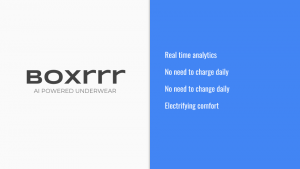
Okay, I made that last one up. But for a second there, you guys did believe me, right? RIGHT?
That is the sad state of affairs. We are all techies here, and might think “wait, WHAT?”. But the vast majority of the not so technical audience out there sees AI as magic. They see it as something beyond their cognitive ability to process and accept any BS branded as “AI-powered” without questions. Thus, we have this article!

Source – Mashable
So what is the truth with AI? If you dig deep enough, or if you peel off enough layers(pun intended), what is happening?
Before we move on to taking the buzz off of buzzwords, let’s look at some core concepts.
Related Read: Top Artificial Intelligence Trends to Watch Out for In 2019
What is AI?
From wiki, Artificial intelligence is intelligence demonstrated by machines. It is the study of “intelligent agents”: any device that perceives its environment and takes actions that maximize its chance of successfully achieving its goals.
But Really, What Is Artificial Intelligence?
IM[not so H]O, AI is just a buzzword. Really, it is just meaningless jargon. Okay, maybe not meaningless, but it’s still jargon. Don’t believe me? Let me give you some examples:
- Computers playing checkers and beating the best human players was considered AI. Until it was not when it was accomplished around 1994 by Chinook, the checkers-playing computer program.
- Computers playing chess and beating the best human players was considered AI. Until it was not when it was accomplished around 1997 when IBM’s Deep Blue defeated the then world champion, Garry Kasparov.
- Cruise control was considered AI. Until it was not when it started being available in production cars in 1990+(partial) and 2010+(full speed range).
- Automatic parking was considered AI. Until it was not when it started being available in production cars somewhere around 2006.
- Human speech recognition was considered AI. Until it was not when it started being available as Google Assistant, Cortana, Siri, etc. Now we have a real-time speech translation!
I could go on, there are quite a few examples of this phenomenon, formally known as(yes, it is so well known that it has a name) the AI effect [wiki].
So a much better definition of AI was put forth by Douglas Hofstadter.
“AI is whatever hasn’t been done yet.”
– Douglas Hofstadter
Just Computation
“Every time we figure out a piece of it, it stops being magical; we say, ‘Oh, that’s just a computation’.”
– Rodney Brooks
So, if it’s all just computation, why was it not, well, “computed” earlier?
Yes, computation, or rather, the capacity for computation is the key. A lot of problems were characterized as AI because, at the time, algorithms for solving that were not known yet, or because the resources to compute those were not available yet.
-
Availability of Computation Power
Eg. Chess/other games, etc.
Moore’s law and the explosion in storage availability have played a major role in turning the tables. [It is important to note that the tables have not turned completely. Yet. There is so much more ground to cover.]
-
Availability of Unbiased Data
Eg. Natural language processing (NLP).
Okay, now you may be thinking “Enough data was not available for speech recognition? This guy is full of BS”, but hear me out. With the explosion of social networks, so much content is created and made freely available that finding huge swaths of unbiased(this is the key here) voice/video of natural speech is available, which in turn has helped the advances in NLP.
-
Availability of Infrastructure
I guess I don’t have to mention the improvement in internet speed that happened over the decade. This has accelerated content creation, real-time processing, etc.
So, What is All the Current Hype About?
The hype is not current. There has been huge interest around AI from the time it was first proposed around the 1950s. The sheer number of films about it tells us about how much.

But the current wave of hype and buzz surrounding AI comes from the recent advances made in, drumroll please, Machine Learning.
What is Machine Learning?
Machine learning is
- giving computers the ability to learn
- to find patterns in data
- from experience
- without explicit programming.
ML is essentially about classifying and predicting stuff.
The typical operation is something like:
- Take some data
- Learn patterns in the data
- When presented with new data, classify it for the best guess of what it probably is, based on the “learning” that happened in [2].
Related Read: Machine Learning- Deciphering the most Disruptive Innovation
Meh! So what is the big deal?
Once trained for one purpose, the same ML system can be reused(with additional training) to learn new concepts. This can be done without rewriting the code. Now that is a big deal.
Let’s look at a simple example: Classifying emails.
Traditional programming:
if the email contains "it's never a job, its always a career"

then send to trash;

if the email contains ...

then ...

if the email contains ...

then ...
ML programs:
try to classify some emails;

change self to reduce errors;

repeat;
That was a two-minute primer on Machine Learning. So next time someone starts talking about Artificial I, I hope you feel the pang and say “Excuse me, I think you mean Machine Learning, not AI”.
Source – HubSpot
Stay up to date on what's new
About the Author

Featured Blogs
Stay up to date on
what's new

