Category: Enterprise Software
The Significance of Odoo Migration and How to Do It?
Odoo is an open-source ERP software that comprises an integrated suite of business modules such as eCommerce, accounting, warehouse management, project management, financial management, customer relationship management (CRM), manufacturing, and purchasing. These modules ensure seamless and efficient communication with each other to exchange information.
Read more: 5 Salient Features of Odoo that Make it a Reliable ERP for Enterprises

Odoo ERP can be used by businesses of all sizes and is available in both cloud or on-premise versions. Odoo is open source and highly customizable, allowing developers to access the code and make changes in the module based on their business needs. Odoo ERP can be easily integrated with payment processors and external shipping systems such as UPS, eBay, FedEx, Amazon, and QuickBooks.
Read more: 5 Reasons to Integrate Your E-commerce Application with Odoo ERP
So, if you are new and planning to implement Odoo ERP for your business, you should consider the most recent and latest version of Odoo, that is, Odoo 14.0.
However, if you are already leveraging Odoo and thinking of migrating to Odoo 14, you need to assimilate the situation before migrating.
Odoo migration involves two parts:
- Data migration
- Odoo apps migration
You can migrate both your company data and the apps used in the older version of your ERP. This migration process requires expertise and an experienced Odoo ERP partner to achieve it. Your older data must be optimized for the newer version smoothly and is best done by a professional Odoo ERP implementation partner like Fingent.
Why migrate to the latest version of Odoo ERP?
Undeniably, the latest versions of Odoo include improved features such as security, speed, and stability. Migrating to the latest version indicates that you are ready to update your system and move forward. Moving forward does not mean that you lose your old data and turn to new data. Migration ensures that all the previous data is kept intact while stepping into the new one.
The latest version, Odoo 14 got released in October 2020. As businesses are ever-changing, the new version comes with many added or deleted features as found optimal by Odoo. This is needed to ensure the ERP keeps running at its best performance and also delivers high performance. It is considered to be four times faster than Odoo 13. So, if you are looking for speed, then you can switch to Odoo 14.
Top features of Odoo 14
Some of the features of Odoo 14 are:
1. Improved user experience
Odoo is a great competitor to big names like Oracle, Dynamics, and SAP. Odoo 14 has added more shortcut keys to control the system faster, improving the system speed and more on-click features to help you save time. There are more widgets in the list view that allows you to send messages directly to your colleagues within a single click.
2. Automated CRM
CRM is a powerful tool that provides your company with a better insight and focuses more on clients and not on the data input. The insight helps you forecast sales or find information about the clients easily. In the absence of a CRM, the salespeople can randomly fill the customer’s information, making it difficult for other team members to follow up or get complete sales information.
As Odoo 14 CRM is automated, you can add and search for customer’s data accurately and quickly.
3. Outlook plugins
This feature automates the communication logging and allows you to communicate with the clients automatically in the CRM. It also helps sales managers track the communication of their subordinates.
4. To-do activities list
Odoo 14 helps salespeople focus on selling instead of data input. The to-do activities feature allows the salespeople to quickly check the to-do list, the next activity, and its priority with its impact every day. This feature comes with an improved follow-up section that helps salespeople send an email or SMS to the potential client directly from the CRM.
Points to consider before Odoo migration
1. Performance
Odoo 14 is designed to deliver more both in terms of performance and features. It includes additional features that can benefit new businesses. The new features ensure the business processes are carried out as smoothly as possible. However, you must make sure to understand the purposes and needs of your business before you avail of the updated version.
2. Deleting a few features
While the new version includes new features, some of the old features have been revoked by Odoo. So, it would help if you had an idea about what features will be lost in the newer update. This is where an Odoo ERP implementation partner like Fingent can help you. Our Odoo consultants can help you migrate to the latest version of Odoo without losing your crucial company data.
Read more: 6 Ways Odoo ERP Customization Can Benefit Your Business

3. Downtime
An update would mean that your business operations would be affected in the meantime. So, you must be prepared to overcome this downtime if you opt for migration. You can use the pilot version to run the platform with updates in the background. However, it is not possible in the live environment. You can discuss this in detail with the migration expert at Fingent.
4. Cost
The cost of the migration process may vary depending on your customized business requirements. Understanding the need for the latest update and knowing if the expense is the right investment for your company is essential. You can consult the experts at Fingent to get an estimate of the Odoo migration expenses for your business.
While migrating your old Odoo versions to newer and better ones is essential, it is a complex and tedious task. So, it is vital to have a good Odoo migration partner, which is why most businesses entrust us with Odoo ERP migration.
Read more: Why Choose Fingent as Your Odoo ERP Partner

Odoo migration: How to migrate to the newer version?
The Odoo migration process is done in two parts:
Part 1: Data migration
The company data present in the Odoo platform is of utmost importance and cannot be lost under any circumstances. This data requires some adaptation to work in sync with the new version. To make sure your data is suited for migration formulation, your information, such as charts, tables, contacts, etc., will be carried out.
Part 2: Odoo apps migration
The Odoo apps functional in the older version are used for specific needs and cannot be lost or compromised in the process of updating. Necessary changes to the existing applications or developing new ones will need to be done to meet the needs of your business.
The migration of applications and data will enhance the platform’s functionality without losing your company data.
To know more about Odoo migration and how we can help achieve it successfully, please contact us.
Stay up to date on what's new

About the Author

Featured Blogs







Stay up to date on
what's new



Talk To Our Experts
Being an Official Partner of Odoo, Fingent has always catered to the needs of various customers and streamlined their operations, thus saving their costs, time, and resources. In this post, you will see how Odoo ERP implementation helps retail management.
Odoo ERP: A Highly Customizable Cloud-based Platform for Retailers!
The retail industry is one of the primary beneficiaries of digital transformation. In 2010, eCommerce accounted for only 5-6% of the aggregate retail sales in the US. The industry has witnessed phenomenal growth over the past decade with the development and adoption of retail technology, ERPs, eCommerce applications, custom retail solutions, and stiff market competition. At present, online retail sales in the US account for 21% of the total retail purchases. Isn’t that mind-blowing?
The paradigm shift from the traditional operating landscape to a digital world presents both opportunities and challenges. Many people look for products online, make buying decisions based on social media reviews, and order products to be delivered home. They even use the internet to search local shops, order online and collect from nearby stores (click & collect) or find retailers that offer discounts in their area. The message is clear: physical/ in-store retailing also needs to pace up with the change.
To overcome the challenges in managing physical and digital selling, retailers need to adopt a modern enterprise resource planning (ERP) system.
Read more: 5 Reasons to Integrate Your E-commerce Application with Odoo ERP
Today, ERP is extensively used to simplify and automate customer relationship management, project management, accounting, compliance, inventory, and supply chain operations. ERP is a reliable investment for business owners as they can control and monitor their operations, get reports, and gain insights on consumer behavior and market situations.
Odoo ERP for Retail Management
ERP software allows integrating the core processes to run a company in one place, such as finance, manufacturing, HR, supply chain, inventory, procurement, tracking, transactions, etc. It also integrates all the data and related business processes of an organization.
Odoo ERP is a popular, open-source, cloud-based business management software that helps manage various business needs such as manufacturing, finance, inventory, point of sale (POS), eCommerce, purchase, logistics, etc. Odoo is an intelligent ERP system that allows retailers to integrate their whole data and all the processes associated with the retail industry. For retailers, Odoo is a perfect choice that increases profit and enhances productivity as it provides comprehensive solutions that can seamlessly integrate with eCommerce.
Read more: 5 signs which imply that your business needs Odoo ERP

How Odoo ERP Benefits Retail Management
Following are the significant benefits of using Odoo ERP in retail:
1. One-step checkout
In online shopping apps, the checkout stage tends to have several processes spread across different web pages. This can put off some customers who don’t want to spend their time navigating through each. Odoo eliminates these multiple processes by offering a one-step checkout that is fast, convenient, and intuitive. It has the potential to reduce checkout abandonment and thereby increase sales.
2. Craft stunning product pages
For eCommerce websites, high-quality product pages are crucial to gain maximum traction. Long descriptions with dull-looking pages are outdated. Odoo ERP lets you build beautiful and stunning product pages with a simple drag and drop feature. You can also customize your online store’s look, layout, color, and theme with Odoo and make last-minute changes to meet the demands and expectations of your clients. You can also make changes and enhancements at regular intervals to add more features to your store. Make sure that your digital store is mobile responsive to be compatible with the changes and new features.
3. Payment module integration
Having different payment options can enhance the customer experience. With Odoo’s plugins and extensions, retailers can integrate and customize various modules like wallets, cryptocurrencies, credit and debit cards, and UPI. It also supports PayPal, PayUMoney, Buckaroo, Sips, Stripe, Ingenico, Adyen, and Authorize.net.
4. Sales, purchase, and finance management
Odoo offers non-retail and retail companies different sales management processes. Odoo has a Point of Sale (POS) module, which is integrated with the sales and inventory module. This module helps retailers track stock and commodities in real-time. The module also allows for the use of biometric devices to log in and out. It’s compatible with any hardware and doesn’t require installation. What’s more, the POS remains operational even when offline.
Read more: How Odoo ERP Simplifies Sales Management in Your Organization

5. Inventory management
It’s a known fact that inventory management in a volatile and dynamic consumer goods market is an arduous task for many retailers. With several issues such as excess inventory or out-of-stock scenarios, inefficient inventory management processes result in financial loss and lead many retailers to bankruptcy.
Odoo ERP offers inventory management as its integral feature, where it stores details of an organization’s entire inventory, including the individual product details. Odoo enables retail managers to keep track of crucial information such as:
- The present status of the inventory
- Items that will run out of stock
- Shelf life details of each product
- Notifications related to product expiry
- Ability to make demand forecasts based on past trends and customers’ online behavior and buying habits
Odoo ERP enables retailers to gain a competitive edge by modifying inventory to meet the fluctuating customer demands.
Read more: Fingent’s new plugin facilitates the scheduling of Zoom meetings from Odoo!

6. Manufacturing and production
Retailers who are also engaged in manufacturing and production can use Odoo’s module to help run functions. The Manufacturing module can assist in creating bills of materials (BoMs), managing semi-finished products, subcontracting manufacturing, etc. It can also help in configuring work centers and managing and configuring kits.
7. The Cloud Advantage
- Odoo solutions are cloud-based, allowing retailers to access their e-commerce stores from anywhere in the world.
- Odoo is flexible, customizable, and scalable, making it especially ideal for small and medium-sized enterprises (SMEs).
- Odoo is an affordable ERP solution with the maintenance fees included in the license fee.
In a nutshell, Odoo ERP serves as a high-performance retail management system where retailers can manage everything on a single system. It can bring tremendous benefits to the retailing industry. They can integrate Odoo’s various business apps such as Sales, Accounting, Customer relationship management (CRM), Inventory, etc., with Odoo e-commerce.
The Odoo App Store features nearly 10,000 apps that connect to the same database on Odoo’s own servers. A testament to Odoo’s popularity is in the numbers: it has more than 5 million users worldwide, from start-ups to large enterprises.
With a simple checkout process, robust customer portal (order tracking, advanced shipping rules, and return management), order review, and wish lists, Odoo ERP provides real-time information to users.
Read more: Why Choose Fingent as Your Odoo ERP Partner
Fingent has an ace team of Odoo developers that offers consulting, development, and implementation services. Whether you want to integrate Odoo ERP with your existing e-commerce store or build an online store from scratch powered by Odoo integration, give us a call right away.
Stay up to date on what's new
About the Author

Featured Blogs
Stay up to date on
what's new
Talk To Our Experts
How Logistics Management Software and Technology Will Transform Businesses in 2021
Without logistics software management, Pfizer cannot become one of the world’s largest sterile injectables suppliers in 2021. Neither can they store, transport, and distribute the COVID-19 vaccine to multiple countries, maintaining ultra-low temperatures. Monitoring temperatures, optimizing delivery routes, managing cold storage, tracking vaccines in transit, overseeing distribution – all these prove that the logistics and supply chain sector has been at the forefront of tech disruption in 2021. Various governments are taking measures to expedite vaccine distribution to the masses; shoppers have increasingly moved to online shopping – 2021 is set to witness the increasing adoption of logistics management software.
Read more: 6 Tips for Logistics and Supply Chain Leaders to Plan COVID-19 Vaccine Distribution Strategies

The Impact of Technology in Logistics
Technology continues to disrupt logistics and supply chain processes by changing it altogether from its core. Research and Markets reports that the increasing use of IoT and emerging technologies across industries will accelerate Connected Logistics’s adoption. The Global Connected Logistics market is projected to grow at a CAGR of 17.5% during 2021 – 2026.
Consequently, logistics will become more refined and fast, changing the way materials, goods, freight, sales orders, inventory, and production are managed.
As efficiency and speed become the determining factors, logistics need to adopt a new approach to deal with the rising demand and complexity of processes. The industry needs a viable solution that manages the flow of things so that the right product reaches the customer within the specified time.
Logistics software adoption streamlines operations and removes process hassles. Organizations that invested in logistics management software have produced good outcomes with noticeable improvements in process, operations, and delivery.
This article attempts to explain all that you need to know about logistics management software, including:
- What is Logistics Management Software?
- Challenges in logistics management
- Pros of a having a logistics software
- 2021 trends that reshape logistics management
- Choosing the right Logistics Management Software
- Checklist of essentials in a Logistics Management Software
- How logistics software improves efficiency
- The future of supply chain
What is Logistics Management?
Logistics involves the flow of things from their point of origin to the point of consumption, usually general customers or businesses. The selection of vendors, transportation means, routes, and delivery methods constitute an essential part of logistical operations.
Logistics management is a part of the supply chain that uses planning and implementation to store and deliver goods and services to the customer. It coordinates several critical activities of the supply chain that range from product development to commercialization.
Typically a logistics management system includes the following:
- Inbound and outbound transportation management
- Warehouse management
- Fleet management
- Processing orders
- Inventory control
- Managing third-party logistics service providers
- Planning supply and demand
Watch Video: Top Challenges Faced by Logistic Management
Logistics management constitutes several functions such as production planning, sourcing, procurement, packaging, and dispatching. It also involves finding the suitable means to deliver goods and services to the end-user. Inbound and outbound traffic is vital in logistics management.
- Inbound logistics is a linear flow of raw materials from suppliers into a warehouse and then a production unit.
- Shifting the products from the warehouse inventory into the hands of the customers falls under outbound logistics.
An example of inbound and outbound logistics at play is that of a manufacturer of electronic goods, which requires several raw materials in the form of components, nuts, bolts, cables, casting, packaging cartons, etc., to build products.
Challenges in Logistics Management
Logistics is prone to several issues that occur primarily due to simple human errors or other factors. Weak decisions usually result in delays in the transport or delivery of goods, leading to customer dissatisfaction. Besides, another challenge that logistics face generally is in the safe transportation of goods. The goods can become damaged or faulty if not handled accordingly while in transit.
Customer demand has also become higher as they want more transparency in the delivery process. Moreover, logistics and supply chains are facing the still unsolved issue of cost control. The rise of fuel charges combined with a steep increase in energy, freight, and labor rates put further pressure on logistics providers.
Effective risk management and managing the relationship between the suppliers and partners are also vital. A reliable solution that covers all these individual challenges in logistics is thus becoming a necessity. The use of logistics management software (LMS) can streamline logistical operations and guide a logistics provider or business to deal with them appropriately.
What is Logistics Management Software?
Logistics Management Software (LMS) simplifies logistics operations by refining the production cycle and making it easier to access important information quickly. A logistics management software helps businesses manage the various processes that go into the production cycle from the delivery of raw materials to shipping the finished products to the consumers.
Logistics software has become broader in its scope and functionality to deal with a vast array of operations and processes. It shares similarities with supply chain management software (SCMS), which contains tools that help deal with transactions, processes, and suppliers. The functionality of a logistics management software extends to areas such as:
- Processing customer requests
- Processing purchase orders
- Inventory Management
- Suppliers Management
- Sales and Distribution
A logistics management software gets rid of all the conventional approaches like paperwork and spreadsheets to simplify management. It comes in three variations: warehouse management systems, enterprise resource planning systems, and integrated supply chain management suites.
Companies with an in-house logistics or supply chain division and third-party logistics providers utilize any of these different versions according to their requirements to efficiently manage their logistical and supply chain operations.
The Pros of having a Logistics Software
In logistics, handing over the process to a logistics management software has several advantages. With logistics management software, a company or 3PL (third-party logistics) provider could avail of the following benefits.
- Refine Transportation: Transportation is a crucial area of logistics. It incurs the most charges in the form of fuel, energy, labor, motorway tolls, and shipping fees. Relying on logistics software can help manage the various transportation means and leverage the operational data for process automation. Logistics management software makes it easy to analyze data and make relevant decisions for reducing costs maximizing efficiency.
- Faster Delivery: The logistics and supply chain industry faces several issues that affect delivery and lead to delays. By incorporating logistics software, businesses can rapidly deliver their products to customers. A logistics management software can improve delivery speed by making meaningful interventions in the production cycle and choosing the suitable carrier. It ultimately reduces shipping delays to a great extent.
- Minimize Human Errors: Another notable advantage of having logistics management software is in reducing human error. Manual analysis of vast quantities of transportation data is difficult, time-consuming, and prone to errors. A logistics software can process these data without any mistakes in less time, seamlessly pushing forward the operations with minimal/nil delays.
- Automates Functions: Process Automation is a tremendous boon of logistics software integration. Certain functions like creating shipment routes, load planning, and tendering of load to carriers are easily automated and managed by using logistics software. Moreover, it eliminates paperwork, which helps deal with the processes efficiently and timely.
- Reduce Costs: Logistics software can automatically compare different shipping services, delivery agents, and transportation methods to find the least pricing ones. The other way logistics software reduces costs is by lowering the expedited shipments through improved shipment planning.
Read more: How Transportation Management Systems Benefit Third Party Logistics (3PL) Service Providers

2021 Trends that Reshape Logistics Management
The demand for logistics software management has peaked with the widespread popularity of e-commerce in 2021. The onset of COVID-19 is also a reason behind the peak in demand for logistics technology. As a result, logistics is constantly evolving to accommodate each industry’s rising requests that depend on it. One area where logistics has transformed is the digitization of its processes and resources. In 2021, the industry is expected to embrace the cloud, mobile, and emerging tech to transform logistics operations. Here are some of the top tech trends that will influence logistics and supply chain in 2021.
1. Artificial Intelligence
Logistics companies will use AI to identify patterns in data and churn insights. It will help advance operations such as intelligent transportation, route optimization, demand forecasting, budget planning, etc. McKinsey reports that AI-driven logistics optimization can reduce costs through real-time forecasts and behavioral coaching. The potential incremental value of AI in the logistics and transportation industry (89%) will be more than other analytics techniques.
Read more: How AI is Reshaping the Supply-Chain and Logistics Industry

2. Warehouse Robotics
Over the last few decades, innovative logistic robotic companies have worked hard to mesh AI and machine learning, better sensors and response capabilities, warehouse management software, or logistics management software. Recently, warehouse robotics in the supply chain has picked up pace exponentially. There has been colossal funding and investment in the industry. For example, Alibaba invested $15 billion into robotic logistics infrastructure, and Google invested $500 million into automated logistics for JD. It is also estimated that the global market for warehouse robotics in the supply chain will reach a market value of $22.4 billion by the end of 2021.
Read more: How Robotics in Logistics Helps Improve Supply Chain Efficiency

3. Cloud Computing
Cloud integrated logistics management software allows having real-time price updates, inventory, and tracking. Cloud-based logistics software enables real-time accuracy and 360-degree management of processes and systems. You can track a product through its lifecycle, right from ordering to distribution. It allows to significantly cut down the costs of lost products, missing deliveries, locate a shipment at any stage of transport, and reroute a misdirected shipment. Cloud-based logistics software allows everyone in a trade network to communicate and share data in real-time, make decisions quickly, and scale on-demand.
4. Contactless last-mile delivery
In a pandemic-troubled world, contactless delivery is more critical than ever. eCommerce companies and carriers face increasing pressure due to the surge in online shopping. It’s crucial to stay agile by ensuring business continuity. At the same time, it is also vital to remain safe and meet delivery needs. Electronic parcel lockers, contactless parcel delivery and collection, and self-service pick-up automate delivery processes to reduce physical interactions between customers and delivery agents.
Watch video: Custom Web Application Developed to Enable Smarter Locker Management
Custom logistics software applications can help fulfill the increasing demand for last-mile delivery. Fingent helps build healthy tech partnership ecosystems to ensure uninterrupted supply and distribution of your products and services.
5. Blockchain
Blockchain, also known as the distributed ledger technology, offers the ability to record transactions between parties securely and permanently. The shared and secured databases enabled by blockchain helps in avoiding intermediaries and third parties that verify, record, and coordinate transactions in a supply chain. Blockchain helps increase the traceability of the material supply chain, improve the credibility and trust of shared data, digitize physical assets like contracts and critical documents, streamline administrative processes, reduce costs, and enable effective auditing of supply chain data.
Example of blockchain application in logistics: The international logistics giant DHL uses blockchain-based serialization of pharmaceutical drugs and products to ensure that:
- the products come only from legitimate manufacturers,
- are not counterfeit, and
- are adequately tracked and traced through their journey from origin to consumption.
6. Predictive Analytics
The emergence of sensor technologies and AI has contributed heavily to the rapid growth of predictive maintenance in the logistics industry. Supply chain leaders want to utilize data effectively to optimize predictive maintenance, forecast demands, adjust inventory levels, improve cold chain transportation, and protect the integrity of the supply chain. Smart and optimized data management through predictive analytics and AI allow logistics providers to refine and transform the supply chain in 2021.
Opting for the right Logistics Management Software
With the trends shifting logistics management in a progressive direction, the need for software solutions in the field has become indispensable. Businesses, whether focussing on e-commerce or delivering services, can benefit from having logistics management software. However, the real question is finding the right kind of logistics software since the requirements vary for each business.
Read more: How to Pick the Right Logistics Management Software

A checklist of essentials in a Logistics Management Software
Before settling on software for logistics management, it is vital to understand the requirements and challenges a business faces daily. Carrying out a detailed analysis can help identify deficiencies in the existing logistical operations of a business. Besides that, it can suggest measures to redeem any discovered shortcomings in the cycle.
When deciding on logistics management software, there are several essential factors to consider. Firstly, it should contain a basic set of functions that can aid in simple logistical management operations.
Besides that, numerous other things should also be present in the software to tackle the wide base of a business’s logistical operations and processes.
Some of the key features to look for in a potential LMS are:
- Compatible Multi-Client Architecture: A logistics software that comes with multi-client architecture support is necessary if a business handles multiple customers. Software with inventory and purchase orders has more emphasis since it deals with several customers simultaneously or in different phases.
- Forecasting: The ability to forecast is a needed trait in logistics and supply chain management software since it can bridge gaps in supply and demand by enhancing the business processes. Demand, supply, and price forecasting can help supply chain management with proper production scheduling, better customer satisfaction, and minimized out-of-stock scenarios.
- Finance Integration: Having tools that integrate the supply chain’s financial side is another critical software requirement. Vital financial aspects like general ledger, account payables, and receivables can help manage the bookkeeping and records of transactions conveniently when included in logistics software.
- Inventory Tracking: Having an inbuilt inventory tracking feature can make logistics management software more dependable. Logistics involves transactions of various kinds. An inventory control feature enables easier processing while ensuring that the customer gets the invoice on time.
- Customizable and Streamlined Interface: A good logistics management software should contain a streamlined interface that allows for effortless navigation across its chief functions. A customizable logistics software can easily accommodate the unique infrastructure and methods implemented by a business.
- CRM: Logistics software should also cover the customer side. A CRM embedded logistics software allows the customers to know the status of their deliveries. For both inbound and outbound logistics, CRM can answer the customers’ queries and supply them with relevant information and adjustments to the delivery.
- Bill of Lading Creation: As a critical document in the shipping and freight chain, looking for a logistics system that can generate the bill of lading is recommended. This can make it easier to create the bill of lading receipts. It facilitates the seamless exchange of goods under the consignee of the shipper and the logistics company.
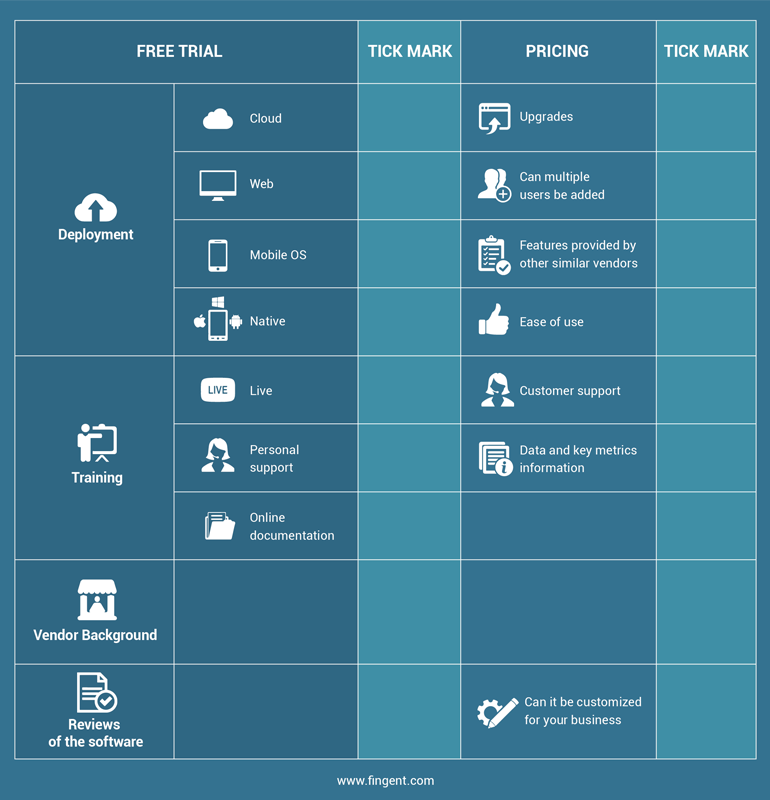
Refer the chart below to get a grip on the overall profile of any software logistics management:
With logistics pushed to the forefront of business operations, leveraging the right technology can make your business compatible with the changing environment.
Outsourcing to a software development vendor will help deploy scalable software for logistics management into your entire supply chain operations. A global software solutions provider like Fingent can give you the advantage of custom logistics solutions built solely based on your requirements.
How logistics software improves efficiency
Logistics management software guarantees more efficiency and control over the logistical and supply chain operations of a business. It means simply substituting the existing manual methods with a software-centric solution. The array of features in a logistics system can refine the entire logistics cycle right from its center. For owners, vendors, and the end customers, using an LSM (Logistics Software management) model opens up improved collaboration, which is the essence of effective logistics management.
Opt for logistics software requires considering all the criteria mentioned above. For a business, it involves addressing their needs and then choosing one that wraps around their existing processes. By integrating an LMS into their operations, companies could reduce their turnaround times and streamline the overall cycle of planning and delivery while keeping up with the customers’ requirements.
Read more: Build or Buy Logistics Software – An End To The Prolonged Discussion
Transitioning into Cloud-Based SaaS: The Future of Supply Chain
With cloud computing gaining momentum in 2021, a whole new way of processing data is unveiled. The tech innovations in 2021 have influenced the supply chain and logistics operations. Increased adoption of supply chain and logistics solutions in 2021 will lead to a shift from the on-premise model to the SaaS model.
Predictions estimate that a subscription-based SaaS model will dominate supply chain management in 2021 and beyond. Adopting a cloud-based supply chain solution offers benefits in the form of flexibility, robustness, and affordability. Free and open-source software adoption has made the Cloud the primary choice for logistics providers and organizations worldwide.
Cloud-based SaaS supply chain solutions offer numerous benefits. It gives a comprehensive outlook on the overall operations in logistics by making processes more transparent and collaborative. Implementing a cloud system reduces the upfront and operating costs. It also offers the ability to scale up with the business needs and enhances supply chain efficiency.
To sum up,
Opting for a logistics solution is one step to simplifying the entire cycle of logistical and supply chain operations. Effective management of each process from procurement to delivery requires a custom logistics management solution that can accommodate each provider’s demands. For instance, an organization lacking an in-house logistics department needs a software management tool that can wrap around their existing methodology and improve it.
By partnering with a vendor specializing in software development, businesses can deploy logistics management software tailored to their requirements. Pioneers in custom software development like Fingent can assist companies from wholesalers to distributors to e-commerce with the advantage of custom logistic solutions. Get in touch with us to spearhead your operations swiftly and efficiently.
Stay up to date on what's new
About the Author

Featured Blogs
Stay up to date on
what's new
Talk To Our Experts
Top 5 benefits of outsourcing software development services
Software development outsourcing is empowering companies worldwide, including the most successful ones across their journeys. Leading players like Google, WhatsApp, Slack, and Microsoft have ample stories to share on their victorious feats with outsourcing development.
A study by Technavio reveals that the global IT outsourcing market will flourish at a CAGR of 5% during the period 2020-2024. The demand for outsourcing software development services keeps surging as organizations want to optimize their business processes and align their strategic planning with their operational strategies.
Outsourcing your IT necessities can be a boon in times of financial and natural adversities because outsourcing companies like Fingent implement business continuity planning and disaster recovery plans to fulfill obligations and deliver services without interruption.
If your company’s growth is dependent on software, and if you cannot afford your in-house IT team to divert from their core operations, it’s high time to outsource your software development needs.
Why software outsourcing is good for your business?
Facts and testimonies speak the truth!
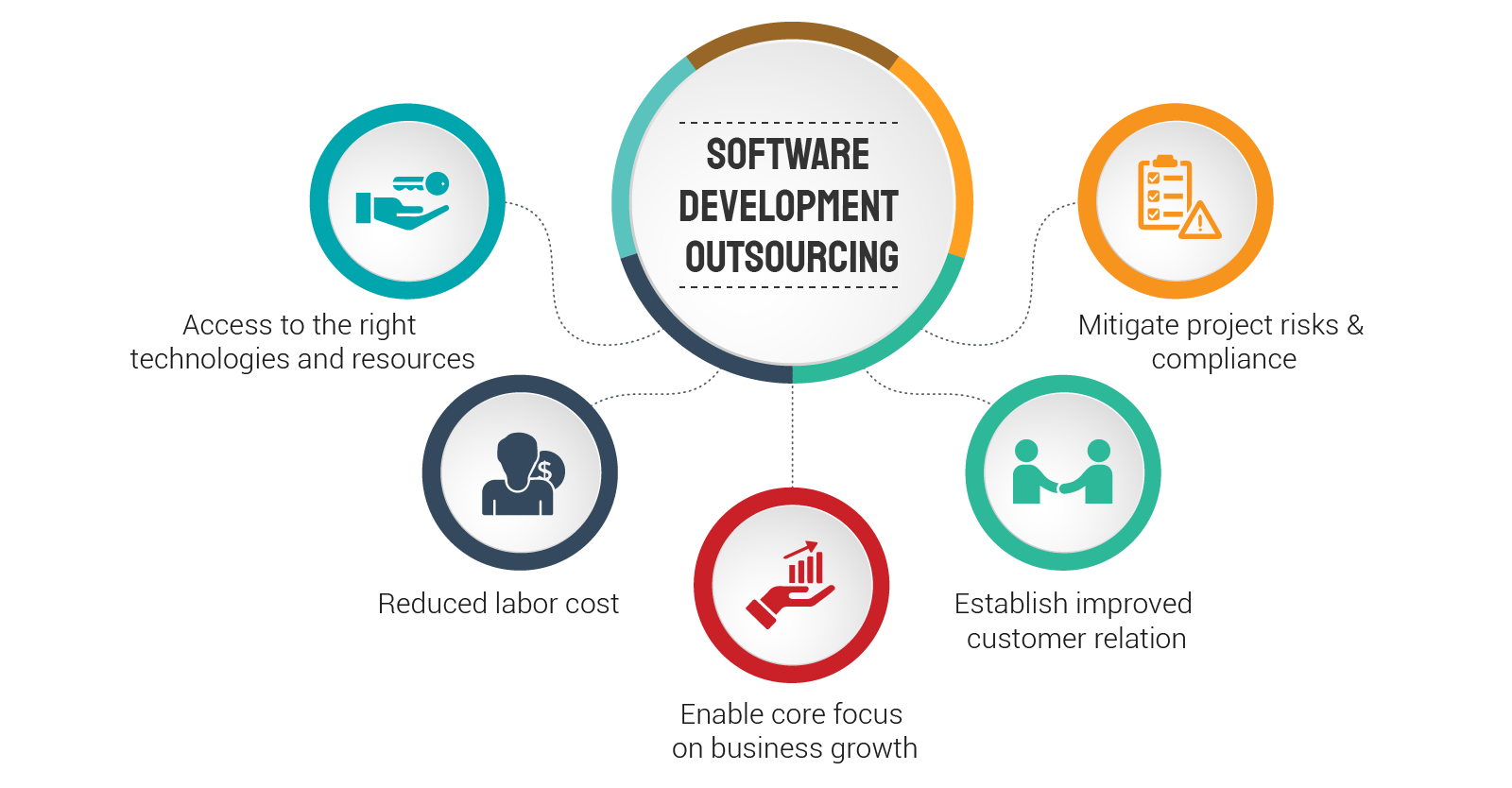
More and more businesses today are relying on software outsourcing companies to develop their projects. Working with an outsourcing company will help you mitigate the risks of running a project internally. Outsourcing can compensate for a lack of in-house skills and ensures that your product is delivered on time.
At Fingent, we specialize as an offshore software development company. Many of our customers have shared their outsourcing success stories with us. A .NET based SaaS platform developed by Fingent has played a great role in the growth of the property management undertaking – SimpleRent. Here’s what SimpleRent’s founder told us.

PwC, one of our prominent customers, reports an 80% increase in productivity and a 67% faster ticket resolution rate after Fingent helped them implement a smart ticketing system. Thanks to outsourcing!
As an outsourcing development company, here are a few reasons why we think outsourcing makes your business more efficient and smarter.
Related Reading: Points to Consider Before Choosing the Best Software Development Company
1. Access to the finest talent and latest technology
Software development outsourcing helps in finding the right talents and minimizing your human-resource problems. If your country has a limited talent pool, outsourcing gives you access to a wider talent pool available anywhere on the globe.
Technology keeps evolving every day and your business needs to take advantage of its benefits. With outsourcing, you will gain access to new and innovative perspectives and an opportunity to utilize strong and diverse technology expertise.
2. Outsourcing cuts down your costs
The biggest benefit of offshore software development undoubtedly is the cost savings. Outsourcing software development companies do not necessarily demand you to make any upfront investments. By contracting work to other companies, you can cut down 70-90% of your labor costs, all while paying your outsourced workforce at competent rates. The cost advantages make your development project more attractive and reduce your overall workload.
Adopting a cost-effective engagement model is crucial to the success of outsourcing. We help you choose the right engagement model essential for the creation of your state-of-the-art product.
3. Improved flexibility and time management
When you outsource your work, you don’t have to spend time hiring and training resources. At Fingent, we take care of all the change requirements even when the project sizes vary or resource-related demands scale up.
Outsourcing software development services accelerate your time-to-market. With people working around the clock, your competitiveness improves greatly and gives you an edge over your competitors.
4. Take your business to the next level with a focused strategy
To win the technological race, you need to have a focused strategy. Every business needs to align its operational strategy with the changing people, process, and technology. When your software is developed by an outsourcing company, your business processes will be highly streamlined and optimized, allowing you to focus on the core activities that will take your business to the next level.
5. Managing risks and compliance
Partnering with a software outsourcing company like Fingent enables you to mitigate the risks associated with handling your project. We follow a high-quality project management system that has been tried, tested and proven across our past as well as ongoing projects.
While outsourcing your software development needs, you are setting out to work with a global talent pool. We take care of all the legal compliance-related matters that have to be fulfilled while onboarding offshore resources as well as forging contracts with our clients. This lets you focus on other things that matter.
Related Reading: The Pros and Cons of Outsourcing Mobile App Development
Ready to outsource your software development needs?
From resource hiring and onboarding to management training and payroll software, several functions can be outsourced by a company. In the age of globalization and technological competition, software development outsourcing is the key to your success. Share your queries and concerns about outsourcing with us. Our consultants can walk you through the best and most affordable solution that works for you.
Re-Engineer your Business Processes with Superior Solutions Now!
Stay up to date on what's new
About the Author

Featured Blogs
Stay up to date on
what's new
Talk To Our Experts
What are the most trending technology stacks of 2022?
What are the crucial things that you would consider when developing a software for your business or startup? Along with planning your budget, time, and effort, you need to choose the right technology stack to get your project off the ground successfully.
What is a software stack? Why do you need to choose one? What are the popular development stacks out there in the current market? This post explores.
What is a technology stack?
A technology stack, also known as software stack or development stack is a data ecosystem that enlists the underlying tools, frameworks, and libraries used to build and run your application. For instance, Facebook’s exhaustive application stack includes PHP, React, GraphQL, Cassandra, Hadoop, Swift, and a host of other frameworks.
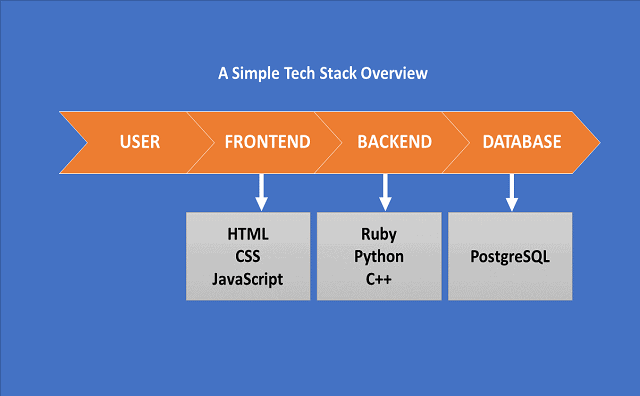
A tech stack is broadly divided into two: client-side (frontend) and server-side (backend). While backend technologies include web frameworks, programming languages, servers, and operating systems, frontend technologies include HTML, CSS, JavaScript, and UI frameworks and libraries.
Why choose a software stack to develop your application?
Software stacks are to your applications, what a deep foundation and girders are to a building. The competitiveness and viability of your application depend upon the technology stack that you choose. Your software stack choice has a long say in your web application development as it influences:
- How your app works
- How it will behave in the future
- The scalability of your product
- The purpose of your project/business
- Your choice of data and application storage (Cloud or Local)
- The capacity of your server systems (whether it’s made for high-read operations or high-write traffic)
As software development standards and trends change within the blink of an eye, it is important to be updated on the most popular tech trends that currently reign the market. By analyzing the strengths and weaknesses of popular application stacks, you can start developing your product with improved confidence, as you get to know the ways to mitigate development risks.
So, what are the leading stacks of software development in 2022? Here they are:
1. The MEAN Stack
The MEAN (MongoDB, Express.js, AngularJS, and Node.js) is one of the most popular tech stacks of 2022. Being an end-to-end JavaScript stack, you use a single language throughout your stack. Thus, you have the opportunity to reuse code across the entire application, decreasing needless reinvention. Another advantage of using MEAN is that all the technologies are free and open-source with the support of a vibrant community. The applications of MEAN stack are perfect for cloud hosting since they are flexible, scalable, and extensible. The stack can be deployed easily as it includes its own web server. The database can be scaled on-demand to accommodate usage spikes temporarily.
Read more: How we optimized a MEAN Stack project for better performance
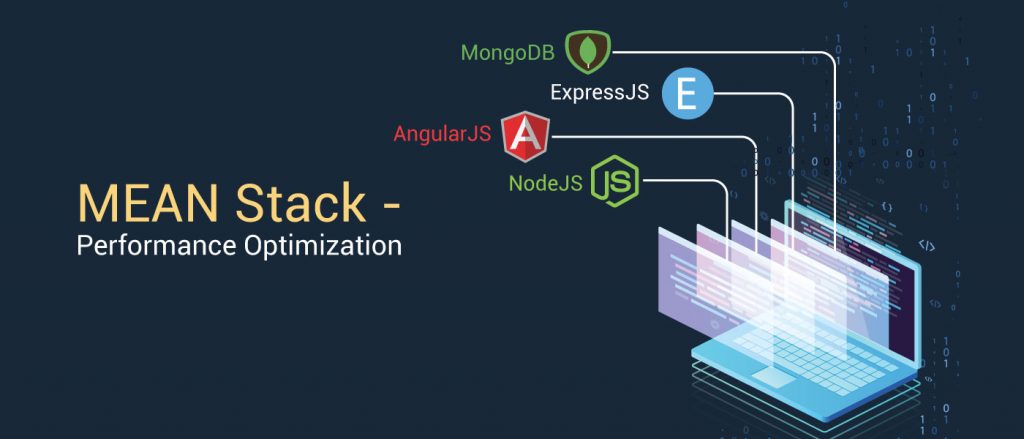
MEAN allows you to use a single team of JavaScript developers who can work adaptively. While MEAN isn’t perfect for every application, it excels in various uses like calendars, mapping and location finding, and news aggregation sites.
2. The MERN Stack
The MERN stack is very similar to MEAN, in which React replaces Angular. Since React uses Virtual DOM, changes can be implemented easily. React uses JSX, which is a modification of JavaScript, enabling seamless component work. React is one of the most popular frameworks used for building high-end, single-page applications with interactive UIs.
Since 2022 is all about enhancing UI, MERN stands to gain. However, while working with React, developers have to deal with limited core functionality since React is a library and not a framework. Hence most developers resort to third-party services.
3. The MEVN Stack
In this version of MEAN, Angular is replaced by Vue.js as a front-end framework. This framework has shown immense popularity over the last few years. Its popularity is expected to continue to 2022 as it is a lightweight solution compared to Angular. Vue.js offers basic out-of-the-box functionality. This functionality can be extended using third-party services. You can say that Vue.js combines the best features of Angular and React to give you great performance and a rich set of tools.
4. The LAMP Stack
The LAMP can be called a classic, time-tested stack of technologies – Linux, Apache, MySQL, and PHP. The LAMP still remains one of the most common ways to deliver web applications and was one of the first open-source software stacks which is still widely used. Popular open-source CMS such as WordPress and Drupal use LAMP. The stability, simplicity, and power that accompany LAMP have made it the platform of choice for developing new custom web apps.
The LAMP stack can efficiently handle dynamic pages wherein the content changes every time it is loaded. LAMP being open-source and non-proprietary, you can choose components based on your specific business requirements. Instead of using Linux as the OS, you can use Microsoft Windows to form a WAMP stack or MAC OS to form the MAMP stack. PHP can also be swapped for Perl or the increasingly popular Python language.
Read more: Why Is It High-Time To Find Alternatives For Microsoft Silverlight?
Since the LAMP has been around for more than a decade, you can avail of the benefits of a substantial LAMP ecosystem.
5. The Serverless Stack
2022 is the best time to build on cloud infrastructure or in other words- to go serverless. Serverless computing platforms provide all the services and tools thus making infrastructure management much simpler. You can easily scale up to hundreds of thousands of users overnight. AWS Lambda was one of the first serverless platforms. Google cloud is another significant provider of serverless computing services.
6. Flutter for Web
Flutter for Web can be called a game-changer in the cross-platform development world. It uses the same UI and business logic on all platforms. With Flutter, you don’t have to spend time on deployment. You can fix bugs, add new features, and build UI without compromising on speed.
What should be your next step
Having learned the tech stack meaning and its impact on your application development, here are a few tips that will help you make a wise choice:
- While building software or an application, employing a consistent, standardized software stack is of utmost importance.
- You have to create your backend with a set of tools designed to work together, reducing development time and streamlining resources.
- In today’s overcrowded stack field, you are spoilt for options. You cannot go for a one-size-fits-all approach while choosing a stack for your project. You need to find a web stack that provides unique advantages for your application.
Now that you’ve made it this far, do you agree that these are the most important tech stacks for software development in 2022? Can you think of any other names that need to be included in this list? Do let us know!
Here at Fingent, we set out to adopt the most efficient technology stacks that can make your software product highly competitive and fulfill your organization’s unique requirements. If you have any questions left, our technology consultants are ready to offer you a piece of expert advice. Feel free to drop us a message, any time.
Stay up to date on what's new
About the Author

Featured Blogs
Stay up to date on
what's new
Talk To Our Experts
How DevOps Uses Test Automation Tools to Accelerate Software Development
The goal of DevOps is to build faster, effective, and responsive applications by bringing together the development team and the operations team. It is a cultural shift to remove all barriers between Dev and Ops and provide shorter as well as frequent software deliveries, thus enabling organizations to respond in a much agile manner with respect to the constantly changing customer demands and expectations.
In a nutshell, DevOps via effective collaboration, communication, streamlined delivery, and automation of processes will accelerate software development in the following key ways:
- Faster time to market
- Reduces risks of failures in each release
- Enhances error fixing and recovery time
- Improves the checking process efficiency
- Speeds up the rate of change
- Allows managers to make improved and effective trade-off decisions
- Enables rapid and continuous feedback
- Offers flawless continuity throughout the Software Development Lifecycle
Testing in DevOps starts from the very beginning of application development and hence it is important to make sure that the development team and the operations team work closely with each other to ensure continuous integration and prompt delivery by continuous testing and monitoring.
Related Reading: Test Automation Trends to Accelerate Development Cycles in 2020
Automation Testing in a DevOps Environment
DevOps is categorized into the following 4 processes:
- Continuous Integration
- Continuous Delivery
- Continuous Testing
- Continuous Monitoring
The testing teams require to align their test design, automation, as well as test case development along with DevOps to ensure that the frequent changes made have not affected the final product.
Unlike the traditional approach, automation testing in a DevOps environment requires moving test automation scripts to a control tool which is of an enterprise version. This system of centralized enterprise-level testing results in an integrated test suite that offers centralized execution and reporting.
Let us walk through the different ways in which DevOps makes use of test automation tools:
How DevOps Uses Test Automation to Speed Up Software Development and Delivery
DevOps testing lays its core focus on test automation within the application’s development pipeline to ensure that by the time the application is deployable, it is done without any further confusion. Some of the popular test automation tools of DevOps are Selenium and Water.
Here is a quick rundown on the popular DevOps tools:
1. New Relic– New Relic offers an end to end visibility along with improved customer experience and dynamic infrastructure. It also helps the DevOps team to save their time spent in monitoring applications.
2. Jenkins – Jenkins is a DevOps automation tool used for checking the execution of redundant tasks. Jenkins is an open-source CI/CD (Continuous Integration/ Continuous Delivery) server that allows users to automate various phases involved in the application delivery pipeline.
3. Splunk – This automation tool is used to access machine data. It offers operational effectiveness to both the development as well as the operations teams in DevOps. It offers enterprises the ability to be more productive, competitive, secure, and reliable.
4. Selenium – Being the most popular automation testing tool for DevOps, Selenium is designed to meet the specific needs of a wide range of different browsers. It makes use of lesser resources and supports parallel test execution which reduces the overall time required for the testing process. The test cases prepared can be run on any operating system as well.
Cucumber, Jasmine, JUnit, and JMeter are other popular test automation tools used by DevOps to accelerate application development and deployment.
Related Reading: How To Measure The Effectiveness Of Your DevOps Program
Future of Test Automation in DevOps: Enhancing Application Development
With the evolution of continuous testing, DevOps has enhanced its test automation strategies where it is supported by practices such as a test-case design that is risk-based, stateful test data management, service virtualization, as well as seamless integration into the DevOps set of test automation tools.
To get the best out of test automation and to learn how to incorporate test automation tools using DevOps to accelerate your application development and deployment, talk to our experts today.
Stay up to date on what's new
About the Author

Featured Blogs
Stay up to date on
what's new
Talk To Our Experts
Why Clutch Ranks Fingent As The Top Software Development Company In Australia?
Over the past 16 years, Fingent has partnered with clients across 4 continents and collaborated with start-up, mid-market, and large enterprises to solve business challenges with the latest custom software development practices. Our core values make us highly attentive to society, peers, family & self, and above all, customers. We are grateful that this client focus is recognized in reviews on Clutch and has enabled us to achieve the position of the leading software developer in Australia.

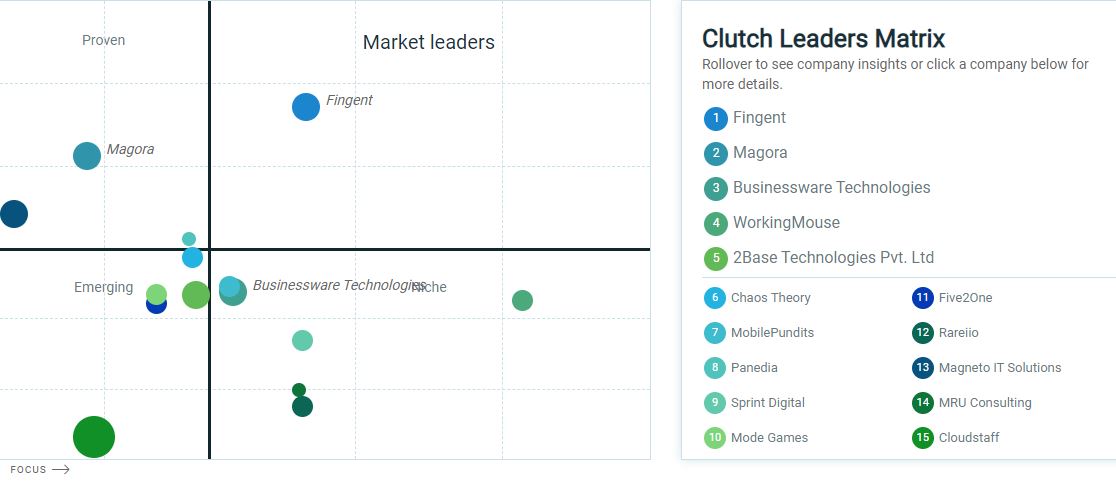
Clutch is a B2B rating and review platform with thousands of company profiles. Clutch carefully analyzes and evaluates industry data, brand reputation, and most importantly, client testimonials to craft authentic descriptions of development companies and their services. When a company is facing a business challenge, Clutch stands as a directory to browse through and find the right solution provider. Clutch connects businesses with leading performers, who receive industry recognition for their excellent services. When it comes to software development, Fingent ranks as the Top Software Developer in Australia. Here’s a peek into Clutch’s leader matrix, where Fingent stands top on the charts of Market Leaders in comparison to the competing companies.
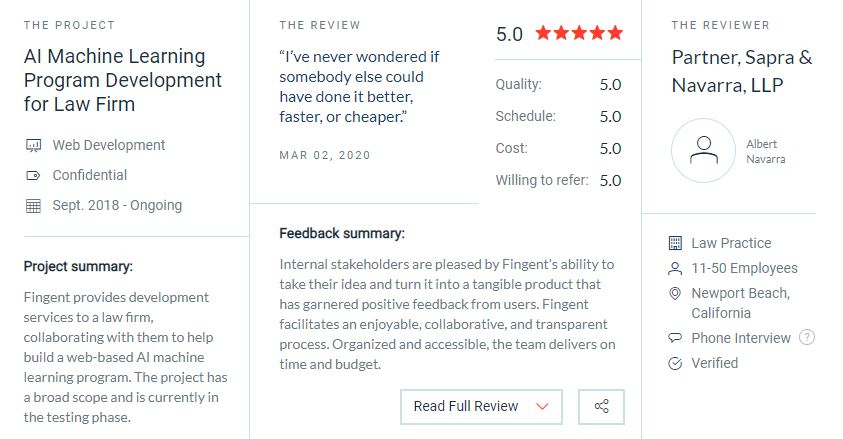
We are extremely thankful to the clients who took the time to share their experiences about Fingent solutions and services on Clutch. Most recently, Sapra & Navarra LLP left us a review on our ongoing development services for their law firm. We were hired by Sapra & Navarra LLP to build a web-based AI machine learning program. Besides receiving 5.0 stars in the Clutch evaluation categories of cost, scheduling, quality, and willingness to refer, Sapra & Navarra LLP appreciated our accessibility and efforts to prioritize being available to answer any questions or concerns. They also applauded our organization, including our robust agendas of maintaining transparency through meetings and conference calls.
Check out a summary of the perfect 5.0 review below!
Once again, we are very grateful to our clients for sharing their positive feedback on Clutch. It inspires us to continue delivering unique, budget-friendly solutions on time.
“We are excited to have been chosen as a top ASP.NET developer and NodeJS developer for 2020 by Clutch.”
– Stephen Cummings, Senior Vice President – Business Development, Fingent
If you’re looking for a technology partner who can build a web or mobile app, deploy RPA or AI technology, or provide software consulting, please get in touch! We’d love to discuss your latest project.
Stay up to date on what's new
About the Author
Featured Blogs
Stay up to date on
what's new
Talk To Our Experts
How AI is bringing change to the software testing practice
Artificial Intelligence is penetrating into multiple functions performed by the software industry. In software testing, the technology holds the potential to be a game-changer. Imagine the capability of your software to test and diagnose itself and make self-corrections! This will lead to huge savings on your resources. With this in mind, let’s try and understand exactly how AI will impact the traditional way of software testing.
Before we proceed, let’s get one thing clear – Do we really need AI in software testing?
Do We Really Need AI in Software Testing?
Software testing came into existence as a result of the evolution of development methodologies. It fed the need for robust, error-free software products. Testing was a laborious task for sure. However, automating software testing required traceability and versioning, both of which were critical and needed careful consideration. Something was needed to resolve this.
As businesses move towards digital transformation and the software market continues to grow, businesses expect a real-time risk assessment across all stages of the software delivery cycle. AI in software testing is the right response to these challenges. AI can develop error-free applications while enabling greater automation in software testing. This helps meet the expanded, critical demands for testing. It improves the quality of engineering and reduces testing time allowing the tester to focus on more important things. The verdict is clear then – We Really Need AI for Software Testing!
Five Impressive Ways AI Impacts Software Testing
1. Improves object application categorization
AI is widely used in object application categorization. When tools and testers are created, unique pre-train controls can be created. Once the hierarchy of the controls is categorized, testers can create a technical map to obtain labels for the different controls.
In the near future, AI will become capable of observing users perform exploratory testing on the testing site. And once user behavior is assessed, it can assign, monitor, and categorize the risk preference.
2. Automation of test case writing
Gone are the days of web crawlers. As automation is picking momentum, AI tools have become capable of learning business usage scenarios of test applications.
Related Reading: Unconventional Ways Artificial Intelligence Drives Business Value
They can automatically collect insightful data such as HTML pages, screenshots and page loading time and eventually train ML models for expected patterns of the app. And as soon as they are executed, any variations are marked as potential issues. This makes it easier for the tester to find and validate differences and fix issues.
3. Enhanced accuracy
To date, source analysis requires human resources to accomplish the task. Unfortunately, because of the enormity of the data, even the best experts could overlook, or miss out on observing certain critical defects. Human error and the tendency to lose focus further impairs the experts involved in software testing. It can be disastrous if bugs caused by these errors are caught by consumers before project stakeholders. Product positioning and brand reputation can be jeopardized.
Thankfully, AI can teach systems to learn source analysis and, in the future, apply this acquired knowledge. This ensures that testers have greatly enhanced accuracy. It eliminates the probability of human error and also shortens the time to run a test and increases the possibility of finding defects or bugs.
4. Automation without the user interface
AI-based techniques can be applied for non-functional tests such as performance, security and unit integration. It can also be applied on various application logs which assists in developing auto-scaling capabilities such as bug prediction.
AI algorithms can enhance UI testing, predict the next test, determine the outcomes for subjective and complex tests and much more. In other words, AI could increase the overall test coverage while it increases the depth and scope of the test itself.
5. Reduces cost and decreases time to market
The need for manually repeating a test is time-consuming and extremely expensive. But with AI, such tests can be automated to repeat several times over. Each time the software test is repeated automatically, the source code gets modified to correct any bugs. This eliminates the additional cost of repeating the test and increases the speed of the test from days to hours, which in turn saves more money.
Related Reading: Quality Assurance in Software Testing – Past, Present & Future
Allow AI to Revolutionize your Business
AI has proven to have a significant impact on software testing with its benefits ranging from optimization to extraordinary savings. It enables testers to move beyond the traditional route and dive toward precision-based testing processes. This can prove invaluable to your business. To find out how you can make this happen for your business, contact us.
Stay up to date on what's new
About the Author
Featured Blogs
Stay up to date on
what's new
Talk To Our Experts
Fingent Receives High Praise from Leading Businesses Around The World!
In today’s increasingly digital marketplace, technology is key to gaining a competitive advantage. Of course, with technology advancing at an unprecedented rate, determining how to most effectively deploy the latest technologies is easier said than done. As a top custom software development company, we build high-quality, cost-effective web and mobile solutions that deploy the newest technologies and meet all of your enterprise needs.
We’re committed to delivering the best quality and customer service — and for that reason, we’re a trusted partner to some of the world’s leading enterprises and businesses.
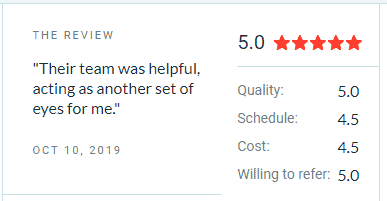
We know how important it is for potential buyers to peruse client testimonials and understand what it’s like to work with us before signing a contract, and that’s why we’ve partnered with the ratings and reviews platform Clutch.
Of more than 300 firms, Clutch ranks us among the top 3 software developers in NY! Clutch determines industry leaders based on market research and client feedback, so we’re immensely grateful to the clients who have left reviews for us. One of our recent reviews was from Wage CALC, a company that provides attorneys and legal professionals with a better way to manage their wage and hour cases with wage & analysis software.
Wage CALC was in need of custom software development services. They were looking for a trustworthy, well-known developer — and they found us on Clutch! Deploying a Microsoft Excel prototype that they’d created, we built their cloud-based app from the ground up.
“I’ve had such an excellent experience with them. Fingent exceeded my expectations.” — Founder & CEO, Wage CALC
The client was impressed that we were able to break down their complex, formula-heavy prototype. They commended our professional and responsive team and were particularly appreciative of how our SVP helped to streamline communication between our team in India and theirs in California.
We received another 5-star review from a large transportation and logistics company that specializes in oil and gas equipment pickup and delivery. There’s a significant technology gap when it comes to processing orders, invoicing, and workflow management within the logistics industry, and we were prepared to change that.
We developed an end-to-end transportation management solution. The solution allows customer service representatives to assign vehicles for order pickup and delivery, while drivers can use a mobile version of the solution to send documentation and process tickets and billing. The company’s accounting team also uses the system to do invoicing, collect payments, and close orders.
“The management system is light years ahead of anything else in our industry.” — IT Director, Transporation Company
The client appreciated our consistency and availability, along with our team’s impressive knowledge and talent.
Meanwhile, The Manifest, Clutch’s partner site listing market experts, ranks us as the #1 custom software development company.
Fingent is not just recognized by the Clutch! A few well-known rating sites like the Software World, have also appreciated Fingent for its expertise in software development and technology solutions.
Learn more on why Fingent is the most trusted Tech Partner for emerging enterprises, and how our expertise can benefit your business. Contact us today — we offer free consultations!
Stay up to date on what's new
About the Author
Featured Blogs
Stay up to date on
what's new
Talk To Our Experts
2020 Turning The Year Of Multi-Cloud Adoption for Enterprises
There has been a lot of hype going on around businesses adopting multi-cloud strategies that make use of public, private, and hybrid cloud services. Businesses, especially the mid-market and enterprise-level industries can utilize multi-cloud strategy as a smart investment by leveraging the benefits of its resilient performance and virtual infrastructure.
A multi-cloud strategy is all about adopting a mixture of IAAS (Infrastructure As A Service) services from multiple cloud providers and sharing workloads among each of these services which are reliable, secure, flexible, and of course cost-effective.
Why Must Businesses Opt For A Multi-Cloud Strategy?
Businesses can adopt a multi-cloud strategy to acquire an optimal distribution of assets across the user’s cloud-hosting environments. With a multi-cloud strategy, businesses can have access to multiple options such as favorable Service Level Agreement terms and conditions, greater upload speed selection, customizable capacity, cost terms, and many more.
How Can Businesses Make A Multi-Cloud Adoption Decision?
Multi-cloud adoption decisions are based on 3 major considerations:
- Sourcing – Agility can be improved and chances of vendor lock-in can be avoided or minimized by sourcing. This decision can be driven by factors such as performance, data sovereignty, availability, regulatory requirements, and so on.
- Architecture – Architecture is a major decision-driver as many modern applications are mostly of modular fashion that can span multiple cloud providers and obtain services from any number of clouds.
- Governance – Businesses can now standardize policies, procedures, processes, and even share tools that can enable cost governance. By adopting services from multiple cloud providers, enterprises can now ensure operational control, unify administrative processes, and monitor their IT systems more effectively and efficiently.
Better disaster recovery and easier migration are the other key benefits that drive enterprises to adopt multi-cloud strategies.
Related Reading: Cloud Computing Trends To Expect In 2020
Top 7 Reasons To Adopt Multi-Cloud For Your Business
-
Ability To Find The Best-In-Class Multi-Cloud Providers
Businesses administrators can bring in the best-in-class cloud hosting providers for each task that best suits their requirements. In a recent survey by Gartner, 81% of respondents said that the multi-cloud approach proved beneficial to them. Businesses are free to make their decisions based on the sourcing, architecture, and governance factors as mentioned above.
-
Agility
According to a recent study by RightScale, organizations leverage almost 5 different cloud platforms on average. This figure shows the transformation of enterprises increasingly towards multi-cloud environments. Businesses struggling with legacy IT systems, hardware suppliers, and on-premise structures can benefit from adopting multi-cloud infrastructures to improve agility as well as workload mobility amongst heterogeneous cloud platforms.
-
Flexibility And Scalability
With a competent multi-cloud adoption, enterprises can now scale their storage up or down based on their requirements. A multi-cloud environment is a perfect place for the storage of data with proper automation as well as real-time syncing. Based on the requirements of individual data segments, businesses can depend on multiple cloud vendors specifically. For improved scalability, enterprises must focus on achieving the following 4 key factors:
- A single view of each cloud asset
- Portable application design
- The capability to automate and orchestrate across multiple clouds
- Improved workload placement
-
Network Performance Improvement
With a multi-cloud interconnection, enterprises can now create high-speed, low-latency infrastructures. This helps to reduce the costs associated with integrating clouds with the existing IT system. When businesses extend their networks to multiple providers in this manner, proximity is ensured and low-latency connections are established that in turn improves the application’s response time along with providing the user a better experience.
-
Improved Risk Management
Risk management is a great advantage that multi-cloud strategies can provide businesses with. For instance, consider the case where a vendor has an infrastructure meltdown or an attack. A multi-cloud user can mitigate the risk by switching to another service provider or back up or to a private cloud, immediately. Adopting redundant, independent systems that provide robust authentication features, vulnerability testing as well as API assets consolidation ensure proper risk management.
-
Prevention Of Vendor Lock-In
With a multi-cloud strategy, enterprises can evaluate the benefits, terms, and pitfalls of multiple service providers and can choose the option to switch to another vendor after negotiation and careful validation. Analyzing terms and conditions before signing a partnership with a vendor can prevent vendor lock-in situations.
-
Competitive Pricing
Enterprises can choose between the vendors and select the best-suited based on their offerings such as adjustable contracts, flexible payment schemes, the capacity to customize, and many other features.
To learn more about adopting an effective multi-cloud strategy and the benefits it offers, drop us a call and talk to an expert.
Stay up to date on what's new
About the Author
Featured Blogs
Stay up to date on
what's new

