Deterministic to Probabilistic Apps:
The Role of the Agent Harness
Business software is moving from deterministic logic, where the same input always gives the same output, to probabilistic applications, where AI agents interpret each user’s context and adapt in real time. That flexibility brings unpredictability, so the model alone isn’t enough.
- The agent harness is the control layer around the model. It governs permissions, context, guardrails, human approvals, evaluation, and observability.
- Hybrid by design: keep deterministic logic where correctness is critical, such as payments and compliance, and use probabilistic behaviour where adaptability adds value.
- Test differently: use evaluation sets and quality thresholds instead of pass or fail.
- Takeaway: the model makes software adaptive, and the harness makes it dependable.
For decades, we have built business software on a simple promise: given the same input, the application will always do the same thing. It is also why they feel rigid. They handle the situations someone anticipated and struggle with everything else.
A different class of application is emerging. Instead of following a fixed script, it interprets what each user is trying to do, adapts to their context, and uses AI agents working in the background to produce outputs that fit the moment. They are called probabilistic applications, and they are changing what businesses expect from the software we build for them. They also change the engineering problem. When outputs are no longer guaranteed, something has to keep the system dependable. That something is the agent harness.
The Ceiling of Deterministic Software
Deterministic applications run on explicit logic. A developer decides every path in advance: if the user selects this option, show that screen; if a field is empty, return this error. The result is predictable, testable, and auditable.
The weakness is that real users do not behave like test cases. Their inputs are messy, their goals vary, and their context changes from one visit to the next. Also, prompting for specific results have also become a widespread habit rather than a trend.
To serve them better, teams keep adding rules, branches, and exceptions. Eventually the logic becomes so large that every change is slow and risky, and the experience is still the same for everyone.
This is the ceiling. You cannot hard-code your way to software that understands intent.
What Probabilistic Applications Change
A probabilistic application places an AI model, usually a large language model, inside the decision loop. Rather than only executing predefined rules, the application understands user inputs, draws on context such as previous user behaviour and browsing history, and generates a response. Agents can also work in the background, researching, assembling, or preparing outputs while the user is still interacting.
This makes the output unique every time. Two users may not get identical responses. It is shaped by the individual, the situation, and the data available. That variability is the source of both the value and the risk.
| Factor | Deterministic application | Probabilistic application |
|---|---|---|
| Logic | Explicit rules written in advance | Model-driven interpretation of intent and context |
| Output | Same input, same output | Varies with input, context, and interaction |
| Personalisation | Segments and fixed variants | Adapts to the individual in the moment |
| Handling the unexpected | Fails or falls back to a default | Reasons about it, within defined limits |
| Testing | Pass or fail | Evaluated against thresholds and quality criteria |
| Main risk | Rigidity | Unpredictability |
What Does This Look Like in the Applications Businesses Ask Us to Build?
The following scenarios are illustrative, not descriptions of specific engagements, but they show the shape of the shift.
An adaptive customer portal
A traditional portal shows every customer the same menu of reports and actions. A probabilistic portal observes what a customer asks for and how they navigate, then surfaces the relevant data, drafts the summary they usually need, and prepares next steps before they request them.
An intelligent intake or quoting flow
Instead of a long form with fixed branches, an agent reads what the user provides, asks only the clarifying questions that matter, and assembles a structured request for the business to act on.
A proactive support experience
Rather than waiting for a ticket, an agent working in the background notices patterns in a user's activity, anticipates a likely issue, and offers guidance within the application.
In each case, the application is no longer a fixed set of screens. It is a system that responds to the person using it.
The New Problem: Outputs You Can't Fully Predict
This flexibility is exactly what makes business leaders cautious, and they are right to be. An application that generates its own outputs can produce an incorrect answer, behave inconsistently across users, expose data it should not, take an action nobody approved, or drive up costs through uncontrolled model usage. In regulated or customer-facing environments, any one of these is unacceptable.
The model alone cannot solve this. A more capable model reduces some errors, but it does not provide permissions, audit trails, approval steps, or fallbacks. Those come from the architecture around the model.
In our view, most failures in agentic applications will trace back to a missing or weak harness, not to a weak model.
The Agent Harness: The Layer That Makes It Dependable
An agent harness is the architectural layer that surrounds an AI model and governs how it operates inside an application. It decides what the agent can see, what it can do, how its work is checked, and when a human steps in. The model supplies the reasoning, and the harness supplies the control.
A well-designed harness typically includes:
- Orchestration loop. Manages how the agent plans a task, takes steps, observes results, and decides what to do next.
- Tool access and permissions. Defines which systems, APIs, and data the agent can reach, and with what level of authority.
- Context and memory. Controls what information the agent receives and retains, so responses are relevant without exposing what should stay private.
- Guardrails and policy checks. Validates inputs and outputs against business rules, security requirements, and compliance constraints.
- Human approval points. Routes high-impact or uncertain actions to a person before they take effect.
- Evaluation. Measures output quality continuously against defined criteria instead of relying on one-time testing.
- Observability. Records what the agent did and why, so teams can audit, debug, and improve behaviour.
Hybrid by design
Adopting probabilistic behaviour does not mean abandoning deterministic logic. The strongest architectures use both deliberately.
Keep deterministic logic where correctness is non-negotiable, like payment processing, regulatory calculations, and writing systems of record.
Allow probabilistic behaviour where adaptability creates value like interpreting requests, summarising information, drafting responses, and personalising experiences.
The agent harness is what connects the two. It lets an agent propose, and lets deterministic services validate and execute. The agent can suggest a refund, but fixed business rules decide whether it is allowed.
Testing and Governing Non-Deterministic Applications
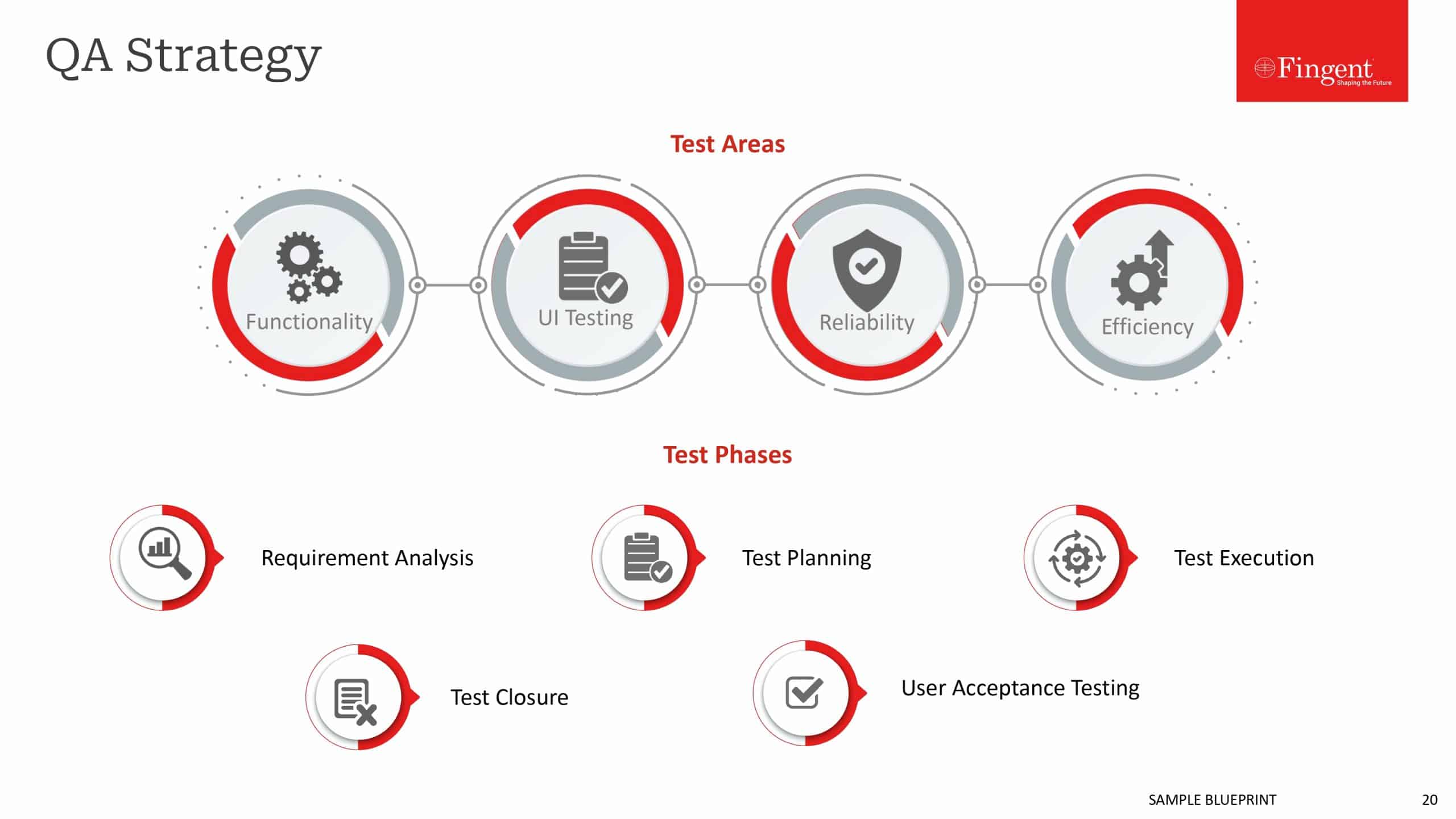
Traditional testing asks whether a function returns the expected preset value as per rules. That approach does not work and is ill-suitable for a situation when outputs legitimately vary. Teams need to shift from pass-or-fail thinking to evaluation thinking.
In practice, that means building evaluation sets of representative scenarios, including difficult and adversarial ones, and scoring outputs against defined quality thresholds. It means monitoring behaviour in production, not only before release, and setting clear rollback conditions when quality drifts. It also means deciding in advance which actions need human approval and who owns oversight.
Governance is part of the same discipline. A risk-based approach, which applies stronger controls where the potential harm is greater, fits naturally into harness design. We explore this in more depth in our white paper, Responsible AI Governance for the Agentic Era.
Build AI Agents You Can Trust
Agentic AI moves faster than traditional governance can keep up.
Our white paper, Responsible AI Governance for the Agentic Era, offers a risk-based framework to help you deploy AI agents with the right controls, accountability, and compliance across the EU, Australia, and New Zealand.
Download the white paper
Questions to Ask Before You Build
Before starting a probabilistic application, business and technical leaders should be able to answer a few questions:
1. Where is adaptability worth the risk?
Identify the experiences that would improve most if they responded to the individual user.
2. What is the cost of an incorrect output?
Rank capabilities by impact, and keep high-stakes decisions in deterministic or human-approved paths.
3. Is our data ready?
Agents are only as useful as the context they can reliably and securely access.
4. How will we measure quality?
Define what "good" looks like before building, not after.
5. Who owns oversight?
Assign accountability for monitoring, escalation, and continuous improvement.
6. Where should we start?
Choose a contained, lower-risk use case to learn from before scaling.
The Road Ahead
The shift from deterministic to probabilistic software is not about replacing rules with guesswork. It is about letting applications understand people while keeping the business firmly in control. The model makes software adaptive, and the harness makes it dependable.
Organisations that treat the harness as a first-class part of their architecture will be able to move faster and with more confidence than those that bolt AI onto existing systems and hope for the best.
If you are considering an application that adapts to your users, explore Fingent's AI offerings to see how we can help you design and build it with the right architecture from the start.
Frequently Asked Questions
1. What is an agent harness?
Agent harness is the architectural layer around an AI model that controls its permissions, context, guardrails, approvals, evaluation, and observability, so the agent can operate safely inside a business application.
2. What is the difference between deterministic and probabilistic applications?
Deterministic applications follow fixed rules and always return the same output for the same input. Probabilistic applications use AI to interpret context and generate outputs that can vary with the user and situation.
3. Are probabilistic applications safe for regulated industries?
They can be, when risk is managed by design. That means keeping critical decisions in deterministic or human-approved paths and enforcing guardrails, audit trails, and continuous evaluation through the harness. Traditional application software is generally deployed directly to local machines or servers and frequently has to be manually updated, as well as pre-licensed. Application software includes old versions of Microsoft Office.
4. Can existing applications be made agentic?
Often, yes. Many organisations begin by adding an agent-driven capability to one part of an existing application, with a harness controlling what it can access and do, instead of rebuilding the whole system.
5. Do we need to replace our current software?
Not necessarily. Existing deterministic systems frequently become the trusted foundation that agents call on, particularly for transactions and systems of record.