Strengthening a Live Web Portal Against AI-Assisted Attacks

Challenge:
- Possibility of the core online portal being vulnerable to AI-assisted attacks.
- Assess and address security issues of a live portal without disrupting operations

Industry
Logistics

Solutions:
Live Web Application Security Testing

Results:
- 5 critical weaknesses fixed within a month.
- Multiple medium and low severity issues mitigated across the quarter.
- Stronger customer and partner trust with detailed application security document evidence.

Location:
Australia
About the Client
The client is a mid-sized, family-owned transport and logistics company in Australia. They handle bulk and general freight for customers across the region. To enable streamlined operations, they rely on an online web portal that serves as a central platform for both customers and internal staff to access critical business data, operational dashboards, and key insights. Both groups access the portal through separate user roles and permissions.
With cyber threats becoming more sophisticated and AI-assisted attacks on the rise, security became a growing concern for the client's leadership team. They wanted an independent assessment of the portal's security posture, including its ability to withstand emerging attack techniques and protect sensitive business and customer information. The client approached Fingent for an independent security assessment. They were aware of Fingent's industry experience and trusted Fingent could develop the right assessment strategy.
Case Overview
For the past four years, the client has run their operations through the online portal. The online portal runs on Microsoft Azure, with application code built using C# and .NET. Users within the platform are organized by customer and line of business, so that each customer can access only their own data and dashboards. This separation is critical to protecting sensitive customer information.
However, a single security weakness could put data boundaries, sensitive client information, and business operations at risk. Although the internal team had already reviewed the portal, leadership wanted greater assurance. Fingent's Live Web Application Security Testing addressed this need by combining automated vulnerability scanning with hands-on testing by security specialists. This approach helped the client understand its actual exposure and determine the right remediation priorities.
CHALLENGES
Roadblocks Faced In The Existing Systems

Live portal holding sensitive customer information

Possibility of the online portal being vulnerable to AI-assisted attacks

Go beyond internal reviews and automated vulnerability scans

The need to assess the business impact of each security finding

Address vulnerabilities without disrupting daily operations
SOLUTION
Fingent’s Approach - Live Web Application Security Testing
Fingent assesses application security in three layers: the application and its code, the platform it runs on, and the organisation's ability to detect and respond to incidents. For the client, Fingent focused more on the application layer. The assessments were conducted through a grey-box testing approach, where testers were given credentials for three user roles, along with selected internal information to examine access controls from each role’s perspective and identify potential gaps.
The testing covered key areas of application security, including authentication and authorization, session management, access controls, input validation, data handling, error handling, and exposed endpoints. Fingent combined automated scanning of the running application (Dynamic Application Security Testing or DAST) with manual penetration testing. The manual tests followed the OWASP Testing Guide, mapping the findings to the OWASP Top 10 list of web application risks. The assessment was designed to provide clear, actionable findings without disrupting business operations.
All testing ran remotely in a staging environment, so live operations were unaffected.
A Fingent security specialist ran the tests, and a second reviewer independently checked the findings and report.
The final written report included an executive summary for leadership, technical details of each finding, and recommended fixes.
Explore how our experts can turn your ideas into innovations.
EVALUATION JOURNEY
Ensuring Reliable Security Assessment
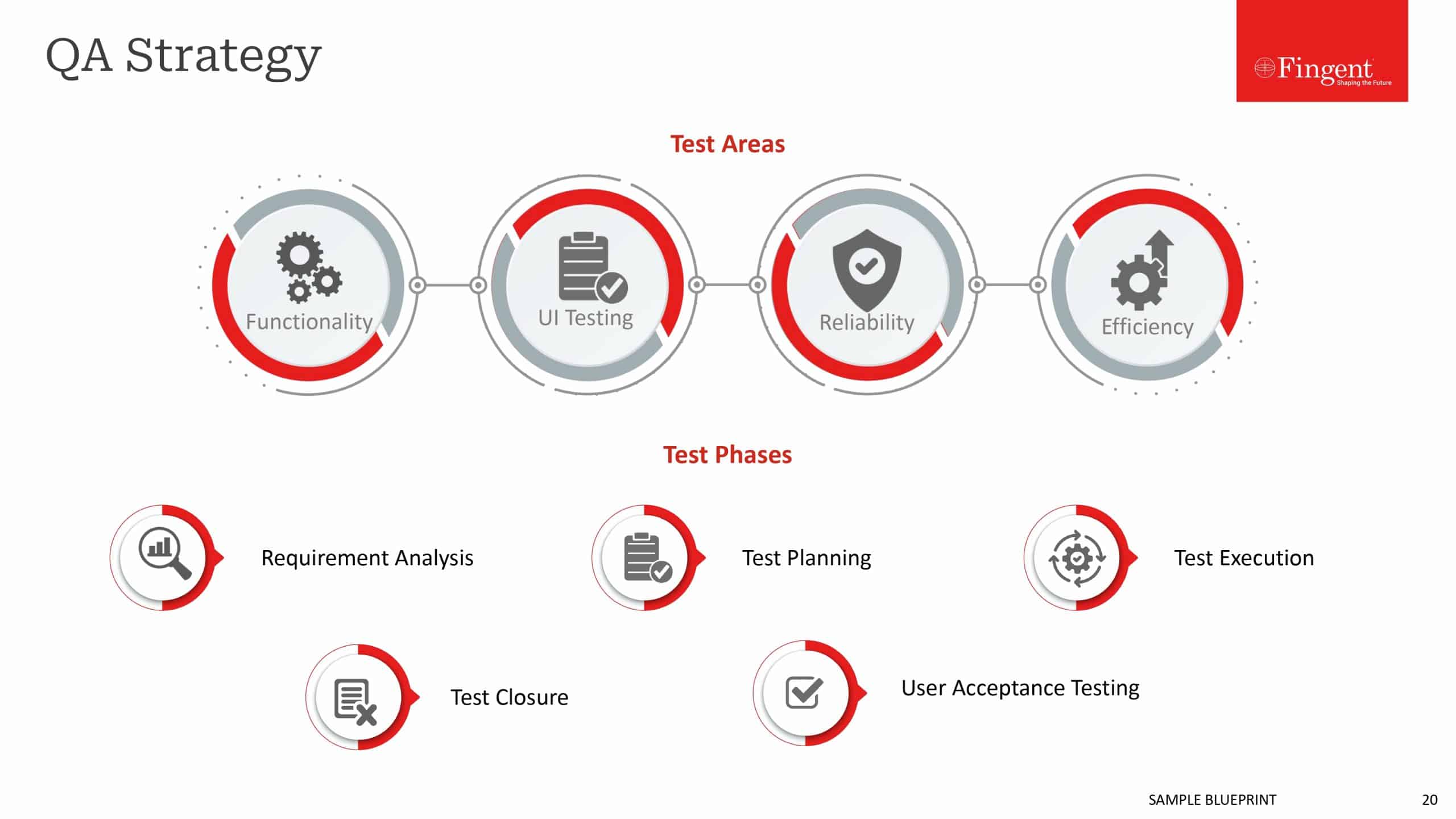
The Live Web Application Security Testing ran for eight days across five phases: reconnaissance, vulnerability identification, controlled exploitation to validate each finding, verification, and reporting. The assessment identified five critical vulnerabilities, along with several medium and low-severity issues. The identified weaknesses were of the kind that AI-assisted attack tools can exploit. Fingent documented each finding with its potential impact and recommended remediation steps.
The OWASP Top 10 mapping also highlighted areas where no weaknesses were found within the assessed scope. These included injection, cryptographic failures, and server-side request forgery (SSRF). Given the portal's live business use and level of exposure, Fingent prioritized immediate action. Temporary patches and urgent hotfixes were deployed within the first week of testing to address critical risks. Fingent then worked on permanent fixes to resolve the underlying issues.
Retesting the fixes confirmed that every critical finding was closed within about a month.
Functional issues found in testing were immediately fixed.
Temporary patches were replaced with permanent fixes, and the remaining findings were mitigated across the quarter.
Upgraded the portal's underlying technology stack.
Secure your applications from AI-assisted attacks before it’s too late
BENEFITS
Making An Impact On Client Success
The retest confirmed that all five critical findings were resolved within approximately one month. The medium and low severity issues were also mitigated over the following quarter. Together, these fixes reduced the risk of security incidents disrupting business operations or affecting the customer dashboards hosted on the portal.
The assessment also gave the client documented evidence of its security posture. The report and retest results now support customer security reviews, audits, and board-level updates. Each finding is rated by likelihood and potential impact, making it easier for stakeholders to understand the risks and track remediation. Security is now part of the portal's ongoing development process. The client has incorporated security checks into its release cycle and conducts regular reassessments.
Reduced live-system exposure through temporary fixes in the first week.
Strengthened customer reviews and audits with documented findings and risk ratings.
Verified closure of all five critical findings through retesting.
Improved ongoing security through regular assessments and release-stage checks.