Category: Technology
The logistics and supply chain market is predicted to experience most complexities this 2021, especially with the COVID-19 vaccine distribution. Here are ways to enable smooth logistics operations, even amidst the chaos!
COVID-19 Vaccine Distribution: A Guide for Logistics and Supply Chain Leaders to Make Strategic Decisions
Crunch time and performing in a crisis – logistics and supply chain leaders are familiar with these challenges. The pandemic recovery mode has turned out to be a whole different ball game for logistics and supply chain service providers. It has thrown them a new and unique challenge in the distribution of the COVID-19 vaccine. Now, the world is looking to those same industry leaders for more strategic decisions and ways to shock-proof the supply chain.
Thus far, most companies have relied on a strategy of low-cost supplies and minimum inventory. However, given the combination of the pandemic, trade conflicts, and harsher natural disasters, they are rethinking such an approach. 2021 is facing one of the most complex logistics and supply chain challenges that we have never experienced in the past. This article shows how logistics businesses can enable smooth operations, especially with the vaccine distribution throughout 2021.
How is COVID-19 vaccine distribution affecting the logistics sector?
According to Jabil’s report on supply chain resilience in a post-pandemic world, the coronavirus disease impacted 78% of respondent supply chains, more than any other disruption over the last decade. Supply chain disruptions are not new, but they are usually contained and short-lived. However, COVID-19 has brought in extraordinary challenges. Here are a few of them:
1. Speed to market
Swift development of the COVID-19 vaccine has a ripple effect throughout manufacturing and distribution. Unlike other vaccines, COVID-19 vaccines need to be shipped under ideal conditions. Speed to market and the need to maintain cold chain integrity will be a big challenge for the supply chain sector.
2. Global and pervasive
Unlike traditional vaccines, the COVID-19 vaccine is not location-specific. Supply chain leaders may encounter challenges as they ship to new customers through unfamiliar trade lanes, using new transport systems. In other words, the vaccine supply chain has to meet the demand on a global scale.
3. Full-scale distribution
The COVID-19 vaccine will have to be distributed full-scale from the start. Given the unfamiliar network, the risk entailed in this process doubles.
These unique challenges are forcing industry leaders to rethink traditional approaches. Those in the supply chain dedicated to the COVID-19 vaccine distribution will need to act in real-time and guide others downstream proactively.
Six stages to enable smooth logistics operations throughout 2021
Post the COVID-19 vaccine release announcement, the public’s attention began to shift from research and development to distribution. And rightly so! Here are six stages that supply chain leaders must focus on while making strategic decisions:
Read more: How to Pick the Right Logistics Management Software

1. Planning is everything
The success of any task starts with proper planning. The supply chain encapsulates the procurement of goods, storage, and delivery to a specific location. With appropriate management of time, transportation, and other parameters, logistics companies can earn maximum profits. Adhering to the schedule helps attain better tracking, quality control, and timely delivery.
Despite good planning, supply chain procedures may encounter some challenges. Supply chain providers need to have a backup emergency plan to manage such unexpected situations.
2. Train for efficiency
The success of the plan is determined by those who execute it. In other words, well-trained staff can have a significant impact on the plan’s success. To this end, the team must be well trained in utilizing modern techniques.
Apart from frequent training sessions, companies can increase their teams’ efficiency through brochures and paper notices posted on the workplace walls. Apart from that, make sure that each employee is aware of the new policies. Educate your staff on how to handle the vaccine shipment so that the handler is conscious of packing and labeling.
3. Keep up with the latest technology
Technology is continuously evolving now more than ever. It is essential to keep up with the latest technology to handle challenges and tackle vaccine distribution demands.
- Artificial Intelligence can assist in providing timely updates regarding the movement of goods.
- It helps the client know the details about the supply, warehouse, and delivery. Automation of such information can save a considerable amount of time for the industry and its clients.
- Automation eliminates human error in tracking, which improves overall process management.
- AI can also assist in managing the account details and employee details.
- Automated warehouses can make sorting, packaging, and organizing vaccines much easier.
- Automated voice bots and chatbots can play a significant role in customer services.
Read more: How SAP Helps Realize Voice-enabled Warehouse Operations

4. Warehouse and inventory management
Effective supply chain management is incomplete without proper warehouse management. Warehouse operations vary according to the product. For example, most vaccines require ultra-low temperatures. Ensure that your current warehouse facility is capable of stocking the vaccine at appropriate temperature levels. Proper warehouse inventory will ensure minimum wastage of goods.
Moreover, using vertical storage columns can maximize storage capacity. Implementing efficient tracking software allows warehouse personnel to locate products quickly.
Implementing logistics software solutions or applying robotics logistics such as robotic palletizing, packaging, and automated picking can modernize warehouse operations, improve health and occupational safety in the warehouse premises, reduce physical contacts between workers, and increase efficiency fulfillment.
5. Improved transportation
Efficient transportation can decrease expenses and speed up the delivery of vaccines. Determine the shortest and safest delivery route. Optimize the packaging to reduce the weight of the package and the volume.
The pandemic has accelerated digital shopping. Last-mile delivery has become more critical than ever before. The use of technology can help logistics managers optimize that last-mile and help them keep their customers updated.
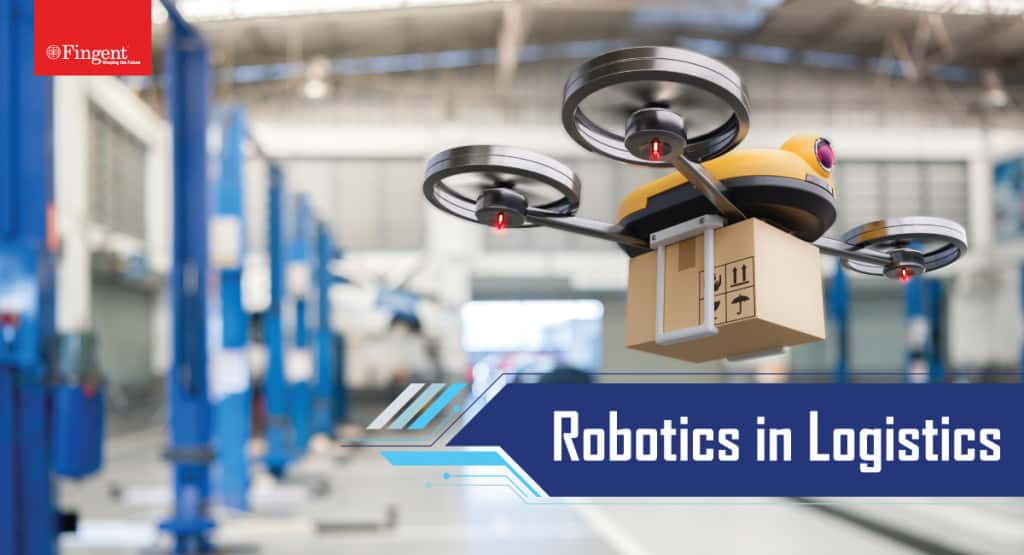
Read more: How Robotics in Logistics Helps Improve Supply Chain Efficiency
6. Analyze and improvise
Integration of feedback and analysis makes any logistics network complete and optimal. Predictive data analytics can help industry leaders learn from what happened and improve in the future. You can use it to get a detailed understanding of what caused delays in your supply chain. Once you identify those bottlenecks, you can boost the productivity of your logistics business and efficiency on your future trips.
Building supply chain resilience
Just as the coronavirus spread from place to place, the vaccine must follow suit to support a global recovery. However, the vaccine’s possible routes are determined by the cold chain. Some areas do not have the option of freezer storage. Local logistics and supply chain leaders must ensure that these communities have access to the approved vaccines.
Location intelligence and technological advantage help leaders determine where vaccines need to go and how to get them there. For most logistics firms, the pandemic seems to be a trial-by-fire. By implementing responsible strategies, you can build resilience in logistics and supply chain practices.
To fulfill the increasing demand for last-mile delivery, logistics companies must strengthen smart tech investments and build healthy partnership ecosystems. Fingent is closely monitoring the situation and helping businesses return to work with our technology consulting and innovation capabilities. Contact us, and let’s get you started.
Stay up to date on what's new

About the Author

Featured Blogs






Stay up to date on
what's new



Talk To Our Experts
Fiori vs. Screen Personas vs. Lumira: Which SAP UI platform best-fits your requirements?
User experience defines customer experience today. User expectations vary with individuals, previous experiences with software, or devices. People tend to leave a mobile app or a web application if they find it slow, inefficient, and difficult to use. Amazon’s open and highly navigable UI has made it a leader in e-commerce, with 29% of baby boomers and 21% of Generation X ranking its UX as the best a web or mobile app can offer. This example of Amazon tells us how vital UI is to create and deliver an unparalleled user experience.
Being a leader in enterprise applications, systems, and products, SAP has always developed user interfaces that its customers appreciate. Over these years, SAP has come up with replacements to its traditional SAP GUI, designed on platforms like NetWeaver. As the UI technologies mature, the tools used for design and development transform. This piece analyzes three of the most popular SAP UI offerings and their benefits: Fiori, Screen Personas, and Lumira.
Read more: How Fingent Enables e-Invoicing for SAP Users to Stay Compliant with GST India Regulations

1. SAP Fiori
Built on the latest design principles, Fiori is one of the most contemporary and enhanced user experience offerings. Fiori applications are device-independent, easy to use, and easily configurable across tablets, desktops, and smartphones. It simplifies workflow approvals, information lookups, and self-service tasks and brings excellent user experience to enterprise applications.
SAP Fiori enables multiple device applications through which a user can start a process on her laptop or desktop and continue it on a smartphone or tablet. For unmatched application response and query-execution time, SAP Fiori can be combined with SAP HANA. It’s easy to set up Fiori and configure a transaction application in systems that run on ECC 6 or EHP 7+ versions. Fiori aligns with SAP’s future UI/UX strategies by offering a modern and delightful user experience.
Benefits of Fiori
- In addition to increased productivity, research reveals that Fiori delivers a 64% reduction in time needed to complete a task than SAP GUI.
- Fiori is simple and easy to learn, so it has a better adoption rate and cuts training time.
- Fiori offers more intuitive workflows that feature business logic instead of SAP logic. So employees tend to get less frustrated.
- Users without SAP expertise find Fiori easier to use.
- Unlike the mouse-keyboard structure of SAP GUI, field technicians and employees can use Fiori-based applications on different device types.
- Developers find less need to build their tools on SAP HANA.
Read more: What is Business Process Expertise in SAP and Why You Need it

2. Screen Personas
Screen Personas is a UI framework or a tool that enables modifications to the existing SAP GUI by allowing you to add or remove fields your users don’t need, collect data automatically using the scripting engine and bring scattered data to a single screen using the editor. Screen Personas is ideal for automating and streamlining business processes and simplifies transactions to create the Fiori user experience across all the devices. This UI offering is included in the standard SAP ERP license.
One of the significant drawbacks of Screen Personas is that it remains limited to the current transaction screens. While it is possible to combine transactions or load extra information via Bapi’s, there could compromise the performance. We can use Screen Personas on different devices, so it becomes necessary to build a separate ‘flavor’ for each screen size, which means extra development time is needed. Further, there are offline options for Screen Personas.
Benefits of Screen Personas
- It reduces the number of clicks by simplifying SAP GUI transactions, simplifies user interfaces, and improves user productivity and data quality.
- Allows users to access data and fill-out data on their mobile devices, making working on the go a breeze. Screen Personas has improved the work experience on the go and in dynamic work environments like the factory floor.
- Screen Personas can be leveraged to bring SAP Fiori experience to transactions and SAP S/4 HANA.
- Reduces the cost involved in training the employees.
- Boosts your company’s image and branding.
3. Lumira
Also known as a visual intelligence tool, SAP Lumira helps create stories and visualize them on a dataset. You can enter the data in Lumira as data sets and then apply filters, calculated columns, and hierarchies to build documents on Lumira. To visualize the data effectively, you can choose different charts such as pie charts, bar charts, etc. The tool is simple and has a user-friendly interface that allows you to create captivating visualizations and analyze data without scripting.
Benefits of Lumira
- From fact-based solutions to complex business questions, Lumira improves decision-making by avoiding list tables and fixed format reports.
- Integrates wide-scale insights that include minute details, which helps maximize business knowledge.
- Increases self-service data usage without burdening the IT department
- Visualize vast quantities of data in real-time using SAP HANA and deploy the same to mobile devices.
SAP Lumira Standard Edition is a paid version and SAP Lumira Personal Edition is available for free download.
UI focused on design thinking
SAP technologies are focused on design thinking and define methodologies to address business challenges. Design thinking provides creative ideas and solutions to resolve complex use cases.
Intelligent technologies from SAP, such as Leonardo, IRPA, Edge Services, IoT, etc., are designed to be integrated with any of your existing SAP ERP systems like ECC or S/4HANA. For instance, you can use IoT services to create Fiori apps in the SAP Cloud Platform. When integrated into your business processes, you will not know there is machine learning involved as an end-user, and you won’t see any apparent changes. However, you will experience automatic decision-making or recommendations.
Read more: Unlock the Potential of Intelligent Enterprise with SAP Leonardo

There is no denying that SAP technologies and tools are evolving to offer an enriching user experience. Its unique UI offerings like Fiori, Screen Personas, and Lumira are designed to address customer priorities, UI expectations, and investment. Are you looking to create a successful UI strategy for your organization? Fingent helps you make the best of SAP’s UI platforms. Contact our expert today and discuss your requirements.
Stay up to date on what's new
About the Author

Featured Blogs
Stay up to date on
what's new
Talk To Our Experts
Why and when does an enterprise require hyperconverged infrastructure?
Enterprises and businesses in all sectors strive for the most efficient infrastructure. The explosion of business data poses additional challenges to IT decision-makers. Weak storage solutions could be disastrous for a business. Organizations need to invest in a reliable IT solution that will bring together all IT infrastructure components. They need a solution that will increase overall workplace productivity and reduce cost.
Hyperconverged infrastructure can be the perfect solution for enterprises. It provides uniform scaling along with the simplicity of deployment and ease of management. These features of HCI translate into operational efficiency and reduced costs. As businesses slowly emerge from the fragile economy caused by the coronavirus impact, hyperconverged infrastructure can help them come back strongly.
Let’s have a look at what hyperconverged infrastructure is and how you can benefit from it.
What is hyperconverged infrastructure?
Hyperconverged infrastructure (HCI) is an IT framework. It combines computing, networking, and storage into a single turnkey platform to increase scalability and reduce data center complexity. Hyperconverged platforms usually run on standard, off-the-shelf servers and include a hypervisor for virtualized computing and networking and software-defined storage. Hyperconverged platforms are designed for scalability. For example, it allows you to cluster multiple nodes for creating pools of shared storage and compute resources.
Compared to traditional enterprise storage infrastructure, you can customize hyperconverged infrastructure to make it flexible and easy to manage. It can provide the agility of infrastructure without relinquishing control of your hardware.
Why and when does an enterprise need hyperconverged infrastructure?
Hyperconverged infrastructure offers scalability, reliability, data protection, and more. However, it does not mean HCI is for everyone. It is not recommended for applications that need low latency and contend with high I/O rates. For applications with the right workload, it proves useful in addition to the data center reducing costs and simplifying IT.
Initially, Virtual Desktop Infrastructure and other general-purpose workloads with fairly predictable resource requirements started using hyperconverged infrastructure systems. However, it has become a suitable platform for enterprise applications, private cloud, edge computing deployments, and databases. In other words, a hyperconverged infrastructure system can be used by smaller enterprises that need faster and more reliable storage solutions.
With the landscape of technology evolving faster than ever before, enterprises are increasingly moving to the cloud. As workload requirements grow, organizations realize the need to add nodes to their system. To achieve this, they need a 100% software-defined storage solution that aggregates the storage and compute performance between servers and nodes.
That is why enterprises need a hyperconverged infrastructure system. It can provide such necessary solutions, replace silos of servers, storage, and virtualization, and avoid the need for separate management tools and processes.
As technology begins to settle down, the rate of HCI adoption is expected to increase soon. So, it is crucial to know its benefits and make an informed decision.
Read more: 11 Tech Trends That Will Disrupt Businesses in The Next 2 Years

12 benefits of hyperconverged infrastructure
1. Simpler design
Though hyperconverged infrastructure is not cloud-based, it is ideal for the cloud era. It comes with a framework that has a flexible and simple design. Hyperconverged infrastructure eliminates silos and other barriers that slow down development. In this way, it helps the organization to accomplish most tasks more swiftly. In the current fast-paced world, having the ability to act quickly is vital.
2. Scalability
Scalability has been the top reason for many enterprises to choose HCI. Each hyperconverged infrastructure appliance is a self-contained unit that is designed from the ground up that maximizes compatibility. It allows expansion of data center capacity by simply attaching an additional unit.
An HCI cluster is made up of preconfigured, and self-contained building blocks called nodes. Since nodes can be pre-optimized, admins can easily add them without having to contend with integration issues.
3. Ease of implementing hybrid systems
Hyperconverged infrastructure combines virtualized computing and networking with software-defined storage. This facilitates identical software deployment, whether hosted on the cloud or at the data center, meaning that a team can quickly deploy applications on-premise and combine them with a public cloud. That makes it perfect for any enterprise that plans to build a hybrid infrastructure.
Read more: Hybrid Cloud Infrastructure: How It Benefits Your Business
4. Simplified management
With a traditional system, an organization would require specialists to manage each of the different elements: storage, compute, and networking. Thankfully, a hyperconverged infrastructure simplifies this management issue. It allows consultants or even general tech staff to oversee the entire setup.
Administrators can work from a single management platform that consolidates administrative tasks. It helps them eliminate management silos that come with traditional infrastructure. Additionally, it frees up IT personnel for other critical tasks such as focusing on new initiatives.
5. Reliability
The inbuilt multi-node architecture of hyperconverged infrastructure offers a highly reliable system. Since fault tolerance and disaster recovery are built into an HCI platform, other nodes can compensate for one node’s failure. This aspect also includes self-healing capabilities that automatically identify and address issues. Admins can add or replace nodes without workload disruptions.
Read more: How Kubernetes benefits your IT infrastructure?

6. Improved performance
Hyperconverged infrastructure is capable of improving workload performance, even when running multiple application types. It can meet the performance demand of varying workloads, including virtual desktop infrastructure. It can also accommodate changing performance requirements without the need to reconfigure the entire hardware.
7. Efficient data storage and protection
Since data storage and protection are a part of its infrastructure, hyperconverged infrastructure can make these processes more straightforward and efficient. It can provide data protection functionalities such as data duplication or snapshots. Disaster recovery and prevention is also made easy with hyperconverged infrastructure.
Being software-centered, HCI gives an enterprise the opportunity for regular backups using public cloud storage. Scattering data across multiple nodes, HCI ensures that the entire business is not affected when just one piece of hardware goes down.
8. Automated infrastructure
Automation has been impossible for most complex IT infrastructures. However, in HCI storage, servers and infrastructure support services are virtualized, making automation of routine operations achievable when centralized management tools are implemented. It enables administrators to quickly deploy cloud infrastructure, automate complex processes, and eliminate time-consuming manual tasks.
9. Workload consolidation
Over the years, HCI products have been supporting workloads beyond back-office applications and virtualized desktop infrastructure. Hyperconverged infrastructure’s ability to consolidate multiple IT functions into the same platform is most beneficial for an organization. It makes it easier to migrate virtual machines between different appliances or even between data centers.
10. Easy upgrades
Hyperconverged infrastructure provides a unified environment that makes upgrading hardware and software much faster and easier. It can streamline and simplify upgrades, eliminating the need to balance independent systems. It provides a flexible and adaptable environment for restructuring systems or hardware. Besides, it does not have risks that come with other systems. Hyperconverged infrastructure offers a unified platform that uses integrated technologies and standard protocols. It makes it easier to implement performance upgrades.
11. Software-defined infrastructure
Software-defined capabilities help in driving operations and maintaining the overall health of the environment. These capabilities make automation more comfortable to implement than with legacy systems. Software-defined infrastructure can quickly and easily accommodate upgrades, multi-storage types, and new components. It can thus simplify IT, handle diverse and changing workloads while improving overall efficiency.
12. Lower costs
Most enterprises adopt hyperconverged infrastructure because it reduces the running cost of workloads throughout their life cycles. It can consolidate hardware resources and maximize their use. Moreover, it will tremendously reduce the need for more servers and minimize power and cooling requirements.
Since you can build hyperconverged infrastructure with commodity hardware, organizations can avoid expenses that come with deploying specialized servers, storage, or network components.
Hyperconverged infrastructure uses direct-attached storage. It helps enterprises avoid the high cost that comes with deploying and managing a SAN. With the help of a reference architecture, they can buy HCI software and build their HCI platforms.
How can organizations adopt hyperconverged infrastructure?
Organizations must adopt hyperconverged infrastructure to reduce the complexity associated with network management across servers and storage. The best approach is to make a trial with a small project and then scale up as the need arises.
If you want to adopt HCI, you can start by surveying your existing infrastructure and figure out what you want to achieve by moving to HCI. It will help you refine your needs and identify what features you will require so that you get to focus on the right vendor offerings.
To tackle the toughest challenges, organizations need to adopt solutions that deliver. Consider these factors when adopting a hyperconverged infrastructure:
- Adequate support: The right HCI solution must support a broad set of application deployment models. It needs to be fast and consistent to run your mission-critical apps.
- Scalability: The right solution should complement your current IT needs and adapt as those needs evolve.
- Seamless integration: The HCI solution should be flexible enough to support multiple hypervisors, whichever cloud environment most appropriate for them.
Learn more: Take a look at how InfinCE, an infinite cloud platform, ensures secured work-collaboration within an organization and helps enhance company efficiency & growth!
Over to you
Organizations need reliable and faster storage performance now more than ever before. Hyperconverged infrastructure provides a path to secure and modern infrastructure. Most organizations consider the solution critical to their strategic IT priorities. What about you?
Chat with us and get the answers to all your questions on hyperconverged infrastructure.
Stay up to date on what's new
About the Author

Featured Blogs
Stay up to date on
what's new
Talk To Our Experts
SAP helps increase warehouse management productivity with voice picking!
Voice technology has been there for a while and is here to stay. Its increasing adoption among warehouse distribution centers has led to increased accuracy, improved productivity, and training time reduction. Supply chain executives report attaining a 50% decrease in picking errors and a typical ROI in less than one year with voice integration.
In retail warehouses, complex facilities such as inventory control are vital, with several picks to be performed every hour. The warehouse employees should be an efficient and accurate while ‘picking’ as wrong picking can lead to incorrect deliveries and affect customer satisfaction.
To improve staff accuracy and speed of pick, warehouses can consider “Voice Picking” technology. Voice picking is an extension of the Warehouse Management System (enhanced by additional software and hardware) that allows transferring instructions to the warehouse operators using earphones and microphones. Voice Picking uses a wearable computer that includes a headset and microphone so that the order pickers can be instructed on what items to pick from where and later confirm their actions verbally into the Warehouse Management System (WMS).
Read more: How Robotics in Logistics Helps Improve Supply Chain Efficiency
Benefits of Voice-picking
A voice-picking system creates a hands-free, heads-up workflow. Unlike the traditional warehouse order picking, where you need to stop to read, scan, or punch keys, the voice-picking system allows users to listen and speak efficiently. Some of its benefits include:
- Productivity improvement
- Reduction in errors by 25% or more
- Decrease in accidents as operators rely on eyes and hands-free technology and hence are more aware of the surroundings
- Cuts training time
How is voice-enabled warehouse operation helping during the COVID-19 pandemic?
In the last few months, warehousing and logistics have been hit hard. While there was enormous pressure on the warehouse to execute deliveries quickly due to increasing customer expectations, COVID-19 has caused further disruption.
Logistic companies have had to evaluate options and make changes across transportation modes, considering delays, interruptions, and price changes.
According to a survey from August to September 2020, about 32,200 jobs were added to the warehouse and storage sector. Thanks to voice and device technology! Voice integration helped address the labor shortage and equipped new workers. Here are a few benefits of voice-enabled warehouse management.
1. Efficient onboarding
New workers can pick up their barcode scanner or mobile device and begin their work with minimal onboarding time. Latest device upgrades offer improved designs and user-friendly interfaces. Whether a Windows 10, iOS, or Android device, workers can choose the device they like. This flexibility helps simplify the training and onboarding process of new workers, optimizing workforce management, and making it a more efficient experience.
New workers can get started quickly without the need for lengthy training processes. With voice-enabled applications, you can reduce the training time from several hours to just a few minutes.
2. Increased productivity
Voice capabilities are helping workers to keep pace with the high volume of orders. It helps them cope with the increased pressure to meet soaring demands, reduce training time, and use the hand-held devices of their comfort.
3. Higher accuracy
With hands-free wearables and voice picking, workers don’t need to stop frequently to check their devices. It will reduce errors and allow pickers to complete more orders within the same timeframe with improved speed and accuracy.
4. Improved safety
The coronavirus has made “contactless” mandatory. Voice picking can eliminate many physical touchpoints that can lead to virus exposure. Minimizing surface contact is one of the best ways to protect warehouse workers.
Read more: Contactless services: The new retail norm

How does SAP help voice-picking?
SAP’s open architecture supports several voice integration methods that help users achieve immense productivity and accuracy. If your business is running on SAP’s Extended Warehouse Management (EWM) solution or Warehouse Management (WM), voice can be easily integrated. It results in the seamless integration of ERP with your warehouse management solutions and voice. Ultimately, the accuracy, productivity, comfort, and safety of all your warehouse processes will improve. It helps distribution centers deliver on time, achieve deadlines, and scale.
Read more: SAP Preconfigured Solutions Boost Efficiency Among Industries

Today, voice integrated into SAP has become an essential tool for many businesses. SAP’s voice picking provides superior ergonomics, eliminates distractions, and allows users to focus on the task. The voice technology is specifically designed to provide voice recognition in noisy environments. The noise cancellation ability helps lower warehouse background noise, such as truck horns, pallet drops, and conveyor system mechanism.
Additionally, the technology helps overcome language barriers as most systems come in more than 40 languages allowing users to interact with SAP most naturally and effectively.
Voice with SAP can quickly scale with your business both when your business grows and when you need to accomplish seasonal peaks. With SAP’s explicit instructions, you can add new employees’ onboarding time and capacity without any complex changes to the given infrastructure.
Download Our Case Study: How Fingent automated integration between SAP SuccessFactors and SAP S/4HANA

To conclude
As the economy battles to overcome uncertainty, using safe, cost-effective solutions, embracing advanced technologies like voice-enabled applications are imperative to sustain. Additionally, with COVID-19 showing no signs of ending soon and the world shifting to contactless shopping, embracing voice-enabled applications makes sense from an economic and physical safety standpoint.
No other technology has impacted the logistics and shipping industry like voice in the recent past. Extend your logistics and fulfillment processes by making voice technology a vital ingredient of your company’s IT strategy. Contact us now to get started.
Stay up to date on what's new
About the Author
Featured Blogs
Stay up to date on
what's new
Talk To Our Experts
Cloud security threats: How to protect your data and mitigate risks?
Be it Google G-Suite, Dropbox, Adobe, Salesforce, or Microsoft Office 365, almost every business uses cloud services for their critical business requirements. Despite its rapid growth, cloud computing brings the possibility of severe security threats that can drastically affect an organization. According to Cybersecurity Ventures, cybercrime damages might hit $6 trillion by 2021. 1 out of 4 will experience a data breach, and on average, businesses are investing about $7.2 million on security breaches. These figures prove how devastating security threats can be if they are left unchecked.
While cloud systems, applications, and networks are not located within your control physically, the security responsibility and risk mitigation are definitely within your control.
Some of the latest security threats to cloud data management include:
- Phishing attacks
- Ransomware attacks
- Insider threats
- Asynchronous procedure calls
- Distributed Denial of Service Attacks (DDoS)
- Uneven security gaps
Why is cloud security important?
While cloud service providers protect your data, they can’t protect your data when it leaves the cloud to interact with other systems.
Cloud security is essential to protect your data as well as the integrity of your business. According to a survey, 60% of breaches occur at patches that are available but not applied. You will need a team to continually monitor potential security threats to ensure that your cloud infrastructure is always up-to-date.
Regardless of your organization’s size, it would be best to implement strong network security services to protect your organizational and customer data.
Read more: Why It’s Time to Embrace Cloud and Mobility Trends To Recession-Proof Your Business?
Six ways to protect your data and monitor your cloud environment
1. Set-up multi-factor authentication (MFA)
Stolen credentials make it easy for hackers to access your business data and applications is to steal your credentials. The combination of complex usernames and passwords alone is not sufficient to secure your user accounts from hackers.
So, protect your cloud users with two-factor authentication or multi-factor authentication to ensure only authorized people can access your cloud apps and have access to sensitive information.
Deploying multi-factor authentication is an effective way to keep potential hackers from accessing your cloud applications. Most security experts believe that it is mandatory to implement MFA as it is also one of the cheapest security controls an organization can have.
2. Assign access controls
Not all your employees need to have access to every file, application, or data. By setting up proper authorization levels, each employee can only view or access applications or data required to complete their job.
Assigning access controls will ensure that your employees don’t edit any information accidentally that they are not authorized to access. Additionally, it will also protect you from hackers who have hacked an employee’s credentials.
3. Leverage automation to monitor, log and analyze user activities
Real-time monitoring and user activity analysis can help you identify any irregularities or abnormal moves that are not part of your regular usage patterns. For example, log in from an unknown IP or device.
Such irregularities could indicate a breach in your system, so it is essential to identify them early on to prevent hackers from hacking your system and help you resolve any security issues before they wreak havoc with your security system.
You can leverage data protection solutions to automate the process and support 24/7 monitoring and management.
Note: Every business has different needs for different levels of security services, so you may consider getting a third-party risk assessment before making significant investments. At Fingent, we identify and evaluate any loopholes in your current infrastructure and provide you with apt cloud infrastructure solutions using our unique approach.
Read more: Cloud Service Models Saas, IaaS, Paas – Choose the Right One for Your Business
4. Provide anti-phishing training to your employees
Small Business Trends reports that 1 in every 99 emails is a phishing attack, which amounts to 4.8 emails per employee in a five-day workweek.
Hackers can easily steal employees’ login credentials to gain access to secure information via phishing. In this kind of social engineering attack, the attacker sends fraudulent emails, texts, or websites to trick the victim into sharing access to sensitive information. Providing ongoing training to your employees to recognize a phishing attempt is the best way to prevent employees from falling prey to such scams.
5. Create a comprehensive off-boarding process for departing employees
Ensure that your departing employees no longer have access to your cloud storage, data, systems, customer data, and intellectual properties.
As every employee is likely to have access to different cloud applications and platforms, you need to set up a process that will ensure all the access rights for departing employees are revoked. If you can’t manage this internally, you may consider outsourcing this task to a credible vendor.
Learn more: Take a look at how InfinCE, an infinite cloud platform, ensures secured work-collaboration within an organization, and helps enhance company efficiency & growth!
6. Cloud-to-cloud backup solutions
There is no doubt that there are legitimate risks associated with any cloud application or platform. However, the odds of you losing data due to your cloud provider’s error is low compared to human error.
Say, an employee deletes your data accidentally, and a hacker obtains the account password and corrupts the information, or an employee clears her inbox and folders. In such cases, cloud providers can do nothing much past a specific period. Most cloud providers store deleted data only for a short time.
You can check with your cloud provider about the time frame and whether they charge any fees to restore the data. If your company must abide by strict regulations or be concerned about being liable for corrupted data, you can consider cloud-to-cloud back-up solutions.
Read more: Cloud Migration Strategy: 7 Steps to Accomplish a Flawless Transition

What Next?
There’s no denying that cloud computing is one of the most cost-effective options to maintain a high level of security for your sensitive data. At Fingent, our experts can help design a comprehensive cloud computing strategy that will help achieve your business objectives and provide you with ongoing management to keep your data protected. Contact us now and get started.
Stay up to date on what's new
About the Author

Featured Blogs
Stay up to date on
what's new
Talk To Our Experts
How does Odoo ERP Customization Help Businesses?
In the current age of empowered consumerism, businesses should never underestimate the importance of customization in their strategy. Each company has its specific requirements, so customization has become increasingly significant to business growth in the past few years. As businesses wade through unprecedented times, customization emerges highly relevant in 2021. Enterprise systems like custom Odoo ERP solutions, in particular, witness an increasing market adoption.
Undeniably, customized ERP software can unlock tremendous opportunities for businesses to grow and expand. However, do you feel that committing to a software vendor could mean you are relinquishing control of your business or that it might not be financially viable? If yes, we invite you to read this article and put your fears to rest as you discover the importance of Odoo ERP, especially as we approach 2021.
Read more: How Odoo ERP Simplifies Sales Management in Your Organization

Does Your Business Need Odoo ERP Customization?
Every business has its requirements, and just because one methodology worked for a particular company, it cannot be a yardstick for all enterprises. Hence, it’s crucial to customize your business software to address your specific needs. The foremost reason for having customized Odoo ERP software is that it can address your specific business requirements. It is essential for businesses to wisely use this capability and customize their Odoo ERP software for an organized workforce and a highly streamlined workflow.
Read more: 5 Salient Features of Odoo that Make it a Reliable ERP for Enterprises

Consider a few reasons:
1. Process Extension
The productivity of any business depends on its work process and business forms. Each association has an alternative work process that may require customization to be more effective. To that end, business leaders may have to stretch out procedures to build new functionalities. In such situations, customizing Odoo ERP can improve collaborations within the work process.
2. Increase application lifespan
Applications are building blocks of any business process because they provide vital features and functionality while simplifying the business process. Given that, businesses cannot afford to lose applications at a critical moment. Companies thus need customized ERP solutions to increase the lifespan of business applications.
3. Establish Unique Identity
Every business has specific objectives to accomplish, which sets them apart in the market. Online marketing activities and data reports of a business mirror its unique identity. Customization of Odoo ERP software can empower businesses to establish their unique identity despite challenging situations.
4. Mobility
With the changes brought about by the pandemic, the need for mobile ERP solutions has taken precedence. Odoo ERP customization can help organizations achieve the desired mobility.
5. Additional features
COVID-19 has redefined the way businesses function that necessitates improvements and upgrades in the business process for 2021. However, it would help if you streamlined each upgrade with the existing process. You can achieve this by incorporating additional features to improve the performance of the whole organization. Odoo ERP customization will help you include other features tailored for your specific business needs.
Read more: Fingent’s new plugin facilitates the scheduling of Zoom meetings from Odoo!

6. Increased adaptation
The pandemic has made it evident that an unprecedented event can take you completely by surprise and change the face of your business. Quick adaptation is necessary for businesses if they are to survive and thrive. However, it can be challenging to find new ways that align with your existing business process. Business systems that are not flexible to adaption can collapse, bringing a thriving business to a grinding halt. Odoo ERP customization enables companies to achieve flexibility, empowering them to adapt quickly as the need arises.
Benefits of Odoo ERP Customization
Odoo ERP customization offers businesses increased flexibility and better control resulting in increased sales and improved customer relations. Here are four main benefits of customized Odoo ERP software:
1. Flexible
Flexibility and better control over mission-critical business functions are two of the main benefits of Odoo ERP customization. The extent of that flexibility depends on the type of customization done by the ERP development company. Since Fingent is an official partner of Odoo, our team is fully trained in Odoo ERP development. Our projects are tailored for easy adaptability.
2. Comprehensive
Odoo ERP covers a wide range of business needs, such as financial management, warehouse management, CRM, and human resource management. It can integrate almost all aspects of a business to improve overall efficiency.
Read more: 5 Reasons to Integrate Your E-commerce Application with Odoo ERP
3. Offers support and allows upgrades
Customized ERP applications give you complete control over their features. It also allows you to upgrade the applications when required. At Fingent, we offer user-friendly applications that help businesses achieve their daily organization and management goals.
4. Development time
Development time might concern enterprises that need to deploy a customized ERP solution within a given time frame. The development timeline varies from project to project, depending on the requirements and expectations of an organization. However, it is a profitable investment considering the long-term benefits.
5. Cost-effective
There is a misunderstanding that customization of the Odoo ERP system costs a fortune or might complicate the software system’s entire delivery. This has held back some businesses from investing in it. While it is true that customized ERP solutions require to be developed from scratch and tend to be more expensive than off-the-shelf systems, you must consider that the benefits and long-term savings far outweigh the cost.
The development cost of customization depends on various factors such as the type of application, the number of features, and the time required for the development. However, Odoo offers a basic ERP system with a low-cost license fee. Hence, developing a simple enterprise application with basic features can be cost-effective in the long run. Organizations can maximize the budget on the customization of the platform.
6. Security
Odoo ERP is known to be secure by design. Being an open-source platform, Odoo is under constant scrutiny by its users. This ensures that it continually improves on bugs as soon as users report them.
Easy Adaptability with Complete Control – Grab It Now
Customization of the Odoo ERP system provides you with the functionality that your business requires. It eliminates any unnecessary features that could confuse a customer and allows you to customize the source code to suit your business needs and features. Customization can also reduce entry duplication and removes redundant fields, which enhances the efficiency of your employees. It can address your current business requirements while providing you with the opportunity to continually improve and refine your business processes as 2021 approaches with new challenges.
If you are worried that the implementation might be difficult, we want to assure you that it isn’t. Fingent’s Odoo implementation projects are tailored for easy adaptability and user-friendliness while ensuring that you have complete control over your processes. Give us a call, and let’s get talking.
Stay up to date on what's new
About the Author

Featured Blogs
Stay up to date on
what's new
Talk To Our Experts
How CEOs can prepare their business for 2025?
The unexpected entry of COVID-19 and its consequences blew away the year 2020. Technology rose to the occasion and helped businesses cope with these changes to a certain degree. However, the “new normal” has proven that we can adapt and come through any mishap. A fresh surge in innovation and new technologies promise to help us deal with the new normal of 2021 and beyond. However, with future business technology trends shifting in real-time by consumer behavior, volatile markets have become a daily reality. As businesses emerge from a chaotic year, CEOs need to begin a rebuilding phase in 2021. It is not just a restoration because the rebuilding must form the foundation of a new era. Are you prepared for it?
Fingent supports customers to ensure business continuity during COVID and enables employees to engage effectively during the current pandemic. Our business technology consulting solutions are tailored to address the unique requirements of various industries.
Read more: 11 Practices Followed by Leaders to Build Resilience and Ensure Rapid Business Recovery

This blog explores five such business technology trends CEOs need to follow in the coming year.
1. Transformation of workplace and work culture
Work from home (WFH) has become a growing trend in today’s work environment. While some businesses already practice a regular remote working option, COVID-19 has made WFH mandatory.
As coronavirus’s terror continues, most businesses have already considered the work from home set up as a permanent feature. Some companies have announced work from home for their employees till the middle of 2021. Few others went a step ahead and allowed their employees to work from home forever! According to an estimate by Global Workplace Analytics, 25-30% of the workforce will be working from home multiple days a week by the end of 2021.
This trend may worry CEOs as it involves a massive element of trust. Laying down work-from-home policies and metrics to ensure productivity will help.
2. Bridge gaps and renew relationships
“That unplanned kind of interaction that contributes so much to how we build relationships with people and how we build culture, those things are what are missing,” says Andi Owen, CEO of Herman Miller Inc.
Both CEOs and employees can empathize with Andi Owen’s sentiments. Perhaps one day in the future, face-to-face meetings will return to normal. However, right now is the time to shift strategies toward the digital realm to improve relationships.
Whatever the circumstances may be, businesses must ensure they have a defined work from home policy. For this concept to be practical, CEOs must ensure that the need for inspiration, connection, and a sense of purpose are met in the workspace. Though remote working makes it practically impossible to have in-person meetings, CEOs must ensure that their employees have newer ways to work – where they feel connected and enjoy a sense of purpose, though isolated.
Additionally, businesses will need to adjust their marketing plans. This could include strengthening their online presence to gain and retain customers while keeping their employees engaged and happy. The most successful CEOs will find ways to improve their network even in the most challenging times.
Read more: 6 Ways to Ensure Business Success Through Strong Digital Presence

3. Embrace innovation and a creative approach
In the past, a CEO could be successful by specializing in certain areas while delegating other responsibilities. Some CEOs may shy away from embracing new ideas and technologies because they do not have the resources to commit to significant innovations. However, the pandemic has completely changed the business landscape. If a CEO is not prepared to accept new ideas and practices, it may turn into a business disaster.
A successful business will always have data and technology at its core, but a successful CEO will encourage creativity in his employees and welcome new ideas and practices. He must have a hands-on approach to every sector of the business and communicate with employees, partners, and customers.
Read more: Prepare for the Future of Digital Innovation with these 10 Services From Fingent

4. Better online presence
All the trends mentioned before this – accommodating a work from home culture, strengthening the network, and embracing innovation – require businesses to improve their online presence and digital profile. It means that CEOs should revamp their online presence by following these tips:
- Business websites must become more interactive yet easy to use.
- Improved customer service should be a top priority on your radar.
- In addition to product launches, continue to update your social content on social media.
- To build your audience, look at the suggestions in their feed.
- Include images and short video clips.
- Look for tools to increase time and bandwidth.
Read more: How Custom Website Development Services Can Increase Sales for Your Business

5. Flexibility is the key
As the new year approaches, every business makes some long-term and short-term plans. However, 2020 taught us that the world could change suddenly and dramatically. Upheaval will continue as the pandemic persists, and we must contend with social and economic collateral damage. Businesses thus need to assess their ability to be flexible.
“The supply and demand for office space may change significantly. Many people have learned that they can work at home or that there are other methods of conducting their business than they might have thought from what they were doing a couple of years ago. When change happens in the world, you adjust to it.” – Warren Buffett, CEO of Berkshire Hathaway. The best thing a business can opt for during these historically tumultuous times is to remain flexible.
Retooling for tomorrow
The coronavirus brought in an unprecedented whirlwind of changes. Technology has been so helpful to businesses in coping with a global economic crisis. The pandemic has been the catalyst for new tech trends, and it will continue to drive innovation to the new normal.
CEOs who leverage these technologies born out of today’s crises to their advantage have an opportunity to elevate their business. Though no CEO can predict what will transpire in 2021, you can get ready for the new year by focusing on these business technology trends. Talk to us and let us make your business equipped for a better tomorrow.
Stay up to date on what's new
About the Author
Featured Blogs
Stay up to date on
what's new
Talk To Our Experts
How AR and VR augment employee safety training programs in industries
Employee Safety has taken on a new meaning as the world totters and tries to wrap its head around COVID-19. The pandemic spared no prisoners as it touched every aspect of our life, including our work and our businesses. It has changed the way people work and accomplish their jobs and altered the way employers look at employee safety training.
For starters, traditional employee safety training usually takes one of two forms: on-the-job and classroom learning, which might be a problem at this time. Fortunately, the latest training methods that feature immersive technologies such as Augmented Reality (AR) and Virtual Reality (VR) demonstrate their ability to close the current gaps in employee safety training. This blog discusses the impact AR/VR has on employee safety training. Before we discuss that, it is crucial to understand why businesses require augmented and virtual realities now.
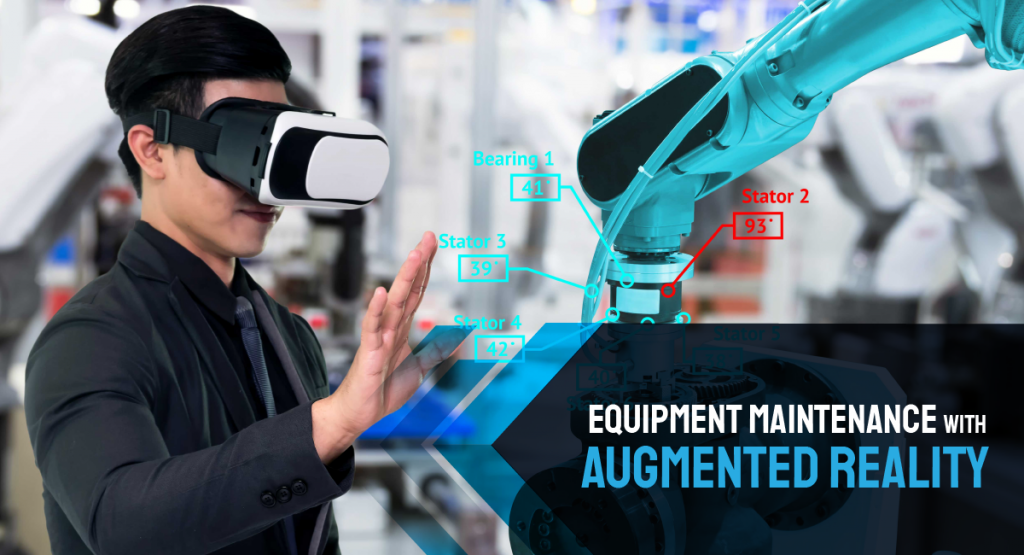
Read more: How Augmented Reality Can Simplify Equipment Maintenance
The increasing significance of AR and VR in employee safety training
Adapting to the new normal, most employees will continue to work from home. Others will face new measures and procedures when they return to workplaces. It can pose a challenge to employers as they struggle to find new methods to train new employees while following physical constraints like social distancing.
Before we look at the solution, let’s have a look at a few drawbacks of the traditional classroom training:
Drawbacks of the conventional classroom training
– Ineffective training procedures
Usually, safety procedures are taught with a combination of computer testing and classroom exercises. These methods do not allow repetition training. It is good but not good enough because it lacks effectiveness and does not encourage knowledge retention. Besides, social distancing norms make it difficult to arrange for classroom training.
– Doesn’t engage employees
As traditional learning techniques are not imparted in a realistic environment, they do not simulate the hands-on experience in scenarios that are tough to be recreated. Classroom learning is often not a useful or engaging teaching style for workers who are in highly mechanical roles. With such training, employers cannot risk a technician to perform their jobs effectively and safely on day one.
– Classroom trainings are expensive
According to the 2019 training industry report, on average, companies spent 1,286 dollars in 2019. The same report also mentions that, on average, employees received 42.1 hours of training. It proves that traditional training methods and materials are a significant expense for financials and lost work time. Employers must look for newer ways to train their employees. Thankfully, AR and VR technologies help support employee safety training.
Read more: How Augmented Reality Is All Set to Transform the Workplace
Top 7 ways AR and VR impact employee safety training
Workplace injuries cost businesses more than 59 billion dollars per year. However, companies cannot cut back on employee safety training under any circumstances. In professions where inadequate safety procedures are a huge risk to the employee, employers must ensure that safety training is practical and accessible.
1. No more trial and error
Specific jobs, such as working in power plants or manufacturing units, require that employees be trained before assuming full responsibility. Augmented and virtual reality help make simulations that allow for training that is safe and free of consequences. Employers can create an exact simulation of their operations and enable new employees to practice repeatedly. Such training allows them to see and correct their mistakes before they start using the actual equipment.
2. Risk-free immersive training
AR and VR technologies allow instructional designers, animation engines, and game designers to combine fun with practical learning. It raises levels of engagement in trainees. Besides attractive and fun components, AR and VR appeal to learners because of the risk-free training element. It eliminates the need for employees and trainees to be in the same location during the training session.
3. Increased retention and skill acquisition
Practice is the best way employees can sharpen their skills. It is a well-known fact that we retain much more information when we combine learning with “doing.” Compared to discussions, reading, lectures, or even audio-visual learning, hands-on-practice is the best way to retain information. AR and VR technologies allow for such training that increases knowledge retention and skill acquisition. These technologies enable employees to practice the concepts they have learned immediately.
4. Allows self-paced learning
Each employee is different with varying levels of learning abilities. AR and VR allow each person to learn at their own pace. It means they can work on the same concept multiple times without the risk of injury to themselves or the machinery. This risk-free approach allows for self-paced learning and the ability to take the training until they master a particular concept.
5. Enhance the effectiveness of learning
Most employers have deemed it unsafe for their workers to share headsets to receive safety training in the current situation. Augmented and virtual reality allows employers to develop solutions where an employee can point his phone camera to a portion of the training manual that opens up additional materials or resources on his screen. This technique allows companies to train their employees about specific products, solutions, or services.
Read more: Impact Of Augmented Reality In Education Industry

6. Prepare employees for emergencies
Augmented and virtual reality are ideal for training employees to handle real-life situations. This technology is apt for safety training. It can minimize damage to the equipment and the cost of training. AR and VR allow firms to train employees to handle emergencies or real-time threats such as controlling a shooting situation.
7. Easy to customize training
Each organization and its requirements are different. Employees may encounter unique challenges and problems because of location, weather, or just the project’s complexity. AR and VR provide a considerable advantage in terms of flexibility and costs to offer company-specific training. It can accommodate a more tailored training experience.
The future of AR and VR in employee safety training
The safety risk is a real challenge that all industries face. Whether it is theft or operating potentially dangerous machinery, employees face risks, including physical hazards. Besides, the pandemic has necessitated a transition to a new way of life. There is currently a desperate need for new solutions that allow businesses to continue with some semblance of normalcy. AR and VR technologies provide organizations effective ways to train their employees while still preserving physical distancing norms. The use of augmented and virtual reality in employee safety training will become the new normal!

Want to explore how you can start with Augmented Reality and Virtual Reality technologies? Talk to us right away.
Stay up to date on what's new
About the Author
Featured Blogs
Stay up to date on
what's new
Talk To Our Experts
Technology in Finance: An Overview of the 2025 Landscape
Technology in finance, along with evolving consumer behavior and regulations, are transforming the financial services industry. The COVID-19 pandemic is accelerating the industry’s focus on digital offerings. Government payment schemes, emergency loans, and personal finance management are the need of the hour.
With several bank branches shut and long waiting hours for phone assistance, financial institutions are forced to invest in better IT infrastructure, relevant automation, and technology in finance to deal with the growing consumer demands.
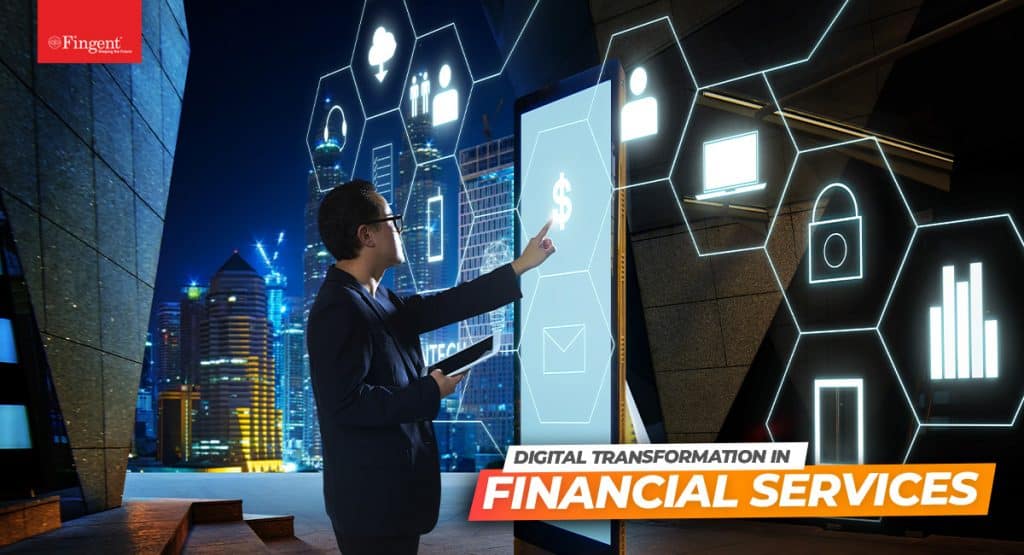
Read more: The impact and significance of digital transformation in financial services.
A study of financial institutions (FIs) by ISMG and OneSpan in North America revealed that providing customers with a top-notch experience is their main priority. 49% of the respondents feel that legacy and manual ID verification are the biggest obstacles to digital opening for FIs, while 35% found that knowledge-based authentication tools were obstacles to onboarding.
Some general FinTech statistics worth knowing are:
- By 2022, the global financial sector is expected to be worth USD 26.5 trillion with a CAGR of 6%.
- 49% of banks and 60% of credit unions in the US believe that FinTech partnerships are worth it.
- Digital payment is one of the most significant FinTech products and holds about 25% of the FinTech market.
That said, many banking and financial institutions are adopting the latest technologies such as artificial intelligence, blockchain, etc., into their operations to benefit their customers, stay competitive, and improve business growth.
Read more: FinTech: Safeguarding customer interest in the post-pandemic world

Here are the top five technologies that transform the financial services industry currently.
1. Artificial Intelligence
The most crucial advantage of Artificial Intelligence in the finance industry is cost savings, which is anticipated to be worth $447 billion by 2023.
AI systems are a game-changer for the finance industry as they can examine vast amounts of data and find patterns and trends that people may miss, and even predict future trends. AI technology makes it possible to automate processes and manage tasks such as comprehending new rules and regulations or generating personalized financial reports for individuals. For example, IBM’s Watson is capable of understanding complex regulations, including reporting of markets’ requirements in the Financial Instruments Directive and the Home Mortgage Disclosure Act.
Chatbots in banking are helping automate simple tasks such as opening a new account or transferring money between accounts and are proving to be a great money-saving tool.
Many financial institutions such as Bank of America and JP Morgan Chase use AI to streamline customer service. Additionally, AI facilitates mobile banking that allows 24/7 access to customers to conduct banking operations. AI is also helping financial institutions boost security and detect and prevent fraud.
2. Blockchain
Blockchain is a promising technology that will impact financial systems significantly. Blockchain technology is inspiring to create several P2P (peer to peer) online financing platforms that help monetary interactions happen in a more decentralized way. Blockchain technology can improve existing systems and processes and create cryptocurrencies.
Five typical applications of blockchain include:
- Make cross-border transaction processes faster, more accurate, and less expensive
- Banks can leverage trade finance to create smart contracts between participants, increasing transparency and efficiency
- Clearing and settlement procedures
- Protect against fraud and speed up the verification process with blockchain-enabled IDs
- Credit-reporting
3. RegTech
RegTech is a regulatory technology that uses cloud computing technology through SaaS (software-as-a-service) to help businesses comply with regulations efficiently and lower costs.
The various areas of RegTech intervention are:
- Data management
- Reframing regulations and implementing new governances
- Real-time reporting
- Data- analytics and decision
- Fraud and risk management
Non-compliance with mandatory government rules leads to fines and crisis. So most FIs want to do everything in their power to avoid non-compliance.
The need for RegTech solutions is growing as FIs grapple to stay compliant with new and existing regulations. RegTech solutions will create a layer that companies will rely upon significantly. Its high accuracy, single dashboard, data analytics, alerts, and insights will help companies optimize resources allocated to compliance and achieve better results.
4. Machine learning
Similar to AI, machine learning helps create a marketing campaign around the consumer. It enables you to understand what kind of services will attract your target market. For example, how people find a financial website, what page they clicked, and what services they need.
Machine learning algorithms and their capability for sentiment analysis will impact trading significantly in the future. It involves using enormous volumes of unstructured data such as photos, video transcriptions, social media posts, presentations, webpages, blogs, articles, and business documents to understand the market sentiment.
Sentiment analysis will transform the future financial markets, and many believe that machine learning will be central to developments.
5. Big Data
According to the IDC Semiannual Big Data and Analytics Spending Guide, currently, banking is one of the top investors in big data and business analytics solutions. Credit card transactions, ATM withdrawals, credit scores, etc., generate massive amounts of data. Deriving actionable insights from this data is crucial to optimize financial processes and make effective business decisions. It will increase the competency of financial institutions in the future.
Big data can help FIs learn more about customers and make business decisions in real-time. Big data analysis allows FIs to identify market trends and streamline internal processes and reduce risks.
Read more: FinTech Innovation: What Is In Store?

The Future of FinTech Adoption
82% of traditional financial organizations plan to collaborate with FinTech companies in the next five years as they fear losing out. 88% of established FIs believe that they may lose to standalone FinTech companies in the next five years if they fail to adopt FinTech innovation.
Financial companies will have to work towards providing a seamless digital experience for their consumers. To avoid the risk of losing out in the market, many FinTech startups, incumbent financial institutions, and technology companies are entering into new partnerships.
Read more: The New Untapped Opportunities for FinTech Companies in the Coming Years

Technology in finance is no different than other disruptive technologies across various industries. It would be wise for even small businesses to consider FinTech as an investment for the future. Fingent has developed end-to-end disruptive technologies and innovative FinTech solutions that will help your business thrive and stay relevant. Contact us for more details.
Stay up to date on what's new
About the Author
Featured Blogs
Stay up to date on
what's new
Talk To Our Experts
How AI is transforming businesses worldwide
Post the PC and the dot-com revolution, the world is witnessing another significant disruption- Artificial Intelligence.
Businesses that implement AI applications will have better access to data across multiple functionalities such as customer relationship management, enterprise resource management, fraud detection, finance, people operations, IT management, and other crucial segments. AI helps businesses find solutions to complex problems in a more human-like way and automate processes. Organizations can redirect their resources towards more creative aspects such as brainstorming, innovating, and researching.
The COVID-19 pandemic required solutions in days, not weeks or months, and business leaders needed to act quickly. AI-based techniques and advanced analytics are helping organizations augment decision making during crises like the coronavirus. While machine learning models were a great choice, developing machine learning models or advanced analytical models would take around four-eight weeks. So, the pandemic accelerated the demand for developing minimum viable AI models quickly.
Despite the many naysayers who believe robots will take over human jobs in the future, AI is already revealing itself as more of an enabler than a disruptor. Here are nine examples of artificial intelligence transforming business.
Read more: How Will Artificial Intelligence Transform The World By 2030
1. Sales and business development
As lockdowns and stay at home orders continue, people are now moving from personal interactions to digital interactions such as online shopping and mobile banking. This shift has created many new and unstructured data that is hard to interpret. That’s where AI comes into the picture and helps understand what consumers feel and need.
AI-powered sales performance solutions can identify which customers are most likely to buy a company’s product or service. This model will help people in sales prioritize their customers and improve their productivity and effectiveness.
2. Demand and Supply
Most companies are interested in matching demand and supply. For instance, a steel company may have information about various factors that may influence steel demand. Typically, these demand measures depend on external data to match up with what the company’s supply chains can generate.
AI solutions help analyze these external data and ensure that the company is not producing more than you need to satisfy the demand and not leaving any request unfulfilled.
COVID-19 crisis is unprecedented, and companies have to make sure that they use data that is representative. Historical data allows you to gain insights into upcoming demand patterns and predict possible outcomes.
3. Back-office tasks
Companies can leverage AI-powered cognitive assistants to perform their back-office tasks such as ordering new credit cards, canceling orders, or issuing refunds. If these assistants cannot handle complex tasks, human assistants can perform those tasks. It will ensure that the team members spend their time solving challenging problems and focus on productive activities.
As long as there are structured tasks, Robotic Process Automation can take care of back-office service operations. RPA is particularly useful for automating the claims processes of banks or insurance companies. Enterprise platforms like SAP offer Intelligent RPA that combines automation and artificial intelligence to augment business process automation.
4. Cash-flow forecasting
As revenue systems dry up, cash flow is likely to be a severe concern for smaller businesses. However, several AI solutions can analyze data (only if representative) for cash-flow forecasting.
Read more: 6 Ways Artificial Intelligence Is Driving Decision Making

5. Document and identity verification
AI can identify and verify documents easily. For example, think of a bank that needs to verify customer data for onboarding and compliance. Human agents manually verify documents such as driving licenses or payslips and other relevant records. It is a costly and inefficient process.
AI is used to identify the type of ID document captured, perform face-matching, determine if the ID’s security features are present, and even determine if the person is physically present.
6. Travel and transportation
The transportation industry forms an integral part of a country’s infrastructure. As many employees may have to self-isolate during the COVID-19 crisis, AI solutions can analyze the number of staff needed by a travel company to run its business in these unprecedented times. For example, a company can request AI to provide information on whether they have enough workers to staff a railroad. Here, AI can help identify demand and supply from the laborers’ standpoint.
AI is already being used in the transportation industry to reduce traffic congestion, avoid accidents, improve passenger safety, lower carbon emissions, and reduce overall financial expenses.
7. Healthcare
From robot-assisted surgeries to safeguarding personal records against cybercrime, Artificial Intelligence is transforming the healthcare industry like never before. The healthcare industry has suffered in terms of medical costs and inefficient processes.
AI-enabled workflow assistants are helping doctors free up 17% of their schedule. Virtual assistants are reducing redundant hospital visits, thereby giving nurses almost 20% of their time back. Also, AI helps pharmaceutical companies research life-saving medicines in a shorter time frame and reduce costs. More importantly, AI is being used to help improve healthcare in underdeveloped nations.
Read more: 7 Major Impacts of Technology in Healthcare
Examples of AI in healthcare:
- PathAI creates AI-powered technology for pathologists to help them analyze tissue samples and diagnose them more accurately.
- Atomwise uses AI and deep learning to improve drug discovery and to speed up the work of chemists.
- Pager is using artificial intelligence to help patients with minor pains, aches, and illnesses.
8. Finance
The financial sector relies on real-time reporting, accuracy, and processing of high volumes of quantitative data, where AI can enhance the processes. The finance industry is rapidly implementing chatbots, automation, algorithmic trading, adaptive intelligence, and machine learning into financial operations. For instance, Robo-advisor, an automated portfolio manager, was one of the biggest financial trends of 2018.
A few examples of how artificial intelligence transforms the financial industry:
- Betterment uses AI to learn about an investor and create a personalized investor profile based on their financial plans.
- Numerai is an AI-powered hedge fund that uses crowdsourced machine learning from many data scientists worldwide.
Read more: Artificial Intelligence and Machine Learning: The Cyber Security Heroes Of FinTech
9. Social Media
With over 3.6 billion active profiles and about $45 billion in annual revenue, social media is invariably in the battle to personalize and provide a better experience for users.
AI can organize massive amounts of data, recognize images, predict shifts in culture, and introduce chatbots. The technology has the potential to make or break the future of the social media industry.
Similarly, machine learning enables social media to identify fake news, hate speeches, and other anti-social activities in real-time.
Final thoughts
With the advancement in technologies, AI is improving possibilities taking businesses to the next level. These examples of artificial intelligence prove that artificial intelligence can transform business models if deployed correctly.
Case Study: Development of AI-enabled chatbots and teaching assistants – How Fingent helped a leading university to create an Automated Intelligence-driven ecosystem
Fingent helps you leverage AI to drive the smart reinvention of your business workflows, processes, and technology. If you are looking to develop an intelligent infrastructure for your business or improve the security process or enhance the customer experience, contact us today!
Stay up to date on what's new
About the Author
Featured Blogs
Stay up to date on
what's new

