Tag: custom software
Stay up to date on what's new

About the Author

Tony Joseph

Tony believes in building technology around processes, rather than building processes around technology. At Fingent, he specializes in custom software development, especially in analyzing processes, refining them, and then building technology around it. He works with clients on a daily basis to understand and analyze their operational structure, discover (and not invent) key improvement areas, and come up with technology solutions to deliver an efficient process. You can reach him at [email protected], Skype: tony_fingent
Featured Blogs






Stay up to date on
what's new



Talk To Our Experts
Increased customer expectations and rapid digital change – ring a bell? Work has become increasingly complex for business professionals. There’s more competition, and you need smarter, faster, and connected systems urgently. In this environment, using only generic tools can create roadblocks instead of support. This is why you need to take the route of custom software development.
Through tailored solutions, you now have the ability to cater to your particular requirements. Custom software development streamlines complicated tasks, slashing the cost of running operations and boosting output. It also designs experiences for customers and employees. Bespoke software development is the only way for businesses to survive today. With AI, the benefits are more powerful than ever. Come have a look at this power combo and see the benefits of custom software development for your business.
Why Businesses Must Invest in Custom Software Today
Off-the-shelf solutions work only when your needs are basic. But no successful business is truly “basic.” Each has its own complexities. This could include a unique customer journey, a complex approval process, needs for sensitive data, or regulatory controls. This is where custom software development becomes invaluable.
Custom tools are made just for your business goals, processes, and future plans. They’re different from packaged software, which is more general in the way it functions. Custom software grows with you and is very easy to integrate into your workflows. If you want your business to evolve, custom software is the way to go.
Drive Business Excellence With Custom-Built Software Solutions
7 Clear Signs Your Business Needs Custom Software
Here are the signs that your organization may need custom software because generic tools no longer fit:
1. Manual processes are slowing down growth
If teams are relying on spreadsheets, emails, or handwritten records, their growth will be limited. Manual work causes delays, errors, and decreases productivity, which is true when you’re a part of a fast-paced industry. Custom solutions automate workflows. This reduces human error. Your team gets to focus on what they do best. Scalability is one of the crucial benefits of custom software development. You know you need it if you are growing.
2. Your current tools cannot address unique business challenges
Every business has at least one process that no off-the-shelf tool can fully support. Your approval cycle might be complex. Maybe your customer onboarding journey is unique. You could also have special compliance needs. When generic platforms become restrictive, slow, or require endless workarounds, that’s your cue. With custom software development, your system adjusts to your business, not the other way around.
3. Operational costs are increasing year after year
The cost of commercializing, subscription renewals, and integrations that require a lot of work can accumulate. Relying on numerous individual tools can also put a drain on finances. Organizations sometimes have to buy a lot more features than they need. Proprietary solutions, on the other hand, may have a higher up-front cost, but significantly reduce costs over time. You are free from recurring licensing, additional add-ons, and platforms that your teams don’t fully use. Eventually, bespoke software is the more cost-effective and scalable route to take.
4. Contradictory data and low data visibility
Data is gold and should enable decision-making. Oftentimes, it becomes an impediment. What will you do with data that is spread out everywhere? Multiple CRM platforms, ERPs, Excel sheets, WhatsApp chats, legacy systems – where do you begin to look? This is bad data governance. In turn, it results in bad insights, siloed reports and more. The outcome? Sluggish decision-making. Custom software provides real-time analytics and enables automation. Custom software development boosts business performance, and this is one of its biggest benefits today.
5. Your software cannot scale with your business
Scalability is a big issue if your current tools:
- crash during busy times
- slow down as more users join
- need costly upgrades
- can’t handle new business models or departments
Custom solutions are built to grow with your business. They adjust to your needs. Whether you open new locations, add product lines, or onboard more users, they maintain strong performance.
6. Integration limitations are affecting productivity
Most businesses use a mix of applications — CRM, HRMS, accounting tools, ERPs, marketing platforms, and more. But when they don’t communicate with each other, efficiency drops. Poor integration leads to:
- double data entry
- inconsistent information
- miscommunication
- delayed operations
Custom software development makes it easy to let all your tech systems work together. That includes APIs, legacy systems, third-party platforms, and new tools. This produces a smooth flow of work that increases productivity and visibility.
7. You’re struggling to keep up with industry compliance or security standards
Now, for industries such as healthcare, BFSI, government, logistics, HR, real estate, etc., strict guidelines are to be maintained. Readymade software solutions rarely comply with or cater to all the regulations pertaining to industry, and they lack advanced security features. With custom software development, you can include:
- role-based permissions
- secure authentication
- audit trails
- encryption
- compliance configurations
- automated reporting
You can lower risk, improve your data privacy, and increase trust from customers and regulators.
Wait No More! Stay Ahead of The Competitive Curve with Custom Software Development
Your Most Common Custom Software Questions Answered
The benefits of custom software development are evolutionary to say the least. But it’s natural to have questions before you implement it.
1. How do I know if my business needs custom software?
Most businesses begin with off-the-shelf tools. But soon, these tools can limit growth. You’ll need custom software development if daily operations are slow.
This is how you know your existing tool set is underperforming:
- When repetitive work begins to take up too much of your staff’s time.
- If you constantly find yourself jumping from system to system.
- If your people are inventing workarounds
- Key tasks are being performed in Excel
- You rely on manual data entries that are dotted with errors
This shows that your off-the-shelf software isn’t working to your benefit. When it becomes a roadblock, you need to tap into the benefits of custom software development.
2. How does custom software improve efficiency and scalability?
Custom software fits your business perfectly. It removes issues caused by irrelevant features, confusing interfaces, or broken workflows. The system fits well with your internal processes. So, employees finish tasks faster and make fewer mistakes. As your business grows, custom software grows with you. You can easily add new features, support more users, introduce automation, or connect with new systems. Custom solutions grow at your pace. Unlike packaged tools, they don’t pressure you to upgrade to costly enterprise plans. Custom software development is very flexible. This flexibility makes it powerful for long-term efficiency and scalability.
3. Can custom software help reduce operational costs?
Absolutely. A major advantage of bespoke software development is the savings in cost in the long run. With process automation and optimization, your team can spend less time on repetitive work. This means fewer labour hours.
Custom software cuts out the need for many third-party tools. It also removes ongoing subscription fees. Plus, fewer manual errors mean reduced losses, faster service delivery, and better customer satisfaction. These enhancements accumulate into a leaner, more cost-effective operation over time. Although it may be a more expensive upfront cost, a custom solution can offer a far superior long-term ROI than off-the-shelf software.
4. How does poor data management affect business performance?
Simple truth: poor data organization slows down your business processes. How? Think about how your team is affected. They are now invested in gathering and verifying data from various documents and spreadsheets. Does this help in productivity? Of course not. They could have been spending this valuable time playing to their strengths – skills that they were hired for.
This is where custom software can benefit you. It is designed to help you automate. Collecting and analyzing data is done automatically. And it’s accessible to your team whenever they need it. Real-time dashboards and automated reporting are an immense help in making decisions – faster and more efficiently. This not only helps you but also your team to be more confident in what their role is, and this leads to greater business intelligence.
5. Why is integration so important in business software?
Modern businesses have many digital tools that are available for use, such as:
- CRM
- ERP
- HRMS
- Accounting software
- Marketing platforms
When these tools are not talking to one another, the information gets siloed. Teams are wasting time manually re-keying information, and productivity decreases. Integration makes each system function as a cohesive unit, like one integrated ecosystem. Tailor-made software allows a seamless flow of data across departments. This creates a unified experience for operations. It eliminates redundancy, errors, and accelerates the workflows. In simple words: better integration = better business performance.
6. What are the benefits of on-demand development teams?
Having an on-demand team can help you source talented developers quickly. This avoids long hiring cycles. Fingent offers vetted experts who can join your team right away. This helps speed up development and eases workload stress. You keep full control of the project. That’s nothing but a boon for you — flexible, expertise, predictable costs. This model is perfect when you have a short-term project or want to expand your tech team. It reduces the time required to make a delivery and maintains the momentum of development.
7. How do offshore software development centers speed up delivery?
Offshore development centers (ODCs) serve as your extended arms outside your home country. They help you grow fast. You get access to global talent, smooth processes, and 24/7 development. Because teams in different time zones can work while your local team rests, projects progress significantly faster. Fingent’s ODC model offers dedicated teams, advanced tools, and tested workflows. These elements speed up releases without sacrificing quality. An ODC is great for businesses seeking steady output. Expense reduction and accelerated time-to-market – that’s a win-win.
8. What industries most benefit from custom software development?
Almost all industries benefit from custom software development. This is particularly true for those who have unique processes or are subject to heavy compliance. Healthcare utilizes custom software for managing patients, medical records, and exchanging data in a secure manner. Finance depends on tailor-made solutions for reporting, risk management, and compliance. Retail and e-commerce have access to custom solutions for creating personalized customer experiences, automating inventory and product management, and integrating with email marketing platforms and sales channels. Customized software solutions are needed in manufacturing, logistics, real estate, education, hospitality and public administration. The software helps increase productivity, reduce errors, and improve customer service. If an industry calls for accuracy and process control, custom software is essential.
9. How can a tech partner help build future-ready custom solutions?
A reliable tech partner doesn’t just build software; they help you plan for the future. Companies like Fingent have knowledge of various industries and how they work. AI, automation, cloud, analytics, and IoT – they have the know-all on it.
They know industry trends. They help you create solutions that stay relevant as your business changes. With Global Capability Centers, Fingent provides continuous support, scalability, and innovation. Their teams use AI tools to cut build time, boost code quality, and make smarter apps. A good tech partner makes sure your software works well today. It should also be adaptable, secure, and ready for future challenges.
How Can Fingent Help?
Fingent’s Global Capability Center model offers businesses dedicated teams, scalable infrastructure, and continuous delivery. It also focuses on innovation-driven engineering. GCCs support:
- large-scale transformation
- multi-year digital roadmaps
- enterprise-grade solutions
- faster execution with reduced costs
This model is ideal for businesses looking for long-term digital capability building.
Fingent uses AI in all parts of software development. This includes requirement gathering, testing, and deployment.
AI accelerators help improve:
- project timelines
- code accuracy
- automation capabilities
- predictive analytics
- overall software intelligence
That way, you can be sure that all the solutions are smart, and future-ready.
Fingent offers flexible teams or a fully managed offshore center. We provide top talent in various technologies. Clients gain speed, flexibility, and budget benefit. We know the industry well. This helps us create solutions that meet real business needs and compliance rules. It doesn’t matter if you’re in healthcare, BFSI, education, logistics, or retail.
Stay up to date on what's new
About the Author
Tony Joseph
Tony believes in building technology around processes, rather than building processes around technology. At Fingent, he specializes in custom software development, especially in analyzing processes, refining them, and then building technology around it. He works with clients on a daily basis to understand and analyze their operational structure, discover (and not invent) key improvement areas, and come up with technology solutions to deliver an efficient process. You can reach him at [email protected], Skype: tony_fingent
Featured Blogs
Stay up to date on
what's new
Talk To Our Experts
Walk into any modern factory today, and you will notice something different. No noisy jungle of machines. No conveyor belts. No caution tape. It is alive—with sensors, data dashboards, and smart devices all working in perfect harmony. So what’s really happening? It is digital transformation in manufacturing! And what’s powering it beneath all the blinking lights and high-tech gear? Not just automation. Not just AI.
But something more fundamental and flexible: custom software for manufacturers.
Would you like to know how custom software development impacts the manufacturing industry? This is a great question to ask—and it is one that deserves a deeper dive than just “it improves efficiency.”
This is because in a world where milliseconds matter and errors can cost millions, manufacturers are trading in cookie-cutter tech for customized digital tools that fit like they were built in-house. This blog discusses the why and how.
Why Off-the-Shelf Tools Are Not Built for Today’s Manufacturing
Off-the-shelf software might work fine for smaller businesses or simpler workflows. Does it work when you are trying to juggle multiple vendors, unpredictable supply chains, compliance headaches, and razor-thin margins?
Not really, that is when the cracks start showing.
One Size Doesn’t Fit Anyone
Generic tools are like buying sneakers in “one universal size.” Great in theory—useless in practice.
Your workflows are unique. Whether you are assembling high-precision auto components or crafting handmade soap, your challenges are different. Your systems should reflect you, not the average of everyone else.
Your Old Systems Don’t Want a New Stranger
Many manufacturers still rely on older, legacy systems. These may be clunky, but they work. Introducing a plug-and-play app that can’t “speak” their language? That creates silos and communication breakdowns.
What you need is manufacturing process optimization software that knows how to bridge the old and new, without breaking everything in the process.
You Need to Grow Fast—Not Wait for Updates
Markets shift. Product lines change. New regulations show up uninvited. Standard software just does not pivot fast enough. You are left with a system that ages faster than it improves.
On the other hand, custom solutions grow with you. Want to add a new plant? No problem. You need to integrate with a supplier in another country? Done.
Question worth asking: Why stick with software that asks you to adapt, when you can build one that adapts to you?
Control Should Be Yours—Not the Vendor’s
Let’s be real: when you’re using commercial software, the vendor decides when you get updates, what features are prioritized, and how fast bugs are fixed.
But with custom ERP for manufacturers, you’re in control. You steer the roadmap. You set the priorities.
Power Your Manufacturing With Modern Approaches Turn To Custom Software Development and Deploy The New-age Technologies
Custom Software: The Real Backbone of Modern Manufacturing
How Custom Software Development Impacts the Manufacturing? It becomes your edge. Your secret weapon. Your advantage.
Real-Time Production Visibility
Imagine seeing, in real time, every machine’s status, every order’s progress, and every bottleneck in your system—before it slows you down.
Successful digital work management (DWM) systems deliver value by increasing the efficiency of internal and external maintenance labor, reducing planned downtime through shutdown and outage optimization, and providing the opportunity to upskill the maintenance workforce. Taken together, these levers can lead to cost reductions of 15 to 30 percent.
That’s not a pipe dream. That is what happens when you invest in smart manufacturing solutions tailored to your workflow.
And the best part? You are not reacting anymore. You’re anticipating. Which means faster decisions and fewer errors. Think of it like upgrading from a map to GPS—you’re no longer guessing where the traffic is.
Predictive Maintenance: Don’t Just React—Prevent
Downtime is the silent killer of productivity. One broken machine can throw your perfect plan off track.
Across a wide range of sectors, it is not uncommon to see 30 to 50 percent reductions in machine downtime, 10 to 30 percent increases in throughput, 15 to 30 percent improvements in labor productivity, and 85 percent more accurate forecasting.
With manufacturing process optimization software, predictive maintenance becomes standard. Smart sensors detect patterns, algorithms flag anomalies, and you get alerts before a breakdown happens.
That’s the power of custom software. It doesn’t just report problems. It prevents them.
Data That Means Something
It is really not about how much data you collect. It is about how quickly and clearly you can act on it.
Custom systems help you visualize the right KPIs at the right time—no fluff, no clutter. That means managers, machine operators, and execs all work from the same truth, in real time.
Integrated Supply Chain Management
Manufacturing does not stop at the factory floor. Obtaining goods, logistics, and inventory play a huge part. With custom ERP for manufacturers, every part of your operation—from vendor management to delivery schedules—can be unified in one place.
That means no more double data entry or emailing spreadsheets back and forth.
Remote Monitoring & IoT Integration
With smart sensors, wearables, and IoT devices becoming the norm, manufacturers need systems that can gather, analyze, and respond to data from hundreds of sources. Custom solutions can be designed to connect to all your devices and give you complete remote control.
Whether you’re on the factory floor or across the globe, you’ll stay in the know.
Benefits of Custom Software in Manufacturing
We have seen how custom tools work. Now let’s talk about why they are worth every penny.
1. Higher Operational Efficiency
Automated processes, data accuracy, and real-time updates mean fewer delays, less rework, and smarter use of resources.
2. Cost Savings in the Long Run
Yes, there is an upfront investment. But custom software reduces errors, minimizes downtime, and boosts productivity—saving you more over time than you’d spend fixing issues with generic tools.
3. Competitive Edge
When you are running lean, responding fast, and making data-backed decisions, you naturally outperform the competition. That’s what digital transformation in manufacturing is all about—staying ahead of the curve.
4. Customer Satisfaction
Faster delivery times, better quality control, accurate tracking, and clear communication? That’s what your customers love. Custom software makes it possible.
The Hidden Wins: What Most People Miss About Custom Software
Everyone talks about efficiency and automation. Sure, those are important. But here is the gold that is every so often unnoticed:
1. Retain the Intelligence in Your Organization
Your top engineers and operators know the quirks of every process. But what happens when these stalwarts leave or retire?
With custom ERP for manufacturers, their insights become part of the system. Their problem-solving logic becomes code. Their workflow gets preserved—not lost.
2. Improve Team Morale and Adaptability
Let’s face it: people resist clunky software. But when tools are designed around how they already work, adoption goes up. Frustration goes down. Teams enjoy using the tools they’re provided.
Thought to reflect on: Are your tools helping your people work smarter—or just adding digital friction?
3. Differentiate Yourself from Competitors
Your competition might have access to the same machines, the same suppliers, maybe even the same customers. But what they do not have is your custom-built software system that reflects your way of doing things.
That is your edge. That is what turns good into great.
Case Study Spotlight: A Real-World Win
Let’s look at a real example.
One of Fingent’s clients—Lakeside Cabins—wanted to streamline their processes and deliver faster with more accuracy. They also wanted to modernize their approaches and offer unique experiences for their customers.
Fingent helped the client deploy 3D Configurators that enabled them to involve their customers through their web portal in designing the cabins at each stage of production. The customers felt more included and valued, plus the manufacturing outcomes were more error-free and sustainable.
That’s smart manufacturing solutions in action.
3D Web Configurator For Cabin Design
How Should Manufacturers Handle Custom Software?
If you are considering taking the leap, here are some initial steps you can begin with:
Audit your current systems.
What’s working? What’s not? Talk to your team. Gather feedback.
Identify your biggest pain points.
Focus on the challenges that are costing you time or your precious resources.
Start small but think big.
You don’t need a full-blown overhaul overnight. Begin with one system or process and scale up.
Choose the right partner.
Custom software is only as good as the team building it. Partner with a firm that has manufacturing experience and a consultative approach.
Why Fingent?
At Fingent, we don’t just write code. We solve problems.
Having years of experience in digital transformation in manufacturing, we comprehend the distinct challenges of the industry. Our team collaborates closely with clients to create customized tools that produce significant effects—from the factory floor to the executive suite.
We combine the strength of manufacturing process optimization tools, tailored ERP for producers, and adaptable, intelligent manufacturing solutions to develop systems that not only function—they perform miracles. From streamlining operations to modernizing legacy infrastructure, we ensure every solution is future-ready, not just functional.
And we do not believe in copy-paste tech. We trust in tailor-made excellence—software that feels as if it was designed specifically for you.
Whether you’re delving into automation, dealing with obsolete processes, or set to streamline your entire production pipeline, our team is prepared to dive in and start building.
Final Take: Don’t Buy the Future—Build It
Digital transformation in manufacturing is not just about modernizing. It’s about redefining how you compete.
Custom software is no longer a luxury. It’s the blueprint for the next generation of manufacturers. It’s about rethinking everything—from supply chain to shop floor—in a way that fits your DNA.
So here’s the question:
Are you still trying to retrofit your factory to someone else’s software—or are you ready to build tools that are made for you, by you, and grow with you?
Want to transform your operations with tailor-made tools? Then don’t follow the crowd—lead it. Let Fingent be your partner in progress. Let’s build something powerful together.
Stay up to date on what's new
About the Author
Tony Joseph
Tony believes in building technology around processes, rather than building processes around technology. At Fingent, he specializes in custom software development, especially in analyzing processes, refining them, and then building technology around it. He works with clients on a daily basis to understand and analyze their operational structure, discover (and not invent) key improvement areas, and come up with technology solutions to deliver an efficient process. You can reach him at [email protected], Skype: tony_fingent
Featured Blogs
Stay up to date on
what's new
Talk To Our Experts
As the world grapples with the challenges of climate change, soil degradation, and resource scarcity, agricultural organizations find themselves at a critical juncture. The urgency for adopting sustainable farming practices, amplified by the integration of custom software, has never been more pronounced. This blog explores the pivotal role of digital transformation in achieving sustainability, shedding light on why agricultural organizations should embrace this shift.
Why the Focus on Sustainable Farming?
The urgency stems from a dual challenge: preserving the environment and securing the economic viability of agricultural operations. Inefficient practices impact the bottom line, making sustainability not just a moral duty but a financial necessity.
The Impact of Digital Transformation in Agriculture
Digital transformation, powered by Artificial Intelligence (AI), Data Analytics, and Cloud solutions, represents a seismic shift in farming approaches. The focus isn’t on whether to adopt these technologies but on how fast agricultural organizations can leverage them for sustainable growth.
To understand why agricultural organizations should embrace digital transformation, let’s consider some use cases.
1. AI in Agriculture: Precision Farming for Optimal Results
Use Case: Crop Yield Prediction
One significant application of AI in agriculture is crop yield prediction. AI algorithms analyze historical weather patterns, soil conditions, and crop health data to forecast optimal planting times and expected yields. For instance, a predictive AI model can take into account variables like temperature, precipitation, and crop health data to help farmers make data-driven decisions, maximizing yield with minimal resource use.
2. Data Analytics: Informed Decision-Making in Real Time
Use Case: Soil Health Monitoring
Data Analytics plays a crucial role in monitoring soil health in real-time. Sensors placed in the soil collect data on moisture levels, nutrient content, and temperature. Data Analytics algorithms process this information, providing farmers with immediate insights into soil conditions. By understanding these factors, farmers can adjust irrigation, fertilizer application, and other practices to optimize crop growth.
3. Big Data: Navigating Trends for Long-Term Success
Use Case: Market Trend Analysis
Big Data is instrumental in analyzing market trends to help farmers make informed decisions about crop selection and pricing. By aggregating and analyzing data from various sources, such as global market trends, consumer preferences, and weather patterns, farmers can strategically plan their crop rotations and adapt to changing market demands.
4. Cloud: Scalability and Flexibility for Modern Farms
Use Case: Remote Monitoring and Management
Cloud solutions enable remote monitoring of farming operations. Farmers can access real-time data on crop conditions, equipment status, and weather patterns from anywhere. This level of accessibility enhances decision-making and allows for timely responses to changing conditions.
Use Case: Collaborative Farming Platforms
Cloud-based collaborative platforms facilitate information sharing among farmers. This includes sharing insights on best practices, weather forecasts, and market trends. Such platforms promote collaboration, helping farmers make collective decisions for mutual benefit.
5. In-Depth Custom Software: Tailored Solutions for Agricultural Challenges
Elaborating on custom software solutions, let’s explore specific examples of how custom software has been tailored to address challenges in agriculture:
Example: Crop Management System
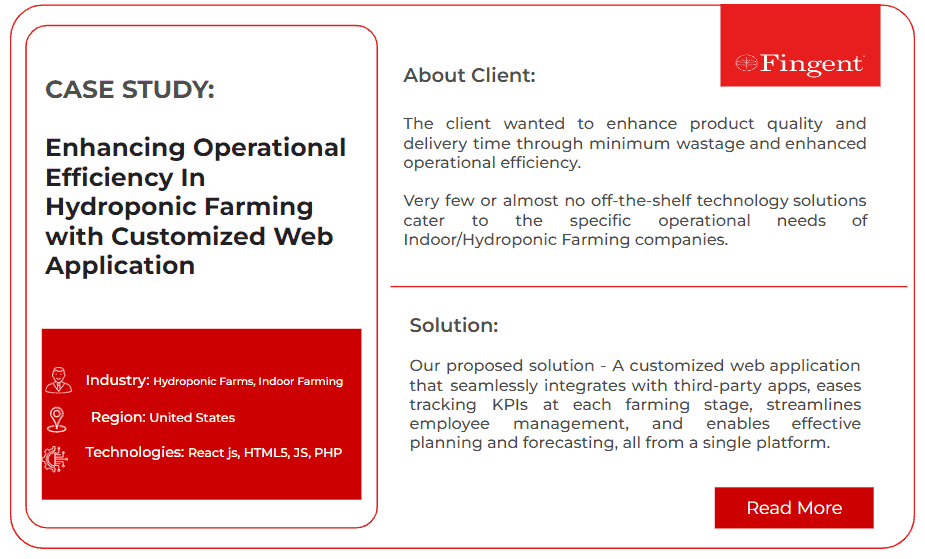
A custom Crop Management System can integrate AI and Data Analytics to provide farmers with comprehensive insights into crop health, soil conditions, and weather forecasts. This solution tailors its algorithms to the specific crops grown on a farm, offering personalized recommendations for irrigation schedules, fertilization, and pest control.
Example: Supply Chain Optimization Software
Custom software designed for supply chain optimization in agriculture integrates Big Data analytics. It tracks the entire supply chain, from harvest to distribution, optimizing routes, storage conditions, and inventory management. This ensures that produce reaches its destination in optimal condition, reducing waste and maximizing profitability.
Challenges in Leveraging Technologies in Farming Processes
Although the decision to implement technology in the farming process seems like a no-brainer, there have been a few challenges on the way.
1. Complex Procedures: Navigating the Intricacies
The adoption of technology in farming processes is not a simple plug-and-play endeavor. Farming operations are intricate and interconnected. Addressing these complexities requires a strategic approach that acknowledges the nuances of each operation.
2. Legacy Systems: Breaking Free from the Past
Many agricultural operations are shackled by legacy systems that were implemented in a different era. These systems, while once effective, now hinder the integration of modern digital solutions. Overcoming this challenge involves strategic investments in upgrading or replacing outdated infrastructure.
3. Staff Onboarding: Bridging the Knowledge Gap
The success of digital transformation hinges on the people behind the technology. Onboarding staff with new technology presents a unique set of challenges, from upskilling the existing workforce to recruiting new talent. A comprehensive training strategy is essential to ensure that the human element seamlessly integrates with the digital landscape.
As the farming industry stands at the crossroads of tradition and innovation, the role of custom software becomes increasingly pivotal. So, let us explore how custom software serves as the linchpin in driving the right digital transformation for agriculture.
Custom Software: Tailoring Innovation to Agricultural Realities
Custom software addresses the complexities of modern farming, offering tailored solutions that off-the-shelf options often lack. It eases the digital transformation journey, ensuring a seamless integration of technology into existing processes. Here are some ways in which challenges can be addressed:
- Addressing Procedural Complexity: Custom software streamlines intricate procedures without disrupting established workflows, ensuring a seamless integration of new technologies.
- Compatibility with Legacy Systems: Designed to coexist with legacy systems, custom software serves as a strategic bridge, preventing the need for a costly infrastructure overhaul.
- Staff Empowerment through Training Solutions: Custom software includes comprehensive training modules, empowering staff to leverage the full potential of new technologies.
How Can Fingent Help?
At Fingent, we understand that the path to sustainable and efficient farming is paved with innovative, custom solutions. Our expertise extends across three crucial phases of the digital transformation journey: discovery, development, and implementation.
- Discovery Phase: Fingent collaborates closely with agricultural businesses to identify opportunities for digital transformation. Through meticulous analysis, we uncover areas for improvement in resource management, data utilization, and operational efficiency.
- Development Phase: Armed with insights, our seasoned developers craft custom software solutions designed to address the unique challenges of each farm. From precision farming tools to supply chain management systems, our goal is to optimize operations and enhance overall efficiency.
- Implementation with 24/7 Backup: The journey doesn’t end with software development. Fingent provides robust implementation support with 24/7 backup, ensuring a smooth transition into the digital landscape. Our commitment is to minimize disruptions and maximize the benefits of sustainable farming practices.
A Greener Tomorrow, Powered by Digital Innovation
In the journey towards a sustainable future for farming, digital transformation is paramount. Custom software is the linchpin, simplifying complexities and seamlessly integrating technology into agricultural operations. At Fingent, we stand ready to be your dedicated partner, discovering opportunities, crafting tailored solutions, and offering unwavering support. With the right custom software, your farm can lead the way to a greener tomorrow.
Give us a call, and let’s get talking.
Stay up to date on what's new
About the Author
Tony Joseph
Tony believes in building technology around processes, rather than building processes around technology. At Fingent, he specializes in custom software development, especially in analyzing processes, refining them, and then building technology around it. He works with clients on a daily basis to understand and analyze their operational structure, discover (and not invent) key improvement areas, and come up with technology solutions to deliver an efficient process. You can reach him at [email protected], Skype: tony_fingent
Featured Blogs
Stay up to date on
what's new
Talk To Our Experts
Home-grown might be the way to go when it’s to be put on your dinner table, but does it apply to your business as well?
The need for complete digitization of business processes has become a necessity in today’s day and age. Due to this demanding criterion, some businesses have taken it upon themselves to cultivate their own personal, home-grown software programs. This has proved to be exponentially advantageous to some businesses. The important question here is: Although your home-grown software helped you take a big step forward, is it going to hold up to other demands of the future?
What Is Home-Grown Software?
Home-grown software, also known as legacy software, is generally a custom-tailored software program fabricated by a consumer or software development team to complete business processes. It is typically created internally from scratch, and the reason for its creation is the lack of suitable commercial packages that fit a specific business need. These programs are affordable and can be extremely handy.
Although home-grown technology has proven to be an excellent path to customize business processes and cut costs in the past, it does not hold the same weight in the incessantly evolving market integrated with evolving advanced technology. The world’s capacity for technology and innovation is rapidly increasing, which places a lot of pressure on businesses that aim to progress. Due to this rise in customer expectations, most businesses are forced to migrate from their old home-grown software to modern cloud-based software.
Is It Time To Upgrade Your Home Grown Software Or Replace It?
Most software tends to fall apart over time, whether it is due to the changing market or its inability to scale as businesses grow. When this happens, you are faced with two choices: to either upgrade your software program or completely replace it. Here are a few indicators to look out for if you are not sure when is the right time to update or replace your legacy software:
- Unending Updates: If the “system update” notification starts popping up too many times, it’s time to consider an upgrade. When a system updates itself, it needs to shut down completely, and this directly affects the productivity of your employees. If there is an inconsistent workflow, motivation to work dies down.
- Security Scares: If your legacy software is incapable of encrypting and protecting your business data, you can potentially become a target for hackers and other security threats. Hence, security is a vital factor in determining whether you need to replace your software or update it.
- Trendy Technology: Analyze if your legacy software can keep up with current technology. If your home-grown software is unable to compete with modern technology and the technology it uses to run is outdated, finding personnel or employees to maintain it becomes close to impossible. This will add to your expenses and ultimately result in a business loss.
Read more: Take steps to modernize your applications before they fall apart. Here are excerpts from a CTO on Legacy Application Migration!
Technical Debt
Technical debt, also known as tech debt, is the cost businesses pay when they do not fix problems that will affect them in the future. It is essentially the price you pay for not foolproofing your business and its aspects. Tech debts are generally caused by insufficient information about company needs, pressure to release software quicker with quality checks, and underestimating the need for quality codes.
It can be said that they are shortcuts taken during software development; they tend to accumulate over time and can affect business. Technical debts take the form of codes that are difficult to read, maintain, and scale or technical infrastructure that is outdated and in need of updating. Postponing the process of adding extra features and maintaining poor records of documentation are also forms of shortcuts.
Consequences Of Technical Debt
There are several consequences of tech debt: increased cost for fixing problems that may arise; lower quality of service leading to poor customer service; tainting company image and reputation; stunted scaling, which leads to stagnant business; death of innovation and integration; poor security; obstructed workflow resulting in lower employee morale; and finally, overall increased risks. These consequences cannot be overlooked because if you ignore their existence in the beginning, they will stack up and slowly poison your business. Although cutting costs in the development phase of your home-grown software may prove to be economical initially, it is bound to cost you more money to repair in the long run. The average cost overrun of an IT project, according to the Harvard Business Review article “Why Your IT Project May Be Riskier Than You Think,” is 27%.
Integration For the Future
Every business owner plans their business with the bigger picture in mind. It is no surprise that the path of technology is decked with Artificial Intelligence and Machine Learning, among many other advanced technologies. When creating software, it is of utmost importance to code it with features that help it integrate with other systems and advanced technology.
As a business owner, it is wise to keep all the cards on your side, and the advantages of Artificial Intelligence and Intelligence Automation cannot be overemphasized. The homegrown system you create must have the capability to sync with these evolving applications and intelligence tools. If you are not willing to completely abandon your legacy software and wish to update it instead, remember to consult the right professionals who can help you modernize your system to be up-to-date with evolving technologies and allow seamless incorporation.
Creating and maintaining the perfect home-grown software can be quite challenging. Hence, most business owners prefer to partner up with a reliable service provider to meet their business needs. Developing custom software that targets your specific needs and is customized to cater to them is beneficial for your business.
Just remember to be mindful of the choices you make while developing it. If you sense your legacy software falling short and notice that it is time for change, be bold and take that leap. Whether it is to replace the home-grown system or update it, keep your business’s future in mind and make your decision.
Talk to our experts and allow us to help you figure out the best solution for your business.
Stay up to date on what's new
About the Author
Tony Joseph
Tony believes in building technology around processes, rather than building processes around technology. At Fingent, he specializes in custom software development, especially in analyzing processes, refining them, and then building technology around it. He works with clients on a daily basis to understand and analyze their operational structure, discover (and not invent) key improvement areas, and come up with technology solutions to deliver an efficient process. You can reach him at [email protected], Skype: tony_fingent
Featured Blogs
Stay up to date on
what's new
Talk To Our Experts
The world of technology keeps evolving and waits for no one, so it is our responsibility to keep up with it rather than fall behind. The healthcare industry has for a long time been using software development systems to monitor and ease work-lifestyles; now it is time to customize this software to make them function and run exactly the way you need it to. Custom software development has made life and business significantly easier for innumerable industries and is poised to revolutionize the Healthcare Industry as well. This article will tell you all you need to know about it.
Importance Of Healthcare Software Development
Healthcare software systems provide innumerable benefits to hospital management, from improved productivity to reduced medication errors. It streamlines the workflow, enhances data quality, drastically reduces errors, and boosts patient experiences. Rising technological advancements also help with hospital administration and operations.
Benefits Of Customized Healthcare Software Development
The overall benefit of using customized healthcare software is overall progress and betterment. This should be reason enough to convince anyone to adopt custom healthcare software but if it is not, listed below are a few of the other benefits of this type of software development:
- Increased security – Thanks to the inculcation of software in healthcare, hospitals are now sending, storing, and retrieving data through the web. Custom software solutions will guarantee the safety of this personal medical data.
- User-friendly experience – The target audience’s desired product is taken into consideration by software designers and user interface designers. Software designers can also consider specific aspects of an application to make it more alluring and interactive.
- Customizable features – Customization is the buzzword right now, and custom software provides it like no other. Customer feedback is prioritized, and the generated product is more streamlined and efficient. Customized software will handle specific problems, and this aspect makes it attracts and brings in more loyal customers or patients.
- Quality of diagnostics – Technology is well known for its brilliance in efficiency. Diagnostics run by a customized software solution have proven to have outstanding quality and accuracy because these solutions imbibe knowledge from innumerable sources and compare results faster. Hence, healthcare providers can proffer improved healthcare if they rely on custom software solutions.
Read more: How Can Custom-Made Software Provide Superior Customer Service In The Healthcare Industry?
Understanding Healthcare Software Development
Healthcare software development is the creation of any software for the healthcare sector to facilitate hospitals and improve equipment management. It also helps with administering electronic records, managing health records, providing diagnoses and treatments, improving patient care, and reducing costs.
Healthcare software development plays an important role in everyone’s life. For doctors – it reduces paperwork and increases collaboration with other specialists. For patients – it enhances patient outreach, improves healthcare quality, and eases access to medical data. Lastly, it improves medical business management and streamlines management processes for organizations.
Healthcare organizations, just like any other organization, have their own set of challenges that cripple them. Custom Software can address most of these challenges and fix them.
- Cyberthreats – The skyrocketing rate of cyber security attacks threatens to endanger the personal medical data of patients and, ultimately, the reputation of a healthcare center. Custom Software can fix this with its exceptional security firewalls and customized cyber security.
- Patient Experience – When patients experience favorable care, they are more likely to heed medical advice and this is essential for better healthcare outcomes, boosting patient retention rates and lowering malpractice risk. Custom software can help here, too by enhancing the user experience and user interface by creating more interactive, customized, and enticing products.
Key Considerations for Healthcare Software Development
Now that we have established the importance of custom healthcare software development, here are some key considerations:
1. Compliance And Security –
Medical records are very sensitive data, and it is the responsibility of the healthcare facility to protect them carefully. Abiding by the international security laws of HIPAA, PCI, and IOS is a must, along with deft investments in specialized medical data security. Ensure that your partner conducts adequate software checkups to detect any potential vulnerability.
2. User-Centred Design –
Customized healthcare software’s main target is its audience, so focusing on their comfort or ease is a top priority. Inclusivity of all kinds, from senior users to less literate users, is a crucial thing to keep in mind when designing an interface for the organization. Properly incorporated user-centered designs are vital for an intuitive and efficient workflow. Software Designers usually build a simple and easy-to-use user interface (UI) and a user experience (UX).
3. Interoperability and Integration –
Interoperability, in simple words, is the ability of a software or system to work compatibly with other products and systems. It helps facilitate organized and effective data exchange between data systems. To avoid complications with regard to personalized information or reports of customers while sharing data between systems, especially when introducing new versions of the same software to different platforms, efficient interoperability is important.
4. Scalability and Flexibility –
Scalability and flexibility are other critical considerations to remember. It is imperative to design a product capable of scaling up as your healthcare organization grows. Ensuring that your customized software developed is flexible and can change and segue according to wavering customer demands.
5. Data Analytics and Insights –
Data analytics is essentially the process of studying raw data in order to determine trends and enable enhanced decision-making. This transformation of data done by custom software into insights can drastically leverage data to enhance decision-making, patient outcomes, and overall operational efficiency.
Read more: AI in Healthcare – Know what’s trending and what’s upcoming!
Steps in Custom Healthcare Software Development
Let’s now get into the development itself. Here are some steps to ensure that the development goes smoothly and provides the best outcomes:
1. Requirements Gathering and Analysis –
It is always best to make a detailed analysis of your organization, its needs, and budgets before diving into a custom software development project. Consult well-versed software designers and healthcare professionals, jot the requirement details, and communicate with your team members to obtain an unbiased perspective.
2. Design and Development –
In this step, the analysis generated is used as input and software infrastructure for implementing software development. Software developers first draw a synopsis of the details for the application, including specific aspects such as User interfaces, System interfaces, Network and Network Requirements, and Databases.
Following close behind the design stage is the development stage. It is the stage where coding starts and all components of the software are implemented. The use of agile methodologies and interactive interfaces to improve user satisfaction, flexibility, and feedback incorporation is crucial during this phase of development.
3. Quality Assurance And Testing –
The testing period begins at the end of the coding stage. Here the modules are circulated for testing. Although testing may not seem like a necessary step, skipping it will ultimately result in the downfall of software. The developed software should be tested thoroughly, and developers fix any vulnerability discovered. There are various tests that need to be conducted after coding of software; these include – functional, usability, and security testing.
4. Deployment and Training –
After the product has been sufficiently tested, the software is deployed into the market or organization scheme. In the case of UAT (User Acceptance Testing), a production environment is created, and the customer, along with the developers, partakes in the testing.
Case Studies
Fingent has been a leader in custom software development for the healthcare sector and has created unmatched solutions for its clients. Here are a few examples:
A Data Analytics Solution for NHS: With the wide range of hospitals under its governance, the NHS required a data visualization tool that would help them compare healthcare performances across the hospitals and showcase the best ones. Fingent helped develop a solution that was customized to the NHS’s specific needs and designed an application with interactive visuals and real-time access to insights.
Fingent’s portfolio includes top-notch solutions like this, including an online engagement platform for NovitaCare and a patient care solution to promote effective communication in the healthcare ecosystem. Working with clients globally, Fingent has been able to have a direct impact on simplified patient care, operational efficiency, and cost savings for healthcare providers.
Future Trends In Healthcare Software Development
The future evidently holds great plans for healthcare software. We have only skimmed over the uses and possibilities that technology has introduced to healthcare; there are so many more possibilities.
1. AI in Healthcare
Artificial Intelligence is the most beneficial factor of technology for the healthcare industry. It can effortlessly mimic human cognition in analyzing, interpreting, and evaluating complex medical data. AI can perform data analysis through the healthcare system and can be widely used to predict patient admissions and improve clinical workflows.
2. IoT in Healthcare
IoT (Internet of Things) has the potential to enable healthcare professionals to supervise their patients more accurately. It can equip healthcare workers and professionals with the tools to deliver excellent care and treatment to patients. Exploiting this technology and several tech-powered wearables that enable real-time tracking, end-to-end connectivity, and remote monitoring are some of the other areas that IoT will assist.
Summary
Healthcare Software Development benefits institution staff, patients, and administrators. Although it might seem quite diverse and may come across as a daunting task, with the right partner on your side your journey will be successful.
Look for a partner in Fingent, and we will help you navigate the complexities and compliances that come with the development of healthcare software solutions.
Reach out to us today, and let’s get talking.
Stay up to date on what's new
About the Author

Featured Blogs
Stay up to date on
what's new
Talk To Our Experts
The right software can serve as a growth catalyst for your business. A robust software solution can empower your team to work more efficiently, better serve your clients, and optimize business performance.
But when searching for these software solutions for your business, you’ll have to make many different decisions along the way. One of the very first choices you’ll encounter is whether you want to buy off-the-shelf software or build a custom solution.
Either route can help your organization modernize its processes, improve efficiency, and scale effectively. Which approach will produce optimal results for your organization in the short and long term is still a question.
Because your decision will significantly impact your business for years to come, it’s critical that you get it right.
With that in mind, join us as we crack the code to smart software selection decision-making by exploring the pros and cons of building and buying software.
Read more: Why Should Your Business Invest In An End-to-End Software Solution?
The Build or Buy Conundrum
The buy option is relatively straightforward: You select software that aligns with your organization’s needs, purchase a license, and deploy the technology. When evaluating your options, you will encounter purpose-built solutions for your industry and more generalized options, like basic accounting software.
Conversely, custom-built software for your organization will include specific tools you need — without superfluous features that distract users and get in the way of critical business functions. It’s important to understand that you won’t be building the software unless you have an in-house team of highly experienced software engineers. Instead, you will need to partner with a talented software development firm.
Pros and Cons of Buying Software
Before providing a decision-making roadmap, it’s crucial to outline the pros and cons of each option.
The primary benefit of buying pre-built software is that it is already deployment-ready. As such, you can easily purchase the software and begin implementing it almost immediately. You’ll also be able to demo the product before you buy, giving you an idea of precisely what to expect. This expedited timetable is particularly appealing if your business’ current technology suite cannot keep up with your present needs.
However, some notable drawbacks exist to buying software instead of taking the custom route. First and foremost, off-the-shelf software is less likely to align perfectly with your company’s needs. After all, off-the-shelf software is designed to appeal to as broad an audience as possible, and naturally, it will include some features you don’t need. Evaluating software can be time-consuming, and applications of any complexity may be impossible to assess fully in a reasonable amount of time.
In addition, pre-built software typically has recurring license and maintenance costs that need to be considered and may change over time. There is also the risk that vendors of pre-built software may stop offering that edition or software or go out of business entirely. Pre-built software may depend upon older technologies that are no longer “leading edge,” which can lead to long-term viability concerns.
For some software categories, you may only be able even to consider a few contenders, or what you find may lack some tools or capabilities your business is looking for.
Read more: Choosing between Custom Software Solution and Commercial Off-the-Shelf Product!
Advantages and Drawbacks of Building Custom Software
Custom software is tailored to help your business meet its organizational goals and overcome its most significant growth hurdles. Every feature, tool, and capability of custom software is purpose-built for your business. As such, it can significantly impact your business more than an off-the-shelf alternative.
The two potential downsides to custom software are cost and the deployment timetable. When there is an off-the-shelf alternative, building custom software will typically require a larger upfront investment, but you will have more control over the software. That means you can change your schedule without being tied to the vendor’s schedule or priorities. If the custom software meets important business requirements, you can expect a strong return on investment.
It’s important to remember that developing and deploying a custom-built software solution will take slightly longer. Fortunately, you can streamline the build process by partnering with a highly experienced software development firm.
How to Determine Which Option Fits Best for Your Business
As you prepare to weigh your best opportunities with each approach, you can streamline your decision-making process with a refined approach.
1. List Your Organizational Goals and Needs
When choosing to buy or build, the most critical question you need to ask yourself is: What do you hope to accomplish with your new technology?
Create a list of goals, objectives, and needs. In addition to providing more internal clarity, you can use this list to compare products during your search. If no single off-the-shelf solution meets your needs, it may be more pragmatic to build custom software. However, if you need the solution sooner rather than later.
2. Analyze the Current Ecosystem
Once you have created your list of goals and objectives, you can start analyzing the current ecosystem. Businesses operating in specific sectors — such as the healthcare industry — will have dozens of options when searching for off-the-shelf software solutions. As such, it is much more likely that a healthcare organization will be able to find a readily available solution that meets its needs when compared to a more niche sector.
Even if you are already leaning toward building a custom solution, you should consider what options are available for your industry. Explore all known choices to see how these solutions align with your needs and goals. This tactic can also provide you with ideas to put on a must-have list for your custom software partner.
3. Calculate the Potential ROI of Each Option
While you must regard the upfront costs associated with buying vs. building software, calculating the potential long-term ROI of each option will be more useful for guiding your decision-making process. Start calculating ROI by assessing the likely cost-savings and additional profits that can be expected once the new software is in place. While this impact can often be difficult to predict fully, it may be easier to consider how large the impact would need to be to recover the cost of the investment — the break-even point.
Building a custom solution will cost more on the front end, but this higher initial investment can yield a significant return over the software’s lifecycle. Conversely, going with a cheaper option could solve today’s business challenges, but you may quickly outgrow that software’s capabilities and find yourself looking to upgrade again in the near future.
Read more: When does your Business need Custom Software Solution – Evaluate Now!
Making Your Final Decision
Whether you buy a readily available option or want to leverage the power of custom-built software, you will need an experienced technology partner to oversee your deployment. Fingent is that partner.
Our team of technology experts specializes in building dynamic, custom software solutions for our diverse array of clients. We can also assist with deploying solutions from Microsoft, SAP, and other leading technology development companies.
To learn more about our deployment and development services, contact Fingent today.
Stay up to date on what's new
About the Author
Tony Joseph
Tony believes in building technology around processes, rather than building processes around technology. At Fingent, he specializes in custom software development, especially in analyzing processes, refining them, and then building technology around it. He works with clients on a daily basis to understand and analyze their operational structure, discover (and not invent) key improvement areas, and come up with technology solutions to deliver an efficient process. You can reach him at [email protected], Skype: tony_fingent
Featured Blogs
Stay up to date on
what's new
Talk To Our Experts
Custom software tackles the specific needs of users more comprehensively than traditional off-the-shelf packages. Efficiency, scalability, lower integration cost, uniquely tailored features, functions, profitability, and independence are a few of its major benefits. In simple words, custom software creates a more customer-centric approach to your business, which translates to more business.
Globalization has pressured companies to take bold steps in expanding their horizon and potential. The rapid increase in market trends, technological innovations, and increasing competitor growth has changed and raised customer expectations. Deploying custom software development solutions in your business can be a strong weapon in this vicious battle. This blog will show you why and also help you see if this might be the right time to implement it for your business.
Why Is There a Need For A Custom Software Solution?
Evolving times have made it necessary for businesses worldwide to step up to the challenge of being bold, unique, and versatile. “Be different or be forgotten” has never before been more relevant than today. Custom software gives you the tools you need to satisfy your customers.
Here are some more reasons why custom software development is the current need for businesses on a global scale:
1. High Security
Security nowadays is a prime preference provided by most companies. Getting hacked by cyberpunks is a nasty affair that not only compromises your company’s data and security but also ruins the reputation of your business. Compared to commercial off-the-shelf (COTS) Software, customized business software is better in terms of security and competence in saving data.
Mobile app formulating corporations exemplify this feature by merging features like two-way authentication and data encryption.
2. Efficiency
Custom Software is purpose-built to support unique operations and workflows promptly and productively. It refines the workflow by removing unnecessary factors and automating monotonous and tedious manual jobs. This way, it fulfills the fundamental goal of improving your company’s and its employees’ operational efficiency and productivity.
3. Scalability
Since customized software is created based on the unique needs of a business, it can easily be modified and embellished depending on the growing needs and requirements of the company. Scalability is one of the greatest significant advantages of custom software. It allows you to construct relatable software based on your business requirements. It can also cut costs associated with purchasing extra licenses and subscriptions to commercial software.
4. Cost-Effective
COTS software generally fails to work with existing and legacy applications. Businesses must invest further to ensure the software works well with their existing infrastructure. On the contrary, custom software can be built to adapt easily to an organization’s needs and integrate with any environment. Custom cloud software development goes one step further and enables you to build cloud-native applications at a much lesser cost.
Read more: Know What’s Driving Custom Software Development Cost This 2022!

5. Independence
Deploying custom software means freedom from the clutches of a commercial software vendor. You can avoid incessant price hikes for licensing and support. You will also remain unaffected when packaged software goes out of business, or a vendor terminates a product. With custom-developed software, you are in charge of creating and maintaining the software, which means you can update and modify it as regularly as you need.
These are just a few reasons for the increasing need for custom software solutions. It can effectively meet the demands of businesses irrespective of the company’s size. Technically progressive solutions can give you a stepping stone over opponents.
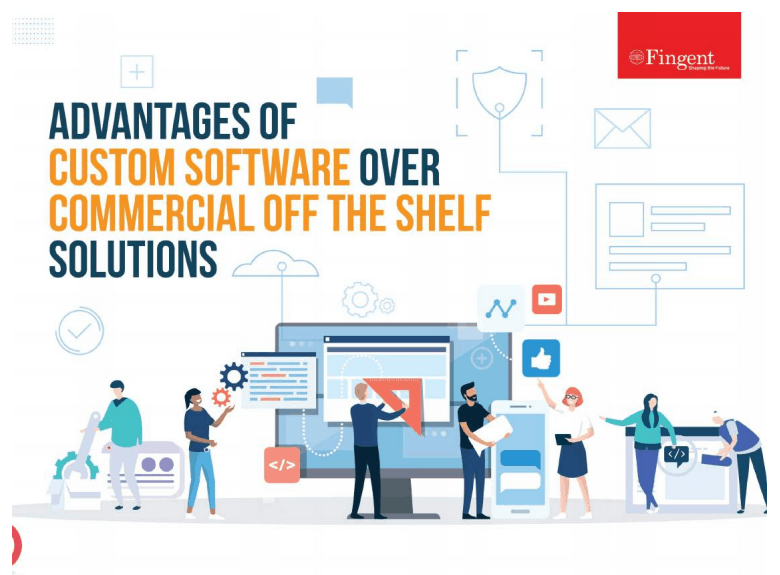
Using custom applications reports a 77% reduction in manual data entry! Learn more about why choosing custom software works over commercial off-the-shelf solutions. Scroll through our Infographic now!
Does Your Business Need Custom Software Solution Right Now?
Now that you know the benefits of custom software, the question is: do you need to implement it right now, or can you put it off for a while? Here is a checklist of symptoms. If you tick any of these boxes, it might just be time to get that ball rolling on a custom software solution:
1. Lack Of Efficiency
Are your employees struggling with mundane manual work? Is it resulting in delays, lower productivity, and errors?
Custom business software developed according to your requirements will empower your business to tackle these challenges by providing an all-in-one environment for employees to plan and execute the workflow, communicate effortlessly, and procure data anytime. By enabling automation and AI in the software, you will be able to eliminate the element of human error and conserve your human resources for more focused tasks.
2. Data Management Issues
Do you often struggle to access and track crucial data? Does it take ages to make sense of the data and put it to good use? Are you struggling with the threat of data leaks?
Data is probably the essential asset of any business. It is usually challenging to store, analyze and track crucial information, and keep the data secure from theft to maintain the data integrity in your industry.
A custom software solution can be built to include Business Intelligence (BI) solutions that can help you convert data into actionable insights. This will help you make intelligent data-driven decisions for your business. You can also customize security layers for your software to address the particular security risks associated with your business.
3. Low Customer Satisfaction
Have you been receiving more customer complaints lately? Are they dissatisfied with their interaction with your business?
Nobody knows your customers as you do. Integrating this knowledge into your software can be priceless in ensuring customer satisfaction. Custom software allows you to do just that. You can work with your developers to integrate insights from your customer base and market analysis and provide features that your customers will be happy with, which can lead to a seamless customer experience.
4. Business Expansion
Is your business expanding? Do you need to grow technologically?
Expansion and development are two constants in a business owner’s mind. Whether your business is expanding in terms of location, the number of employees, or customers, you unquestionably need to grow technologically.
You don’t want to add technological issues to the chaos of a quickly expanding business. Looking for new software solutions every time a component of your business grows will be a real challenge. With custom software, you can easily build on the existing software and add features as you scale.
Read more: Choosing the Right Software Development Vendor
How To Get Started?
As you can see, custom software can play an integral part in the operation and success of your business by improving productivity and increasing efficiency. It is an excellent investment in time-saving, cost-effectiveness, and risk reduction.
The first step is hiring a professional technical team to help you develop custom software. Fingent, a leading custom software development company, excels in crafting tailored software solutions for clients, perfectly aligned with their unique requirements. We can help you too.
Give us a call, and let’s discuss your requirements.
Stay up to date on what's new
About the Author
Featured Blogs
Stay up to date on
what's new
Talk To Our Experts
Every small business requires an array of software to run its operations smoothly and successfully. When starting a new business, it may seem like your off-the-shelf software would suffice all your needs. As your business grows, your business management software should scale to meet your team’s evolving needs, boost the efficiency of your workflows, and be flexible to support new use cases. Custom software or a software application tailor-made to address your specific business requirements helps improve your market competency and realize ROI at a faster pace.
How will you determine if custom software is the right fit for your small business?
Read on this post to learn more about custom software for small businesses.
Read more: 5 Reasons Why Custom Software is Important for Your Business
Top Signs Indicating Why Your Small Business Needs Custom Software
The classic “build vs. buy” decision is a pertinent question that every small business faces when addressing their software needs. Considering the cost, time, energy, and resources dedicated to custom software development, many SMEs adopt packaged software in a haste. Look out for these warning signs before deciding whether to build or buy.
1. Employee Discontent
Find out if your employees are satisfied with your existing off-the-shelf software. Do they still stick to old-school tricks or find manual methods faster and more convenient? Are your employees forced to discover alternative workarounds to use the software? Do they still rely on spreadsheets and how-to guides for using the software? All these signs indicate that your off-the-shelf software lacks employee approval and can fail your business eventually.
2. Existing Tech Isn’t User-friendly
Rolling out enterprise-wide canned software that commands an advanced level of technical expertise will inflict more harm. It will complicate the processes for your employees and incur heavy training costs. Complex shelf software will fail the very purpose of technological innovation, that is, to simplify human efforts. If only less than 20% of your employees find the software workable, it’s better to build a customized solution.
View Infographic: Custom Software vs. Commercial Off-the-shelf Solutions
3. Wasting Time on Mundane Tasks
Is your software forcing your employees to spend their valuable time on routine activities that don’t require human thought and creativity? If your software isn’t allowing you to leverage the potential of automation, it can minimize your employees’ productivity and workplace efficiency. Automation of mundane tasks with minimal or adequate supervision is a must for small business growth and success.
4. Software Spend Drains Your Wallet
Adapting a rigid off-the-shelf solution for your small business needs requires you to subscribe to third-party apps and pay multiple licensing fees. Most biz owners end up paying full price for unwanted features. Some companies would want to integrate estranged business applications to increase the usability of their shelf software. All these challenges lead to increased software spending.
5. Unable to Make Data-backed Decisions
Your business data comes from multiple sources such as your website, emails, social profiles, chat, and conversation histories, helpdesk, and so on. How far is your canned software allowing you to make use of this data? Are your decisions driven by live data? If your dashboards aren’t getting updated in real-time and reports throw only past information, it’s time to consider custom software. Integrating multiple business systems and exporting all the useful data insights onto a centralized, user-friendly platform in real-time will empower small businesses to make rightful decisions.
Watch Video: Why Your Business Requires Custom Software
How Can Your Small Business Benefit from Custom Software?
Small business competition has intensified in recent years. Thanks to the increasing democratization of digital innovation! Access to technological advancements is no longer limited to large enterprises. With a custom-built software, your small business can stay relevant and competitive.
1. Own Purpose-built Software
Custom software development guarantees 100% alignment with specific business needs. You can rest assured that no crucial operations are left unsupported and there aren’t any wasted features. Share your unique requirements with a trusted custom software development company like Fingent and get exactly the features you would require on a long-term.
2. Uncompromised Security
Ready-to-use software is highly vulnerable to cyberattacks due to the widespread availability of code and proliferation of users. Owning custom code places your small business under lock and key and keeps your sensitive information hack-proof. Customized solutions offer built-in security with a specialized approach to development. Better compliance and data governance improves your organization’s reputation and trust.
3. Improve Workflows and Efficiency
Attaining profitability amid stiff competition needs your employees to put in their best performance. Experienced custom software companies like Fingent can help you identify the workflows or business functions that can be improved with the right technology. This makes your business more efficient and maximizes the productivity of your employees.
4. Keep Costs Under Control
Improved business efficiency transforms to lower operational costs. Technologies like automation enable your employees to complete more tasks in less time, without feeling monotonous. Custom software actually costs lesser than off-the-shelf solutions, considering the extra dollars you would spend on subscriptions, licenses, third-party integrations, software upgrades and maintenance, and other overheads required to make the shelf software workable.
Read more: Know What’s Driving Custom Software Development Costs in 2022
5. Round-the-clock Support
Modern business might come to a standstill if technology stops working. A typical readymade software provider puts you into a long wait with back-to-back support tickets and repeated calls, whereas a dedicated custom software development partner offers access to a direct line of technical support to resolve your issues immediately.
Read more: The Dos and Don’ts of Custom Software Development
Tips to Choose the Right Software Development Partner
Hiring the services of an experienced custom software development agency will help you focus on developing a sustainable business model. How can you identify the right software development partner for your small business? Here’re a few tips we recommend:
- Identify your needs. Decide what you expect the software to do. List out your objectives. Use an application specification template to fill out your needs. This improves your communication with the software development vendor. It helps the vendor understand your expectations clearly. This can go a long way in finalizing the project’s scope.
- Check the partner’s technical skills, expertise, and experience. Have they handled projects related to your domain? Read up their case studies and analyze their portfolios. Arrange catch-up sessions to learn more about their software development approaches and project management methodologies.
- Ask for references. It helps you understand their reputation and trustworthiness. Use top B2B review platforms like Clutch and GoodFirms to evaluate their performance. Connect with the company’s past clients for more candid reviews.
- Cost is as important as the experience and reputation of the software development partner. Bestow your project only if you’re confident of guaranteed ROI.
- Is your development vendor passionate about your project? Figure it out over the initial meetings before the formal kick-off. Do they come up with unique ideas that improve your application’s value in the future? Make sure that their ideas are backed with convincing use cases or POCs.
- Choosing a software development partner also depends on the quality of after-sales service and technical support. Do they provide cloud-based updates, software upgrades and maintenance, and other troubleshooting services when you need them?
Selecting the right custom software development partner is a meticulous job. Check out our earlier post covering these and more crucial tips in detail.
Also read: How to Choose the Right Custom Software Development Firm
Why Choose Fingent as Your Custom Software Development Partner?
Over the past two decades, Fingent has been serving as a reliable and capable tech partner for many leading global brands, including Fortune 500 companies. With an impeccable track record as a successful custom software development partner, we’ve helped improve cash flow and business efficiency for many clients. If hiring in-house developers is costing you a fortune, extend your development team with our dedicated talent pool at reasonable rates.
Read more: Top Benefits of Outsourcing Software Development Services
We’re in track of the latest tech development trends and help our clients explore new and emerging tech such as Augmented Reality (AR), Virtual Reality (VR), Internet of Things (IoT), 3D Web Configurator, Robotic Process Automation (RPA), Artificial Intelligence (AI), and so on. If you’re an aspiring small biz owner trying to make the most of technology without burning a deep hole in your pocket, connect with our team and get started. Let’s help you build scalable and robust small business software.
Stay up to date on what's new
About the Author
Tony Joseph
Tony believes in building technology around processes, rather than building processes around technology. At Fingent, he specializes in custom software development, especially in analyzing processes, refining them, and then building technology around it. He works with clients on a daily basis to understand and analyze their operational structure, discover (and not invent) key improvement areas, and come up with technology solutions to deliver an efficient process. You can reach him at [email protected], Skype: tony_fingent
Featured Blogs
Stay up to date on
what's new
Talk To Our Experts
Is custom software poised to fulfill business needs in 2021?
From small firms to established companies, the COVID-19 pandemic has forced businesses and leaders to embrace digital transformation. Businesses are spending more on custom software solutions to ensure smooth workflow as they switch their operations to virtual workspaces. Custom software development and mobile application development have become inevitable for business growth and success. As technology advances, intelligent interfaces and highly intuitive cognitive capabilities transform businesses in unimaginable ways.
Custom software solutions appeal to tech leaders and companies of all sectors globally. In today’s dipping economy, software development companies like Fingent help businesses restart or rebuild what they lagged with custom software solutions.
Read more: 5 reasons why custom software development is important to your business

What is a custom software solution?
A custom software solution is the best response for both clients and customers to adapt to the new normal. Currently, many organizations are allowing their employees to work from home, thereby limiting physical interactions. Such organizations adopt customized software applications tailored for specific use by their employees. Remote working software tailored to meet specific workplace requirements and maintain privacy without affecting the workflow allows businesses to better serve their customers.
Simply put, custom software development involves designing, developing, implementing, and managing a particular software application used by a specific set of audience, functions, or organizations.
A software development company first analyzes the business and its product requirements to develop customized scalable, dynamic, and cost-effective software solutions. It helps meet the needs and preferences of the customers, clients, and the organization at large.
The new normal is making it difficult for businesses to obtain a competitive edge, so they resort to custom software applications rather than off-the-shelf software development. Thanks to these tailor-made solutions, work is becoming easier and enabling businesses to take a step ahead.
What is the difference between custom software and commercial software?
Custom software solutions are designed and built to adapt to the changing market demands. Off-the-shelf software allows businesses to adjust to their expertise. Commercial off-the-shelf applications come pre-packaged and are purchased by enterprises to carry out their tasks. Custom software enables you to retain only the features you use and supports scalability in the future.
View infographic: What are the advantages of custom software over commercial off-the-shelf solutions?
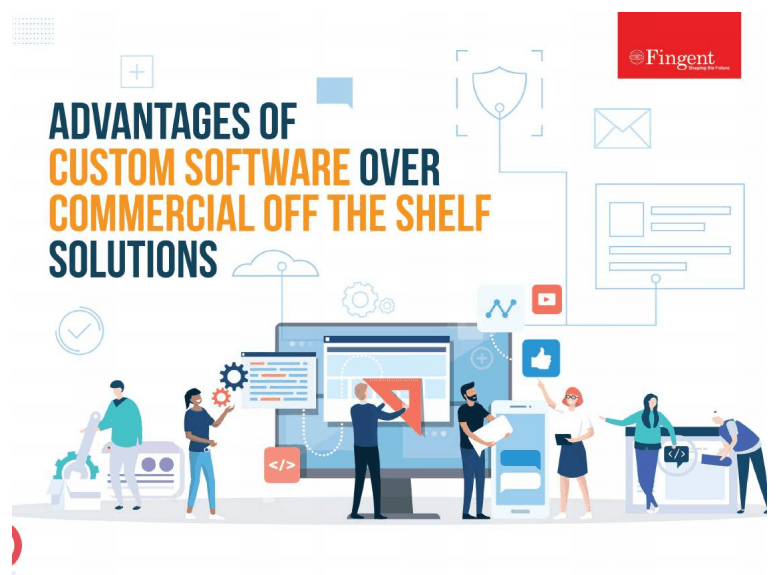
Why do businesses need custom software development services?
Custom software solutions are one of the best ways for businesses to survive in today’s uncertain market. Moreover, custom software development assures that your data remains secure and confidential as there is a high amount of data security risk with off-the-shelf software. Custom software is the best option today, considering your business’s privacy, security, and accountability. As custom software is made exclusively for in-house use, the associated risks are low.
What are the benefits of custom software solutions?
1. Improves efficiency
Custom software is designed to support the specific processes followed by a business entity and its users. Hence it improves the productivity and operational efficiency of the business and its employees. By automating mundane tasks and tweaking the workflow to eliminate unwanted elements, custom software implementation adds business value.
2. Reduces integration costs
Most of the commercial off-the-shelf software fails to work with existing and legacy applications. If it does not comply, businesses will have to invest further to ensure that the prepackaged software operates with the existing infrastructure. On the other hand, custom software integrates well with the current environment and adapts to a business’s needs.
3. Scalability
Custom software can grow as the business expands or changes. Developers can assess future requirements and incorporate them into the application. It can save costs associated with purchasing additional licenses or subscriptions of commercial applications.
4. Profitability
Investing in custom software development increases the profitability of a business. Depending on the project’s terms and conditions, the organization that creates custom software can own it or license it or sell it to other organizations.
5. Independence
As you will be free of a commercial software vendor, you need not worry about price hikes for licensing and support or whether the vendor terminates a product or goes out of business. However, the business that develops and uses custom software should bear the cost of maintaining and supporting the software. So, every organization must carefully decide whether it’s better to buy or build.
Read more: How to Choose the Right Custom Software Development Firm
Technologies and practices to consider in custom software development
1. Open-source
Open-source indicates that the software source code is open to the public and the development community to use. For example, Microsoft, Linux, and Google. Open source can significantly improve development productivity through software component reuse and improve interoperability by avoiding proprietary architecture.
2. Artificial Intelligence (AI)
Artificial Intelligence allows the software to replicate human decision making and learning. It can enhance the development process. For example, natural language processing (NLP) is used to analyze requirements from elaborate texts and recommends improvements based on best practices. AI technologies such as machine learning and modeling may also be incorporated into applications through application programming interfaces (API) and cloud services.
3. Blockchain technology
Developers are leveraging open- source hyper ledger technology and blockchain ledgers to build new types of secure transactional and financial applications that can boost business processes.
4. Cloud-based development
It brings the advantages of cloud computing by hosting development environments in the cloud. It supports design, coding, integration, and other development functions to build on-premises and cloud-native applications. These environments also promise cost control, speed, and on-demand convenience.
5. Mobile application technology
With the customers’ buying behavior shifting from products and services to experiences, mobile application technology is a must. So, developers have to connect mobile apps with data to improve and enrich the user experience.
6. Analytics technologies
These technologies enable software applications and their users to understand data through dashboards, visualizations, and predictive capabilities. AI, cloud-based services, and automation make it easier to incorporate analytics into applications.
The health crises and economic uncertainties brought in by the COVID-19 pandemic have compelled businesses to adopt solutions tailored for use by their employees and customers. So, opting for custom software solutions is a wise decision as they can be customized to suit your business needs.
Read more: 5 Custom software development trends every business should know
While the initial investments seem a bit high, custom apps will get you a higher ROI in the future. If you are looking for a custom software solution for your business, all you need to do is select a trusted and reputed company like Fingent. We first understand your requirements and help preserve your accountability in the market. To know more, please don’t hesitate to get in touch.
Stay up to date on what's new
About the Author

Featured Blogs
Stay up to date on
what's new

