“Aviation is the branch of engineering that is least forgiving of mistakes.” – Freeman Dyson, British-American theoretical physicist and mathematician.
The truth in that statement is sobering indeed. The precision and skill needed to perfect a safe flight plan involves an army of brilliant minds. The process flows onto the nitty gritty of running the day-to-day tasks of the industry as well. That is where AI comes in.
“Artificial intelligence is not a substitute for human intelligence; it is a tool to amplify human creativity and ingenuity.” – Fei-Fei Li, co-director of the Stanford Institute for Human-Centered Artificial Intelligence.
Let us look into how AI is transforming the Aviation industry.
An Introduction to Aviation and Artificial Intelligence
The aviation industry includes nearly every facet of air travel as well as the operations that support it. By extension, this covers the entire airline sector, as well as the production of aircraft, research firms, military aviation, and much more. Aviation management includes a wide range of tasks like managing airport safety and security, air traffic control, airport operations, aircraft maintenance, and airline operations. The ideal pricing strategy for an airline will always vary depending on its unique business objectives, route network, and market competition. The use of strategic communications to market an aviation or aerospace company to decision-makers is known as aviation and aerospace marketing.
Where AI meets Aviation:
Artificial intelligence has revolutionized modern aviation, especially in connection with the modern airport. Recent reports by Radix state that “the artificial intelligence (AI) market, currently valued at $328.34 billion, is anticipated to expand by at least 120% annually”.
AI is already improving the efficiency and convenience of air travel by automating mundane procedures in airports. In the future, artificial intelligence (AI) in aviation will primarily focus on digital transformation projects to enhance customer experience, speed up procedures, lower costs, and explore many more benefits of such cutting-edge technologies. According to research, approximately 38% of airports plan to use AI for tailored marketing in the near future.
Artificial intelligence (AI) has already enabled autopilot technology to go from basic instruments for maintaining aircraft altitude to completely autonomous flight control systems that can operate gate-to-gate without requiring human intervention.
Furthermore, it can also be used by airlines and other operators for ground operations, flight planning, and fleet optimization. AI tools can help engineers designing airplanes create and certify goods more quickly and easily before they are even put on the market. Pricing strategy and marketing modules are two of the most critical areas that AI is impacting.
Pricing Strategies
Airlines are transforming passenger engagement and revenue optimization by utilizing Artificial Intelligence (AI) to harness the possibilities of personalization and dynamic pricing. We’ll explore three of these key artificial intelligence-driven tactics.
1. Dynamic Pricing For Tickets:Conventional pricing models frequently find it difficult to adjust in real time to changes in the market. However, this is where AI excels.
Customer Division: AI divides travelers into categories according to their willingness to pay and purchase patterns. Different consumer segments might have their pricing methods customized to ensure that the price is appealing to them.
Competitor Observation: Artificial Intelligence (AI) solutions enable airlines to promptly respond to shifts in the competitive landscape by monitoring the pricing and strategies of their rivals.
Supplementary Services: AI maximizes the cost of both tickets and add-ons like checked baggage, in-flight Wi-Fi, and seat preference. Airlines can optimize their ancillary revenue by determining pricing that appeals to travelers.
2. Personalization Pricing Modules: Airlines are now able to customize services, offers, and experiences to each passenger’s specific interests and behaviors thanks to machine learning algorithms. This degree of personalization is available from the reservation procedure all the way through the in-flight encounter, leading to a flawless travel experience.
Customer Segmentation and Profiling: To generate thorough client profiles, AI algorithms can examine a wide range of data sources, such as previous booking histories, travel trends, and even social media activity.
Customized Deals and Services: Airlines can create customized offers once they have unique profiles in place. These customized deals increase passenger satisfaction and foster client loyalty.
3. Real-Time Demand Analysis: Real-time analysis and demand fostering generally fall under dynamic pricing, but they are also similar to personalized models.
Analyzing Data in Real Time: AI systems monitor the market, demand patterns, and pricing strategies of rivals in real time to modify ticket prices. This guarantees airlines’ continued competitiveness and revenue maximization.
Demand Forecasting: Artificial Intelligence is able to forecast changes in demand for particular flights and schedules. Then, airlines can modify their pricing to maximize income during busy periods or fill unfilled seats.
Marketing Model
AI is capable of analyzing enormous volumes of data to spot possible safety hazards, forecast equipment malfunctions, and support preventative maintenance, all of which increase overall aviation safety. As per reports, AI in aviation was estimated to be worth USD 686.4 million in 2022, and between 2023 and 2032, it is expected to grow at a compound annual growth rate of more than 20%. In order to manage air traffic and optimize flight routes, airlines and aviation corporations look for AI software solutions. Two key ways that AI influences marketing struggles in the aviation industry are:
1. Targeted advertising:Many neighboring industries utilize AI to optimize their advertising procedures and make them more attractive to the right audience. With passenger services like chatbots and tailored suggestions, AI can bring in more customers and revenue to airlines while simultaneously boosting customer satisfaction levels.
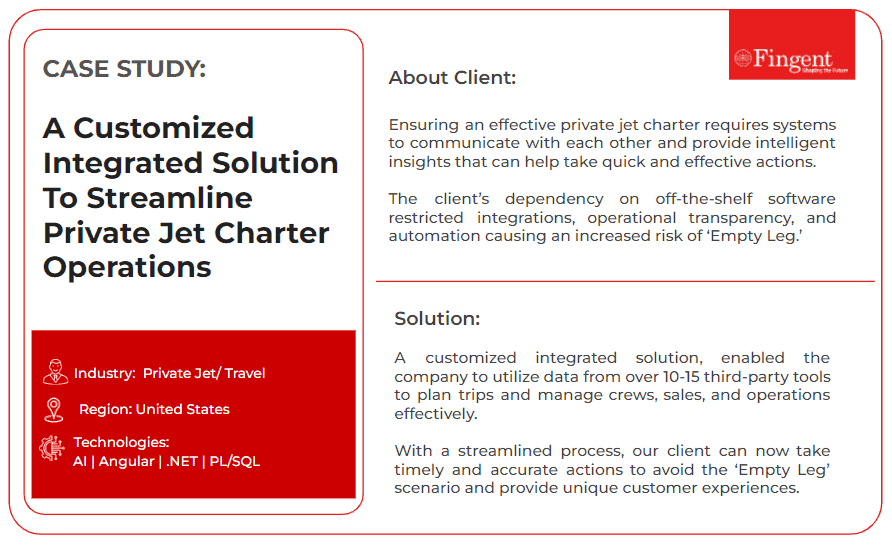
2. Monitor emails: The majority of requests for private flights are made via email, which means that operators must perform the tiresome chore of reviewing emails once an hour. With the help of AI, team members can react to travel requests more quickly and arrange flight schedules more easily by sifting through emails and selecting those that best fit what the business has to offer.
The Future Of AI In Aviation
By now, it must be evident how useful AI is to the Aviation industry. Furthermore, according to research, it is predicted to grow at a 37% annual rate of growth between 2023 and 2030, reaching US$ 12.1 billion by the end of 2031. Some emerging trends and advancements to look out for are:
Autonomous Aircraft: By decreasing human error, boosting productivity, and possibly even enhancing environmental sustainability, the development of autonomous aircraft might completely transform air travel.
Data security:As AI systems are used more frequently, there is a greater need than ever for strong cyber security defenses against online threats.
Workers Adaptation: As AI technologies are integrated, the aviation sector will need to upskill its workers and create new positions that reflect the shifting job market.
UAVs (unmanned aerial vehicles): These drones with AI algorithms installed can effectively scan large areas, giving security operations useful data.
Predictive maintenance: AI systems that can precisely forecast the need for maintenance by evaluating data from sensors integrated into aircraft components by reducing downtime and enhancing overall safety; this proactive strategy assists airlines and maintenance teams in identifying any problems before they become more serious.
Customer assistance:Customers may soon be able to utilize AI-powered devices like Amazon Alexa, which can be connected to an airline’s mobile app. After that, Alexa may be used to respond to queries, deal with typical issues, track flight statuses using their numbers, manage check-in requests, and find out if amenities like Wi-Fi are available while flying.
Passenger identification Kiosks: It is anticipated that AI will be used soon to provide self-service flight check-in. Consumers will utilize this technology in facial recognition kiosks. It is anticipated to enhance customer satisfaction and enable quicker check-ins and client flow at the airport.
How Can Fingent Help Aviation Companies Explore Capabilities with AI Better?
Here at Fingent, we believe using emerging technology can help industries reimagine processes and find possibilities in impossible challenges. We enable organizations to look beyond digitalization and create innovations that change lives by providing them with easy-to-use and quickly implemented software solutions.
Fingent combines the full force of its expertise in many facets of technology to bring you a solution that will fit your needs. This includes the power of augmented, virtual, and mixed realty, data analytics, network, and infrastructure security, and more.
We use an agile process to create dependable, high-quality, reasonably priced solutions that have an impact. In addition to our well-known post-installation care, we provide excellent customer service and knowledgeable support from the beginning to the end of the implementation. Give us a call, and lets create a custom solution that will help your aviation business reach new heights.
Stay up to date on what's new
About the Author
Tony Joseph
Tony believes in building technology around processes, rather than building processes around technology. He specializes in custom software development, especially in analyzing processes, refining it and then building technology around it.He works with clients on a daily basis to understand and analyze their operational structure, discover (and not invent) key improvement areas and come up with technology solutions to deliver an efficient process.
To reiterate John F. Kennedy, “Change is the law of life, and those who look only to the past or present are certain to miss the future.”
The digital world revolves around evolution and change. It is constantly transforming from one stage to the next. Do you feel lost in this metamorphosis of digital transformation? Does the fervent adoption of advanced technology into business processes catch you off-guard and unprepared?
We understand and want to help you navigate and thrive in this new era. Stay with us and continue reading.
What Is Digital Transformation?
Digital transformation is the process of utilizing digital technology to develop or modify current corporate practices, culture, and consumer experiences to meet shifting business and market requirements. The perks include better company agility, improved efficiency, and, eventually, the creation of new value for shareholders, consumers, and employees.
According to Gartner, 87% of senior business leaders believe that digitalization should be a top priority for businesses, and 91% of organizations across the globe are currently involved in some sort of digital operation. To improve its client experience, a business might implement AI or cloud computing, for instance. Or it might change its supply chain to ensure machine learning is used more effectively. There are innumerable ways to digitalize your business and reap its many benefits.
Why Is Digital Transformation Important?
The pandemic changed the relevance of digital transformation almost overnight. From a way of enhancing customer care, it quickly became embedded into the core operational and innovative aspects of an organization. In this day and age, an organization’s sustainability may be in jeopardy if it fails to implement digital transformation. This is vital to satisfy the demands of the business landscape. As per Statista, digital transformation has been the leading priority for information technology (IT) initiatives for global companies since 2020.
Businesses are using digital solutions to help them customize their interactions, communications, and goods to meet the unique needs of their clients. For instance, a report by Gartner estimates that by the end of 2020, chatbots will power 85% of customer support. Here are some important reasons why businesses are adopting digital tech:
Improvement Of Customer Experience – Customer experience is at the core of digital. In order to enhance the customer experience, 92% of business leaders are developing sophisticated digital transformation strategies.
Additional Data-Based Insights – The tracking and analysis of metrics are made possible by going digital. Making efficient decisions and increasing ROI can both be accomplished by using data-driven insights to better understand customers and re-evaluate business strategies.
Competitive Edge – By developing new goods and services, entering new markets, and enhancing customer comprehension and service, digital transformation enables organizations to achieve a competitive edge.
Cost-Cutting –By automating procedures, reducing waste, and improving supply chain management, digital transformation lowers business expenses. A McKinsey study found that businesses that completely adopt Digital Transformation can cut costs by up to 50%.
Stages Of Digital Transformation
Digitization, digitalization, and digital transformation are the three major stages of the Digital Transformation process. A successful implementation requires businesses to move from one stage to the next seamlessly.
Digitization – The transformation of manual (analog) information into digital format, enabling easy manipulation, storage, and transmission, is called digitization. It is the process of moving to a digital business. For instance, converting paper forms into electronic documents.
Digitalization – Using digital technologies and digitalized data to enable or improve business processes is known as digitalization. For instance, using a marketing website, software, or mobile app to stay in touch with customers and employees is an example of how digitalization may modify an organization’s operating structure and provide new revenue and value-producing opportunities.
Digital Transformation – The use of new and developing technologies to encourage sustainable innovation and creative expansion while making fundamental changes in an array of business-related areas. It enhances all aspects of the organization, including how employees engage with clients and how operations are carried out. For example, it collects insights from previous customer data, behavioral patterns, and purchase history to customize products and services offered. That is one of its many benefits.
How To Discover Where Your Business Stands
Legacy challenges are frequently overcome as part of digital transformation, but how effective is it? Measuring the progress of any effort with well-defined KPIs and metrics is the only way to know how far you have come.
Tips to measure the progress of digital transformation:
Feedback from your employees and co-workers
Track fluctuations in customer feedback
Analyze the data across the different initiatives that you have implemented
Some additional metrics to track include:
The degree of digital adoption
Customer satisfaction rankings
Receiving feedback and measuring progress this way can help you locate where your business stands in its Digital Transformation process and improve your strategies to drive better results.
The Future Of Businesses In Digital Transformation
From using cutting-edge technologies to making strategic decisions, Digital Transformation is influencing businesses. It alters how firms operate, streamlining operations, boosting efficiency, and establishing a cultural shift. A prediction by International Data Corporation states that 75% of corporate executives will use digital platforms and ecosystem capabilities by 2025 to increase their platforms’ agility, efficiency, and sustainability.
Here are some future trends in Digital Transformation:
1. Low-Code, No-Code
Low-code, no-code is a method of software development that calls for either very little (low-code) or no (no-code) coding at all. As per studies, low-code and no-code platforms will be used for more than 65% of software development by 2024. The market will be valued at $13.8 billion in that year!
2. Cloud Migration
Cloud migration is the act of moving data and applications from one location, typically a company’s on-premises servers, to a public cloud provider’s servers. The four benefits of cloud migration are efficiency, accessibility, scalability, and security.
3. Artificial Intelligence And Machine Learning
AI uses machine learning for data analysis and forecasting to guide efficient digital organizational strategies, personalize interactions, optimize workflows, and offer consistently dependable services 24/7.
Strategizing An Effective Digital Transformation Journey
While undertaking such a big change, it is important to have a foolproof strategy to rely on. Following are a few aspects that you can consider during your digital transformation process:
Transformation Of Business Strategies – Technology becomes pivotal to business strategy in the aftermath of digital transformation. Operating expenses and inefficiency can be decreased with this strategy.
Realigning Business Operations –For agility and experimentation, it is essential to transform corporate procedures and adopt new working methods.
Adopting Novel Methods Of Agility And Experimentation – Modern engineering capabilities must be combined with new working methods as customer expectations and the rate of change increase. Successful digital transformation requires a fundamentally different strategy—one that values the accessibility of technology and the adaptability of people.
Flexible Technology Is At The Heart Of Long-Lasting Change – Staying fluid and adaptable will enable you to more readily create ecosystem connections that foster speed and scale while also accelerating innovation within your organization.
Fingent is one of the leading solution providers in the world. We have been around since 2004 and have successfully transformed many businesses from traditional modules into digitalized success stories.
Fingent has expertise in all the technologies that drive a successful digital transformation journey. Specialists in Cloud computing, Artificial Intelligence and Machine Learning, Virtual and Augmented Reality, and more come together to create a holistic digital solution for your business.
Talk with our Digital Consultants, who will analyze your unique requirements and work out a future for your business that is equipped to succeed in the digital age.
Stay up to date on what's new
About the Author
Tony Joseph
Tony believes in building technology around processes, rather than building processes around technology. He specializes in custom software development, especially in analyzing processes, refining it and then building technology around it.He works with clients on a daily basis to understand and analyze their operational structure, discover (and not invent) key improvement areas and come up with technology solutions to deliver an efficient process.
Software Development Trends 2025: Guide For Business Owners
In today’s world of volatility, there is no way to transform. We live in a world that is subjugated by cutthroat competition. The only sustainable advantage you can have over other businesses is to keep up with the latest trends in software development.
WiseWords
“At least 40% of all businesses will die in the next 10 years if they don’t figure out how to change their entire company to accommodate new technologies.”
– John Chambers, Cisco.
Every Penny Counts
All business owners are aware that every penny counts. That is why cost-effective custom software development is essential to keep your company competitive and successful. But what is custom software development, and how can it benefit your business?
What are the top software development trends for businesses in 2024, and who should adopt this service? What top methodologies must you know before you step into software development? Read on to find out.
Top Software Development Trends To Look Out For In 2024
The technology industry evolves quickly, including custom software development. With developments in AI, IoT, and more, 2024 promises to be an exciting yet challenging year for businesses looking to build customized software. Here’s a rundown on the top technology trends not to miss out in 2024!
AI development will continue to grow
Artificial intelligence is already making a big impact in software development today. And the trend will continue to grow in 2024. As AI and ML become more sophisticated, businesses can expect to see faster development and deployment of custom software. AI can also help analyze customer data better, creating more accurate predictions about customer needs and wants.
Discover the potential of artificial intelligence (AI) in project cost estimation. Leverage AI algorithms to enhance speed, accuracy, and efficiency in estimating project costs. Analyze historical data, utilize machine learning, and automate processes for faster and more precise cost estimation. Stay updated with real-time adjustments as project parameters change. Experience improved accuracy, reduced estimation time, increased efficiency, and better decision-making during project planning and budgeting. Explore the use case page for more insights.
Cloud solutions are becoming increasingly popular as businesses of all sizes look for a more versatile and budget-friendly way to develop custom software. It proves lucrative for development teams as they facilitate remote work.
Outsourcing software development
Did you know that the value of global IT outsourcing in 2022 was $440.41 billion and is expected to reach 610.12 billion by 2027 with a CAGR of 6.68%?
Software outsourcing can lead to rapid growth, cost efficiency, better quality, and lower risks.
Low-code development
Software engineering is hastily moving toward a streamlined approach with solutions like low code as it helps developers build applications with minimal coding.
Did you know that the global revenue value of the low code platform is expected to reach 65 billion dollars by 2027 with a CAGR of 26.1%. That is why it is one of the most influential trends in custom software development.
“Technology is fast evolving! But businesses need to strategize smart to actually leverage the benefits of these advanced technologies. Not all software or digital platform can provide you the solution your company needs!”
Dileep Jacob, Senior Vice President, Global Operations, Fingent
Read further to know how your company can identify the right technology solutions to drive the intended business growth and success, top myths that can prevent you from adopting software development, and steps to strategize a successful software development project. But first, let’s see what does custom software development mean?
What Is Custom Software Development?
Custom software development is a process of researching, designing, developing, deploying, testing, and maintaining unique software application that solves a specific set of challenges. Unlike off-the-shelf software, custom software focuses on defined requirements.
It is not uncommon for businesses to look for unique application features. Unfortunately, the software market often cannot meet all the demands of modern business management. That is why companies develop custom software to manage inventory, content, customers, and so on. Custom software is designed to fulfill certain requirements by outsourced or in-house development teams.
But why is there an increased need for businesses to develop custom software now? Let us find out.
Software development, like professional sports, has a way of making a thirty-year-old man feel decrepit.
– Neal Stephenson.
Did You Know
The global custom software development market size is expected to expand at a compound annual growth rate (CAGR) of 22.3% from 2022 to 2030?
– Grand View Research.
Is Your Business Just a Fast Caterpillar or An Emerging Butterfly?
Do you have demanding clients or requirements unmet by off-the-shelf software products? Do you want to reach your clients quickly, uniquely, and compellingly? Then, custom software development likely is your best bet. Custom software does not just quicken your business processes, it reinvents your entire process helping your business to emerge as a unique brand, one that can stand apart from its industry peers.
In other words, working with custom software will bring several advantages that could stretch long-term and redefine success. The benefits your business will enjoy span from increased efficiency to 24/7 customer support and many more. Let us take a closer look at them:
Customer software development improves your business flexibility and scalability. This means that the software can perfectly adapt to your business needs. It allows you to decide what features you want to keep and what you want to leave out.To this end, it is more efficient than off-the-shelf software as it allows you to customize it, as per your business requirements. This can result in increased operability and productivity, thereby contributing to business stability.
Personalization is one of the most obvious benefits of custom software development. Off-the-shelf software may offer a variety of features and functionalities, but it is also made to serve a wide range of companies at once.
In a competitive business environment shaping a unique identity ensures a leading position. Custom software is built with the specific needs of your business to help you achieve that. An experienced development team will help you deliver intuitive solutions incorporating features and technologies of your choice.
At first glance, canned software may seem less expensive, but it often has recurring costs that make it less profitable in the long run. Besides that, canned software often needs customization to work with your specific needs. Eventually, they might lack critical functionality, because of which the developers will have to rebuild them from scratch. Worse yet, you will face some hidden costs if you choose to scale up your project.
Contrary to ready-made software, custom software does not entail any license fee. Custom software can be implemented based on your budget and developed iteratively.
Custom software is designed following the highest security standards and technologies of your business field. This makes it more reliable and trustworthy. Industries such as healthcare, insurance, and fintech turn to custom software as it provides compliance with all regulations. Most importantly, it enables the protection of vulnerable data.
Building custom software solutions involves analyzing your requirements, applying best practices, and considering hidden threats that may surface during development. When properly tested, custom software reduces the chances of intrusion. It also ensures high performance to deliver maximum value for your business.
Uninterrupted support and maintenance is another benefit you can always depend on. A dedicated custom software development team will be able to provide you with efficient technical support whenever you need it. Since they are the software creators, they are aware of your application inside and out. They will help update or tweak the software if you encounter problems.
Custom software is designed to cover new features, increase the capacity of your product, or simply support the growing demands of your company.
Seamless integration is essential for all businesses to ensure that their operation runs smoothly and efficiently. Custom software provides significant benefits over off-the-shelf software, as they are developed to match existing systems and processes of the company.
Seamless integration is the backbone of custom software solutions. Seamless integration can provide real-time visibility and accuracy of data. This is because custom software tools are designed to communicate with each other to deliver the desired outcomes. It allows you to streamline business operations, automate workflows and drive informed decision-making.
Implementing a custom solution allows your business to improve flexibility and adaptability to changing circumstances. This way, businesses can stay ahead of the competition and ensure their operations run smoothly.
Right custom software can make a world of difference to your team and your business as it can meet your goals and your company’s technical and business needs. Doing so helps your team achieve more efficient operations. It improves productivity as employees need not spend more time on repetitive tasks. Furthermore, it helps to gain more insights from data and allows you to juggle multiple tasks simultaneously. This can help you streamline your operations and ensure that each process runs optimally.
Something to consider:Are you looking for ways to boost your employee’s morale without shelling out more money? Nothing can deflate a professional’s motivation more than a frustrating and chaotic work atmosphere. Keep your employees motivated and productive by providing an efficient, smoothly operating workplace.
As the use of mobile devices continues to increase, it is important to ensure your software remains compatible with these devices. While many off-the-shelf tools come with a mobile version, these applications may not meet all your needs. With the help of experienced developers, you can develop a mobile application that meets your company’s exact specifications and goals.
But when you turn to custom software development, you can acquire a mobile application that complements your product and adds value to your business. This app could be used by employees, customers, and other stakeholders, allowing them to access your services from any device.
It can also provide your customers with a seamless experience and ensure you stay one step ahead of your competition.
Something to consider:In addition to building custom software, some business owners set out to design mobile apps to help customers shop and stay on top of company events.
Top Myths That Prevent Businesses from Investing in Software Development
Myth #1: Custom software development is expensive
While custom software may seem more expensive at first, you will find that off-the-shelf software is actually costlier. In the case of custom software, you are in control of the entire development process. Once you budget the expenses that follow, such as updates, training, and maintenance, you are sorted. On the other hand, with off-the-shelf software development, other recurring expenses like upgrades and licensing can be very expensive.
Myth #2: My business does not need custom software
We live in a decade where all businesses compete online. You need strong online representation to stay competitive. Think again if you can make it without a robust tool.
Myth #3: Custom software is not scalable
The need to expand or shrink software depends largely on changing workload or expansion of services you offer. Custom software is ideal for scalability because it lets you introduce new functionalities and eliminate the ones you no longer need. You can scale up or down quickly to meet your business requirements.
Myth #4: Custom software development is a risky venture
Well, for that matter, every business decision involves risk. This is a fact you are aware of as a business owner. However, you are willing to take that risk because there is a return for that risk. Just as you would consider any other business strategy to improve your business performance and overall revenue, you will find custom software worth considering.
WiseWords
The biggest risk is not taking any risk…In a world that is changing quickly, the only strategy guaranteed to fail is not taking risks.
– Mark Zuckerberg.
Myth #5: You need an in-house team to build custom software
Successful custom software development requires specific skills and expertise. That does not mean you must build an in-house team to develop the software. Even if you already have an IT team, there could be two scenarios: either they have no prior experience in this field, or they have a lot on their plate already.
In both cases, trying to build custom software in-house could lead to more problems or distract your team from other, more important tasks. On the other hand, outsourcing your software development projects will ensure a robust product that can be released as per the schedule.
WiseWords
If you deprive yourself of outsourcing and your competitors do not, you’re putting yourself out of business.
– Lee Kuan Yew.
What Should You Know Before Stepping into Software Development?
You can meet the specific needs of your business by developing highly-functional and secure custom software. Of course, there is much to learn about the custom software development lifecycle. You might be overwhelmed by all the stages and the things you need to remember. But rest easy, it isn’t that complicated. Here we will describe in simple terms the necessary stages of the development lifecycle to help you develop a perfect program:
Information gathering
In this first stage, the main objective is to gather business needs and identify the specific features required of any program. Consider these questions:
What type of information must be included in the software?
What type of data should it generate once completed?
Who will use this software?
How will it be used?
Once these questions are considered, a general blueprint is prepared for the software engineers. Then the document with requirement specifications helps in determining the next step.
Design
At this stage, a program draught design is created. Programs, graphic layouts, and other essential documentation are included in this stage. IT infrastructure and system model creation are the two main tasks performed during the designing phase.
Coding
In this stage, work is divided into many parts and modules, and then actual coding starts. This phase focuses on real program writing. One developer may be sufficient for a small project. But a bigger project will require numerous teams.
Testing
Testing is vital in the development process. the software is tested for errors, bugs, and safety issues. This stage minimized the time and effort spent later on fixing bugs after the launch. The two main categories of testing tools are
White box test with access to the native objects, flows, and code.
Black box test without access to the source code.
Deployment
Deployment begins once the software code has been completed. Beta testing is conducted to ensure that it works on a large scale. If any errors are identified during implementation, the engineering team is notified to ensure it is bug-free. Once it is debugged, the ultimate deployment is launched.
Maintain and improve
Once the users start using the software, some problems may surface that need to be corrected. Maintenance of the finished project will help in enhancing the product.
Top Methodologies and Their Pros and Cons
The software development life cycle offers many methodologies for efficiently developing software applications. Each has its own advantages and disadvantages, so it can be hard to determine which one is best for the job, Let us take a look at the most effective methodologies and discuss their pros and cons.
Methodology
Pros
Cons
Waterfall
Waterfall methodology is one of the most common SDLC approaches. It involves a structured process of development that adheres to a series of steps. This method is ideal for projects that require a high degree of structure.
It can be very rigid, resulting in costly adjustments and rework if changes are needed later.
Agile methodology
Agile methodology is a faster approach to software application development emphasizing a quick and iterative process. It introduces flexibility to adapt to change. It allows the team to set short-term goals and improve development speed in general.
Constant changes can prove to be distracting for the team and can demand a lot of effort from the developer’s side.
Kanban
Kanban is a pull-based agile software development methodology that utilizes visual cues to manage workflows. This method emphasizes transparency and flow, allowing teams to visualize progress and gain insights into the process.
On the upside, Kanban allows for better throughput, as well as clear identification of problems.
It does not provide a system for estimating costs or predicting time grams for tasks. Additionally, with Kanban, tasks are often overly dependent on team members to get done.
Extreme programming (XP)
Extreme programming focuses on quick, simple solutions that can be implemented rapidly. Hence, XP is an effective choice when there is a pressing need to get the product out of the door quickly. Additionally, XP encourages open, collaborative communication among all members of the development team.
The quick approach means that some features may never be completed. Plus, these projects require face-to-face meetings and require client presence.
5 Top Steps to Plan the Right Software Development Strategy
When you prepare to begin a custom software development project, you must follow certain steps to ensure everything goes as planned.
Here are some top steps that can help you have a successful development journey:
Step 1: Understand Your Current Process and Future Needs
Before you begin any development, it is essential to clearly define your current process, expectations, and success criteria. This will ensure that your development project is well-defined from the start and that you have realistic expectations for the outcome.
Ask yourself
What is the current process?
What problems am I trying to solve?
What does success look like?
To do
Take time to document your current process and the changes you hope to make through software development. This will be the project’s foundation and help you communicate your needs to the development team. With careful planning, you can ensure that your project meets your requirements and delivers the results you are looking for.
Step 2: Choosing the Right People Can Make a Huge Difference
When developing custom software, several options are available. Your internal IT team can take on the task. Alternatively, you can hire or contract a software development company.
Something to consider
When developing custom software, several options are available. Your internal IT team can take on the task. Alternatively, you can hire or contract a software development company.
To do
It is important to consider each option carefully and determine which offers the most cost-effective results for your business. Take the time to assess the capabilities of each individual in your team or the company you plan to hire and weigh it against the project at hand. When selecting a company to develop your custom software, ask questions and read reviews.
Working with a specialized team with experience designing and implementing custom software can be advantageous. Not only is it cost-effective, but you can also find a company specializing in products for your particular industry. This can be hugely beneficial as they will be familiar with the specific needs of your sector and be able to provide the most suitable solution. Outsourcing is a great way to get the most out of your custom software development.
Step 3: Have A Clear Road Map That Defined Milestones
Create a team of developers, subject-matter experts, and project managers to lead and direct your project. Together, create a realistic road map for the project. Remember that you cannot create a complex workflow and shipping system in a week.
Plan for development stages or specific milestones to keep the project on track. With budget intervals in mind, these stages must be completed at a specific time. Assess the progress made at each milestone to determine if your budget or timeline needs to be adjusted.
Point to remember
It is essential to specify the milestones, testing period, and assistance in the agreement to avoid any miscommunication.
Step 4: Test it!
Before you roll out your new software across your business, test it. Testing must be done at a technical level and the user level.
Technical testing: is conducted by the developers and the IT professionals to ensure the software’s foundational elements are working as they are designed.
User testing: is conducted by business beta users to ensure the software works as expected and desired. This involves testing user experience and interface. This will ensure employees can use it efficiently without confusion or frustration.
Document all Stages of the Process
When developing and implementing software, having a well-documented process is essential. This includes having:
A test plan and checklist to evaluate the software thoroughly.
A statement of scope to ensure you do not try to solve too many problems simultaneously.
An implementation plan outlines who will use the software and when they should begin using it.
A training plan and detailed user documentation so that users do not get confused or are left with unanswered questions when you roll out the software.
Having detailed documentation for each step of the development process is a key component in ensuring the software is functional and reliable.
How Fingent Can Ensure Successful Software Development Projects with Unique Processes and Development Strategies!
Fingent specializes in delivering custom software development services, offering dedicated teams and comprehensive support for your business, including both ongoing projects and existing initiatives. We are prepared to evaluate and offer a full cycle of custom software from scratch.
We have talented people from across the world. Fingent’s tech developers have experience and expertise in creating high-quality products. Our team uses proven technologies for each project. Last but not least, our quality department ensures that your product is free of errors. Fingent provides reliable solutions to its clients across the world.
Here is an example:
The International Automotive Oversight Bureau (IAOB) wanted to upgrade its program management system to make it more efficient and secure. To do this, they approached Fingent to develop a custom software solution to meet their needs.
The new software, tailored to IAOB’s quality and needs is designed to streamline many operations, including work and workflow organization, meeting scheduling, availability, notifications, and tracking of various results. To ensure maximum security, the program also included multifactor authentication.
The ultimate result of this technology upgrade is a program management system that is more efficient and secure, reducing the chances of human error and keeping organizational data safe. By relying on custom software to manage their programs, IAOB will now be able to scale up their operations without compromising on security.
Discover the potential of custom program management software designed to streamline program activities and enhance efficiency. Benefit from features such as program planning, document management, compliance monitoring, and data analytics. This tailored software solution empowers organizations to optimize their operations and improve performance. Seamlessly collaborate with stakeholders, access important documents, ensure compliance with regulations, and make informed decisions using insightful data analysis. Experience the power of customized software in driving operational excellence.
Now that you have a complete overview of the what, why, when, and how of custom software development, are you ready to explore its possibilities for your business? Reach out to us and let us answer your questions and get you started.
Home-grown might be the way to go when it’s to be put on your dinner table, but does it apply to your business as well?
The need for complete digitization of business processes has become a necessity in today’s day and age. Due to this demanding criterion, some businesses have taken it upon themselves to cultivate their own personal, home-grown software programs. This has proved to be exponentially advantageous to some businesses. The important question here is: Although your home-grown software helped you take a big step forward, is it going to hold up to other demands of the future?
What Is Home-Grown Software?
Home-grown software, also known as legacy software, is generally a custom-tailored software program fabricated by a consumer or software development team to complete business processes. It is typically created internally from scratch, and the reason for its creation is the lack of suitable commercial packages that fit a specific business need. These programs are affordable and can be extremely handy.
Although home-grown technology has proven to be an excellent path to customize business processes and cut costs in the past, it does not hold the same weight in the incessantly evolving market integrated with evolving advanced technology. The world’s capacity for technology and innovation is rapidly increasing, which places a lot of pressure on businesses that aim to progress. Due to this rise in customer expectations, most businesses are forced to migrate from their old home-grown software to modern cloud-based software.
Is It Time To Upgrade Your Home Grown Software Or Replace It?
Most software tends to fall apart over time, whether it is due to the changing market or its inability to scale as businesses grow. When this happens, you are faced with two choices: to either upgrade your software program or completely replace it. Here are a few indicators to look out for if you are not sure when is the right time to update or replace your legacy software:
Unending Updates: If the “system update” notification starts popping up too many times, it’s time to consider an upgrade. When a system updates itself, it needs to shut down completely, and this directly affects the productivity of your employees. If there is an inconsistent workflow, motivation to work dies down.
Security Scares: If your legacy software is incapable of encrypting and protecting your business data, you can potentially become a target for hackers and other security threats. Hence, security is a vital factor in determining whether you need to replace your software or update it.
Trendy Technology: Analyze if your legacy software can keep up with current technology. If your home-grown software is unable to compete with modern technology and the technology it uses to run is outdated, finding personnel or employees to maintain it becomes close to impossible. This will add to your expenses and ultimately result in a business loss.
Technical debt, also known as tech debt, is the cost businesses pay when they do not fix problems that will affect them in the future. It is essentially the price you pay for not foolproofing your business and its aspects. Tech debts are generally caused by insufficient information about company needs, pressure to release software quicker with quality checks, and underestimating the need for quality codes.
It can be said that they are shortcuts taken during software development; they tend to accumulate over time and can affect business. Technical debts take the form of codes that are difficult to read, maintain, and scale or technical infrastructure that is outdated and in need of updating. Postponing the process of adding extra features and maintaining poor records of documentation are also forms of shortcuts.
Consequences Of Technical Debt
There are several consequences of tech debt: increased cost for fixing problems that may arise; lower quality of service leading to poor customer service; tainting company image and reputation; stunted scaling, which leads to stagnant business; death of innovation and integration; poor security; obstructed workflow resulting in lower employee morale; and finally, overall increased risks. These consequences cannot be overlooked because if you ignore their existence in the beginning, they will stack up and slowly poison your business. Although cutting costs in the development phase of your home-grown software may prove to be economical initially, it is bound to cost you more money to repair in the long run. The average cost overrun of an IT project, according to the Harvard Business Review article “Why Your IT Project May Be Riskier Than You Think,” is 27%.
Integration For the Future
Every business owner plans their business with the bigger picture in mind. It is no surprise that the path of technology is decked with Artificial Intelligence and Machine Learning, among many other advanced technologies. When creating software, it is of utmost importance to code it with features that help it integrate with other systems and advanced technology.
As a business owner, it is wise to keep all the cards on your side, and the advantages of Artificial Intelligence and Intelligence Automation cannot be overemphasized. The homegrown system you create must have the capability to sync with these evolving applications and intelligence tools. If you are not willing to completely abandon your legacy software and wish to update it instead, remember to consult the right professionals who can help you modernize your system to be up-to-date with evolving technologies and allow seamless incorporation.
Creating and maintaining the perfect home-grown software can be quite challenging. Hence, most business owners prefer to partner up with a reliable service provider to meet their business needs. Developing custom software that targets your specific needs and is customized to cater to them is beneficial for your business.
Just remember to be mindful of the choices you make while developing it. If you sense your legacy software falling short and notice that it is time for change, be bold and take that leap. Whether it is to replace the home-grown system or update it, keep your business’s future in mind and make your decision.
Talk to our experts and allow us to help you figure out the best solution for your business.
Stay up to date on what's new
About the Author
Tony Joseph
Tony believes in building technology around processes, rather than building processes around technology. He specializes in custom software development, especially in analyzing processes, refining it and then building technology around it.He works with clients on a daily basis to understand and analyze their operational structure, discover (and not invent) key improvement areas and come up with technology solutions to deliver an efficient process.
Artificial Intelligence (AI) evolved from a concept of science fiction to a transformative force that permeates our daily lives. From autonomous vehicles to voice assistants, AI has already made significant inroads in various sectors.
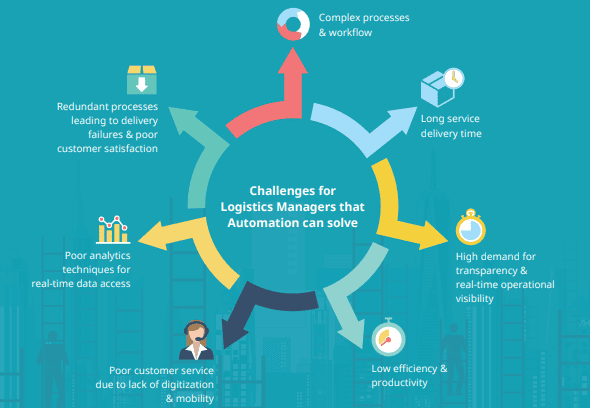
However, one area that stands to gain immensely from AI’s potential is the supply chain. As the backbone of global trade, the supply chain encompasses complex networks and intricate logistics. It is an ecosystem where efficiency, accuracy, and agility can make or break success.
With its vast array of applications, AI has the potential to streamline operations, enhance decision-making, and unlock untapped opportunities. In this journey through AI’s rising capabilities, we will delve into real-world use cases that demonstrate how AI is revolutionizing the supply chain. Furthermore, we will also explore the specific benefits that AI brings to the supply chain domain.
Role Of AI Optimizing the Supply Chain
Every business owner dreams of a supply chain that is finely tuned, seamlessly efficient, and adaptive to every twist and turn of the market. A business where warehouses run like clockwork, shipments arrive precisely on time, and customer demands are anticipated with uncanny accuracy is not a far-fetched dream; it’s a reality being shaped by the game-changing role of Artificial Intelligence (AI) in optimizing supply chain operations.
At the heart of AI’s transformative influence are three key components that work in harmony to revolutionize the supply chain landscape. Let’s uncover their captivating role in reshaping the future of supply chains.
Machine Learning and Predictive Analytics: Machine learning and predictive analytics in the supply chain are like having a trusted, experienced mentor by your side, whispering valuable insights and guidance into your ear. Machine learning algorithms analyze vast amounts of historical data to uncover patterns, trends, and potential pitfalls.
Natural Language Processing and Chatbots: Natural Language Processing (NLP) allows you to simply ask a question about your supply chain and receive instant, accurate answers. With a chatbot available 24/7, customers can get instant responses, while supply chain teams can focus on strategic decision-making.
Robotics and Automation: Robots, equipped with advanced sensors and AI algorithms, can perform repetitive tasks with unmatched precision and speed. From inventory management to order fulfillment, these tireless machines streamline operations, reduce errors, and enhance efficiency.
How AI Solves Supply Chain Challenges
The world of supply chain management is like a complex maze with numerous challenges at every turn. Thankfully, AI emerges as the trusty guide, equipped with the tools to solve some of the most daunting hurdles. Here are some for your reference:
1. Demand Forecasting and Inventory Optimization: This AI-powered assistant acts as your supply chain ‘savant,’ it understands your historical consumption patterns, market trends, and even factors like seasonality or promotional events.
2. Supplier Selection and Relationship Management: Choosing the right suppliers and maintaining strong relationships is like finding the perfect dance partner. AI steps in as a knowledgeable matchmaker. By analyzing vast amounts of supplier data, performance metrics, AI algorithms can assess and rank potential suppliers based on criteria such as reliability, quality, and cost.
3. Warehouse and Inventory Management: AI acts as a vigilant warehouse manager, optimizing layout, guiding picking and packing processes, and even predicting optimal storage locations. With AI-powered systems, warehouses can maximize space utilization, minimize errors, and accelerate order fulfillment, resulting in streamlined operations and satisfied customers.
4. Transportation and Logistics Optimization: AI takes on the role of coordinator who has a bird’s-eye view of the entire transportation network, utilizing algorithms to analyze real-time data on factors like traffic, weather conditions, and delivery constraints. By optimizing routes, load planning, and vehicle assignments, AI enables efficient transportation management.
5. Quality Control and Defect Detection: Think of a diligent quality inspector who never misses a flaw in a product. AI becomes this meticulous inspector, utilizing computer vision and machine learning algorithms to analyze visual data and detect defects with remarkable accuracy.
6. Risk Management and Supply Chain Resilience: AI plays this vital role just like a risk management expert. It analyzes a wide range of data sources to identify potential risks and vulnerabilities, ensuring supply chain resilience in the face of uncertainties.
7. Customer Service and Satisfaction Enhancement: AI takes on the role of a customer service representative who can swiftly address customer inquiries, provide accurate information, and resolve issues with ease. AI-powered customer service tools offer instant responses, personalized recommendations, and seamless assistance, enhancing customer satisfaction and loyalty.
Watch: Artificial Intelligence – how to navigate AI if you are not a tech company.
Remarkable Real-world examples of AI in the Supply Chain
AI transforms supply chain management like never before. Don’t take our word for it. See it in action as implemented by big players in the industry:
Use Case 1: Precision Prediction by Amazon
Problem: Traditional demand forecasting and inventory management methods often struggle to predict customer demands and optimize inventory levels in real-time accurately.
Solution: To address this challenge, Amazon has harnessed the power of AI algorithms to revolutionize demand forecasting and inventory management. By analyzing vast amounts of customer data, historical sales patterns, and even external factors like weather forecasts, AI algorithms can accurately predict demand with remarkable precision.
This AI-driven approach allows Amazon to optimize inventory levels, ensuring that popular products are readily available while minimizing excess inventory and reducing the risk of stockouts. By aligning supply with demand, Amazon is able to enhance customer satisfaction and maintain a competitive edge in the dynamic e-commerce landscape.
Use Case 2: Substitution Solution by Walmart
Problem: In online grocery shopping, customers often encounter situations where certain items they ordered are out of stock. This can lead to dissatisfaction and inconvenience, as customers may have to manually search for suitable substitutes or go without the desired product.
Solution: To address this issue, Walmart has implemented an AI-driven product substitution system. Using advanced algorithms, the system analyzes product attributes, customer preferences, and available inventory data to suggest suitable substitutions for out-of-stock items.
When an ordered item is unavailable, the AI system automatically identifies the best possible substitute based on factors such as brand, size, price, and customer feedback. It takes into account the customer’s past purchase history and preferences to make personalized recommendations. The system provides clear and transparent information to customers, ensuring they are aware of the substitution and have the option to accept or reject it.
Use Case 3: Real-Time Routing by UPS
Problem: Traditional route planning methods often struggle to optimize delivery routes efficiently, resulting in inefficient use of time, resources, and fuel.
Solution:UPS leverages AI algorithms for route optimization, enabling them to analyze real-time data on factors such as traffic patterns, delivery constraints, and even weather conditions. By considering these variables, UPS can generate optimal delivery routes that minimize distances, reduce fuel consumption, and optimize delivery time.
Through the implementation of AI in its logistics operations, UPS achieves significant cost savings, improves delivery efficiency, and reduces its carbon footprint. This AI-driven approach allows UPS to stay ahead of the competition and provide exceptional service to its customers.
Use Case 4: Valuable Vending by Coco-Cola
Problem: Traditional vending machines often lack the ability to gather real-time data on customer behavior and gauge the effectiveness of different brands and product offerings.
Solution: To overcome these limitations, Coca-Cola has implemented AI-enabled next-gen vending machines. These machines are equipped with advanced sensors, cameras, and AI algorithms that gather real-time data on customer behavior, purchasing patterns, and brand preferences.
With this newfound understanding, Coca-Cola can optimize product placements, tailor offerings to specific locations, and develop targeted marketing campaigns. Furthermore, the AI-enabled vending machines also allow Coca-Cola to remotely monitor inventory levels, predict demand patterns, and optimize restocking schedules. This ensures that the vending machines are always well-stocked with popular products, reducing the likelihood of stockouts and maximizing sales opportunities.
Use Case 5: Wonder Warehouses by Alibaba
Problem: Traditional warehouse management practices often face challenges related to inefficient storage utilization, suboptimal picking processes, and delays in order fulfillment.
Solution: Alibaba has embraced AI technology to develop smart warehouses that leverage automation, robotics, and AI algorithms. These AI-enabled warehouses optimize storage utilization, streamline picking and packing processes, and enable efficient order fulfillment.
Through the integration of AI, Alibaba achieves faster and more accurate inventory management, enhances warehouse operations, and improves overall efficiency in its supply chain. This innovative use of AI allows Alibaba to meet the demands of the e-commerce market and deliver exceptional service to its customers.
Advancements in AI technologies continue to shape the supply chain landscape, with machine learning algorithms becoming more sophisticated, natural language processing capabilities evolving, and robotics and automation becoming increasingly intelligent and adaptable. These advancements enable businesses to make data-driven decisions, automate repetitive tasks, and optimize operations like never before.
At Fingent, we understand the immense potential of AI in supply chain management and are committed to helping businesses harness its power. Our expertise lies in developing innovative AI solutions tailored to specific industry needs, integrating AI with emerging technologies, and driving digital transformation in the supply chain.
Whether it’s building intelligent forecasting models, implementing AI-powered automation, or leveraging AI-driven analytics, Fingent is dedicated to empowering organizations to thrive in the AI-driven supply chain landscape.
Businesses that embrace its potential will gain a significant competitive advantage. By leveraging AI technologies, integrating with emerging technologies, and partnering with experienced custom software solution providers like Fingent, organizations can unlock new frontiers of efficiency, innovation, and success in the dynamic world of supply chain management.
Reach out to us to get the best supply solution for your business.
Stay up to date on what's new
About the Author
Tony Joseph
Tony believes in building technology around processes, rather than building processes around technology. He specializes in custom software development, especially in analyzing processes, refining it and then building technology around it.He works with clients on a daily basis to understand and analyze their operational structure, discover (and not invent) key improvement areas and come up with technology solutions to deliver an efficient process.
SAP S/4HANA is a catalyst for business success, weaving its transformative power across the ERP landscape. SAP S/4HANA is more than just any software; it’s a realm of possibilities. It is like a digital fortress that integrates and orchestrates your supply chain, ensuring harmony and efficiency throughout your organization.
With a single source of truth, it empowers organizations to make informed decisions based on accurate, up-to-the-minute insights. It’s like having a trusted compass that illuminates the hidden paths of your operations, empowering you to confidently navigate the ever-changing terrain of the business landscape.
Understanding SAP S/4HANA – A Visionary Leap Into The Future
SAP S/4HANA is not your ordinary ERP solution. It harnesses the power of in-memory computing, real-time analytics, and a simplified data model to deliver a seamless and intelligent ERP experience. It is a technological marvel that blends speed, agility, and simplicity into a single transformative platform.
The shift from traditional SAP ERP systems to SAP S/4HANA marks a significant milestone in the ERP landscape. It represents a move from a row-based data model to an in-memory, columnar-based data model, resulting in lightning-fast data processing and real-time analytics.
With the transition to SAP S/4HANA, businesses unlock a plethora of benefits. They gain real-time insights for faster decision-making, simplified processes for improved efficiency, and intelligent technologies for enhanced automation and predictive capabilities. It’s like upgrading to a futuristic command center that propels your business into a new realm of success.
Let’s begin by unveiling the key features and capabilities that make SAP S/4HANA shine.
It brings the power of real-time insights, allowing businesses to make decisions based on up-to-the-minute data.
SAP S/4HANA simplifies processes, reduces data redundancies, and eliminates complexities to streamline operations.
It leverages advanced technologies such as artificial intelligence (AI), machine learning, and predictive analytics to unlock automation, insights, and predictive capabilities.
1. Grasp The Pulse of Your Business at Any Given Moment with Real-Time Analytics.
With its in-memory computing capabilities, SAP S/4HANA processes massive amounts of data in real-time, allowing for faster and more responsive operations. With real-time analytics, you have the power to respond swiftly to changing market dynamics, identify emerging trends, and seize opportunities before they fade away. It’s like having a nimble and swift chariot that propels your business forward, helping you stay ahead of the competition.
2. Enthralling User Experience
SAP S/4HANA’s intuitive interface and personalized dashboards transform ERP navigation into a delightful journey. It’s like stepping into a realm of effortless elegance, where tasks are completed with grace and efficiency, where your teams can work seamlessly, unlocking their full potential and driving productivity to new heights.
3. Declutter Your Landscape with a Simplified Data Model
SAP S/4HANA can help you bid farewell to the tangled webs of complexity and data redundancies. It enables you to declutter your business landscape, allowing you to focus on what truly matters—innovation and growth. With a simplified data model, your organization gains agility, flexibility, and the ability to adapt swiftly to changing business needs.
Now that you are aware of the business benefits let’s discuss how you can prepare for SAP S/4HANA implementation.
Prepare For SAP S/4HANA Implementation
With the right foundations in place, organizations can embark on their SAP S/4HANA implementation with confidence, ready to unlock the full potential of this transformative platform.
1. Assessing Business Readiness:
Assessing the organization’s readiness for SAP S/4HANA implementation is like taking stock of your supplies before embarking on a grand expedition. Evaluating data readiness ensures that your information is accurate, complete, and compatible with the new system. Additionally, allocating resources appropriately – including skilled personnel and budget – ensures that you have the necessary support to navigate the implementation journey smoothly.
2. Building the Implementation Team:
On a voyage, each member has a vital role to play. Project managers steer the entire implementation process. Functional consultants bring their expertise in specific business areas, ensuring that SAP S/4HANA meets your unique requirements. Technical experts handle system configurations, integrations, and customizations. Together, this cross-functional team brings together diverse perspectives, fostering synergy and ensuring that all aspects of the implementation are addressed comprehensively.
3. Chart your Course by Defining Implementation Goals and Scope:
Defining clear goals and scope for the SAP S/4HANA implementation provides a clear direction and prevents aimless wandering. By identifying key business processes, you prioritize areas that will benefit most from the new system. This focused approach optimizes time and resources enabling effective project planning and increasing the likelihood of a successful SAP S/4HANA implementation.
Six Phases of SAP S/4HANA Implementation
Each of the following well-defined phases of the SAP S/4HANA phase brings your organization closer to harnessing its and unlocking new levels of efficiency, agility, and competitive advantage:
Phase #1 Project Planning and Preparation:
Planning and preparation are like laying the foundation for a solid structure. Activities in this phase include creating a detailed project plan, establishing timelines, and defining deliverables. By clearly outlining project objectives, tasks, and responsibilities, organizations ensure a structured and well-organized implementation process.
Effective stakeholder communication is vital during this phase, keeping everyone informed and engaged. Change management strategies are implemented to address any resistance to change, ensuring the smooth adoption of SAP S/4HANA.
Phase #2 System Installation and Configuration:
System installation and configuration start with assessing hardware requirements and designing the system landscape, ensuring optimal performance and scalability. The SAP S/4HANA system is then installed, configured, and integrated with other systems, creating a cohesive IT ecosystem. This phase requires careful consideration of factors like network infrastructure, security, and software installation.
Phase #3 Data Migration and Conversion:
Data migration and conversion are like transferring belongings to a new home. Legacy data is extracted, transformed, and loaded into the SAP S/4HANA system. This process involves data cleansing, eliminating duplicates, and ensuring data accuracy. Data validation is crucial to verify the integrity and consistency of migrated data.
Phase #4 Customization and Configuration:
This phase is like arranging furniture in a new space. Configuration involves setting up master data, defining workflows, and configuring system functionalities. This phase ensures that SAP S/4HANA aligns with the organization’s unique processes, enabling efficient operations and improved user experience.
Phase #5 Testing and Training:
Testing and training form the backbone of a successful SAP S/4HANA implementation. Thorough testing is conducted to validate the system’s functionality, performance, and data accuracy. This includes unit testing, integration testing, and user acceptance testing.
Training programs are designed to equip end-users with the necessary skills and knowledge to effectively utilize SAP S/4HANA.
Phase #6 Go-Live and Post-Implementation Support:
Going-live is like opening the doors to a new facility, enabling users to work with real data. Post-implementation activities include monitoring system performance, addressing user feedback, and providing ongoing support. Continuous improvement initiatives and enhancements are implemented based on user experience and evolving business needs. Regular system maintenance and updates ensure the system’s optimal performance and long-term success.
These are some best practices and lessons learned from previous SAP S/4HANA implementations. They offer valuable insights that can guide your organization toward successful implementation. These can help you avoid common pitfalls and maximize the benefits of SAP S/4HANA.
Strategies You Can Use to Overcome Common Challenges
Challenges during SAP S/4HANA implementations can vary, but some common ones include data migration complexities, resistance to change, resource constraints, and technical integration issues. To overcome these challenges, organizations should:
Engage experienced consultants and leverage their expertise.
Invest in data cleansing and migration tools to streamline the process.
Prioritize change management activities and communicate the benefits of SAP S/4HANA.
Allocate sufficient resources and budget for implementation and post-implementation support.
Collaborate closely with SAP experts and leverage their guidance and best practices.
Monitor the implementation progress regularly and adapt the plan as needed.
How Can Fingent Help?
Fingent can provide comprehensive services to deploy SAP S/4HANA for better supply chain management. We at Fingent offer consulting services to assess your supply chain management requirements and design a customized SAP S/4HANA implementation strategy. Our advisory services provide expert guidance on how to optimize your operations and drive digital transformation.
Are you currently using an older version of SAP ERP? If so, we can analyze your existing system, assess the impact of the conversion, and guide you through the conversion process.
Fingent leverages SAP Leonardo’s intelligent technologies, such as machine learning, IoT, and analytics, to enhance your supply chain management processes. With our expertise in SAP S/4HANA and supply chain management, we can guide you through the entire deployment process, from strategy and implementation to ongoing support.
Ashok leads Fingent’s SAP Consulting practice for ANZ, SE Asia, The Middle East and Africa (EMEA), and other global clients. More specifically, he helps companies improve operational efficiency by enhancing their digital cores and improving their application integration. Ashok has amassed over 20 years of leadership and consulting experience having worked with Global giants like SAP, IBM Consulting, Capgemini, & Oracle in his previous assignments.
Connect with Ashok via LinkedIn and learn how your business can excel with recent SAP trends.
The world of technology keeps evolving and waits for no one, so it is our responsibility to keep up with it rather than fall behind. The healthcare industry has for a long time been using software development systems to monitor and ease work-lifestyles; now it is time to customize this software to make them function and run exactly the way you need it to. Custom software development has made life and business significantly easier for innumerable industries and is poised to revolutionize the Healthcare Industry as well. This article will tell you all you need to know about it.
Importance Of Healthcare Software Development
Healthcare software systems provide innumerable benefits to hospital management, from improved productivity to reduced medication errors. It streamlines the workflow, enhances data quality, drastically reduces errors, and boosts patient experiences. Rising technological advancements also help with hospital administration and operations.
Benefits Of Customized Healthcare Software Development
The overall benefit of using customized healthcare software is overall progress and betterment. This should be reason enough to convince anyone to adopt custom healthcare software but if it is not, listed below are a few of the other benefits of this type of software development:
Increased security – Thanks to the inculcation of software in healthcare, hospitals are now sending, storing, and retrieving data through the web. Custom software solutions will guarantee the safety of this personal medical data.
User-friendly experience – The target audience’s desired product is taken into consideration by software designers and user interface designers. Software designers can also consider specific aspects of an application to make it more alluring and interactive.
Customizable features – Customization is the buzzword right now, and custom software provides it like no other. Customer feedback is prioritized, and the generated product is more streamlined and efficient. Customized software will handle specific problems, and this aspect makes it attracts and brings in more loyal customers or patients.
Quality of diagnostics – Technology is well known for its brilliance in efficiency. Diagnostics run by a customized software solution have proven to have outstanding quality and accuracy because these solutions imbibe knowledge from innumerable sources and compare results faster. Hence, healthcare providers can proffer improved healthcare if they rely on custom software solutions.
Healthcare software development is the creation of any software for the healthcare sector to facilitate hospitals and improve equipment management. It also helps with administering electronic records, managing health records, providing diagnoses and treatments, improving patient care, and reducing costs.
Healthcare software development plays an important role in everyone’s life. For doctors – it reduces paperwork and increases collaboration with other specialists. For patients – it enhances patient outreach, improves healthcare quality, and eases access to medical data. Lastly, it improves medical business management and streamlines management processes for organizations.
Healthcare organizations, just like any other organization, have their own set of challenges that cripple them. Custom Software can address most of these challenges and fix them.
Cyberthreats – The skyrocketing rate of cyber security attacks threatens to endanger the personal medical data of patients and, ultimately, the reputation of a healthcare center. Custom Software can fix this with its exceptional security firewalls and customized cyber security.
Patient Experience – When patients experience favorable care, they are more likely to heed medical advice and this is essential for better healthcare outcomes, boosting patient retention rates and lowering malpractice risk. Custom software can help here, too by enhancing the user experience and user interface by creating more interactive, customized, and enticing products.
Key Considerations for Healthcare Software Development
Now that we have established the importance of custom healthcare software development, here are some key considerations:
1. Compliance And Security –
Medical records are very sensitive data, and it is the responsibility of the healthcare facility to protect them carefully. Abiding by the international security laws of HIPAA, PCI, and IOS is a must, along with deft investments in specialized medical data security. Ensure that your partner conducts adequate software checkups to detect any potential vulnerability.
2. User-Centred Design –
Customized healthcare software’s main target is its audience, so focusing on their comfort or ease is a top priority. Inclusivity of all kinds, from senior users to less literate users, is a crucial thing to keep in mind when designing an interface for the organization. Properly incorporated user-centered designs are vital for an intuitive and efficient workflow. Software Designers usually build a simple and easy-to-use user interface (UI) and a user experience (UX).
3. Interoperability and Integration –
Interoperability, in simple words, is the ability of a software or system to work compatibly with other products and systems. It helps facilitate organized and effective data exchange between data systems. To avoid complications with regard to personalized information or reports of customers while sharing data between systems, especially when introducing new versions of the same software to different platforms, efficient interoperability is important.
4. Scalability and Flexibility –
Scalability and flexibility are other critical considerations to remember. It is imperative to design a product capable of scaling up as your healthcare organization grows. Ensuring that your customized software developed is flexible and can change and segue according to wavering customer demands.
5. Data Analytics and Insights –
Data analytics is essentially the process of studying raw data in order to determine trends and enable enhanced decision-making. This transformation of data done by custom software into insights can drastically leverage data to enhance decision-making, patient outcomes, and overall operational efficiency.
Let’s now get into the development itself. Here are some steps to ensure that the development goes smoothly and provides the best outcomes:
1. Requirements Gathering and Analysis –
It is always best to make a detailed analysis of your organization, its needs, and budgets before diving into a custom software development project. Consult well-versed software designers and healthcare professionals, jot the requirement details, and communicate with your team members to obtain an unbiased perspective.
2. Design and Development –
In this step, the analysis generated is used as input and software infrastructure for implementing software development. Software developers first draw a synopsis of the details for the application, including specific aspects such as User interfaces, System interfaces, Network and Network Requirements, and Databases.
Following close behind the design stage is the development stage. It is the stage where coding starts and all components of the software are implemented. The use of agile methodologies and interactive interfaces to improve user satisfaction, flexibility, and feedback incorporation is crucial during this phase of development.
3. Quality Assurance And Testing –
The testing period begins at the end of the coding stage. Here the modules are circulated for testing. Although testing may not seem like a necessary step, skipping it will ultimately result in the downfall of software. The developed software should be tested thoroughly, and developers fix any vulnerability discovered. There are various tests that need to be conducted after coding of software; these include – functional, usability, and security testing.
4. Deployment and Training –
After the product has been sufficiently tested, the software is deployed into the market or organization scheme. In the case of UAT (User Acceptance Testing), a production environment is created, and the customer, along with the developers, partakes in the testing.
Case Studies
Fingent has been a leader in custom software development for the healthcare sector and has created unmatched solutions for its clients. Here are a few examples:
A Data Analytics Solution for NHS: With the wide range of hospitals under its governance, the NHS required a data visualization tool that would help them compare healthcare performances across the hospitals and showcase the best ones. Fingent helped develop a solution that was customized to the NHS’s specific needs and designed an application with interactive visuals and real-time access to insights.
Fingent’s portfolio includes top-notch solutions like this, including an online engagement platform for NovitaCare and a patient care solution to promote effective communication in the healthcare ecosystem. Working with clients globally, Fingent has been able to have a direct impact on simplified patient care, operational efficiency, and cost savings for healthcare providers.
Future Trends In Healthcare Software Development
The future evidently holds great plans for healthcare software. We have only skimmed over the uses and possibilities that technology has introduced to healthcare; there are so many more possibilities.
1. AI in Healthcare
Artificial Intelligence is the most beneficial factor of technology for the healthcare industry. It can effortlessly mimic human cognition in analyzing, interpreting, and evaluating complex medical data. AI can perform data analysis through the healthcare system and can be widely used to predict patient admissions and improve clinical workflows.
2. IoT in Healthcare
IoT (Internet of Things) has the potential to enable healthcare professionals to supervise their patients more accurately. It can equip healthcare workers and professionals with the tools to deliver excellent care and treatment to patients. Exploiting this technology and several tech-powered wearables that enable real-time tracking, end-to-end connectivity, and remote monitoring are some of the other areas that IoT will assist.
Summary
Healthcare Software Development benefits institution staff, patients, and administrators. Although it might seem quite diverse and may come across as a daunting task, with the right partner on your side your journey will be successful.
Look for a partner in Fingent, and we will help you navigate the complexities and compliances that come with the development of healthcare software solutions.
Vinod has conceptualized and delivered niche mobility products that cater to various domains including logistics, media & non-profits. He leads, mentors & coaches a team of Project Coordinators & Analysts at Fingent.
Augmented Reality in Retail: Use Cases & Business Benefits
Try Before You Buy: Creating Interactive Retail Shopping Experiences with AR
Imagine waking up to a record sales conversion on your eCommerce portal! Your customers are 20% more engaged and satisfied with the shopping experience. Your business gains boosted customer trust, brand value, and improved ROI!
Yes, it’s possible with Augmented Reality!
Augmented Reality in Retail is revolutionizing shopping experiences expeditiously! With AR in retail, customers can interact, customize, and engage with products better, so that they make the right purchase decisions. Nike’s Virtual View is one top example of how WebAR in Retail boosts customer engagement and trust!
But of course, it’s only natural to be a little skeptical before investing in any new business technology. That is why we bring you a detailed guide on what is Augmented Reality, and how your Retail and eCommerce firms can smartly deploy and benefit from augmented reality services !
Simply put, Augmented Reality (AR) superimposes digital content and information onto a user’s real-life scenario to enhance their virtual experience of the existing physical environment. The improved version of the physical world is attained by leveraging the capabilities of the computer-generated display, visuals, sound, text, and graphics which augments the user’s real-world experience.
AR will allow you to search things visually by simply pointing out mobile cameras toward objects in real-life surroundings. The Live View feature in Google Maps is a leading example of how AR allows users to visualize their destinations in the real world. Nintendo’s Pokémon Go App and the photo filters on Facebook and Snapchat are some of the popular examples of AR today.
However, AR is not just a gaming or navigational application. Several industries today, including consumer products and retail, are implementing AR to improve their operational and marketing abilities. Leading ecommerce brands, as well as in-store retailers, are highly investing in AR to build and deliver top-notch brand experiences.
By 2024, the number of mobile AR users will reach 1.73 billion.
billion
0
By 2024, the number of mobile AR users will reach 1.73 billion.
Why Is Augmented Reality Important In Retail and eCommerce?
Millennials are the core shoppers today, and they need services at their fingertips! Standing in long queues to grab that limited offer is off the trend! Now shoppers love to book it first online.
With Augmented Reality in Retail, online shopping experiences takes a new turn. Customers get to virtually try on items, customize and interact with the products better so that they make quick and smart purchase decisions. Getting complete satisfaction with online shopping increases brand trust immensely, giving retailers an immediate boost to expedite sales! The more reasons to implement AR in Retail!
0%
40% of consumers say they would pay more for a product that they could customize in AR.
What are the Latest AR Trends in Retail?
Today’s customers value personalization and convenience over pricing and product. Augmented Reality allows brands to develop smart retail experiences that influence their customers’ buying decisions.
AR makes online selling easier and more comfortable by creating virtual simulations for users to interact with a product, just like how they try a fashion outfit in a physical store. Using AR, retail customers can virtually visit their favorite brand stores, try products, and make comparisons, without leaving the comfort of their homes.
Top AR Trends in Retail Today
Improved In-store Experience
Shopping Sizeable Products
WebAR
Try Before You Buy
Experiential Marketing
AR Product Configurators
Improved In-store Experience
Improved In-store Experience
Using AR apps on mobile devices, customers can now quickly access product details, try out varied colors of the desired products, and make purchase decisions faster without actually trying each one out. The popular brand Lacoste gained much traction when they implemented this AR feature to bring their sports shoe colors to life!
Shopping Sizeable Products
Shopping Sizeable Products
Furniture and electronics brands are now highly using AR to improve their point-of-sales by letting their customers view the size, color, and look of the products in their selected space! Here’s a look at how Fingent, using web-based AR and 3D configurator, is making business smarter for retailers.
WebAR
WebAR
Make your website content interactive! Shoppers today dislike skimming through large content to understand product features. With WebAR, retailers can implement top AR features on websites so that customers can view the styles and fittings of clothes and accessories in augmented reality without downloading any further apps. ‘Nike Virtual View’ is one example of this brilliant feature.
Try Before You Buy
Try Before You Buy
Virtual try-ons powered by AR allow customers to try products without physically visiting the stores. Top eyewear and cloth stores are now letting their customers visualize how they look in different products right from home before purchasing them.
Experiential Marketing
Experiential Marketing
AR’s interactive visualization features enable retailers to entice a consumer from product consideration to product purchase through experiential marketing. Top beauty brands are now allowing customers to experience scientifically validated skin assessments and photo-realistic makeup simulations.
AR Product Configurators
AR Product Configurators
Retailers can create interactive product catalogs that display each product in a digital format that customers can explore. Nike’s sneaker configurator employs AR technology that allows customers to personalize their sneakers extensively by browsing product catalogs, is a fascinating example of this trend!
AR will enable retailers to deliver impactful, well-timed, and relevant user experiences that increase customer value, both in physical stores as well as in ecommerce!
Enriching Customer Experiences With Smart Malls Of The Future!
Right from parking to shopping to food, AR is reimagining mall experiences.
Notify your customers on their mobile about your top deals as they walk past your store!
Make mall visits fun for your customers. Add in some AR games to the mix!
Watch more on how your business can leverage AR for a unique and smart mall experience!
Why is AR a Powerful Retail Sales Channel?
By 2025, nearly 75% of the global population and almost all people who use social or communication apps will be frequent AR users. AR adoption will see growth in these four key areas:
But why use AR for retail?
Research shows the top reasons why customers return their products.
AR-integrated ecommerce websites and applications can run on any smartphone allowing customers to contextually experience every product at scale. Immersive product discovery experiences lead to better conversions as retailers can capture shoppers’ attention at the decision-making stage.
Brands that implement AR for Retail Sales will see:
AR offers shoppers innumerable options to interact with consumer products in a more personalized way. Customers aren’t anymore held back by a limited number of product images and videos. With AR, every single online session can be turned into a powerful sales channel.
Capture shoppers’ attention at the decision-making stage | Allow shoppers to personally interact with products | Turn online browsings into powerful sales channels
0%
32% of consumers use AR while shopping!
How Does AR Increase Sales in Retail?
AR use cases in retail are growing in leaps and bounds. Across the B2C, D2C, and B2B realms, AR will bridge the gap between online selling and the customer experience in the following ways.
AR can improve complex warehouse operations by streamlining warehousing management activities such as order allocation and picking, inventory control, material handling, and packaging. Using an interactive 3D warehouse layout, retailers can improve their warehouse planning.
Locate products and process orders faster.
Quickly extract necessary information (order number, trolley number, deposit bin information, passage numbers).
Expedite loading and unloading processes.
Achieve zero-delay deliveries through warehouse optimization.
Increases your sale orders and drives revenue.
Virtual Fitting Rooms
Virtual fitting rooms allow your customers to try on clothing items, jewelry, and other accessories even if they don’t visit your physical store. Even without touching an item, shoppers can see the size, style, and fit of apparel before they buy it. According to Shopify, an omnichannel shopping experience powered by AR nudges online shoppers to spend 10% more.
Superimpose the visuals of your items on live video feeds for your customers.
Create a virtual dressing room using Augmented Reality features.
AR-powered virtual mirrors can save valuable retail space in your brick-and-mortar stores.
Avoid the need to set up separate trial rooms.
Placement Previews
IKEA Place App’s AR feature allows customers to visualize how a new piece of furniture will fit their space. After selecting an item from IKEA’s catalog, the customer can point their mobile camera anywhere in their surroundings to see the furniture’s placement, adjust it from different angles, take photos, and share it with their friends for feedback.
The highly interactive preview experience keeps users motivated throughout the buying journey.
The seamless and fluid experience will encourage customers to return for more purchases.
This automatically boosts customer loyalty and brand recognition.
Guarantees conversion ten times more.
Route Optimization
Not just online and shopping experiences counts to customers. When products are delivered quickly and smartly, there are much more chances for a customer to build their trust in brands. With AR enabling effective navigation capabilities, routes can be optimized for seamless delivery channels.
Develop AR-powered apps that enable the delivery teams to plan their travel smarter.
Plan shortest route options, traffic updates, map views, and more.
Support your delivery partners with additional assistance just from their smartphone cameras, leading them to the right routes.
Ensure no package delivery goes missed or undelivered.
Interactive AR Packaging
AR-enabled interactive packaging offers consumers a highly engaging shopping experience that will boost ecommerce and in-store sales. Customers could scan a QR code on the retailer’s package to understand the latest offers and discounts, new product roll-outs, or read the brand’s story. Jack Daniel Distillery’s smart AR packaging allows users to take a closer look at their whiskey-making process and explore their growth story.
With AR, product packages aren’t throwaway junk anymore.
Encourage users to scan QR codes on food packaging to get exclusive recipes and cooking videos of top chefs.
Use interactive AR techniques to encourage shoppers to recycle packages and share their product experiences with others.
Interactive Business Cards
AR takes your plain business cards to the next level by allowing you to add 3D objects, interactions, animations, and powerful virtual components on top of your physical business cards. When you point your smartphone camera toward the card, you can see an interactive display of your business profile. AR allows you to incorporate numerous features into your V-card such as videos, audio, images, 3D objects, social links, animations, and URLs, besides your contact info and designation.
Stand out from your competitors and provide prospects with instant resources.
Increase curiosity and prompts your clients to access more information about your business.
Immersive and unique experiences in the real world improve your business’s credibility and doubles lead capturing.
Interactive business cards shorten the sales cycle and increase customer appointments and engagement.
Complete Product Information
AR allows superimposing additional product information that your customers may not get easily in physical or online stores. Processing product information is the most significant aspect that influences a customer’s buying decision. Customers want to know if the products they buy will fit their purpose. Top automotive brands such as Mercedes Benz and Hyundai use AR-powered digital car manuals to explain automotive features in a highly interactive way.
Digitally delivering the right information will simplify the product discovery process for the consumer, boosting sales.
Customers can avoid scrolling through large user manuals.
Pointing to a specific feature with mobile cameras will provide the necessary information required to impact the buyer’s decision.
The age of analyzing products via videos and images is gone! Customers now need more! With AR, realtors can bring their products closer to their customers, enabling them to interact with the items meanwhile establishing added brand value and customer trust!
Real-World Cases Of Boosted Customer Experience with AR
AR Taking Cabin Manufacturing To New Heights: Use Case
Complex designs, large customer requests, and inaccurate floor plans often challenge and restrict the operational efficiencies of shed and cabin manufactures. Leading players of the industry are now trying to implement modern approaches at each stage of their process to streamline functions and improve performance. How can AR help in this?
With a customized software solution featuring 3D web configurators
Customers can build and design their own sheds using AR
61% of consumers say they prefer retailers with AR experiences.
Augmented Reality vs. Virtual Reality
Many people use Augmented Reality and Virtual Reality interchangeably thinking that both technological concepts are the same. Though both AR and VR help creates immersive and interactive experiences, both are different in their own niches.
Augmented Reality
Augments the real-world experience of the user
Creates virtual experience by overlaying digital content on top of what the user is already seeing
Detects markers such as barcodes or QR codes to deliver AR animations to specific user locations
Explored best with smartphones
AR SDKs empower mobile apps to detect and capture real-time user environments
Reflects true-to-life conditions and real-life scenarios
Virtual Reality
Creates a fully-immersive virtual environment
Total immersion is accomplished by shutting the user from the real-world
Virtual Reality Modeling Language or VRML experiences delivered via a client-side interface to simulate virtual environments
Explored best with a VR headset
VR SDKs allow users to navigate pre-loaded and cloud-stored streams by using controllers and environment trackers
Virtual representation of real-life conditions
0%
Augmented Reality Boosts Online Shopping Sales Up To 200% - Forbes
Augmented Reality In Retail: Why Is It Picking Up Steam In Today’s Digital Age?
AR will boost your customers’ trust and drive their purchasing confidence.
Real-time product visualizations and virtual trials ensure that retailers are able to deliver products that match their customers’ expectations. AR reduces your marketing costs and increases your customer satisfaction.
AR retail experiences will eliminate the friction between sellers and buyers and maximize the probability of purchasing. When customers receive their orders as expected, it will decrease your product returns.
The rise in ecommerce demands delivering more successful online experiences. Retailers leveraging augmented reality can rest assured that they aren’t left behind in the competition.
Interactive virtual experiences arouse your customers’ curiosity and motivate them to explore your products. AR experiences such as virtual try-on persuade customers to come back and shop for additional products.
AR-enabled shopping experiences collect insightful data on customers’ shopping patterns, buying behavior, interests, and preferences. Retailers can use these insights to run targeted marketing campaigns and develop more personalized products.
The demand for contactless experiences triggered by the COVID-19 pandemic is here to stay. As people are more concerned about their personal hygiene and contamination risks, retailers can employ AR to connect with their customers and keep the show running.
Customers place emphasis on the value they get when buying from you. CX is the key brand differentiator that boosts customer loyalty today. With AR, you can optimize every customer touchpoint to deliver unmatched CX.
AR ecommerce apps can serve as your shop assistants and sales agents that take you through product features and benefits. You don’t have to hire expensive labor for showing the customer around, as AR does the heavy lifting.
0%
71% of consumers say they would shop more often if they used AR.
Fingent’s AR-enabled Applications for Retailers
Be it in-store or ecommerce, Fingent top custom software development company, enables retailers to deliver seamless shopping experiences to their consumers by leveraging technology to the fullest. Our AR retail solutions effectively bridge the gap between consumers and sellers:
1. Advanced In-store Experiences
2. AR Product Visualizer
3. Interactive User Manuals
1. Advanced In-store Experiences
Leveraging AR, we build powerful retail applications that offer shoppers an enriching in-store experience. Some of our top solutions include AR pop-up stalls that drive more foot traffic to physical stores, AR product guidance applications, web-based AR ecommerce apps that don’t require separate downloading, virtual try-ons for jewelers and cloth retailers, and AR visual merchandising to build buzz and brand awareness.
2. AR Product Visualizer
AR offers an excellent opportunity for retail shoppers to personalize their products by adding or removing features according to their tastes. Personalized experiences lead to better and faster purchase decisions. Consumers can view their selections in real-time and on a real scale to narrow down their choices. AR helps them overcome the common retail challenges such as mismatch of color, size, fit, design, material, and quality. For instance, they can choose the right washing machine by examining its features, color, front load or top load, energy usage, and so on.
3. Interactive User Manuals
Virtual technicians and interactive user guides that display operation instructions using AR will simplify complex product installations and configurations. Using a smartphone camera, users can explore the features of an electronic device, a vehicle, or a coffee machine. By superimposing computer-generated displays on top of the user’s view of the product feature, AR will help them understand the product demonstrations and instructions quickly. Users can verify if they are executing each step correctly and follow the simple DIY troubleshooting tips to ensure that the product functions well.
Augmented Reality Reshaping eCommerce!
Bring showroom-like experiences to your customer’s fingertips.
No more restrictions on a wide range of product displays.
Let your customers interact with your products and customize them right from the comforts of their homes.
What more on how you can smartly and seamlessly deploy AR for your eCommerce!
How Fingent Can Help Your Business Build Intuitive Apps With AR
With our expertise around ARKit for iOS Platforms, Spark AR, Lens Studio, Vuforia, Web AR Solutions, and AR Core for Android Platforms we help create powerful user experiences that fetch a competitive edge.
eCommerce
Bring the “Wow” factor to your eCommerce with virtual try-ons, preview placements, AR filters, and more!
Healthcare
We help you deploy AR to improve medical training, pediatric MRI evaluation, venipuncture procedures, dentistry, and more!
Equipment Maintenance
With AR connect faster with your machines to work smarter at reduced costs, and effective time management.
Augmented Reality streamlines retail operations to make shopping easier and convenient for both online and offline buyers. AR replaces physical fitting rooms with virtual try-on solutions and allows consumers to configure products based on their preferences. AR modernizes retail marketing through personalized content delivery and offers contactless purchasing options which will boost online sales.
3D product visualizations and “try-before-you-buy” digital experiences allow retailers to reduce the cost of returns that affect their ROI. Retailers can develop 3D animations and visual simulations to improve consumer awareness and influence buying decisions. AR helps retailers analyze customer behavior, test their product samples, boost brand engagement, and augment sales.
Full-fledged 3D experiences can improve product research and discovery which will result in more sales. Retailers selling automotive, home furniture, consumer electronics, and lifestyle products can drive traction and make unique selling pitches through AR. Studies prove that AR increases the average product (images and videos) viewing time from 30 seconds to eight minutes. Linking purchasing decisions with the shopper’s emotions will eliminate their doubts about the product and increase your sales volume.
According to Snapchat, 76% of consumers believe that AR will play an integral role in future shopping, with 57% of consumers planning to increase their AR usage in post-COVID times. AR improves a retail brand’s discoverability and increases a consumer’s likelihood to purchase after an immersive experience. AR experience educates and motivates customers at multiple points in the shopping journey, thereby influencing their purchasing decisions.
Today, every retailer needs to pursue an omnichannel retail strategy that revolves around customer-centricity. This requires retailers to personalize their offerings in the best way possible. AR can simplify your personalization efforts as it’s a highly user-centric technology that tremendously transforms the way you market and sell. Augmented retail strategy improves both your business’s bottom line and customer experience.
Augmented Reality in Retail: Use Cases & Business Benefits
Try Before You Buy: Creating Interactive Retail Shopping Experiences with AR
Imagine waking up to a record sales conversion on your eCommerce portal! Your customers are 20% more engaged and satisfied with the shopping experience. Your business gains boosted customer trust, brand value, and improved ROI!
Yes, it’s possible with Augmented Reality!
Augmented Reality in Retail is revolutionizing shopping experiences expeditiously! With AR in retail, customers can interact, customize, and engage with products better, so that they make the right purchase decisions. Nike’s Virtual View is one top example of how WebAR in Retail boosts customer engagement and trust!
But of course, it’s only natural to be a little skeptical before investing in any new business technology. That is why we bring you a detailed guide on what is Augmented Reality, and how your Retail and eCommerce firms can smartly deploy and benefit from augmented reality services !
Simply put, Augmented Reality (AR) superimposes digital content and information onto a user’s real-life scenario to enhance their virtual experience of the existing physical environment. The improved version of the physical world is attained by leveraging the capabilities of the computer-generated display, visuals, sound, text, and graphics which augments the user’s real-world experience.
AR will allow you to search things visually by simply pointing out mobile cameras toward objects in real-life surroundings. The Live View feature in Google Maps is a leading example of how AR allows users to visualize their destinations in the real world. Nintendo’s Pokémon Go App and the photo filters on Facebook and Snapchat are some of the popular examples of AR today.
However, AR is not just a gaming or navigational application. Several industries today, including consumer products and retail, are implementing AR to improve their operational and marketing abilities. Leading ecommerce brands, as well as in-store retailers, are highly investing in AR to build and deliver top-notch brand experiences.
By 2024, the number of mobile AR users will reach 1.73 billion.
billion
0
By 2024, the number of mobile AR users will reach 1.73 billion.
Why Is Augmented Reality Important In Retail and eCommerce?
Millennials are the core shoppers today, and they need services at their fingertips! Standing in long queues to grab that limited offer is off the trend! Now shoppers love to book it first online.
With Augmented Reality in Retail, online shopping experiences takes a new turn. Customers get to virtually try on items, customize and interact with the products better so that they make quick and smart purchase decisions. Getting complete satisfaction with online shopping increases brand trust immensely, giving retailers an immediate boost to expedite sales! The more reasons to implement AR in Retail!
0%
40% of consumers say they would pay more for a product that they could customize in AR.
What are the Latest AR Trends in Retail?
Today’s customers value personalization and convenience over pricing and product. Augmented Reality allows brands to develop smart retail experiences that influence their customers’ buying decisions.
AR makes online selling easier and more comfortable by creating virtual simulations for users to interact with a product, just like how they try a fashion outfit in a physical store. Using AR, retail customers can virtually visit their favorite brand stores, try products, and make comparisons, without leaving the comfort of their homes.
Top AR Trends in Retail Today
Improved In-store Experience
Shopping Sizeable Products
WebAR
Try Before You Buy
Experiential Marketing
AR Product Configurators
Improved In-store Experience
Improved In-store Experience
Using AR apps on mobile devices, customers can now quickly access product details, try out varied colors of the desired products, and make purchase decisions faster without actually trying each one out. The popular brand Lacoste gained much traction when they implemented this AR feature to bring their sports shoe colors to life!
Shopping Sizeable Products
Shopping Sizeable Products
Furniture and electronics brands are now highly using AR to improve their point-of-sales by letting their customers view the size, color, and look of the products in their selected space! Here’s a look at how Fingent, using web-based AR and 3D configurator, is making business smarter for retailers.
WebAR
WebAR
Make your website content interactive! Shoppers today dislike skimming through large content to understand product features. With WebAR, retailers can implement top AR features on websites so that customers can view the styles and fittings of clothes and accessories in augmented reality without downloading any further apps. ‘Nike Virtual View’ is one example of this brilliant feature.
Try Before You Buy
Try Before You Buy
Virtual try-ons powered by AR allow customers to try products without physically visiting the stores. Top eyewear and cloth stores are now letting their customers visualize how they look in different products right from home before purchasing them.
Experiential Marketing
Experiential Marketing
AR’s interactive visualization features enable retailers to entice a consumer from product consideration to product purchase through experiential marketing. Top beauty brands are now allowing customers to experience scientifically validated skin assessments and photo-realistic makeup simulations.
AR Product Configurators
AR Product Configurators
Retailers can create interactive product catalogs that display each product in a digital format that customers can explore. Nike’s sneaker configurator employs AR technology that allows customers to personalize their sneakers extensively by browsing product catalogs, is a fascinating example of this trend!
AR will enable retailers to deliver impactful, well-timed, and relevant user experiences that increase customer value, both in physical stores as well as in ecommerce!
Enriching Customer Experiences With Smart Malls Of The Future!
Right from parking to shopping to food, AR is reimagining mall experiences.
Notify your customers on their mobile about your top deals as they walk past your store!
Make mall visits fun for your customers. Add in some AR games to the mix!
Watch more on how your business can leverage AR for a unique and smart mall experience!
Why is AR a Powerful Retail Sales Channel?
By 2025, nearly 75% of the global population and almost all people who use social or communication apps will be frequent AR users. AR adoption will see growth in these four key areas:
But why use AR for retail?
Research shows the top reasons why customers return their products.
AR-integrated ecommerce websites and applications can run on any smartphone allowing customers to contextually experience every product at scale. Immersive product discovery experiences lead to better conversions as retailers can capture shoppers’ attention at the decision-making stage.
Brands that implement AR for Retail Sales will see:
AR offers shoppers innumerable options to interact with consumer products in a more personalized way. Customers aren’t anymore held back by a limited number of product images and videos. With AR, every single online session can be turned into a powerful sales channel.
Capture shoppers’ attention at the decision-making stage | Allow shoppers to personally interact with products | Turn online browsings into powerful sales channels
0%
32% of consumers use AR while shopping!
How Does AR Increase Sales in Retail?
AR use cases in retail are growing in leaps and bounds. Across the B2C, D2C, and B2B realms, AR will bridge the gap between online selling and the customer experience in the following ways.
AR can improve complex warehouse operations by streamlining warehousing management activities such as order allocation and picking, inventory control, material handling, and packaging. Using an interactive 3D warehouse layout, retailers can improve their warehouse planning.
Locate products and process orders faster.
Quickly extract necessary information (order number, trolley number, deposit bin information, passage numbers).
Expedite loading and unloading processes.
Achieve zero-delay deliveries through warehouse optimization.
Increases your sale orders and drives revenue.
Virtual Fitting Rooms
Virtual fitting rooms allow your customers to try on clothing items, jewelry, and other accessories even if they don’t visit your physical store. Even without touching an item, shoppers can see the size, style, and fit of apparel before they buy it. According to Shopify, an omnichannel shopping experience powered by AR nudges online shoppers to spend 10% more.
Superimpose the visuals of your items on live video feeds for your customers.
Create a virtual dressing room using Augmented Reality features.
AR-powered virtual mirrors can save valuable retail space in your brick-and-mortar stores.
Avoid the need to set up separate trial rooms.
Placement Previews
IKEA Place App’s AR feature allows customers to visualize how a new piece of furniture will fit their space. After selecting an item from IKEA’s catalog, the customer can point their mobile camera anywhere in their surroundings to see the furniture’s placement, adjust it from different angles, take photos, and share it with their friends for feedback.
The highly interactive preview experience keeps users motivated throughout the buying journey.
The seamless and fluid experience will encourage customers to return for more purchases.
This automatically boosts customer loyalty and brand recognition.
Guarantees conversion ten times more.
Route Optimization
Not just online and shopping experiences counts to customers. When products are delivered quickly and smartly, there are much more chances for a customer to build their trust in brands. With AR enabling effective navigation capabilities, routes can be optimized for seamless delivery channels.
Develop AR-powered apps that enable the delivery teams to plan their travel smarter.
Plan shortest route options, traffic updates, map views, and more.
Support your delivery partners with additional assistance just from their smartphone cameras, leading them to the right routes.
Ensure no package delivery goes missed or undelivered.
Interactive AR Packaging
AR-enabled interactive packaging offers consumers a highly engaging shopping experience that will boost ecommerce and in-store sales. Customers could scan a QR code on the retailer’s package to understand the latest offers and discounts, new product roll-outs, or read the brand’s story. Jack Daniel Distillery’s smart AR packaging allows users to take a closer look at their whiskey-making process and explore their growth story.
With AR, product packages aren’t throwaway junk anymore.
Encourage users to scan QR codes on food packaging to get exclusive recipes and cooking videos of top chefs.
Use interactive AR techniques to encourage shoppers to recycle packages and share their product experiences with others.
Interactive Business Cards
AR takes your plain business cards to the next level by allowing you to add 3D objects, interactions, animations, and powerful virtual components on top of your physical business cards. When you point your smartphone camera toward the card, you can see an interactive display of your business profile. AR allows you to incorporate numerous features into your V-card such as videos, audio, images, 3D objects, social links, animations, and URLs, besides your contact info and designation.
Stand out from your competitors and provide prospects with instant resources.
Increase curiosity and prompts your clients to access more information about your business.
Immersive and unique experiences in the real world improve your business’s credibility and doubles lead capturing.
Interactive business cards shorten the sales cycle and increase customer appointments and engagement.
Complete Product Information
AR allows superimposing additional product information that your customers may not get easily in physical or online stores. Processing product information is the most significant aspect that influences a customer’s buying decision. Customers want to know if the products they buy will fit their purpose. Top automotive brands such as Mercedes Benz and Hyundai use AR-powered digital car manuals to explain automotive features in a highly interactive way.
Digitally delivering the right information will simplify the product discovery process for the consumer, boosting sales.
Customers can avoid scrolling through large user manuals.
Pointing to a specific feature with mobile cameras will provide the necessary information required to impact the buyer’s decision.
The age of analyzing products via videos and images is gone! Customers now need more! With AR, realtors can bring their products closer to their customers, enabling them to interact with the items meanwhile establishing added brand value and customer trust!
Real-World Cases Of Boosted Customer Experience with AR
AR Taking Cabin Manufacturing To New Heights: Use Case
Complex designs, large customer requests, and inaccurate floor plans often challenge and restrict the operational efficiencies of shed and cabin manufactures. Leading players of the industry are now trying to implement modern approaches at each stage of their process to streamline functions and improve performance. How can AR help in this?
With a customized software solution featuring 3D web configurators
Customers can build and design their own sheds using AR
61% of consumers say they prefer retailers with AR experiences.
Augmented Reality vs. Virtual Reality
Many people use Augmented Reality and Virtual Reality interchangeably thinking that both technological concepts are the same. Though both AR and VR help creates immersive and interactive experiences, both are different in their own niches.
Augmented Reality
Augments the real-world experience of the user
Creates virtual experience by overlaying digital content on top of what the user is already seeing
Detects markers such as barcodes or QR codes to deliver AR animations to specific user locations
Explored best with smartphones
AR SDKs empower mobile apps to detect and capture real-time user environments
Reflects true-to-life conditions and real-life scenarios
Virtual Reality
Creates a fully-immersive virtual environment
Total immersion is accomplished by shutting the user from the real-world
Virtual Reality Modeling Language or VRML experiences delivered via a client-side interface to simulate virtual environments
Explored best with a VR headset
VR SDKs allow users to navigate pre-loaded and cloud-stored streams by using controllers and environment trackers
Virtual representation of real-life conditions
0%
Augmented Reality Boosts Online Shopping Sales Up To 200% - Forbes
Augmented Reality In Retail: Why Is It Picking Up Steam In Today’s Digital Age?
AR will boost your customers’ trust and drive their purchasing confidence.
Real-time product visualizations and virtual trials ensure that retailers are able to deliver products that match their customers’ expectations. AR reduces your marketing costs and increases your customer satisfaction.
AR retail experiences will eliminate the friction between sellers and buyers and maximize the probability of purchasing. When customers receive their orders as expected, it will decrease your product returns.
The rise in ecommerce demands delivering more successful online experiences. Retailers leveraging augmented reality can rest assured that they aren’t left behind in the competition.
Interactive virtual experiences arouse your customers’ curiosity and motivate them to explore your products. AR experiences such as virtual try-on persuade customers to come back and shop for additional products.
AR-enabled shopping experiences collect insightful data on customers’ shopping patterns, buying behavior, interests, and preferences. Retailers can use these insights to run targeted marketing campaigns and develop more personalized products.
The demand for contactless experiences triggered by the COVID-19 pandemic is here to stay. As people are more concerned about their personal hygiene and contamination risks, retailers can employ AR to connect with their customers and keep the show running.
Customers place emphasis on the value they get when buying from you. CX is the key brand differentiator that boosts customer loyalty today. With AR, you can optimize every customer touchpoint to deliver unmatched CX.
AR ecommerce apps can serve as your shop assistants and sales agents that take you through product features and benefits. You don’t have to hire expensive labor for showing the customer around, as AR does the heavy lifting.
0%
71% of consumers say they would shop more often if they used AR.
Fingent’s AR-enabled Applications for Retailers
Be it in-store or ecommerce, Fingent top custom software development company, enables retailers to deliver seamless shopping experiences to their consumers by leveraging technology to the fullest. Our AR retail solutions effectively bridge the gap between consumers and sellers:
1. Advanced In-store Experiences
2. AR Product Visualizer
3. Interactive User Manuals
1. Advanced In-store Experiences
Leveraging AR, we build powerful retail applications that offer shoppers an enriching in-store experience. Some of our top solutions include AR pop-up stalls that drive more foot traffic to physical stores, AR product guidance applications, web-based AR ecommerce apps that don’t require separate downloading, virtual try-ons for jewelers and cloth retailers, and AR visual merchandising to build buzz and brand awareness.
2. AR Product Visualizer
AR offers an excellent opportunity for retail shoppers to personalize their products by adding or removing features according to their tastes. Personalized experiences lead to better and faster purchase decisions. Consumers can view their selections in real-time and on a real scale to narrow down their choices. AR helps them overcome the common retail challenges such as mismatch of color, size, fit, design, material, and quality. For instance, they can choose the right washing machine by examining its features, color, front load or top load, energy usage, and so on.
3. Interactive User Manuals
Virtual technicians and interactive user guides that display operation instructions using AR will simplify complex product installations and configurations. Using a smartphone camera, users can explore the features of an electronic device, a vehicle, or a coffee machine. By superimposing computer-generated displays on top of the user’s view of the product feature, AR will help them understand the product demonstrations and instructions quickly. Users can verify if they are executing each step correctly and follow the simple DIY troubleshooting tips to ensure that the product functions well.
Augmented Reality Reshaping eCommerce!
Bring showroom-like experiences to your customer’s fingertips.
No more restrictions on a wide range of product displays.
Let your customers interact with your products and customize them right from the comforts of their homes.
What more on how you can smartly and seamlessly deploy AR for your eCommerce!
How Fingent Can Help Your Business Build Intuitive Apps With AR
With our expertise around ARKit for iOS Platforms, Spark AR, Lens Studio, Vuforia, Web AR Solutions, and AR Core for Android Platforms we help create powerful user experiences that fetch a competitive edge.
eCommerce
Bring the “Wow” factor to your eCommerce with virtual try-ons, preview placements, AR filters, and more!
Healthcare
We help you deploy AR to improve medical training, pediatric MRI evaluation, venipuncture procedures, dentistry, and more!
Equipment Maintenance
With AR connect faster with your machines to work smarter at reduced costs, and effective time management.
Augmented Reality streamlines retail operations to make shopping easier and convenient for both online and offline buyers. AR replaces physical fitting rooms with virtual try-on solutions and allows consumers to configure products based on their preferences. AR modernizes retail marketing through personalized content delivery and offers contactless purchasing options which will boost online sales.
3D product visualizations and “try-before-you-buy” digital experiences allow retailers to reduce the cost of returns that affect their ROI. Retailers can develop 3D animations and visual simulations to improve consumer awareness and influence buying decisions. AR helps retailers analyze customer behavior, test their product samples, boost brand engagement, and augment sales.
Full-fledged 3D experiences can improve product research and discovery which will result in more sales. Retailers selling automotive, home furniture, consumer electronics, and lifestyle products can drive traction and make unique selling pitches through AR. Studies prove that AR increases the average product (images and videos) viewing time from 30 seconds to eight minutes. Linking purchasing decisions with the shopper’s emotions will eliminate their doubts about the product and increase your sales volume.
According to Snapchat, 76% of consumers believe that AR will play an integral role in future shopping, with 57% of consumers planning to increase their AR usage in post-COVID times. AR improves a retail brand’s discoverability and increases a consumer’s likelihood to purchase after an immersive experience. AR experience educates and motivates customers at multiple points in the shopping journey, thereby influencing their purchasing decisions.
Today, every retailer needs to pursue an omnichannel retail strategy that revolves around customer-centricity. This requires retailers to personalize their offerings in the best way possible. AR can simplify your personalization efforts as it’s a highly user-centric technology that tremendously transforms the way you market and sell. Augmented retail strategy improves both your business’s bottom line and customer experience.
Today we live in a world where machines possess an extraordinary ability to learn, reason, and make decisions, much like the human mind. This remarkable realm of technology known as Artificial Intelligence is not merely a product of science fiction or futuristic imagination. It has become an awe-inspiring reality that is transforming the landscape of countless industries.
But that’s just the tip of the AI iceberg.
In mobile development, AI can transform your customer’s device into a personal shopping assistant, a language guru, or a creative photographer all in the blink of an eye.
It unlocks a realm of possibilities for your customers, from personalized virtual assistants that organize their life, to fitness apps that act as their personal trainers, to healthcare apps that monitor their well-being.
But how do we understand the concept of AI in mobile apps?
Unraveling Artificial Intelligence in Mobile Apps
Simply put, AI is like the brain behind the scenes, making your apps smarter and more interactive.
One of AI’s superpowers is Machine Learning (ML). It’s like a super adaptable brain that learns from data and experiences. Machine learning algorithms analyze massive amounts of information to get better at tasks. They can recognize patterns, make predictions, and even understand your preferences.
Another clever component is Natural Language Processing (NLP). It’s like an AI language translator that allows you can talk to your app, ask questions, and it magically understands and responds. NLP allows your AI sidekick to grasp the meaning behind your words, making conversations with your app feel more human-like.
From Mundane to Marvelous – Benefits of AI In Mobile Apps
Weaving the powers of AI into your mobile apps can enhance user experience. How? Like a brilliant and intuitive companion, AI-powered mobile apps can provide personalized recommendations. AI algorithms analyze user behavior, learn their tastes, and curate a world of suggestions.
Plus, it learns and grows with them. The more your customers use your apps, the smarter those apps become, tailoring their suggestions to your customer’s ever-changing whims and fancies and predicting their move, and effortlessly serving up what they need.
AI brings a layer of intelligence to your apps that takes them to the next level. Here are some key applications that this has made possible:
1. Voice Assistants and Natural Language Processing
40% of mobile users use voice search at least once a day. – Comptia.
Natural Language Processing (NLP) enables the integration of voice assistants like Siri, Google Assistant, and Alexa into mobile apps. No matter how they phrase it, NLP enables your app to decipher the meaning and context of their spoken words.
It is capable of unraveling the intricacies of slang, deciphering accents, and even understanding complex sentences with multiple layers of meaning. It’s like having a language expert at your beck and call. But it doesn’t end there. NLP allows voice assistants to learn from every interaction, becoming more intelligent over time.
2. Personalized Recommendations
AI algorithms can analyze user data to provide personalized recommendations in mobile apps by utilizing machine learning techniques:
Data Collection: Mobile apps collect user data through various means, such as user registrations, app usage tracking, explicit ratings, and implicit signals like clicks, views, and interactions.
User Profiling: Such data is used to create user profiles that capture individual preferences, interests, and behaviors.
Pattern Recognition: AI algorithms can identify similarities based on factors like item attributes, past behavior, and user demographics.
Recommendation Generation: Based on the identified patterns, the algorithms generate personalized recommendations. For example, in a music app, the algorithm might suggest songs or artists similar to the user’s previous listening habits or recommend popular tracks among users with similar tastes.
The benefits of personalized recommendations for user engagement and satisfaction are significant:
Enhanced User Experience: Users are more likely to discover new content they enjoy and spend more time using the app.
Improved Discovery: Personalized recommendations help users explore new music genres, discover new movies or shows, or find products that suit their tastes, leading to greater satisfaction.
Time and Effort Saving: With personalized recommendations, users can find relevant content more quickly and easily.
Increased User Retention: When users receive preferred recommendations, they are more likely to remain engaged with the app.
Business Benefits: Personalized recommendations result in improved conversion rates and increased customer loyalty.
3. Image and Video Recognition Tasks
AI plays a crucial role in mobile apps across industries, including e-commerce, social media, entertainment, gaming, and more. For example:
Facial Recognition: This technology is widely used in mobile apps for various purposes, such as authentication, photo tagging, and personalization.
Object Detection: With AI algorithms, mobile apps leverage object detection for a range of purposes, such as visual search and safety features.
Augmented Reality (AR) Experiences: AI algorithms are employed in mobile apps to enable applications like virtual try-on for shopping, gaming, and navigation.
The integration of AI-powered chatbots in mobile apps revolutionizes customer support and interaction by enabling efficient and automated communication with users. Using AI algorithms, chatbots recognize the intent behind user queries and quickly search and retrieve relevant information to address user queries effectively.
Success Stories
Mobile apps have been able to enhance user satisfaction, drive revenue growth, and achieve operational efficiency, resulting in their success in the mobile app market. Here are some examples:
1. Instagram
Instagram, one of the “big three” social media platforms, utilizes AI algorithms to provide personalized content recommendations in the Explore tab. This greatly improves user engagement by helping users discover relevant posts and accounts. AI is also used for content moderation, and identifying and filtering out inappropriate or spammy content, thus creating a safer user environment.
Impact: AI integration in Instagram has contributed to increased user engagement by facilitating content discovery and improving user safety by detecting and removing harmful content. Today it is 4th most used social media platform and 5th most visited website.
2. Uber
Uber, a ride-hailing platform, employs AI algorithms to optimize its dynamic pricing system. Machine learning models analyze supply and demand patterns, traffic conditions, and historical data to determine surge pricing, ensuring efficient allocation of drivers and meeting high-demand periods.
Impact: AI integration in Uber enables efficient pricing strategies, ensuring the availability of drivers during peak demand and generating increased revenue for the company.
In 2022, Uber experienced substantial growth with a revenue of $31.8 billion, marking an 82% increase from the previous year. Furthermore, the number of completed trips also saw an increase, with Uber drivers recording 7.6 billion trips, exceeding the previous peak of 6.9 billion trips in 2019.
3. Amazon
Amazon, a leading e-commerce platform, extensively uses AI across its mobile app for personalized product recommendations, dynamic pricing, inventory management, and fraud detection.
Impact: AI integration in the Amazon app has led to increased user engagement by providing relevant product suggestions, improved customer satisfaction through personalized experiences, optimized pricing strategies, and enhanced operational efficiency.
In Amazon, it was observed that there is a 42% likelihood of a customer proceeding to a prospective product purchase. On the other hand, Walmart and Etsy have recorded figures of 16% and 13% respectively.
Amazon’s Alexa has taken over the world’s smart speaker industry, by securing an impressive 26.4% market share.
Emerging Trends in AI For Mobile Apps
Emerging trends in AI for mobile apps are shaping the future of mobile app development. Here are two key trends:
1. Edge Computing: Edge computing involves processing data locally on the device or in nearby edge servers, reducing the reliance on cloud computing. This trend enables AI-powered mobile apps to perform complex tasks and analysis directly on the device, leading to faster response times, enhanced privacy, and reduced dependency on internet connectivity.
Implications: The increasing adoption of edge computing enables apps to respond quickly to user inputs, process sensor data in real-time, and provide immediate feedback, leading to faster and more seamless experiences.
2. Federated Learning: Federated learning allows AI models to be trained collaboratively on decentralized data from multiple devices without transferring sensitive user data to the cloud. Each device performs local model training, and only model updates are exchanged, ensuring privacy and data security.
Implications: Future advancements will likely include greater transparency, explainability, and fairness in AI algorithms to ensure user trust and mitigate potential biases or discriminatory outcomes.
In this era of technological revolution, artificial intelligence stands as a beacon of innovation and possibility. AI integration in mobile apps offers compelling benefits such as personalized experiences, improved user engagement, increased efficiency, advanced functionalities, data-driven decision-making, competitive advantage, and future-proofing.
These reasons make AI integration a strategic choice for app developers looking to deliver exceptional user experiences and drive the success of their mobile app projects.
By partnering with Fingent, you can leverage our expertise in AI and mobile app development to unlock the transformative potential of AI in your app projects. From custom travel apps to apps using AI enabled chatbots and virtual assistants, Fingent has created unique solutions for clients across the globe. Our commitment to delivering tailored solutions, adherence to data privacy, and end-to-end services make us an ideal choice for AI mobile app development.
Tony believes in building technology around processes, rather than building processes around technology. He specializes in custom software development, especially in analyzing processes, refining it and then building technology around it.He works with clients on a daily basis to understand and analyze their operational structure, discover (and not invent) key improvement areas and come up with technology solutions to deliver an efficient process.