Augmented Reality in Retail: Use Cases & Business Benefits
Try Before You Buy: Creating Interactive Retail Shopping Experiences with AR
Imagine waking up to a record sales conversion on your eCommerce portal! Your customers are 20% more engaged and satisfied with the shopping experience. Your business gains boosted customer trust, brand value, and improved ROI!
Yes, it’s possible with Augmented Reality!
Augmented Reality in Retail is revolutionizing shopping experiences expeditiously! With AR in retail, customers can interact, customize, and engage with products better, so that they make the right purchase decisions. Nike’s Virtual View is one top example of how WebAR in Retail boosts customer engagement and trust!
But of course, it’s only natural to be a little skeptical before investing in any new business technology. That is why we bring you a detailed guide on what is Augmented Reality, and how your Retail and eCommerce firms can smartly deploy and benefit from augmented reality services !
Simply put, Augmented Reality (AR) superimposes digital content and information onto a user’s real-life scenario to enhance their virtual experience of the existing physical environment. The improved version of the physical world is attained by leveraging the capabilities of the computer-generated display, visuals, sound, text, and graphics which augments the user’s real-world experience.
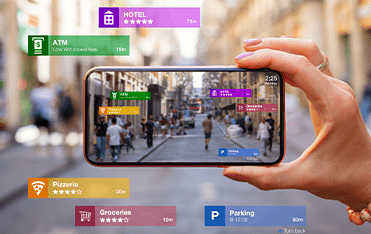
AR will allow you to search things visually by simply pointing out mobile cameras toward objects in real-life surroundings. The Live View feature in Google Maps is a leading example of how AR allows users to visualize their destinations in the real world. Nintendo’s Pokémon Go App and the photo filters on Facebook and Snapchat are some of the popular examples of AR today.
However, AR is not just a gaming or navigational application. Several industries today, including consumer products and retail, are implementing AR to improve their operational and marketing abilities. Leading ecommerce brands, as well as in-store retailers, are highly investing in AR to build and deliver top-notch brand experiences.
By 2024, the number of mobile AR users will reach 1.73 billion.
billion
0
By 2024, the number of mobile AR users will reach 1.73 billion.
Why Is Augmented Reality Important In Retail and eCommerce?
Millennials are the core shoppers today, and they need services at their fingertips! Standing in long queues to grab that limited offer is off the trend! Now shoppers love to book it first online.
With Augmented Reality in Retail, online shopping experiences takes a new turn. Customers get to virtually try on items, customize and interact with the products better so that they make quick and smart purchase decisions. Getting complete satisfaction with online shopping increases brand trust immensely, giving retailers an immediate boost to expedite sales! The more reasons to implement AR in Retail!
0%
40% of consumers say they would pay more for a product that they could customize in AR.
What are the Latest AR Trends in Retail?
Today’s customers value personalization and convenience over pricing and product. Augmented Reality allows brands to develop smart retail experiences that influence their customers’ buying decisions.
AR makes online selling easier and more comfortable by creating virtual simulations for users to interact with a product, just like how they try a fashion outfit in a physical store. Using AR, retail customers can virtually visit their favorite brand stores, try products, and make comparisons, without leaving the comfort of their homes.
Top AR Trends in Retail Today
Improved In-store Experience
Shopping Sizeable Products
WebAR
Try Before You Buy
Experiential Marketing
AR Product Configurators
Improved In-store Experience
Improved In-store Experience
Using AR apps on mobile devices, customers can now quickly access product details, try out varied colors of the desired products, and make purchase decisions faster without actually trying each one out. The popular brand Lacoste gained much traction when they implemented this AR feature to bring their sports shoe colors to life!
Shopping Sizeable Products
Shopping Sizeable Products
Furniture and electronics brands are now highly using AR to improve their point-of-sales by letting their customers view the size, color, and look of the products in their selected space! Here’s a look at how Fingent, using web-based AR and 3D configurator, is making business smarter for retailers.
WebAR
WebAR
Make your website content interactive! Shoppers today dislike skimming through large content to understand product features. With WebAR, retailers can implement top AR features on websites so that customers can view the styles and fittings of clothes and accessories in augmented reality without downloading any further apps. ‘Nike Virtual View’ is one example of this brilliant feature.
Try Before You Buy
Try Before You Buy
Virtual try-ons powered by AR allow customers to try products without physically visiting the stores. Top eyewear and cloth stores are now letting their customers visualize how they look in different products right from home before purchasing them.
Experiential Marketing
Experiential Marketing
AR’s interactive visualization features enable retailers to entice a consumer from product consideration to product purchase through experiential marketing. Top beauty brands are now allowing customers to experience scientifically validated skin assessments and photo-realistic makeup simulations.
AR Product Configurators
AR Product Configurators
Retailers can create interactive product catalogs that display each product in a digital format that customers can explore. Nike’s sneaker configurator employs AR technology that allows customers to personalize their sneakers extensively by browsing product catalogs, is a fascinating example of this trend!
AR will enable retailers to deliver impactful, well-timed, and relevant user experiences that increase customer value, both in physical stores as well as in ecommerce!
Enriching Customer Experiences With Smart Malls Of The Future!
Right from parking to shopping to food, AR is reimagining mall experiences.
Notify your customers on their mobile about your top deals as they walk past your store!
Make mall visits fun for your customers. Add in some AR games to the mix!
Watch more on how your business can leverage AR for a unique and smart mall experience!
Why is AR a Powerful Retail Sales Channel?
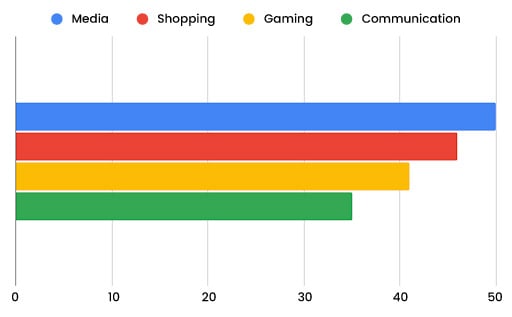
By 2025, nearly 75% of the global population and almost all people who use social or communication apps will be frequent AR users. AR adoption will see growth in these four key areas:
But why use AR for retail?
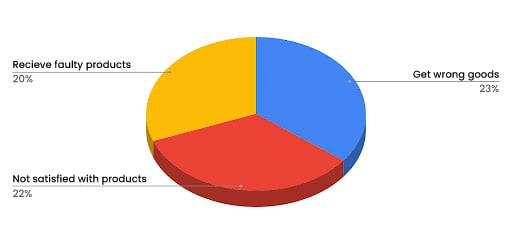
Research shows the top reasons why customers return their products.
AR-integrated ecommerce websites and applications can run on any smartphone allowing customers to contextually experience every product at scale. Immersive product discovery experiences lead to better conversions as retailers can capture shoppers’ attention at the decision-making stage.
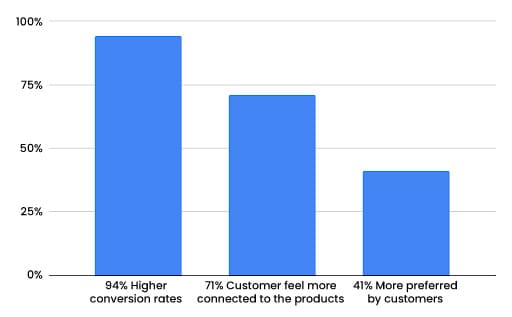
Brands that implement AR for Retail Sales will see:
AR offers shoppers innumerable options to interact with consumer products in a more personalized way. Customers aren’t anymore held back by a limited number of product images and videos. With AR, every single online session can be turned into a powerful sales channel.
Capture shoppers’ attention at the decision-making stage | Allow shoppers to personally interact with products | Turn online browsings into powerful sales channels
0%
32% of consumers use AR while shopping!
How Does AR Increase Sales in Retail?
AR use cases in retail are growing in leaps and bounds. Across the B2C, D2C, and B2B realms, AR will bridge the gap between online selling and the customer experience in the following ways.
AR can improve complex warehouse operations by streamlining warehousing management activities such as order allocation and picking, inventory control, material handling, and packaging. Using an interactive 3D warehouse layout, retailers can improve their warehouse planning.
Locate products and process orders faster.
Quickly extract necessary information (order number, trolley number, deposit bin information, passage numbers).
Expedite loading and unloading processes.
Achieve zero-delay deliveries through warehouse optimization.
Increases your sale orders and drives revenue.
Virtual Fitting Rooms
Virtual fitting rooms allow your customers to try on clothing items, jewelry, and other accessories even if they don’t visit your physical store. Even without touching an item, shoppers can see the size, style, and fit of apparel before they buy it. According to Shopify, an omnichannel shopping experience powered by AR nudges online shoppers to spend 10% more.
Superimpose the visuals of your items on live video feeds for your customers.
Create a virtual dressing room using Augmented Reality features.
AR-powered virtual mirrors can save valuable retail space in your brick-and-mortar stores.
Avoid the need to set up separate trial rooms.
Placement Previews
IKEA Place App’s AR feature allows customers to visualize how a new piece of furniture will fit their space. After selecting an item from IKEA’s catalog, the customer can point their mobile camera anywhere in their surroundings to see the furniture’s placement, adjust it from different angles, take photos, and share it with their friends for feedback.
The highly interactive preview experience keeps users motivated throughout the buying journey.
The seamless and fluid experience will encourage customers to return for more purchases.
This automatically boosts customer loyalty and brand recognition.
Guarantees conversion ten times more.
Route Optimization
Not just online and shopping experiences counts to customers. When products are delivered quickly and smartly, there are much more chances for a customer to build their trust in brands. With AR enabling effective navigation capabilities, routes can be optimized for seamless delivery channels.
Develop AR-powered apps that enable the delivery teams to plan their travel smarter.
Plan shortest route options, traffic updates, map views, and more.
Support your delivery partners with additional assistance just from their smartphone cameras, leading them to the right routes.
Ensure no package delivery goes missed or undelivered.
Interactive AR Packaging
AR-enabled interactive packaging offers consumers a highly engaging shopping experience that will boost ecommerce and in-store sales. Customers could scan a QR code on the retailer’s package to understand the latest offers and discounts, new product roll-outs, or read the brand’s story. Jack Daniel Distillery’s smart AR packaging allows users to take a closer look at their whiskey-making process and explore their growth story.
With AR, product packages aren’t throwaway junk anymore.
Encourage users to scan QR codes on food packaging to get exclusive recipes and cooking videos of top chefs.
Use interactive AR techniques to encourage shoppers to recycle packages and share their product experiences with others.
Interactive Business Cards
AR takes your plain business cards to the next level by allowing you to add 3D objects, interactions, animations, and powerful virtual components on top of your physical business cards. When you point your smartphone camera toward the card, you can see an interactive display of your business profile. AR allows you to incorporate numerous features into your V-card such as videos, audio, images, 3D objects, social links, animations, and URLs, besides your contact info and designation.
Stand out from your competitors and provide prospects with instant resources.
Increase curiosity and prompts your clients to access more information about your business.
Immersive and unique experiences in the real world improve your business’s credibility and doubles lead capturing.
Interactive business cards shorten the sales cycle and increase customer appointments and engagement.
Complete Product Information
AR allows superimposing additional product information that your customers may not get easily in physical or online stores. Processing product information is the most significant aspect that influences a customer’s buying decision. Customers want to know if the products they buy will fit their purpose. Top automotive brands such as Mercedes Benz and Hyundai use AR-powered digital car manuals to explain automotive features in a highly interactive way.
Digitally delivering the right information will simplify the product discovery process for the consumer, boosting sales.
Customers can avoid scrolling through large user manuals.
Pointing to a specific feature with mobile cameras will provide the necessary information required to impact the buyer’s decision.
The age of analyzing products via videos and images is gone! Customers now need more! With AR, realtors can bring their products closer to their customers, enabling them to interact with the items meanwhile establishing added brand value and customer trust!
Real-World Cases Of Boosted Customer Experience with AR
AR Taking Cabin Manufacturing To New Heights: Use Case
Complex designs, large customer requests, and inaccurate floor plans often challenge and restrict the operational efficiencies of shed and cabin manufactures. Leading players of the industry are now trying to implement modern approaches at each stage of their process to streamline functions and improve performance. How can AR help in this?
With a customized software solution featuring 3D web configurators
Customers can build and design their own sheds using AR
61% of consumers say they prefer retailers with AR experiences.
Augmented Reality vs. Virtual Reality
Many people use Augmented Reality and Virtual Reality interchangeably thinking that both technological concepts are the same. Though both AR and VR help creates immersive and interactive experiences, both are different in their own niches.
Augmented Reality
Augments the real-world experience of the user
Creates virtual experience by overlaying digital content on top of what the user is already seeing
Detects markers such as barcodes or QR codes to deliver AR animations to specific user locations
Explored best with smartphones
AR SDKs empower mobile apps to detect and capture real-time user environments
Reflects true-to-life conditions and real-life scenarios
Virtual Reality
Creates a fully-immersive virtual environment
Total immersion is accomplished by shutting the user from the real-world
Virtual Reality Modeling Language or VRML experiences delivered via a client-side interface to simulate virtual environments
Explored best with a VR headset
VR SDKs allow users to navigate pre-loaded and cloud-stored streams by using controllers and environment trackers
Virtual representation of real-life conditions
0%
Augmented Reality Boosts Online Shopping Sales Up To 200% - Forbes
Augmented Reality In Retail: Why Is It Picking Up Steam In Today’s Digital Age?
AR will boost your customers’ trust and drive their purchasing confidence.
Real-time product visualizations and virtual trials ensure that retailers are able to deliver products that match their customers’ expectations. AR reduces your marketing costs and increases your customer satisfaction.
AR retail experiences will eliminate the friction between sellers and buyers and maximize the probability of purchasing. When customers receive their orders as expected, it will decrease your product returns.
The rise in ecommerce demands delivering more successful online experiences. Retailers leveraging augmented reality can rest assured that they aren’t left behind in the competition.
Interactive virtual experiences arouse your customers’ curiosity and motivate them to explore your products. AR experiences such as virtual try-on persuade customers to come back and shop for additional products.
AR-enabled shopping experiences collect insightful data on customers’ shopping patterns, buying behavior, interests, and preferences. Retailers can use these insights to run targeted marketing campaigns and develop more personalized products.
The demand for contactless experiences triggered by the COVID-19 pandemic is here to stay. As people are more concerned about their personal hygiene and contamination risks, retailers can employ AR to connect with their customers and keep the show running.
Customers place emphasis on the value they get when buying from you. CX is the key brand differentiator that boosts customer loyalty today. With AR, you can optimize every customer touchpoint to deliver unmatched CX.
AR ecommerce apps can serve as your shop assistants and sales agents that take you through product features and benefits. You don’t have to hire expensive labor for showing the customer around, as AR does the heavy lifting.
0%
71% of consumers say they would shop more often if they used AR.
Fingent’s AR-enabled Applications for Retailers
Be it in-store or ecommerce, Fingent top custom software development company, enables retailers to deliver seamless shopping experiences to their consumers by leveraging technology to the fullest. Our AR retail solutions effectively bridge the gap between consumers and sellers:
1. Advanced In-store Experiences
2. AR Product Visualizer
3. Interactive User Manuals
1. Advanced In-store Experiences
Leveraging AR, we build powerful retail applications that offer shoppers an enriching in-store experience. Some of our top solutions include AR pop-up stalls that drive more foot traffic to physical stores, AR product guidance applications, web-based AR ecommerce apps that don’t require separate downloading, virtual try-ons for jewelers and cloth retailers, and AR visual merchandising to build buzz and brand awareness.
2. AR Product Visualizer
AR offers an excellent opportunity for retail shoppers to personalize their products by adding or removing features according to their tastes. Personalized experiences lead to better and faster purchase decisions. Consumers can view their selections in real-time and on a real scale to narrow down their choices. AR helps them overcome the common retail challenges such as mismatch of color, size, fit, design, material, and quality. For instance, they can choose the right washing machine by examining its features, color, front load or top load, energy usage, and so on.
3. Interactive User Manuals
Virtual technicians and interactive user guides that display operation instructions using AR will simplify complex product installations and configurations. Using a smartphone camera, users can explore the features of an electronic device, a vehicle, or a coffee machine. By superimposing computer-generated displays on top of the user’s view of the product feature, AR will help them understand the product demonstrations and instructions quickly. Users can verify if they are executing each step correctly and follow the simple DIY troubleshooting tips to ensure that the product functions well.
Augmented Reality Reshaping eCommerce!
Bring showroom-like experiences to your customer’s fingertips.
No more restrictions on a wide range of product displays.
Let your customers interact with your products and customize them right from the comforts of their homes.
What more on how you can smartly and seamlessly deploy AR for your eCommerce!
How Fingent Can Help Your Business Build Intuitive Apps With AR
With our expertise around ARKit for iOS Platforms, Spark AR, Lens Studio, Vuforia, Web AR Solutions, and AR Core for Android Platforms we help create powerful user experiences that fetch a competitive edge.
eCommerce
Bring the “Wow” factor to your eCommerce with virtual try-ons, preview placements, AR filters, and more!
Healthcare
We help you deploy AR to improve medical training, pediatric MRI evaluation, venipuncture procedures, dentistry, and more!
Equipment Maintenance
With AR connect faster with your machines to work smarter at reduced costs, and effective time management.
Augmented Reality streamlines retail operations to make shopping easier and convenient for both online and offline buyers. AR replaces physical fitting rooms with virtual try-on solutions and allows consumers to configure products based on their preferences. AR modernizes retail marketing through personalized content delivery and offers contactless purchasing options which will boost online sales.
3D product visualizations and “try-before-you-buy” digital experiences allow retailers to reduce the cost of returns that affect their ROI. Retailers can develop 3D animations and visual simulations to improve consumer awareness and influence buying decisions. AR helps retailers analyze customer behavior, test their product samples, boost brand engagement, and augment sales.
Full-fledged 3D experiences can improve product research and discovery which will result in more sales. Retailers selling automotive, home furniture, consumer electronics, and lifestyle products can drive traction and make unique selling pitches through AR. Studies prove that AR increases the average product (images and videos) viewing time from 30 seconds to eight minutes. Linking purchasing decisions with the shopper’s emotions will eliminate their doubts about the product and increase your sales volume.
According to Snapchat, 76% of consumers believe that AR will play an integral role in future shopping, with 57% of consumers planning to increase their AR usage in post-COVID times. AR improves a retail brand’s discoverability and increases a consumer’s likelihood to purchase after an immersive experience. AR experience educates and motivates customers at multiple points in the shopping journey, thereby influencing their purchasing decisions.
Today, every retailer needs to pursue an omnichannel retail strategy that revolves around customer-centricity. This requires retailers to personalize their offerings in the best way possible. AR can simplify your personalization efforts as it’s a highly user-centric technology that tremendously transforms the way you market and sell. Augmented retail strategy improves both your business’s bottom line and customer experience.
Today we live in a world where machines possess an extraordinary ability to learn, reason, and make decisions, much like the human mind. This remarkable realm of technology known as Artificial Intelligence is not merely a product of science fiction or futuristic imagination. It has become an awe-inspiring reality that is transforming the landscape of countless industries.
But that’s just the tip of the AI iceberg.
In mobile development, AI can transform your customer’s device into a personal shopping assistant, a language guru, or a creative photographer all in the blink of an eye.
It unlocks a realm of possibilities for your customers, from personalized virtual assistants that organize their life, to fitness apps that act as their personal trainers, to healthcare apps that monitor their well-being.
But how do we understand the concept of AI in mobile apps?
Unraveling Artificial Intelligence in Mobile Apps
Simply put, AI is like the brain behind the scenes, making your apps smarter and more interactive.
One of AI’s superpowers is Machine Learning (ML). It’s like a super adaptable brain that learns from data and experiences. Machine learning algorithms analyze massive amounts of information to get better at tasks. They can recognize patterns, make predictions, and even understand your preferences.
Another clever component is Natural Language Processing (NLP). It’s like an AI language translator that allows you can talk to your app, ask questions, and it magically understands and responds. NLP allows your AI sidekick to grasp the meaning behind your words, making conversations with your app feel more human-like.
From Mundane to Marvelous – Benefits of AI In Mobile Apps
Weaving the powers of AI into your mobile apps can enhance user experience. How? Like a brilliant and intuitive companion, AI-powered mobile apps can provide personalized recommendations. AI algorithms analyze user behavior, learn their tastes, and curate a world of suggestions.
Plus, it learns and grows with them. The more your customers use your apps, the smarter those apps become, tailoring their suggestions to your customer’s ever-changing whims and fancies and predicting their move, and effortlessly serving up what they need.
AI brings a layer of intelligence to your apps that takes them to the next level. Here are some key applications that this has made possible:
1. Voice Assistants and Natural Language Processing
40% of mobile users use voice search at least once a day. – Comptia.
Natural Language Processing (NLP) enables the integration of voice assistants like Siri, Google Assistant, and Alexa into mobile apps. No matter how they phrase it, NLP enables your app to decipher the meaning and context of their spoken words.
It is capable of unraveling the intricacies of slang, deciphering accents, and even understanding complex sentences with multiple layers of meaning. It’s like having a language expert at your beck and call. But it doesn’t end there. NLP allows voice assistants to learn from every interaction, becoming more intelligent over time.
2. Personalized Recommendations
AI algorithms can analyze user data to provide personalized recommendations in mobile apps by utilizing machine learning techniques:
Data Collection: Mobile apps collect user data through various means, such as user registrations, app usage tracking, explicit ratings, and implicit signals like clicks, views, and interactions.
User Profiling: Such data is used to create user profiles that capture individual preferences, interests, and behaviors.
Pattern Recognition: AI algorithms can identify similarities based on factors like item attributes, past behavior, and user demographics.
Recommendation Generation: Based on the identified patterns, the algorithms generate personalized recommendations. For example, in a music app, the algorithm might suggest songs or artists similar to the user’s previous listening habits or recommend popular tracks among users with similar tastes.
The benefits of personalized recommendations for user engagement and satisfaction are significant:
Enhanced User Experience: Users are more likely to discover new content they enjoy and spend more time using the app.
Improved Discovery: Personalized recommendations help users explore new music genres, discover new movies or shows, or find products that suit their tastes, leading to greater satisfaction.
Time and Effort Saving: With personalized recommendations, users can find relevant content more quickly and easily.
Increased User Retention: When users receive preferred recommendations, they are more likely to remain engaged with the app.
Business Benefits: Personalized recommendations result in improved conversion rates and increased customer loyalty.
3. Image and Video Recognition Tasks
AI plays a crucial role in mobile apps across industries, including e-commerce, social media, entertainment, gaming, and more. For example:
Facial Recognition: This technology is widely used in mobile apps for various purposes, such as authentication, photo tagging, and personalization.
Object Detection: With AI algorithms, mobile apps leverage object detection for a range of purposes, such as visual search and safety features.
Augmented Reality (AR) Experiences: AI algorithms are employed in mobile apps to enable applications like virtual try-on for shopping, gaming, and navigation.
The integration of AI-powered chatbots in mobile apps revolutionizes customer support and interaction by enabling efficient and automated communication with users. Using AI algorithms, chatbots recognize the intent behind user queries and quickly search and retrieve relevant information to address user queries effectively.
Success Stories
Mobile apps have been able to enhance user satisfaction, drive revenue growth, and achieve operational efficiency, resulting in their success in the mobile app market. Here are some examples:
1. Instagram
Instagram, one of the “big three” social media platforms, utilizes AI algorithms to provide personalized content recommendations in the Explore tab. This greatly improves user engagement by helping users discover relevant posts and accounts. AI is also used for content moderation, and identifying and filtering out inappropriate or spammy content, thus creating a safer user environment.
Impact: AI integration in Instagram has contributed to increased user engagement by facilitating content discovery and improving user safety by detecting and removing harmful content. Today it is 4th most used social media platform and 5th most visited website.
2. Uber
Uber, a ride-hailing platform, employs AI algorithms to optimize its dynamic pricing system. Machine learning models analyze supply and demand patterns, traffic conditions, and historical data to determine surge pricing, ensuring efficient allocation of drivers and meeting high-demand periods.
Impact: AI integration in Uber enables efficient pricing strategies, ensuring the availability of drivers during peak demand and generating increased revenue for the company.
In 2022, Uber experienced substantial growth with a revenue of $31.8 billion, marking an 82% increase from the previous year. Furthermore, the number of completed trips also saw an increase, with Uber drivers recording 7.6 billion trips, exceeding the previous peak of 6.9 billion trips in 2019.
3. Amazon
Amazon, a leading e-commerce platform, extensively uses AI across its mobile app for personalized product recommendations, dynamic pricing, inventory management, and fraud detection.
Impact: AI integration in the Amazon app has led to increased user engagement by providing relevant product suggestions, improved customer satisfaction through personalized experiences, optimized pricing strategies, and enhanced operational efficiency.
In Amazon, it was observed that there is a 42% likelihood of a customer proceeding to a prospective product purchase. On the other hand, Walmart and Etsy have recorded figures of 16% and 13% respectively.
Amazon’s Alexa has taken over the world’s smart speaker industry, by securing an impressive 26.4% market share.
Emerging Trends in AI For Mobile Apps
Emerging trends in AI for mobile apps are shaping the future of mobile app development. Here are two key trends:
1. Edge Computing: Edge computing involves processing data locally on the device or in nearby edge servers, reducing the reliance on cloud computing. This trend enables AI-powered mobile apps to perform complex tasks and analysis directly on the device, leading to faster response times, enhanced privacy, and reduced dependency on internet connectivity.
Implications: The increasing adoption of edge computing enables apps to respond quickly to user inputs, process sensor data in real-time, and provide immediate feedback, leading to faster and more seamless experiences.
2. Federated Learning: Federated learning allows AI models to be trained collaboratively on decentralized data from multiple devices without transferring sensitive user data to the cloud. Each device performs local model training, and only model updates are exchanged, ensuring privacy and data security.
Implications: Future advancements will likely include greater transparency, explainability, and fairness in AI algorithms to ensure user trust and mitigate potential biases or discriminatory outcomes.
In this era of technological revolution, artificial intelligence stands as a beacon of innovation and possibility. AI integration in mobile apps offers compelling benefits such as personalized experiences, improved user engagement, increased efficiency, advanced functionalities, data-driven decision-making, competitive advantage, and future-proofing.
These reasons make AI integration a strategic choice for app developers looking to deliver exceptional user experiences and drive the success of their mobile app projects.
By partnering with Fingent, you can leverage our expertise in AI and mobile app development to unlock the transformative potential of AI in your app projects. From custom travel apps to apps using AI enabled chatbots and virtual assistants, Fingent has created unique solutions for clients across the globe. Our commitment to delivering tailored solutions, adherence to data privacy, and end-to-end services make us an ideal choice for AI mobile app development.
Tony believes in building technology around processes, rather than building processes around technology. At Fingent, he specializes in custom software development, especially in analyzing processes, refining them, and then building technology around it. He works with clients on a daily basis to understand and analyze their operational structure, discover (and not invent) key improvement areas, and come up with technology solutions to deliver an efficient process.
You can reach him at [email protected], Skype: tony_fingent
“A simple rule: always give people more than they expect.” – Nelson Boswell
The cycle of business starts and ends with customers. Keeping them satisfied and happy is the number one rule of any business that dreams of being successful. Customer needs and expectations never cease, so businesses should always be prepared to meet and exceed their needs. Artificial Intelligence has been a substantial help in this area since the late 19th century, and it consistently finds new innovative ways to amplify its presence in modern businesses.
Meeting Customer Needs and Exceeding Expectations
Recent research reported that a good number of executives have already planned to invest more in rising technology to gain a competitive advantage. Due to the Covid-19 pandemic, almost all businesses were forced to move to an online platform to survive, further underscoring the need to adopt AI technology.
It is extremely imperative to recognize and address the needs, desires, and emotions of people which change from moment to moment. Businesses have to provide their customers and clients with care beyond purchases and respond to the intricacies in their lives. In a world that moves forward so fast, it’s best not to fall behind.
What Is Artificial Intelligence and How Does It Impact Customer Experience?
The textbook definition of Artificial Intelligence is – a semblance of human-like intelligence processed by machines, especially computer systems. AI is used by developers to:
efficiently perform mundane tasks that humans otherwise do.
connect with customers.
recognize patterns.
solve problems.
AI Customer experience is when artificial intelligence tools are used to learn about customers and improve their business experience. The AI technologies that are famously emerging include machine learning, natural language processing, automation, chatbots, virtual assistants, and even enhanced customer experience platforms.
There are three major ways in which AI impacts Customer Experience –
1. Better Understanding Of Customer
Artificial Intelligence combined with machine learning enhances the gathering and analyzing of social and factual data of customers, which then facilitates businesses to gain an accurate understanding of their customers. AI is known for continuously learning and improving from the data it surveys. This enables it to predict customer behavior perfectly.
2. Real-time Decision Making
Making decisions in real-time is the ability of AI to collect fresh data from current interaction with a customer and make a decision with near-zero delay. It is a very effective marketing strategy and often leads to predictive analysis, which is the process of analyzing statistics, data mining, and modeling to make accurate predictions.
3. Hyper-Personalization
Artificial Intelligence, along with all its advanced technologies, proffers content that is specifically relevant to the customer. This eradicates the need to search for services the customer requires manually and adds a layer of comfort to the business and its customization techniques.
Top Ways Businesses Use AI To Tweak Customer Experience
Following are the top 8 utilities that Artificial Intelligence provides to boost customer experience –
1. Personalization
Businesses can easily gain a clear picture of their customer preferences and requirements by using AI and ML technologies which acquire and analyzes social, factual, and behavioral data. AI is built to predict client behavior by regularly surveying and improving the data it collects. This facilitates companies to analyze customer demographics and personal preferences. This, in turn, highlights the relevant products and resources during the browsing process.
2. Chatbots
A chatbot is a conversational AI using machine learning and natural language processing. It is automated and programmed to pretend to be human and carry out programming tasks based on specific triggers. Its unique ability is to conveniently and efficiently generate conversations between two people.
The most commonly found type of chatbot is a “question-answer bot” —this form of chatbot refrains from using advanced artificial intelligence but instead accesses a smaller knowledge base and utilizes pattern recognition.
Artificial Intelligence powered Chatbots make a business’s presence accomplished by allowing customers to find what they are looking for while simultaneously delivering a seamless experience.
Did You Know: 35% of customers want to see chatbots being used more often to improve communication and offer a better experience overall.
The best examples of Chatbots are – Apple’s Siri, Amazon’s Alexa, and Google Assistant.
Using simple rules and past interactions, bots provide insightful replies to any query, making their responses accurate, short, and creative.
3. Predictive Analysis
Predictive analytics, by definition, is to use data collected to predict a business’s future. It utilizes statistical algorithms blended with internal and external data to foresee future trends, ultimately enabling businesses to optimize inventory, enhance delivery times, boost sales, and reduce operational costs. A more accurate and punctual prediction occurs when Artificial Intelligence is added to the mix. Predictive analytics can be used by advanced analytics tools and machine learning models across any industry or business function.
4. Voice Recognition
The voice recognition model functions purely with the aid of AI to
analyze the user’s voice and language,
learn the words spoken,
and then bring forth outputs with transcription accuracy as text data on a screen or model content.
With the help of this technology, devices can interact and respond to human questions in uncannily natural language.
With the ability to understand and converse with human language, Voice AI has opened up great opportunities for businesses to serve their customers better. It efficiently speeds up processes, increases productivity, and scales operations.
Approximately 55% of virtual assistant users prefer speech recognition apps be they proffer a complete hands-off operation of devices.
Examples of businesses that integrated AI for voice recognition and have successfully replaced touch-screen devices are – Amazon Echo, Siri, Google Assistant, Google Home, Amazon Alexa, and a few others.
5. Sentiment Analysis
A sentiment analysis system collects specific customer feedback and uses it to improve company products and services. When AI technologies are fused with this system, it can identify objects or situations that customers feel any negative emotions towards as expressed in text. AI understands the undertone of a statement rather than simply noting a negative or positive connotation.
Sentiment Analysis is majorly utilized by marketers to better understand their consumers’ sentiments, beliefs, and motives perfectly to make advertising to specific groups effective. It has a wide array of benefits ranging from patient insights and online reputation management to competitor analysis and product development.
Almost all social media platforms use Sentiment Analytics powered by AI. This way brands and companies can keep track of the content being shared and censor or filter content that could evoke negative emotions and cause problems.
6. Customer Journey Mapping
A customer journey map as the name suggests, is essentially the visual representation of the customer’s journey from brand discovery to purchase and post-purchase. It enables businesses to retrace a customer’s footsteps and see where their services might need any improvements or upgrades.
All through this journey, AI and Machine Learning play a vital role in ensuring a headache-free shopping experience. There are three essential stages to customer shopping: the Pre-Purchase, purchase, and post-purchase. With the assistance of AI and ML, customers thread these maps and help brands analyze and prioritize activities that impact customers, boosting internal collaboration and coordination.
The benefits of creating a customer journey map are that it helps:
streamline the customer experience,
optimize customer service costs,
accelerate proactive sales solutions to customer problems, and lastly, boost customer retention rate.
Examples of businesses using customer journey mapping are – Home Depot, JPMorgan Chase, Starbucks, and Nike.
7. Fraud Detection
Fraud detection is another surprising area that AI has a distinguished hold over. AI can work with internal security to help organizations improve and protect corporate activities. Businesses can use AI to examine large quantities of exchanges and unravel misrepresentation patterns.
In the case of online fraud detection and prevention, machine learning consists of a collection of AI algorithms that are specially trained with the company’s data to suggest risk rules. The business owner can then enforce the rules to block or allow certain user actions, such as suspicious logins, identity theft, or sketchy transactions.
When fraud detection is handed over to AI and Machine Learning, businesses reap great benefits like – faster and more effective detection, reduced manual review time, faster predictions with bigger databases, and cost-effective solutions.
8. Personal Data Protection
AI and Data Protection are like two sides of the same coin; both are very important, and one cannot progress without the other. We all see and know that AI technology is advancing rapidly; it raises important questions about the use of personal data and the protection and storage of said data in AI systems.
AI is frequently used to minimize the risk of privacy breaches by encrypting personal data and detecting potential cybercrime incidents. It is, therefore, pivotal for businesses to maintain a balance between technological advancements and artificial intelligence with respect for data protection rules and guidelines.
The main benefit of Data Protection Artificial Intelligence is the elimination of human errors and its keen sense for spotting new trends and patterns.
Amazon, Apple, Facebook, IBM, Microsoft, and many other grandiose organizations have implemented this system, and many more are predicted to follow.
AI has been implemented in virtually every facet of our lives and in every industry imaginable. Here are 3 Use Cases that will give you a gist of how they can be applied successfully.
Learning experiences become unique and personalized when the right assistance is provided at each stage of learning. That’s where leading educational institutions are now deploying Automated Intelligence-driven ecosystems to facilitate students to interact with AI-enabled Teaching Assistants (AiTA). The system, when tightly integrated with other Teaching Assistant Bots, enables improved interaction, easy instructor-led training, and enhnaces student-instructor relationship.
2. Simplifying Claims Management for Legal Firms
A typical compensation claims processing takes up to three years for case settlement costing an average of $85000. It’s often challenging for legal firms to balance time, money, and the cases in hand. That’s why they are now implementing AI and machine learning to improve performance efficiency. Utilizing AI and machine learning to settle claims can help legal firms reduce costs up to 57%.
3. Netflix Gets You!
Netflix is the largest streaming platform, with more than 200 million customers globally. It gained a majority of its popularity due to its personalization feature. This streaming service uses AI to create a personalized home screen interface for individual subscribers and accounts. When viewers create a new account, they are directed to pick a few of their favorite TV series and movies. The AI at the crux of Netflix analyzes the data fed to it and provides recommendations similar to the favorites picked by the user. It continues to customize the suggestions displayed based on what the user watches.
4. Rolls-Royce Rolls Out Smart, Responsible Manufacturing
To exemplify the impact of AI on Predictive Analytics, we can look at Rolls-Royce, one of the world’s largest manufacturers of aircraft engines. It deployed predictive analytics to help drastically reduce the amount of carbon produced in its engine’s product while simultaneously optimizing maintenance to assist clients and keep their planes flying longer.
5. Ask Julie!
“Ask Julie” is Amtrak’s virtual assistant. Amtrak, the national passenger railroad company of the United States has implemented this chatbot to the best advantage. Ask Julie has successfully helped provide Amtrak provide a seamless customer experience to “over 375,000 customers on their website each day and over 30 million passengers on over 300 trains each year.” The result – an 8X return on investment, more effective customer services. and reduced email costs.
Finding The Right AI Partner – A Few Tips
Digitalizing a business can be very daunting, especially when you want to integrate Artificial Intelligence into its core. Finding a partner who understands you and can communicate well with you is quite hard to find, but you must not give up hope! Keep looking because it is better to spend a little more at the start and have a quality setup rather than spend less and have a wobbly foundation that could jeopardize your whole AI implementation. Here are a few tips to keep in mind while looking for a capable AI partner –
1. Priorities
When looking for your potential AI partners, choose someone who can help the business and its employees prioritize and manage workloads.
2. Comprehend The Difference Between Machine Learning And Artificial Intelligence
Although the two may sound like they perform the same functions, do not be fooled. They each have their own region of expertise so look for someone who acknowledges that.
3. Invest In The Right Tools
In the current economy, businesses can not afford to splurge money on luxuries. Pick a partner who understands your company’s budget and can plan a perfect setup for you.
How Fingent Can Help Seamlessly Leverage AI For Customer Experience
Artificial Intelligence is a wide ocean of opportunities, if you have the right swimming gear, you can glide on its surface. Making the right decisions and trusting the right people with your projects should not be taken lightly. Fingent is committed to providing impactful software solutions to meet business goals seamlessly. Our certified experts focus on client-centered transparency and offer complete services with a wide range of Artificial Intelligence capabilities. Our team can boost your business to be more efficient and robust through intelligent technology. We have nearly two decades of experience and completely understand our client’s needs and requirements. Give us a call and let us know how we can help you.
Stay up to date on what's new
About the Author
Tony Joseph
Tony believes in building technology around processes, rather than building processes around technology. At Fingent, he specializes in custom software development, especially in analyzing processes, refining them, and then building technology around it. He works with clients on a daily basis to understand and analyze their operational structure, discover (and not invent) key improvement areas, and come up with technology solutions to deliver an efficient process.
You can reach him at [email protected], Skype: tony_fingent
SAP is widely known for its brilliant abilities and functionalities, the foremost being Data Analysis. The newest version of SAP ERP is the SAP Data and Analytics Solution. It has been making great strides in helping businesses make sense of their data and make intelligent decisions.
But before we dive into that, let us briefly understand what SAP is.
What is SAP ERP?
SAP, or Systems Applications and Products in data processing, is a powerful tool revolutionizing data handling. Its extraordinary data integration capabilities have helped businesses streamline data flow while storing common information securely and efficiently.
As SAP has evolved, it has become an ERP software compiled of many fully integrated modules that have found vital applications in human capital management, data analysis, production planning, plant maintenance, quality management, and more.
Now that we clearly understand what SAP is and what it does let us look into SAP Data and Analytics Solution. SAP has taken the same approach as any reliable technology that would find room to grow and improve itself. SAP Data and Analytics Solution titled SAP Datasphere was launched on March 8th, 2023.
SAP Analytics for cloud, also called SAP Datasphere, is a cloud-based Business Intelligence (BI) tool designed by SAP Company to provide all the vital functionalities of an analytic tool to business users.
Carefully engineered by SAP, this tool provides analytics compatibility from data received from various databases. This tool essentially converts the raw data collected from the transactional system into comprehendible insight to assist business owners in making better decisions.
The SAP Analytics feature solely depends on data algorithms, programming, and operations research to get data insight and to find meaningful information from data cumulated from multiple data sources. This data insight and information ultimately leads to better business planning and forecasting.
Key features provided by SAP Datasphere are – Business Intelligence, Augmented Analytics, Planning, Modelling, and Smart Transformation. Some benefits that business owners can reap from this solution include – high market profitability, more accuracy in the decision-making process, reduced downtime and performance obstructions. This is a reliable solution for many challenges faced by businesses.
How SAP Data and Analytics Solution Helps Businesses Maximize Data Value
SAP solutions are famously known for making the collection, storage, management, and analysis of Big Data from multiple sources easy and seamless. It takes out the complexity of data management with its suite of products and enables businesses to handle greater chunks of structured and unstructured data. SAP uses powerful AI-driven analytics, and this is an added benefit to organizations that want to enhance operational efficiency and customer engagement.
SAP’s new platform, in addition to all its predecessor’s capabilities, also allows businesses to gain meaningful insights into customer trends and likings in order to navigate smarter decision-making across the organization.
With SAP Data and Analytics Solution, a business can get greater value from their data in three notched forms:
1. Database
It effortlessly streamlines and upraises your landscape with advanced database technology that provides flexibility, multi-cloud support, and mixed workload processing to deliver impressive results.
2. Data Management
It caters to a set of technologically advanced tools such as Artificial Intelligence (AI), Machine Learning and The Internet of Things (IoT) to identify, compile, analyze, and draw out the most context-relevant data throughout the business enterprise.
3. Analytics And Planning
Finally, it freely gives people the power and freedom to discover, plan, and act on real-time on-site insights with technologically advanced tools to assist with planning and analytics. All this is combined with a trusted semantic layer.
Among SAP’s many nifty and beneficial tools are three major analytics tools – SAP Lumira, SAP Business Objects, and Analytics Cloud. We will now look at the basic functionality of these tools and what they bring to the table.
1. SAP Lumira
SAP Lumira, earlier known as SAP Visual Intelligence, possesses many unique features allowing it to visualize and analyze data from many different sources. In a short period after IT had prepared a robust data model and exposed it to a Presentation Layer tool, business users flocked to create impactful visualizations with numbers, charts, filters, and rankings.
2. SAP Business Objects
This tool is a more centralized data reporting, visualization, and sharing suite. It transforms chunks of data into meaningful insights and is available anywhere at any time. Using a flexible architecture, the SAP Analytics platform simplifies, personalizes, and creates dynamic information consumption.
3. Analytics Cloud
SAP Analytics Solution with Analytics Cloud combines analytics and planning with a unique integration, allowing seamless access to multiple data sources. This tool facilitates trusted insights and integrated planning processes throughout the enterprise to help business owners make quick, informed decisions.
How To Identify the Right Tools for Your Business Needs
Selecting the right SAP Analytics Cloud tool for your business can be a daunting job, but it can be made easy by keeping these pointers in mind:
It is imperative first to analyze your business needs. Gather your organization’s tech team, its investors, and all the people you need to make this decision.
Once you have sorted out what aspects of your business could use a little push or improvement, scout out a suitable partner to team up with.
Next, do a thorough background check on your new potential business partner and ensure that you contact referrals before you trust your business’ future in their hands.
Lastly, take any advice your SAP service provider may offer and keep communication clear.
How Fingent Can Help in Leveraging the Best SAP Data and Analytics Solution
Fingent’s certified experts focus on client-centered transparency and offer complete services with a wide range of SAP products.
Selecting the perfect SAP product fortifies the success of your business. A few extra benefits you receive by partnering with Fingent are – improved security, efficiency in task completion right to the deadline, automation of the data collection process, and an overall 55% gain in productivity. Want to know more?
Ashok leads Fingent’s SAP Consulting practice for ANZ, SE Asia, the Middle East, and Africa (EMEA), and other global clients. More specifically, he helps companies improve operational efficiency by enhancing their digital cores and improving their application integration. Ashok has amassed over 20 years of leadership and consulting experience, having worked with Global giants like SAP, IBM Consulting, Capgemini, & Oracle in his previous assignments.
Connect with Ashok via LinkedIn and learn how your business can excel with recent SAP trends.
For more than a decade, businesses in all industries have undergone a digital metamorphosis. This evolution is marked by a transition from on-premises software solutions to cloud-based computing technology.
By leveraging cloud-computing resources, businesses can gain access to scalable assets, increase organizational performance, and optimize digital agility.
It’s a mistake to think about cloud solutions primarily as software-as-a-service (SaaS) applications. While these technologies are a valuable component of business modernization, they’re only the tip of the iceberg.
Businesses that create their own cloud-native applications can truly harness the power of discrete cloud technologies to deliver long-lasting competive advantages. As their name implies, cloud-native applications are “native” to the cloud computing environment. In other words, cloud-native software development involves creating applications in components optimized for deployment in the cloud instead of a physical computing environment.
What Is Cloud-Native Development?
In simple terms, cloud-native software development is the process of creating applications using core cloud-computing principles and resources. The architecture of cloud-native applications is highly scalable, responsive, and dynamic.
Cloud-native applications are designed to be deployed and run in cloud computing environments, and as such, they offer a number of benefits to developers. Some of the advantages of developing cloud-native applications include:
Scalability: Cloud-native applications can easily (and often automatically) scale up or down to meet changing demand with consistent performance levels, making them well-suited for applications with fluctuating usage patterns.
High availability: Cloud-native applications can be designed to be highly available, meaning they can withstand failures and continue to function even in the event of a hardware or software failure.
Elasticity and Agile development: Using independent microservices isolates the effects of changes, making it easier for developers to iterate on their products and respond to customer needs.
Cost efficiency: By leveraging the economies of scale offered by cloud providers, businesses can reduce their infrastructure costs and invest in building and improving their applications.
Integration with cloud services: Cloud-native applications can easily integrate with other cloud-based services, such as databases, messaging systems, and analytics tools, which can simplify development and improve the functionality of the application.
Overall, the main advantage of cloud-native applications is that they are designed to take full advantage of the capabilities of cloud computing environments, which can help developers build and deploy applications more quickly, efficiently, and at lower costs.
Additionally, many cloud-native applications are “cloud-agnostic,” meaning they can be run on a range of cloud providers (hyperscalers) or function in multi-cloud environments. Much of the appeal of cloud-native software development lies in the ability to yield adaptable and versatile applications. Sometimes applications can benefit from services that are only available from certain cloud providers, which risks “vendor lockin,” so it pays to consider the trade-offs carefully.
Why Modern Businesses Need Cloud-Native Development
Like on-premises computing resources, software created with traditional application-development practices are bound by the limits of that technology. As such, they can’t provide the quality of experience that modern audiences expect.
Additionally, applications developed in an old-school environment often need re-factoring to try to match the performance of cloud-native alternatives when the former is introduced to a cloud environment.
By leveraging cloud-native development services, modern businesses can facilitate their digital transformation on a faster time horizon. Cloud-native processes enable businesses to serve their customers better and deliver a frictionless user experience.
Top businesses in virtually all industries leverage cloud-native development. Those that neglect to do so will fall further behind these trailblazers and find it challenging to maintain a foothold within their respective markets.
Adopting cloud-native processes is no longer an optional step—it’s become necessary for businesses that want to thrive in the digital marketplace.
Top Benefits of Cloud-Native Software Development
Your business can tap into the multiple benefits of investing in cloud-native software development. Specifically, your organization can:
1. Streamline the User Experience (UX)
When the goal of cloud native is to develop applications that can serve your business while adjusting to the speed of changing technology, the end user is always the priority.
Because of the improved speed of development and the ability to make changes during the development process, cloud native puts UX first. While there are many ways to enhance the UX, investing in cloud-native development is one of the most effective approaches.
2. Improves Development Strategy
Cloud-native applications enable developers to leverage two essential UX-centric methodologies: continuous integration (CI) and continuous delivery (CD).
Continuous integration is the process of merging code changes using automation. Multiple developers can merge code changes into a centralized project to streamline app development and generate a cohesive, fully functional product.
Continuous delivery addresses post-release application software updates. Instead of occasionally pushing out massive updates, CD involves delivering smaller updates more frequently. This short-cycle approach improves software delivery and performance while yielding a super UX.
Moreover, microservices can be easier to implement with quality assurance automation, which elevates achievable levels of code quality.
3. Protect Business Continuity
Making dynamic, user-friendly applications a central part of your business model can give you a competitive edge in the modern marketplace. However, if your application goes down, customer frustrations will mount, and your brand could experience lasting reputational damage as a result.
Since cloud-native apps can tap into stand-alone, scalable cloud resources, these products are far less likely to experience extended outages due to spiking utilization. Developers can more rapidly isolate and remedy the issue, as well as rapidly test changes when a cloud-native app experiences downtime, thereby protecting business continuity.
4. Meet Evolving Demands for Services
In the digitized marketplace, it seems as if customers’ expectations and demands are in a constant state of flux. Unfortunately, it can be difficult — if not impossible — to pivot rapidly using legacy application development processes.
Cloud-native architectures can give your organization the agility it needs to respond to sudden shifts in customer expectations. For instance, you could add a new feature that enables customers to communicate easily with your brand. You could also frequently update your app’s capabilities to improve overall performance and stay relevant in the digital marketplace.
In the long run, cloud-native software development outperforms traditional application development practices at every turn. Cloud-native development reduces risk, has broader scalability, and allows developers to make changes more quickly. Most notably, the speed of delivery is far and above one of the most compelling advantages of shifting to a cloud-native approach.
Your organization is undoubtedly using cloud-based computing resources in at least some capacity. You can complete the transition by modernizing your cloud-native development processes, too. Doing so will empower your business to regain a competitive edge within your respective industry.
At the same time, one should consider the downsides of cloud applications. Some cloud-native applications can be more complex than traditional applications, due to the need to integrate with multiple cloud-based services and manage distributed systems. This can create more opportunities for something to fail.
While cloud native applications can be cost-effective they can also be more expensive than traditional applications in certain situations, particularly if they require a large number of resources or if they have high usage patterns.
The Nexus Between Cloud-Native Development and Business Modernization
Today’s customers want the freedom to interact with brands across multiple touchpoints. This holds true whether your target audience consists of individual consumers or business-to-business (B2B) clients.
Modern businesses live up to this customer expectation by providing their clients access to user-friendly, intuitive, and dynamic applications. These organizations can expand their reach in the digital marketplace, connect with a broader audience, eliminate friction from purchasing processes, and generate more revenue, all by transitioning to cloud-native development.
Conventional, monolithic application development practices often present a significant hurdle to large-scale integrations, digital transformation and business modernization efforts. Your business can’t achieve its digital transformation goals without fully embracing the cloud-computing environment and its many resources.
Examining the Business Impact of Cloud-Native
The notion that cloud-native software development is the new gold standard isn’t just pure conjecture. This fact is supported by numerous case studies and research projects, including a recent business impact brief by 451 Research.
In the brief, the organization’s team reported that:
64% of companies develop at least half of their applications using cloud-native technology
49% of companies have partially or fully adopted Kubernetes
55% of companies have partially or completely adopted containers
451 Research analysts concluded that cloud-native software development has gone beyond the development process and evolved into a full-fledged methodology. As such, it should continue gaining momentum among brands passionate about actualizing digital transformation.
And that’s just the barest overview. Managers can review 451 Research’s business impact brief by downloading the report.
Why Choose Fingent for Cloud-Native Development?
Fingent’s suite of cloud-native software development services is designed to deliver maximum value to our clients. When leveraging Fingent’s cloud-native development services, your organization will experience:
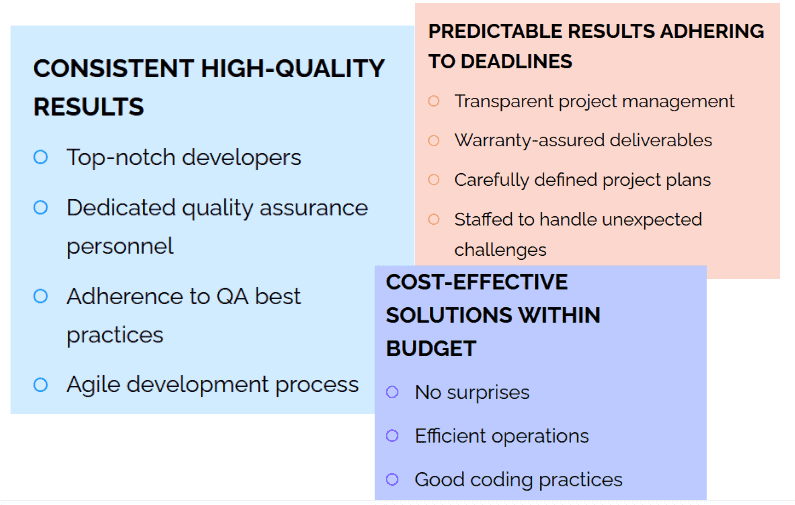
Consistent, High-Quality Results: As a client-oriented cloud-native development firm, Fingent focuses on providing high-quality, consistent results that exceed expectations. Our robust, agile teams and dynamic quality assurance practices ensure that our deliverables expressly meet your needs and address your most significant organizational pain points.
Best-of-Breed Solutions: Fingent’s unique approach enables us to provide world-class cloud-native software development services that produce best-of-breed solutions. These cost-effective solutions will align with your budget and delivery timetable. With Fingent, you won’t have any last-minute surprises like budgeting issues or missed deadlines.
Prebuilt Services: Fingent’s talented team can build truly custom solutions for your organization. However, we can also expedite development by leveraging prebuilt frameworks, applications, and microservices for common functions that are a staple of virtually all industries. Some of these prebuilt services include cognitive AI, shipment, and payment service functions.
Pay-as-You-Go Models: With Fingent, you can transition away from speculative technology spending — that is, purchasing new machines and acquiring more infrastructure in anticipation that you will succeed. While it’s important to believe in your business and plan for its success, tying up resources on unneeded equipment for months or years will only harm your bottom line. But Fingent enables you to break the cycle of speculative spending and rely more on operational expenses (OPEX). Instead of letting new hardware gather dust in the data center until its eventual use, you can access additional servers on-demand via a cloud-native infrastructure.
Scalability: As your business grows, you must have the flexibility to support additional users at a moment’s notice. However, scaling IT capabilities can too time-consuming, and costly if you are limited by monolithic software architectures.Take advantage of Fingent’s expertise to create your cloud-native capabilities that are able to support more users in more locations, all while accommodating a dynamic array of devices.
Speed of Delivery: Fingent can help you stay on top by providing an expedited speed of delivery via cloud-native solutions. Skip the need to field a development team with the right mix of skills but assigning your project to Fingent. We facilitate an accelerated speed of delivery by shifting away from a “big bang” approach to project management when practical and instead focusing on achieving meaningful milestones across the project’s development life. We have the deep bench of personnel needed to keep projects moving ahead at the optimal speed.
Transparent Project Management: At Fingent, we always keep our clients in the loop. We’ll routinely provide you with updates regarding the status of your cloud-native development project. We pride ourselves on setting firm deadlines and adhering to them.
If you’re ready to achieve business modernization and make your organization a standout player in your industry, take advantage of Fingent’s cloud-native services. Contact us to discuss your latest project.
Stay up to date on what's new
About the Author
Dileep Jacob
Dileep Jacob is a Management & IT professional with an entrepreneurial flair. With over 22 years of experience, Dileep has been progressively serving the Technology service industry in the roles of Software Engineer, Business Analyst, Manager - Business Development, Senior Manager - Service Delivery, and VP - Operations. Currently, he is associated with Fingent as the Senior Vice President - Global Operations. Dileep believes implementing the right technologies most effectively can bring transformative and remarkable business results.
Digital technologies are evolving at an unprecedented rate. Major innovations, such as artificial intelligence tools, machine learning software, cloud computing resources, and big data, have already reshaped the landscape of countless industries and actualized new financial concepts such as blockchain and cryptocurrencies.
As business leaders apply these technologies to their digital transformation initiatives, many focus on functions like sales, customer support, and demand forecasting. While these are mission-critical functions, finance must be front and center during any digital transformation discussion.
Whether your team manages a standalone financial business or is responsible for overseeing an organization’s financial functions, you must embrace the digital world. Let’s take a closer look at the financial technology (FinTech) landscape, identify some ongoing challenges facing the financial industry, and shed light on some tech trends you can adopt to strengthen your competitive advantage.
FinTech is primarily responsible for the evolution of the financial business landscape, and over the last few years, the FinTech sector has exploded. As of 2023, there are more than 26,000 FinTech startups globally, as well as hundreds of pre-established FinTech developers.
The growth of the FinTech market has largely been supported by venture capital (VC) funding. Though numerous FinTech sectors have received significant financing from VC rounds, three stand above the rest.
Between 2016 and 2021, the following three sectors received over $5 billion in VC funding:
Capital markets ($8.07B)
Payments ($6.03B)
Wealth management ($5.43B)
Digital lending, FinTech tools for small-to-medium-sized businesses, and banking-related projects also received significant funding, though these amounts fell below the $5B mark.
The Top Challenges Facing the Finance Industry
The modern financial business landscape has largely been shaped by uncertainty, market volatility, rapidly shifting consumer trends, and the emergence of increasingly sophisticated technologies.
Businesses in virtually every industry continue to face disruptions and supply chain challenges, hurdles that have placed an additional burden on finance teams, as they are tasked with helping their organizations prepare for the unexpected. Unfortunately, antiquated solutions and strategies don’t provide the agility necessary to promote adequate resilience.
From the financial business perspective, the digital world has led to the development of two new core challenges: accessibility and racing to keep up.
First, consumers expect to be able to access services, accounts, and support on their terms. To meet this demand, financial businesses must develop user-friendly mobile apps that increase the accessibility of their services and work to empower consumers.
The second challenge is interconnected with the first: New technologies are arising so rapidly that some businesses need help to keep pace. Those that struggle fall behind in the digital arms race will cause financial organizations to lose valuable market shares, potentially fading into obscurity.
Fortunately, organizations can overcome these challenges by adopting finance technology trends and implementing robust new software solutions.
Organizations committed to reinventing themselves must develop a cohesive digital transformation strategy. As part of the process, business leaders must identify any functions and processes that need to be retired, updated, or improved. From there, they can then begin exploring solutions to enhance the agility and versatility of their business.
Conducting extensive market research is also essential to digital transformation. Financial businesses need to step into the minds of their audience and determine what features, capabilities, and tech services are at the top of their priority lists. Only then can businesses strategically invest in new technologies and solutions that will align with the needs of modern consumers.
Finance Technology Trends that Can Give Your Business an Edge
If your organization is on the precipice of a digital transformation but is still determining where to focus its efforts, examining current FinTech trends is an excellent place to start. A few of the trends in the finance industry include:
1. Self-Service Tools
Most consumers lead hectic lives, which means that many of them don’t want to have to stop in a branch or waste precious time seeking phone-based support. Instead, they’d prefer to have access to user-friendly self-service tools so that they can access support or manage their account whenever is most convenient for them.
Therefore, you should implement customer-facing tools and features that empower your consumers. The easier your services are to access, the better, so make sure that clients can reach these tools via various channels, including desktop and mobile devices.
2. Sophisticated Mobile Apps
The rise of digital-only banking has forever changed customer expectations regarding financing. Digital financial institutions have shown consumers that managing every aspect of an account is possible without ever setting foot in a branch.
While you do not necessarily have to transition to a digital-only business model, you need to provide your consumers with access to a high-quality mobile app that is easy to navigate, simple to use, and reliable.
3. Embedded Finance
The embedded finance technology ecosystem has become too big to ignore. By joining this growing sector, you can create new revenue streams and expand your organization’s reach within the finance industry.
Of the various types of embedded finance solutions, “buy now, pay later” (BNPL) has become especially popular. It is a sales model that allows customers to make purchases immediately but pay for the goods via a set number of more-affordable installments. In 2021, BNPL transactions totaled over $120B, and they are expected to reach a value of $576B by 2026.
According to Deloitte, the rapidly-growing FinTech industry will reach a market size of $188 billion by the end of 2024. This statistic illustrates how bank executives and business leaders across the financial industry are embracing digital transformation. In fact, 66.7% of bank executives believe FinTech will “impact wallets and mobile payments globally,” according to Statista researchers.
If your organization wants to keep pace with forward-thinking financial businesses, it must reinvent itself for the digital world. Fingent can help you do that via our financial software development services. We develop highly-secure, purpose-built solutions, such as cash management software, mobile and internet banking apps, digital finance and accounting tools, and other applications that will enable you to thrive in this rapidly evolving industry.
Stay up to date on what's new
About the Author
Vinod Saratchandran
Vinod has conceptualized and delivered niche mobility products that cater to various domains including logistics, media & non-profits. He leads, mentors & coaches a team of Project Coordinators & Analysts at Fingent.
Over the years, digital evolution has transformed the way we shop!
The lockdowns and store closures due to the unprecedented events of 2020 has moreover accelerated this evolution and mainstreamed online shopping.
Today consumers don’t just make purchases online. They compare brands, shop for deals, join communities, and engage in immersive experiences. According to Forbes, roughly 21% of all retail purchases will be online in 2023.
There’s no denying that digital technologies are changing the retail industry as we know it. The only question that remains is whether your business is ready for the future of retail.
To help you prepare, we explore the state of the retail industry and shed light on some of the most significant challenges your business faces. Most importantly, we reveal some technology trends you can leverage to compete with major players in the retail space.
In a 2023 retail industry outlook report, Deloitte researchers examined how labor challenges, supply chain hurdles, and market volatility would impact retail businesses in the new year.
Of the various predictions made in the report, the most notable is that retail sales growth in the U.S. – barring a recession – will be minimal due to a meager GDP growth forecast of just 0.9%.
Additionally, researchers found that nominal average weekly earnings rose by 8.3% between December 2020 and December 2022. However, real earnings decreased by approximately 5% due to inflation. In other words, consumers have less purchasing power even though their weekly earnings have nominally increased.
In light of these predictions, retail businesses must remain fluid and agile. In 2021, many retailers increased inventory volume by 11% on average to contend with supply chain volatility.
Continuing to maintain an extensive inventory with a potential recession just over the horizon would be unwise, as doing so would leave retailers with less liquidity and could hinder their ability to capitalize on emerging technology trends or shifts in consumer spending habits.
Retail Businesses Must Evolve or Fail
Like many others in the retail industry, you probably hoped 2023 would represent a continued progression toward “normalcy.” However, many of the changes affected by the global pandemic are here to stay. Modern consumers expect a more technology-centric retail experience, even if they choose to shop in-store.
In addition to adapting to the new consumer, you must also navigate the aforementioned economic challenges poised to persist throughout 2023 and beyond. To make matters worse, the quit rate of employees in the retail industry remains at about 4%, significantly higher than the national average.
While these interconnected issues seem to have created a perfect storm, it’s possible for your business not only to survive the future of retail but thrive in it. To do so, you must familiarize yourself with the latest tech trends and how they might affect your reimagined business model.
Key Tech Trends Shaping the Future of Retail
To stay relevant and competitive, we suggest you consider how adopting the following key tech trends can impact your business:
1. A Shift to Digital Goods and Services
Even if your company sells physical products, offering digital goods and services is an excellent way of differentiating your brand from retail businesses that aren’t so forward-thinking.
For instance, you might commission a development agency to create a custom mobile app for your business. You could then use this app to connect with customers, deliver digital goods (i.e., coupons or top customer badges), and nurture feelings of loyalty among your target audience.
You can take this concept further by creating a digital community that lets shoppers share how your products and goods make them feel or improve their daily lives.
2. Omnichannel Shopping Options
The shopping experience is no longer linear. Instead, customers typically interact with a brand along multiple touchpoints and channels before actually making a purchase. With this in mind, you must adopt interconnected technologies to seamlessly guide leads through each phase of the purchasing journey.
What does that look like, exactly? First and foremost, you should have a dynamic, user-friendly, mobile-optimized website in place.
You’ll also need to give consumers multiple ways of interacting with your brand, such as your website, mobile app, and brick-and-mortar store. The top brands are already doing this — your company should follow suit.
While you already have social media pages for your company, you may not be using these channels to their full potential. The most successful brands have tapped into meme culture, hashtags, influencers, and other trends that are native to social media to reinvent the customer journey.
Putting social media at the center of your marketing campaigns allows you to fuel online shopping in new ways and connect with younger audiences.
There are many ways to up your social media marketing efforts, including hosting live events, holding Q&A sessions, and interacting with followers in the comment section.
4. Automated Pricing
Automated pricing involves using software to set prices according to variables of significance to the store. Automated pricing technologies have become a valuable resource for big-box retailers in recent years. Smaller businesses are catching on, using this convenient technology to ensure that product prices are set to optimize profitability for both online and in-store products.
Implementing pricing automation solutions will reduce the workload on your staff, as they’ll no longer have to set prices manually. This will help you overcome labor shortages and improve productivity. Automated pricing tools also allow you to deliver better value to customers by running short-term sales or discounts.
A mixture of in-person shopping experiences and tech-centric journeys will shape the future of retail.
While many modern consumers still like to make purchases at brick-and-mortar shops, 63% of all buying journeys start online. As such, your organization must embrace the latest retail industry technology trends to provide consumers with an experience that seamlessly transitions between channels and mediums.
To achieve such fluidity, you need a technology partner like Fingent that understands the thoroughly modern challenges retail businesses face.
Fingent provides end-to-end custom application development services for retailers. Our dynamic team can create tailor-made field sales applications, inventory management tools, omnichannel fulfillment solutions, and other digital technology resources you need to maintain your edge.
Connect with us today or submit a request for a proposal to learn more.
Stay up to date on what's new
About the Author
Tony Joseph
Tony believes in building technology around processes, rather than building processes around technology. At Fingent, he specializes in custom software development, especially in analyzing processes, refining them, and then building technology around it. He works with clients on a daily basis to understand and analyze their operational structure, discover (and not invent) key improvement areas, and come up with technology solutions to deliver an efficient process.
You can reach him at [email protected], Skype: tony_fingent
The automobile industry is one of the largest sectors in the world. In just the U.S., the car & automobile manufacturing industry boasts a market size of $104.1 billion.
However, even an ecosystem as large as the automotive industry is not immune to the unprecedented challenges over the last few years. The coronavirus pandemic and subsequent semiconductor chip shortage forced manufacturers to cut 11.3 million vehicles from production in 2021.
In addition to supply chain challenges, automotive manufacturers have contended with labor shortages, shifts in consumer demand, and pressures to create a sustainable work environment.
But, like any resilient industry, the automotive sector has leaned into these new challenges and has begun to address them proactively. Let’s take a closer look at what these hurdles entail and, more importantly, how automotive businesses overcome them via technology’s strategic implementation.
Use Case: A Smart Solution To Control Mobile Usage While Driving!
Challenges and Trends Reshaping the Automotive Industry
While many challenges and trends prompt the automotive industry to evolve, three stand out above the rest. These roadblocks include:
1. Ongoing Worker Shortages
Like many other business verticals, the automotive industry has been plagued by worker shortages. Manufacturers need help to fill vacancies at every level of the organization, including line-level staff, decision-makers, and engineers.
This worker shortage has made it nearly impossible to rebuild supply and catch up to runaway consumer demand for new vehicles.
2. Supply Chain Disruptions
Various legs of the automotive supply chain have faced disruptions over the last few years. Of these, the shortfall of semiconductor chips had the most significant impact on production and vehicle inventory.
Unfortunately, many experts predict the shortage will continue well into 2023, if not beyond. It is too late for automakers to prepare for this extended chip shortage. All they can do now is adjust manufacturing strategies to align with consumer demand and cut back production on less popular vehicles.
3. The EV Revolution
Despite these other concerns, the electric vehicle (EV) market continues to grow. By Q4 of 2022, EV sales represented 5.6% of all auto transactions. This percentage doubled from the year prior when EV sales made up just 2.7% of the total auto market.
This statistic demonstrates that consumers are becoming more environmentally conscious and are interested in decreasing their impact on natural resources. Government incentives and tax credits are further contributing to the surging popularity of electric vehicles.
But what does all this have to do with the future of work in the automotive industry? It means that automakers will need to implement new and more sophisticated production processes and hire better talent if they hope to push the envelope in the EV space.
The New Industry Focus: Creating a Sustainable Work Environment
One of the biggest drivers of change in the automotive industry is a global push toward creating a sustainable work environment.
Historically, the automotive sector has been anything but sustainable. Traditional assembly line-based production strategies focus on efficiency at the expense of almost anything else. These tactics result in the consumption of excessive amounts of power and often produce an unnecessary amount of resource waste.
However, the next-generation automotive industry will likely be unrecognizable to the pioneers of the last century. Modern manufacturers are reimagining every aspect of the supply chain, from material sourcing to assembly and distribution. Visionaries and thought leaders are also encouraging a shift away from old-school engineering and development processes in favor of AI-powered practices prioritizing efficiency.
Even the retail sales aspect of the automotive industry is changing. Many dealers are shifting toward online transactions, and some are transitioning increasingly to a made-to-order sales model. The end result is a more agile and less wasteful automotive supply chain.
Technologies that Can Fuel the Auto Sector’s Metamorphosis
The future of work in the automotive industry will focus on sustainability, resilience, and agility while prioritizing efficiency. To realize their aspirations of a sustainable work environment,
industry executives, managers, and workers must embrace leading-edge technologies, including:
1. Predictive Analytics Software
Predictive analytics software will influence numerous aspects of the automotive industry. Organizations interested in forging sustainable work environments can use these analytics tools to identify production waste and increase operational efficiency. Additionally, they can leverage these solutions to create more energy-efficient vehicles that produce fewer greenhouse gasses.
Predictive analytics technologies will also assist with demand forecasting — organizational leaders can use these insights to prioritize in-demand vehicles as they contend with ongoing chip shortages.
2. Automation Tools
Automation tools will prove invaluable amid labor and talent shortages. Businesses in the automotive industry can use automation software to streamline redundant back-office processes and improve communication across the entire supply chain.
Manufacturers can also use automation tools to ramp up production while conserving energy and reducing waste.
3. Machine Learning and AI Solutions
Machine learning and artificial intelligence technologies can transform every link in the automotive industry supply chain. Businesses can use these complementary technologies to optimize raw material sourcing, vehicle distribution, and production.
Because they allow for a more data-driven approach to manufacturing and sales, these technologies can reduce waste while simultaneously creating more agile and resilient supply chains. In turn, this will help keep the costs of vehicles manageable, thereby increasing accessibility to energy-efficient automobiles and EVs.
When your business is in the automotive industry, creating a sustainable work environment should be one of your top priorities. Doing so will help you attract and retain top talent, meet consumer demand for more efficient vehicles, and align your business model with the latest regulations and compliance frameworks.
To achieve these goals, you will need access to purpose-built technologies designed for your business’s unique needs. That’s where Fingent top custom software development company, can help.
Our development experts can create dynamic software for your business. From customer-facing applications to internal solutions that empower your staff to be more productive, we build the software you need to thrive.
Vinod has conceptualized and delivered niche mobility products that cater to various domains including logistics, media & non-profits. He leads, mentors & coaches a team of Project Coordinators & Analysts at Fingent.
How the insurance industry delivers service has evolved significantly in the last decade.
Regardless of what form of insurance sales or policy management your organization is engaged in, you can attest that face-to-face interactions are no longer routine and are, in fact, an oddity.
As the insurance industry’s new normal, more and more interactions between customers, industry experts, other organizations, and adjustments claims occur digitally. Though phone-based communications will continue to be a part of the customer service process for the foreseeable future, customers, care providers, other insurers, and virtually anyone else with whom an insurance company interacts have come to expect a largely digitized experience.
For any organization to thrive in the insurance industry of tomorrow, it must take steps to evolve its processes today. That means creating a cohesive modernization strategy and investing in leading-edge technology solutions.
To understand what a modernized strategy looks like in the insurance industry, it’s vital to examine some of the top challenges businesses will face in the coming years.
1. Staffing Shortages
Historically, the insurance sector has contended with turnover rates somewhere in the range of 8-9%, according to Insurance Business America, but that span climbed to 12-15% by September 2022.
That additional turnover significantly impacts business continuity and diminishes the customer experience. It can also negatively influence insurers’ ability to replace members of leadership that are retiring or stepping away from the industry.
2. Skyrocketing Costs
Inflation and numerous other factors have contributed to rising costs of everything from healthcare to vehicles higher than ever before. Naturally, some of these cost increases are passed onto insurers and their customers, so insurance companies must find ways to absorb some of these expenses while mitigating rate increases for their clients.
Insurers should also explore ways to reduce their operating costs to keep coverage prices lower. Otherwise, businesses may find it challenging to retain customer accounts, particularly in sectors like automotive insurance, where consumers can freely shop around and change policies in six-month intervals.
3. Antiquated Legacy Systems
Some legacy systems hinder the ability of many businesses to embrace digital transformation. These aging platforms can make it challenging to comply with relevant regulatory requirements and increase an organization’s overall operating costs.
The longer that insurance companies cling to antiquated systems, the harder it will be for them to streamline traditionally tedious practices, such as claim management. Therefore, insurance companies must replace these inefficient, disjointed platforms with modern, unified alternatives.
The Role of Digital Transformation in Solving These Challenges
Digital transformation can bring modern technologies to any business process to improve its operation. Fast-growing digital transformation technologies include machine learning, artificial intelligence (like ChatGPT), customer relationship management platforms, and intelligent document processing software.
Digital transformation holds the key to solving the insurance industry’s most significant problems, and it appears that many in the industry realize this, as recent projections estimate that insurance technology spending will increase by 25% between 2022 and 2026 in the US and UK.
A cohesive digital transformation strategy will lay out a roadmap for replacing aging technologies with modern alternatives, and once these technologies have been replaced, the cost savings are almost immediate.
In one example of how a digital transformation strategy led to practical innovation, Fingent joined forces with the California law firm of Sapra & Navarra, LLP to develop Ambit, an AI and ML program that simplifies and enhances the management of workers’ compensation claims. Claims may include hundreds of pages consisting of a variety of letters, affidavits, forms, and other documents from claimants, doctors, lawyers, investigators, employers, and witnesses, among others. Utilizing both artificial intelligence and machine learning, the Ambit system streamlines the claims management process, reducing claim costs, and helps break the old practices of:
Taking too long to assess claims
Treating similar claims inconsistently
Not equipping claim adjusters with modern tools
Instead, Ambit improves the efficiency of all parties — insurance carriers, self-insured companies, lawyers, and claim adjusters — while reducing costs for insurers by 57%.
The Ambit solution was designed to:
Easily ingest the many documents in the claims process
Review structured and unstructured documents automatically
Identify areas of concern
Suggest potential legal defenses
Automate calculations and reminders for important legal deadlines
Generate case summaries, with action plans
These automation capabilities not only make life easier for claims managers but enable organizational leaders to offset productivity issues created by ongoing labor shortages by reducing onboarding time for new hires. These capabilities result in more uniform handling of the claims while speeding their resolution and lowering their overall costs.
In general, automation technologies, such as those implemented during a digital transformation initiative, will also decrease operating costs, enabling insurance companies to increase their profitability and offer their customers more competitive premiums.
The Essential Components of Digital Transformation
The technology trend in insurance is clearly moving from the strictly paper-based methods of the past to the digital. Beyond static websites to mobile apps. Beyond email to text and chat. Beyond processes driven by people to more and more intelligent automation that speeds up and uniformly handles all kinds of processes from marketing, and operations, to customer service.
Every organization’s digital transformation roadmap should be as unique as the business itself, but every digital transformation strategy must include a few core elements:
Clear objectives
An integrated plan
A leadership-driven approach
Investments in the right technology
When creating your organization’s digital transformation strategy, you should start by defining your “why.” In other words, you must identify the reasons you are undertaking this initiative in the first place.
From there, work with a digital transformation partner who can help you create an integrated plan that includes everyone from executive members to line-level employees.
Digital transformation efforts — even small ones — require the active support of top management. Change is the hardest thing to achieve in the organization and without the sponsorship of the corporate leaders, the effort is unlikely to succeed.
Finally, you will need to replace outdated, inefficient technology with modern, robust solutions. When appropriate,
partner with a custom software development firm that can provide you with a purpose-built solution you need for your business. They are equipped with the personnel and experience to generate a solution in the minimum timeframe and without the need to increase in-house headcounts.
If your organization has been exploring ways to improve the customer service experience, increase productivity, improve profitability, and streamline its operations, it is more than ready to embrace digital transformation.
Successfully facilitating digital transformation requires a cohesive strategy, some cutting-edge technologies, a commitment to doing things better, and the right development approach.
Naturally, the cornerstone of any digital transformation initiative is technology choices. These may be an off-the-shelf system for standard processes, the integration of existing systems or, your transformation may demand a custom solution that can accommodate your business needs unlike systems available to anyone else.
At Fingent, we specialize in creating resilient custom software solutions that are able to change and adapt according to your requirements. We work with insurance industry clients to help them streamline mission-critical business processes, and – as in all our projects – we accomplish this by providing dynamic, unique software that incorporates the most appropriate technology, such as the latest in machine learning and artificial intelligence technologies.
Connect with Fingent today to accelerate your digital transformation with the help of an experienced software development partner.
Stay up to date on what's new
About the Author
Tony Joseph
Tony believes in building technology around processes, rather than building processes around technology. At Fingent, he specializes in custom software development, especially in analyzing processes, refining them, and then building technology around it. He works with clients on a daily basis to understand and analyze their operational structure, discover (and not invent) key improvement areas, and come up with technology solutions to deliver an efficient process.
You can reach him at [email protected], Skype: tony_fingent
According to a 2020 report, 58% of real estate brokers have a clearly defined digital strategy, a figure that represents a 6% increase from the two previous years and thus indicates that an increasingly large percentage of the real estate industry is buying into the concept of digital transformation.
While the real estate industry is — and always will be — centered around interpersonal interactions between buyers, sellers, and agents, technology plays a more significant role in these transactions than ever before. Innovative real estate firms worldwide are leveraging futuristic technology far more frequently, and those that fail to adapt will find it hard to keep up.
Technology such as machine learning (ML) software, artificial intelligence (AI)-powered mobile apps, drones, and augmented reality (AR) solutions are no longer just “nice to have” in the real estate industry. Digital transformation is an inevitability that real estate professionals must embrace if they want to thrive in such a rapidly evolving business space.
Why Digital Transformation Is Inevitable for the Real Estate Industry
While many factors fuel digital transformation in the real estate industry, the most potent catalyst is consumers. Home buyers and sellers have grown accustomed to being able to perform a variety of essential life tasks online thanks to the ever-evolving nature of smartphones and other sophisticated internet-connected devices.
According to a 2022 report, 51% of all home buyers found the properties they purchased via the internet. Another 29% found their dream home with the assistance of a real estate agent, whereas just 4% located the home they eventually purchased via traditional signage.
These statistics indicate that the vast majority of prospective buyers are taking charge in their search for their next home. Real estate agents who want to keep pace must incorporate futuristic technology into their sales models or risk finding it increasingly difficult to provide consumers with the efficient and primarily digital experience they prefer.
Still, the industry is about more than buying and selling homes and real estate technology means more than improving sales. Many property management firms want to leverage technology for payment platforms, leasing and facility management, back office processes, and more. Most important to these management teams is having all those processes in one place.
Futuristic Technology is Poised to Reshape Real Estate
The real estate industry can solve many existing challenges by embracing digital technologies. From complex workflows brought on by the multitude of activities required of a real estate firm to communication shortfalls, there are many leading technologies that property services can embrace as part of a digital transformation. While there is no single answer, some forms of futuristic technology that are already making a big splash in the real estate industry include:
1. ML and AI
Machine learning and artificial intelligence technologies are true game changers for the real estate industry. They enable real estate agents and brokers to automate redundant tasks, like creating timesheets, filling out paperwork, generating offer documents, or scheduling meetings. Within property management, automation can lead to higher sales volumes, efficient back-office solutions, and a more valuable experience for clients and management teams.
2. Mobile Applications
Real estate agents and property managers are always on the go, and while smartphones help them stay connected to clients and co-workers while in the field, these devices are only as good as the applications installed on them.
With that in mind, many real estate firms are turning to robust mobile applications that are purpose-built for the real estate industry. These applications can enable the performance of a wide array of tasks remotely, including approving documents, sending forms to clients, and much more.
3. All-in-One Property Management Platforms
Traditionally, real estate firms that manage rental properties have done so by using a cobbled-together network of disparate applications. Though that kind of approach works, it is hardly ever efficient or cost-effective. Fortunately, dynamic, all-in-one property management platforms like Rentmoji exist.
Created by Fingent, Rentmoji empowers property managers to govern every facet of property management from a single, user-friendly platform that includes a mobile application. The platform includes a suite of interconnected apps, each of which addresses specific property management challenges and pain points.
With separate sub-portals for tenants, owners, and vendors, the Rentmoji suite provides complete transparency for all parties and makes process automation a breeze. Rentmoji is the reality of futuristic technology for the present.
Drones enable real estate agents to capture aerial pictures of a home and property to provide a more comprehensive overview of each listing. Unique and captivating aerial drone photos on an online listing will help real estate agents make the properties they are selling stand out. In addition, multiple listing service (MLS) reports that properties with drone images in the United States are 68% more likely to sell.
Agents can also use drones to help assess property lines, landscapes, and potential maintenance concerns. Real estate agents and property managers can then use this information to help clients make informed purchasing decisions or evaluate upkeep issues.
5. AR/VR Technologies
Virtual reality (VR) and AR technologies benefit firms that sell yet-to-be-completed homes. Agents can use these technologies to give buyers a sneak peek of a home before it is built, and these digital images can help agents close more deals and bring customers’ vision of their dream home to life much more quickly as a result.
AR and VR technologies can also be used to digitally stage properties, an approach that is much more cost-effective than bringing furniture in just to stage a vacant home. Staging properties with AR/VR tech makes vacant homes more appealing and can thus speed up the selling process.
How Fingent Can Help Real Estate Firms Embrace Digital Technologies
If you operate within the real estate industry and want to gain a definitive edge by investing in digital transformation, Fingent is here to help. We create customized, futuristic technology that is tailor-made for the needs of your business.
We understand the challenges that affect the real estate industry. You’re seeking solutions to marketing challenges that help you stand out against the growing competition, and your business wants to adapt to evolving tech trends. We have a track record of solutions that are here to help.
Our custom software development professionals have created numerous real estate software solutions for clients that engage in every facet of the industry, from single-family residential sales to commercial property management.
To learn more about how Fingent can help you step into the future, contact our team today to schedule a consultation.
Stay up to date on what's new
About the Author
Tony Joseph
Tony believes in building technology around processes, rather than building processes around technology. At Fingent, he specializes in custom software development, especially in analyzing processes, refining them, and then building technology around it. He works with clients on a daily basis to understand and analyze their operational structure, discover (and not invent) key improvement areas, and come up with technology solutions to deliver an efficient process.
You can reach him at [email protected], Skype: tony_fingent