AI in ERP: Is Your SAP Ready for the AI-Driven Enterprise?
ERP is entering the AI era. For thirty years, ERP had one job. Record the transaction and keep the books straight. That job is changing with AI in ERP.
SAP now builds its Joule AI assistant directly into S/4HANA. It’s no longer just showing you the numbers. It can prepare your expense report, explain a compliance error in plain English, and catch an invoice mismatch before your finance team even opens the screen. ERP stopped being a filing cabinet. It’s turning into a colleague.
But here’s the catch. A colleague who can’t see your data clearly isn’t going to help you. It’s going to make confident mistakes faster than a human ever could. Gartner found that 63% of organizations don’t have, or aren’t sure they have, the right data management practices to support AI. That’s not a footnote you can skip past. It’s the whole ballgame.
So the real question for 2026 isn’t “should we adopt AI?” It’s “can our SAP environment actually carry it?”
5 Signs Your SAP Environment Isn’t AI-Ready
Most companies don’t fail at AI because they picked the wrong tool. They fail because nobody checked whether the ground underneath could hold the weight. Here’s what that looks like in practice.
1. Legacy systems and fragmented data
If your SAP landscape is a patchwork of ECC, spreadsheets, and side systems that don’t talk to each other, AI has nothing solid to stand on. You can’t build a smart forecast on data that lives in five places and agrees with none of them.
2. Heavy reliance on manual processes.
If someone still has to key in, check, and re-key the same number three times, that’s not a process AI can plug into. AI speeds up whatever pattern already exists. Feed it a slow, manual habit, and you just get a faster version of the same mess.
3. Limited integration across business systems
Finance, supply chain, and procurement often run as separate islands in older SAP setups. AI needs the whole picture. One corner of it is really just a guess dressed up as a dashboard.
4. Poor data quality or accessibility
Duplicate vendor records. Missing fields. Data locked away where only IT can find it. AI trained on messy data doesn’t get smarter. It gets confidently wrong, and confident wrong answers are worse than no answer at all.
5. Automation that breaks when exceptions occur
Old automation follows a script. The moment something unusual happens, it stalls or fails quietly. Add AI on top of a system that can’t handle a curveball, and you’ve just given the curveball a bigger stage.
Modernize your Business Now! Plan Your S/4HANA Migration and AI Adoption Strategies with us.
How to Prepare Your SAP ERP for AI
Getting ready isn’t one big leap. It’s six deliberate steps. Skip any one, and the failure point just moves further down the road.
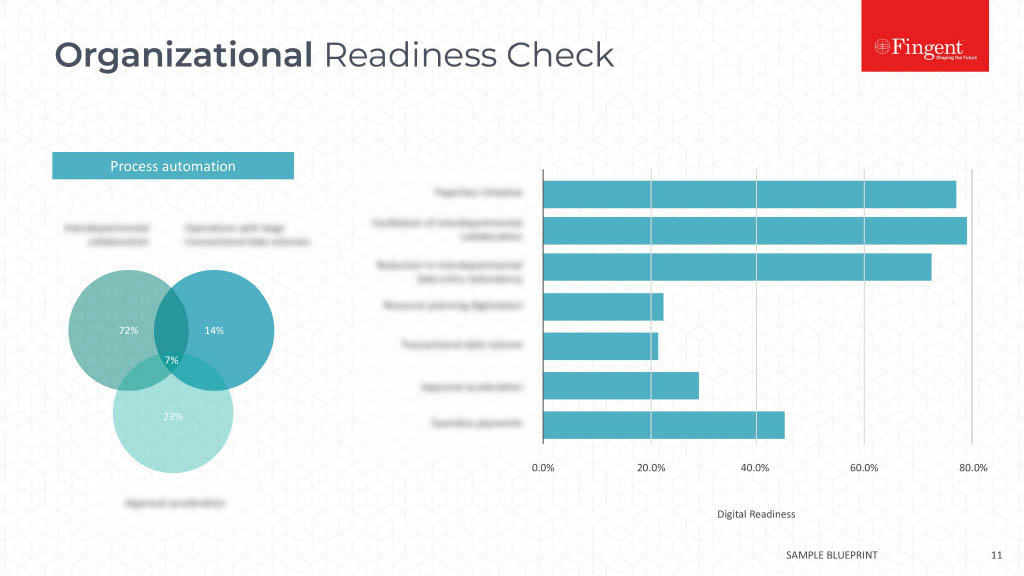
1. Assess your current SAP architecture and processes
Before you build anything new, know exactly what you’re standing on. Which modules are up to date? Which processes are still manual? Where do the bottlenecks actually live? Not where everyone assumes they live. Modernize or migrate where needed. SAP ECC mainstream maintenance ends December 31, 2027. After that, no more patches or compliance updates. With many customers still moving to S/4HANA, the deadline is closer than it looks.
2. Establish a strong data foundation
AI is only as good as the data you feed it. Clean master data, consistent naming, one source – this can make or break everything that follows.
3. Locate high-value AI use cases
AI shiny-object chase may be thrilling. But stop. Select two or three scenarios that decrease time, lower expenses, or minimize mistakes. Demonstrate the worth initially. A single specific, quantifiable success will generate more confidence than five lofty projects that can’t be clarified in a board meeting.
4. Introduce AI gradually
Allow AI to generate the report. Allow a person to make the final decision. Begin with support, then gradually cede more control as confidence develops. It is built one correct answer and one successful handoff at a time.
5. Build an AI governance framework.
Decide who owns the AI, who approves its decisions, and perhaps most importantly, who is accountable when it gets something wrong. Because “the AI did it” is an explanation. It is not an accountability model.
Where AI Is Transforming SAP in 2026
Finance
AI integrated into S/4HANA now manages cash flow predictions, automatic reconciliations, and anomaly identification in transactions that would require a person days to detect manually. For a finance team buried under month-end close, that’s not a minor convenience. That’s hours of a controller’s week handed back.
Supply chain
Stop planning from yesterday’s patterns. AI reads live signals, predicts demand, and helps prevent shortages and overstock before they happen.
Procurement
AI spots supplier risks, flags contract red flags, and turns days of spend analysis into minutes. The value isn’t replacing judgment. It’s giving the team a head start before the judgment call has to be made.
Operations
Workflow automation paired with predictive insight means fewer surprises on the shop floor and fewer emergency calls at 6 a.m. because a machine failed with no warning. Predictive maintenance flags wear and tear before it becomes downtime.
Customer service
AI-assisted responses inside SAP’s customer experience tools help service teams resolve account-specific issues faster, without losing the thread of what the customer already said. Nobody should have to explain their problem twice.
None of this works if the data underneath is fragmented. Every gain here assumes that the foundation from the section above is already in place.
Good News for SAP ECC Users!
You don’t have to wait until SAP S/4 HANA migration to adopt AI! Begin capturing value from AI on ECC while keeping your future S/4HANA plans in view.
Check out this practical guide to AI adoption for SAP ECC users.
FAQs
1. What is AI in ERP?
AI in ERP means putting AI directly into the system that runs your business most effectively. Instead of simply recording what happened, the ERP can now look ahead, spot patterns, and make recommendations. It can even take action.
2. How is AI employed in ERP systems?
AI gives the ERP a new job description. It can predict, spot anomalies, answer questions, and, through AI agents, actually get work done. The ERP is no longer just keeping score. It is starting to help run the play.
3. What are the benefits of AI in ERP?
The biggest benefit is not that the ERP becomes “smarter.” It is that people spend less time doing work the system can handle. That means faster closes, fewer manual errors, quicker decisions, and processes that can adapt when reality changes instead of following the same script regardless of what is happening.
4. Where can AI make the biggest impact in ERP?
The best AI use cases turn better predictions into faster decisions and real business value. Begin with finance and supply chain, areas rich in data where timely decisions are crucial. Consider cash flow, demand, fraud, purchasing, and upkeep.
5. How can businesses prepare their ERP systems for AI?
Do not start with the AI. Start with the foundation.
Take an honest look at your architecture. Remove the unnecessary data. Select a few key issues where AI can provide quantifiable benefits rather than attempting to implement AI throughout the whole ERP system. And ensure individuals are informed from the outset. The goal is not to remove human judgment. It is to give people better information and more time to use it.
6. How is AI used in SAP ERP?
SAP is putting AI directly into the workflows where work already happens. Joule, SAP’s AI copilot, works across S/4HANA, SuccessFactors, and Ariba. That matters because context matters. The AI meets people where the work happens, instead of sending them off to another tool.
7. Does SAP S/4HANA use AI?
Yes. The larger change is regarding the position of AI. It is transitioning into finance, supply chain, procurement, and operations, evolving from an add-on to an essential element of ERP functionality.
SAP Transformation Is Beyond Migration
Moving to S/4HANA Cloud doesn’t make a company AI-ready. It makes it AI-eligible. That’s a real difference, and it’s the one most transformation budgets miss.
The common thread in stalled AI projects isn’t the software. It’s treating migration as the finish line instead of the starting point. A modern ERP core is necessary. It simply isn’t sufficient by itself.
Genuine readiness integrates four elements functioning cohesively: a contemporary foundation, a refined data strategy, automation capable of managing exceptions, and AI employed with purposeful intention. Neglect one, and the other three bear the burden by themselves.
Don’t Wait Too Long! Explore Your SAP S/4HANA Migration Options Now!
How Fingent Can Help
Fingent works with SAP customers on exactly this gap, between migration and true AI readiness. That means architecture assessments that tell you the truth about where you stand. Data foundation work that doesn’t get skipped for a deadline. And AI use cases chosen for measurable value, not for the demo.
We’ve seen enough rushed rollouts to know the teams who slow down for the data foundation are the ones who move fastest once AI actually goes live. We can make that happen seamlessly. Not sure where your SAP environment stands? Talk to our expert today.
Stay up to date on what's new

About the Author

Recommended Posts

09 Oct 2026 B2B
Chatbot vs Conversational AI: What’s Actually Different
Chatbot vs Conversational AI: What's Actually Different Every vendor calls its chatbot AI-powered. Most won't tell you what happens when the customer goes off script. That’s where the real difference……

17 Sep 2026 B2B
Agentic AI Governance: A Practical Framework for CXOs and IT Leaders
AI pilots are easy to approve. However, production says a different story. Once an AI agent starts making decisions, calling business systems, handling customer interactions, or triggering actions without waiting……

10 Sep 2026 B2B
SAP S/4HANA Migration: What Happens If You Wait Until 2027?
Everyone talks about the ECC deadline like it's a wall you hit on one specific day. It's not. It's a slope. And you're already standing on it, whether you've noticed……

03 Sep 2026 B2B
How AI Agents Are Simplifying the Adoption of AI in Logistics
AI in logistics is changing the game for businesses, from forecasting and order processing to lead generation and customer service. Yet, many logistics leaders struggle to move from experimentation to……
Featured Blogs







Stay up to date on
what's new



Talk To Our Experts