Category: Business





Stay up to date on what's new

About the Author

Featured Blogs







Stay up to date on
what's new



Talk To Our Experts
Progressive Web Apps: New Cutting-Edge Trend in Web Development
Speed and convenience have become crucial in keeping online shoppers engaged. Progressive Web Apps development is a solution that allows the shopper to enjoy an app-like experience via a website (using web browsers). Users can install the PWA application from the browser window and access it just like a native app. In addition, progressive web apps improve the quality of your web applications, making them reliable, fast, and engaging.
Are you considering PWA for your business growth? Is it worth exploring this option? This blog will help you take a closer look at why Progressive Web Apps are turning to be the new cutting-edge trend in web development.
What is a Progressive Web App?
Frances Berriman and Alex Russel coined the buzzword “Progressive Web Apps” in 2015. To date, PWA has been a big player in this mobile-first world. Progressive Web Apps (PWA) have caused digital marketers to rethink how they design and deliver sites.
Progressive Web Apps can deliver a blazingly fast and slick app-like shopping experience to the end-user. It combines the best of two worlds: your website and the native application. It can be called a hybrid app as users can now browse your website on their mobile. Besides, PWA promises to solve two vital issues:
- Performance and usability
- Mobile-web conversion rates
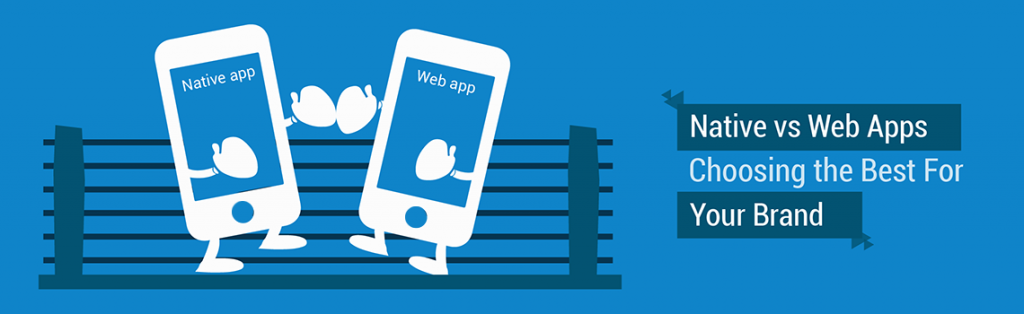
Read more: Native Apps vs. Web Apps: Choosing the Best for Your Brand
Business Benefits of Progressive Web Apps
Several companies that focused their efforts on PWAs instead of having a separate native app have experienced increased conversions. A best case in point is the world’s largest online B2B trading platform, Alibaba.com. Alibaba.com increased its conversion rate by 76% across browsers after upgrading its website to PWA.
Here’s how your business can benefit from PWA:
1. High-performance rate
Response time is crucial for audience engagement and better conversion rates. PWA responds quickly as the browser uses caching to save the elements of the layout that are repeated in the template. This improves the speed of downloads and reduces page load time. Subsequently, better performance leads to a better user experience, which in turn increases customer retention rates.
2. Ease of use across multiple devices
Progressive Web Apps are built with a responsive layout in mind for an improved user experience. A responsive design will fit into any size of the screen with ease. In other words, PWA will adjust the experience as per the device screen size. You can further improve the user experience with a PWA manifest file that controls the full-screen view.
3. Seamless browsing experience
A traditional website is virtually useless without a stable internet connection, but not a Progressive Web App. PWA can be easily viewed offline as service workers automatically cache important application features and information from the user’s last online access. This way, the user can access it without any network. Plus, you can add a brand logo, product descriptions, and few advanced features to your offline page.
This is an additional incentive for shoppers to choose businesses with a Progressive Web App over those that use native apps. Such a seamless browsing experience rewards you with better engagement rates and customer retention.
4. Resembles native-built applications
PWAs can be designed to look and behave like native apps, or they can be designed to let users know they are browsing the Progressive Web App. Regardless of the developer’s choice, it can contain a complete set of traditional app functionalities with database access. The best part is that you can seamlessly integrate the application into an existing website or an app.
Watch Video: Fingent can help you choose the right mobile app development approach by evaluating your requirements.
5. No installation is needed
Shoppers can download your app directly onto their devices. Once downloaded, it gets its own icon on the screen, just like a traditional mobile application. This will avoid the slow and complex installation process, improve user experience, and reduce user abandonment.
Here is another way it can benefit you: users can easily access the PWA via a URL. In other words, a user can easily share this link with a friend contributing to increased leads.
6. No manual updates are required
Native apps must be updated periodically through mobile internet or a WIFI connection. Such updates can consume large amounts of data, which may be costly for some users. Fortunately, Progressive Web App updates are performed “on-use,” much like how a website is updated.
7. Low development cost
Developing a mobile app can be a costly process, especially for small businesses and startups. Thankfully, PWA development is much cheaper than traditional app development but provides a better option for companies to generate a positive ROI.
Read more: Mobile app development: 4 tips to consider

8. Wide range of features
The most prominent feature of PWA is push notifications. Publishers and developers can use this feature to implement creative advertising solutions. As the push notifications appear on a shopper’s device screen, it is read more often than emails or updates on social media. This can lead to valuable brand awareness and promote products or services.
9. Improved app and data security
Security has been a concern for both users and developers. According to new standards of web design, all customer information must be moved to HTTPS. So it is highly convenient to launch Progressive Web App within a safe environment. Moreover, it builds customer confidence in the security of their personal information as they enter sensitive data into your PWA.
10. Low data and low storage
Data is costly in some developing nations. That is why it is a bonus that Progressive Web App consumes only a fraction of data usage compared to native apps. Moreover, it does not take up significant storage space on devices, so users are more inclined to use a lighter app on their smartphones. Also, it contributes to better performance.
Read more: Building a Business Mobile App in 2021? Here’s What You Need to Know
Progress with Progressive Web Apps
Progressive Web Apps are the future of web-hosted apps as they can overcome the inherent limitations of web performance and insufficient or unavailable internet connections. Since PWAs can run on any modern platform, soon they will overtake truly native apps. Yes, PWAs have the potential to change the way the web works. However, Progressive Web Apps will not replace websites and mobile apps altogether. It is still in its infancy. To know which option is best for your business, have a chat with the technology experts at Fingent.
Stay up to date on what's new
About the Author

Featured Blogs
Stay up to date on
what's new
Talk To Our Experts
Dynamic visual storytelling using SAP Analytics Cloud can reimagine your business intelligence, analytics, and reporting with real-time data. Here’s how.
“Storytelling is our obligation to the next generation. If all we are doing is marketing, we are doing a disservice, not only to our profession but also to our children and their children. Give something of meaning to your audience by inspiring, engaging, and educating them with story. Stop marketing. Start storytelling.” These impactful words from Laura Holloway, Founder & Chief of The Storyteller Agency, sets the tone for this article.
Business storytelling is a powerful communication tool. It is a process and approach that helps establish a brand’s identity by making its message meaningful and memorable.
SAP Analytics Cloud helps you create this impact by creating visual stories with your brand or product in the spotlight. Moreover, it can help your product or brand stand apart in its essence and what it stands for. Visual storytelling contributes to your brand’s alignment with customers who ascribe to the same beliefs.
This blog discusses how SAP Analytics Cloud helps analysts create dynamic visual stories and how businesses can benefit from the same.
What is SAP Analytics Cloud?
SAP Analytics Cloud is a solution in the SAP portfolio to meet the needs of data visualization in the cloud. It enables analytics (analysts) to create storyboards about your products and services faster. SAP Analytics Cloud empowers all businesses to shape their ideas in the form of fun-filled, illustrative stories.
Interestingly, studies have revealed that the human brain processes visual information 60,000 times faster than text. Defining products and services has always involved long functional specifications. As a result, they are easily misinterpreted and cannot be validated by the users. On the other hand, SAP Analytics Cloud can help analytics create dynamic visual stories that show the value of your ideas and product vision making messages more memorable and understandable.
SAP Analytics Cloud is delivered as an all-in-one, SaaS-based product. Its primary function is to create data reports that originate from various sources such as real-time data, budget forecast data, or data formatted as an MS Excel table. This solution is intuitive and user-friendly, allowing users to produce reports of varying complexity with complete autonomy.
Analysts understand that data can be a powerful influence only when it is presented in the right way. Mind-numbing spreadsheets or uninteresting charts can be turned into powerful and appealing stories with the help of SAP Analytics Cloud. Undeniably, data has a lot of potential. With an expressive storyline, you can unleash the potential of the data making it convincing and remarkable.
Read more: 8 ways business intelligence in SAP serves as your centralized suite for data reporting
Top 5 benefits of SAP Analytics Cloud
SAP Analytics Cloud is a pre-configured ready to deploy true cloud solution. It is convenient, secure, and can scale with a business of any size. Consider 5 top benefits of SAP Analytics Cloud.
1. Gain insight into what drives your business
SAP Analytics Cloud is powered by augmented analytics features driven by AI and ML technologies. So, you can automatically gain insight from any level of detail and use those key influencers of past results to predict future scenarios and outcomes.
2. Create dynamic visual stories for better decision making
Hasty decisions made on assumptions can have disastrous consequences for your business. Conversely, you can make informed decisions by interacting with visualization as you can create dynamic visual stories based on your critical business areas with trusted data. Furthermore, this solution allows you to investigate thoroughly and answer essential questions of business on the fly.
3. Simplify analytics landscape
As SAP Analytics Cloud seamlessly integrates with your data and planning solutions, you can connect to data from multiple sources. This simplifies your analytics landscape, enabling you to get the complete picture and make better decisions.
4. Drive better business outcomes
Your organization can gain complete alignment across all business aspects by aligning financial, strategic, and operations planning in SAP Analytics Cloud. Subsequently, you can now predict future scenarios and outcomes with collaborative enterprise planning in one simple cloud solution.
5. Strategize with business growth in view
Strategic planning ensures business growth and helps businesses to remain resilient despite challenges. Collaborative enterprise planning empowers you to create a fact-based plan for your business’s success. Moreover, it allows you to modify your planning data when required to drive better budgeting, forecasting, and analysis for your business growth.
Read more: 7 crucial business challenges solved by SAP Analytics Cloud
SAP Analytics Cloud help analysts tell a story with your data
Just as in writing or speaking, analytics must keep their data design simple, crisp, and to the point. Telling a compelling, dynamic visual story requires both common sense and imagination. Here are some best practices to follow:
- Consider your target audience and identify what they already know about the subject.
- Ensure the colors and style are unique to your story to avoid confusion.
- The arrangement of the dashboard must be self-explanatory and user-friendly.
- Use symbols, icons, and pictures to help your audience understand the story at a single glance.
- Do not just beautify the visuals. Instead, explain the data.
Read more: Healthcare analytics reaches new heights with SAP HANA

Use cases of how SAP Analytics Cloud helped create dynamic visual stories
Use case 1: A conservation society in Australia improves its operations with data-driven decisions
Taronga is a non-profitable organization that works to create the next generation of conservation champions. With the help of cutting-edge technology by SAP Analytics Cloud, Taronga is leveraging its data to improve operations and expand its impact. It is experiencing transparency, flexibility, and scalability while streamlining and digitizing all its business processes.
SAP Analytics Cloud provided Taronga access to real-time reporting that enabled the organization to make data-driven decisions which in turn contributed to a positive impact on wildlife conservation and enhanced visitor experience.
Use case 2: A dairy cooperative in Belgium makes informed decisions with real-time financial reporting
Milcobel is the largest dairy cooperative based in Belgium. It is a vast company that processes and commercializes 1.8 billion liters of milk from 2,400 dairy farms. The larger the organization, the greater the volume of data. So, Milcobel chose to implement SAP Analytics Cloud along with other SAP solutions. This implementation resulted in the reduction of time-consuming manual processes.
Moreover, it provided real-time data to the financial team to better understand the product margins and profitability of each of its dairy plants. Thus, the leaders can now trust that they are confidently making informed decisions based on up-to-date data. In addition, SAP Analytics Cloud ensures that all users have access to real-time data. Consequently, Milcobel has control and flexibility over their data quality and can benefit from an end-to-end strategy that combines data volume, quality, and usage to create data value.
Read more: SAP S/4HANA journey: 8 ways C-level leaders and executives can derive business value

Beyond visual storytelling
The capabilities of SAP Analytics Cloud go far beyond just visual storytelling. As an SAP Silver Partner, Fingent has worked with many clients globally and helped them bring out the best from their business using the SAP Analytics Cloud landscape.
Read more: How Fingent helps CFOs gain new insights and reliably enable key decisions
Fingent will help you create a cloud-first business environment, provide data visualization and reporting solutions, and empower your company with unparalleled business intelligence while leveraging your existing cloud and on-premise data solutions. What more could you ask for? Well, there is a lot more, and Fingent can help you tap into it all. So give us a call, and let’s get talking.
Stay up to date on what's new
About the Author

Featured Blogs
Stay up to date on
what's new
Talk To Our Experts
Why migrate your legacy ERP software to Odoo ERP?
COVID-19 pandemic and the subsequent economic disruption have made many businesses consider the benefits of legacy application migration. Migrating legacy enterprise applications or systems to new technology platforms is one of the cheapest and fastest methods to ensure business continuity in today’s volatile market.
Read more: Why modernize your legacy systems? What’s the best approach to legacy systems modernization?
Technavio estimates that the global ERP software market will grow by $18.91 billion from 2019-2023, with a CAGR of 9%. This report only highlights the growing demand for ERP software across various businesses.
Odoo ERP implementation is an all-in-one solution befitting your particular business requirements. Odoo ERP system is flexible and easy to deploy. It can replace your outdated legacy system and augment the overall business process. For example, Toyota uses Odoo ERP to streamline material handling processes. Even for a complex project, the shortest implementation span has helped Toyota create additional value in just six months of Odoo integration.
Reasons leading to an increase in demand include the need for digital transformation and to keep up with the ‘new normal’ thanks to the rise of eCommerce, mobile shopping, and providing a seamless experience to customers. In addition, the changing business scenarios are compelling businesses to adapt to new technology and platforms for facing the challenges and making the migration from one environment to another inevitable.
This has necessitated migration to the latest platforms such as legacy ERP systems to the new, web-based, Cloud, or On-premise Odoo ERP or from old Odoo ERP to the latest version.
Read more: Top 6 reasons to migrate to a cloud-hosted ERP

Legacy System vs. Odoo ERP
Currently, many organizations are operating under the legacy system, and some even continue to stay within that comfort zone. However, decision-makers will have to look into new technology and methods, as legacy systems need better functionality to facilitate daily business operations and accommodate the growing customer base.
Migrating to Odoo ERP system is the best way to adapt and meet the ever-evolving market demand. In addition, Odoo ERP migration reduces manual labor and improves business productivity to a great level. It is less time-consuming and cost-effective than going for a total replacement of your legacy enterprise application.
Why is legacy application migration needed?
1. Eliminate maintenance and security risks
A legacy system is inefficient and outdated and can cost you more than a total replacement, especially if the system is older. It can result in IT businesses spending more on its maintenance, leaving little of the budget to address business challenges that are getting complicated day by day.
That said, old and outdated software systems are more prone to cyber-attacks and security risks. Also, when such an obsolete system is near its end of the life cycle, support will be stopped leaving organizations operating on those legacy systems vulnerable.
In many cases, companies may lose data and information when legacy systems fail. Also, it could be tough to find people who know those obsolete programming languages to repair the system. Outsourcing the maintenance work may also become more expensive than usual as the professionals may not be well-versed with such a system. This is where a legacy application migration expert like Fingent can help. We help migrate your legacy on-premise systems to advanced, cloud-hosted infrastructure so that your business can scale as it grows.
Read more: 5 ways application modernization enables your business to reap ROI during a pandemic
2. Gain improved access to relevant data
Most of the legacy systems were built during times when customers would still shop from traditional brick-and-mortar stores. Also, these systems would not store business data from each department in a central place.
So, organizations looking to continue operating on outdated applications or systems will naturally miss out on better opportunities and scaling up. It will limit their business mobility and flexibility as well. Additionally, legacy systems lead to data duplication. The data itself could be inaccurate, outdated, and incomplete. These inefficiencies will hamper your business growth and even slow down the competitive edge.
On the other hand, web-based cloud ERP systems like Odoo allows businesses to access their data from anywhere and anytime from various operating systems and mobile devices.
Simply put, Odoo migration provides organizations with more innovative ways of operating a business while offering technological developments allowing them to maximize value creation across assets and operations lifecycles, eventually improving ROI.
Read more: Odoo Migration: Why is it crucial and how to do it seamlessly
Benefits of legacy application migration to Odoo
Odoo migration allows you to move your legacy applications from their existing tech stack to the latest software platform. Legacy application migration to Odoo ERP is one of the best ways to augment software performance by leveraging the latest technologies. Here’s what legacy system migration to Odoo offers you:
1. Improved operational efficiency
Odoo offers both Cloud and On-premise ERP solutions that enable organizations to address the needs of their customers. Cloud-based ERP is more popular as it offers improved flexibility, accessibility, security, and better operational efficiency. The cloud-based application is also accessible across different devices such as laptops, smartphones, desktops, and tablets. However, you will need a reliable internet connection and a compatible device to access the application anytime and anywhere. Migrating to Odoo will also reduce hardware dependency and is easily accessible.
2. Cost-efficiency
Odoo migration is cost-effective and gives you better control of your operational expenses. You can utilize Odoo’s dedicated financial management, invoicing, and accounting modules and customize them according to your business needs. More importantly, Odoo migration reduces infrastructure complexities and maintenance costs. Also, its flexible nature allows you to pay for the features you are using.
3. Robust data security
As legacy systems include obsolete software configurations and outdated technologies, they are more vulnerable to cyber-attacks. Odoo offers exceptional features such as 256-bit SSL encryption, PBKDF2+SHA512 encryption, RPO/RTO-based backup, and disaster recovery techniques in addition to top-notch network defense against DDoS attacks, SQL injections, and malware attacks.
4. Overcome compatibility issues
Many organizations are likely to face compatibility issues while upgrading their legacy applications due to old software configurations. In addition, given the underlying software architecture, the legacy system also makes integrating new technologies very challenging.
So, legacy application migration seems to be the only option to overcome the apparent limitations and vulnerabilities. As the entire tech is upgraded while moving data to the Odoo ERP software platform, it becomes fully compatible with several applications, enterprise modules, and software technologies. You can also benefit from the multiple, feature-rich modules offered by Odoo ERP to manage various business functions.
Read more: Why your business needs Odoo ERP

In addition to the above benefits, Odoo ERP enables search integration, social networking, and other latest technology functions. Moreover, migrated systems are less likely to become outdated as they can be continuously updated to on-trend technology.
Migrate your legacy ERP to Odoo with Fingent
Odoo ERP caters to the business needs of enterprises of all sizes, and legacy application migration to Odoo will provide you with a string of benefits. These benefits will future-proof your organization regardless of its diverse functionality.
Read more: Why choose Fingent as your Odoo ERP partner

We, at Fingent, provide end-to-end Odoo ERP solutions for industry-specific business needs. We specialize in building custom enterprise applications for varying business needs and render complete support for Odoo ERP integration and legacy application migration to Odoo ERP. To know more about our Odoo ERP migration services, contact us right away.
Stay up to date on what's new
About the Author

Featured Blogs
Stay up to date on
what's new
Talk To Our Experts
How Various Industries are Leveraging AR, VR, and MR Today?
Augmented Reality (AR), Virtual Reality(VR), and Mixed Reality (MR) may sound the same to many of us. But do you know that each one is different? AR, VR, and MR are different tech concepts with characteristics that differentiate each from one another.
Here’s what you need to know about each of the technologies, along with a few examples.
Augmented Reality
Augmented Reality uses computer vision along with mapping and depth tracking to show the appropriate content to the user. This functionality allows the cameras to collect, send and process the data to show the appropriate content to the user.
AR is designed for unrestricted movement while projecting images or other objects that you are looking at and enhances the user’s physical environment with contextually relevant digital content in real-time. A user can experience Augmented Reality with a smartphone or special hardware.
Watch Video: Augmented Reality in Education Transforms Learning Experience
Some of the interesting real-world examples of AR
1. AR in Gaming
Games like “Pokemon Go” project a Pokemon on your screen, on top of whatever your mobile camera focuses on. Augmented Reality has beautifully combined the real world with the favorite Pokemon characters.
2. AR in Medical Training
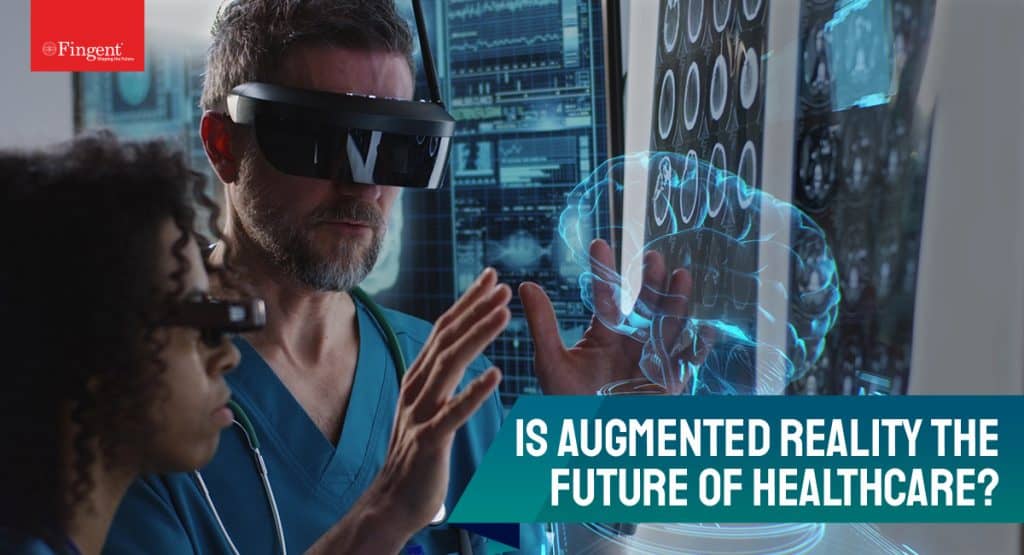
Augmented Reality is finding its virtue in medical training today. For example, students at the Cleveland Clinic, Case Western Reserve University are learning human anatomy using AR headsets or glasses. AR allows them to examine the human body without the need for dissecting cadavers or watching live operations.
Read more: How Augmented Reality in Healthcare is set to Transform the Industry in Future
3. AR in Retail
The retail sector also has been taking advantage of AR to help customers have a more enjoyable and interactive shopping experience. For example, Harley Davidson has developed a unique mobile app for its customers that allows them to view a motorcycle in-store using AR and customize it by adding accessories, changing paint jobs, etc.
IKEA, the leading retail conglomerate, has rolled out AR-powered retail apps that allow customers to “try on” clothing remotely before buying them online.
Read more: How Top Brands Embrace Augmented Reality to Offer Immersive Customer Experiences
4. AR in Manufacturing
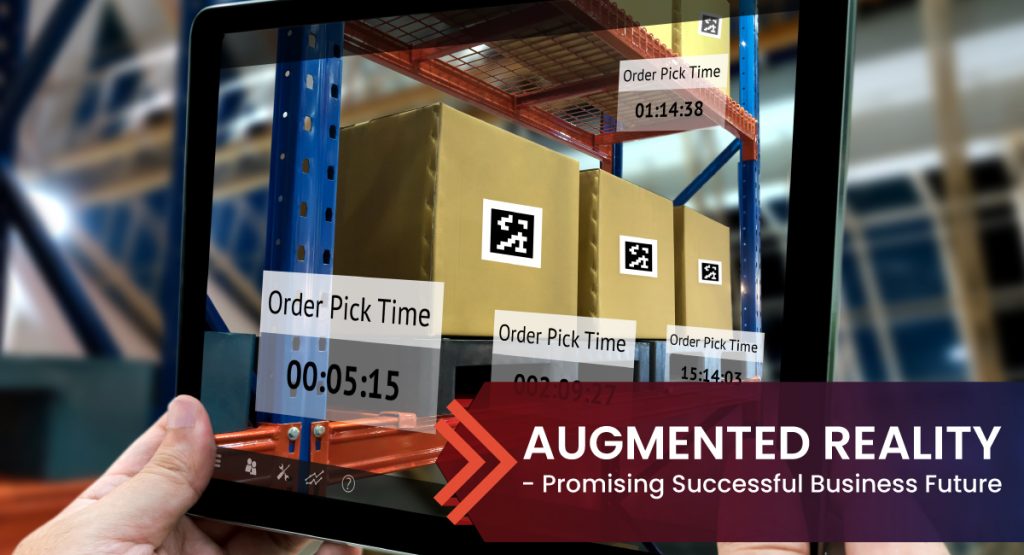
Augmented Reality enables the manufacturing industry to gain a competitive edge by helping companies improve quality and productivity. Workers can get assistance from AR gadgets to save time, reduce errors and increase efficiency. Some of the world’s biggest brands like Boeing and General Electric are already using AR in their manufacturing processes.
Using AR glasses allows Boeing’s technicians to easily view the wiring renderings in the aircraft fuselage without external distractions.
Augmented Reality enables GE mechanics to be more productive as the technology offers them step-by-step instructions and visuals directly within their line of sight. They also get alerts in real-time through AR smart glasses so that they can inspect every step before moving on.
Read more: How Augmented Reality Simplifies Equipment Maintenance

Virtual Reality
Virtual Reality Environments (VREs) allow users to experience real-life scenarios via simulated counterparts and gain practical knowledge that would otherwise be difficult to comprehend in a real environment.
As the main focus of Virtual Reality is on simulating the vision, you will have to wear a VR headset such as Oculus Quest or HTC Vive Cosmos in front of your eyes that eliminates any interaction with the natural world (avoids distractions). Typically, two autofocus lenses are placed between the screen and the user’s eyes. The lenses adjust based on the individual eye movement and positioning. To render the visuals on the screen, you can use an HDMI cable connected to the PC or mobile phone.
Virtual Reality uses speakers, goggles, and even handheld wearables to simulate a real-world experience. You can also employ visual, audio, and touch simulation to create a more immersive reality.
A few real-life applications of VR
1. VR in Education
Virtual Reality can make learning more engaging and immersive. In addition to schools and universities, virtual experiences can help businesses train their staff. Currently, Unimersiv is offering VR educational content for institutions and companies.
Case Study: Using 360-degree VR simulations, the University of North Carolina offers an immersive campus touring experience to aspiring students. Download now!
2. VR in Real Estate
For years, real estate agents have used photos and graphic designs to showcase properties to prospective buyers. Today, Virtual Reality has transformed real estate property tours, making them more personalized, immersive, and close to reality. Being an immersive technology, VR enables potential buyers to experience a 3D walkthrough and understand better what each property has to offer even before scheduling a physical site visit.
For example, Sotheby’s, one of the world’s leading luxury realty brands, offers Virtual Reality home tours and videos to its clients. Potential buyers can view properties and spaces from the comfort of their homes using a web browser, or a smartphone, PC, laptop, or through a wearable headset.
Read more:How Virtual Reality can Transform Your Real Estate Business

3. VR in Marketing
VR is helping businesses reach out to their audiences by launching immersive and engaging marketing campaigns. With the COVID-19 pandemic compelling people to shop online and companies to transform digitally, Virtual Reality is gaining more popularity as it is helping people get a feel for products without leaving their homes.
For example, IKEA has introduced a VR app that enables users to experience kitchen remodeling. Using the VR Kitchen app, you can explore the virtual kitchen and interact with the objects using a VR headset.
4. VR in Healthcare
Virtual Reality helps doctors understand their patients’ needs better as it provides an in-depth look into human anatomy. Today, VR is extensively used in surgical training.
An educational project conducted by the University of New England (UNE) successfully used VR to teach empathy to medical and health profession students. The project used a VR tool called “Alfred Lab app” – to teach students about macular degeneration and hearing loss from a 74-year-old African American man’s perspective. Realizing an aged and ailing patient’s thoughts and concerns enables the residents to develop empathy towards such patients.
Read more: How Virtual Reality Improves the Standard of Medical Education and Training

5. VR in Travel and Hospitality
The travel industry is facing the hardest time ever in its history. However, vaccination rollouts on a global scale and international travel relaxations now give a fillip to travel, tourism, and hospitality. An early adopter of digitalization, the travel industry has already forayed into Virtual Reality. Travel businesses attract tourists and even promote holiday destinations through virtual staging and tours. Virtual Reality also allows people to explore the world virtually, especially those who cannot afford to travel.
Google StreetView is one of the best examples of how VR is being used in the travel industry. In addition to viewing panoramic images on a computer, it allows users to enable Google Cardboard mode for a Virtual Reality experience.
Mixed Reality
Mixed Reality, sometimes known as hybrid reality, combines the elements of both AR as well as VR. However, here the virtual content is not only overlaid on the actual environment but is fixed to and interacts with that environment. In simple terms, Mixed Reality lets you see virtual objects just like Augmented Reality, but these objects are capable of interacting with the real world. In simple words, Mixed Reality is more like immersive and interactive Augmented Reality.
MR is still in its nascent stages and may take time to create an impact like the other two technologies. One of the most remarkable Mixed Reality apparatuses is Microsoft’s HoloLens.
Opportunities provided by Mixed Reality
1. MR in Education
Mixed Reality allows students to see both the real world as well as the holograms. MR offers an immersive learning environment enabling students to understand better.
Case Study: Find how Fingent developed a unique Mixed Reality application for a leading university that enables users to identify people using facial recognition. Download Now!

2. MR in Manufacturing
Mixed Reality provides workers with real-time assistance, thereby facilitating manufacturing processes. The technology allows workers to see holographic instructions, so they know what to do. This minimizes human errors and improves quality significantly. Mixed Reality is also helpful for repairs and maintenance, especially in industries that require precision and expertise.
For example, Renault Trucks integrates Mixed Reality into its manufacturing process for enhancing engine quality control at one of its factories.
The blurring line between physical and virtual
While Virtual Reality takes you to the virtual world from wherever you are, Augmented Reality adds to the reality by projecting information on top of what you see. Mixed Reality combines both AR and VR. All these technologies, though powerful, are yet to make their mark with consumers. That said, they can completely change the way we use computing devices, gadgets, and technology in the future.
Are you thinking about delivering immersive virtual experiences to your customers that can overtake physical encounters? Talk to our reality tech experts today.
Stay up to date on what's new
About the Author

Featured Blogs
Stay up to date on
what's new
Talk To Our Experts
What are the benefits of implementing SAP ERP software into your business?
With businesses transforming themselves digitally, SAP ERP systems saw a rise in popularity for the past few years, especially since 2019. What makes the system so unique? For one, SAP ERP can be implemented by all businesses, big or small, and reap the benefits of the software. That said, SAP software is providing solutions that are helping businesses adapt to the ever-changing technology landscape.
Read more: SAP for Business: 9 Ways to Maximize Business Performance

What is SAP ERP?
SAP stands for Systems, Applications, and Products in data processing. SAP is the market leader among ERP software providers. SAP ERP comprises several modules that help companies gather, maintain, store and interpret data from functional areas such as;
- Sales and distribution
- Financial accounting
- Manufacturing and material management
- Logistics and warehouse management
- Supply chain management
- Business intelligence
In other words, the SAP ERP system produces a precise process that offers a complete perspective (internal and external) of your business.
Read more: 8 Ways Business Intelligence in SAP Serves as Your Centralized Suite for Data Reporting
What are the uses of SAP ERP software?
With over 230 million cloud users and more than 100 solutions covering all business functions, SAP is the largest cloud portfolio provider in the ERP market.
SAP facilitates effective data processing and information flow across organizations. Also, software like SAP S/4HANA leverages in-memory computing to process vast data volumes and simultaneously supports advanced technologies such as machine learning and Artificial Intelligence (AI).
Read more: 6 capabilities of SAP S/4HANA that will help you become an intelligent enterprise

SAP software connects different parts of a business, such as finance, accounting, sales, supply chain, assembly line, HR, etc., into an intelligent business suite that is entirely digital. You can purchase or customize any module based on your business needs.
Simply put, SAP software can manage almost all your departments, revolutionizing the way your business operates. Also, it helps organizations eliminate the redundancy and duplication in data. This can help organizations to run even more efficiently.
If you’re new to SAP and looking for an SAP consultant, get in touch with us, and we will assist you further.
Case Study: Fingent helped a real estate giant reduce manual work, improve TAT, and increase profitability by integrating multiple role-based mobile apps into their SAP ERP system. Download now!
Business benefits of implementing SAP ERP software
1. Offers innovative technology
SAP ensures you are equipped with the right tools and technology that will help you prepare for the future. SAP software also provides you with future-proof cloud ERP solutions that will power the next generation of your business.
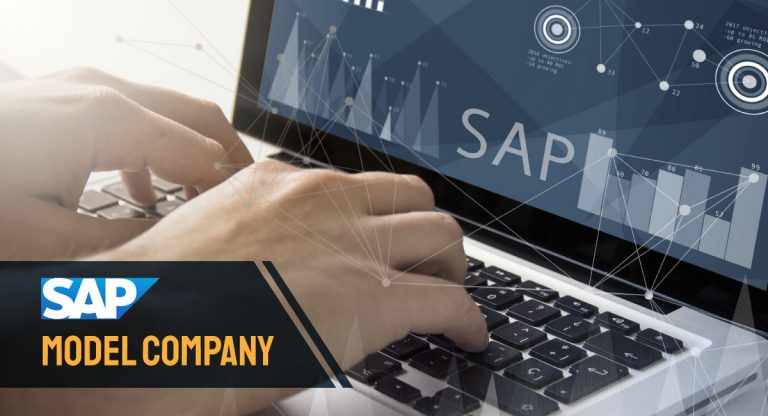
Read more: Create Intelligent Organizations with SAP Model Company
2. Improves cost-efficiency
SAP ERP software reduces the administration and operation expenses by using accurate and real-time information. In addition, the software enables manufacturers to control operations and avoid delays in production and break up information, which eventually allows the management to make decisions effectively.
Additionally, SAP offers complete power to the administrators over the breakdowns of crucial company processes and future disturbances.
3. Advances data management
Performance metrics and measurements help businesses assess their performance and set future objectives as well. However, as the business expands, it will become difficult to manually measure the profit ratios, sales margin, and other metrics.
SAP ERP helps automate processes and allows the staff within the organization to view shared data without retaining manual records. It also helps in generating synchronized reports on essential company metrics. Immediate access to such information will augment decision-making.
Read more: What are the benefits of adopting SAP Intelligent Robotic Process Automation (IRPA)

4. Avoids duplication and upgrades transparency
As all your business information is stored in a single database, the possibility of duplicate records and data entries is reduced. In addition, the system will automatically report the present system records. It improves the quality of the data and lets you create exact pictures in most cases.
Additionally, SAP software upgrades the transparency of your business to a new level. The ERP system will screen and monitor every marginal operation and task from an inventory product level, purchase orders, or billing and delivery. This will provide a clear view of the performance of all the tasks.
5. Integrates other members of the value chain
SAP ERP helps bridge the gap between the suppliers and customers by integrating other value chain members. This allows your organization to gain a competitive edge by engaging in the design and development of new products that add value to their experience.
SAP ERP is a great tool that helps you get more information and improve quality. For example, the availability of up-to-date data lets you adjust production orders and purchase according to your requirements. Also, you can get a segmented database of your customers, making it easier to carry out your marketing campaigns targeting specific segments.
6. Enables better analysis and forecasting
In most cases, it is difficult for a person to provide accurate information evaluation along with reports. SAP ERP system eliminates information risk as there is no duplication of data. In addition, the system provides real-time reports of even the minor business tasks that serve risk assessment and generation of performance reports.
The ERP system reviews purchases and changes in the inventory as they happen. It provides customers and, most notably, managers with the tools and resources needed to make accurate forecasts.
Read more: Why is SAP Commerce Cloud a Complete Digital Business Solution
7. Allows effortless scaling
If you are a prospective start-up organization and aspire to become a more prominent and successful company in the future, you will have to handle the expansion. It is required to extend your company operations.
Right from the development stage, you will have to consider the machinery, workforce power, and extensive data. SAP software is designed to suit all the fundamental market criteria. Initially, you can do some simple integration and then scale up according to the precise industry specifications.
8. Enhances data security
The SAP ERP system improves data quality and security. The software provides better data protection using built-in security systems and firewalls.
Additionally, SAP allows you to access the relevant information to allocate and limit data usage to every employee or a group of individuals.
Read more: What is business process expertise in SAP and why you need it

Fingent offers SAP ERP consulting and implementation services
SAP has an extensive portfolio of programs designed for all major roles, including project teams, IT administrators, key users, and end-users. Fingent is a certified SAP Silver Partner authorized to deliver a broad range of ERP services across the wide spectrum of solutions offered by SAP. We enable our clients to customize and implement SAP ERP solutions to accelerate their digital transformation journey. We also provide continuous support, SAP AMS, and quality management services to monitor your ERP environment.
Feel free to contact us for any SAP consulting requirements. We are committed to quality and innovation to help deliver optimal results for your business.
Stay up to date on what's new
About the Author
Featured Blogs
Stay up to date on
what's new
Talk To Our Experts
Add More Zest to Your Ecommerce Marketing and CX with 3D Web Configuration
Having a digital infrastructure is inevitable, but it just isn’t enough to keep up with the competition. Achieving business success is about “wowing” your e-commerce buyers. In the post-pandemic world, businesses must find engaging and innovative ways to increase customer satisfaction and experience. A recent Frost & Sullivan study showed that by 2020, customer experience would overtake price and product as a key brand differentiator. True to this, business in 2020 was entirely driven by customer experience.
View Infographic: Business Technologies to Boost Customer Experience and Satisfaction
Local shoppers switched to online shopping, door deliveries were encouraged, telemedicine became more popular, mobile and internet banking users increased, and even classrooms became virtual.
So, how do you “wow” your customer in this age of online shopping? By giving them as close to the real experience as virtually possible!
How do you do that? With a 3D configurator!
A 3D product configurator allows your customers to see exactly how your product looks, acts and feels. It gives them a personal connection with their potential purchase. 3D configurators have become an integral part of the sales process and rising customer expectations during the pandemic, making it vital for specific industries.
This blog helps you understand what a 3D web configurator is and how it can help increase your e-commerce sales and boost customer satisfaction.
Read more:How Custom Retail Software Solutions Help You Gain a Competitive Advantage?

What is a 3D Web Configurator?
In the past, customers were satisfied to see a static photograph that they could easily zoom in and out. However, with the changed circumstances and digital development, customers would like to view how various product designs or features would look in real-time, allowing them to spin, zoom, scroll, and rotate. That is precisely what a 3D web configurator allows your customers to enjoy.
A 3D web configurator is defined as an interactive tool powered by 3D models that lets your customers personalize a product to their specifications in real-time. Plus, it allows them to choose custom options and watch them transform instantly, and receive estimates of the costs based on their customizations.
This service gives your customers the feel of being at your store because it gives them the ability to get the feel of the product, such as the color, texture, and other aspects of your product. Customers can watch it from any device without using plugins.
Essentially, 3D configurators are not just for retailers and car companies. All industries that sell customizable products can benefit from letting their customers see how their products look in real-time. Once this service is implemented, you can increase your ecommerce sales and boost customer satisfaction.
Read more: 6 Ways to Accelerate Business Growth and Success in 2021

How does a 3D Web Configurator Work?
A 3D web configurator accomplishes two pertinent e-commerce goals:
- A detailed exploration of your products
- The ability to customize the product to a customer’s specific needs
When your customers have not zeroed in on a particular product, your 3D configurator steps in to display different combinations and options for that product to inspire them to make an informed decision. In effect, your 3D configurator will help them check out the colors, styles, material and combine them in different ways until they create a personalized product. Then, as they mix and match their specifications, your configurator will allow them to see their combinations in 360-degree, in real-time mode, along with the price. Such precise control over their product will encourage them to make a purchase.
Read more: How Top Brands Embrace Augmented Reality to Deliver Immersive Customer Experiences
How 3D Web Configurators Boost E-Commerce Sales and Customer Satisfaction?
1. Enable omnichannel experience
As mentioned at the outset, 3D configuration solutions do not require a third-party plugin which limits the number of customers who can view your product. Above all, it can be formatted for events or used in interactive stores as it can also work offline. Such interaction encourages your customers to participate in your productions, ensuring you understand their choice and budget.
2. Grow your e-commerce sales
Your customers will have proactive control of what they want to buy as 3D configuration solutions allow them to try out various combinations virtually. Once you know their exact requirements, you can minimize errors, misunderstandings, and mistakes between you and your customer.
3D web configuration reduces barriers to the market as you will be able to release the options to your customers during the first stage of product development. Thus, you can grow your e-commerce sales as your customers know that you understand them clearly and provide them with quality products.
3. Save costs
3D web configurators can redefine and shorten the sales cycle as real-time customer responses/ reactions can help you create better outcomes. This allows you to track consumer behavior in real-time. Also, you can reduce the quantity of raw materials you need to stock as you will now create products as per request.
Furthermore, you can minimize significant expenses incurred in logistics and storage to a great degree. You can also personalize this unmatched 3D technology to become as responsive as the rest of your website.
4. Place your customers behind the wheel
As the factory floor entered the digital age, brands must let their customers take the driver’s seat for tremendous success. Only then will you precisely understand what your customers want. Knowing that will help you meet their demands accurately. The 3D web configurator allows your customers unparalleled freedom to bring their dream product to life, ensuring their satisfaction.
5. Distinguish your brand with a “wow” factor
Consumer attention has created intense competition between brands, forcing them to spend billions in an attempt to find the magical ingredient that will capture and retain the attention of their customers.
What determines whether their attention sticks or moves away is the “wow” factor that keeps them returning for more. A 3D configurator will help you ensure that your customers are “wowed” each time they visit your website because they would have truly enjoyed the experience. Your configurator can boost customer satisfaction by delivering the experience needed to attract and amaze your customers repeatedly.
6. Boost sales
3D web configurators increase conversion rates and revenues as your customers can make informed decisions without delay. It gives them all the information they require to make a quick purchase. For example, it offers details such as customization of the product, price, immediate and direct contact with the salesperson, detailed descriptions, and a strong call to action. Additionally, you can avoid cart abandonment scenarios through increased engagement.
Make 3D Web Configurators Your Launching Pad
Customer engagement and interactive product visualization can customize a product of choice and provide a tangible in-store experience to your online customers. It can become a launching pad for increased growth, higher sales, and conversions. Would you like to experience the power of a 3D web configurator and don’t know where to start? Get in touch with us right away.
Stay up to date on what's new
About the Author
Featured Blogs
Stay up to date on
what's new
Talk To Our Experts
How does legacy cloud migration ensure business continuity in FinTech? Explore in this article.
Did everyone have Business Continuity Plans in place and protocols to follow during the pandemic? Yes, definitely. Did anyone expect a disaster of magnitude like this? Not in their wildest dreams or gloomiest forecasts! The pandemic forced hundreds of millions of employees to shelter in place, essentially moving all operations online. Not all organizations were equipped with the needed technological tools, and most businesses were caught off-guard. FinTech companies were not immune to the aftermath.
For example, pre-COVID-19, it is true that a few FinTech organizations began migrating to Cloud. But, conversely, there were many who hesitated to embrace the cloud migration strategy because of legitimate concerns over critical factors such as rising costs, managing complex business data and workloads, re-training existing IT staff, and more.
The pandemic was a wake-up call that helped businesses identify legacy cloud migration as a relevant and vital choice. Though most companies have realized that modernizing old, outdated business applications can boost productivity and increase efficiency; some are still hesitant about their cloud migration strategy.
Read more: 11 Practices Followed by Leaders to Build Resilience and Ensure Rapid Business Recovery

This blog explains why FinTech organizations must consider legacy cloud migration seriously and what are some specific benefits of cloud migration strategy.
What is legacy cloud migration?
Legacy cloud migration involves moving on-premise applications, outdated software, or programs that a company has relied upon for years. These applications may include everything from sales or CRM applications to industry-specific applications. Some FinTech organizations may be reluctant to migrate to cloud just because legacy cloud migration is a daunting project. However, maintaining a status quo can be detrimental to your business growth.
Read more: Why modernize your legacy systems? What’s the best approach to legacy systems modernization?
Legacy cloud migration is the only light at the end of the tunnel
The pandemic has triggered a significant reexamination of FinTech businesses and their IT priorities. Gartner predicts that “by 2022 cloud shift across key enterprises IT markets will increase to 28%.” This era of economic uncertainty caused by the pandemic affected all businesses, especially, FinTech organizations. A report from Yellowbrick showed that 84.3% say cloud computing is more important than workplace disruption.
Thankfully, cloud migration strategy was available when it was most needed – a phase when maintaining business continuity has become a priority. Consider the most important reasons for legacy cloud migration.
Why FinTech Companies Should Embrace Legacy Cloud Migration
1. People matter more than premises
As the pandemic hit the world with one wave after another with no time to catch a breath, there was a dire need for remote self-service technology. The massive role played by people working from home is a clear indication that people matter more than premises. A year ago, cloud migration strategy was considered discretionary. Today, work from home has made cloud migration mandatory.
Read more: Why It’s Time to Embrace Cloud and Mobility Trends To Recession-Proof Your Business?
Hence, now is the time for FinTech organizations to plan for their business continuity to remain adept for future upheavals, disruptions, or even disasters. When your organization migrates to cloud, you ensure your teams’ effectiveness while working remotely.
2. Prepare for the next
Though the pandemic is wreaking havoc, it will recede in due time. However, what remains is a possibility of a similar recurrence of disruption in the future. Hence, FinTech organizations must prepare for future disruption by recognizing that the calamity to come may not be another pandemic but its functional equivalent. Legacy cloud migration will equip you to face any future disruptions and remain resilient.
3. Facilitate real-time payments
Banks are well aware of the advantages of real-time payments. The race is on for upgrades and integrations that allow organizations to leverage real-time payments. A survey of over 500 executives indicated that 71.9% are ‘extremely interested’ in such payment capabilities. Above all, cloud brings in scalability and agility to real-time payments. Cloud migration strategy can improve the speed and consistency of transactions. Besides, it can enable fast and frictionless transactions.
Legacy cloud migration allows banks to adopt digital payments. Banks can address many of their traditional payment pain points, such as spikes in demand.
Collaborating between payment players and cloud service providers can help your organization provide a more secure digital experience for your customers. This is of paramount importance in a world where contactless interaction is the key. According to a McKinsey survey, banks that adopt digital transformation were able to increase customer satisfaction by 15-20%, reduce cost by 20-40%, and boost conversion rates and growth by 20%.
While consumer expectations and payment preferences continue to evolve rapidly, cloud migration strategy will help FinTech industries to stay relevant and continue to grow.
Read more: Safeguarding IT Infrastructure From Cyber Attacks – Best Practices

4. Scalability and flexibility for an uncertain future
FinTech firms need an infrastructure that can grow with them and protect their business from future disruptions. Migrating to a cloud platform equips FinTech firms to adapt to branch closures while extending banking services to as many people as possible. Legacy cloud migration provides the agility to scale with speed while saving on on-premise infrastructure that is comparatively expensive to maintain and upgrade. Moreover, it can provide your organization the needed accessibility, flexibility, and scalability during economic downturns.
5. Manage risks and compliance
Efficiency, automation, and cloud-based delivery will be critical for compliance operations. It is vital to use next-generation technology and emerging digital approaches to optimize risk modeling. Since legacy cloud migration is agile, flexible, and low cost, it can solve many challenges in operational risk and financial crime compliance activities. Additionally, solutions deployed in the cloud can assist with operational challenges.
6. Data management
Acquiring large quantities of accurate data is a top priority for all FinTech firms. Their success depends on all the information they must collect, from onboarding to analyzing their spending habits. Cloud migration strategy enables your firm to gather and store data securely while allowing your designated employees to access it from anywhere when required.
Read more: Cloud Migration Strategy: 7 Steps to Accomplish a Flawless Transition

The FinTech industry is at a crossroads now. How it responds to the current crisis will determine its future. The key to the survival of FinTech companies will be the rapid digitization of their business and the adoption of cloud migration strategy. Migrating to the cloud is as important as the historic move from typewriter to computer. Cloud migration has become a global force for business growth. It can reduce overhead costs and help your team focus on increasing productivity and performance.
Cloud migration strategy will become inevitable as the FinTech industry builds a more accessible financial world. By partnering with a cloud migration services provider like Fingent, you will be able to quickly and seamlessly migrate to the cloud without disrupting your business. We also help you build FinTech applications and platforms leveraging the latest technology in the market. So, give us a call, and let’s get talking.
Stay up to date on what's new
About the Author

Featured Blogs
Stay up to date on
what's new
Talk To Our Experts
How CEOs Can Gain Value from Software Development Outsourcing
In-house creation of a complete and sophisticated software application requires large amounts of resources and time. Maintaining an in-house team amid the coronavirus lockdowns has added to this and become increasingly complex. Frankly, in these turbulent economic times, software development outsourcing can prove more profitable to your business than ever before.
Software development outsourcing offers limitless possibilities to CEOs. As the world is connected by the power of the internet, you can access the talent you would normally be hard-pressed to find. Additionally, finding an expert offshore software development company that meets your fast-approaching deadlines is another benefit.
As CEO of your company, before you take full advantage of software development outsourcing, you need to know how you can leverage outsourcing effectively. Here is a comprehensive guide that will help you understand various aspects of the offshore software development process and prepare you to face the challenges it can bring your way.
Does Your Business Need Offshore Software Development?
For most businesses, hiring an offshore development partner’s services has helped them breathe easy and take the load off their shoulder. Here are a few scenarios where the offshore software development model will prove to be the best solution for your company.
1. Do you require talent with narrow expertise?
Software development outsourcing improves the quality of your team as it gives you access to a vast talent pool with narrow specialization. Such resources allow you to leverage both international perspectives and onboard the best talent.
2. Do you need to scale your team?
If you lack an excellent in-house team that can undertake multiple projects simultaneously, it is time to consider offshore software development. This allows you to scale up your team of experts without spending a fortune or risking output quality.
3. Do you want to concentrate on your product?
Software development outsourcing can help you automate most mundane operations such as payroll and accounting. This will help you concentrate on the growth of your company and innovation.
Read more: Offshoring Software Development: Here’s All You Need to Know

Advantages of Software Development Outsourcing
Software development outsourcing can help your company experience higher production levels without spending too much money or energy. Partnering with the offshore software development team will help you carry out temporary tasks, improve the pace of your growth, and reduce your labor costs. In other words, it gives your company a much-coveted competitive advantage by improving customer service while ensuring limited-budget product quality. Here are some specific benefits of offshore software development.
1. Saves costs
Cost-saving is one of the most significant benefits of software development outsourcing. Whether you want to scale up your employees or scale down, outsourcing a whole project is much cheaper than hiring each developer separately. The difference in salaries across the globe can save you millions of dollars. Offshore development allows you to get the same amount of work done, with the same quality, in the same amount of time at a much lesser cost as different countries have different living costs. For example, the average offshore software development rate in India per hour is $30, whereas, in the USA, the hourly developer rate will cost around $100.
2. Flexibility
Once you offshore your development requirements, you do not have to spend time recruiting, training, and housing new employees. Besides, it is impossible and impractical to hire a full-time in-house contractor for your short-term projects. Software development outsourcing gives you the option of choosing developers for a single project. You can find talent that fits perfectly without investing in a permanent position. This will give your core team some relief as they can concentrate on mission-critical activities essential to run the company and focus on the development process.
3. Saves time
Offshore software development relieves you from searching for new developers and preparing them to suit your needs. It can also improve speed to market as it helps your management and key employees to focus on the core business. Since it can eliminate secondary tasks, you can redistribute your services for more essential aspects of the organization.
4. Centered approach
One of the most competitive advantages is the ability to have a focused strategy. If the in-house team needs to deal with several projects simultaneously, they may be forced to compromise on quality. However, Software development outsourcing can streamline your business process. This will allow your employees to take a centered approach and produce high-quality output within the set timelines.
5. Technological advantages
Businesses seeking to gain a competitive advantage will develop cutting-edge innovations using the latest technologies without expending an additional amount of time and resources in learning them themselves. This is possible when they team up with strategic offshore development partners with a proven track record.
6. Compensate for the lack of in-house experience
Software development outsourcing can bring in additional knowledge and power to reach your business goals. Outsourcing offers the flexibility to use your resources where there is a need as it allows you to scale up or scale down as required. It means that you can either let go of certain talent in one field while allowing you to quickly add specialists to your pool of experts in another field. You can employ a team of varying size, complexity, and cost. Such a team will be able to find optimal solutions contributing to the growth of your company.
Read more: Why Software Development Outsourcing is a Smart Move Now
Best practices to follow while offshoring software development
Here are a few points to consider when you decide to outsource your software development project:
- Get introduced to all the developers who are supposed to work on your project.
- Ensure to have a full-time on-shore lead and an offshore lead to help establish necessary coding standards, solve technical issues, and mentor the offshore team.
- Use video conferencing to arrange regular meetings to handle any problems and resolve the same in a timely and efficient manner.
- Use appropriate tracking tools (project management tools) to plan tasks efficiently and prioritize work accordingly.
Read more: Selecting the Right Engagement Model for Business Software Development

Offshore Software Development with Fingent
Since 2003, Fingent has been a reliable and capable offshore partner for leading global brands, including many Fortune 500 companies. With an impeccable track record as an offshore software development team, Fingent has helped improve cash flow and increase business efficiency for many clients. We help your organization scale up as required without the need to hire or fire any of your team members.
Our diverse offshore talent pool includes experienced developers and tech professionals who leverage the latest software development trends, such as automation, cloud computing, Artificial Intelligence (AI), Internet of Things (IoT), Augmented Reality (AR), Virtual Reality (VR), 3D Web Configurator, Robotic Process Automation (RPA), Mobile application development (native, hybrid), Microsoft solutions, SAP solutions, and so on.
Our experts are available to provide you with inputs on your project. Let’s get talking and find out which process fits your project.
Stay up to date on what's new
About the Author
Featured Blogs
Stay up to date on
what's new
Talk To Our Experts
SAP ATTP Enables COVID Vaccine Manufacturers to Overcome Supply Chain Vulnerabilities. Find How!
Vaccinating the whole world and making everyone resistant to COVID-19 is a daunting task. From managing product life cycles to supply chain tracking, and massive distribution, SAP Advanced Track and Trace for Pharmaceuticals (SAP ATTP) is helping the world’s leading vaccine manufacturers.
With regulatory requirements looming, meeting the target of delivering COVID vaccines to millions will require an efficient system that will eliminate any hiccups in the supply chain. Pharmaceutical companies must examine serialization and track and trace solutions to control the chain of custody to prevent tampering, counterfeiting, theft, and diversion.
Read more: 7 Practical Steps to be Implemented by Organizations that Engage in COVID-19 Vaccine Delivery

Thankfully, SAP ATTP (SAP Advanced Track and Trace for Pharmaceuticals) has emerged as a solution. It can enable your company to comply with serialization and associate reporting requirements. As SAP ATTP was co-developed with the leading pharmaceutical companies, it can be tailored to address the specific needs of your pharma company and your stakeholders. This blog will explain how SAP ATTP can quicken and smoothen the race to vaccinate the world. Let us begin by understanding what SAP ATTP is.
What is SAP ATTP?
As the name SAP Advanced Track and Trace for Pharmaceuticals suggests, SAP ATTP involves the journey of the vaccine from its source (the pharmaceutical company) to the destination (the end-user) within the supply chain. SAP ATTP enables companies to enforce specific measures to identify the product and view its journey to reduce counterfeit and stolen vaccines.
It addresses the regulatory requirements for serialization, tracking, and tracing of all pharmaceutical products, including COVID-19 vaccines. It is specifically designed to solve the issues with expected data volumes, queries, and reporting as per the guidelines. SAP ATTP is now playing a critical role in major pharmaceutical companies across the globe.
Leading COVID vaccine producers like Moderna, German vaccine manufacturer CureVac, AstraZeneca, and others are relying on SAP to manufacture and distribute vaccines on a global scale. According to SAP’s report, 18 of the world’s top 20 COVID vaccine producers run their entire product lifecycle and supply chain processes on SAP for better traceability, tracking, and serialization.
Read more: SAP for Business: 9 Ways to Maximize Business Performance
What is the significance of SAP ATTP?
If you have experienced a delay in delivering an urgently needed pharmaceutical product, you can understand the potential impact it can have on people and society. If the first challenge was to create and test vaccines at record speed, the next challenge is to vaccinate people across the globe before the virus mutates and becomes more virulent. This demand is stretching the supply chain to its limits. Digitizing their production to achieve production scale and flexibility is critical as most vaccine producers are data-heavy industries.
What are the advantages of using SAP ATTP software?
SAP ATTP is a solution that facilitates data exchange with packaging lines, supply chain partners and contract manufacturing organizations, and warehouse applications. Here are a few benefits of this software:
- Integrates serialization with business processes
- Enables compliance with directives across markets
- Reduces compliance costs for all serialization requirements
- Streamlines and manages a secure pharmaceutical supply chain
- Packaging line integration
- Boosts efficiency of your supply chain
- Enables simple reporting processes
How can SAP help win the race to vaccinate the world?
For perhaps the first time in history, pharmaceutical companies were pushed to focus all their resources on the development of vaccines in record time. And for the first time in history, they are expected to win the race to vaccinate the global population. This is an opportunity for intelligent enterprises to make a difference. SAP rose to assist by providing various solutions to address this pressing need.
1. Enables collaboration with supply chain partners
SAP helps pharmaceutical companies comply with international legislation, which focuses on ensuring genuine medicines reach patients and product authentication. SAP applications enable serial number management and regulatory reporting capabilities. Companies can use SAP to facilitate collaboration with supply chain partners, such as contract manufacturers and wholesalers. SAP cloud platform enables trading partners to exchange large amounts of serialization and associated data.
- Pharmaceutical companies must guard against product counterfeiting, reimbursement fraud, diversion, and medication errors.
- A company must include verification in case of the return of vaccine packs or an apparent tampering of the products.
- SAP’s digital network consists of a blockchain-based verification repository to eliminate such counterfeit products along the supply chain.
- Once manufacturers push data into the blockchain, wholesale distributors can execute verification requests. Since these solutions can be integrated into a pharmaceutical company’s backbone, your company enjoys a holistic view of its end-end processes.
Read more: 6 Tips for Logistics and Supply Chain Leaders to Plan COVID-19 Vaccine Distribution Strategies

2. Ensures patient safety and eliminates the risk of fake vaccines
Pharmaceutical thefts have cost billions of dollars worth of losses annually. One measure taken to overcome this challenge was to implement serialization. Serialization of pharmaceuticals protects the end-user and prevents manufacturers from producing fake goods.
SAP serialization allows you to provide a unique identifier (UID). It enables manufacturers to define regulations based on the laws of each country. For example, certain countries may require the entire product dose to be serialized, while others may require each unit to be serialized. SAP allows you to comply according to your country’s regulations. However, serialization is just the first step.
3. Helps you gain visibility of the vaccine from its source to destination
SAP ATTP allows for a transparent journey of vaccine from its source to the destination. Tracking involves knowing the current status, such as the current location of the shipment, in whose possession it is, and the condition of the vaccine, while Tracing involves knowing the past, such as where the vaccine has been, who had it, and was it handled appropriately.
SAP ATTP is beneficial to companies since the early stages of production and distribution. As it allows you to enter all the product details into the system, it is easy to locate where the product is at any given point in the supply chain. Furthermore, SAP can enable withdrawing a specific compromised batch instead of an entire shipment saving a considerable amount of money.
Pharmaceutical regulations vary from country to country. Nevertheless, all pharmaceutical products must be serialized for easy identification within the supply chain. Apart from this, certain governments may require companies to report data to regulatory bodies or authorities. They may also require verification of the products to ensure it is an authentic product. SAP can make these tasks more efficient as it allows you to:
- Generate and format serialized numbers
- Aggregate goods for quick and easy scanning of the vaccine units
Read more: How SAP Helps Realize Voice-enabled Warehouse Operations
Leave no loopholes in the vaccine supply chain
SAP ATTP helps pharmaceutical industries to gain real-time visibility into the location and condition of their product along the entire supply chain. In addition, it helps them perform better management by allowing real-time reporting and analysis to turn insights into actions fueling the mission to vaccinate the world.
As an SAP Silver Partner, Fingent can help you implement SAP ATTP seamlessly and cost-effectively. Time is of the essence right now, and vaccine producers need to get the vaccine out faster while ensuring safety and compliance. So let’s save lives together. Connect with our SAP expert to see how you can benefit from implementing Advanced Track and Trace for pharmaceuticals.
Stay up to date on what's new
About the Author
Featured Blogs
Stay up to date on
what's new

