Category: Enterprise Mobility
An elixir! But with a Pinch of Salt!
This ubiquitous realm of Digital has not only weaved new waves, but has also unlocked potential problems of its own. But then again, it is the problems when addressed in the right way that brings any technology to maturity. The mobile era for enterprises is still relatively young and the right efforts at the early stages can do a lot in shaping the technology to make it the reckoning power it can be. Enterprises need the reassurance that the potential challenges mentioned below can be dealt effectively, having lesser hassles as we move on into a truly mobile landscape.
Security

The influx of mobile device has given businesses the opportunity to expand into new areas and to get equipped with tools that previously did not exist. The scale still tilts in the direction of being cautious even with these possibilities. BYOD strategies have been reluctantly welcomed by organisations due to concerns of security and the possible increase in points of vulnerability. With mobile, a new kind of vulnerability of possible theft also becomes prominent. Such threats can lead to loss of corporate data, giving unauthorized access to the corporate network. Even though the scale tilts more dominantly to the side of being mobile wary, it shouldn’t be the case going forward. There can be protocols and inbuilt security that can stop a lot of security concerns but refraining from and educating the employees about risky interactions can help the corporates have better control.
Data Access

It is highly imperative that an employee working from the field is not limited to the data that he has. With concerns over security, mobile should not be an inferior option to the connected devices in the offices. Having limits on the way mobile can perform, defeats the purpose for which it stands for, rendering the capital spend for mobile strategy irrelevant. With a good mobile application development policy, data can be provided in real time with the IT having a secure control over it.
Enterprise Mobile Applications
Statistics tells us that employee productivity can increase by more than 30% with an enterprise mobile app. But the problem is, most organisations fail to tap into this productivity due to short-sightedness in the development of the app. The multitude of devices and the OS makes it difficult to build native apps for these diverse scenarios, this along with the lack of skilled developers and testing makes it a headache even with the right more profound. Hence it becomes imperative for organisations to take expert help for giving efficient, swift and functional mobile apps.
Supporting Mobile Workforce

Managing a remote workforce should also have a streamlined process through which IT can support them. The workforce irrespective of their location should be able to connect seamlessly in times of need to take required help from IT. This makes a strong network a default requirement make the enterprise mobility a success. The creation of a working environment in which employees can do what they do traditionally in an office space is the final litmus of a truly mobile workforce. They should not feel limited by the network, the device, the application or the security.
The Mobile strategy is here to stay, it becomes imperative for an organization to develop full-fledged, well-rounded apps that can deliver a consistent experience to the user. Granted using mobile has a few concerns, but these would get rectified along the way. There is no shying away from a mobile strategy especially with the exponential adoption of mobile devices all around, it only becomes a natural evolution of the workplace to rest within the hands of the employees in times to come.
Stay up to date on what's new

About the Author

Featured Blogs








Stay up to date on
what's new



Talk To Our Experts

While security remains a pressing concern in the mobility space in continental Europe, UX is now emerging as a bigger investment area, in the English-speaking world of UK and US.
The increasing investment in UX syncs with the preferences of today’s highly demanding customers, who value a hassle-free engagement, without having to struggle to consume information. Even users of enterprise apps now expect a visual appeal, or UX similar to what they find with games and other consumer apps.
Traditionally, UX and security have been inversely linked, with improvements in security often getting in the way of UX. For instance, the common requirement of having to reset password once in two weeks makes the account more secure, but impede usability. Similarly, blocking file download from an unknown IP address may prevent a hacker from accessing the data, but also prevents the user from accessing his own data when he needs it, on the move.
The best security is invisible, working away in the background, keeping digital assets safe without the user even noticing the workings. While the ground reality is far from such an ideal state in most enterprises, there is now growing realization that the tendency to push in too many security features, especially in an already stressed mobility space, can drive away users, or worse, prompt them to seek out loopholes.
The solution, however, is not to throw security out with the UX bathwater, but rather deliver a seamless UX yet uncompromising on any security considerations. This requires a change of approach, best exemplified by an allegory of locks. While the existing approach resembles adding more number of locks to a door, which while keeping trespassers away also makes it more difficult for the genuine user to get it, the new approach tries to offer only a single, but an unbreakable lock. Mobility investments are flowing in this direction.
One way to reconcile security with UX is the “security by design” approach, or building in security early in the development process, rather than co-opt it as an awkward extra layer in the end, akin to manufacturing a door with a deadbolt lock built-in rather than affixing locks after installing the door.
But what exactly is the difference, one may be left wondering?
Consider an approach where users need to enter their login credentials every time and access to a specific section or resource depends on the credentials provided and another approach where there is a tight control on what each and every user can see, based on a need-to-see basis incorporated at the design stage itself. A user, rather than being prevented from peeking at data, not for their eyes, may not be served with means to access to such data in the first place. For example, the sales team may be given an app that offers all sales data, but not information that pickers in the warehouse access through their apps, and managers have another set of apps, offering a far wider range of data and information.
Another approach to reconciling the divide between security and UX is through the hardware. A case in point is Apple’s Touch ID fingerprint scanner and similar systems on Android smartphones. When hardware becomes the trusted security medium, UX can be spared from having to authenticating users. The assumption, of course, is only the right users will have access to the hardware in the first place.
Yet another approach is not to break it, but explain it. At times, there’s no workaround for a security procedure that impedes a smooth UX. In fact, focusing too much on usability may be counter-intuitive, for what is the easiest and most convenient may not be in the best interests of security. A confusing interface may best be solved with a tutorial, a FAQ page, or some help videos, rather than breaking the interface for the sake of UX and impede security in the process. There is also the issue of writing earning message in a way users understand, focusing on the implications of an unsafe action, rather than harping on technical jargon.
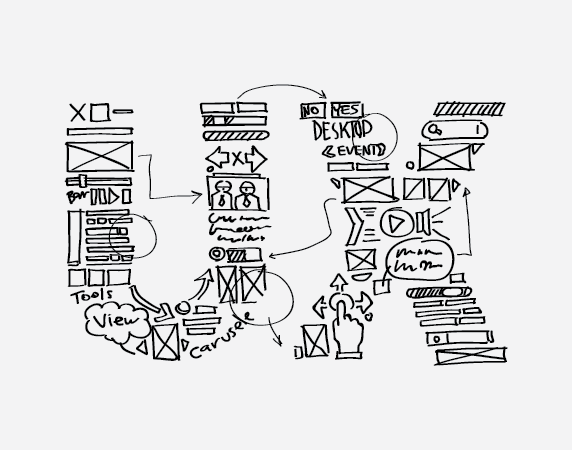
Security is all-important, but only if there are users available in the first place. A poor UX in today’s highly demanding and competitive age would simply drive away users, making rigid security protocols self-defeating and redundant. Developers are widening up to this all-important logjam and investing big in UX, but such focus should be with the understanding that UX and security aren’t necessarily at odds, and the duo even benefits each other.
Your best bet in developing state of the art mobility software that offers the best of both worlds is partnering with us. Our experienced and versatile team of developers understand both UX issues and security considerations and help you roll out software and apps that fit the bill perfectly.
Stay up to date on what's new
About the Author
Featured Blogs
Stay up to date on
what's new
Talk To Our Experts