Category: Digital Transformation
What is Cognitive Computing?
Cognitive computing is the simulation of human thought processes in a computerized model, or an attempt to make computers mimic the way human brains work. Cognitive computing platforms help create automated IT systems capable of solving problems on its own, without human assistance.
Cognitive computing epitomizes a shift from programmed-systems to systems that learn and understand. Apps using cognitive computing technology feature self-learning algorithms. It makes use of techniques such as data mining, natural language processing, and pattern recognition, to acquire knowledge from the data it mines or is fed into it. The system looks for patterns and refines itself as it encounters more and more new data.
Impact of Cognitive Computing
Cognitive Computing is a disruptive technology, with major transformational impact. It has the potential to take enterprises much further than what traditional business intelligence and analytics solutions take them, manifested in several real-life use cases already widespread now.

The range of insights offered by cognitive applications extends far beyond what a traditional analytical tool provides. The process of continuous improvement and refinement makes cognitive application systems capable of anticipating new problems and modeling possible real-life solutions.The tips and recommendations get better with time, as more and more data enters its range.
Cognitive computing is already in widespread use in several artificial intelligence applications, such as robotics, virtual reality solutions, and more. Among the various sectors where the adoption is already widespread, a key area where results are already obvious is in healthcare, fitness, marketing, and sports technology.
“Coach Watson” to Set the Stage on Fire
Cognitive computing is all set to unleash big disruptions in sports technology, and change the way athletes and other stakeholders approach major sports tournaments. Leading the disruption is IBM Watson.

The versatile IBM Watson is donning a new hat, of coaching elite runners in America’s top running clubs. While there are several apps already leveraging big data to offer valuable insights and optimize an athlete’s performance, “Coach Watson” goes beyond. As it is with any typical cognitive computing application, Coach Watson pulls in data from a wide gamut of sources, analyze such information in real-time, identify trends, and deliver actionable tips to athletes, in natural language.
The following are some sources from which IBM Watson gets inputs, on the basis of which it conducts its analytics:
- Watson collects physiological and biomarker data from wearables worn by athletes.
- The system takes in the tons of unstructured data which conventional analytical tools usually fails to factor. Examples include travel schedule, the attritional effect of a long season, work and family stress, body recovery time, and more, all of which are seemingly not related but can play a critical role in an athlete’s performance
- The system pulls in latest research findings from medical journals, health and fitness history of top performers in the particular environment, and more.
- IBM has co-opted Orreco, a working partner with Oregon Track Club for six years running. Orreco provides insights on physiological test data and biomarker data and data on nutrition and sleep.
- IBM has tied up with Triax Technologies, 113 Industries, and Spare5 to enlarge the Watson ecosystem, and further deepen insights.
The insights generated by cognitive computing apps such as Watson facilitate drawing up highly customized training programs and optimizing schedules. For instance, a Cognitive computing powered app draws in data from the wearable devices, compares it to optimal body parameters, and indicate how much harder or longer to carry on with a workout, whether to lower the intensity of the workout, take a few days off to recover on encountering fatigue, how to optimize sleep schedules around travel, and several other rich insights. Such insights, hitherto not easily discernable with any authority, ensure each athlete remains in a zone of peak performance on the day of a competition and could make all the difference between a medal and an “also-ran.”
At another pane, Coach Watson works to preempt injuries, which can severely disrupt or even end an athlete’s career. For instance, continuous monitoring of biomarker data could make evident iron deficiency in the blood, offering early warning signs of an upcoming injury, weeks in advance.
Watson Powers Many Actionable Apps
Cognitive applications are in the throes of revolutionizing sports technology. Many Watson powered cognitive solutions have already hit the market, to empower coaches, trainers, players, managers, and other stakeholders in a big way.
The Triax Smart Impact Monitor (SIM), a wearable sensor embedded in headbands or skullcaps track the force and frequency of head impacts, offering proactive assistance to mitigate the situation. The device factors in diverse data sources to offer sound advice on the best course of action.
The cognitive app powering Spare 5’s Watson Golf Pro is akin to a highly resourceful personal caddy. The app accumulates a corpus of knowledge on mechanics and drills, gathered from contracted golf professionals. Amateur golfers may consult the app in natural language, and gain crucial insights related to the course, such as wind velocity, the best shots to play, and more. Seeing a golfer’s swing, the app provides feedback for improving that swing.
Cognitive Systems Lend Objectivity to Player Selection and Management
There is a big element of subjectivity in sports selection and management. Cognitive apps can offer greater insights which allow selectors, coaches, managers and other decision-makers to make informed decisions, and support their gut instincts with hard data.
For instance, cognitive computing apps can read and interpret all the press conferences made by players over the years, offering insights to selectors and managers on the mindset of the player, as in whether the player is becoming more positive, more optimistic, and other innate characteristics traits. Likewise, coaches get detailed and in-depth information about the player’s physical and mental faculties, and how they react to specific situations, allowing them to take proactive actions to manage the player well.
Cognitive apps have the capability to analyze unstructured data, meaning it can make an in-depth analysis of videos and footage of the athlete’s performance, and give real actionable recommendations. This is a big improvement from coaches and training staff watching videos, and generating pointers, manually, based on their gut instincts, and with a high degree of subjectivity and assumptions.
Cognitive Applications Enhance Fan Experience
Cognitive applications work wonders not only for athletes and the business side of sports but also for fans. A good case in point is 113 Industries “Pi” service, which has been put to good use by Pittsburgh Penguins, the famous hockey team, to analyze the huge volumes of fan-based data. The club uses such insights to develop specialized offers and services for fans, relating to concessional merchandise, pre and post game entertainment at the CONSOL Energy Center, and more.

Cognitive apps could likewise guide fans proactively, such as making explicit the train to catch to reach the stadium on time, factoring in traffic, fares, preferences, and other innate traits which the fan had to consider manually before. Cognitive apps would also guide the fan to the best parking space, without having to drive around in circles. Once inside, a cognitive app could guide the fan to the toilet with the least wait time. All these are possible in natural language.
The application of cognitive computing to enhance sports technology can deliver rich rewards across the board for all stakeholders, players, tournament organizers, coaches, spectators, fans, television broadcasters, and everyone else. However, as always, the devil lies in the details. Success depends on designing the apps right, with clarity on the objectives, and the development task done by competent and resourceful professionals who know what they are doing.
Stay up to date on what's new

About the Author

Featured Blogs








Stay up to date on
what's new



Talk To Our Experts

What is Business Intelligence?
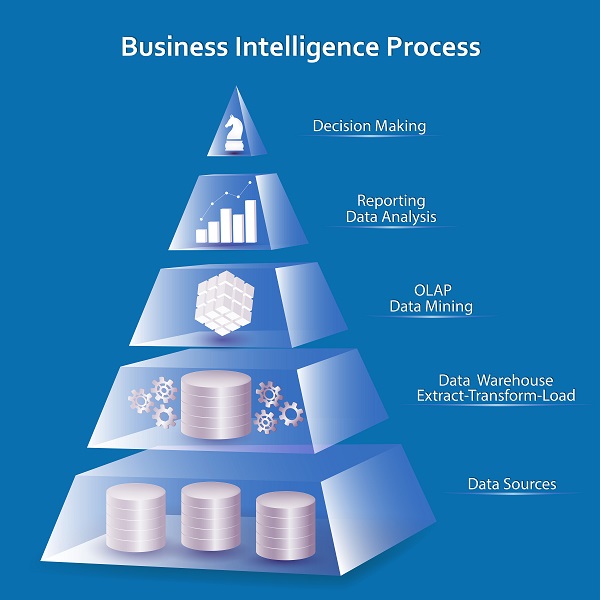
Business Intelligence (BI) turns data into information. It is the sum of applications, technologies, and methods adopted to glean strategically relevant information for the business. The task involves collecting, integrating, analyzing, and applying historical, current and predictive information related to the business. The objective is to gain strategic insights, evaluate risk, and improve decision-making capabilities for top management, business owners, and other stakeholders.
Business intelligence information encompasses both internal data and external data related to the business. Internal data may include operational data, data from sales, financial data, and more. External information is fairly wide in scope and may include information from the external supply chain, social media channels and more. Another dimension to external information for business intelligence is information about competitors and other companies, for benchmarking, and to gain a competitive edge over such companies.
Many businesses now apply business intelligence to make informed decisions, rather than relying on hunches or unfounded assumptions. For instance, restaurant owners use business intelligence to decide the menu to be added and removed from a restaurant menu. Automobile manufacturers apply business intelligence to add new features to their car models. Tour operators use business intelligence to optimize their itinerary. The possibilities are endless. Businesses may use Business intelligence to modify their internal work processes as well.
Business Intelligence Vs. Analytics
One might mistake Business Intelligence as being another name for the much-hackneyed business analytics. While both business intelligence and analytics involve aggregating and analyzing data, the similarity ends there.
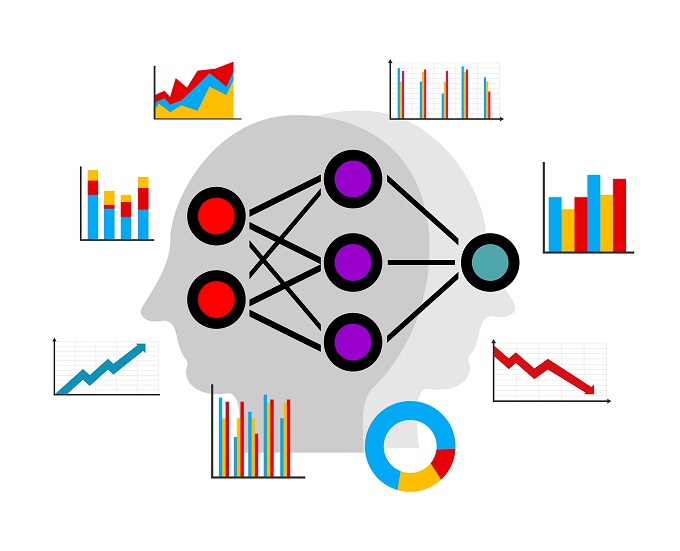
Business intelligence aggregates data to make it explicit what is happening to the business, whereas analytics aggregate data to delve into why it happens. For instance, business intelligence evaluates sales performance by extracting data from various sources and presenting it in the form of intuitive graphs. Analytics involves running statistical tests to make explicit whether sales performance correlates with advertisements and promotions undertaken.
While both Business Intelligence and Analytics involve analysis of data, the scope is markedly different. In a sense, Business Intelligence ends with the basic mathematical operations of addition, averages, and percentages to the dataset. Applying advanced algorithms complex formulas, statistical operations such as regression analysis, correlation analysis, and more, to answer deeper questions related to the dataset comes from the realm of analytics.
Technically, Business Intelligence encompasses ETL tools to access and transform data, OLAP (online analytical processing) tools to handle complex queries, tools to manage metadata, development tools to generate various reports and dashboards, and others tools for publishing, scheduling and distribution capabilities. Analytics co-opt different methods of analyzing information, such as descriptive, predictive, regression, neural networks, and the tools to apply such methods.
What is a Business Intelligence Software?
Business intelligence software enables enterprises to undertake business intelligence tasks.
Any Business Intelligence system worth its byte involves the following activities, and software to undertake such activity.
- Data warehousing, or bringing together all data, such as sales data, operational data, data from financial reports, competitor sales data, social media talk, and more. ETL (extract-transform-load) tools usually facilitate the task of extracting data from several databases, systems, and applications, transforming it as required, and loading it into the target data warehouses, analytical applications, and other systems.
- Data visualization, or presenting the information in a visually appealing way, for users to make sense of the data in a better way. There are different visualization types, such as charts, graphs, infographics, and more, and various enabling tools for each type. Each visualization type serves a specific purpose. For example, Pie charts are best suited to communicate relative performance, whereas bar charts depict trends in the best way. Some intuitive methods such as “slice and dice” are gaining popularity of late, for its powerful capabilities.
- Management dashboards, or well-grouped set of visualizations containing most relevant information to any stakeholders, usually reserved for top management. OLAP tools, used to aggregate data and handle complex queries, are commonly associated with Business Intelligence.
Several types of tools enable data visualization and management dashboard capabilities.

- Spreadsheets such as MS-Excel are the most common method of presenting the Business Intelligence data. The ease of work nature and universal availability of spreadsheets are however marred by serious limitations, such as limited security, limited collaboration features, limited automation capabilities, and a high degree of inaccuracy and variability. Various other tools offer seamless and advanced automation, security, and audit capabilities, which MS-Excel lacks.
- Operational reports, often custom made for the enterprise, list data at a very detailed level, in a highly-structured and logical format.
- Querying and analysis solutions allow business users and analysts to generate business queries and reports rapidly. The ad-hoc nature of these tools offers unbridled flexibility. These tools also come with intuitive graphical interfaces. A middleware layer which converts database conventions to normal business nomenclature, and dashboard drag-and-drop functionality spares end-users from the need for technical proficiency to use these tools.
- Dashboard management systems offer easy access to key information in intuitive and graphical formats. It displays the required set of key performance indicators, metrics, and other relevant information in a single consolidated view, greatly improving the user’s decision-making capabilities.
- Data mining tools allow analyzing large data sets to discover patterns and build predictive models. data mining application use algorithms, statistics, advanced mathematical techniques, and sophisticated data search capabilities, to unearth insights otherwise not discoverable.
- Online analytical processing (OLAP) tools facilitate the rapid visualization and analysis of business metrics. Users may store and access data in multidimensional OLAP cubes comprising of measures, and text values. Queries from OLAP cubes are much more powerful than simple database tables and offer users advanced insights into past performance and various “what-if” scenarios. Users may use such cues to evaluate information from various dimensions and perspectives. In fact, OLAP operations constitute the fundamentals of most advanced functionality used by data visualization tools.
Top Business Intelligence Tools 2017

Until a few years ago, users had a limited choice of comprehensive Business Intelligence tools. The choice was limited to platforms offered by biggies, such as IBM, Oracle, SAP or Microsoft. The high cost of the software and the associated complexities made business intelligence out of the reach of most enterprises, except big corporations.
Read more: Business Intelligence in SAP: How It Helps You Become a Data-driven Organization
The advent of the cloud changed things, making business intelligence more democratic. Business no longer needed to build their own BI infrastructure in-house, as SaaS providers perform the resource-intensive tasks of data gathering, persisting and reporting, allowing businesses the ease, affordability, and convenience of the subscription model.
Some of the top ETL tools include Oracle Warehouse Builder, SAP Database Services, IBM Infosphere Information Services, SAS Data Management., Elixir Repertoire for Data ETL, SQL Server Integration Services (SSIS), and more.
Some of the top OLAP tools in vogue include Yellowfin, Stratum, Birst, Profitbase BI, and the quintessential Microsoft SharePoint, among others.
Here is a rundown of some of the leading data visualization and dashboard software in 2017
- Dundas BI, one of the most popular browser-based business intelligence and data visualization platform, offers integrated dashboards, reporting tools, and data analytics capabilities.
- Domo, A cloud-based suite, makes it easy to integrate multiple data sources, including databases, spreadsheets, social media and also legacy cloud-based and on-premise solutions deployed in the enterprise.
- SiSense support business data with powerful visuals and tools, making it handy for users with little or no technical skills.
- BOARD, a centralized tool, hosts data and conducts multidimensional analyses. It boasts an impressive client list, which includes US Navy, Giorgio Armani, and Puma, among others.
- IntelliFront BI enables viewing multiple data sets from a single pane. It also distinguishes itself with strong automation features, real-time dashboards, and on-demand reporting.
Self Service Tools
The emerging trend of self-service business intelligence, made possible by the advancement of mobility, analytics, and other relevant technology, empower end-users with the ability to undertake business intelligence tasks by themselves, without necessarily having advanced technical skills.

As it is with several other sectors, Google has also entered the business intelligence space, and with time, is sure to give established incumbents a run for their money. It is now possible to build an intuitive BI dashboard powered by Google Data Studio reporting tool and Google BigQuery, a cloud-native data warehouse capable of analyzing petabytes of data in double quick time. As always, all these Google tools are open-source and free, giving developers the unbridled freedom to co-opt it in their systems, the way they want it.
Google’s new offering competes with Microsoft Power BI, another free, self-service cloud-based business intelligence offering from the Microsoft staple. Non-technical users may leverage this offering for aggregating, analyzing, visualizing and sharing data easily.
Businesses would do well to consider developing custom suites facilitating such self-service options, integrating ready-to-use Business Intelligence tools to the extent required. Partnering with Fingent top custom software development company would enable the business to roll out highly intuitive business intelligence apps and other solutions, empowering end-users to gain the required insights easy and fast, without having to wait for the IT team to do the job and spoon-feed them with reports.
Stay up to date on what's new
About the Author
Featured Blogs
Stay up to date on
what's new
Talk To Our Experts
Digital transformation has turned into a ubiquitous concept that businesses can no longer afford to look away. The world is going digital at a lightning speed, making it imperative for business establishments to upgrade their skills, processes and technological know-how to this changing model. The fact that digital transformation emerged as a top concern for CIO Agenda in 2017, according to Wall Street Journal report underlines the imminence of the situation.
Leveraging digital technologies to improve business operations and organizational setups is the focus of businesses right now. If you too are considering a digital transformation initiative for your business, here are five questions to consider for making desired progress in a prioritized and strategic way:
1. Why do you need digital transformation?
‘Just because everyone is doing it’ is not the best reason to undertake a digital transformation process. It is important for an organization to understand why, if at all, they need to go through it. The best approach here is to identify the end goals you want to achieve by going digital – whether it is improving product quality, customer experiences or internal processes – and then work backward. This is particularly important for businesses, where digital processes do not directly tune in with core KPIs. Having your end goals in sight right from the onset will help you determine the outcomes of your digital transformation initiative.
2. How will you substantiate the value of your digital transformation initiative?
Well, this is one of the basic questions that must govern almost every business decision you take but is especially crucial in the case of digital transformation. You must have a clear idea as to how you plan to measure the success of your digitization plan, and for that, knowing how the concept fits into your business strategy is of paramount importance. Once these parameters have been established, the process of monitoring and gauging value of other relevant indicators, not just during the process of digital transformation but also beyond, becomes simpler. This will also save you time, effort and money in layering on technology in areas that don’t really require it.
3. Are your key stakeholders on board?
Digital transformation isn’t a small project but an extensive overhaul that will impact every single department and person associated with your business. As with every other big project, unexpected difficulties may crop up along the way. The project may get delayed or the budget may overshoot. If all your stakeholders aren’t onboard or fully convinced about the need to go digital, they may decide to pull the plug on the project. Working on your buy-in is essential to make sure all leaders and stakeholders – business partners, financiers, and shareholders – fully understand the importance of such an initiative and are committed to taking it to its logical end.
4. Have you found the right people to execute your digital transformation?
Whether you are simply revamping a website, building a new one, working on automated marketing, digitizing customer experiences, or doing it all in one go, you need the right kind of experts to get the job done and done well. Which brings up another poignant question – whether you want to hire people to do this job for you or outsource? The answer to this depends entirely on the kind of digitization you have in mind and the resources available at your disposal. If you are an established business with a long-term digital map in mind, building a core team of digital professionals is better suited. On the other hand, if you are a startup with limited resources, outsourcing may be a more practical option. Whatever your choice, you need to focus on striking that intricate balance between experience, skill and in-demand roles. There are a lot of talented professionals in the marketplace, you just need to pick the ones whose wavelength resonates with your end goals and larger KPIs.
5. Are your employees prepared for the change?
When a business undergoes a digital transformation, a lot of operational aspects are bound to change. This may mean that your employees will need to upgrade their skills and learn new processes. You cannot expect them to throw their existing work habits right out of the window and embrace the change instantaneously. A digital transformation will kick-in in the true sense only when you evolve a strategy to inform, educate and help your employees cope with the change.
Just the way every business has its own distinct identity, each digital transformation initiative is unique too. Be that as it may, these five key questions can prove vital in helping you define and execute a digital transformation that works best for your organization.
Stay up to date on what's new
About the Author
Featured Blogs
Stay up to date on
what's new
Talk To Our Experts
Business Consulting & Technology Augmentation delivered by Fingent helps client evolve into a regional market leader, achieve quantifiable objectives and add multiple dimensions to their business repertoire
A Top Ranking Property Management Client
A leading property investment and management company, handling more than 8000 properties segmented under single family real estate wanted to implement technological transformations to their business to soar new heights. The client manages real estate portfolios of private equity funds, offering a vertical spectrum of services ranging from property acquisition all the way to lease or sale management.

Major Roadblocks in their Real-Estate Business
Back in the day, a typical brick and mortar operational model was effective for the client, if not sophisticated. However, overhead liabilities and persistent gaps of a manual process soon curtailed scalability, and automation was inevitable.
How a Wrong Decision Curtailed Their Business
A switch was made, and a leading off-the-shelf property management software was inducted into the environment. But as is the case with most implementations, migration was far from seamless. The software primarily catered to multi-family real estate requirements, and level of customization offered was too limited. The gap was however massive, even if customizations were to be made. In the simplest terms, when the rework was exceeding the value-added work that has been budgeted for, the client realized that the project is failing. This is what happened to our client when they attempted to introduce a ready-made property management solution for their processes.
When the software fails, it jeopardizes the company’s prospects. And if the failure is large enough, it can even steal the organization’s entire future. In fact, software failures can be traced to a combination of incorrect project management, technical, and business decisions.
For every problem, there is a solution that is simple, elegant, and wrong- H. L. Mencken
The client was forced to fall back on a plethora of excel sheets to manage million dollar transactions and persist with several manual processes. They were considering alternate vendors when detailed transparent analysis and ability to comprehend the business problem firmly tilted the decision in Fingent’s direction. Following multiple rounds of promising discussions, executives at the client side were excited to begin the core transformation project with Fingent.
Finding the Right Solution

With disparate cycles amalgamating into a vertically integrated solution, a phased approach had to be adopted. The challenge was to ensure business continuity while deploying solutions on a unified platform. Business processes were classified into three major cycles – Property Acquisition, Management, and Maintenance.
- Property Acquisition – Prospective properties get channelised through an application funnel for inspection and evaluation. The value range thus assigned to a property help bidders make decisions during auctions. Acquired properties get updated on the database, and transactional parameters and contracts are abided by in the system. An assigned property manager visits respective sites, to initiate renovation and development. Three distinct mobile applications were created – for Scouting, Bidding and for the Property Manager, which are tightly integrated into the property acquisition application.
- Property Management – Application enables lease ready properties to be listed. It syndicates with several listing sites and caters to the entire lead management cycle for sales associates. All contractual formalities for leasing are taken care of within the application. An accounting module caters to the rent collection process, with a section dedicated to handling exceptions including evictions. While a mobile application caters specifically to the functionalities of a leasing agent, another app helps tenants explore the properties themselves. The latter termed the self-showing app enables physical entry into a pre-booked property view session based on geographic coordinates.
- Property Maintenance – Comprehensive property maintenance application within the real estate spectrum, enabling tenants to raise support tickets for various issues. A mobile application allows tenants to connect directly with vendors that are pre-approved and listed.
By meticulously gathering and mapping requirements, an area of expertise for the Fingent team, the project met every major milestone on time and budget. Key highlights of the comprehensive property lifecycle management include:
- Cloud-based solution delivering features via the web and mobile platform, with the capability to scale at ease. An advanced property lifecycle solution that exhaustively covers all possible process flows in single family real estate
- Seamless integration with industry leading service providers for payment, credit verification, accounting, listings etc. Individual portals for the owner, tenant, and vendor.
- Efficient data sourcing enables tight department wise integration, helps to create proficient workflow and enables easy data migration from disparate data sources. To cite an example, all parameters can be imported while acquiring a portfolio, without manual intervention
- Facilitates transparency across functions and departments alongside exhaustive customized reporting, delivering maximized performance.
The Right Software Solution can Make a Good Business Great
Deployment of a unified platform, tightly integrating all functions within the property management life cycle, transpired into exponential business growth for our client. Streamlined, end to end automated workflow meant substantial cut back on their operational overhead, while enabling phenomenal scalability.

Fingent’s client got listed by the prestigious magazine Inc., ranking amongst the Top 10 Real Estate and Top 200 overall. A whopping growth of 2626% was registered over 3 years, and company valuation increased multifold. This lead to a 1.7-Billion-dollar hedge fund investing in the client to further propel growth.
The enterprise application suite is now maturing into a comprehensive product for the real estate industry, opening up a new line of business for the client in partnership with Fingent.
To Sum Up…
The average company spends about 4-5% of revenue on IT. Much of this money goes into software and hardware, software upgrades, software license fees, and the like, but a big chunk is still for new software solutions that are assumed to create a better future for the organization and its customers. Custom software solutions and enterprise applications are now one of the largest corporate expenses outside employee costs. Yet choosing the right software vendors and getting the right solution tailored made for your processes is mission critical for every business aiming heights in today’s competitive market.
Stay up to date on what's new
About the Author

Featured Blogs
Stay up to date on
what's new
Talk To Our Experts
Businesses have encountered several technology waves, starting with the mainframe revolution in the 1960s to the decentralized computing wave of the 1970s, and from the advent of PCs in the 1980s to the rise of client servers in the 90s. The cloud and mobility represent the latest evolution of technology.
Such digital disruption is now a fact of life for almost all businesses. Enterprises no longer confront a question of “if,” but rather concern themselves with the “when” and “how” of digital transformation. A recent KPMG and Harvey Nash survey reveals 62% of IT professionals opine their business was already being disrupted or would be disrupted within the next two years. However, only 27% of respondents confined the presence of an enterprise-wide digital strategy.
Digital disruption is much more than co-opting new technology to the business. Businesses need to create entirely new competencies and co-opt it to incumbent legacy cultures and operating models. Here are four major questions to ask, to smooth the transformation process. These four questions also constitute a basic checklist for the digital transformation process.
1. What are the objectives of the Digital Transformation?
Embarking on a digital transformation journey is doomed to fail unless the enterprise has the end in mind, and defines a coherent strategy upfront. Implementing new technologies for the sake of it, or just because everyone else is doing so, is an exercise in futility, and may end up counterproductive by disrupting the well-entrenched ecosystem with nothing to gain in return.

Have a clear idea of the processes where digital transformation is to set in, and how the transformation would improve the process, add value, and how the intervention would make the lives of the stakeholders, from employees to customers, and from managers to owner better.
Some of the processes where digital intervention can automate the process, or make the process seamless and more accurate include form modeling, document integration, report generation, role-based accessibility and user assignment and reassignment, email notifications, task prioritization, and more. However, the possibilities are endless, limited only by imagination.
2. How much Customization will be required?

Most businesses face an issue of integration when they indulge in digital transformation, especially when the transformation involves multiple pieces of commercial software. Off the shelf software, for any function, be it operations, HR, Finance, data analytics, CRM, or any other function, will never suit enterprises perfectly. Seamless workflows will require customization as a rule.
Successful digital transformation takes place when the enterprise knows the extent of customization required. They audit the existing state, have a clear-cut idea of the desired state, have a roadmap to transform from the existing to the desired state, and map the software to the journey, to make sure the software works for the business.
A related consideration is the time-frame for the migration. A Successful digital transformation process progresses as per a predefined time frame, making sure the change does not disrupt business operations. A related challenge is slow down of operations when the new digital systems set in, owing to the learning curve. A well thought out digital transformation process factors in the delays associated with the learning curve, and pre-empt contingencies which may cause the business to screech to a grinding halt when the new software goes down to a bug.
3. How to Quantify the Value of the Digital Transformation Initiative?
Today’s businesses are driven by profits or returns on investment. The top management or owners support all change initiatives, including digital transformation initiatives based on the value it creates to the enterprise.

At the internal front, digital transformation generally makes internal processes seamless, increasing productivity and efficiency. At the customer facing end, digital transformation makes things easier for the customer, unlocks new possibilities, enable customers to buy or contact support in a much better way, and offers flexibility. However, even when the value created by the digital transformation is obvious, it still has to be quantified and made explicit. The harbingers of change need to not only know about the technologies to implement but also how to measure the value created by such initiatives. The end goal of digital transformation is to boost revenue, profitability, and investor value. Some of the factors which can be measured to link the digital transformation to such ends include inventory, human capital productivity, asset utilization, and other Key Performance Indicators (KPIs). Tracking some intermediate indicators, such as sentiment and engagement is also handy.
Today, several tools make quantification easy. Nucleus Research estimates every dollar spent on Customer Relationship Management (CRM) system implementation returning a whopping $8.71. Forrester’s Total Economic Impact (TEI) tool enables enterprises to quantify the potential benefits enterprises gain by implementing a stack of technologies that communicate and work together, integrated by a framework of operational transformation methodologies.
4. How to Orchestrate the Change Initiative?
Regardless of whether the initiative is a digital upgrade or digital transformation, it is essentially a change process, and change requires strong leadership.
Implementing the digital transformation requires a well-defined team with a narrow scope and a cross-functional mandate. The harbingers of digital transformation need to make a tough call on the team.

Many of the team will resist change, accustomed as they are what they have always been doing. The digital transformation initiative requires clear cut consideration on how to implement change in the least disruptive way, and chalk out strategies on how to overcome resistance to change. Training the rank and file for familiarity to the new digital processes, and factoring in a learning curve are the basic requirements, but there is also a need for clear-cut communication on why the digital transformation initiative is being carried out, and the benefits it will bring about. Most often, the digital transformation initiative will be inevitable to keep pace in the highly digitally charged world, and for the firm to stay competitive. Today’s tech-savvy customers also demand heavy digital initiatives to be satisfied.
Estimates of digital transformation failures range from 66% to 84%. It requires a method to preempt the process from descending into madness. Roping in a sound tech development partner, competent in the digital technologies you want to adopt, and backed up by the resources and talent to implement a cutting edge digital solution, is the best way to embark on a digital transformation initiative.
Stay up to date on what's new
About the Author
Featured Blogs
Stay up to date on
what's new
Talk To Our Experts
The transformative impact of blockchain remains much underestimated. While the concept is now associated with Bitcoins, the underlying technology could very well become the most important disruption since the arrival of Internet.
Blockchain in its purest essence is a distributed database, containing digital data. Users may access, inspect, or add to the data, but cannot change or delete it, making it tamper-proof. The original information remains as it is, leaving behind a trail, or a chain of transactions. Any single transaction would be a “block” in a never-ending chain, with the chain distributed across the internet, outside the control of anybody. Businesses leveraging block chains have an easier and safer mechanism to conduct transactions.
How Viable is Blockchain in the Supply Chain?
One area where blockchain technology is in the throes of making a big disruption is the supply chain of industries. In the existing system, the database is updated every time a movement or change takes place in the supply chain. With blockchain, every time a product changes hands, the transaction is documented, creating a permanent history of a product, from the point of origin to sale. In a traditional supply chain, each stakeholder maintains their respective records. With block chain, the records are distributed across the cyberspace, allowing for smart contracts. The distributed database runs on multiple servers, constantly checking the security and integrity of each transaction.

The application of blockchain technology in supply chain manifest in many ways:
- Real-time live recording of the quantity and transfer of assets, such as trailers, pallets, and containers
- Continuous tracking purchase orders, receipts, shipment related notifications, and other trade-related documents
- Assigning digital labels to physical goods, such as bar codes, serial numbers, RFID tags, and more. Blockchain allows connecting digital product information such as the source of origination details, batch numbers, factory and processing data, expiration dates, storage temperatures and shipping detail in a robust and inseparable way.
Improved Transparency

Blockchain brings about greater transparency in the supply chain. The log reveals the origins and touch points of each product, disseminating information on the manufacturing process, movements, and delivery, to all stakeholders. Such in-depth and finer details are not easily available now, and the potential applications of such transparency are earth-shattering:
- For perishable commodities, such as fish, blockchain records for each process, such as how and when the fish was caught or raised, whether it has been handled in a compliant manner, whether harmful formaldehyde was used in storing it, and more, increases consumer confidence and safety manifold. Walmart’s new Food Safety Collaboration Center in Beijing, where the company tied up with IBM and Tsinghua University to apply blockchain technology, to ensure food supply chain traceability and authenticity is a case in point.
- Blockchain logs make explicit the genuineness of a product, as in whether the product is really organic as claimed.
- An audit of blockchain logs make explicit whether the product was made using child labor, whether workers were paid fair wages, and whether there are any other ethically and/or legally reprehensible associations.
- Blockchain logs enhance safety. For instance, customers can track the components in their vehicle has come from an authorized manufacturer and has passed all recommended tests, increasing confidence, and reducing the risk of injury.
- In the case of defective products, the trial makes it easy to pinpoint the source of the problem and make effective amends. For instance, Blockchain production records enable tracing the place and time when a specific automobile airbags were made, allowing automakers to reduce their liability.
The trust and transparency that block chain infuses across the value chain become a new nexus for value exchange.
Security

One major impact of blockchain in the supply chain is improved security and accountability.
- The chain of logs ensures the authenticity of the product, and customers can verify the same automatically. With transactions tracked from the origin, a duplicate product or an unauthorized transaction is immediately flagged as counterfeit or theft.
- The permanent registry and verification assign tamper-proof individual identifiers to high-value products such as jewelry, making theft easily attributable. It also helps identify insurance fraud, which is a $60 billion industry in the USA.
- Blockchain serves as an escrow account, requiring all parties to confirm transactions. It eliminates the need for third parties, usually involved in the mix to ensure both parties honor their part of the contract. A shared, indelible ledger with codified rules also eliminates the need for audits.
The blockchain is on its way to enable more agile and secure value chains, with closer cooperation among stakeholders.
Process Improvements
The application of block chain in supply chain contributes greatly to process improvements.
- Blockchain logs make it very easy to detect errors or problems, and subject the supply chain movements to analytics to improve efficiency, on a dynamic basis. It also facilitates effective planning to improve processes.
- Blockchain delivers a decentralized architecture, which creates opportunities to innovate. For instance, intelligent block chain contracts query other nodes in the blockchain for the best pricing, delivery times, and other particulars. Smart shippers are already finding ways to leverage innovations to increase profits and strengthen relationships across the supply chain.
The application of blockchain technology enables tapping into rules-based intelligence, for executing business functions. Stakeholders may apply intelligent program code to embed conditions and other logic into contracts and other transactions, implemented automatically, with 100% accuracy. Manufacturers and other stakeholders can spare themselves of the copious amount of time, money, and other resources they presently spend to negotiate and communicate with other stakeholders.
The effectiveness of blockchain technology, however, depends not on blindly applying the technology per se, but developing solid and reliable apps that leverage the technology. The blockchain is only a facilitator, and it still requires cutting edge mobility solutions to power your supply chain to greater heights. Get in touch with a reliable partner for your business and mobility solutions requirements.
Stay up to date on what's new
About the Author
Featured Blogs
Stay up to date on
what's new
Talk To Our Experts
Success in today’s highly competitive environment is all about being fast and competitive, and this translates to shortening the learning curve when adopting new technologies. While training is touted as the obvious solution, most enterprises are caught in the trap of the obvious, failing to estimate whether training is indeed worth its while. The reality is much of the on-going employee training is worthless. McKinsey & Co. estimates training enhances the performance of only 25% of the employees.
Employers train the workforce, in hope, they gain competencies to handle a new technology better. However, today’s world is marked by fast-paced changes, and in a state of continuous flux. Change is the only constant, and the odds are by the time the trained employees gain mastery over the new technology, it may already be obsolete, to be replaced by something new. Just to put things in perspective, training certificates denoting competencies in Dbase, Foxpro, Sybase and many other technologies that were a rage not too long ago are now not even worth the paper it is printed on. Each new wave of tech advancements, such as the cloud, IoT, Artificial Intelligence, Immersive Technology, and others, demolish existing paradigms.
In the fast-changing environment, success depends not on training, but on adaptability. Only employees who have the skill-set to learn something new, and learn it fast without being spoon-fed, or wait for a formal training process, will succeed. Equally important is the uncanny ability to unlearn what is no longer required and may become counterproductive.

Another case against on-going employee training is its disruptive nature. Training is time away from what the employee is supposed to be doing, and cuts into productivity, with an uncertain promise of better productivity in the days ahead. There are too many variables in today’s fast-paced world to hold with any optimism the investment in training will recoup lost productivity in the future.
However, doing away with training and leaving employees on their own is akin to throwing the baby out with the bathwater. The solution rather is a shift in approach. The fact remains employees may remain technologically challenged with the new technology and may be hamstrung in doing their jobs optimally without training. The solution lies in adopting a new approach to training, along with a combination of intelligent work design, greater transparency, and developing “democratic apps” and other solutions.
Training Needs a Reality Check
Training requires a reality check. Training fails to realize its objectives mainly due to lack of strategic focus. Many enterprises go agog with the latest technology trends, rather than taking the time to understand the skills most critical to the business’s stage of development.
The most effective training offers practical skills critical to the present stage of organizational requirements. Training for anything not required in the next six months is pretty much a wasted effort. With high employee turnover, coupled with a short technology shelf-life, the only metric that really matters for the enterprise is the short-term or immediate return on the training dollar.
There is a need for effective follow-up as well. The American Society for Training and Development (ASTD) estimates U.S. firms invested about $156 billion on employee learning (2011), but as high as 90% of the new skills are lost within a year, owing to lack of follow-up to lock in the gains.
Road-test the training. Enterprises who do not give employees the opportunities to apply the newly acquired skills, by not facilitating them with the right tools and technologies are frittering away their investment in training.
The actual conduct of the training also makes a big difference. There is also a case of avoiding boring marathon sessions, which are disruptive in nature and offer training in short bites or capsules, preferably on the job. Hands-on training, during the course of work, offers promise for being most relevant, and the least disruptive. Upskill offers a competency-based training software for enterprises that combines advanced technology, quality content and expertise to discover potential and maximize the productivity of your workforce.
Intelligent Work Design
Success depends on making optimal use of every dollar. A part of the investment on training could be diverted to intelligent work design, to deliver much more efficient and long-lasting returns.
Intelligent work design makes work processes simple, and removes complexities from the equation, reducing or even doing away with the need for training. Automation of routine processes, and the use of Artificial Intelligence to relegate to the back-end many works that now require technical expertise would especially make the need for training redundant.
The Push towards a Learning Organization
Peter Senge, the noted management expert expounded the concept of a learning organization way back in the 1990s. Senge defines the learning organization as one where the enterprise nurtured and encouraged expansive patterns of thinking, the workforce continually expanded their capacity to create the desired results, and work together for the realization of mutual goals. In other words, employees are self-motivated and learn on their own

Greater transparency, mainly brought about by demolishing data silos and barriers of knowledge, makes many hitherto challenging tasks explicit and furthers the cause of a learning organization
Democratic Apps
Democratic apps leverage the power of simplicity, making the front end seamless and obvious without the need for any training for even the most technically challenged user.
Side by side with democratic apps, there is also a case for promoting the BYOD culture. When employees bring their own familiar device, they can handle most of the workflows without a learning curve.
It requires professional expertise to redesign systems, and roll out highly intuitive apps that take the complexity out of the equation. With our extensive experience cutting across sectors, and our highly skilled talent pool, we are ideally poised to partner with you in the quest to develop intelligent mobile solutions that reduce your training budget.
Stay up to date on what's new
About the Author
Featured Blogs
Stay up to date on
what's new
Talk To Our Experts