Tag: Artifical Intelligence
Smoothening RPA Adoption For Your Business
Robotic Process Automation (RPA), is the new superhero in town!!!
With bots that can replicate exact human tasks, Robotic Process Automation is promising an increasingly effective, organized and productive workflow for businesses. How exactly RPA is providing businesses with these incredible benefits and how companies can avail them, are some points highlighted in this post.
What is Robotic Process Automation?
According to Wikipedia, Robotic Process Automation (RPA) is an emerging form of business process automation technology based on the notion of metaphorical software robots (bots) or artificial intelligence (AI) workers.
In other words, RPA is a generic tool that uses specialized computer programs or software bots, to automate high volume clerical tasks that otherwise require excessive inputs.
RPA is currently the most popular AI application or otherwise speaking, the new superhero in town, as it is easily enabling businesses to shift from legacy systems to complete automation.
How is RPA Promising A Better Business Future?
Industries like Banking, Insurance, Telecommunication, and Utilities are turning to be the biggest adopters of RPA. Such industries with high volume tasks and complex workflows often encounter innumerable human errors that cause lower production, depreciated revenue, and even risk to life.
Automating such recurring, time-consuming, and complex tasks, RPA is leading companies to a streamlined, time-effective, and efficient business eco-system.
Tackling The Barriers To RPA Adoption
Although RPA promises a brighter future for businesses, yet many companies are reluctant to adopt the technology. Considering RPA as a sophisticated, costly, and complex digital transformation, many companies are hesitant and mostly ignorant of this technology.
To enable easy understanding and adoption of RPA, we have briefed everything you need to know about RPA, in our latest whitepaper.
- Learn the growing opportunities of RPA
- Easily implement RPA to existing business workflow
- Transform your workspace with RPA
Read through our whitepaper to know more about how Robotic Process Automation can simplify your business operations!
To avail the right guidance on RPA adoption and learn how RPA can fit into your unique business processes, get in touch with our technology custom software development experts today!
Stay up to date on what's new

About the Author

Featured Blogs








Stay up to date on
what's new



Talk To Our Experts

5 Tips To Select The Ideal Chatbot For Your Business
Chatbots have opened up a whole new realm of communication between humans and machines. They enhance a company’s customer service and improve operational efficiency, driving better engagement, reduced churn rates, and overall sales growth. They have become immensely popular and their popularity only continues to increase. It is clear that the use of chatbots is imperative for your business success.
In this blog, we will take a look at the types of chatbots available and how to wisely select the chatbot that suits your business.
The Wide Array of Bots
Studies predict that by 2021, more than half of the enterprises will increase their investments in chatbots, creation than traditional mobile app development. Customers would prefer to get real-time answers from bots on a company website.
Chatbots can do just about anything. They can help you deliver a surprise gift to someone you love. They can also help you break up with your lover and much more!
Broadly, chatbots can be classified as follows:
- Action Chatbot: In order to follow through with a specific action, this type of chatbot requests relevant data from the customer.
- Social Messaging Chatbot: It utilizes social messaging platforms and allows customers to interact with the chatbot directly on social media.
- Scripted Chatbots: It uses a predefined questionnaire to interact with the customer.
- Natural Language Processing (NLP) Chatbots: Being an application of AI, NLP enables chatbots to understand the written or spoken language and come up with the best response.
- Contextual Chatbots: It is the most brilliant of all chatbot types. Since it is based on artificial intelligence and machine learning, it can self-improve over time.
Tips To Choose A Perfect Chatbot For Your Business
As a communication agent, chatbots play a vital role in automating mundane tasks in an “always-on” work environment. Chatbots can handle day to day queries until an emotive or complex issue arises, which might require the intervention of a trained human agent to address it.
Related Reading: Capitalizing on AI Chatbots Will Redefine Your Business: Here’s How
Here are a few pointers to select the perfect chatbot for your business needs:
1. Think about your target audience
Like every business that has a target customer, the chatbot too must have a target audience. It is important to remember that the chatbot should serve as the bridge between you and your customers. The bot should be able to understand the preferences of your customers and cater to their convenience.
2. Define objectives
Identifying and narrowing the specific tasks or areas you want to automate would yield maximum benefits. There are a few points that could help your business define those objectives. Carefully consider factors such as the platform where the chatbot would be used, the queries it would answer, the queries it would direct to a human customer care executive, and how it would manage the hand-over process smoothly.
3. Define your value proposition
The value proposition involves ensuring that the most vital factor of your business, is given prime consideration. It determines whether your customers will come to you or go to your competitors. A higher value proposition might require AI or ML capabilities; so gauge and determine your value proposition to select the right chatbot that fits your budget and your business needs.
4. What is your response speed?
According to the 2018 State of Chatbots Report, customers want quick and easy answers. Customers might get frustrated if the answers are delayed. The appropriate selection of chatbots can help you avoid such kind of delays effectively. When dealing with a complex issue, ensure that your chatbot is capable of collating information quickly without delay. If there is a need to hand over the query to a human customer care agent, it should be done seamlessly and fast.
5. Evaluate features and functionalities
Evaluation aids your business in identifying the essential features and functionalities required from a chatbot to run your business successfully. To begin with, you could create a set of standards that would analyze all solutions. Decide on which features are required, such as NLP, integrations, contextual awareness, analytics, and so on. Proper documentation is required while evaluating the features. Such a candid evaluation helps a business choose the right chatbot that could be fine-tuned later or could self-learn.
Download our case study: Using chatbots to create an enhanced and engaging learning experience
Make Your Business Chatbot Ready
In the 24/7 era where customers want instant services, chatbots help businesses to keep pace with such expectations. By evaluating your own objectives and keeping in mind your customers’ expectations, your business can maximize the benefits of chatbot technology. However, choosing the right chatbot that fits your organizational needs and implementing it without any flaws require a good deal of expertise.
Our team at Fingent has been doing amazing things with Chatbots for our clients. Recently, we provided a matured chatbot assistant technology to a client, which provides comprehensive user intent identification and processing as well as satisfactory response according to the user query. Chat with us to identify the best chatbot solution for your business, and learn how we can implement it for you quickly.
Stay up to date on what's new
About the Author

Featured Blogs
Stay up to date on
what's new
Talk To Our Experts
Patient-Generated Health Data – A Powerful Tool To Enhance Healthcare
Remember a time when patients would queue up in line with a big dossier in hand, waiting for their time to be examined by the doctor? Lengthy queues, paper-heavy records to be maintained, time wasted as doctors reacquaint themselves with the patient’s entire history – no more of all of that. Today, a patient wants to be involved in his care and he doesn’t want to be waiting around wasting precious time. With innovative health technologies, patient-generated health data is making that possible by enabling patient-centered, citizen-engaging care.
Let us consider how improving patient care through technology is possible. We will also see how the use of information technology in healthcare is allowing the healthcare industry to deal with patients as valued customers, improving their experience. But, first of all, what is patient-generated health data?
Patient-Generated Health Data
Any valuable information a patient can garner about their health status is referred to as Patient-Generated Health Data [PGHD]. PGHD is much more than just a person’s health history with information on his symptoms, medication and treatment information. It also includes his biometric data, as well as information about his lifestyle choices. These records will provide a clearer picture of a patient’s actual health status, better than the patient can describe in his own words.
The use of information technology in healthcare is making it possible for healthcare providers to understand their patients better and in making better medical decisions. It also aids patients in receiving an increased understanding of their health condition. The importance of health information technology in healthcare today cannot be over-emphasized.
How Does The Use Of Information Technology In Healthcare Help Healthcare Organizations?
Patient-generated health data can improve the quality of patient care. When integrated into clinical care, patient-generated health data enhance shared decision making and patient engagement. The use of information technology in healthcare can provide an assessment of the patient’s symptoms and well-being, preferences and values, and goals for healthcare. Here are a few specific benefits of the use of IT in healthcare:
1. Improves nurse-patient relationship
Low health literacy can strain the nurse-patient relationship. When a patient comes to appointments armed with their health research, the nurse-patient relationship improves.
2. Clinical benefits
PGHD plays an important role in assessing a person’s health and monitoring treatment effects. It connects patients and healthcare providers during a care encounter. PGHD can be used to monitor a person’s overall health and allows healthcare professionals to detect potential health dangers.
3. High-risk patients
Keeping a track of PGHD helps providers identify and treat high-risk patients at the earliest. Leveraging PGHD proves extremely valuable in chronic and acute care.
4. Patient engagement
Patients have ownership over their data and control on how and when that data is shared with their care team. They are empowered to contribute to their care and can share insights. It improves communication and contributes to shared decision-making.
5. PGHD provides independence to seniors
PGHD can be used in assisted living to mitigate the risk of falls. It gives confidence to the elderly for independent living and it improves adherence to complex medication plans. PGHD also alerts healthcare providers when required, avoiding the need for expensive assisted living facilities and nursing homes.
Fingent Technologies worked with NovitaCare, an early-stage healthcare startup, in setting up an online platform to enable easy administration, streamlined workflow for many healthcare services and HIPPA compliance. Improving patient and caregiver interactions, eliminating waste, enhancing accountability, and raising the quality of care were the main accomplishments of this tool.
Related Reading: Read more about the case study here.
Innovative Health Technologies To Help The Patient
Innovations in health technologies go beyond just PGHD. It includes various devices and systems designed to streamline healthcare operations, lower the costs and enhance the quality of care. Among the most promising healthcare technologies are Artificial intelligence (AI), virtual reality, chat-bots and so on. Let us consider a few.
1. Artificial Intelligence
Artificial intelligence with machine learning is proving to be essential for healthcare organizations. It is capable of reducing the risk of preventable medical situations in three ways.
-
- Reminders: It can provide automated reminders to help a patient, reminding him to take his medication within a certain time-frame.
- Identify and alert: It helps to identify potentially dangerous situations and triggers alerts for the medical staff making timely medical intervention possible.
- Personalized dosage: Dosage recommendations are made depending on each patient’s body chemistry while considering environmental factors.
2. Blockchain in Healthcare
Blockchain can create and maintain a transparent and tamper-proof transaction ledger. This technology could change the way huge healthcare sectors operate. Personal data collected in blockchain remains with the patient instead of being stored on servers, thus enhancing confidentiality.
3. Voice Search
According to research, 46% of Americans use voice-assistance on their mobile devices. The figures are not much different for the rest of the world. We can expect that soon many more would be inclined to search for health-related information using voice search. Since it is increasingly used, the healthcare industry is also making good use of voice search. This technology would be helpful to both patients and caregivers who try to locate hospitals or clinics either near their homes or offices.
4. Chatbots
Chatbots in healthcare provide various benefits. They assist with medication management, first-aid or in emergencies. Chatbots offer a personalized service to patients and caregivers.
5. Virtual Reality in Healthcare
Patients are often anxious about hospital stays and procedures. Virtual reality helps calm their nerves and improve the patient experience.
6. mHealth Apps
Mobile applications provide patients with control over the options available to him. These apps can assist in making an appointment, uploading medical history or even checking into a hospital for medical care. Mobile apps ease the load of the non-medical staff at hospitals and reduce the patient’s waiting period thus reducing operational costs considerably.
An online platform Encourage was developed to empower patients with information related to their healthcare and educational material about procedures and illnesses. The tool further helps doctors keep track of a patient’s progress, assign tasks, reminders and care plans for the patient. It also gives patients the ability to include people as their caretaker and manage their engagement with them and the doctors through a rewards system and more.
Related Reading: Read more about the case of simplifies patient care here.
What is the Future of PGHD?
With no signs of slowing down, it is estimated that in a couple of years AI is expected to grow annually at the rate of 48%. Other technologies along with mobile apps help in communicating with patients even after they leave the healthcare facility. With such promising technologies, patient-generated health data will surely benefit patients and caregivers and aid healthcare organizations to provide better care.
Yes, the partnership of healthcare organizations with technology is a match that brings out the best in each other. We can confidently look forward to this relationship growing and maturing in the days to come. To empower your healthcare organization with the budding technologies, get in touch with our experts now!
Stay up to date on what's new
About the Author

Tony Joseph

Tony believes in building technology around processes, rather than building processes around technology. At Fingent, he specializes in custom software development, especially in analyzing processes, refining them, and then building technology around it. He works with clients on a daily basis to understand and analyze their operational structure, discover (and not invent) key improvement areas, and come up with technology solutions to deliver an efficient process. You can reach him at [email protected], Skype: tony_fingent
Featured Blogs
Stay up to date on
what's new
Talk To Our Experts
Top Artificial Intelligence Strategies For Investment Management
Artificial Intelligence can prompt you what best to invest in. Digital Revolution is at its height and AI implementation makes use of digitized data to help businesses make decisions based on past performance.
It is a fact that 80 percent of the companies already have artificially intelligent systems implemented. Companies rely on artificially intelligent machines to make investment decisions by analyzing the vast amount of structured and unstructured data at hand. It is necessary to understand how artificial intelligence fosters to enhancing communication, forecasting future events, and in making good decisions.
AI helps in investment management by helping businesses augment the intelligence of human workers to develop new technologies. Some examples where AI is employed by investment management teams of businesses are as follows:
- Product Innovation and R&D derive 50 percent of its revenue from AI.
- Supply Chain derives 42 percent from AI.
- Customer Engagement Services to around 46 percent revenue form AI.
- Sales deriving 34 percent.
- Security of about 40 percent.
- Data Gathering derives to about 27 percent of its revenue from AI.
- Intelligent Workflow and Automation around 23 percent.
- Operations on Analytics by 20 percent.
Related Reading: Check out how artificial intelligence is revolutionizing small businesses.
The potential of Artificial Intelligence in managing assets is significant. So how can the investment management business derive its maximum out of AI? Here’s how:
Machine learning is used in investment management to learn from large volumes of structured and unstructured data. This data is gathered from past transactions and is used to predict buying and selling decisions.
According to JP Morgan, the investment management industry is likely to spend $2-3 billion on BigData. BigData is modeled and distributed in order to generate insights by performing predictive analytics. It also ensures high investment returns.
Machine Learning takes huge chunks of unstructured and raw data. This data is then organized and streamlined into predictable patterns. Based on these patterns, deep analysis is conducted and critical insights are drawn.
Benefits Of Artificial Intelligence In Investment Management
To augment the intelligence of humans, Artificial Intelligence benefits Investment Management in the following ways:
1. Provides Critical Insights
Firms provide their structured and unstructured data sets and derive critical insights from the patterns generated. Historical data provide insights that help in making investment decisions for firms. This also helps in predicting future business outcomes.
2. Reaching Out To Clientele
Artificial Intelligence helps in automating processes. For instance, getting an email or automated feedback or notification on how to manage investments is performed by analyzing historical data via machine learning algorithms. AI helps in reaching out to the clients with the help of monitoring search engines and crucial insights drawn out of patterns from historical data.
3. Reporting Services
Natural Language Generation or the NLG technology enables the automatic analysis and explanation of data and transforms the data-driven sections into reports. These reports are generated for clients. Marketing material, portfolio, and many more such tasks use the NLG technique.
4. Better Customer Experience
Chatbots and machine learning to serve the investment management industry verticals to a great extent. For instance, there are smart chatbots that offer guidance for managing investors in taking critical decisions. Natural Language Processing techniques are a rapidly growing use case in the investment management domain.
Related Reading: AI-powered Chatbots can help you redefine your business. Read on to know how!
5. Enabling Risk Management
Machine-learning algorithms can transform the existing validation frameworks in order to mitigate risks. AI can transform the financial sector by making use of chunks of data available to build models. These data models can improve decision making, can manage risks. The McKinsey Global Institute researches state that implementation of AI and machine learning algorithms can generate over $250 billion in the banking sector.
The compliance and risk management functions enhance the investment firms in three main ways as follows:
- Data Analysis is automated, largely into systems.
- Tasks such as administrative activities are considerably reduced.
- The workforce can focus on critical and value-generating tasks rather than having to spend time on redundant and time-consuming activities.
These algorithms monitor for fraudulent transactions and trigger automated responses that can help investors make accurate decisions.
Related Reading: Can Machine Learning predict fraudsters? Read along to know more!
6. Automating Functions
The aggregation revolution that AI has gone through in recent years has fueled the pace at which critical data reaches investors. Investment management is now going through an analytical revolution where artificially intelligent systems and investment is coupled together to transform the approach in analyzing data, how the data is packaged and how this data is showcased to the investors.
This augmented intelligence will help potential investors to professionally be informed about crucial investment ideas and also regarding stock selection and portfolio construction tools.
Related Read: Artificial Intelligence: Taking The Buzz Out Of Buzzwords
7. Taking Over Tedious Tasks From The Workforce
Artificial intelligence can perform screening of stocks, in addition to being able to rapidly identify stock opportunities among global markets. This is a huge preference for investors to be able to identify accurately the various means of shifting tedious tasks from the workforce. This is made possible by letting investors know about it via a visual representation of key factors derived from the AI engine.
8. Real-time Visualization And Control
Investors are prompted and notified with suggestions that mitigate the risk of unwanted exposure of critical data and decisions to the outside world. Exposing portfolios to unknown sources can lead to frauds. For instance, letting out the details of forecasted details of interbank lending rates can lead to uncertain risks. Thus, risk control is necessary and is achieved via real-time visualization made possible with AI tools.
9. Reducing Investor Biases
Smart monitoring systems powered by Artificial Intelligence are critical because the AI engine alerts the investors regarding factors such as price declines beforehand. This reduces the exposure of the investor to risk factors. It reduces investor biases considerably and creates a more balanced perspective for investors to increase performance.
10. Generating Alpha For Value Creation
Investment firms that require growth, in the long run, can enable AI-based systems, where big data plays a major role in generating alpha. This excess return measures the market’s overall risk volatility and is also termed as systematic market risk.
It is critical for the investment management industry to make accurate decisions and to allocate capital in the right way for enhanced value creation. The four pillars analyzed for a successful transformation thus, are:
- Alpha Generation
- Increasing the Operational Efficiency
- Understanding Investor Preferences in Real-Time and
- Risk Management.
These four pillars are augmented with artificial intelligence to obtain efficient business models. Investment firms that capitalize on these four pillars reap successful business outcomes. Drop a call to our IT strategists right away to gather tips on investment management!
Stay up to date on what's new
About the Author

Featured Blogs
Stay up to date on
what's new
Talk To Our Experts
Artificial Intelligence (AI) is considered to be one of the most significant disruptive technologies today. More and more businesses are already realizing its benefits. Gartner’s 2019 CIO survey revealed that the percentage of companies implementing AI increased by about 270 percent over the last four years, and 37 percent in 2018 alone.
Leveraging the power of AI to enhance your existing business applications isn’t nearly as complicated as you might think. You don’t need a billion-dollar budget to implement AI-powered applications. In fact, small and midsize businesses (SMBs) today are cutting costs and delivering great customer experiences with AI-powered applications—and they are competing with giant companies at scale.
Here’s a look at how you can enhance your existing business applications with AI:
Enhance CRM Apps with AI
Incorporating AI into your current Customer Relationship Management (CRM) system, for instance by using chatbot or automated live chat support, will allow your company’s helpdesk to provide better, faster and more dynamic responses. It will also help you reduce the man-hours needed to resolve queries and help you build better engagement and customer trust. And because the AI-powered CRM system provides predictive insights, you can automatically recommend similar products or services a customer may be interested in.
Related Reading: Unconventional Ways Artificial Intelligence Drives Business Value
Streamline Supply Chain with Machine Learning
Machine learning (ML) allows your system to discover patterns in the supply chain data using algorithms that automatically identify the factors that contribute to the success of your supply networks, while constantly learning in the process. ML algorithms and the applications running them can analyze large, varied data sets in no time, improving accuracy in forecasting supply and demand. If applied correctly within your SCM work tools, ML could revolutionize the agility and optimization of your supply chain planning.
AI-Powered Recruitment Apps
Artificial Intelligence is expected to replace 16 percent of Human Resource (HR) jobs within the next 10 years, according to Undercover Recruiter. Integrating AI into your existing recruitment processes or tools could help your company’s HR department find the right candidate or the best fit faster and easier, thereby saving you time and money. AI-powered video interview tools, for instance, can utilize biometric and psychometric analysis to evaluate your applicants’ tone of voice, micro-expressions, and body language.
Related Reading: AI To Solve Today’s Retail Profit Problems
Improving Cybersecurity System with AI
Given the data breaches and cyber-attacks that have hit headlines in recent years, integrating AI into your current security system is vital to protect consumer data, improve trust and deliver true business value. About 71 percent of companies in the US plan to spend more budget on AI and machine learning in their cybersecurity software this year.
AI not only improves your company’s existing detection and response capabilities but also allows new abilities in preventive defense. It enhances and streamlines your security operating model by reducing complex, laborious and time-consuming manual inspection and intervention processes. Because the AI-powered cybersecurity system can self-adjust and learn data over time, you can automatically detect and block cyber-attacks and fraud.
Enhancing Space Exploration with AI
Another area where the application of AI has great potential is exploring outer space. NASA has plans to look for life on other planets, such as Mars, in the very near future. In their Mars 2020 initiative, they will use AI to explore Mars in greater depth, which includes looking for alien lifeforms. Most of us are at least slightly familiar with or aware of NASA’s Opportunity rover, which wrapped up a 14-year Mars mission when it quietly went dark in February 2019. Opportunity, also known as “Oppy,” found evidence that Mars at some point was home to water — a huge discovery.
Going forward with Mars 2020, NASA’s Mars Exploration Program will continue its use of AI for space exploration. In ongoing efforts to evaluate whether Mars is (or was at some point) habitable for humans and other animals, the Mars 2020 rover is equipped with a drill it will use to collect samples of rock and soil. It will store these samples in special tubes that will be collected by a later NASA mission. Read more about the artificially-intelligent robotic arm that will make it all happen.
Related Reading: Industry experts weigh in on the adoption of AI and ML in software development
Taking Your Existing Business Applications to the Next Level with AI
New AI frameworks and tools make provisioning AI capabilities more feasible than ever before. Working with a development partner who has the data science and AI technology experience, creating or updating a business application with AI can be started rapidly, take less time to code, and the resulting application placed into service sooner. Nor would it be necessary to staff for these hard-to-find resources for the long term.
Related Video: Artificial Intelligence – How to navigate AI
Stay up to date on what's new
About the Author
Featured Blogs
Stay up to date on
what's new
Talk To Our Experts
The year 2017 has been eventful for digital transformation, with technologies such as Big Data coming of age. Digital transformation promises to be more disruptive in the coming years, as evident from the following predictions.
1. IoT Becoming Mainstream
The much-hyped IoT will walk its talk fully in the future. About 8.4 million “things” are already part of the IoT ecosystem, a 30% increase from last year’s levels. Enterprises will start using IoT to deliver better products, services, and insights. IoT will permeate to the masses, and become mainstream and commonplace.

Among specific sectors, IoT will revolutionize analytics in a big way, driving new smart solutions. A few possibilities include hyper-efficient fleet operations, intelligent traffic signals, and more. Tech giants such as Microsoft, IBM, SAS, and SAP are all heavily investing in IoT Analytics, offering a portent of the things to come.
2. Edge Computing Offers Effective Real-Time Processing Solution
The cloud and Big Data analytics analyze tons of data seamlessly. However, the sheer volume and velocity of data create time lag and some inefficiency. For instance, the cloud, for all its advantages, is not viable for IoT powered smart drones, autonomous vehicles, and other AI-powered smart devices. These devices need real-time and instantaneous data processing. Sending data from these devices “all the way” to the cloud is an inefficient and impractical method of processing data.
Edge computing, which performs data processing at the edge of the network, near the source of the data, promises effective solutions to the shortcomings or limitations of the cloud and big data. Edge computing, for instance, allows IoT powered devices to connect and communicate instantly and seamlessly.
Industry biggies, such as HPE and CISCO have already rolled out hardware and software to actualize Edge computing. IDC predicts 40% of all computing to happen at the edge in the next couple of years.
3. Enter the 5G Network

4G or fourth-generation wireless, synonymous with LTE (Long Term Evolution) technology, went mainstream in 2017. 5G of fifth-generation wireless will go gain ground in coming years. The need for hyper-connectivity and IoT propels the need for 5G.
The Next Generation Mobile Networks (NGMN) Alliance defines 5G as “an end-to-end ecosystem to enable a fully mobile and connected society.” 5G is not an incremental upgrade over 4G or LTE.
While the 4G focus is on raw bandwidth, 5G focuses on pervasive connectivity and super-dense network, enabling even faster and resilient access to the Internet even from the remotest caves or desolate hills. Unlike the hitherto monolith networks entities such as 2G, 3G or 4G, 5G co-opts a combination of technologies, including 2G, 3G, LTE/4G, LTE-A, Wi-Fi, and more. While emerging technologies and solutions, such as IoT, connected wearables, augmented reality and immersive gaming places a great strain on incumbent networks, 5G will run these technologies seamlessly.
Industry majors such as Sony and Samsung are investing in Gigabit LTE, the stepping stone between the incumbent LTE and 5G. The already well-entrenched Qualcomm Snapdragon technology powers Gigabit LTE. However, 5G will become a household technology only after a few years.
4. Blockchain finds Its Way
Blockchain, the secure transaction ledger system distributed across a network of computers, rather than under any single entity, will finally become mainstream by 2018. The financial industry has already started to embrace blockchain in a big way. The healthcare, entertainment, and hospitality sectors are on the verge of embracing it in a big way. Dubai is rapidly moving toward becoming the world’s first-ever blockchain-powered government by 2020.
5. Artificial Intelligence Becomes Mainstream
The market size for AI is set to double up from $2420 million in 2017 to $4066 million by 2018.
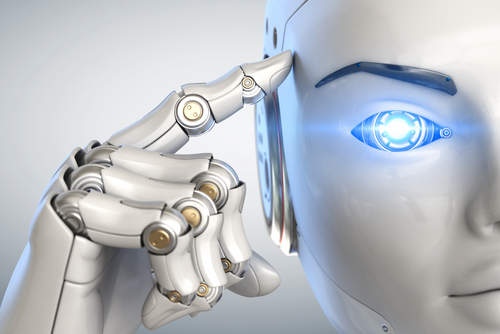
Solutions powered by Artificial Intelligence are already popular. Artificial Intelligence already powers many popular solutions, such as Alexa, Siri, Salesforce Einstein CRM, IBM Watson, SAP Leonardo, Netflix, Amazon AI, Cortana Intelligence Suite, and various customer service chatbots.
Companies will continue to roll out cutting-edge solutions based on Artificial Intelligence, especially to implement smarter and cheaper automation. The scope of artificial intelligence would expand to encompass everything from emails and content generation and from industrial manufacturing to smart grids. In fact, major companies will embed Artificial Intelligence into their core operations. Fueling the growth of Artificial Intelligence is the spread of open-source solutions. Artificial Intelligence cannot easily be integrated into closed systems.
With more investments being made betting on Artificial Intelligence, Virtual Reality is losing the race significantly because Artificial Intelligence offers whatever Virtual Reality offers, in a much cheaper and better way. For instance, companies can apply 3-D visualization to train, pitch, and envision new products in a much better way than what Virtual Reality offers.
6. Anything as a Service
XaaS or “Anything as a Service” is now within the realms of possibility. The cloud-based services market now encompasses software, infrastructure, and everything else. The latest to enter the “as a service” market is a framework! Framework-as-a-Service (FaaS), which falls between SaaS and PaaS is a customizable cloud-based platform. Users may indulge in rapid prototyping, visualization, and other fast fail methods to discover whether a concept or strategy will work or not. Companies get to know the result of their initiative, without having to spend time and effort, doing it the hard way.
Side-by-side with FaaS, workplace-as-a-service (WaaS) and unified-communications-as-a-service (UaaS) will also become mainstream in the future. Remote workplaces, powered by WaaS, will rise in a big way in the future.
7. Low Code Platforms to Soar in Popularity
Low code development platforms (LCDP) will net a total revenue of $6.1 billion by 2018, and over $10 billion by 2019. These figures are impressive when compared with the total revenue in 2015 which was just $1.7 billion.

LCDPs allow creating apps through a configuration of functions, and intuitive drag-and-drop options, rather than by hand coding. The obvious advantage is ease of development and accelerated delivery of business applications. Acute shortage of talented programmers fuels the growth of LCDPs.
Some popular LCDPs, as of now, are Appian, Mendix, Google App maker, and Zoho Creator. The growing popularity of such low-code development platforms will spur ‘citizen development’.
Technology is always fluid. Companies who embrace the latest technology head-on to deliver better solutions for its customers stand to reap dividends. Companies who do not change will surely be swept away into obsolescence.
Stay up to date on what's new
About the Author
Featured Blogs
Stay up to date on
what's new
Talk To Our Experts