Category: ERP
As a company grows and faces new challenges, a continuous evaluation must be done on the current work processes and IT solutions so as to analyze whether they can address these challenges. Performing a periodic gap analysis in ERP implementation helps assess the direction in which a company is headed. Moreover, it can also determine whether the company is equipped with the right kind of tools to get there.
Some of the common issues that companies normally need to look into are:
- Streamlining day to day operations so as to improve productivity and profitability
- Recognize the need for collaborating with business partners
- Generate more insights for decision making
- Meeting regulatory requirements
- Adapting and scaling the business
Most companies rely on a combination of manual and automated workflows, legacy applications, and databases to run their business. These systems may serve their purpose for quite some time, but will eventually run out of options for scalability leading to productivity gaps. In today’s highly competitive markets, inefficient systems can seriously affect the productivity, profitability, and growth of a business.
Dealing with separate systems can become a hindrance to growth and profitability. At the same time, companies can benefit from ERP systems to help define best practices, optimize workflows and achieve a better view over the various business processes.
By automating business processes, companies benefit from the increased accuracy, accelerated data flow and streamlining of day to day activities. This, in turn, gives the staff more time to focus on areas that require personalized attention.
The Need for GAP Analysis in ERP Implementation
Considering the rapidly evolving ERP market and ever-changing needs of companies, it is very essential that gap analysis is done on a frequent basis. This can assess the relevance of legacy systems and ascertain whether the organization’s demands have outrun the capabilities of these systems. GAP analysis helps in providing precise analytical data to compare the costs involved in an upgrade versus the value addition that the upgrade brings in.

Performing the GAP Analysis
GAP analysis is the technique of listing out the steps to be taken for a company to move from its current state of operations to a desired future state. The analysis begins with highlighting the company’s current situation, listing factors to achieve the objectives, and also planning out the key steps to put into effect for bridging the gap between the current situation and the desired future state.
Besides, undertaking an ERP implementation also imply conforming to common market forces and regulatory requirements. The following checklist will help analyze whether the existing system meets your unique business requirements. In addition, this will also guide you determine whether to enlist the services of a consulting organization to perform a detailed evaluation for accurately assessing the value that a state of the art ERP system would bring about.
Does your organization need to comply with government regulations?
Many companies in various industries must comply with various regulations constituted by the government. Some of these regulations include:
- Sarbanes-Oxley Act for all public companies
- OSHA Hazard Communication Standard
- ANSI
- European Union REACH (Registration, Evaluation, Authorisation, and Restriction of Chemicals) legislation for chemical companies
- The Bioterrorism Act
- HACCP (Hazard Analysis and Critical Control Points) for food and beverage producers
Most companies find that managing these government regulations are burdensome and costly. The higher costs are attributed to the fact that many of these are managed manually. Moreover, manual compliance processes not only increase the cost but also leads to inaccuracies and time delays.
Do you need to streamline your operations to improve productivity and profitability?
In today’s competitive world, organizations need to continuously improve their processes and streamline their operations to reduce costs and increase productivity. Manual systems can be time-consuming and slow down the business processes due to rekey of information into multiple systems. Furthermore, to add to the trouble, there are a lot of inaccuracies as well.
Do you need to enhance your decision-making capabilities?
With the increasingly competitive market, it is essential that your company has all the required info to guide you in making the right strategic decisions. When data is spread across various systems and spreadsheets, it becomes increasingly difficult and time-consuming to create reports that are needed to support key decisions.
Do you need to collaborate with partners?
As your company grows and the market conditions fluctuate, it may become unavoidable to not team with partners in various industries across different geographical locations. During such collaborations, effective and hassle-free communication becomes vital to meet customer expectations, maintain loyalty and remain profitable at the same time.
Does your processes and systems scale with your business?
Scalable systems are an absolute necessity considering the competitive markets that thrive today. You will need technology solutions that not only cover your present needs but also accommodate the growth of your business in the future.

Are you planning to grow your business globally?
If the answer is yes, then you will definitely need systems that address the following:
- Global currencies
- Multiple Languages
- Global regulatory specifications
The Output of GAP Analysis
- The GAP analysis will give a complete overview of the system
- It will inform the organization or business, how much value the ERP system will precisely bring into the various business processes
- At times, it may also lead to the conclusion that the implementation of an ERP isn’t needed for the organization when analyzing the value being added
Conclusion
Modern day companies face adverse competition due to rapid market shifts. In the midst of new technological innovations, the adoption of an ERP system is a big step for the growth of a company and its productivity as well. GAP analysis remains an indispensable part of this entire process and companies should focus on it more and give the importance that it deserves. The value adds by giving you a detailed retrospective of your business processes and the current systems are much more than the costs involved in the same.
Stay up to date on what's new

About the Author

Featured Blogs








Stay up to date on
what's new



Talk To Our Experts

The cloud is growing at an exponential pace, with more and more businesses being sold to the innumerable benefits it offers. One software segment which has seen almost wholesale migration to the cloud is ERP. New cloud-based ERP software already had two-thirds of the global market share by 2017, and the figure is higher now. This is a big leap from 2009 when about 80% of the midmarket enterprises preferred an on-premises ERP.
Here are the key reasons why more and more businesses find it expedient to migrate their ERP to the cloud.
1. Reduced Cost and Effort
Despite the benefits on offer, implementation of the traditional on-premises ERP has been lackluster. ERP has hitherto been more-or-less limited to large enterprises, mainly owing to the huge implementation costs and the effort involved in deployment. Cloud-based ERP systems, in contrast, have a low implementation cost, and moreover, allow the enterprise to hit the ground running. With a cloud-based ERP, enterprises do not have to bother about setting up hardware, maintaining servers, or upgrade software. Enterprises are even spared of any major downtime. The enterprise may subscribe to immediately operational software, log-in, and start working.
The only cost incurred with a cloud-based ERP is a flat monthly rate fee. Doing away with the setup requirements saves the initial balloon investment or upfront cost in infrastructure. The savings incurred on recurring maintenance and upgrade costs, and doing away with the costly personnel required to maintain the system, offers even more savings. The icing on the cake is the predictability of cloud subscription rates. With on-premises ERP, everything has to be done in-house, and making estimates on the actual costs the enterprise would end up paying is a difficult task.
A 2014 Mint Jutras survey reports respondents with SaaS implementations reaching their first go-live milestone 19% faster compared to respondents with on-premise solutions.
2. Leverage the Latest Technology Offers, Seamlessly and Effortlessly

No enterprise would be ready to sacrifice the painstakingly built on-premises system easily and would try to squeeze the last minute out of it. The invariable result is the enterprise being struck with an aging and even obsolete software when technology has advanced. With cloud-based ERP, the provider always upgrades to offer the latest technology, or risk losing business to a competitor. As such, the enterprise may leverage the latest technology to offer seamlessly, and hardware-free. Odoo is one such well known in the ERP world for its really short implementation durations and flexibility.
3. Remote Anytime, Anywhere access
The inherent advantage of the cloud, which is anywhere, anytime access, is available for cloud-based ERP systems as well. Enterprise users may access their cloud-based ERP system from the field, from remote locations when traveling for a conference or training, when on a holiday, or even when commuting. Employees no longer have to carry around bulky laptops, or restricted in the work by lack of access to a system with the proprietary ERP software installed.
The cloud-based ERP may be accessed securely from any browser. Front-end mobile apps with smart UX and intuitive “need-to-see” designs for different employee segments make access even more smooth, seamless, and straightforward.
Such universal access was unthinkable a few years ago, and even if conceived, required a gargantuan budget to see through. Cloud-based ERP allows universal access to authorized users, without the need for any special equipment. This is invaluable in today’s fast-paced world where opportunities do not last long, and success depends on how quickly the enterprise can seize an opportunity or get things done.
4. Innovation and Flexibility
Cloud-based ERP systems are flexible and encourage innovation. Traditional on-premises solutions are constrained by the deployed build and leave little scope for scalability or flexibility. The extent of innovation possible is also limited to the resources on-hand. With the cloud, the enterprises can easily scale up or scale down the resources, experiment with new things, indulge in automation and even outsource non-core activities. The cloud also makes it easy to integrate the ERP with IoT and other emerging technologies.
Cloud-based ERP leverages the easy networking and scalability that the cloud offers, to deliver the latest capabilities. Social-style collaborative features, smart and intuitive dashboards for smartphone apps, and more are some of the possibilities cloud-based ERP enables.
5. Business Intelligence (BI) Capabilities
Cloud-based ERP facilitates agile, just-in-time business processes, with real-time budgeting, sophisticated modeling, and big data analytics which the business can optimize to further their revenues.
Cloud-based ERP makes extracting data for analytics or for other uses a simple and straightforward affair. Business Intelligence (BI) suites may easily connect with the cloud-based data. In fact, most cloud-based ERP offers built-in analytics features, offering intuitive tools and graphics with drill down menus, powered by real-time data. For instance, an executive may tap into the cloud-based ERP and generate a chart based on real-time data during the course of a meeting. The transparency and immediacy offered by cloud-based ERP are invaluable for the business to base their decisions on accurate insights, and seize opportunities in a timely way. The net result is a quantum improvement in efficiency and effectiveness over the traditional method of waiting on a report in the computer room, which may anyway be based on outdated historical data.
Traditional on-premises software invariably encounters compatibility issues, and breed silos. In contrast, cloud-based ERPs easily integrate with other systems and deliver seamless integration of all facets of business operations. The easy access and analysis of cloud-based data also allow the enterprise to make sense and remain in control, in an era where data is growing at an exponential pace, and enterprise systems are swamped with terabytes of unstructured data, of all hues.
6. Heightened security
Cloud-based ERPs are more secure than traditional, on-premises systems. With awareness on the implications of security at an all-time high, cloud providers now pay serious attention to security. Advanced authentication standards, military-grade encryption, and more are some of the standard features now expected from most cloud-based systems. The cloud provider also offers secure gateways for remote access and deploys advanced document management systems to prevent download of sensitive data from unauthorized users. The cloud-based systems also come in-built with document retention capabilities and make it easier for enterprises to comply with government regulations and standards.
In traditional on-premises ERP deployments, the enterprise is responsible for all security
More and more businesses now find value in ERP. The cloud, by eradicating the traditional pain-points associated with ERP systems and unlocking new opportunities, enable ERP to go mainstream.
Stay up to date on what's new
About the Author

Tony Joseph

Tony believes in building technology around processes, rather than building processes around technology. At Fingent, he specializes in custom software development, especially in analyzing processes, refining them, and then building technology around it. He works with clients on a daily basis to understand and analyze their operational structure, discover (and not invent) key improvement areas, and come up with technology solutions to deliver an efficient process. You can reach him at [email protected], Skype: tony_fingent
Featured Blogs
Stay up to date on
what's new
Talk To Our Experts
HR plays an important role in all businesses nowadays. Traditionally, the department has played a supportive role and does not take part in any number-oriented departments like marketing and business development. Today’s organization have realized the further potential of the HR department to enhance and develop a business enterprise.
HR deals with the management of the most important and valuable asset to any organization viz, human capital. HR is being considered an employee’s sponsor or advocate. The department continuously monitors and finds out the talent needs of an organization and fills the gap that is being formed usually by hiring employees with a specific skill set to match the needs. In addition, HR act as strategists in the organization contributing to the development and accomplishment of the business plans and objectives.
The HR personnel is responsible for designing a working system in which people succeed and contribute. Establishing a favorable and safe work environment, culture and climate in the organization where the people feel competent, concerned and committed to serving the customers well.
The Payroll function of the HR Department is considered as very important. Payroll is the process of compensating employees, balancing the payroll data, wage deductions, reporting taxes, record keeping, verifying the payroll data, calculating reimbursements, bonuses, overtime, holiday pay, etc.
The HR section keeps all the records of the employees in the organization. Performance appraisal is a function of HR Department by which job performance of an employee is documented and evaluated. Decisions like transfer, salary hike, promotions, etc. are all taken by an HR person.
As the functions of HR is complex and important to the business organization, it needs to be done effectively and efficiently throughout the organization. The need for proper integration of the activities of every department in order to carry out the process led to the implementation of ERP software systems in organizations.
ERP- Meaning
ERP or Enterprise Resource Planning is software providing integrated management of core business processes mediated through software and technology. It allows the organization to use integrated applications in order to automate back office functions and minimize the replication of work. ERP is a single system where all the information is stored in a single database, which can be accessed by all the functional areas in an organization.
Nowadays, almost all the large business enterprises have ERP software or else it is close to impossible to handle the complexity of the data by the personnel alone. ERP has different modules that mimic the different functional areas of business. Microsoft Dynamics AX, Oracle Enterprise Resource Planning, Odoo, WebERP are some examples of ERP systems. Odoo is an open source ERP.
ERP- Functional Modules
ERP has different modules that mimic the different functional areas of a business. Common ERP modules that are found implemented are: Financial Module (FI), Human Resource Module (HR), Materials Management Module (MM), Production Planning Module (PP), Quality Management Module (QM), Sales and Distribution Module (SD), Controlling (CO), Supply Chain Management (SCM), General Logistics (LO), Project System (PS), Plant Maintenance (PM), Customer Relation Management (CRM), E-commerce (E-COM), Advance Planner Optimiser/Advance Planner Scheduler (AO/APS) etc. These modules comprise several submodules.
ERP Assisting Human Resource Planning
Companies use an HR module for creating and maintaining a complete list of employees, track their performance, streamlining compensation, etc. It helps to track the workforce of an organization real-time. Variable compensation plans can be prepared based on qualification, role and work experience in order to motivate the employees. Managing leaves is never been easier. More importantly, it streamlines the process of recruitment easily.
OPEN SOURCE ERP/ ODOO
Out of all ERP’s in the world, Odoo has its own place. Because of its free license to use, easy customization and quick implementation, Odoo is highly preferred by enterprises with less capacity to invest in ERP packages like SAP, Microsoft Dynamics, Oracle etc.
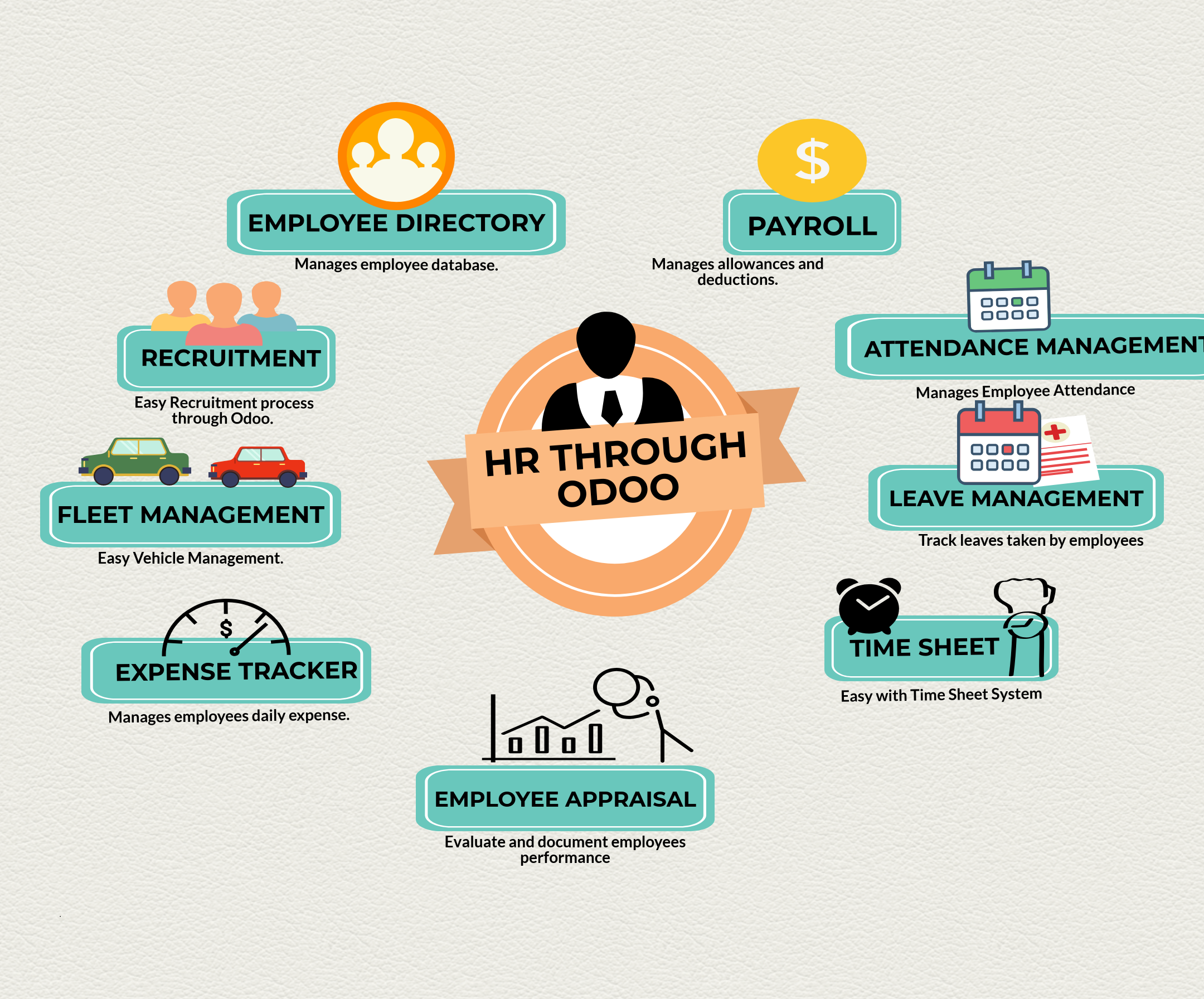
Leave Management
Using this module, it is easier to track the leaves taken by each employee. Employees can request for leaves and the manager can approve or reject them with a note of explanation. The agenda of each employee is updated accordingly. 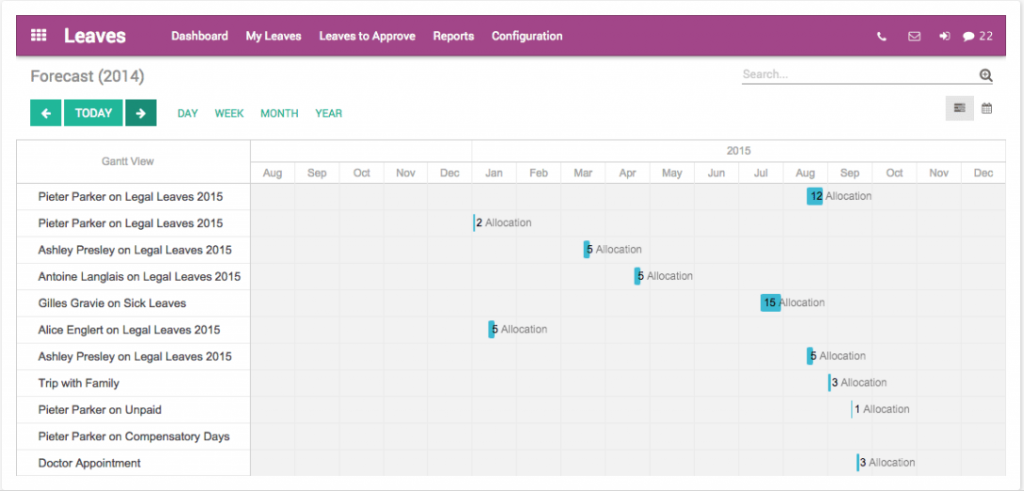
The manager can view the leaves of his/her own team and also forecast the distribution of future tasks accordingly. The module creates statistics, reports based on request type, employee, department or even for the whole enterprise. You can plan for the upcoming to make sure that the company runs at the highest level of productivity.
Recruitment
The recruitment process can be a bit of a headache for HR people in an enterprise. Odoo can handle this process easily right from the sourcing to contract. Just as we did previously, you need to install a specific app to use that feature. By installing Recruitment Process App, you can create job positions and set objectives in terms of recruitment for that particular position, assign responsibility to an HR manager, create an email to generate applications automatically from emails received at this email address, add job descriptions and requirements and customize the process in order to fit your environment. Odoo can also help in the interview process by scheduling the first interview date, adding appreciation, expected salary and internal role. 
After the first interview, an HR manager can add department manager in the loop to schedule a second meeting with the applicants. After the next action, maybe briefing with the manager, the manager can look at the message received and open the application forms. After the meeting, a manager can add an internal note asking the HR manager to hire the applicant.
Indexation of resumes is another feature where you can search for certain keywords and you’ll get CV’s that contains that keywords. It helps in finding applicants having required qualification and skills from all the applications received.
Employee Directory
This is a core application of HR in Odoo. It keeps records of all the employees in one place. And it is very easy to manage and maintain these records. To use, first you need to install the Employee Directory App and then you can start creating new employees on the list. You can set up departments and assign managers to each while also creating job positions within each department. Keeping track of all the employee details is easy with Odoo.
Payroll
With the Payroll app of Odoo, it becomes easy to manage allowances and deductions, configure basic/gross/net salary, managing employee payslip, maintaining payroll register. Moreover, it comes integrated with holiday management.
Timesheets
With this module, you can implement a timesheet within your system. A Timesheet is a method of recording the amount of time a worker spent on each job. Each employee can encode and track their time spent on each project or assignments. It is completely integrated with the cost accounting module.
Attendances
This module manages the employee’s attendances based on actions performed by them like check in/check out.
Employee Appraisal
Employee performance appraisal or performance review or performance evaluation is a method of evaluating and documenting the employee’s performance. Through Odoo Employee Appraisals Application, you can manage employee evaluation, set up a periodic employee evaluation and appraisals. You can create surveys right from the app and collect employee’s answers. There are several templates to choose from or you can create one of your own. Employees can send these evaluations to subordinates, juniors as well as to their managers. You can create evaluation plans with a clear schedule to automatically generate interview requests. You can specify which employee or department or level in the hierarchy can answer the survey. Then allow managers to review the content and finalize the evaluation.
Expense Tracker
Odoo Expense Tracker provides online expense management, which allows you to manage your employee’s daily expenses, whether it is travel related or any other costs. You can access all your employees expense details such as the fee notes and validate or refuse them. Employees can add copies of the receipts and proofs directly to the expense records to avoid losing them. As a manager, you can follow the expenses recorded to keep an eye on the costs and make sure to keep the target and budget. The workload can be shared among employees, managers, and accountants as they are included here to save time.
Fleet Management
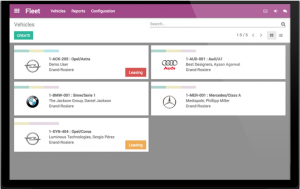
Fleet or vehicle management includes management of vehicles such as cars, vans or trucks, private vehicles, also known as the grey fleet, aviation machinery such as aircraft, ships, rail cars etc. Fleet management includes various functions like driver management, vehicle financing, speed management, fuel management, health and safety management, etc. It helps to minimize the risks associated with vehicle investment and reducing transportation and staff cost.
Odoo Fleet Management helps the manager supervise the organization’s vehicle, contracts, costs, insurances etc easily. It provides a specialized tracking system for company vehicles such as Odoo’s Smart App which can keep track of fleets.
Other Third Party Apps
There are over 14,000 apps in the Odoo App store to choose from. There are many third-party applications available. Following is the top 10 in Odoo App Store:
Common Calendar: Synchronize different objects in one calendar such as meetings, tasks, holidays and other custom models.
Employee Workload Calculation: Employee calculation and notification for next given days based on project tasks.
Employee Overdue Task Reminder Mail: You can see the total on employee kanban and form also.
HR Payroll Dashboard: View, edit and compare all your company payslips in a page.
HR Config: Add HR configuration Company form.
Open HRMS Core: Bring all the Open HRMS modules.
HR Dashboard: Dashboards for HR managers and Officers.
Biometric Device Integration: Integrates Biometric Devices with HR Attendance (face + thumb)
Payroll Slip Reporting: Payslip Pivot view report.
HR- LinkedIn Integration: Integrates LinkedIn with HR Recruitment.
Some applications are free and some are paid. The main advantage of Odoo is that it can be easily integrated.
Why Odoo?
Odoo is indeed a comprehensive platform that efficiently manages different business applications. Being opensource, it is available in the enterprise version, online model and community version which is open source.
Odoo has many advantages like easy and simple navigation, keeping up the pace with business operations, availability of 1000 + modules, flexibility in the sense, implementation and addition of basic and new modules, easy integration, good user experience, up-to-date technology and most importantly, budget-friendly.
Summing Up
Odoo has about 700 partners and over 2 million users because of its error-free nature and proven quality. Small Business or Startups, which find themselves hard to manage their finances and operations can choose Odoo without any doubt. But if you have a higher capacity and budget for investment, you can go for more conventional and fully established ERP systems like the SAP. The decision comes down to your company’s requirements and needs.
Stay up to date on what's new
About the Author
Featured Blogs
Stay up to date on
what's new
Talk To Our Experts
The importance of security can never be understated in today’s age of big-time security breaches, where cyber-criminals strike at will. However, the enterprise app development team needs to make sure that the security does not impede usability, or in other words, security is not self-defeating.
Most apps and solutions tap into the corporate database and handle sensitive data, including personally identifiable information. The implications of a breach can be ruinous and even sound the death-knell of the company. However, at the same time, today’s demanding workforce and highly pampered customers seek intuitive and easy-to-use apps. Customer satisfaction is critical to the survival of the app.
The conventional approach to security is akin to adding more number of locks to the door of a house. While it makes it difficult for thieves to penetrate such a house, it also makes it difficult for the occupants themselves to enter. In the digital world, forced to log in every time, forced to log in first into the device, then log into the software, and then enter a transaction password, being forced to change all these passwords once every two weeks, being said the password is not long enough or was used previously, and more, all strengthen security, but are major irritants and impede usability greatly.
Here are some ways to balance the security-usability conundrum, or ensure security does not end-up self-defeating the very purpose of the app.
Implement Security by Design
The best approach to security is “security by design” or co-opting security during the development process itself.
When security is embedded into the planning, design and implementation phases, developers may code with security in mind, use secure frameworks, and co-opt security testing a part of the app development process.
Adding security layers at a later stage makes the entire process awkward, and hinders usability. Often tweaks have to be affected, and well-written code redone. The analogy is to manufacturing a door with a single tamper-proof deadbolt lock built-in, as opposed to adding multiple locks after the door is installed, to get the same strength.
Collaborate with all Stakeholders
App developers need to collaborate with security experts and business managers, to assess the security risks and determine the best solutions to solve underlying security issues.
If bringing the security and development team together is a challenge, establishing common ground is an even bigger challenge. Developers seek to make things as easy as possible for their customers or users. The security team remains obsessed with the safety of data, often with the attitude if someone has to wait a few extra seconds to access the data, so be it. They remain oblivious to the implications of the harried customer moving on elsewhere rather than wait or put up with a convoluted system. Google usability studies reveal even a tenth of a second delay in an app’s performance adversely affects the user experience.
A collaborative team effort, where every stakeholder is part of the prototype, design, and testing tasks make finding a common ground and workarounds easy. For instance, with a security team in the mix, developers will no longer have to figure how to securely connect to the enterprise every time they build an app. Inputs from the security team would help them build a secure connection, VPN or otherwise, which may even be reused for other apps. In the same way, security could design a secure way for users to log into these apps.
Opt for Hardware-Based Authentication
Developments in hardware technology offer an effective antidote to security vulnerabilities, without having to compromise on usability. A case in point is Apple’s Touch ID fingerprint scanner and compatible Android systems. By deploying such hardware-based security and authentication, users do not have to wrestle with irritating passwords, and developers are spared the cumbersome work in securing data and authenticating users through the application code. It also leads to faster development lifecycle and a much cleaner code.

Limit Availability of Sensitive Data
If data is not there to be stolen, it won’t be stolen.
Businesses would do well to reconsider their business model and limit the availability of data online only to the minimal extent required. Hypersensitive data may be stored in impregnable silos, using military grade authentication, quite contrary to the much-touted logic of eradicating silos to facilitate big data analytics. Only the data required for analytics may be released, on a need-basis.
Developers could also make use of Security Information and Event Management (SIEM). SIEM collects security log events from numerous hosts connected to the enterprise servers, to identify normal patterns. An abnormal usage pattern triggers alerts, and even lockdowns, safeguarding the data. At the same time, normal, routine usage is allowed unobtrusively. The challenge lies in the complexity of configuring the SIEM.
Leverage the Power of Simplicity
Leverage the power of simplicity. Simple apps, with a minimalist design, and lean coding are not just easy on the users but contain lesser vulnerabilities. Such a set-up also minimize the chance of users doing anything to compromise security. A case in point is Amsterdam-based Usabilla putting in the minimal security necessary, and nothing more for its consumer feedback service. The simplifying services and features encouraged users to follow the right path rather than take actions having potential security implications.
Hire Competent Developers
Often skills gaps, poor planning and poor understanding of the business model by the developer aggravates the usability-security conundrum. Hiring competent enterprise app developers, who have considerable experience and exposure to the business, who are able to work closely with business managers, and who are able to deploy the best tools and techniques of the trade, is the key to develop highly intuitive apps, which are highly secure at the same time.
Stay up to date on what's new
About the Author
Tony Joseph
Tony believes in building technology around processes, rather than building processes around technology. At Fingent, he specializes in custom software development, especially in analyzing processes, refining them, and then building technology around it. He works with clients on a daily basis to understand and analyze their operational structure, discover (and not invent) key improvement areas, and come up with technology solutions to deliver an efficient process. You can reach him at [email protected], Skype: tony_fingent
Featured Blogs
Stay up to date on
what's new
Talk To Our Experts
Infince to Exhibit at The Small Business Expo, New York and Boston
WHITE PLAINS –April 17, 2018– Infince will be exhibiting during The Small Business Expo ( America’s biggest event for entrepreneurs and business owners ), in New York on Thursday, May 3, 2018, and in Boston on Thursday, May 17, 2018. Infince will be located at Exhibitor Booth 521 in New York’s Javits Center and Booth 420 in Boston’s Hynes Convention Center.
Infince delivers the three IT-essentials for business: run-your-business software, secure cloud hosting, and concierge IT services, on a single tightly integrated platform. Created by Fingent, a leading developer of cloud-based technologies, Infince gives a business instant access to a complete, reliable, fully supported, and secure IT infrastructure, even if they don’t have any in-house IT expertise. Perfect for today’s “deskless” worker and employees who BYOD.
Software: Infince offers a turnkey library of free, open source, enterprise software, including customizable CMS, ERP, CRM, and marketing automation software; and enables unified access to popular SaaS services, all of which can be activated or deactivated on demand. This integration greatly facilitates onboarding and offboarding of employees. A business’ internet domain, email server, and website can be set up with a few clicks. Out of the box, each user gets a suite of business office software, email, chat, secure file sharing, and productivity tools, including video meetings.
Cloud: Unlike other cloud providers who have complex configuration options primarily catering to software developers, provisioning cloud resources on Infince is easy-to-do and easy-to-understand. Infince lets a business owner grow and manage their IT infrastructure themselves, in economical bite-sized increments. All employee files and communications are secured and inaccessible to search engine companies.
Services: Infince offers a variety of service options including online help desk and expert application technical support, self-help support, configuration assistance, server management, and affordable custom programming services.
Cost and Pre-requisites: An introductory starter package supporting up to 10 users is offered at $50 per month, and it requires no annual commitment. As a “thin client,” virtual desktop, Infince can be run from anywhere there is available internet service and on any device with supported browsers: from Chromebooks, tablets, and smartphones, to PC’s and Macs.
“Infince is a complete and worry-free cloud offering that lets a business adopt technology quickly, with integrated support, and lets owners stay focused on achieving their core business goals.” said Stephen Cummings, SVP.
Easy to use and simple to deploy, Infince makes it economical for a small business to get big business technology. For more info, see infince.com.
About Fingent: Fingent, the creator of Infince, develops software that equips businesses to operate more effectively, more efficiently, and with more resiliency. Since 2003, Fingent has developed sophisticated web and mobile software solutions that have been key to our clients’ business success — rapidly, on schedule, and on budget. Fingent has offices in White Plains, NY, and Cambridge, MA. For us, it is not just about delivering software, but also about partnering in business efforts to shape a brighter and smarter future.
Stay up to date on what's new
About the Author

Featured Blogs
Stay up to date on
what's new
Talk To Our Experts
Businesses in the present are making every move to ensure that they stay ahead of their competitors in the market. A rapid growth in terms of market share, revenues and customer base is desired by every business unit. One of the strategies being used by the businesses to ensure faster growth is the development and deployment of the enterprise mobility applications.

Enterprise Mobility is the trend that allows the employees of a business organization to work remotely to fulfill the business tasks and activities using mobile devices, mobile applications, and cloud-based solutions. An enterprise mobility application refers to a mobile app that is developed to target the enterprise-related problems.
Enterprise mobile applications can enhance business growth for companies in the following ways:
- Better Work-Life Balance

Every employee engaged with an organization aspires to maintain a healthy balance between the professional and personal commitments. Enterprise Mobility Applications allow the employees to experience better flexibility by allowing them to carry out business tasks from any of the remote location. 69% of the IT decision-makers support the idea of BYOD as they have witnessed positive results with the inclusion of the same. Workers in the United States on an average save 81 minutes per week with the aid of BYOD. There are 49% employees that say that they are more productive while working on their personal devices.
- Improved Workflow
Critical issues may crop up in a business environment anytime, without prior notices or hints. Enterprise mobile applications allow the employees to resolve such issues on an urgent basis irrespective of their presence and availability at the office location. Real-time interactions are also made possible with the clients that result in better customer engagement and satisfaction. The overall workflow, therefore, improves with the use of such applications.
- Reduction in Costs
Enterprise mobile apps can be made compatible and accessible on the personal devices of the staff members. It leads to the reduction in the cost of the devices and the share may be used in other significant business requirements.
- System Independence
There is a higher level of system independence provided to the employees with the use of enterprise mobility applications. It leads to the execution of the tasks from any network and the tools are installed in the devices of the employees.
- Reduced Paperwork
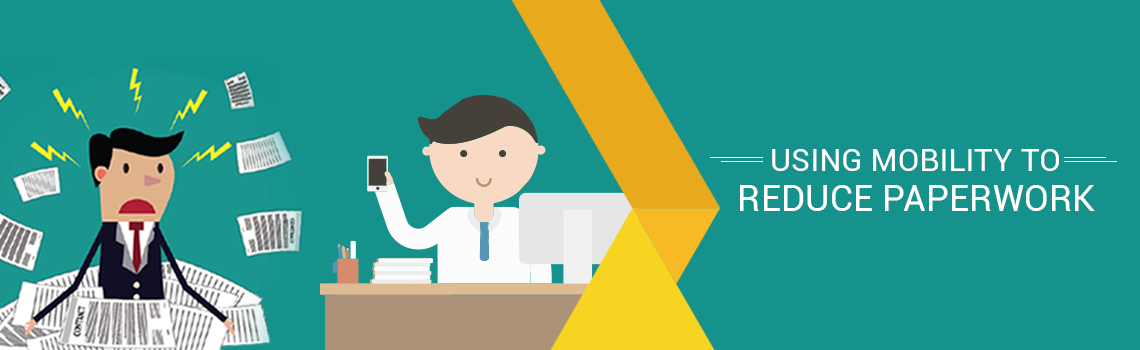
More paperwork leads to increase the number of risks in the business, such as loss of documents, replication of data and inefficiency in the storage and management of the documents. With the use of enterprise mobility applications, there are electronic documents that are used for sharing and transactions. These are easier to maintain and can also be processed at a faster pace as compared to the paper-based documents. The overall business speed, therefore, gets enhanced as a result.
- Customer Engagement
With the improvement of the workflow of a business and the non-stop availability of the employees, the customers feel connected with the organization. There are higher levels of transparency that can be maintained to gain customer trust and satisfaction. Rapid resolution of the defects and issues along with urgent sharing of information are some of the abilities that are made possible through the enterprise mobility applications. It leads to the better engagement with the customers and the reputation of the business organization also improves in the market.
- Empowers the Field Workers

There are several businesses that include a lot many field workers to carry out operational business activities. These field workers may experience certain issues such as difficulty in understanding a task or emergence of a conflict between two resources. Enterprise mobility applications may be used in such scenarios to contact the team heads and managers for maintaining the continuity of the operations. Also, activities such as status reporting and sharing of information can be done in a matter of seconds. All of these capabilities lead to enhancement of the processing speed of the operations resulting in faster business growth.
There are technological innovations and advancements that are being carried out with each passing day. It is required for the business organizations to remain updated with the technological changes and adapt the same to their functioning. The practice will allow the business units to achieve their goals accurately and rapidly. Enterprise mobility applications are a contribution of technology that has benefitted a lot many organizations. However, the inclusion of these applications in the business architecture may vary from one business unit to the other. Factors such as nature of the business, projects that are undertaken by the organization, customer expectations, project team members etc. shall be considered before moving on to the use of enterprise mobility applications.
Stay up to date on what's new
About the Author
Featured Blogs
Stay up to date on
what's new
Talk To Our Experts
Enterprise software solutions are the backbone of an organization. Selecting one for your organization is a great responsibility as it requires detailed analysis at each and every step. The major challenge lies in understanding that every organization’s structure is different and cannot do with the same software that was used in your previous organization or is used at the competitor’s company. To make your task easy, here are 8 challenges to avoid before purchasing an Enterprise Software.
1. Change Management
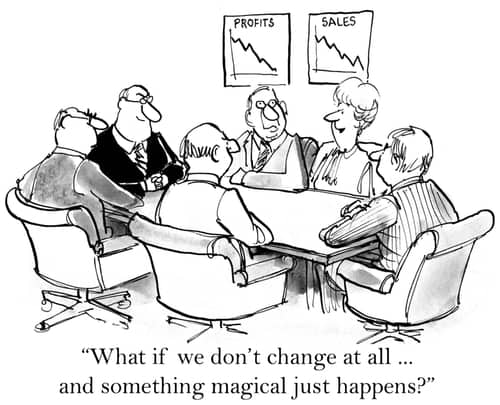
One of the key understandings that should come with a new Enterprise Software is that there is a need for identifying the changes in the IT infrastructure beforehand and then implementing it. Know how much change is required and if it is possible to handle before purchasing the new software. Also, the employees need proper training for change management and to get them comfortable with the new system before it goes live on an organizational scale.
2. Physical Requirements
Before jumping into a purchase decision, figure out what is the current IT infrastructure landscape, if it fits well or requires changes. For a newer setup, choose the software wisely and then plan the landscape. But remember, the software you choose defines this landscape and should be thoroughly checked to avoid any unwanted changes in the future.
3. The load of migration

Data is the basis for every industry functioning in this day and age. Introducing newer software to the system means adding your current data to it for validation and future operations. Check the requirements of the new system you plan on incorporating and if the required is way too much. Remember data is imperative to the organization and correct migration will minimize errors.
4. What the vendor has to offer
Sometime Enterprise Software vendors are too enthusiastic to sell the product but lack a structure post-purchase. Figure out what are the key support promises that they offer and if they have a track of delivering them. A due diligence of the provider should not be skipped especially if the vendor is not a big company.
5. Readying the team

Internal challenges are one of the key points to consider for the purchase. You will have to understand the requirements of the enterprise software development company well along with the features required. Each department will offer a different list of features they need. The challenge is to create a project scope that encapsulates all these important points and uses it as a foundation to identify the right software.
6. Software scope
Considering any enterprise software, and its capabilities, it is quite hard to find one that has everything that a business needs. As organizations strive to meet individual customer demands, they rely on customization to align their strategic objectives with enterprise solutions. For instance, one of our leading real estate organizations wanted to add a document management function that enabled them to share documents easily with their field agents. However, this posed numerous regulatory constraints considering security and privacy. Our solutions experts realigned the software architecture and build processes to meet the client’s requirement.
7. Taking unwanted risks

The market has opened up for Enterprise Software like never before and every day a new solution surfaces that promises to offer the best of all worlds. New-age technology can be highly enticing but always look under the hood and see if it has been taken for a test drive. Check LinkedIn, job boards, or other forums to find out more about the seller and the software itself. Don’t elevate your risks by getting attracted to high-end technology or pricing.
8. No detailed analysis
One of the issues that hamper the procurement of the right enterprise software is the lack of understanding of your own system. Run the analysis several times and match it with what the software will provide. Keep in mind to not depend on what the next version update will feature, rely only on what the solution provides today.
9. Cutting the influences

Decision making in organizations sometimes doesn’t necessarily stay with the designated employees. It is directly or indirectly influenced by the owners or other people in important positions. No matter how well they know or what better deal is offered through a reference, ensure that the decision, in the end, comes keeping the organization in mind and not the influences.
10. Exploring all opportunities
Do not hesitate to look at third-party support alternatives as they might offer something similar or better than premium vendor support. Look at the maintenance rates that come with the software as it is something that your organization will incur on a regular basis.
Whether you are trying to set up a new system or replace an old one, an expert perspective can help reduce these risks and challenges.
Stay up to date on what's new
About the Author
Tony Joseph
Tony believes in building technology around processes, rather than building processes around technology. At Fingent, he specializes in custom software development, especially in analyzing processes, refining them, and then building technology around it. He works with clients on a daily basis to understand and analyze their operational structure, discover (and not invent) key improvement areas, and come up with technology solutions to deliver an efficient process. You can reach him at [email protected], Skype: tony_fingent
Featured Blogs
Stay up to date on
what's new
Talk To Our Experts
A niche business is no longer a term used often these days due to growing competition in every sector. In the world of startups and well-established enterprises, the companies that stand out clearly in front of their customers will only survive and succeed. Smartphones and fast data packs are beneficial to companies in terms of reaching out to their customers via desktop and mobile websites. But having such a front is a norm today and you will have to think of giving a little more to engage them. According to studies, business mobile apps have a higher rate of conversation when compared to desktop or mobile websites. You must be thinking how will a custom mobile application development help boost your business? Here’s how –
1. Better customer relationship
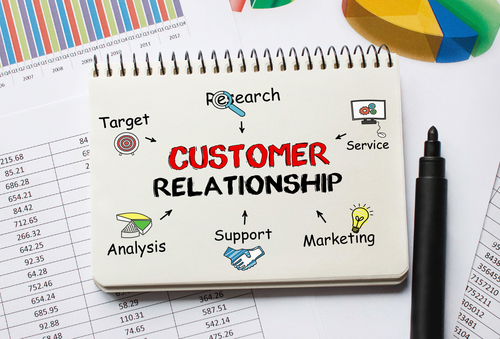
A custom software development offers customers a way to access your services and products directly. Especially, if you are a product-oriented company, you can have your products laid out better over the standard formats of e-retailers. Also, you can send offers, notifications, and even receive feedback from customers in real-time. You can even have a dedicated app team that offers support 24 x 7 and sorts query for customers with in-app emails and chat.
2. Creating and maintaining database
A custom app will give you the opportunity to access existing customer data and acquire new ones. Also, your app will have your own specialized security features that will safeguard your data against potential leaks and threats.
3. Integration with current services
If you are a software provider then a good way to offer more to your clients is by creating a custom app that syncs with your software. There can be reports, updates, and even a way to access information quickly and easily. To further improve client satisfaction, you can even hire a dedicated support team for app management. Such integration will definitely give your software some extra brownie points while marketing it.
4. Generate revenue

Apps are not just a great way to connect with your customers but can also work as a good revenue source for the business. You can charge customers a little extra for app services or an upgrade. Also, you can have in-app advertisements that add income to your kitty whenever your app is accessed by the customers.
5. Increase customer base
An app ensures that a customer is in your space and the only things they can surf around are your products and services. Having a custom app gives you a chance to put your case forward to new customers and even attract them with in-app offers. You can start giving them free trials and additional discounts via app downloads to add to your revenue. A custom app will define your uniqueness as it adds up to a brand identity for your business.
6. Project Management
Apart from seeking and retaining customers, your entire team can benefit from having an app that works for internal purposes only. Custom logins at each hierarchy can give them access to groups, documents, tasks, calendars, and more to run your business smoothly no matter where they are working from. This is beneficial especially if you have several teams working from different locations. Each team can receive updates regarding the project. Also, it helps in sending critical issues to all the personnel quickly.
Building a custom mobile app for your business is vital in this day and age of competition. Once you are clear about what you want, it’s a good idea to approach companies such as ours that build custom apps from the ground up.
Stay up to date on what's new
About the Author
Featured Blogs
Stay up to date on
what's new
Talk To Our Experts
In the business environment of this day and age, with all its briskness and high levels of customer expectations are becoming increasingly difficult to meet. Survival in itself is a matter of concern, let alone success. Many businesses are finding their way to success and of course survival through simplification.
As your business grows, it is bound to get more complex and, of course, more difficult to manage. Even small enterprises experience some kind of chaos when they go through even the smallest amount of growth. It is important to reduce such disruption caused by growth and change and become more agile.
As and when an organization grows, it needs more resources to accommodate the growth. This often causes the different departments of the business to work in confinement and as a result employees get detached from the core of the business. Thus, they spend more time on the non-core activities and ultimately leads to decrease in the efficiency of the organization.
This is a problem faced by most business enterprises these days and there fortunately is a solution for it – An Enterprise Resource Planning (ERP) system. Modern ERP systems can help enterprises a great deal in the simplification of business their activities. Some of the benefits of having an ERP system are:
- Better control – An ERP system helps to keep better control over the activities in an enterprise. It has dashboards which present to you a clear picture of what is going on in the organization. You get to see how each department or division of your organization is performing in real time. You can also derive useful insights regarding your business operation which can help you in making decisions. You get access to a single version of information, rather than duplicates across various departments.
- Reduced complexity – As an ERP system integrates all the departments in an enterprise, it reduces the complexity in having to take care of each department individually. Especially in cases of large organizations, where the size of the information to be accessed across all the departments will also be higher, apart from the number of departments, an ERP system helps to clearly define the workflows and introduces a neatly defined system of operations.
- Simplified operations – As the workflows in an enterprise get properly defined and centralized, there is more transparency and clarity in its operations. This reduces redundancy or duplication of data and efforts. Automation oftasks, of course, reduces human errors too. In all, the operations in an enterprise are simplified and made easier to manage.
- Reduced operation costs – Deploying an ERP system reduces the overall costs of managing the various resources in anenterprise. For example, all the data are available on the cloud, that is, in a single location, which can be accessed by any concerned person from anywhere in the organization. This reduces the cost of having to maintain such information in all the concerned departments separately. It also helps to eliminate such duplication.
- Scalability – An ERP system is easily scalable. It is easy to add more functionality to it and make changes to it, as and when required. Hence, as and when an organization grows and seeks to add more departments and functions, it becomes easier to do so. Since change is a vital part of any business environment, it is very important to be dynamic and be able to adopt any changes that may be necessary for the business to grow.
An ERP system basically integrates all the departments in an organization helps it to function as a single entity. This not only brings the employees more closer to the organization, it also encourages the team spirit. As the daily administrative and management activities are taken care of by an efficient ERP system, the employees get more time to concentrate on their core competencies. This helps to increase productivity and efficiency, ultimately leading to more profits.
Although, having an ERP system is beneficial to your organization, it is important that you get one that is customized to suit your business model. With the right resources used in the right times and places, and with the help of the right ERP partners, business can flourish easily.
At Fingent, we work with large and mid-size organizations helping them build and implement technology solutions for solving their business challenges. Talk to us to find out how we can work together to improve your business efficiency.
Stay up to date on what's new
About the Author
Featured Blogs
Stay up to date on
what's new
Talk To Our Experts
When you think, storage and analysis of data, the first thing that comes to mind is spreadsheet software. It has rows and columns and it has basic features to manage the data. So, why think of anything else, right?
The need to think of something else arises in the context of an ever-growing business scenario. Indeed, spreadsheets have the capability to maintain basic records and they help analyze information quickly and effectively. But as the size of the information grows, it becomes difficult to manage and interpret.
For startup businesses, it could be sufficient to use a spreadsheet, as they can avoid the initial cost of deploying a whole ERP (Enterprise Resource Planning) system. However, after a certain point or in cases of mid-sized to enterprise business concerns, it is impractical to use a spreadsheet software.
Besides that, spreadsheets have other disadvantages. So if you rely on spreadsheets for your business activities, here is some food for thought:
Errors
Several studies have shown that a majority of spreadsheets contain errors, whether intentional or unintentional. Since a lot of the information in the spreadsheets is entered manually and since it is handled by many people, human errors like typing in a wrong key etc. are likely to happen and they can be difficult to trace. These can end up costing companies huge amounts.
Difficulty to Analyze and Operate
Time-Consuming AnalysisThe larger the volume of data, the more time it takes to analyze and arrive at solutions or conclusions. Hence, making it difficult for decision makers to make relevant and prompt decisions. Sometimes a formula entered in a spreadsheet may have to be re-entered every time specific information is required.
Duplication of Spreadsheets
As the spreadsheets are emailed from one computer to another, it gets stored in a number of systems and ultimately, you lose track of the original version.
Lack of Security
A spreadsheet may not be as secure as an ERP system. Even though it is possible to set a password for access to a spreadsheet, it may not be encoded as an ERP package.
Inability to Track
A spreadsheet created by one person can be edited by another person and hence it would be difficult to trace the changes as to who made the last change leaving the spreadsheet vulnerable to changes.
Using an ERP solution for the management of various areas in an enterprise will not only help eliminate such problems but also comes with a lot of advantages of being cloud based. It provides automatic backup of the data, which results in lesser chances of loss of data. It also enables real-time sharing of data among all users and generation of important business reports. So as you can see, there is no reason why you shouldn’t choose an ERP solution over spreadsheet software.
Stay up to date on what's new
About the Author
Featured Blogs
Stay up to date on
what's new
Talk To Our Experts