Category: News and Updates
Humans are unbelievable; they say they are dying to have the latest gadget, and a week after getting it, it becomes perhaps the most boring thing! They crave for a new car, and a month later the new car is in the lobby covered in all dust and mud! It’s difficult to predict what turns them on and what makes them bored. And funnily, boredom is the only true companion for them most of the time, because, it comes back to visit every now and then.
The same is the case with social media. I log off because I’m bored. And I log back in five minutes because I’m bored. There is a difference here though, every time I get bored with the popular social media like, Facebook, the company manages to bring up something that redeems its X-factor in my eyes. A latest example to site may be Facebook’s “Safety Check” tool that helped people to connect to their friends and relatives during the horrific events in France. I really appreciate the way social media unite during crisis; it renews my faith in humanity.
Facebook is out with another cool feature to help its users manage their smartphone notifications. Iphone has got its Notify app, notifying users about the latest news about ‘the things they care’ about right on the lock screen. On launching the app, users will be asked to select the channels of their interest (sports, weather, movies, etc.), managed by over 70 sources like Buzzfeed, ABC, GQ Magazine, Entertainment Tonight and The Weather Channel. Whenever there is a new headline in the category it appears as a notification to the user, where the user can swipe left and right from the lock screen to read the story and save it for later/ share with friends respectively.
How Notify App can get on your nerves
However, there is chance that you get overwhelmed with all kind of notification from the different channels you select. As it can streamline all notifications from the different apps into one single app, the app successfully meets its goal of making users use Facebook all the time. Having your phone’s notification light blink all the time with these many notifications and having the Facebook app run always in the background can drain considerable amount of your battery. Facebook have currently limited users’ access only to content from those sources it has partnered with, so it won’t still act as your complete news/ updates alert tool. This would also mean that you will get candy crush and other such invites as notification in phone, which can be quite distracting at times, though you can turn off notifications individually for such apps. The lock screen always tends to be a busy place where users want to swipe off fast to be able to use their phone; a lock screen filled with notification can distract the user from his intentions.
Application in work environments
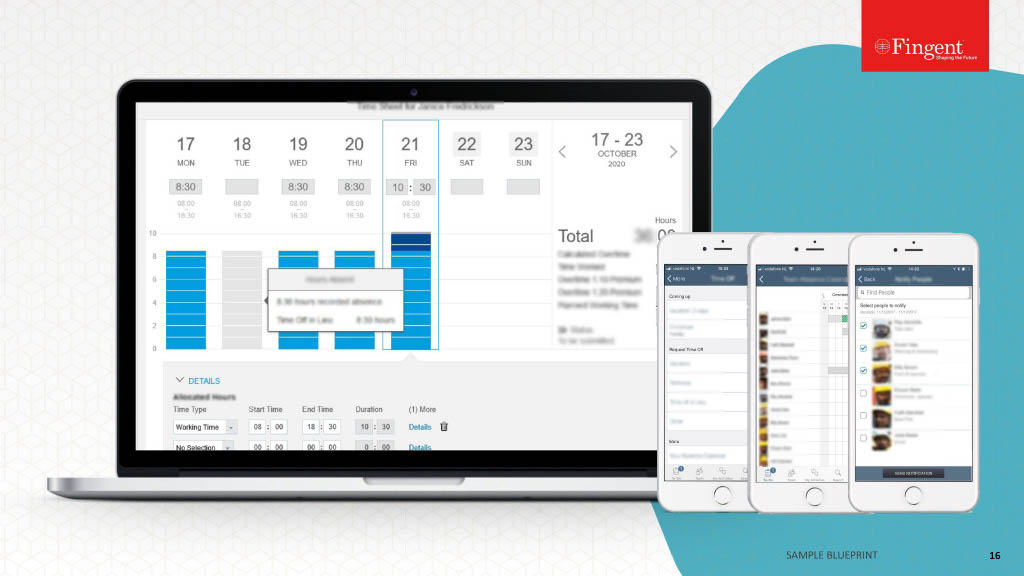
Having said all that, a notification system for the real time environment like the work environment will be very effective in modern work culture, where there are an increased number of mobile workforces spending less time in typical office premises. According to a survey by Forrester Research, 44% of workers use their smartphones in work. Three out of every five workers say that their work is no longer office bound, and they need not be in offices to be productive. Such notification apps can be used in work environments to send, receive, track or respond to operational or emergency alerts from the SAP, ERP or CRM systems in the enterprise. The notification app will allow the dispersed workers to be connected and perform important tasks even when they are not in office. The managers can anytime oversee the activities, or access important documents, like invoices whenever a requirement arises. The app is handy to remind critical tasks or about upcoming events even when the employees are in offices. The notification works over cellular networks and Wi-Fi, which enable it to inform even employees on business tours to be aware of critical office events or tasks. Employees can use such apps to create unique messages and send it out to individuals or pre-defined groups throughout the enterprise right through their smartphone. For instance, if the marketing head wants to assemble the entire marketing team for a meeting next day, he could simply use the app to send out notifications/alerts to the members. It can send alerts or receive alerts from connected individuals at no charge unlike the usual sms alerts.
Facebook’s notification app is a powerful tool that finds application in various ways in different areas, just like the latter scenario. It offers a flexible, reliable and powerful way to stay connected, to communicate, and send notifications wherever the members are, enhancing business interactions, protecting resources and increasing operational efficiency. AWARE Mobility, for instance, is Fingent’s unique enterprise notification application based on specific business conditions using details from your SAP ERP system that has been configured in AWARE. Aware fits into any part of the SAP ecosystem, to help organizations connect with their members and keep them updated about the business processes via alerts, warnings or information messages, anytime anywhere on their Android or iOS smart devices. Our experts can help you with any additional information required.
Image courtesy: Radu Bercan / Shutterstock.com
Stay up to date on what's new

About the Author

Featured Blogs







Stay up to date on
what's new



Talk To Our Experts

Field service management industries have now reached a tipping point of transformation; so how has your business
ensured to stay on top of it? How does your field operation compare to the best standards in the industry? How well has the internet helped to leverage its efficiency and impact?
The webinar “Transforming Field Operations with the Internet”, hosted by Fingent on 17 December 2015,
provides insights to a range of internet technologies that can help improve delivery and management of services – from simple low-cost options to more sophisticated alternatives. The ever so powerful Internet and the cutting edge technologies, like the Internet of Things, smart device integration, and advanced analytics are making the field service business operations predictive rather than responsive. The field service technicians are already better equipped with intelligent, online apps that gather and deliver real-time data and analytics at their fingertips to enable quick strategic decision making, security, faster operations and easy processes. These efficient field operation practices have a significant impact on customer satisfaction, customer retention rates and ultimately, productivity and profitability.
The smart players of the industry are already on the hunt for strategic trends in the field that can give their business a forward push among other competitors in the market. Has your business entered the bandwagon yet?
Don’t miss this opportunity to learn how your field service business can excel with modern apps, the Internet of Things and software.
Meet our Hosts
Stephen Cummings
For over 25 years, Stephen Cummings has provided innovative software solutions to enterprises large and small, enabling them to become more collaborative and more efficient.
Efraim Burgos
For over 15 years Efraim Burgos has helped Enterprises such as Samsung, Sony, Time Warner, organize their field service teams for higher efficiency.
Date: 17th December 2015
Time: 2 p.m EST
Stay up to date on what's new
About the Author
Featured Blogs
Stay up to date on
what's new
Talk To Our Experts
According to Gartner, a strategic technology trend is one that is likely to or has the potential to have a significant impact on the organization, like the chance for a disruption to business or Information Technology users or the need to make a huge investment etc. These are all business decisions that are likely to affect the organization in a huge way in terms of its long-term goals or initiatives.
It’s that time of the year again when organizations start charting out their strategic technology plans for the coming year and prepare themselves to meet the resources and expenses for the same. What are the trends in technology that most organizations are likely to adopt in the future?
Here is a list of the top 10 strategic technology trends as per Gartner, that are likely to affect digital business opportunities and processes:
The device mesh
Device mesh is a term used to describe the expandable endpoints, or in simple words, the devices that people use to access applications or information and also to communicate and interact with people through social and business communities. It includes devices like mobile phones, wearables, home electronic devices and automotive or environmental devices as well. Most of these devices are almost always connected to back-end systems through various networks these days. But sometimes, they also have been working in isolation from one another. According to Gartner, we can expect connection models to diversify and expand to facilitate greater coordination and interaction between devices to emerge. Now, as far as line managers are concerned, this would probably mean better coordination between various departments in the organization and therefore, better ability to ensure that all employees are on the same page when it comes to progress in work.
A continuous user experience
As a result of the device mesh, a new continuous and ambient user experience is formed, with deeply engaging environments and virtual reality being just a part of it. This leads to a continuously flowing user environment, that helps to save time and space across a changing set of devices and interaction channels, and also merge physical, virtual and electronic environments together as users move from one place to another. David Cearley, vice president and fellow at Gartner, feels that these advanced experiences will go on to become a major differentiator for Independent Software Vendors (ISVs) and enterprises by 2018. This again contributes to bringing different departments in an enterprise closer and hence makes it easier for line managers to monitor and supervise his team.
3D printing
In 3D printing, there have been several huge advances in terms of materials used like nickel alloys, carbon fibre, glass, electronics, pharmaceuticals, conductive ink, electronics and the like. These improvements also drove up the user demand for 3D printing, as the practical applications of 3D printers has expanded to different sectors like aerospace, military, medical, automotive and energy. According to Gartner, the growing range of 3D printable materials will drive a compound annual growth rate of 64.1% for enterprise 3D printer shipments by 2019. And these improvements actually entail a need to re-plan assembly line and supply chain processes to make use of 3D printing.
Information of everything
The digital mesh, mentioned above, entirely makes use of, produces and transmits all kinds of information, ranging from audio or video to sensory and contextual information. Information of everything seeks to address this inflow with the help of technology and strategies to combine data from all different data sources. Such information has always existed everywhere. It was due to the lack of capabilities to classify and analyze them, that always made such data incomplete, isolated or unavailable. But now, with advances in semantic tools such as graph databases and other fast emerging data analysis techniques, we would be able to bring more meaning to the usual rush of information.
Machine learning
Machine learning makes use of certain Deep Neutral Nets (DNNs), that have capabilities far beyond regular computing and information management, to produce systems that can independently learn to perceive the world on their own. As discussed, the large influx of information and its complexity makes it infeasible and also uneconomic for manual analysis and classification. That is where DNNs succeed, in addressing the challenges arising from the trend of ‘information of everything’ and in making machines intelligent.
DNNs are advanced form of machine learning applicable to large complex data sets, that enable machines (hardware or software based) to learn for themselves, all kinds of features in their environment, from the tiniest of details to the most complex ones. As this area is rapidly progressing, organizations, more specifically, line managers, need to figure out ways and means of using these technologies to gain competitive advantage.
Independence
As a consequence of the digital mesh and advanced machine learning put together, there is a whole range of smart machine implementations like Virtual Personal Assistants (VPAs), robots, autonomous vehicles and smart advisors, that have a huge impact, not only on the physical front, but also on the software side. VPAs like Google Now, Cortana and Siri, are the perfect examples of an ambient or continuous user experience provided by autonomous agents. These agents are soon becoming the main user interface in most systems, by which people can literally talk to the apps, rather than interacting with menus and buttons. Line managers and IT leaders need to find ways to use such autonomous agents and things, to augment human activity and free people from work. Although, we must keep in mind that this is a long-term phenomenon that is likely to evolve and expand rapidly over the next few years.
Advanced adaptive security
Digital business these days, with an algorithmic economy and a fast emerging ‘hacker’ industry, increase the threat platform for an organization. Regular security methods like perimeter defense and rule-based security would be inadequate, especially since organizations are now making use of more cloud-based services and open APIs for customers and partners to integrate with their systems. Line managers need to figure out new, advanced, adaptive security techniques like application self-protection through user and entity behaviour analytics and the like.
Advanced systems
The device mesh and smart machines call for high level computing architecture to make them viable for organizations. There are several high powered and super efficient neuromorphic architectures that can provide this push. With the help of field-programmable gate arrays (FPGAs), neuromorphic architectures have several significant benefits like, “being able to run at speeds greater than a teraflop” with high energy efficiency. According to David Cearley, “Systems built on GPUs and FPGAs will function more like human brains that are particularly suited to be applied to deep learning and other pattern-matching algorithms that smart machines use.”
Mesh app and services
According to Gartner, the traditional monolithic, linear application designs, that is, the three-tier architecture are leading towards a more integrated approach: the apps and services architecture. With software-defined application services, this new design enables web-scale performance, flexibility, and agility. Microservice architecture is another emerging design for building distributed applications that support agile delivery and scalable deployment, both on-premises and in the cloud. Containers are also emerging as a useful technology for facilitating agile development and microservice architectures. Development teams must create new architectures to provide agile, flexible and dynamic cloud-based applications with similar user experiences that comprise the digital mesh.
IoT platforms
Internet of Things (IoT) Platforms actually compliment the mesh app and services architecture. The various management, security and integration standards of the platform form the basic set of capabilities for building, managing and securing elements in IoT. It basically constitutes the work behind the scenes, done from an architectural and technological point of view, that make IoT a reality. It is an essential part of the device mesh and continuous user experience.
As is evident from the above technological trends, it is a “one-thing-leading-to-another” scenario, with each of the likely trends linked to the other. The device mesh has a lot of consequences and the ambient user experience, being one of those, has its own separate consequences.
All of these strategic technological trends mean more coordination and interaction between departments in an organization. For line managers, who know exactly what their team needs and is capable of, technology is literally going to be their best friend, who understands the team just as well. In all, with all these advancements, it looks like this year will be a year of transformation to the next level yet again, just like the previous was.
Stay up to date on what's new
About the Author
Featured Blogs
Stay up to date on
what's new
Talk To Our Experts
What is the first thing that comes to your mind on hearing the term, Virtual Reality? Do you get images of Neo and Morpheus strolling about in “The Matrix” or is it that of Johnny Quest with his father fighting it out in their “other world”. Either way, you are about in the right track. To think that these were characters created as part of the fantasy world in the past.
Virtual reality is a concept that is fast becoming common and popular these days. It opens a whole new range of exciting opportunities with it as well, especially in the world of gaming. Leading techs are already in the game, with their much-anticipated products such as Facebook’s Oculus Rift, Microsoft’s HoloLens, Sony’s Project Morpheus and a comparatively low-cost entry into this field, the Google Cardboard.
A lot of these devices are already being used in a number of industries across the world, as virtual reality is one of the most versatile technologies ever to be innovated in the recent past. To know what the hype is all about, let’s take a detour to find out what virtual reality is.
What is virtual reality
Virtual Reality is basically a concept in which computer technology is used for creating a simulated three-dimensional world. One in which the user can manipulate, maneuver and explore stuff while experiencing a feeling of actually being in that world. Nowadays, it is also known as Virtual Environment. Though there are different theories and opinions on what exactly comprises a virtual reality experience, the basic constituents are:
- three-dimensional, life-size images from the user’s point of view
- the power to monitor the user’s movements and change the images and features in the virtual display to reflect the changes in perspective
There are several devices and applications these days that have been created solely to achieve these goals.
A peek into how it works
The user feels a sense of “immersion” on being in a virtual reality environment. Immersion refers to a feeling of being inside or part of a particular world. Once the user starts interacting with the environment, he gets into state of “Telepresence”. Telepresence is a combination of the sense of immersion and interaction with the environment.
A proper Virtual Reality environment will actually make one feel detached from the real world or real surroundings and get you to focus only on your existence in the virtual environment. Computer Scientist Jonathan Steuer says, “Telepresence is the extent to which one feels present in the mediated environment, rather than in the immediate physical environment.”
Devices are designed by the developers with the help of technology to create these feelings among the users and provide rich virtual reality experiences.
The future
The two main custodians of larger-than-life experiences – the gaming industry and the film industry are the pioneers in using virtual reality for business. They are likely to take virtual reality to new heights and set the pace for other industries as well.
For example, the 700 billion dollars worth glamour industry in the United States, Hollywood uses virtual reality to make amazing movies. Nokia’s new Camera Ozo, is likely to become a huge hit in this regard. With the ability to capture audio and video in 360 degrees, Ozo has been reported to give the most amazing experience with surround sound and images. Users actually felt the voices in their surroundings and were able to turn around and see the characters talking.
There are a number of other companies also looking to invade the film industry like Samsung.
The gaming industry too has a fairly large amount of loyal followers who are highly enthusiastic and encouraging about new innovations. For example, Rebellion, the leading game makers are looking to launch a virtual reality integrated version of their old 1980s classic Battlezone. There are also other companies yet to set their feet into this huge wonder.
Tourism is also another industry which is starting to make use of virtual reality with the South-African tourism being the pioneers. Their shark diving experience is something that is likely to become the next big thing leveraging virtual reality.
From the looks of it, this is already starting to be a revolution which is not going to stop with the present day. Into the future, maybe we’ll have people watching pyramids being built in the early days of Egypt or maybe how the Empire State building was set up in America or watch a play in the original Globe theatre. Books could also be made into jaw-dropping movies or even games with virtual reality supported cameras. We have tons of talented developers waiting, with all the skills to ideate, conceptualize and produce amazing worlds for us to explore and experience. All we need to do is wait for it.
Stay up to date on what's new
About the Author
Featured Blogs
Stay up to date on
what's new
Talk To Our Experts
According to Mashable, Australian schools from now on, are going to replace History and Geography with coding as per their new digital technologies curriculum. As reported by The Australian, this new curriculum ensures that 21st-century coding is taught in primary schools from year 5 and programming is taught from year 7. This is as part of Australia’s new move to focus on STEM (Science, Technology, Engineering and Math) subjects at a primary level. Education minister Christopher Pyne made this last act right before he became Minister for Industry, Innovation and Science.
Pyne said, “High-quality school STEM education is critically important for Australia’s productivity and economy well-being, both now and into the future.”
He also talked about the need to train teachers for this new approach in teaching. Earlier this year, he had mentioned the need to strengthen the country’s skills in science, technology, engineering and maths and also digital skills that are essential for the technology-oriented environment in this 21st century as well.
For this purpose, the Government of Australia will be putting in 12 million Australian dollars into four separate STEM areas. That is, computer coding introduction, innovative maths curriculum development, a site for a P-Tech styled pilot school and summer schools that provide funds for underrepresented students in STEM. Christopher Pyne said, “We know that as computer-driven smart-technology expands into every aspect of our recreational and working lives, there is an ever-growing need for highly skilled workers in this global growth industry. All children will need to understand is computational thinking and how it can contribute to their future.”
Similar successful programs have been run by the United States and the UK as well, both of which had been quite successful. For example, Code.org and “Hour of code” which were implemented in the United States with the help of Google and Microsoft. The UK introduced its curriculum last year. Following their path, the Australian Govt. also seeks to equip its children with the necessary skills to work in a technology-filled world.
Estimates say that up to 75% of the rapidly growing occupations in Australia, are most likely to require excellent skills in Science, Technology, Engineering or Maths, that is the STEM subjects. Such being the importance of technology education, it seems like the right thing to do for Australia. As a matter of fact, it is actually high time that they implemented this concept because, this has been on discussions for quite some time now, especially among Australia’s top technology executives such as Atlassian’s Mike Cannon-Brookes. He said, “Technology education in primary and high school is going to be one of our biggest fails as a country in 20 years time if we don’t fix it and it may already be too late if we don’t move very fast.
If you look at what other countries are doing, we’re miles and miles behind and I think it’s as critical as Maths or English to every single job that’s going to be done in the economy in 20 years time and education takes a long time to flow through.”
With all this, it seems like the world is slowly coming to terms with the fact that technology is not only here to stay, but is bound to improve and that technological disruption is not really a choice, but a way of life. As children get introduced to technology at their young age, they get the chance to adapt themselves to it and will also be skilled enough to survive as technology takes over most industries. With the theoretical knowledge, they will also learn practical side of the Science, Maths and everything in their curriculum that makes technology possible, and thus have a basic understanding of how things work.
Even though this concept has been approved by most people, their Prime Minister, Tony Abbott was not quite supportive of it. He said that he didn’t see the point in teaching primary school children coding and programming.
Stay up to date on what's new
About the Author
Featured Blogs
Stay up to date on
what's new
Talk To Our Experts
Samsung, the South Korean Electronics titan, is reportedly planning to follow the footsteps of Apple. According to Forbes, the company is likely to launch a new smartphone leasing program for its Galaxy range of smartphones in the U.S market. Through this system, Samsung intends to allow its consumers avail a new mobile device, like the Galaxy S6 or the Galaxy S6 Edge on a monthly installment basis. This program is similar to the one launched by Apple less than two weeks ago.
Forbes said, “ Samsung may be launching this leasing program in the next several months, although that timeline may accelerate.”
Apple had announced its iPhone Upgrade Program in September at an event where it also launched the iPhone 6s, 6s Plus, the iPad Pro and an updated version of the Apple TV. As per the program, Apple phone users will be given the privilege of buying iPhones directly from the Apple Store, rather than through carriers. It allows users to get new iPhones every year through Apple Care, with a two-year contract starting at a very affordable rate of $32 a month. Which means, they get to upgrade each year to the latest version if they desire to do so.
Apple’s Upgrade program came at a time when U.S customers were using the lengthy subsidized plans of big wireless carriers for smartphone hardware and a result were locked in two-year contracts. Now, most customers are left with no option but to buy their own hardware, now that the wireless carriers have withdrawn. Such lack of subsidies had led to a decline in sales of high-end phones like Apple’s iPhone and Samsung’s Galaxy series. This was probably what made Apple introduce its own program to enable a larger share of its customers purchase its highly priced hardware easily. So basically, through its program, Apple makes it possible for its customers to upgrade their iPhones on a regular basis, much easily than with the traditional carrier plans and also offer better value than other similar U.S leasing programs like that of AT&T and Verizon.
Now, in the same way, even Samsung plans to make its devices easily accessible to its customers. I would say it’s a smart move as it can attract new customers who are probably looking to get a relief from two-year contracts. Even though Samsung has announced its plan to be released in the next few months, it could arrive sooner than that because the company is working hard to bring its program to the market as soon as possible. However, for the time being, Samsung hasn’t revealed its pricing strategy for the program. Hence, we will have to wait in anticipation to see what Samsung has in store.
So, now that there are two smartphone companies out to provide smartphones on lease, and since customers can hardly wait to avail them, leasing seems to be the new “in” thing. What makes it so popular? How does it benefit users and what are the disadvantages that can inhibit its adoption?
Pros and Cons of Smartphone leasing
The most important factor for the popularity of smartphone leasing is definitely the fact that there is no upfront fees required. Even though you don’t own the smartphone, you can use it for a set period of time, then give it up and upgrade to a new device. The monthly payments are also quite reasonable which makes it affordable for everyone. Also, you get frequent and sure shot upgrades, almost every year, with the option of purchasing the phone at the end of the period. Of course, it all depends on the lease plan which varies with each carrier. When you own a smartphone, you only have the option of upgrading your phone every two years. With all these benefits, more people are moving towards leasing rather than owning smartphones and spending a lot of money on them. When there is an option to rent or lease technology, people would most certainly choose to go for companies that can provide such benefits.
Although, the fact that you don’t own the device is a major con, as you need to return the phone in good condition at the end of the lease period even it is for an upgrade. The customer will be held liable for all damages which is not the case when you actually purchase a smartphone. Moreover, you can only terminate the lease agreement upon paying the balance amount of the lease and the phone.
Nevertheless, leasing is definitely becoming a much preferred and popular means to use a smartphone. Especially since the leaders in the industry are set to make it easy and affordable.
Stay up to date on what's new
About the Author
Featured Blogs
Stay up to date on
what's new
Talk To Our Experts
The boss at the table, clad in the most popular elite class of suits, taps away on his desktop computer, without taking the eyes off the system, when suddenly his lawyer calls on his smartphone asking to meet him out in 5 minutes. As he is on the way, he opens the same presentation on his smartphone, completes the work and passes it on to the assistant, who accesses it through his smartphone as well. At the client site, he uses the official iPad to show the presentation and then onto further discussions….
A classic example of how enterprise mobility slowly started influencing employees and organizations in general. According to a PwC report Enterprise mobility means “mobilizing the enterprise systems to empower enterprise workforce with mobile devices to execute their day-to-day activities anytime anywhere”.
The need for enterprise mobility stems from the need for organizations to adapt to transformations in trends and consumer behaviour. From technology companies to communication industries, every single organization benefits with this trend. Mobile devices like, smartphones and tablets actually improve the productivity of employees as well as the whole organization as it is quite evident from the scenario described above.
Current scope of Enterprise mobility
As per a new forecast from International Data Corporation (IDC), “the U.S mobile worker population will grow at a steady rate over the next five years, increasing from 96.2 million in 2015 to 105.4 million mobile workers by 2020.” And the by the end of the period of forecast, IDC expects mobile workers to account for almost three quarters, that is, upto 72.3% of the entire U.S workforce. That is from an employee’s’ perspective.
When we talk about the global enterprise mobility market, it is expected to have opportunities of up to $140 billion by 2020. This is according to a report published by the National Association of Software and Services Companies (NASSCOM) in association with Deloitte. And what this market comprises are, Mobile Device Management (MDM), Mobile Application Management (MAM), Mobile security and Mobile Business Applications. With all these, the growth rate is expected to be about 21%.
Enterprise Mobility Management (EMM) Solutions
Enterprise Mobility Management solutions basically help business enterprises manage all of the mobile devices used by their employees. It covers device management, content management, mobile security and applications management. Over the past few years, companies taking up EMM solutions had their minds set on the benefits from using this system. More often, security issues never seemed to be a problem. From a consumer-oriented perspective, since mobility empowered enterprises to reach out to their customers, as well as gain useful and powerful insights on their behaviour and buying habits, it again led to widespread adoption of this concept. Either way, mobility is the new ‘in thing’ and it is definitely here to stay.
Let us now take a look at some expected future trends in enterprise mobility:
- Drastic shift from wired to wireless – Mobility has already begun to change the world in a big way as we all know. What seemed impossible in business enterprises, let’s say, about 10 years ago, is a way of life now. To state a simple example, smartphones, which play a major role in enterprise mobility now, were something that we didn’t expect would have changed things this way, right? In the same way, mobility is likely to bring about a drastic and dramatic change in the way business enterprises and industries operate. With the opening of the U.S wireless industry, there is definitely going to be a major shift from a wired to a wireless world. It will lead to faster data speeds, more bandwidth and new ways for businesses to serve consumers. All this with mobile devices. It has been estimated that by the end of 2015, almost 50%, that is half of the devices used in business enterprises would be mobile phones.
- More software applications – As the business environment is undergoing drastic changes, enterprises are left with no option but to move from static business models to highly dynamic ones. This is according to Gartner. This necessitates the usage of rules, codes as well as software applications that are capable of adapting themselves to the environment, more specifically, cloud-based solutions. Businesses are likely to bring more Saas (Software as a Service) and DBaas (Database as a Service) solutions into use.
- Security concerns – As the use of the cloud is increasing, be it for storage, or networking, or virtualization or computing, security concerns still remain a problem. A lot of people find issues related to data loss and leakage risks as the main reasons of concern. Other matters of concern include possibilities of unauthorized access, account hacking and the like. In Spite of all this, the rate of cloud adoption is on the rise.
- Rise of MBaas (Mobile Backend as a Service) – All the things that a mobile backend can take care of like mobile ads, mobile payments, offline data synchronization, data storage, GPS, analytics and other such activities can now create a market space of their own with MBaaS. It enables the confluence of all these services into a cloud-based system. This means that developers would be freed from the hours they used to spend on backend activities.
These are some new, up and coming trends in the world of enterprise mobility. Organizations need to be well aware of these and several other advancements in this field to get a heads up and be prepared for the future.
Stay up to date on what's new
About the Author
Featured Blogs
Stay up to date on
what's new
Talk To Our Experts
“You have an app for that”. – How many times have you used or heard this statement lately? Probably a Gazillion times, right. Undoubtedly, it is because of the huge surge in the use of mobile applications and devices for anything and everything in this world. For almost everything you do, you invariably have an application for that. The number of services that are available with an app in your mobile phone has gone beyond imagination levels. While this is good news for the app users, it puts the developers in a tad bit of pressure in creating applications that surpass existing ones. Here we look at some of the latest trends in the area of mobile app development that have been doing the rounds this year and have contributed a great deal in making beautiful apps:
- Rapid Mobile development – As the demand for mobile applications increased rapidly, businesses have been racing ahead in the run for delivering them to customers. This put the app developers on a constant lookout for ways to shorten their app development lifecycles and deliver apps much faster. Now, there are various tools available in the market for rapid app development and we can expect to see many more in the near future. The basic idea is to reduce the time gap between the birth of a concept and delivery of the product. These tools have also proved to be quite effective as well.
- Internet of Things (IoT) and Big data – With 2015 came large amounts of data and the increased popularity of the “Internet of Things”. It means that the data handled by various business enterprises have increased along with the idea of connecting all of their devices and objects. App developers definitely need to take such big data, as well as their analysis into consideration and ensure proper usage and incorporation of these while developing mobile apps. The same goes with the connection theory as well. I would say that it has had a major influence on app development this year. The user interface and the user experience of the apps need to be modified essentially for proper integration with IoT. Users need to have unique user experiences in order to push an app into the market and increase popularity.
- The cloud – The all-pervasive cloud has conquered the world of mobile apps as well. Users these days want a single app to be integrated across several devices, and what better way than the cloud. App developers have been faced with the challenge of making this kind of integration possible without affecting the look and feel of the app. An advantage of this is that the data stored in the cloud makes syncing among the different devices easier, faster and more efficient, which benefits the end users as well.
- Wearable tech – Do I even have to explain how much of an influence this has been in terms of app development? With the launch of the Apple Watch, the race for wearables started and as more and more such devices came in, like FitBit, Jawbone etc. in the fitness industry, the popularity of wearables increased. Now there is a need for developers to create mobile apps targeted at such wearables. Actually not just now, in the years to come as well.
These were just some of the trends in mobile app development that have conquered the industry in a big way in 2015. There are also many other trends worth looking out for as well, like streaming content and digital media, e-commerce, increased use of HTML5, mobile marketing techniques etc. As is evident, these have enough potential to transform app development into a huge industry by itself. They definitely contribute to a richer user experience for users as well.
What other trends do you think have come up in mobile app development this year? Share with us in the comments below.
Stay up to date on what's new
About the Author

Featured Blogs
Stay up to date on
what's new
Talk To Our Experts
Apple alleges that its new iOS 9, released on September 16, 2015 will make people ‘do more and leave them wondering how they ever did without it’. What can be so fundamental that we missed for so long and never realized that we did? After all, what’s in it that the Apple is so proud about?
The new iOS brings subtle design changes, improved functionality, more refined features and performance enhancements. There are major enhancements made to apps, multitasking has been made much better with new 3D app carousel (an improved version of Android’s multitasking window), a made-over Siri, new built-in iCloud Drive that lets user store, see, access and manage all files in icloud drive, improved security and productivity- all are part of the new iOS now. Apple seems to be playing a catch up game with Android, by incorporating a deep battery saving mode in iOS 9, for phones in their dire power straits.
Apart from the usual well-versed features, are there any key improvements worth a bite? Yes, there are. Here are 9 of such cool factors that make you awe at the finest tweaks Apple has brought in its new version:
Search through settings
No idea where to find the “Location Services” in settings? Don’t worry, there’s now a search option at the top in the Settings menu, where you can enter your query, like “Location service” and get every matching result appear right there, from where you can easily access it. A very useful feature indeed to quickly search for features. iOS 9 also has a spotlight search at the top with which users can search through the different Apps to find a particular app they need to open.
Wi-Fi Assist
A feature that is enabled by default, to allow users automatically switch to the phone’s data connection, if the Wi-Fi connection they use becomes spotty. The feature is available in, Settings->Cellular-> Wi-Fi Assist.
Switching between Apps
iOS 9 brings the ability to swap back to the previous app you were using. For instance, you opened a new built-in App, like the Mail or the App store; the OS will show a quick shortcut in the top left corner to switch back to your previously opened app.
Going back quickly
The Back button at the top left corner of iOS 9 interface helps you swap between apps to check links or maps. It helps a lot to navigate around quickly than having to double tap the Home button like before.
Slip Screen
Hey iPad owners, make use of the Slide Over feature in iOS 9 by sliding your finger from the right. This feature has a second app as its sidebar. iPad Air 2/ iPad Pro users can tap and drag the Slide Over border line to use an advanced Split View.
Smarter searches
iOS 9 learns your preferences over time and will present you with smarter search recommendations. It is available when you swipe left from the main screen and will show your most frequently used apps, contacts, locations etc. first and the rest below on further scrolling.
Block out Ads
Ads are a great nuisance unless they are highly personalized, that is, about something we really need, which is not often the case. Most often users wish if ads were poppers which they can be popped off. You can do just that with new iOS 9. The “Content Blockers” work like desktop ad blockers, to block ads, tracking attempts, and more that in turn makes faster page loads.
Select multiple photos, hide photos, and find selfies easily
From within the main Photos app, you can select multiple photos easily. Tap “Select” tab, and hold and drag to select multiple consecutive images, just as the click and drag selection in computers. You can also hide sensitive images from the general view via the “Hide” option in the “Share” menu. These images can be made visible from the Albums view in the app. Another surprise for Selfie fans is that, iOS 9 keeps the photos taken with your front cam in a separate folder, enabling easy access to your smashing selfies!
Picture in Picture
The picture-in-picture technology in iOS 9 lets user scale down a streaming video to the bottom of the screen. You can open any other app like, mail and still see the video playing in a reduced screen below.
If you are planning to get the new iPhone 6s and 6s plus, you can enable even more features with new hardware like 4k video recording and 3D touch, but everyone can’t sell kidneys to get latest iPhones every year, right?
iOS 9 has brought the tiniest and finest changes that actually make your life a lot easier. You will be left thinking, “Wow, did they actually make this tiny tweak that makes my work a lot easier”?!
All these clearly justify the fact that the new OS has reached nearly 12% adoption in less than a day since its release into the wild (which is better than its previous version)!
However, I would suggest you to wait a little longer before updating. The OS is good to go with iPhone 4s and above versions but with other borderline devices, be slow people, the OS might work but the device could get extremely slow.
Image credits: Alexey Boldin / Shutterstock.com
Stay up to date on what's new
About the Author
Featured Blogs
Stay up to date on
what's new
Talk To Our Experts
The Android 6.0 Marshmallow (Android M) first announced back in June, at the Google I/O 2015 conference is hatching out the egg in the fall. The developer preview is already available for devices like, the HTC Nexus 9, the LG Nexus 5, the Asus Nexus Player and the Motorola Nexus 6, which is a clear indication that the final update will also land on Nexus devices before any other OEMs. PC advisor reports that the LG Nexus 5 and the Google Nexus 6 (hitting markets by November) will be the lucky ones to first experience the new OS update, in next few weeks.
Are you a Nexus user? If not, there is nothing much to get too excited about, because you may have to wait a little longer before manufacturers make Android Marshmallow available to other compatible phones, like Motorola, Sony, LG and Samsung, probably by early 2016. Also, there are phones (like HTC One M8 eye,) on which there are no signs of even Android Lollipop update yet. As of September 7, 2015, only 21% of android devices got the Lollipop update, where 39.2% were still using KitKat. So, if you have a phone that currently runs Lollipop, chances are that you get Android M update by the start of 2016 and if not, the choice is yours: do you want a new phone or ignore this blog and count your chickens?
About its final update, Google says, ‘this final API update is fairly incremental compared to previous developer preview version’. While Android’s previous version, the Lollipop, was a design centric update, Marshmallow is going to the basics with more focus on polishing the existing features, improving the core experiences and fixing the swarm of bugs in previous update. The following are the most significant changes we shall see in Android M:
Now on tap
This feature simply extends the smart assistant, Google Now’s concept, across the entire OS. So, regardless of what you are doing, you can use this Android assistant to get contextual information about whatever is running on the mobile screen. For instance, while watching a YouTube video, this feature lets you get more details about someone in this video, without leaving the app, by simply tapping and holding down the home button. Or, if a friend asked you out for dinner in a text message, you can get restaurant suggestions right there. You can also do a voice search, saying, “OK Google”.
User-facing App permission controls
“The App needs access to the following, Allow?” Every one of us, the Android users has seen this while installing applications from the Android Play store. Android Marshmallow will have this question moved from here to when you open an installed app for the first time. Rather than asking permission to access a long list of ‘necessary/ unnecessary’ functions at a time, each app will now get individual permissions to the device functions it needs to work with. This provides user complete control over the applications that they install and protects any privacy issue. For example, suppose you are trying to send a Whatsapp voice message for the first time, the system will then prompt you, ‘Whatsapp is trying to access your microphone, allow?’ It would mean that you simply don’t have to grant permission to an app for an insensible request. For example, why should you allow a Picture editing app access your contact list? This setting can also be turned off in App settings.
Doze
This feature helps improve the battery life of devices, resolving the unpredictable standby times on phones. The verge reports that the feature when tested in Nexus 9 tablet, nearly doubled the standby time. The feature uses significant motion detection to learn your phone usage pattern, when it is frequently, mildly and not used. If the device has been left without any activity for a while, it will then take the phone to a deep sleep mode, where it cuts down the background apps, makes the update checks less frequent, while still staying alert to calls, texts, and other important things. A report from 9 to 5 Google says that while testing the beta on the LG Nexus 5 from 2013, the OS enhanced its battery by threefold.
Automatic Backup and Restore
What Android was missing for years! Android Marshmallow will allow automatic backups for apps and app settings (while connected to a Wi-Fi network) to your Google drive with up to a limit of 25MB per app. So no worries if you change the phones or reset it, because when you reinstall it, the app settings and previous data are automatically restored.
Shift to API level 23/ Fingerprint API
Android Marshmallow natively supports fingerprint scanners not just to unlock phones, but also to authorize payments offline via Android Pay (like Apple Pay) or to use with any Play store apps. Users can forget entering card details to confirm purchases and authorize the purchase with their fingerprints. Similarly, adding fingerprint authorization to apps helps you seamlessly access and use those apps from different devices and sensors.
Android M would have a new RAM manager located front and center in ‘Settings’ that allows users to check and manage the memory/RAM consumption of different apps. It will have a rotating home screen, a 3-5 times faster charging mechanism with its USB Type C feature, and will improve the Chrome browser, Google Now, Google Photos and more. Speculations aside, what other things Android 6.0 Marshmallow will bring with it is still a surprise, Google is always about making users happy, you see.
Image Credits: Technobuffalo
Stay up to date on what's new
About the Author
Featured Blogs
Stay up to date on
what's new
Talk To Our Experts