OCR Invoice Automation and Calculation

Challenges:

Manual ticket verification increased invoicing time. Detention tickets accounted for 20% of total daily orders.

Industry

Logistics

Solutions:

OCR Invoice Automation - AI-powered Ticket Time Extraction System

Results:

Increased autoinvoicing from 40% to 70% reduced manual interventions and processing delays, accelerating invoice completion and payment timelines.

Location:

US

About the Client

The client is a mid-sized transportation logistics company with an annual revenue of $20 million and an average of 10,000 orders per month. Operating across the mainland USA, the company partners with major oil refineries and other logistics providers to deliver comprehensive services to customers nationwide.

The company operated in a fast-paced logistics environment but continued to rely on physical paper tickets as proof of delivery and supporting documentation for invoicing. These tickets included handwritten timings, which were essential for calculating detention time at pickup and drop-off locations. Detention tickets accounted for 20% of total daily orders. The accounting team was required to manually verify these handwritten timings and apply the rate sheet to charge customers accordingly. This manual process created significant operational challenges. It required substantial labor. Extended billing cycles and delayed payments limited the team’s ability to process invoices efficiently.

Case Overview

The manual verification process consumed over 600 hours annually and delayed the issuance of detention invoices, impacting cash flow. During peak seasons, the growing volume of detention tickets further increased verification time. This extended invoicing cycles and added to manual labor requirements.

The company recognized that their customers would prefer to continue using physical tickets. Fingent thus proposed OCR Invoice Automation with AI-powered Ticket Time Extraction System that used Azure’s custom Document Intelligence model for handwriting recognition. This solution enabled the company to automate timing capture without changing processes for drivers or customers. The implementation reduced human errors, accelerated invoicing, and improved operational efficiency. Initial concerns about handwriting recognition accuracy were addressed by retraining the model with over 100 tickets, achieving an accuracy rate exceeding 95% for each ticket.

CHALLENGES

Roadblocks Faced In The Existing Systems

Excessive manual labor and cost.

Slow process. Extended billing cycles.

Frequent errors and inefficiencies.

Delayed invoicing and payments.

Delayed tickets accounted for 20% of total daily orders.

SOLUTION

Fingent’s Approach - A Custom AI-Powered Ticketing System

The AI-powered Ticket Time Extraction System for OCR Invoice Automation was developed using Microsoft Azure Document Intelligence. The solution automates the entire process—from document upload to data validation—ensuring accurate, consistent, and real-time extraction of key ticket details. Uploaded ticket images and documents are first classified through a Custom Document Classification Model, confirming standard formats before extraction.

Once validated, the system employs a Custom Data Extraction Model that leverages OCR and layout-based recognition to identify ticket timings, dates, and other essential fields from both structured and semi-structured documents. The extracted data is automatically transmitted back to the customer’s portal through secure API integration, where it is verified and matched against order details for accuracy and consistency.

Automated document classification and extraction using Azure Document Intelligence.

Intelligent calculation module ensures precision by automatically matching extracted timings with order details.

End-to-end integration with the customer portal for real-time validation and data synchronization.

Want to explore our full success story?

IMPLEMENTATION JOURNEY

Ensuring a Successful and Smooth AI Transition

The OCR Invoice Automation was implemented through four phases. It began with a detailed feasibility and design phase, where the existing automation process was analyzed to identify inefficiencies within the 59% automation baseline. Multiple OCR and vision models—including Azure Document Intelligence and Google OCR—were evaluated for accuracy and reliability. Based on this assessment, AI-driven calculation workflows were designed and aligned with order validation rules.

During the development and integration phase, the team built a robust document upload pipeline using Azure APIs and developed a document identification model for standardized invoice recognition. OCR, validation logic, and calculation modules were integrated with the client’s existing systems, followed by the implementation of exception handling workflows and an intuitive user interface for accounting staff review. Subsequent pilot and rollout phases focused on model fine-tuning, feedback-driven optimization, and full-scale deployment across all invoice types.

Launched a pilot with a subset of invoices in the preproduction environment.

Fine-tuned extraction models for handwritten and scanned tickets.

Optimized calculation logic for detention time validation.

Expanded automation across all invoice types. Incorporated user feedback loops for correction and learning.

Have a similar challenge or an idea to discuss?

BENEFITS

Making An Impact On Client Success

The OCR Invoice Automation with an AI-powered ticket time extraction system delivered measurable improvements across efficiency, accuracy, and operational performance. By automating core processes and reducing manual dependency, the system enhanced data reliability. In addition, it accelerated invoicing and empowered teams with actionable insights for continuous optimization.

Automation Efficiency: Increased autoinvoicing from 40% to 70%, reducing manual interventions.

Accuracy Gains: Significant reduction in errors through advanced OCR and calculation validation

Faster Invoicing Cycles: Reduced processing delays, accelerating invoice completion and payment timelines.

Data-Driven Insights: Reports provided visibility into error patterns, enabling continuous process improvement.

Faster invoicing

Enhanced accuracy

Intelligent decisions

Reduced operational costs

Download Case Study


    Subscribe to Fingent's emails and newsletters

    Stay up to date on what's new

      About the Author

      ...
      ftsblogadmin

      Talk To Our Experts

        Redefining Customer Support With a Custom AI Ticketing System

        Challenges:

        Manual email triage and ticket routing led to a time-consuming, inconsistent, and error-prone process, often leading to misclassified or delayed tickets.

        Industry

        Electronics

        Solutions:

        A Custom AI-Powered Ticketing System

        Results:

        80% reduction in manual handling time, a 40% boost in agent productivity, and significantly faster issue resolution with automated email parsing, ticket creation, and intelligent routing.

        Location:

        Japan

        About the Client

        The client is a global technology and electronics corporation employing over 110,000 people across 40+ countries. The company delivers solutions in IT infrastructure, communications systems, and enterprise services for both commercial and government customers. Its global support organization handles tens of thousands of service requests monthly, spanning enterprise servers, network devices, and digital transformation solutions.

        The client’s customer support teams managed inquiries through multiple shared inboxes, relying on manual review and entry into a legacy helpdesk platform. This process was time-consuming, inconsistent, and error-prone, often leading to misclassified or delayed tickets. Support managers had limited visibility into workloads and response times, creating uneven agent utilization and frequent SLA breaches.

        Case Overview

        Skilled agents were spending significant time on administrative triage instead of problem resolution. The result was slower responses, higher operational costs, and declining customer satisfaction across key business lines — prompting leadership to explore automation as a path to improved efficiency and service quality. When evaluating solutions, the client’s leadership considered two primary options: expanding their support workforce or adopting a commercial ticketing tool. Both were quickly ruled out.

        Adding staff would increase costs, and off-the-shelf ticketing software lacked the required intelligence. Stakeholders from Customer Support and IT identified that the real bottleneck lay in the manual interpretation and routing of incoming emails. Fingent proposed a Custom AI Ticketing System capable of understanding message intent, categorizing issues, and routing them instantly.

        CHALLENGES

        Roadblocks Faced In The Existing Systems

        Manual email triage and ticket routing.

        Time-consuming and error-prone processes.

        Excessive manual efforts. Reduced productivity.

        Misclassified and delayed tickets.

        Reduced customer satisfaction.

        SOLUTION

        Fingent’s Approach - A Custom AI-Powered Ticketing System

        The custom AI Ticketing System built on Microsoft .NET, PowerApps, and Azure AI Services is tightly integrated with the client’s in-house platform. The solution automates the entire lifecycle of incoming customer inquiries — from email receipt to ticket creation and intelligent routing — eliminating manual handling while ensuring precision, visibility, and compliance across the support organization. The AI Ticketing System is orchestrated through an agentic architecture. Distinct agents handle specific reasoning tasks.

        The AI layer functions as a distributed agentic system operating within the client’s Azure environment.

        Running on a serverless architecture using Azure Functions and Event Grid, the system scales automatically to process high email volumes in near real time.

        All agent interactions are captured within a central observability stack powered by Azure Monitor and Application Insights, providing end-to-end transparency, compliance, and explainability.

        Explore how our experts can turn your innovative ideas into reality

        IMPLEMENTATION JOURNEY

        Ensuring a Successful and Smooth AI Transition

        The project was executed in a phased approach to ensure accuracy and user adoption. It began with a four-week pilot program focused on a single department with a high volume of structured inquiries. During this phase, we measured the AI's performance on categorization accuracy and the time saved per ticket. The pilot was an immediate success, demonstrating high accuracy in ticket categorization and proving the system's ability to handle high email volumes.

        This early win built significant momentum and confidence among stakeholders. Following the pilot, the system was rolled out to subsequent departments over two months. Fingent conducted comprehensive training sessions for administrators and support agents, familiarizing them with the new automated workflows and the powerful reporting features of the Admin and Agent dashboards. One key challenge was ensuring the AI agents understood domain-specific product terms and acronyms that frequently appeared in support emails. Another challenge was latency during peak load.

        Instead of model retraining, Fingent introduced a lightweight terminology-mapping module powered by a curated reference database.

        This improved interpretation accuracy without modifying the base LLMs.

        Event-driven batching and asynchronous queue management were implemented to resolve latency during peak load.

        Have a similar challenge or an idea to discuss?

        BENEFITS

        Making An Impact On Client Success

        The AI Ticketing System architecture employs a modular, service-oriented design, integrated via secure REST APIs with internal tools, identity management systems (AD), and reporting interfaces. Built within the client’s private Azure infrastructure, the solution adheres to enterprise-grade governance, security, and data retention standards, ensuring robust performance, auditability, and operational resilience. Although the system has recently been deployed, the anticipated impact based on pilot results and performance projections is transformative. The company anticipates a dramatic reduction in manual labor and a surge in productivity.

        Efficiency Improvement: Time spent on manual ticket creation, categorization, and routing will be reduced by up to 80%.

        Faster Resolution Times: Time-to-resolution is expected to decrease significantly, directly boosting customer satisfaction.

        Increased Productivity: Expected to increase overall agent productivity and capacity by an estimated 40%.

        Enhanced Transparency: The new Admin Dashboard provides managers with real-time visibility into ticket volumes, agent activity, and more.

        Reduced manual efforts

        Boosted agent productivity

        Faster & simplified processes

        Enhanced customer experience

        Have a similar challenge or an idea to discuss?

        Download Case Study


          Subscribe to Fingent's emails and newsletters

          Stay up to date on what's new

            About the Author

            ...
            ftsblogadmin

            Talk To Our Experts

              Zero-Downtime High-Scale Platform Modernization for a 10 Million-Download Media App

              A mission-critical modernization executed without downtime. Learn how Fingent rebuilt core systems, APIs, and mobile experiences while millions of users stayed continuously online.

              Challenges:

              Overhaul the legacy system without disrupting ongoing operations to future-proof the website and mobile app of a religious media conglomerate.

              Industry

              Media/Nonprofit

              Solutions:

              Transformed a legacy platform into a scalable, future-ready digital platform for website and mobile app.

              Results:

              A modern, scalable, and future-ready tech stack that will support the future growth of the app across mobile and web platforms.

              Location:

              US

              About the Client

              One of the largest U.S.-based faith-driven media conglomerates known for producing faith-based, educational, and inspirational content across television, radio, and digital platforms. They wanted a website and mobile apps (Android & iOS) to help children learn timeless moral values and life lessons through engaging, Bible-based animated stories.

              The vision was to bring the scriptures to life for families worldwide through an interactive adventure series featuring two time-traveling children and their robot companion. This concept quickly gained popularity and raked up 10 Million+ downloads in Android and iTunes app stores.

              Case Overview

              Fingent collaborated with the global faith-based media organization to modernize the tech stack without disrupting existing app services, ensuring uninterrupted access for users throughout the transition.

              Both the backend and frontend architecture were replaced and upgraded to the latest version of a carefully assembled tech stack.

              The project resulted in a complete overhaul of a near-obsolete legacy system, replacing it with a secure, scalable, and future-ready platform built to support over 3 million users while setting the ground for future expansion.

              CHALLENGES

              Pain Points in Existing Architecture

              Upgrading the architecture without disrupting ongoing operations

              Legacy mobile tech stack no longer supported

              Urgent need to modernize the architecture to sustain growth

              Complex CMS upgrade of large volume, structure, and content organization.

              SOLUTION

              Modernizing a Legacy System for a Global Faith-Based Media Organization

              Fingent modernized the client’s existing platform to deliver a scalable, secure, and high-performing solution capable of handling over 20,000 concurrent users. The project emphasized modernizing the obsolete tech stack, a complete revamp of backend architecture, optimizing app performance, and ensuring uninterrupted access during the transition.

              Complete backend revamp with federated GraphQL via WunderGraph, Azure Functions for serverless scaling, and multi-layered caching

              Expanded capabilities in Node.js and native app development for a superior user experience

              Implemented a SmartClient architecture to enhance flexibility and responsiveness

              Conducted high-scale performance testing using Azure Load Testing to ensure stability for up to 20,000 concurrent users

              Explore how our experts can turn your innovative ideas into reality

              BENEFITS

              Creating Lasting Value Through Modernization

              The modernization initiative transformed the client’s platform into a modern, high-performing, future-proof, secure, and scalable solution. By enhancing system efficiency and ensuring uninterrupted service, Fingent helped the organization sustain its current audience while building a scalable foundation to expand its global reach further.

              Maximized scalability and improved performance to support peak user volumes

              Extensive testing across different call types, agent performance levels, and edge cases ensured reliable operation before deployment.

              Streamlined data flow and elimination of data silos through Wundergraph API integration

              Seamless migration with zero downtime during the architecture transition

              Improved security and maintainability through the Drupal 10 upgrade

              Enhanced system capability to handle 20,000+ concurrent users

              Disruption-free transition

              Future-ready architecture

              Unified digital ecosystem

              Rigorous load testing

              Have a similar challenge or an idea to discuss?

              Stay up to date on what's new

                About the Author

                ...
                ftsblogadmin

                Talk To Our Experts

                  Transforming Call Center Quality Assurance with AI-Powered Automation

                  Challenges:

                  • Quality Assurance evaluated only 3% of 9400 daily calls across 350 agents.
                  • Lack of visibility into widespread performance trends and compliance risks. Inability to identify customer satisfaction drivers.
                  • The manual QA process consumed 2,550 hours monthly.
                  • QA operational cost estimated at $0.7 million annually.

                  Industry

                  Media/Nonprofit

                  Solutions:

                  AI-Powered Call Center Agent Scoring Application

                  Results:

                  Evaluation coverage from 3% to 100% of all calls. Complete visibility of agent performance across all interaction types, times, and customer segments. Quick identification of performance gaps and training needs. Reduced manual efforts and operational costs.

                  Location:

                  US

                  About the Client

                  The client is a diversified media organization with an annual revenue of approximately $700 million and a workforce of over 1,500 employees. Operating across content production, broadcasting, digital media distribution, and publishing, the company serves millions of customers worldwide. With a strong focus on innovation, it continuously adapts to emerging technologies to stay competitive in the dynamic media landscape.

                  The organization's call center handles an average of 9400 calls daily, through 350 customer service agents. However, their quality assurance program faced significant limitations. With only 12 dedicated QA agents, they could evaluate approximately 280 calls per day, which was just 3% of total call volume. This sampling bias prevented an accurate assessment of agent performance. Critical compliance issues or customer experience problems went undetected in the remaining 97% of calls. Coaching interventions were delayed by weeks due to insufficient data coverage.

                  Case Overview

                  The manual QA process consumed approximately 2,550 hours monthly, costing an estimated $0.7 million annually in QA labor alone. More critically, the organization lacked visibility into widespread performance trends, compliance risks, and customer satisfaction drivers. This limited their ability to proactively improve service quality and agent performance.

                  The organization's leadership evaluated several alternatives, including hiring additional QA staff, implementing traditional call monitoring software, and using off-the-shelf solutions. However, these approaches would scale costs linearly due to the fundamental limitation of sampling-based evaluation. Moreover, off-the-shelf software could not provide the quality and specificity of evaluation. The decision to pursue AI-powered automation was driven by the technology's unique capability to evaluate 100% of interactions while maintaining consistent scoring standards.

                  CHALLENGES

                  Roadblocks Faced In The Existing Systems

                  Inability to accurately assess agent performance

                  Limited QA coverage –only 3% calls were reviewed

                  Major compliance and customer experience issues went undetected

                  High manual QA efforts and costs –2,550 hours monthly, costing an estimated $0.7 million annually

                  Limitations to proactively improve service quality and agent performance

                  SOLUTION

                  Fingent’s Approach - AI-Powered Call Center Agent Scoring Application

                  Fingent implemented a comprehensive AI-based Call Center Agent Scoring Application built on Microsoft Azure's cloud-native serverless architecture. The solution utilizes Azure Functions and Azure OpenAI Service with multiple GPT models for intelligent cost-optimized processing. The system processes call transcripts through a sophisticated pipeline featuring pre-processing modules for text normalization and PII removal.

                  Advanced model-specific prompt engineering utilizing few-shot in-context learning with domain-specific knowledge injection is used to transform the organization's 10-criterion scorecard into structured evaluation instructions. Call ingestion occurs via REST API integration with the existing contact center platform. This triggers workflows that orchestrate evaluation through configurable sampling strategies—from targeted call types to full 100% coverage— for cost optimization.

                  The platform integrates bidirectionally with existing systems and business intelligence tools.

                  Comprehensive audit trails, data protection, and retention policies ensure compliance.

                  The system maintains enterprise-grade security with role-based access control and integration with Azure Active Directory.

                  Enable a smooth and effortless AI transition journey with Fingent

                  IMPLEMENTATION JOURNEY

                  Ensuring a Successful and Smooth AI Transition

                  The implementation began with a comprehensive feasibility study involving detailed analysis of the organization's existing QA criteria, call types, and evaluation processes. The team conducted extensive testing of different evaluation strategies and LLM models to identify optimal performance and cost. The development phase focused on building the core Azure-based application backend, the PostgreSQL, and the CosmosDB. This was done by establishing secure API connections with their existing contact center platform for automated transcript ingestion.

                  The rollout phase began with a pilot program covering specific call types and agent groups, gradually expanding to full deployment across all 350 agents. This phase involved fine-tuning based on real-world performance data, optimizing cost efficiency and processing strategies, and training managers and QA staff on the new system capabilities. Throughout the implementation, Fingent maintained a strong stakeholder engagement with regular progress updates, addressed technical challenges through iterative problem-solving, and ensured seamless integration with existing workflows to minimize operational disruption.

                  Developed a React-based user interface for QA supervisors and managers to review and modify AI evaluations.

                  Extensive testing across different call types, agent performance levels, and edge cases ensured reliable operation before deployment.

                  Implemented comprehensive audit trails and integration with Power BI for reporting.

                  Explore how our experts can turn your innovative ideas into reality

                  BENEFITS

                  Making An Impact On Client Success

                  The AI-powered QA solution delivered improvements across multiple dimensions of the organization's call center operations. The most significant achievement was expanding evaluation coverage from 3% to 100% of all calls—a massive increase in visibility. This comprehensive coverage eliminated sampling bias and provided the first complete picture of agent performance across all interaction types, times, and customer segments. The automation generated substantial cost savings by reducing manual QA labor requirements significantly. QA staff can now focus on strategic coaching, trend analysis, and complex cases requiring human judgment.

                  Coaches and managers gain access to comprehensive, objective performance data enabling fair and accurate agent assessments.

                  Data-driven decisions can be made about training programs, coaching priorities, and performance management.

                  The system provides the base to identify performance patterns, compliance risks, and improvement opportunities at scale

                  Real-time alerts for compliance violations and quality issues enable immediate intervention.

                  Quick identification of issues

                  Strategic, data-driven training approaches

                  Reduced QA operational costs

                  Improved service quality & agent performance

                  Have a similar challenge or an idea to discuss?

                  Download Case Study


                    Subscribe to Fingent's emails and newsletters

                    Stay up to date on what's new

                      About the Author

                      ...
                      ftsblogadmin

                      Talk To Our Experts

                        Unlocking Marketing Intelligence with a Conversational AI Agent

                        Challenges:

                        The marketing team lacked access to actionable intelligence from 9,400 daily call center interactions. This limited their understanding of their customer behavior and changing trends.

                        Industry

                        Media/Nonprofit

                        Solutions:

                        Custom Conversational AI Agent to unlock marketing intelligence

                        Results:

                        Accelerated campaign development by 3 weeks. Faster intelligence gathering process. Enhanced clarity on customer needs and behavior. Data-driven and targeted marketing campaigns. Improved user engagement and brand trust.

                        Location:

                        US

                        About the Client

                        The client is a diversified media organization with an annual revenue of approximately $700 million and a workforce of over 1,500 employees. The company operates across multiple verticals, including content production, broadcasting, digital media distribution, and publishing, serving millions of customers worldwide. The company focuses on evolving with emerging technologies to stay competitive in a rapidly changing media landscape.

                        The company handles approximately 9,400 call center interactions daily. It's equivalent to 3.4 million annual conversations' worth of untapped user feedback. However, the marketing team had no scalable method to analyze these conversations. This left them unable to identify trends, measure sentiment, or understand the specific needs and motivations of their users, despite having an excellent data source at hand.

                        Case Overview

                        The lack of insight was a significant opportunity cost. Marketing campaigns were designed with incomplete information, limiting their effectiveness and ROI. Product development was reactive, relying on delayed or indirect feedback rather than real-time data. Crucially, the organization was missing the ability to proactively understand its users, which is essential for building loyalty and driving engagement in a competitive media landscape.

                        The leadership evaluated expanding customer surveys and manual call analysis teams. But surveys yielded low response rates, while manual analysis was unscalable and too expensive. Fingent recognized that an AI Agent-based solution can analyze 100% of call data in real-time while leveraging existing infrastructure from a parallel call center agent evaluation project. The initial concerns about AI accuracy and implementation complexity were addressed through a phased PoC and MVP approach, which demonstrated quick wins during the design phase.

                        CHALLENGES

                        Roadblocks Faced In The Existing Systems

                        Inability to convert 3.4 million annual customer interactions into insightful data

                        Manual and weeks-long intelligence gathering process

                        Inability to proactively understand customer needs and behavior

                        Lack of data-driven campaign development

                        Inability to build brand loyalty and drive customer engagement

                        SOLUTION

                        Fingent’s Approach - Custom Conversational AI Agent

                        The conversational agentic AI system was built on a cloud-native serverless architecture using Azure Functions. The solution features a React-based conversational chat interface embedded into the client's internal applications for easy access. Marketing users query the data using natural language, which is then routed to AI agents equipped with specialized tools.

                        The stack is designed for modularity and scalability, leveraging Python’s async capabilities for low-latency API interactions, paired with a responsive React-based front end. The serverless architecture using Azure Functions ensures efficient resource utilization. The system leverages PostgreSQL with pgvector to store embeddings for RAG ( Retrieval Augmented Generation), and a NoSQL store for unstructured data. The system includes a data pre-processing pipeline that embeds relevant data, stores metadata, and generates additional contextual information. The agentic AI system is powered by Azure OpenAI for planning and execution.

                        The system uses both REST APIs and MCP (Model Context Protocol) to access data and tools.

                        The architecture prioritizes scalability, fault tolerance, and extensibility.

                        Azure AD, RBAC, and additional security measures ensure enterprise-grade compliance.

                        Enable a smooth and effortless AI transition journey with Fingent

                        IMPLEMENTATION JOURNEY

                        Ensuring a Successful and Smooth AI Transition

                        Implementation began after validating the concept and identifying strategies to overcome key bottlenecks via multiple PoCs. The three-month project was structured across three distinct phases to ensure an agile and effective rollout.

                        Throughout the project, the team successfully navigated key challenges related to performance and data accuracy. To ensure fast response times when querying large volumes of data, the system's architecture was optimized for efficient data processing and caching. The reliability of the AI-generated insights was ensured by a validation process that combined automated confidence scores and source citations. This practical approach ensured the final tool was fast and reliable.

                        Phase 1 - Scope & Design: This initial phase of one month focused on identifying the core set of business questions, designing the agentic AI architecture, creating the data processing pipelines, and creating UI mocks.

                        Phase 3 - Pilot Rollout & Iteration: Early wins included successfully answering 78% of initial queries and reducing typical research tasks from hours to minutes.

                        Phase 2 - Development & Integration: The core development phase included building the React-based chat interface, developing the AI agent and its backend tools on Azure, establishing the data integration with their contact center platform, and finishing with a week of testing with various sample scenarios.

                        Explore how our experts can turn your innovative ideas into reality

                        BENEFITS

                        Making An Impact On Client Success

                        The solution transformed the marketing team’s intelligence gathering from a manual, weeks-long process to instant query resolution, accelerating campaign development time by 3 weeks. Estimated time savings averaged 85%, with some tasks that previously required over 4 hours of manual research now completed in under 15 minutes. This new capability led to several measurable improvements in marketing and product development operations.

                        Data-Driven Campaign Development: The team could now design campaigns based on a real-time understanding of user needs, concerns, and sentiment.

                        Efficient Content Generation: The ability to query the entire call database allowed for the rapid identification of powerful user testimonials and stories for use in content.

                        Accelerated Product Improvement Cycles: Direct, unfiltered feedback on products and services could be analyzed at scale to identify and prioritize enhancements.

                        Enhanced Regional Analysis: The marketing team could now perform demographic and regional analysis to create more user-specific strategies.

                        Improved customer engagement

                        Customer-specific marketing campaigns

                        Agile decisions in product strategy

                        Enhanced brand trust & loyalty

                        Have a similar challenge or an idea to discuss?

                        Download Case Study


                          Subscribe to Fingent's emails and newsletters

                          Stay up to date on what's new

                            About the Author

                            ...
                            ftsblogadmin

                            Talk To Our Experts

                              Transforming Operations for a Leading Experiential Marketing Agency with Agentic AI

                              Challenges:

                              The inability to quickly access relevant client information and project details hampered the organization's efficiency in client and event management. The sales team was also losing potential deals.

                              Industry

                              Marketing

                              Solutions:

                              An Enterprise-Grade AI-powered Operational Assistant

                              Results:

                              70% reduction in routine information lookup workloads for sales and operations teams. A 40% reduction in the time needed to generate a client report. 75% reduction in time required to analyze project data. Sales productivity increased by 3-5%.

                              Location:

                              US

                              About the Client

                              The client is an award-winning experiential marketing company. They focus on building bold, immersive brand experiences across three core areas: experiential marketing & brand activation, event marketing & trade show services, and integrated marketing & live experiences. Approximately 3,000 people operate from eight strategic locations nationwide. The agency serves over 350 clients, including marquee Fortune 500 companies like Samsung and Google, organizing over 3,000 events annually worldwide.

                              The agency's rapid growth, however, created significant operational bottlenecks across their enterprise systems. Sales representatives found it complex and time-consuming to quickly find basic client contact information, past project details, and internal points of contact during time-sensitive client calls. Around 10-15 minutes were often wasted navigating multiple CRM screens, filters, and databases to derive such information.

                              Case Overview

                              Project managers also struggled to coordinate with resources across multiple simultaneous events. They often had to spend hours manually searching through various project databases to locate timelines, status updates, and resource assignments. The operations teams faced delays in event setup because they couldn't quickly locate specific inventory items, equipment, and materials across multiple warehouses and locations.

                              Fingent helped the client implement an enterprise-grade AI-powered operational assistant leveraging large language models (LLMs) with conversational AI capabilities. The AI solution enabled the team to quickly access client history, project data, and inventory information. A 3-5% increase in sales productivity, a 40% reduction in report generation time, and a 25% improvement in customer satisfaction through faster, more informed client responses were achieved through the solution.

                              CHALLENGES

                              Roadblocks Faced In The Existing Systems

                              Manual processes demanded significant time and resources.

                              Inability to quickly access the client history during critical sales calls.

                              Reduced speed. Delayed responsiveness.

                              The sales teams were losing potential deals.

                              Complex client relationship management. Slow revenue generation.

                              SOLUTION

                              Fingent’s Approach - Enterprise-grade AI-powered Operational Assistant

                              The enterprise-grade AI-powered operational assistant deployed a cloud-native microservices framework with API-first design patterns. This helped create a unified conversational interface layer that orchestrated data access across the agency's three core business systems: their CRM platform (containing client contact information and communication history), project management system (storing timelines, assignments, and status updates), and inventory management platform (tracking equipment, materials, and props across all locations).

                              The technical architecture utilizes a retrieval-augmented generation (RAG) approach that grounds AI responses in real-time enterprise data from connected systems. An intelligent query orchestration engine employs multi-step reasoning with chain-of-thought prompting. This helps decompose complex natural language queries into discrete API calls across heterogeneous data sources.

                              The system maintained enterprise-grade security through AD SSO, role-based access control (RBAC), and end-to-end encryption for all data transactions.

                              The solution helps achieve 96.4% semantic accuracy in cross-platform information synthesis and retrieval.

                              Advanced prompt engineering with few-shot learning examples enabled domain-specific query understanding.

                              Enable a smooth and effortless AI transition journey with Fingent

                              IMPLEMENTATION JOURNEY

                              Ensuring a Successful and Smooth AI Transition

                              The implementation journeys involved a three-month development and integration phase, one month of testing and soft launch, plus another month to enable organization-wide rollout. The technical implementation commenced with comprehensive API discovery and schema mapping across all target systems, with REST API wrappers for standardized interfaces to legacy systems. During this period, the development team worked closely with department stakeholders to understand specific workflow requirements and ensure the natural language processing could handle industry-specific terminology and complex multi-system queries. Custom integrations were built to maintain data security and real-time synchronization across all platforms.

                              A controlled staging environment replicated production infrastructure for comprehensive testing with selected power users. Performance benchmarking measured query latency, throughput, and accuracy metrics using automated testing frameworks. Testing included adversarial testing for prompt injection vulnerabilities, data leakage prevention, and edge case handling. Custom and cloud native monitoring systems provided real-time observability into system performance, token consumption, and user interaction patterns. Early wins included dramatic improvements in information retrieval speed and positive feedback from pilot users who noted the intuitive nature of the natural language interface.

                              The full deployment phase included comprehensive change management support with self-learning materials and training videos to ensure smooth adoption across all 1,000 employees.

                              Ongoing support was provided throughout the rollout period to address any adoption challenges and ensure maximum utilization of the new system.

                              Department-specific customizations were implemented based on pilot feedback, including specialized query templates for common sales scenarios, project management workflows, and inventory searches.

                              Explore how our experts can turn your innovative ideas into reality

                              BENEFITS

                              Making An Impact On Client Success

                              The AI-powered operational assistant delivered substantial improvements in day-to-day operations across all departments. The agency achieved a 70% reduction in routine information lookup workloads for sales and operations teams. It transformed tasks that previously required navigating 5-8 different screens into simple natural language queries.

                              Project teams experienced a 40% reduction in time needed to generate client reports and project summaries, while operations saw a 75% reduction in time required to analyze project data and resource allocation across their 3,000 annual events. Sales productivity increased by 3-5% as representatives gained faster access to client history during critical sales calls, leading to more informed conversations and improved deal closure rates.

                              85% of employees started fully utilizing the AI assistant within three months of the full rollout.

                              The natural language interface eliminates the frustration of complex multi-system searches.

                              The system now handles 80% of routine information requests that were previously managed through manual system navigation.

                              Users can now focus on higher-value client service activities rather than administrative tasks.

                              Improved operational efficiency

                              Reduced manual efforts. Faster processes

                              Improved sales perfromance

                              Enhanced competitive advantage

                              Have a similar challenge or an idea to discuss?

                              Download Case Study


                                Subscribe to Fingent's emails and newsletters

                                Stay up to date on what's new

                                  About the Author

                                  ...
                                  ftsblogadmin

                                  Talk To Our Experts

                                    Transforming Lead Response with AI Agent Automation

                                    Challenges:

                                    Time-consuming manual sales processes resulted in slow responses to leads and loss of sales opportunities.

                                    Industry

                                    IT

                                    Solutions:

                                    Custom AI agent to automate lead identification, lead routing, and personalized responses.

                                    Results:

                                    Response time reduced from 24+ hours to a consistent sub-one-hour standard. Reduced manual lead processing efforts. Improved productivity and efficiency.

                                    Location:

                                    US

                                    About the Client

                                    The client is a mid-sized B2B technology consulting and system integration service company. With over 500+ employees, the firm serves global customers across multiple time zones. The company typically receives 50+ inbound leads daily through their primary inbox, which is handled by 15+ dedicated sales managers of various expertise in different time zones.

                                    The company, however, faced significant bottlenecks in their lead management process. They followed a complete manual workflow involving dedicated staff to constantly monitor emails and identify genuine leads. Identified leads were forwarded to sales managers as bulk emails. These were then segregated and nurtured by respective sales managers. The process was extremely slow. It increased the chances of missing out on opportunities. The entire process hampered lead response time and quality, ultimately resulting in loss of leads.

                                    Case Overview

                                    Manual lead processing was becoming a significant competitive disadvantage for the firm. They estimated losing 30-40% of potential leads to competitors who responded faster. Moreover, the group forwarding approach led to accountability issues. Some leads received multiple responses, while others were overlooked. Sales managers often provided rushed, generic responses that failed to convert. Capturing accurate data on CRM was also turning difficult, hampering effective follow-ups.

                                    The company initially considered hiring additional staff and implementing email forwarding rules. However, they quickly realized that this wouldn’t improve response speed, personalization, or data accuracy. The company then considered an AI approach. They started off with a comprehensive pilot program to test email quality and proper lead routing. The AI agent is now utilized to generate professional, personalized responses while maintaining 100% accuracy in sales manager assignments.

                                    CHALLENGES

                                    Roadblocks Faced In The Existing Systems

                                    30 to 40% of deals were lost due to slow sales processes

                                    Need to keep dedicated staff on the job, round the clock, and on weekends

                                    Delayed or rushed lead responses

                                    Difficulty in capturing accurate data of prospects in the CRM

                                    The manual and slow sales process posed a significant competitive disadvantage

                                    SOLUTION

                                    Fingent’s Approach - Custom AI Agent Automation for Lead Response

                                    Fingent implemented a sophisticated AI agent-based solution built on a node-based workflow automation architecture. The solution utilizes JavaScript runtime engines and Python execution environments, with OpenAI's GPT language models and LLM capabilities. The core classification engine leverages contextual frameworks to distinguish between genuine leads, partnership opportunities, HR inquiries, and other correspondence with 96% accuracy.

                                    The system implements a human-in-the-loop fallback mechanism for edge cases. The routing engine executes conditional logic by interfacing with the company's territory assignment database through REST API calls. It utilizes dynamic rule-based assignment algorithms to factor geographic regions and industry expertise across the 15+ sales managers.

                                    Adapts the tone and content depth of prospects to generate personalized communications.

                                    Allows syncing CRM via webhooks and scheduling emails with calendar integrations.

                                    Allows encrypted secret management and role-based access controls for enhanced security.

                                    Enable a smooth and effortless AI transition journey with Fingent

                                    IMPLEMENTATION JOURNEY

                                    Ensuring a Successful and Smooth AI Transition

                                    To enable a smooth transition, the implementation process began with a three-week pilot phase involving only two sales managers from different domains. This phase focused on fine-tuning email classification and personalizing responses. Key technical challenges like email parsing, lead identification, and eliminating false positives were addressed with a human-in-the-loop. The most significant challenge was to accurately analyse complex emails that did not have a clear intent specified in the messages.

                                    The pilot phase was, however, a success. Although there was initial skepticism about AI-generated communication, the quality of lead responses proved reliable. User adoption was also seamless. It hardly required any process change as the system was integrated directly into the existing email process workflow. Full deployment to all 15+ sales managers was completed within two weeks with comprehensive monitoring and real-time performance optimization.

                                    A structured eight-week approach to enable a smooth transition.

                                    Addressed critical technical challenges with a human-in-the-loop approach.

                                    System directly integrated into the existing workflow eased user adoption.

                                    Explore how our experts can turn your innovative ideas into reality

                                    BENEFITS

                                    Making an Impact on Client Success

                                    The AI agent implementation delivered immediate and measurable improvements. Response times dropped from the previous 4-24+ hour range to a consistent sub-one-hour standard. Most prospects received personalized responses within 30 minutes of their initial inquiry. The system achieved 96% accuracy in lead identification. The remaining 4% lead is successfully captured by the human-in-the-loop backup process. This results in zero lost opportunities due to classification errors.

                                    100% accuracy in sales manager assignment

                                    Prospect data is automatically populated in the CRM system

                                    Manual lead processing managers are freed up to focus on higher-value activities

                                    Improved the quality of follow-up conversations

                                    Improved lead qualification rates

                                    Improved data capturing abilities

                                    Consistent and personalized responses

                                    Enhanced company brand perception

                                    Have a similar challenge or an idea to discuss?

                                    Download Case Study


                                      Subscribe to Fingent's emails and newsletters

                                      Stay up to date on what's new

                                        About the Author

                                        ...
                                        ftsblogadmin

                                        Talk To Our Experts

                                          SAP Ariba Optimization for a Leading Healthcare Sector

                                          Challenges:

                                          SAP S/4HANA integration issues that limited reach to the supplier network. Data silos, annual tracking, and reporting affected operational efficiency.

                                          Industry

                                          Healthcare

                                          Solutions:

                                          SAP Ariba Optimization

                                          Results:

                                          Enhanced system controls & compliance, clearly defined SOD’s, automated management approval workflows, and wider supplier collaboration.

                                          Location:

                                          Saudi Arabia

                                          About the Client

                                          Johns Hopkins Aramco Healthcare (JHAH) is a premier healthcare provider in the Kingdom of Saudi Arabia. The organization is dedicated to serving the Saudi Aramco employees and their dependents with high-quality, patient-centered care.

                                          In order to maintain operational excellence, the client wanted to modernize their supplier lifecycle and performance management using advanced technologies. However, they were encountering SAP Ariba implementation and S/4HANA integration issues.

                                          Case Overview

                                          Fingent implemented a tested and proven solution framework to address the client's challenges. The engagement began with a comprehensive assessment of the current systems in use, followed by clearly defined milestones and governance protocols.

                                          The project was initiated with a strong foundation of stakeholder alignment. This was facilitated through the establishment of robust project governance structures and a detailed RACI matrix outlining roles and responsibilities.

                                          CHALLENGES

                                          Roadblocks Faced in the Existing System

                                          SAP Ariba–S/4HANA integration issues

                                          Offline communication and data silos

                                          Limited reach to the supplier network

                                          Manual tracking and reporting

                                          Low adoption of SAP Ariba

                                          SOLUTION

                                          Fingent’s Approach - SAP Ariba Optimization

                                          Fingent implemented structured change management and communication strategies to drive organizational buy-in and support user adoption. This included regular engagement with key stakeholders and communication of project benefits.

                                          Training plans were designed to demystify SAP Ariba’s capabilities

                                          clearly document AS-IS and TO-BE process models

                                          Developed comprehensive training manuals and documentation

                                          Want to explore our client's full story?

                                          SOLUTION BENEFITS

                                          Making an Impact on Client Success

                                          The seamless integration with SAP S/4HANA brought end-to-end transparency and real-time data flow across the organization. Collaboration with suppliers was significantly enhanced via the Ariba Business Network, while automated dashboards and reports delivered real-time insights to support faster, data-driven decisions.

                                          Clearly defined SOD’s, and automated management.

                                          Wider supplier collaboration through Ariba Business Network

                                          Single source of information enabling friction-free audits

                                          Automated analytical reports & dashboards to provide real-time insights

                                          Quick decision-making

                                          Effective data utilization

                                          Improved collaboration

                                          Efficient processes

                                          Have a similar challenge or an idea to discuss?

                                          Download Case Study


                                            Subscribe to Fingent's emails and newsletters

                                            Stay up to date on what's new

                                              About the Author

                                              ...
                                              ftsblogadmin

                                              Talk To Our Experts

                                                Accelerating Transportation Decisions with Modern Technology

                                                Challenges:

                                                The company wanted to plan and utilize their fleet and resources better through data-driven, intelligent decisions. They also wanted to simplify their billing process, enabling a friction-free workflow.

                                                Industry

                                                Logistics

                                                Solutions:

                                                • Intuitive Dashboards with Predictive Analytics
                                                • Modernized Billing Engine
                                                • Customer Portal for Real-time Tracking

                                                Results:

                                                Improved visibility into fleet performance and demand trends. Better strategic planning with predictive analytics. 90-95% reduced dependency on spreadsheets for invoice creation. Faster and more accurate billing process. Enhanced customer satisfaction and trust.

                                                Location:

                                                New Zealand

                                                About the Client

                                                The client is a leading transport company in the South Islands, New Zealand. They offer a wide range of logistics services across key sectors, including dairy, forestry, viticulture, and water delivery, helping businesses manage critical transportation needs efficiently and reliably.

                                                Although the company caters to a wide range of industries, they are especially recognized for their presence in the dairy sector. As a major logistics provider in the southern hemisphere, ensuring timely deliveries across multiple locations is critical to their operations. However, managing a large fleet during sudden demand spikes and peak seasons often became challenging. A lack of visibility into real-time fleet operations limited the effective utilization of trucks and drivers. Disconnected data systems, a limited view of year-over-year growth comparisons, and outdated billing systems restricted the company’s potential to scale confidently.

                                                Case Overview

                                                Fingent collaborated closely with the client’s in-house tech team to understand their data patterns, identify key decision-making KPIs, assess existing applications, and map the overall workflow structure.

                                                Comprehending the challenges and the client objectives, Fingent proposed to build intuitive dashboards with predictive analytics to track key KPIs around daily, weekly, and monthly truck utilization, kilometers run, and locations traveled. Predictive analytics help determine the season's demand and truck requirements by comparing the previous two years' data. To streamline their billing process, a modernized billing engine with integration to their dispatching system was developed. The solutions enable faster processes and improved efficiency. In addition, a customer portal was initiated to enable real-time tracking for improved transparency.

                                                CHALLENGES

                                                Roadblocks Faced in the Existing System

                                                Limited Fleet Planning Efficiency

                                                Disconnected Data Systems

                                                Limited Visibility into Year-over-Year Growth

                                                Inability to Predict Demand Fluctuations

                                                Outdated Billing System

                                                SOLUTION

                                                Fingent’s Approach - Enabling Intelligent Decisions with Modernized Technology

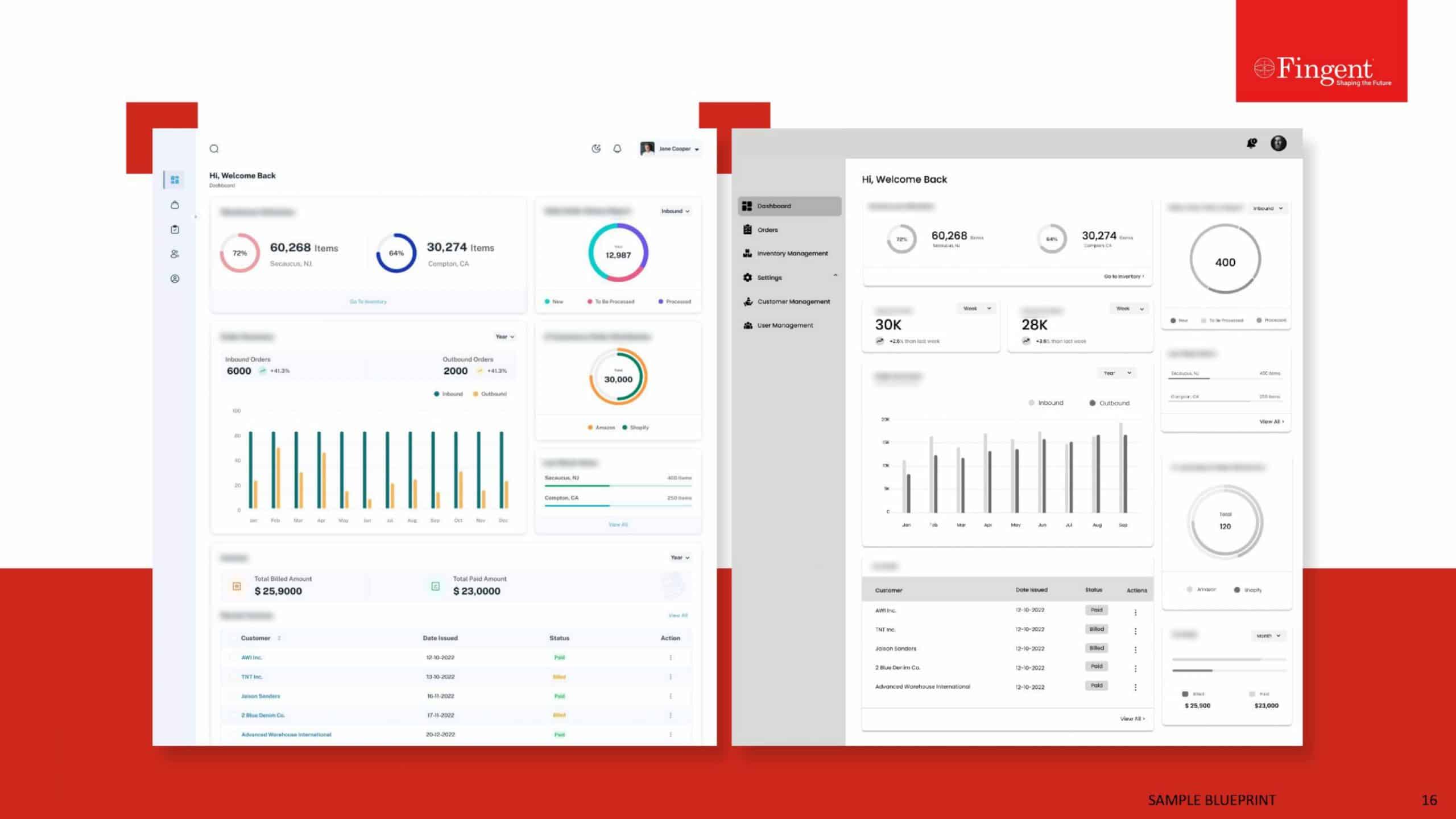
                                                Utilizing Microsoft Power BI, Fingent helped the client build ‘Intuitive Milk Productivity Dashboards’ with multi-layered information architecture. It offers quick insights on critical KPIs that support strategic decision-making for top management. Its predictive analytics determine the total growth and profitability of the business. Users can compare current data with the previous two seasons’ data to gain visibility of performance improvements and gaps.

                                                The ‘Billing Engine’ developed serves as a bridge between their internal dispatching system and the third-party invoicing platform. It simplifies invoice creation with integrated data flow, rate assembler, easy reconciliation and line-of-business based customization. In addition, a customer portal was built to enable customers to easily track the trucks in transit.

                                                Intuitive dashboards to provide a quick view of key KPIs

                                                Seamless defining of complex rate formulas for billing, reducing heavy dependency on spreadsheets.

                                                A data warehouse using Microsoft’s Azure Synapse to structure raw data

                                                Dyne-Solution

                                                Want to explore our client's full story?

                                                Dyne-Benefits

                                                SOLUTION BENEFITS

                                                Making An Impact On Client Success

                                                The solutions provided the client with greater efficiency, speed, visibility, and operational clarity. Where the ‘Intuitive Milk Productivity Dashboards’ provide clear insights into fleet utilization and business performance, the ‘Billing Engine’ simplifies invoicing by replacing manual and Excel-dependent workflows. Predictive analytics and season-based comparisons enable management to plan the fleet and prepare for demand fluctuations better. Faster strategic decisions and optimized workflows empower the client to improve service quality by reducing delays and operational chaos.

                                                Improved visibility into fleet performance and demand trends

                                                Scalable and centralized business processes

                                                90-95% reduces dependency on Excel Sheets

                                                Real-time customer visibility and tracking for boosted trust

                                                Easy data management

                                                Consolidated view of
                                                operations

                                                Enhanced decision-making

                                                Cost optimization

                                                Have a similar challenge or an idea to discuss?

                                                Download Case Study


                                                  Subscribe to Fingent's emails and newsletters

                                                  Stay up to date on what's new

                                                    About the Author

                                                    ...
                                                    ftsblogadmin

                                                    Talk To Our Experts

                                                      Smart Home Automation System Redefining Living Experiences

                                                      Challenges:

                                                      Improve home comfort and personalization, transform living with smart technology, and offer unique customer experiences

                                                      Industry

                                                      Real Estate

                                                      Solutions:

                                                      Smart Home Automation System

                                                      Results:

                                                      15% increase in property value, improved home security, energy saving, centralized home management, flexibility to integrate new devices, enhanced comfort, and personalization.

                                                      Locations:

                                                      UAE

                                                      About the Client

                                                      The client is a prominent real estate management company in the Middle East with a renowned reputation of over 25 years. The company manages a vast portfolio of 10,000 properties and aims to create exceptional customer experiences.

                                                      The client team specializes in providing comprehensive, end-to-end property management solutions that cater to property owners' diverse needs. Committed to building trusted and valued brands in the real estate sector, the company leverages streamlined collaboration, innovative strategies, and cutting-edge technologies.

                                                      Case Overview

                                                      In a world of smart devices and connected solutions, home automation is emerging as a game changer for builders and homeowners. The seamless integration of various devices is redefining home interactions and setting new standards for modern living.

                                                      Fingent helped design a home automation system compatible with popular voice assistants like Alexa and Google Assistant, offering users the convenience of hands-free control. This integration ensures a user-friendly experience and enhances the overall functionality of the home automation solution, making it truly innovative for the client's customers.

                                                      CHALLENGES

                                                      Roadblocks Faced In The Existing Systems

                                                      Improve home security

                                                      Develop_a_“digital bridge”

                                                      Improve home comfort and personalization

                                                      Enable energy efficiency

                                                      Enable centralized control

                                                      Transform living with smart technology

                                                      SOLUTION

                                                      Fingent’s Approach - Smart Home Automation System

                                                      The home automation system integrated smart devices like lights, thermostats, door locks, and security cameras to improve living experiences. The system also interacts and exchanges information using wireless protocols. Users get the ease of operating the system through their mobile devices.

                                                      Smart door locks for a new level of security and convenience

                                                      Connecting the garage lock to the tenant app helps secure vehicles

                                                      Smart intercoms allow tenants to receive visitors remotely & verify identities

                                                      Want to explore our client's full story?

                                                      BENEFITS

                                                      Making an Impact on Client Success

                                                      Smart home technologies are the future of real estate. Properties equipped with home automation see a 15% increase in market value and attract more potential buyers! Interacting with and controlling homes from anywhere is a groundbreaking innovation. With enhanced convenience, improved security, and effective energy savings, smart home technology is boosting property value.

                                                      A user-friendly smartphone app to control and customize smart devices

                                                      Connected smart devices over wireless protocols to enhance home experience

                                                      Each smart device features - sensors, actuators, and connectivity options.

                                                      Homeowners can use the mobile app to create automation routines

                                                      Unique customer experience

                                                      Energy saving

                                                      Improved home security

                                                      Flexibility to integrate new devices

                                                      Have a similar challenge or an idea to discuss?

                                                      Download Case Study


                                                        Subscribe to Fingent's emails and newsletters

                                                        Stay up to date on what's new

                                                          About the Author

                                                          ...
                                                          ftsblogadmin

                                                          Talk To Our Experts
                                                            ×