AI in logistics is changing the game for businesses, from forecasting and order processing to lead generation and customer service. Yet, many logistics leaders struggle to move from experimentation to enterprise-wide AI adoption.

What’s holding them back? The barriers run deeper than strategy!

A striking 51% of logistics leaders say their executive teams aren’t well-prepared to leverage AI. They lack the reliable IT infrastructure and clean, accessible data needed to support AI at scale.

And even when AI makes it into the operation, adoption doesn’t always follow. 30% of logistics leaders express explicit dissatisfaction with their firm’s progress in embedding AI tools.

Change-management complexity, limited training, and unclear ownership leave employees struggling to adapt to new systems. The result? Less than 2% of logistics companies currently qualify as “future-ready.”

AI initiatives built on fragmented data, weak strategy, or unprepared teams can quickly become expensive experiments rather than business transformations.

But what if logistics companies could make AI adoption more practical, scalable, and easier for their teams?

This is where AI Agents in Logistics can make AI adoption more practical. Here’s more on it!

How Are AI Agents Changing the AI Adoption Game for Logistics?

The next shift in logistics AI may not be about deploying bigger models or replacing existing systems. It’s about making AI easier to put to work.

That’s where AI Agents are changing the adoption game.

Unlike large-scale AI transformations that often require organizations to overhaul workflows, retrain teams, and rebuild technology stacks, AI Agents in logistics can work alongside the systems and processes logistics businesses already use. They can take on specific, high-volume tasks, automate repetitive work, and step in where manual effort continues to slow operations.

And the workforce may be more ready for this shift than businesses assume. 77% of employees say they would be comfortable collaborating with an AI Agent as part of their job.

This creates a more practical path to adopting AI in logistics. One where businesses can start small, prove value, and expand without putting their entire operation at risk.

Moving From Reactive Logistics to Autonomous Operations with Agentic AI

Read More!

What are the Benefits of AI Agents in Logistics?

AI Agents in logistics can bring AI directly into logistics workflows, working alongside existing systems to handle tasks, make decisions within defined boundaries, and escalate exceptions when human judgment is needed. This makes adopting AI in logistics more practical while creating measurable operational value.

1. Move Beyond AI Pilots by Solving Real Operational Problems

Many logistics companies have experimented with AI but struggle to move beyond isolated pilots. AI Agents provide a more practical path forward by targeting specific operational bottlenecks, such as order entry, shipment tracking, invoice reconciliation, customer queries, or lead qualification.

Moreover, they can work with existing systems and workflows. Businesses can introduce AI where it delivers immediate value without having to redesign their entire operation.

2. Automate Repetitive Processes and Reduce Manual Workload

Logistics teams spend significant time handling repetitive tasks: entering order details, checking documents, updating systems, responding to routine queries, and reconciling information across platforms.

AI Agents can take over these repetitive workflows, extracting information, validating data, updating business systems, and triggering the next step automatically. Employees spend less time on administrative work and more time handling exceptions, customers, and higher-value decisions.

3. Accelerate Operations by Cutting Processing Time

In logistics, delays compound quickly. A few extra minutes spent processing an order or responding to a customer can become hours of operational backlog at scale.

AI Agents can process information continuously and perform routine tasks in seconds or minutes rather than waiting for manual intervention. Faster order capture, quicker customer responses, and automated handoffs can help logistics businesses move work through the operation faster.

4. Scale Operations Without Adding Headcount

Growth traditionally comes with a familiar equation: more customers and orders require more people to manage them.

AI Agents can change that equation by absorbing growing volumes of repetitive work without requiring a proportional increase in headcount. Instead of using additional employees to handle predictable workload increases, businesses can use AI to expand their processing capacity while keeping human teams focused on work that requires judgment and relationship-building.

5. Respond Faster to Market Changes

Customer expectations and logistics conditions can change quickly. New service requirements, demand fluctuations, capacity constraints, and competitive pressures can force businesses to adapt faster than traditional processes allow.

AI Agents can help organizations respond by continuously processing information, identifying changes, and initiating predefined actions. Whether it’s prioritizing urgent orders, responding to customer requests, identifying exceptions, or adjusting operational workflows, AI Agents can help businesses react faster without waiting for every task to pass through a manual process.

Key Use Cases: How AI Agents Work for Logistics

1. AI Sales Agent for a Stronger Pipeline

Finding the right prospects and keeping up with personalized outreach can consume hours of a sales team’s time.

An AI Sales Agent acts as a digital sales development representative. It helps identify high-quality prospects, connects with your CRM and marketing tools, personalizes outreach, and automatically books qualified meetings.

Business impact:

  • 96% accuracy in lead identification
  • Personalized client outreach at scale
  • Faster campaign development
  • Reduces campaign preparation time

2. AI Agent for Faster Order Processing

Order processing often involves extracting information from emails, documents, calls, and other sources before manually entering it into a TMS or OMS.

An AI Agent for order processing handles this workflow end-to-end. It captures order data, updates systems, and routes exceptions to the right team when human intervention is needed.

Business impact:

  • 3× faster order processing
  • 50% lower operational costs
  • 97% order-entry accuracy
  • Faster customer responses

Discover How AI Agents Can Power Your Business to Scale Faster Without Limits

Explore Now!

How Can Partnering with Fingent Speed Up AI Adoption

Adopting AI in logistics successfully is rarely about choosing the right technology alone. It’s about knowing where AI can create the most value, how to introduce it without disrupting operations, and how to scale it when the results are proven.

That’s where an experienced implementation partner can make a difference.

Fingent helps logistics businesses identify high-opportunity areas for AI adoption and build practical strategies around them. Rather than forcing organizations to overhaul their existing operations, the focus is on integrating AI intelligently into current workflows and systems, helping businesses transition at their own pace while maintaining business continuity.

With a deep understanding of the logistics industry and experience delivering AI solutions across real-world business environments, Fingent brings together domain expertise, AI capabilities, and an agile approach to implementation.

Why Fingent?

  • 20+ years of technology expertise across industries and complex business environments
  • Proven AI experience through real-world AI and automation implementations
  • Logistics domain understanding to identify use cases that address actual operational challenges
  • Intelligent integration approach focused on connecting AI with existing systems rather than disrupting them
  • Transparent, agile methodology that enables faster iteration and measurable progress
  • AI ecosystem partnerships, including collaboration with Lyzr for building and orchestrating AI Agent solutions

How Can Logistics Businesses Prepare for AI Adoption?

Successful AI adoption starts well before deploying an AI Agent. Logistics businesses need to prepare their processes, data, systems, and people for AI-assisted operations.

  • Identify processes worth automating: Start with repetitive, high-volume, rules-driven workflows where AI can deliver immediate value.
  • Assess data readiness: Ensure the data AI relies on is accurate, accessible, structured, and clearly owned.
  • Connect disconnected systems: Enable AI to work across TMS, WMS, ERP, CRM, email, documents, and other operational systems.
  • Map exceptions and human handoffs: Define where AI can act independently and where human judgment must take over.
  • Establish clear AI governance: Put security, permissions, auditability, and human oversight in place from the beginning.
  • Start with measurable use cases: Prioritize areas such as order processing, invoice reconciliation, customer support, and sales prospecting.
  • Prepare employees for AI-assisted workflows: Train teams to collaborate with AI rather than leaving them to figure out new workflows themselves.
  • Build for scale: Choose solutions that integrate with existing operations so successful AI use cases can expand beyond isolated pilots.

Frequently Asked Questions (FAQ)

1. What are AI Agents in Logistics?

A. AI Agents in Logistics are AI-powered systems that perform specific logistics tasks or workflows with a degree of autonomy. They can interpret information, interact with business systems, perform defined actions, and escalate exceptions to humans when judgment is required.

2. How can AI Agents be used in logistics?

A. AI Agents can automate several logistics workflows, including order processing, customer support, sales prospecting, shipment-related queries, invoice reconciliation, and knowledge management. They can work across systems such as TMS, WMS, ERP, CRM, email, and document platforms.

3. Can AI Agents integrate with existing TMS and ERP systems?

A. Yes. AI Agents can be integrated with existing TMS, ERP, WMS, CRM, and other business systems through APIs and other integration mechanisms. This allows businesses to introduce AI into existing workflows rather than replacing their core systems.

4. Will AI Agents replace logistics employees?

A. AI Agents are generally better suited to augmenting logistics teams than replacing them entirely. They can handle repetitive and predictable work while employees focus on exceptions, customer relationships, problem-solving, and decisions requiring human judgment.

5. How do logistics businesses know where to start with AI Agents?

A. The best starting point is usually a high-volume, repetitive workflow with measurable business impact. Order processing, customer support, invoice reconciliation, and sales prospecting are examples of areas where businesses can identify clear efficiency or productivity improvements.

6. Are AI Agents suitable for small and mid-sized logistics businesses?

A. Yes. AI Agents can be introduced incrementally, making them suitable for businesses that want to start with a focused use case rather than undertake a large AI transformation. A business can prove value in one workflow and expand to additional processes as adoption grows.

Wait No More!Start Your AI Journey Today with AI Agents Built for Logistics

Contact Us Now!

The Future of AI Adoption in Logistics

AI in logistics does not have to begin with a massive transformation program.

AI Agents in Logistics offer a more practical approach: identify a specific operational challenge, connect Artificial intelligence to the existing workflow, automate what can be automated, keep humans involved where judgment matters, and scale what works.

For logistics businesses, the opportunity is not simply to add AI to existing operations. It is to make AI part of how everyday work gets done, faster, more efficiently, and at greater scale.

Stay up to date on what's new

    About the Author

    ...
    Ishaque

    Ishaque is a seasoned Application Architecture & Delivery Manager at Fingent with a strong passion for emerging technologies and digital innovation. He specializes in enabling secure, scalable application architectures, with a particular focus on AI-driven solutions. Ishaque is dedicated to helping organizations adopt modern development strategies that accelerate innovation while maintaining security, reliability, and business value.

    Talk To Our Experts

      Most enterprises treat automation as one. That’s the first mistake. Some keep funding RPA for problems it was never built to solve. Others replace working RPA bots with agentic AI they don’t yet need.

      Both mistakes stem from the same gap: failing to recognize where RPA reaches its limits and where judgment-driven AI needs to take over. Successful automation programs understand this boundary.

      RPA follows a script. It moves data, fills fields, and repeats a fixed sequence of steps with no variation. Agentic AI works differently. It reads context, weighs a decision across systems, and takes action without someone approving every stage. That’s a different category of tool, built for judgment rather than repetition.

      Read on to understand Agentic AI vs RPA better. Recognize when your business needs Agentic AI before RPA and how you can make the right shift.

      Discover How Agentic AI Works for Your Business

      Explore Now!

      Where RPA Still Wins

      RPA remains the right choice for a large share of enterprise work, and dismissing it in favor of agentic AI across the board is its own kind of mistake. It handles high-volume, rule-based tasks with a stable structure. It moves data between screens, pulling fields from a fixed-format document, following the same sequence a person would follow by hand.

      Three advantages make RPA hard to beat for this kind of work:

      1. Cost efficiency. The logic is simple and fixed, so RPA bots cost less to build and run than judgment-based systems.

      2. Deployment speed. Most RPA projects go from build to production in weeks, not months.

      3. Auditability. Every step is scripted and logged, which makes RPA easy to defend to auditors and regulators.

      A finance team reconciling daily transactions between an ERP system and a bank feed is a good example. The fields sit in the same place every time. The match rules rarely change. A bot can run that reconciliation each morning at a fraction of the cost of a manual review, with a full audit trail for every transaction it touches. That’s the reconciliation task RPA was built to handle.

      RPA is also the right architecture for batch data entry, structured reconciliation, fixed-format report generation, and swivel-chair work between legacy systems that haven’t changed in years. If the input format is consistent and the steps never vary, RPA will outperform a more complex system on cost and speed almost every time.

      The real issue is asking RPA to handle work it was never designed for, then blaming the tool when it doesn’t hold up.

      The 6 Signs RPA Has Hit Its Ceiling

      RPA runs on scripts. It follows the exact path it was programmed to follow, and nothing else. That works fine until the work stops matching the script. Here’s where that happens most often.

      1. Input variability. Free text, scanned documents, and inconsistent formats break RPA’s rules-based logic. A bot built to pull data from one invoice template fails the moment a vendor changes the layout.

      2. Exception density. When a meaningful share of cases fall outside the scripted path, the “automation” turns into a queue of exceptions waiting for a person to resolve them by hand. At that point the bot is adding a step, not removing one.

      3. Cross-system judgment. Some decisions require weighing context across multiple systems, or checking a request against a policy document. RPA can move the data. It can’t weigh it.

      4. Frequent process change. If the underlying workflow shifts often, every change means re-scripting the bot. Maintenance becomes a recurring cost instead of a one-time build.

      5. Need for self-correction. RPA halts the moment something doesn’t match. It can’t adjust mid-process and keep going.

      6. Judgment over repetition. Some tasks need a decision, not just accurate copying. RPA was built for the second kind of work, not the first.

      Here’s what this looks like in practice. A claims team using RPA might process 70% of submissions cleanly, because those claims arrive complete and in the expected format. The other 30% get kicked to a manual queue due to a missing document, an unfamiliar claim type, or a policy exception that needs a judgment call. Over time, that queue grows faster than the team can clear it. The bot isn’t broken. It’s being asked to do a job it was never built for.

      If two or more of these signs show up regularly in a process you’ve already automated, that process has likely outgrown RPA.

      What Agentic AI Adds Beyond That Line

      Agentic AI picks up where RPA runs out of road, moving a process toward true AI workflow automation. Instead of following a fixed script, it reasons through ambiguity. It reads unstructured input, such as a scanned form, a customer email, or a policy document. It applies judgment, takes an action, and adjusts if the situation changes mid-process.

      here RPA halts and hands every exception to a person, agentic AI resolves most of them on its own and escalates only the cases that genuinely need a human decision.
      Back to the claims example: an agentic AI layer can read the claim, the attached documents, and the relevant policy terms together, then decide whether the claim is valid, needs more information, or should go to a human adjuster. That’s the same 30% that used to sit in a manual queue, now moving through the system instead of piling up in front of it.

      This doesn’t mean tearing out RPA. Agentic AI solutions are an addition to the automation stack, not a replacement for the RPA investment already in place. Most enterprises get the best result by using each tool for what it does well, and by being deliberate about which processes go to which system.

      Agentic AI vs RPA: Matching the Tool to the Task

      Use this table as a filter for where each process belongs. Most enterprises get better results running both tools at once.

      Not Sure If You Need AI or RPA? Book a Free AI Discovery Call with Our Experts

      Contact Us Now!

      Where the Two Systems Compound Each Other

      The strongest automation programs don’t pick a side. They pair RPA and agentic AI through agent orchestration. So agentic AI can direct the decision, and RPA can handle the execution; that way each system does the part it’s suited for.

      Agentic AI handles the judgment layer. That is reading a document, classifying a request, deciding which path a case should take. Once that decision is made, it hands the structured, well-defined part of the task to existing RPA bots for execution.

      In the claims example, the agentic AI layer decides which policy applies and what the payout should be. It then hands the payment processing, system updates, and confirmation emails to the RPA bots that already handle that work today. Each system stays within the part of the task it’s built for.

      This split protects the RPA investment an organization has already made instead of discarding it. For a buyer who has spent years building out an RPA program, agentic AI extends that value rather than competing with it, a shift the SME Agentic AI Playbook covers in more depth. That makes it a meaningfully different conversation than “replace what you have”.

      How Fingent Builds Both

      Fingent delivers RPA and agentic AI as part of the same practice, building autonomous agent solutions alongside the RPA programs enterprises already run. That matters because the right answer for most enterprises isn’t ‘RPA’ or ‘agentic AI.’

      Our engagement model moves from discovery to a proof of concept to production, typically within weeks rather than quarters.

      We come to these conversations as advisors helping clients choose correctly, not as a vendor pushing the more expensive system because it’s more expensive. If RPA is the right answer for a given process, we’ll say so. If a process has already outgrown RPA, we’ll show you exactly where the judgment gap sits and what an agentic AI layer would need to close it.

      That approach comes from having built both systems long enough to know their limits. Decades of RPA delivery means we know precisely where scripted automation holds up and where it starts costing more than it saves. That’s the same judgment we bring to deciding where agentic AI belongs in a client’s stack.

      Discover How Agentic AI Can Transform Your Business Operations

      Explore Our Services Now!

      A Few Common Questions

      Q. Does agentic AI replace RPA?

      A.No. Agentic AI handles judgment-based work that RPA can’t. RPA still handles the high-volume, rule-based work it was built for. Most enterprises run both.

      Q. Can RPA and agentic AI work in the same workflow?

      A. Yes. A common pattern is agentic AI making the decision to classify a request or read a document, then handing the structured task to an RPA bot to execute.

      Q. How do we decide which processes need agentic AI vs RPA?

      A. Start with the six signs above. If a process shows two or more of them, such as input variability, high exception rates, cross-system judgment, frequent process change, need for self-correction, or judgment over repetition, it’s a candidate for agentic AI.

      Q. Does Fingent offer both RPA and agentic AI development?

      A. Yes. Fingent builds both, and helps clients decide which one, or which combination, fits a given process before any build work starts.

      Q. How long does it take to add an agentic AI layer to an existing RPA deployment?

      A. Timelines vary by process complexity, but most engagements move from discovery to a working proof of concept within weeks, with production rollout following once the pilot proves out.

      What Do You Do With This List?

      The next step is identifying the one process where the ceiling above is already costing you time, headcount, or accuracy, then testing agentic AI there specifically rather than across the board.

      If two or more of the six signs sound familiar for a process you’ve already automated, that’s the process worth testing first. Map it against the table above, then bring in a partner who can build either system, or both, without a bias toward the more expensive option. That’s the kind of evaluation Fingent runs with clients every day, matching RPA and agentic AI to the processes where each one actually delivers.

      Stay up to date on what's new

        About the Author

        ...
        Ishaque

        Ishaque is a seasoned Application Architecture & Delivery Manager at Fingent with a strong passion for emerging technologies and digital innovation. He specializes in enabling secure, scalable application architectures, with a particular focus on AI-driven solutions. Ishaque is dedicated to helping organizations adopt modern development strategies that accelerate innovation while maintaining security, reliability, and business value.

        Talk To Our Experts

          Finding the right AI development company to partner with is crucial. While AI adoption is accelerating, many organizations still struggle to move beyond pilot projects because of challenges such as inaccurate outputs, cybersecurity, explainability, and regulatory compliance.

          The difference between success and failure often comes down to implementation. An experienced AI development partner can help you build reliable solutions, mitigate risks, and scale AI to deliver real business value. To simplify your search for the right partner, we evaluated 20 leading AI development companies based on their AI capabilities, industry expertise, project experience, and market reputation.

          Solve Burning Business Challenges With AI

          Explore Our Services!

          We have compiled a list to help you find reliable AI development companies.
          We looked at several important factors:

          • Verified market reputation and client feedback as corroborated by Clutch
          • Demonstrated AI and machine learning expertise
          • Active project delivery within recent years
          • Breadth of services that include:
            • Generative AI
            • Natural language processing
            • Computer vision
            • LLM integration
            • MLOps
          • Industry experience across multiple sectors
          • Public case studies and client transparency

          This editorial assessment shows market observations from June 2026.
          It doesn’t represent paid rankings.

          The 20 Best AI Development Companies in 2026

          The companies listed below include big enterprise-focused firms and specialized AI solution builders. If you need a trusted AI development company in the USA or global services, these firms lead in innovation.

          Quick Comparison

          Company
          Core AI Focus
          Industries
          Clutch Rating
          Company Fingent
          Core AI Focus
          • AI Consulting
          • Machine Learning
          • Natural Language Processing (NLP)
          • Computer Vision
          • Predictive Analytics
          Industries
          • Healthcare
          • Retail
          • Education
          • Real Estate
          • Non-profit
          Clutch Rating
          4.9 ★
          Company Biz4Group LLC
          Core AI Focus
          • AI Product Development
          • IoT + AI
          • Chatbots
          • Predictive Analytics
          Industries
          • Healthcare
          • Logistics
          • Real Estate
          • Retail
          Clutch Rating
          4.9 ★
          Company Uptech Team
          Core AI Focus
          • Generative AI
          • AI-powered SaaS
          • Data Science
          Industries
          • FinTech
          • Healthcare
          • E-commerce
          Clutch Rating
          4.9 ★
          Company eSparkBiz
          Core AI Focus
          • AI / ML Development
          • Natural Language Processing
          • Chatbots
          Industries
          • Healthcare
          • Retail
          • Logistics
          Clutch Rating
          4.9 ★
          Company SoftKraft
          Core AI Focus
          • LLM Applications
          • Data Engineering
          • AI Solutions
          Industries
          • Healthcare
          • SaaS
          • FinTech
          Clutch Rating
          4.9 ★
          Company DataRoot Labs
          Core AI Focus
          • Machine Learning
          • Natural Language Processing
          • Computer Vision
          • AI Consulting
          Industries
          • Healthcare
          • FinTech
          • Retail
          Clutch Rating
          4.9 ★
          Company DevTeam.Space
          Core AI Focus
          • AI Product Engineering
          • AI Automation
          Industries
          • FinTech
          • Healthcare
          • SaaS
          Clutch Rating
          4.9 ★
          Company Kodexo Labs Global
          Core AI Focus
          • AI / ML Solutions
          • Agentic AI
          Industries
          • Healthcare
          • Retail
          • FinTech
          Clutch Rating
          4.9 ★
          Company Imaginovation
          Core AI Focus
          • AI / ML Solutions
          • Intelligent Automation
          Industries
          • Healthcare
          • Retail
          • Technology Startups
          Clutch Rating
          4.9 ★
          Company HatchWorks AI
          Core AI Focus
          • AI / ML Solutions
          Industries
          • Financial Services
          • Healthcare
          • Retail
          Clutch Rating
          4.9 ★
          Company Blackthorn Vision
          Core AI Focus
          • Computer Vision
          • Machine Learning
          • AI Product Development
          Industries
          • Healthcare
          • Manufacturing
          • Logistics
          Clutch Rating
          4.8 ★
          Company Scopic
          Core AI Focus
          • AI Software Development
          • Predictive Analytics
          • Computer Vision
          Industries
          • Healthcare
          • Education
          • Manufacturing
          Clutch Rating
          4.8 ★
          Company Requestum
          Core AI Focus
          • Generative AI
          • Natural Language Processing
          • Custom AI Solutions
          Industries
          • E-commerce
          • Healthcare
          • FinTech
          Clutch Rating
          4.8 ★
          Company SumatoSoft
          Core AI Focus
          • AI Development
          • Predictive Analytics
          • Automation
          Industries
          • Healthcare
          • Manufacturing
          • Retail
          Clutch Rating
          4.8 ★
          Company BotsCrew
          Core AI Focus
          • Enterprise AI
          • Generative AI
          Industries
          • Healthcare
          • Travel
          • Hospitality
          • Banking
          Clutch Rating
          4.8 ★
          Company AscentCore
          Core AI Focus
          • Intelligent Automation
          • AI Product Engineering
          Industries
          • Healthcare
          • FinTech
          • SaaS
          Clutch Rating
          4.8 ★
          Company Simform
          Core AI Focus
          • AI Solutions
          • Data Modernization
          Industries
          • Healthcare
          • Financial Services
          • Retail
          Clutch Rating
          4.8 ★
          Company Masters of Code
          Core AI Focus
          • Conversational AI
          • Generative AI
          • AI Agents
          • Chatbots
          Industries
          • Retail
          • Finance
          • Healthcare
          • Telecom
          Clutch Rating
          4.7 ★
          Company Code Brew Labs
          Core AI Focus
          • Generative AI
          • AI Apps
          • Chatbots
          • Automation
          Industries
          • Healthcare
          • E-commerce
          • FinTech
          Clutch Rating
          4.2 ★
          Company Upsilon
          Core AI Focus
          • AI Solutions
          • Data Science
          Industries
          • Healthcare
          • FinTech
          • SaaS
          Clutch Rating
          3.7 ★
          1. Fingent

          Founded in: 2003 | Based in: White Plains, New York | Workforce: Over 500 professionals Fingent has become a reliable partner for enterprise AI development for companies looking to modernize operations, automate workflows, and extract more value from their data. With a strong background in artificial intelligence, machine learning, generative AI, and enterprise software development, Fingent provides comprehensive solutions that connect cutting-edge technology projects to quantifiable business results. Core AI Services:
          • Conversational AI
          • Machine learning solutions
          • Generative AI applications⁠
          • Large Language Model (LLM) integration
          • ⁠Natural Language Processing (NLP)
          • ⁠Computer vision solutions
          • Predictive analytics
          • Intelligent process automation
          • MLOps implementation and model lifecycle management
          • AI-powered business intelligence and decision support systemsIndustries Served
          • Healthcare
          • Financial Services & Fintech
          • Manufacturing
          • Retail & E-commerce
          • ⁠Logistics & Supply Chain
          • Real Estate
          • ⁠Education
          • Energy & Utilities
          • Media & Entertainment
          • Nonprofit Organizations
          Notable Clients / Projects
          • Sony
          • ⁠Johnson & Johnson
          • PwC
          • NEC Corporation
          Best Suited For Medium-sized companies and big corporations looking for a lasting technological collaborator for tailored AI solutions, digital evolution, and enterprise software upgrades. Clutch Rating 4.9 / 5.0 (66 verified reviews) Why Fingent Leads the List
          • ⁠Over two decades of providing enterprise class software and digital transformation solutions across multiple industries.
          • AI knowledge and end-to-end product development capabilities under one roof, allowing customers to go from strategy and prototyping to deployment and long-term optimization with a single partner.
          2. Biz4Group LLC

          Founded in: 2003 | Based in: Orlando, Florida | Workforce: 200+ professionals Biz4Group LLC is a software development and AI consulting company. The company specializes in AI, IoT, mobile applications, and enterprise software development. Core AI Services
          • AI agents
          • Computer Vision
          • IoT + AI Solutions
          Industries Served
          • Healthcare
          • Real Estate
          • Manufacturing
          Best Suited For Mid-sized businesses and enterprises that want to make custom AI products, AI platforms, smart automation systems, or IoT-enabled AI solutions. Clutch Rating 4.9 / 5.0 (28 verified reviews)
          3. Uptech Team

          Founded in: 2016 | Based in: Kyiv, Ukraine | Workforce: 90+ professionals Uptech is a software development company focused on creating AI-powered digital products. Core AI Services
          • AI-powered SaaS applications
          • Data science consulting
          • AI product development
          Industries Served
          • FinTech
          • Healthcare
          • SaaS
          Best Suited For Venture-backed startups, scale-ups, and enterprises want to launch AI products fast. They also aim to keep strong design and engineering standards. Clutch Rating 4.9 / 5.0 (42 Verified Reviews)
          4. eSparkBiz

          Founded in: 2010 |Based in: Ahmedabad, India | Workforce: 400+ professionals eSparkBiz offers dedicated development teams, AI engineering, and digital transformation services. Core AI Services
          • AI engineering teams
          • Predictive analytics
          • Intelligent process automation
          Industries Served
          • Healthcare
          • Manufacturing
          • Education
          Best Suited For SMBs, enterprises, and tech companies need affordable AI development teams, staff support, and custom AI software solutions. Clutch Rating 4.9 / 5.0 (68 reviews)
          5. SoftKraft

          Founded in: 2015 | Based in: Bielsko-Biała, Poland | Workforce: 50+ professionals SoftKraft focuses on data-heavy applications and top-tier digital products. It mainly serves clients in North America and Europe. Core AI Services
          • LLM-powered applications
          • Data engineering
          • Cloud-native AI modernization
          Industries Served
          • Healthcare
          • FinTech
          • SaaS
          Best Suited For Mid-sized organizations and enterprises want ready-to-use AI solutions, advanced data platforms, and secure cloud-native software systems. Clutch Rating 4.9 / 5.0 (24 verified reviews)
          6. DataRoot Labs

          Founded in: 2016 | Based in: Kyiv, Ukraine | Workforce: 50+ professionals DataRoot Labs are experts in machine learning, deep learning, and data science solutions. Core AI Services
          • Machine Learning development
          • Deep learning
          • AI product strategy
          Industries Served
          • FinTech
          • Retail
          • Agriculture
          Best Suited For Startups and innovative companies need advanced AI skills. They also seek help with AI product development and proof-of-concept validation before they scale their solutions. Clutch Rating 4.9 / 5.0 (23 verified reviews)
          7. DevTeam.Space

          Founded in: 2016 | Based in: Los Angeles, California | Workforce: 200 professionals DevTeam.Space is a community-driven platform that connects vetted engineering teams with software and AI projects. Core AI Services
          • AI product engineering
          • AI automation systems
          • Dedicated AI Teams
          Industries Served
          • FinTech
          • Healthcare
          • SaaS
          Best Suited For Startups, scale-ups, and enterprises seeking flexible development teams and end-to-end AI product engineering support. Clutch Rating 4.9 / 5.0 (43 verified reviews)
          8.Kodexo Labs Global

          Founded in: 2021 | Based in: Wyoming, USA | Workforce: 200 professionals Kodexo Labs Global is an AI-first software developer that specializes in AI product development, automation, and digital transformation solutions. Core AI Services
          • Agentic AI
          • Multi-agent systems
          • RAG applications
          Industries Served
          • Healthcare
          • Retail
          • FinTech
          Best Suited For Startups, SMBs, and growing enterprises looking to rapidly develop AI-powered products, automate business processes, and integrate generative AI capabilities into existing systems. Clutch Rating 4.9 / 5.0 (13 verified reviews)
          9.Imaginovation

          Founded in: 2011 | Based in: Raleigh, North Carolina | Workforce: 11-50 professionals Imaginovation is digital product development company that focuses on AI solutions, mobile apps, and custom software development. Core AI Services
          • Product-focused AI
          • Intelligent automation
          • AI strategy consulting
          Industries Served
          • Healthcare
          • Retail
          • Technology Startups
          Best Suited For Startups and growth-stage companies seeking product-focused AI development, MVP creation, and long-term technology partnerships. Clutch Rating 4.9 / 5.0 (16 verified reviews)
          10.HatchWorks AI

          Founded in: 2016 | Based in: Atlanta, Georgia | Workforce: 200+ professionals HatchWorks AI is an AI-native software development and consulting company that helps organizations adopt generative AI technologies. Core AI Services
          • AI transformation strategy
          • AI copilots
          • Nearshore AI delivery
          Industries Served
          • Financial Services
          • Healthcare
          • Retail
          Best Suited For Mid-market and enterprise organizations seeking strategic AI adoption, AI-enabled business transformation, and enterprise-grade generative AI deployments. Clutch Rating 4.9 / 5.0 (29 verified reviews)
          11.Blackthorn Vision

          Founded in: 2009 | Based in: Lviv, Ukraine | Workforce: 100+ professionals Blackthorn Vision is a software engineering and AI consulting firm that6 delivers advanced AI and software solutions for clients worldwide. Core AI Services
          • Predictive Analytics
          • Data Engineering
          • Computer Vision
          Industries Served
          • Healthcare
          • Logistics
          • Manufacturing
          Best Suited For Mid-sized businesses and tech firms need custom AI apps, computer vision systems, and data-driven business intelligence solutions. Clutch Rating 4.8 / 5.0 (24 verified reviews)
          12. Scopic

          Founded in: 2006 |Based in: Massachusetts, USA | Workforce: Over 280 professionals Scopic is a software development and digital innovation company. The company delivers AI, web, mobile, and cloud solutions to clients worldwide. Core AI Services
          • Healthcare AI
          • Computer vision
          • Predictive analytics
          Industries Served
          • Healthcare
          • Manufacturing
          • Education
          Best Suited For Mid-sized companies and enterprises want complete product development. They also seek AI implementation and lasting technology partnerships. Clutch Rating 4.8 / 5.0 (69 verified reviews)
          13. Requestum

          Founded in: 2015 | Based in: Kharkiv, Ukraine | Workforce: 75 to 100 professionals Requestum focuses on custom software development, AI apps, and digital transformation. Core AI Services
          • Natural Language Processing (NLP)
          • AI-powered SaaS development
          • Workflow Automation
          Industries Served
          • Healthcare
          • FinTech
          • SaaS
          Best Suited For Startups and mid-sized businesses want to create AI-enabled products, automate workflows, or add machine learning to their software. Clutch Rating 4.8 / 5.0 (36 verified reviews)
          14. SumatoSoft

          Founded in: 2012 | Based in: Boston, Massachusetts | Workforce: 100+ professionals. SumatoSoft specializes in creating scalable digital products and smart business solutions for both enterprises and startups. Core AI Services
          • Computer vision
          • Business process automation
          • Data science consulting
          Industries Served
          • Healthcare
          • Manufacturing
          • Retail
          Best Suited For Organizations that need custom AI systems, smart automation platforms, and data-driven decision-making tools that fit into their enterprise environments. Clutch Rating 4.8 / 5.0 (25 verified reviews)
          15. BotsCrew

          Founded in: 2016 |Based in: San Francisco, California | Workforce: 60+ professionals BotsCrew specializes in chatbots, virtual assistants, and AI-powered customer engagement solutions. Core AI Services
          • Conversational AI platforms
          • Voice bot development
          • Customer service automation
          Industries Served
          • Healthcare
          • Travel & Hospitality
          • Banking
          Best Suited For Organizations want to enhance customer support. They aim to automate interactions and use top-tier conversational AI solutions across various channels. Clutch Rating 4.8 / 5.0 (39 verified reviews)
          16. AscentCore

          Founded in: 2017 | Based in: Virginia, United States | Workforce: 200 professionals AscentCore is focused on technology consulting and software engineering. Core areas range from AI cloud solutions to product development. Core AI Services
          • Predictive modeling
          • Intelligent automation
          • AI product engineering
          Industries Served
          • Healthcare
          • FinTech
          • SaaS
          Best Suited For Mid-sized businesses and enterprises seeking dedicated AI engineering teams, custom AI applications, and scalable technology solutions. Clutch Rating 4.8 / 5.0 (15 verified reviews)
          17. Simform

          Founded in: 2010 | Based in: Orlando, Florida | Workforce: 1300+ professionals Simform focuses on digital engineering and AI services. The company helps organizations to build scalable software products, cloud platforms, and AI-powered solutions. Core AI Services
          • AI-powered digital engineering
          • Data modernization
          • Enterprise AI
          Industries Served
          • Healthcare
          • Financial Services
          • Retail
          Best Suited For Mid-sized enterprises and large organizations seeking end-to-end AI implementation, dedicated engineering teams, and digital transformation initiatives at scale. Clutch Rating 4.8 / 5.0 (85 verified reviews)
          18. Masters of Code Global

          Founded in: 2004 | Based in: Winnipeg, Canada | Workforce: 200+ professionals Masters of Code is a consultancy focused on digital transformation and AI. They specialize in conversational AI and generative AI solutions. The company partners with global businesses to create smart customer engagement platforms and AI-driven apps. Core AI Services
          • Conversational AI
          • Voice assistants
          • Customer experience automation
          Industries Served
          • Retail
          • Banking & Financial Services
          • Telecommunications
          Best Suited For Large enterprises and mid-market organizations that want customer-facing AI solutions, conversational commerce platforms, and top-tier virtual assistants. Clutch Rating 4.7 / 5.0 (35 verified reviews)
          19. Code Brew Labs

          Founded in: 2013 | Based in: Chandigarh, India | Workforce: 200+ professionals Code Brew Labs is a mobile app and AI development company focuses on AI-driven digital products, marketplaces, and enterprise automation solutions. Core AI Services
          • AI-powered mobile applications
          • Process automation
          • Marketplace AI
          Industries Served
          • Healthcare
          • E-commerce
          • FinTech
          Best Suited For Startups and growth-stage businesses that want quick AI product development, seek to create MVPs and build AI-enabled mobile apps. Clutch Rating 4.2/ 5.0 (53 Verified Reviews)
          20. Upsilon

          Founded in: 2012 | Based in: Tallinn, Estonia | Workforce: 50+ professionals Upsilon is a software engineering and AI development company known for its skills in data science, machine learning, and scalable software design. Core AI Services
          • AI for startups
          • MVP development
          • Data science solutions
          Industries Served
          • Healthcare
          • FinTech
          • SaaS
          Best Suited For Startups, SaaS companies, and innovation-focused organizations seeking experienced AI engineering teams to accelerate product development. Clutch Rating 3.7 / 5.0 (3 verified reviews)

          How to Choose the Right AI Development Company for Your Business

          Selecting an AI development partner is one of the most important technology decisions a business can make. The right partner can help turn AI from a promising pilot into a scalable solution that delivers measurable business value.

          Before choosing an AI development partner, ask these key questions:

          • Do they have proven experience delivering AI solutions in your industry
          • Can they demonstrate production-ready AI applications, not just prototypes
          • What post-launch support, monitoring, and model maintenance do they provide?
          • How do they address data privacy, security, governance, and regulatory compliance?

          A vendor’s answers reveal whether they can deliver successful AI implementations—not just technical expertise. Real-world deployment experience is often the difference between an AI project that remains stuck in the pilot phase and one that scales successfully across the business.

          If you’re looking for an experienced AI partner, Fingent combines AI consulting, enterprise software development, cloud expertise, and digital transformation services to help businesses design, deploy, and scale secure, business-focused AI solutions.

          Frequently Asked Questions

          Q. How do I choose the right AI development partner for my business?

          A.Evaluate the company’s industry experience, technical skills, and portfolio. Check client reviews and their approach to data security. It’s also key to see if they can help with your project after development. This includes deployment, maintenance, and ongoing optimization.

          Q. What services do AI development companies typically offer?

          A. Most AI development firms provide services such as

          • AI consulting,
          • machine learning development,
          • generative AI solutions,
          • chatbot development,
          • data engineering,
          • predictive analytics,
          • computer vision,
          • AI integration,
          • and intelligent automation.

          Q. How much does it cost to hire an AI development company?

          A. Costs vary depending on project complexity, data requirements, technology stack, and development timeline. Small AI projects can cost a few thousand dollars. In contrast, enterprise-grade AI platforms often need much bigger investments. Start with a discovery or assessment phase. This helps define the scope and budget clearly.

          Q. What industries benefit most from AI development services?

          A. AI delivers value across nearly every industry. Healthcare organizations use AI for diagnoses and patient engagement. Retailers leverage it for personalization. Manufacturers enhance efficiency with predictive maintenance. Financial institutions apply AI for risk analysis, fraud detection, and automating customer service.

          Q. Is Fingent a good choice for enterprise AI projects?

          A. Yes. Fingent has vast experience in providing enterprise software solutions. They also create AI-powered applications for various industries, including:

          • Healthcare
          • Finance
          • Logistics
          • Manufacturing
          • Retail
          • Education

          Its complete approach—from strategy and development to deployment and support—makes it a valuable partner for organizations aiming for long-term AI goals.

          Q. How long does it take to build a custom AI solution?

          A. Timelines vary based on several factors. These include project complexity, data availability, integration needs, and business goals. A proof of concept might take a few weeks. In contrast, a fully deployed enterprise AI solution can take several months. Partnering with an experienced AI developer makes the process smoother and lowers risks.

          Stay up to date on what's new

            About the Author

            ...
            Ishaque

            Ishaque is a seasoned Application Architecture & Delivery Manager at Fingent with a strong passion for emerging technologies and digital innovation. He specializes in enabling secure, scalable application architectures, with a particular focus on AI-driven solutions. Ishaque is dedicated to helping organizations adopt modern development strategies that accelerate innovation while maintaining security, reliability, and business value.

            Talk To Our Experts

              This is the reality of many enterprises today: A request is created. Someone sends an email. Another person updates a spreadsheet. Someone copies the data into a CRM. Then the cycle repeats.

              Nothing appears broken. Yet the process stays slow and fragile. Relying on someone to process the next step can stall the workflow.

              That is why custom enterprise workflow automation software is becoming essential for modern organizations. Automation keeps routine work moving without human nudges. Workflows are hassle-free, services are on time, and customers are easier to retain. Here’s more on enterprise workflow automation, what it is, how it works, and why modern businesses must consider it!

              What are the Benefits of Enterprise Workflow Automation?

              Manual processes look harmless on the surface. Yet they quietly create operational drag across an organization. Emails pile up, approvals stall. Data gets duplicated while small errors continue to multiply. These inefficiencies become expensive.

              Well-designed custom enterprise workflow automation software addresses these problems in practical ways.

              1. Faster Process Execution

              Manual workflows slow down decision-making. Every step depends on someone noticing an email or remembering a task.

              Automation removes that delay. A purchase request is automatically directed to the appropriate approver depending on department, budget, or spending restrictions. If approval is postponed, it triggers immediate alerts and reminders. This saves time.

              2. Consistency and Precision

              We humans, are capable, but we are not perfect data processors. Manual workflows often involve copying information between systems. This introduces mistakes. A wrong number in an invoice. An incorrect customer status. A missed compliance step.

              Automation keeps the process consistent every time. The rules are built into the workflow, reducing the risk of human error.

              3. Real-Time Process Visibility
              Figuring out where the task is stuck is the top priority for managers.

              Visibility is one of the superpowers of custom enterprise workflow automation software. Every step is visible through dashboards and logs. No guesswork. You know who approved, who hasn’t responded, and what stage the process is in.

              4. Scalability Without Operational Chaos

              As businesses grow, transaction volume increases. More invoices, more customer requests, more approvals. Manual systems rarely scale well. Teams respond by hiring more staff just to manage operational tasks.

              Automation changes that equation. Processes handle higher volumes without proportional increases in manpower. This allows companies to grow while maintaining operational control.

              Step Out of Tedious Time-Consuming Manual Efforts Elevate Your Operations With Enterprise Workflow Automation

              Contact Us Now!

              Enterprise Automation Use Cases

              Automation becomes easier to understand when we look at real operational scenarios. Many industries are already applying these systems to solve practical problems.

              Let’s look at some real-world enterprise automation use cases.

              1.  Intelligent Document Automation

              Businesses handle thousands of documents daily. AI-driven automation eliminates the trouble of manually reviewing documents, compiling data, and entering it. Through OCR and machine learning, documents are analyzed, data is gathered, verified, directed, and refreshed automatically.

              The impact is immediate. Manual effort drops by up to 99.99%, shifting teams from data entry to real analysis and decision-making.

              Such capabilities are particularly useful to industries handling large sets of data, like legal, insurance, and logistics. Document intelligence can help identify errors and fraud faster, recognize human writing, and process invoices faster.

              In custom enterprise workflow automation, this is not an add-on. It is the workflow, with documents moving from intake to approval and storage with minimal human touch.

              2. Operational Assistance in Experiential Marketing

              Experiential marketing campaigns involve dozens of moving parts – venue coordination, vendor approvals, event staffing, and customer engagement tracking.

              Without automation, campaign teams drown in coordination tasks. Operational AI assistants change this dynamic.

              They act as digital coordinators that:

              • Track campaign progress
              • Assign operational tasks
              • Monitor event logistics
              • Alert teams when actions are required

              With custom enterprise workflow automation software, these assistants connect seamlessly with CRM systems, marketing platforms, and analytics tools.

              The result? Better coordinated campaigns, faster decisions. And a more consistent customer experience.

              3. Automating Lead Response

              In sales, timing matters most. However, most businesses continue to reply to leads several hours or days late, losing the significant increase in conversions that results from responding within minutes.

              Automation solves this instantly. When a lead arrives:

              • The system evaluates the lead
              •  Assigns it to the right salesperson
              • Sends personalized responses
              • Schedules follow-ups
              • Updates CRM records

              No missed opportunities. This is one of the fastest-return investments companies make when adopting Custom enterprise workflow Automation software.

              4. Conversational AI for Marketing Intelligence

              Marketing teams collect massive amounts of data. Such as:

              • Campaign metrics.
              • Customer engagement.
              • Channel performance.

              The challenge is interpreting that data quickly. Conversational AI changes the experience.

              AI gets the data, looks at it, and gives you a clear answer in a few seconds. This is possible because custom enterprise workflow automation is already linking systems and running the right analysis in the background.

              No need to chase reports or piece things together manually. The answers are ready when they are needed.

              Why Choose to Build a Custom Enterprise Workflow Automation Software

              Why not just buy an off-the-shelf tool? Because enterprise workflows are rarely generic.

              They are shaped by:

              • Internal policies
              • Compliance requirements
              • Legacy systems
              • Industry-specific processes

              Pre-built tools often force companies to adapt their processes to the software. Custom automation flips the equation. The software adapts to the business. That is the real advantage of custom enterprise workflow automation software.

              It integrates with existing systems, mirrors real operational processes, and scales as the business evolves.

              Best Practices for Successful Workflow Automation Software Development

              Automation works only when it solves real operational problems. Effective workflow automation software development starts with understanding how work currently flows before building anything.

              Here are a few principles experienced teams follow:

              1. Start With High-Impact Workflows

              Many organizations make the same mistake. They try to automate everything at once.

              But ask a simple question first. Where does work slow down the most? Start there.

              Look at the workflows employees complain about every week. These are usually the pressure points where delays pile up. Automate these first, and the payoff is immediate. Teams feel the relief. Leadership sees the numbers move.

              2. Prioritize User-Friendly Design

              Automation is intended to simplify work, not complicate it.

              If workers require a guide to authorize a request or monitor progress, does the system truly assist?

              Individuals ought to have the capability to authorize requests, monitor workflow progress, and advance tasks without searching through perplexing interfaces. When tools seem intuitive, acceptance occurs quickly.

              This is the reason numerous organizations opt for tailored enterprise workflow automation software. Rather than compelling teams to conform to inflexible tools, the software adjusts to the actual workflow of the team.

              3. Ensure Scalability and Security

              Enterprise systems must support growth. A workflow platform handling hundreds of transactions today may face thousands tomorrow. Scalability keeps performance steady as demand grows.

              Security is just as critical. The best custom enterprise workflow automation platforms integrate securely with enterprise systems while keeping access tightly controlled. The doors stay connected, but firmly locked.

              4. Continuous Optimization After Deployment

              Automation is not a singular occurrence. Process flows need to adjust as tasks evolve.

              Teams can consistently enhance processes. They can remove bottlenecks as they emerge. This way, the organization evolves with a tailored, seamless workflow.

              Power Your Workflows With Intelligence Integration

              Explore Your Options Now!

              Frequently Asked Questions

              Q. What is custom enterprise workflow automation software?

              A. Custom enterprise workflow automation software is a tailored system that automates internal business processes. It routes tasks, triggers approvals, connects enterprise systems, and moves work forward automatically.

              Instead of employees coordinating each step, the workflow manages the process.

              Q. How long does enterprise workflow automation implementation take?

              A. Timelines vary depending on workflow complexity and system integrations.

              A focused automation initiative targeting key processes may take only a few months. Larger enterprise programs are usually implemented in phases to deliver early results. All the while expanding automation gradually.

              Q. How much does it cost to make software for businesses?

              A. The cost to build enterprise software depends on several factors:
              Workflow complexity
              Number of systems that must integrate
              Security requirements
              Advanced capabilities such as AI-driven automation
              Most companies start small. They automate a few high-impact processes first, then expand as the value becomes clear.

              Q. Can automation integrate with existing enterprise systems?

              A. Yes. Modern automation platforms connect with CRM systems, ERP platforms, analytics applications, and marketing software via secure APIs.

              This enables workflows to function smoothly throughout the organization without eliminating current systems.

              How Fingent Can Help

              Most businesses do not struggle due to a deficiency of ideas. They face challenges because of the friction throughout the workflow.

              This is where Fingent creates real impact.

              Fingent assists businesses in creating and deploying personalized enterprise workflow automation software. Our teams analyze current workflows and pinpoint bottlenecks. Doing so will help us create solutions that integrate smoothly with your enterprise systems.

              The outcome extends beyond mere automation. It is operational clarity. Work moves faster. Teams spend less time coordinating and more time executing. And leadership gains the visibility needed to scale operations with confidence.

              Stay up to date on what's new

                About the Author

                ...
                Tony Joseph

                Tony believes in building technology around processes, rather than building processes around technology. At Fingent, he specializes in custom software development, especially in analyzing processes, refining them, and then building technology around it. He works with clients on a daily basis to understand and analyze their operational structure, discover (and not invent) key improvement areas, and come up with technology solutions to deliver an efficient process. You can reach him at [email protected], Skype: tony_fingent

                Talk To Our Experts

                  Most enterprise leaders have experienced this—the initial excitement of AI giving way to a high-stakes question: When will I see the returns? This state of “pilot purgatory”, high investment with no measurable bottom-line impact, forces many to blame it on the maturity of AI models. The actual culprit, however, is the underlying infrastructure that lacks connectivity.

                  Gartner forecasts that through 2026, up to 60% of AI projects will be abandoned due to inadequate integration and low-quality data. To achieve enterprise-wide value, leaders must shift their focus from the model itself to the intelligent integration architecture that empowers it to act. Read on!

                  Structural Bottlenecks Hindering Your AI’s Success

                  AI initiatives are often considered as standalone trials rather than core business functions. Here’s where the AI project begins to fail. By dropping a high-powered AI model on top of disconnected data and fragmented legacy systems, you don’t get innovation but friction. Before scaling your next pilot, evaluate if these common architectural barriers are draining your budget:

                  • Fragmented and Siloed Data: AI can support strategic decisions only if it is able to see your operations end-to-end. Your models remain “data-deprived” in the absence of a unified architecture for intelligent integration. This results in the generation of irrelevant or inaccurate outputs.
                  • Rigidity of Legacy Systems: Traditional ERPs and databases weren’t designed for real-time AI interaction. How AI systems are integrated in enterprises determines whether your AI acts as a fast-moving engine or a stalled project that cannot access the records it needs to function.
                  • The Orchestration Gap: A lack of an AI agent orchestration architecture means your automated agents cannot communicate. This creates “agent silos” where only individual tasks are automated, but end-to-end business processes remain broken because the agents cannot “hand off” tasks to one another.
                  • Manual Middleware Debt: Relying on custom-coded connections for every new use case is unscalable. Many companies face a kind of “AI ROI Paradox” where they increase investment but struggle with returns because they spend more on “fixing the plumbing” than on actual innovation.

                  Afraid to Step Into the World of AI? Let Us Help You Design a Strategic Roadmap to AI Success

                  Contact Us Now!

                  How to Secure Your Organization’s AI Investment and Drive Measurable Growth?

                  If your customer information, supply chain data, and financial records exist in three isolated systems, your AI is essentially operating with one eye closed. You can fix this by shifting to an intelligent integration architecture. More than connecting App A to App B, this architecture allows you to set up a unified ecosystem where AI can automatically access, interpret, and act on enterprise-wide data in real-time.

                  To protect your investment and achieve tangible growth, your IT strategy must prioritize a “digital core” that facilitates autonomous action across the board:

                  • Deploy an AI Integration Layer Architecture: Create a centralized hub that allows AI to securely access and interpret data from every department in real-time. This layer ensures that intelligence is consistent across the front and back office.
                  • Standardize with Agent Frameworks for Enterprise AI: By moving away from disconnected ad-hoc tools to a unified framework, you can ensure that every autonomous agent deployed follows your corporate governance norms, security protocols, and operational logic.
                  • Leverage MCP Servers in Enterprise AI: Model Context Protocol (MCP) enables your AI models to interact with local data and specialized tools securely. Utilizing this protocol helps you bypass the need for expensive, manual workarounds whenever you onboard a new department.
                  • Focus on Coordinating AI Across Enterprise Systems: Ensure your roadmap emphasizes “ecosystem thinking.” A robust architecture for intelligent integration enables automation that improves operational speed and efficiency and eliminates manual error.
                  • Future-Proof with Intelligent Integration Architecture: By implementing a scalable integration architecture, your infrastructure becomes equipped to keep pace with the evolving AI models, without the need for rebuilding your entire data pipeline.

                  A CIO’s Checklist for Running an AI Integration Audit

                  An integration audit is a critical next step for any leader looking to move from pilot testing to enterprise-scale AI deployment. Here is a 5-point checklist designed to give you, or your CIO/ CTO, a clear view of your current architectural health.

                  1. Map Your Data Accessibility: Does your current setup allow AI models to query cross-departmental data in real-time, or is the AI restricted to isolated data lakes?
                  2. Evaluate Legacy Connectivity: Can your existing ERP and CRM systems talk to AI agents via APIs and modern protocols, or are you relying on manual data exports?
                  3. Audit Orchestration Readiness: Do you have a centralized AI integration layer architecture in place to manage how different AI agents interact with your business logic, or is orchestration currently handled by fragmented, hard-coded scripts?
                  4. Assess Governance & Security Standards: Are your AI agent frameworks standardized to ensure that autonomous actions across the business remain compliant with internal security and data-privacy policies?
                  5. Measure Latency in Decision Cycles: Are you able to quantify how long it takes for a data point to move from a source system to an AI decision output? A high-latency cycle is a clear sign that your intelligent integration architecture needs optimization.

                  Start Scaling Your AI ROI Through Intelligent Integration Architecture

                  AI is not a plug-and-play miracle. It is a sophisticated capability that is only as powerful as the data it can access and the integrated systems it can control or connect with. Companies winning the AI race aren’t necessarily the ones with the biggest budgets; they are the ones that have mastered the modern integration architecture.

                  The goal is no longer just to “have AI”—it is to have a connected, intelligent enterprise that can act at the speed of the market. Stop building isolated AI experiments and start building a foundation for scalable, autonomous growth that delivers a clear bottom-line impact.

                  Ready to Scale? Let’s optimize your integration architecture for maximum AI ROI today.

                  Request a Consultation

                  Frequently Asked Questions

                  Q. What is an intelligent integration architecture?

                  A. It is a strategic and structured framework that connects AI models with your core business data and legacy systems. By acting as a “digital nervous system”, an architecture for intelligent integration ensures the AI functions as a core functional part of your operational ecosystem rather than a disparate, ad-hoc tool.

                  Q. How do AI agents work together across enterprise systems?

                  A. Agents exchange data and perform interconnected workflows by employing an AI agents orchestration architecture. This architecture helps coordinate the actions of front-office and back-office agents in real-time, allowing businesses to prevent operational frictions and silos.

                  Q. What is AI orchestration, and why is it important?

                  A. AI orchestration helps coordinate AI across your enterprise systems to ensure every task follows business logic. It is crucial because it prevents conflicting AI actions and ensures consistent decision-making across the entire organization.

                  Q. What role do MCP servers play in AI integration?

                  A.MCP servers in enterprise AI act as secure connectors that allow models to instantly access local data and specific tools. These servers eliminate the need for maintaining custom codes for every new integration point.

                  Q. How are agent frameworks utilized in enterprise AI?

                  A. Agent frameworks for enterprise AI provide a standardized environment for developing and administering autonomous agents. These frameworks ensure that every agent sticks to the corporate security standards while performing complex, cross-functional tasks

                  Q. How do enterprises coordinate intelligence across systems?

                  A. Enterprises utilize a dedicated AI integration layer architecture to synchronize data and logic across various platforms. This layer acts as the “nervous system” that facilitates intelligence to flow seamlessly from front-end interfaces to back-end databases.

                  Q. What differentiates AI architecture from AI integration architecture?

                  A. AI architecture focuses on how models are built, whereas an intelligent integration architecture centers on how these models interact with your business. The latter is what actually enables how AI systems are integrated in enterprises for maximum ROI.

                  Q. Is intelligent integration architecture suitable for legacy systems?

                  A. Yes, an architecture for intelligent integration is specifically designed to bridge the gap between modern AI and rigid legacy infrastructure. It allows you to extract value from older data systems without requiring a complete, high-cost “rip and replace” overhaul.

                  Stay up to date on what's new
                    About the Author

                    ...
                    Tony Joseph

                    Tony believes in building technology around processes, rather than building processes around technology. At Fingent, he specializes in custom software development, especially in analyzing processes, refining them, and then building technology around it. He works with clients on a daily basis to understand and analyze their operational structure, discover (and not invent) key improvement areas, and come up with technology solutions to deliver an efficient process. You can reach him at [email protected], Skype: tony_fingent

                    Talk To Our Experts

                      Gartner predicts that Agentic AI will autonomously resolve 80% of standard customer service issues by 2029, without human intervention. For market leaders, mastering Agentic AI is no longer optional—it is the blueprint for the modern digital enterprise.

                      Imagine a workforce where AI not only suggests ideas but executes them. That is the reality of Agentic AI in 2026. For CIOs and technical decision-makers, these platforms mean switching from mere “tools” to virtual “teammates.” This guide provides the roadmap you need to evaluate, select, and deploy the right Agentic AI platform for your business transformation.

                      Agentic AI Defined: What CIOs Need to Understand in 2026

                      Agentic AI refers to autonomous systems capable of reasoning, planning, and executing multi-step tasks to achieve high-level goals with minimal human intervention. It acts as an independent entity that can perceive its environment and adapt its actions dynamically.

                      An Example: Unlike a chatbot that simply answers a question, an AI agent can evaluate trade-offs, use external tools (APIs), and self-correct when it encounters errors.

                      Agentic AI vs. Generative AI and Narrow AI

                      While Generative AI focuses on creating content (text, images, or code) and Narrow AI excels at specific, singular tasks like recommendation engines, Agentic AI is defined by its autonomy. These systems don’t just respond to prompts; they plan, use digital tools, and execute actions to achieve a high-impact goal.

                      Feature Narrow AI
                      (Ideal for Predefined Tasks)
                      Generative AI
                      (Primarily Reactive)
                      Agentic AI
                      (Proactive and Goal-Oriented)
                      What it Does Excels at a specific predefined task (like a spam flter) but doesn’t adapt to new goals outside its narrow scope. Generates content based on prompts (text, image, code) and stops once the output is created. The agent plans, uses tools, and executes multi-step workflows autonomouslyto achieve high-level objectives.
                      Primary Goal Task Automation Content Creation Goal Achievement
                      Autonomy Level Low (Needs Pre-Programming) Moderate (Requires Human Prompt) High and Proactive
                      Interaction Model Reactive (Rule-Based) Assisted (Prompt-Based) Autonomous (Loop-based)
                      Tool Integration Siloed / Individual Standalone Output Dynamic Orchestration / Interconnection
                      Logic Type Fixed Logic Pattern Prediction Reasoning and Planning
                      Business Value Incremental Efficiency Speed and Augmentation Operational Transformation
                      Three Factors That Distinguish Agentic AI from Other Types of AI

                      #1. Autonomy

                      The ability to operate independently within defined parameters.

                      #2. Planning

                      The ability to break down complex goals into logical sub-tasks.

                      #3. Action Execution

                      Interacts with external software, APIs, and databases to complete work.

                      In modern workflows, Agentic AI reduces “transaction costs”—the time and effort spent searching, communicating, and coordinating—allowing human talent to focus on high-value strategy rather than administrative friction.

                      Why This Guide?

                      Data from Forbes shows that the market for AI agents is estimated to hit a massive $50.31 billion by 2030. As these agents shift from simple chatbots to the backbone of enterprise productivity, research, and automation, the actual challenge isn’t just adopting the tech—it’s knowing the difference between a basic “wrapper” and a truly autonomous system.

                      We’ve put together this guide to help you cut through the noise and make informed decisions. Here is what you’ll gain:

                      • A Curated Comparison: A clear look at the top Agentic AI platforms available in 2026, categorized by how they actually help your business.
                      • Actionable Insights: A breakdown of key features, pricing ranges, and the specific use cases where each platform shines.
                      • Strategic Clarity: Everything you need to select the right tool to scale your operations while keeping your team in the driver’s seat.

                      Whether you’re a C-suite leader or technical decision-maker, this guide is your roadmap to identifying the Agentic AI platform that fits your organization’s unique goals.

                      What Are the Criteria for Evaluating Agentic AI Platforms?

                      Agentic AI platforms can be assessed based on their ability to think, act, and scale within a secure enterprise environment. Consider these four aspects:

                      1. Autonomy and Decision-Making: The system’s ability to operate in “closed-loop” cycles, refining its own plans based on real-time feedback. Can the agent handle ambiguity and self-correct without human interference and support?

                      2. Integration and Execution: How seamlessly the agent connects to your existing software stack (such as CRM, ERP, Slack), databases, and third-party APIs to perform real-world actions?

                      3. Intelligence and Understanding: The depth of reasoning provided by the underlying large language models (LLMs) and their ability to maintain long-term context. Does the agent maintain context over long-running tasks and complex data sets?

                      4. Accessibility: Whether the platform requires deep engineering expertise or offers low-code interfaces for non-tech business users.

                      How Are the Top Agentic AI Platforms Classified?

                      AI Agentic platforms are categorized here by their level of autonomy and their specific intended purpose within an organization.

                      1. General-Purpose Autonomous Agents

                      These Agentic AI platforms are designed for broad versatility, often serving as the one-stop shop for autonomous task completion. Some of the top platforms in this category include:

                      A. Lyzr: Lyzr Agent Studio is a scalable low-code platform that allows businesses to build, deploy, and manage secure AI agents tailored to their enterprise workflows in a private cloud or on-premise environment.

                      B. AutoGPT: An open-source platform for businesses to create, deploy, and manage continuous AI agents capable of automating multistep projects and complex workflows (with minimal human input).

                      C. BabyAGI: A lightweight, task-driven framework that excels at simulating human-like cognitive processes to prioritize and manage task lists. It can autonomously generate and run a sequence of tasks based on a user-provided objective.

                      D. AgentGPT: A user-friendly, browser-based platform that allows anyone to configure and deploy autonomous agents directly in their web browser for completing any specific goal by breaking down the goal into logical tasks

                      Platform Ideal For Key Features Price Range
                      Lyzr Mid-to-large enterprises that need locally hosted agents for specific workflows.
                      • RAG-powered applications
                      • Automated data-analysis assistants
                      • Multi-agent orchestrations
                      • Responsible AI guardrails
                      • Starts with a freemium tier
                      • Paid plans available
                      • Custom enterprise pricing plans available
                      AutoGPT Tech-forward organizations looking for maximum flexibility and experimental research capabilities.
                      • Web-browsing capabilities
                      • Multimodal input (text/image) processing
                      • Data structuring for future analysis
                      • Visual builder for agent creation
                      • Available for free on GitHub
                      • Users with an OpenAI API key can access it
                      • OpenAI pricing: per-model basis
                      BabyAGI Smaller teams or startups that need an efficient, self-improving system for managing their internal workflows.
                      • LLM and Task list
                      • Integration with vector database
                      • Agents for task execution, creation, and prioritization
                      • Free and open-source
                      • Usage costs incurred for external services
                      AgentGPT Individuals or small business owners who need quick access to autonomous agents without complex setup.
                      • Intuitive web interface
                      • GPT on a loop task breakdown
                      • Support for long-term memory
                      • Real-time web search and access to external tools
                      • Starts with a free version
                      • Hosted service with paid tiers for higher usage limits

                      2. Enterprise and Workflow-Focused Agentic AI

                      These are Agentic AI platforms built by major tech providers to integrate deeply with the tools your team already uses every day. These proactive systems take autonomous action to achieve specific business goals.The prominent leaders in this category include:

                      A. Microsoft Copilot Studio (Agent Capabilities): A low-code platform that enables users to create, manage, and publish custom AI agents (Copilots) within the Microsoft 365 ecosystem. These agents autonomously handle complex business processes, workflows, and tasks.

                      B. Anthropic Claude for Agents: Claude AI, developed by Anthropic, is a family of safety-focused large language models (LLMs) that allows users to build powerful, collaborative, and safe AI agents, leveraging the Claude models’ high reasoning and massive context windows.

                      C. Google Gemini with Agent Extensions: Gemini Agent is a high-speed Agentic AI platform designed for handling your team’s complex to-dos. Integrated with Google Workspace, Gemini Agent allows users to seamlessly navigate the complexities of their daily (multi-step) tasks, while retaining control.

                      D. IBM watsonx Assistant + Agents: IBM watsonx Assistant + Agents combine conversational AI with independent, goal-oriented agents to automate complex, multi-step business workflows across HR, IT, sales, and other departments. It enables users to resolve issues, integrate with more than a hundred enterprise tools (e.g., Jira, ServiceNow), and perform actions in real-time.

                      Platform Ideal For Key Features Price Range
                      Microsoft Copilot Studio Enterprises already operating within Microsoft 365 that are looking to automate and secure their AI workflows.
                      • Integration with SharePoint and Dataverse
                      • Multi-agent system support
                      • Robust admin-governed security
                      • Monthly pre-purchase plans for a specific number of credits
                      • Pay-as-you-go pricing options
                      Anthropic Claude Agents Regulated industries like healthcare and finance where accuracy, safety, and document-heavy reasoning are paramount.
                      • Handle multi-step workflows
                      • Maintain context over long conversations
                      • Safety interlaced tools
                      • Constitutional AI for safety and ethical reasoning
                      • Enterprise partnership models
                      • Pay-as-you-go API model based on token usage
                      Google Gemini with Agent Extensions Organizations relying on Google Workspace that need agents capable of high-volume, multimodal task processing.
                      • Extensive integrations
                      • Massive token context windows
                      • Multimodal task execution
                      • Complex problem-solving and automation
                      • Consumer / prosumer subscriptions
                      • Enterprise / developer pay-as-you-go models
                      IBM watsonx Assistant + Agent Global enterprises that need mature multi-language support and deep integration with legacy backend systems.
                      • Code-free development
                      • Advanced intent recognition
                      • Omni-channel deployment (web, mobile, voice)
                      • Essential and Standard plans
                      • Pay-as-you-go pricing models
                      • Custom enterprise pricing

                      3. Developer-Centric Agent Frameworks

                      For businesses building their own proprietary agentic infrastructure, these platforms provide the essential building blocks like software libraries and tools needed for building and deploying autonomous agents. The following Agentic AI platforms enable developers to focus more on logic and less on low-level infrastructure.

                      A. LangChain: The industry-standard open-source framework for building LLM-powered applications and stateful agents. The platform comes with a pre-built agent architecture and integrations for any model or tool, accelerating the process of agent development and adaptation.

                      B. Ray Serve Agents: A scalable model-serving library that allows for the deployment of agents across large clusters of machines. Its specialization in creating distributed inference services allows businesses to develop production-grade AI agents with in-built multi-component nature.

                      C. Hugging Face AutoTrain and Agent Kits: A suite of tools from the world’s leading open-source AI community for businesses to develop, train, and deploy custom, multi-step agents.

                      D. AI21 Studio Agents: This platform represents a specialized, enterprise-focused approach to building and deploying AI agents, primarily driven by AI21 Maestro. Designed for high-value, data-intensive business tasks, the AI21 framework equips agents to search, reason, and act with reliability and precision.

                      Platform Ideal For Key Features Price Range
                      LangChain Businesses that want to deploy complex, custom, and context-aware agentic workflows that require maximum control.
                      • Extensive library of integrations
                      • Modular agent primitives
                      • LangGraph integration for fine-grained workflow control
                      • Custom pricing plans for enterprises
                      • Plus pricing plan for individuals and teams
                      Ray Serve Agents Companies building high-scale production-grade AI services that need to handle millions of requests.
                      • Distributed computing support
                      • Low-latency execution
                      • Seamless scaling for high-traffic applications
                      Open-source (Free). Costs are linked to the underlying cloud infrastructure (AWS/GCP/Azure).
                      Hugging Face AutoTrain & Agent Kits Research-driven organizations and developers who want to leverage the latest open-source breakthroughs.
                      • Access to thousands of open-source models
                      • Simplified fine-tuning
                      • Native "tool use" support
                      • Free for open-source use
                      • Paid tiers for hosted Space/Endpoints
                      AI21 Studio Agents Businesses looking for high-performance alternatives to the major providers with a focus on specific enterprise tasks.
                      • Context-aware reasoning
                      • Specialized APIs for business tasks
                      • Enterprise-grade reliability
                      • Custom pricing plans for high-volume users
                      • Usage-based monthly plans for low-volume users

                      4. Platform-Specific or Niche Agentic Solutions

                      These are Agentic AI solutions diversifying into platform-specific, industry-tailored, and specialized niches. These specialized agents live within specific software products, executing complex, multi-step tasks across enterprise systems and automating work right where it happens. The major leaders in this category are:

                      A. Zapier AI Agents: Zapier allows businesses to build and deploy specialized autonomous agents that can interact with thousands of different apps to connect live business data and automate complex, cross-platform workflows.

                      B. Notion AI (Agentic Features): These agents act as autonomous, intelligent teammates executing multi-step, end-to-end tasks directly within the workspace. They work like an integrated assistant that can research, summarize, and draft content directly within your workspace.

                      C. Salesforce Einstein GPT Agents: Agentforce (formerly Einstein GPT Agents), is an autonomous AI agent platform that goes beyond chatbots to independently manage, analyze, and act on business processes 24/7. These are AI agents built directly into the Salesforce CRM to handle sales and service tasks autonomously.

                      D. Taskade and Obsidian AI Plugins: Taskade and Obsidian offer distinct approaches to AI agents, with Taskade focusing on autonomous team-based task automation, and Obsidian focusing on enhancing personal knowledge management (PKM) via locally run or API-connected AI plugins. Both tools provide modular AI enhancements for productivity and note-taking apps that turn static documents into interactive workspaces.

                      Zapier AI Agents

                      Ideal For

                      Small to mid-sized businesses, growing startups, and departments within larger enterprises.

                      Key Features
                      • Advanced orchestration and collaboration
                      • Easy setup for simple trigger action agents
                      • No-code interface
                      Price Range

                      Separate paid plans for professionals, teams, and enterprises (custom pricing options).

                      Notion AI (Agentic Features)

                      Ideal For

                      Lean, fast-moving, knowledge-based teams that need to organize and synthesize large amounts of internal documentation. /p>

                      Key Features
                      • Workspace-wide search
                      • Automated meeting summaries
                      • Automated document generation
                      • Context-aware assistance
                      Price Range
                      • WFree and Plus plans for individuals and small teams
                      • ABusiness and Enterprise plans for organizations

                      Salesforce Einstein GPT Agents: Agentforce

                      Ideal For

                      Data-driven, customer-centric businesses looking to automate the entire customer lifecycle management within a single platform.

                      Key Features
                      • Omni-channel deployment
                      • Full integration with Salesforce
                      • Automated CRM updates
                      • Deep customer data integration
                      Price Range

                      Enterprise-level pricing: often bundled with Salesforce industry clouds or available as high-tier add-ons.

                      Taskade & Obsidian AI

                      Ideal For

                      Creative teams focused on project management, rapid content creation, and private knowledge management.

                      Key Features
                      • Automated task generation
                      • Mind mapping
                      • Long-term project management
                      • Structured, AI-driven project execution
                      Price Range
                      • Taskade: Tiered monthly subscription for built-in agents
                      • Obsidian: Credit-based, pay-as-you-go model

                      Business Use Cases – How Agentic AI is Being Applied

                      From the back office to the front line, Agentic AI delivers immediate value by handling processes that once required manual oversight. Leading businesses are integrating AI agents into everyday real-world operations.

                      How AI Agents Support Daily Business Operations
                      Industry Operational Areas
                      Banking and Financial Services
                      • Autonomous risk audits to detect abnormal patterns
                      • Compliance monitoring and loan underwriting
                      • Financial advisory services for customers
                      • Automation of wealth management strategies
                      IT and Process Automation
                      • Autonomous IT infrastructure management
                      • Anomaly detection and system performance optimization
                      • Continuous system health monitoring and troubleshooting
                      • Cyber-threat detection and prevention in real time
                      Customer Experience
                      • Logical escalation of customer queries to human agents
                      • Rapid ticket resolution such as issuing refunds
                      • In-depth contextual and hyper-personalized experiences
                      Supply Chain Management
                      • Automation of supplier analysis and final selection
                      • Automation of contracting and purchase ordering
                      • Automated spend analysis to identify cost-cutting areas
                      • Compliance management and transaction monitoring
                      Three Operational Areas Where AI Agents Deliver High Business Value

                      #1. Productivity

                      Autonomous expense reporting and invoice processing systems extract data, verify compliance, and route approvals without human intervention.

                      #2. Research

                      Agents conduct comprehensive due diligence by searching across multiple datasets, extracting key findings, and compiling structured reports.

                      #3. Automation

                      Customer service agents handle complex resolution tasks like account resets or subscription changes, significantly reducing ticket volume.

                      Agentic AI: Risk, Governance, and Ethical Oversight – What CIOs Must Address

                      The shift from passive tools to autonomous systems capable of independent reasoning and action has increased the efficiency of businesses manifold. However, it demands more accountability and oversight from technical decision-makers and CIOs. Here are a few aspects to consider:

                      • Safety and Control: Organizations must implement strict “guardrails” and human-in-the-loop checkpoints to mitigate hallucination risks and prevent unauthorized actions.
                      • Data Privacy: Handling proprietary data requires robust encryption and compliance with global standards like GDPR, ensuring sensitive information is never exposed to the broader model.
                      • Human-Agent Collaboration: The goal is not replacement but augmentation; transparency and explainability are essential so humans understand why an agent took a specific action.

                      Wait No More! Drive Business Excellence With the Right AI Tools Today.

                      Let Us Help You

                      Strategic Next Steps for CIOs and Technical Decision-Makers

                      Choosing an Agentic AI platform is a strategic decision that balances innovation with institutional safety. For leaders, the choice of platform depends on the balance between security, ecosystem integration, and customization. As you evaluate your options, keep these steps in mind:

                      • Define High-Impact Use Cases: Identify “closed-loop” workflows—like automated customer support or proactive supply chain alerts—where autonomous action delivers the highest ROI.
                      • Evaluate Integration Maturity: Ensure the platform offers robust API orchestration to interact with your CRM, ERP, and internal databases.
                      • Establish Security Guardrails: Prioritize Agentic AI platforms that support “human-in-the-loop” checkpoints and rigorous data compliance (GDPR/HIPAA).
                      • Assess Scalability and Support: Choose a framework that allows you to scale from a single specialized pilot to a multi-agent ecosystem.

                      The ultimate success of Agentic AI deployment rests on your framework for data privacy and human-in-the-loop oversight. As you begin your journey, prioritize use cases with clear ROI and ensure your cybersecurity teams are integrated into the rollout from day one.

                      Stay up to date on what's new
                        About the Author

                        ...
                        Tony Joseph

                        Tony believes in building technology around processes, rather than building processes around technology. At Fingent, he specializes in custom software development, especially in analyzing processes, refining them, and then building technology around it. He works with clients on a daily basis to understand and analyze their operational structure, discover (and not invent) key improvement areas, and come up with technology solutions to deliver an efficient process. You can reach him at [email protected], Skype: tony_fingent

                        Talk To Our Experts

                          Legacy systems do not just support the enterprise. They run it. They move money, manage care, track inventory, and process millions of transactions with precision. The issue is not reliability. It is agility.

                          That is why AI integration for legacy systems has become a strategic priority. Leaders are not looking for disruption. They are looking for intelligence layered into what already works.
                          The real question is straightforward: how do you enable AI without replacing core systems that already carry operational risk and regulatory weight?

                          The answer lies in a disciplined AI overlay for enterprise systems—adding decision intelligence through APIs, event streams, and orchestration frameworks instead of rewriting transactional foundations. The result is foresight, self-sufficient processes, and quicker decisions without altering the core.

                          How Can Enterprises Modernize Legacy Systems Using AI?

                          Legacy systems such as COBOL mainframes, SAP R/3, and custom monoliths remain reliable but struggle with fragmented data, manual interventions, and limited visibility. AI applied to defined workflows reduces decision latency and exception friction.

                          Layered intelligence operates within existing boundaries, enabling evolutionary modernization. In procurement, monitoring agents assess supplier performance and trigger exceptions without altering core transactions.

                          This AI overlay for enterprise systems extends systematically across sectors. For non-AI native businesses operating entrenched infrastructures, this methodology provides accessible entry points. Initial deployments start with observational agents mining existing data exhaust. As governance strengthens, actuation follows. Cross-functional steering keeps the push aligned to measurable business outcomes, not experiments.

                          Discover Quick Wins with AI

                          Explore Now!

                          Concrete Patterns to Apply AI Based On Platform Type

                          AI integration patterns stay grounded in proven architectural paradigms. The priority is modularity, enabled by frameworks like LangChain for tool orchestration, CrewAI for coordinated multi-agent execution, and AutoGen for dynamic delegation.

                          1. ERP Platform Modernization

                          In ERP estates such as SAP ECC, SAP S/4HANA, Oracle E-Business Suite, and Infor, AI runs on event-driven orchestration. OData and RESTful endpoints surface transactional data. Apache Kafka ensures durable, scalable streams.

                          Then execution scales. Orchestrator agents decompose goals like “resolve supply disruption” into parallel forecasting, negotiation, and logistics tasks, consolidating results for API-driven action.

                          Observe, orchestrate, execute.

                          SAP Ariba deployments illustrate maturity in this domain. Intelligence layers extract source-to-pay document flows, correlate against S/4HANA master data, and surface contractual compliance exposures through embedded reasoning pipelines.

                          Fingent’s legal sector implementations demonstrate practical sophistication—specialized agents augmented claims adjudication workflows, transitioning from comprehensive manual review cycles to surgically prioritized analysis. All this while preserving foundational ERP transactional sovereignty.​

                          Advanced configurations introduce hierarchical delegation where parent agents maintain strategic context, dynamically instantiating child agents for domain-specific execution. Global supply chain operations benefit particularly, as distributed agent clusters process regional variances while synchronizing through centralized governance protocols.

                          2. CRM Platform Intelligence Augmentation (Salesforce, Microsoft Dynamics, Siebel)

                          CRM modernization prioritizes conversational and behavioral intelligence. AI integration patterns for enterprises use webhook synchronization to route emails, call transcripts, and support tickets into stateful NLP agents. These agents retain context, score propensity, flag churn risk, and recommend sequenced actions.

                          Under the hood, the engineering is deliberate. Services like Azure Cognitive Services or CrewAI powered agents maintain multi-turn conversational memory and enforce configurable confidence thresholds to control escalation boundaries. This is context retained, risk flagged, and action prescribed.

                          Container orchestration with Kubernetes keeps models elastic. Test in parallel. Roll back in seconds. Meanwhile, marketing agents cluster live behaviors on the fly, turning raw interaction streams into real-time customer typologies. Event-driven models enable near real-time segmentation updates.

                          3. ECM Semantic Intelligence Frameworks (SharePoint, Alfresco, OpenText, Documentum)

                          Enterprise content systems play a critical role in AI integration for legacy systems, especially where unstructured data slows visibility and decisions. The goal is simple: extract contextual intelligence from existing repositories while preserving governance, access controls, and core system stability.

                          • Vector database overlays such as Pinecone or Weaviate index unstructured repositories and power retrieval-augmented generation pipelines for precise query resolution.
                          • Fine-tuned extraction models traverse document hierarchies to surface compliance gaps and regulatory risks.
                          • Agents navigate ECM access controls to isolate critical clauses and validate them against policy templates.
                          • Workflow intelligence triggers on lifecycle events such as approvals or expirations, syncing context to ERP and CRM systems.
                          • ERP integrations prioritize event durability through Kafka and coordinated multi-agent orchestration.
                          • CRM architectures rely on webhook responsiveness and stateful NLP agents.
                          • HR and DevOps integrations use MCP bridges to federate data access with strict authorization controls.

                          4. Architectural Navigation of Persistent Integration Challenges

                          AI integration for legacy systems confronts structural impediments, each addressable through established countermeasures.

                          Data fragmentation across proprietary formats undermines unified visibility. Apache NiFi ingestion pipelines reconcile disparate streams into canonical schemas, applying data mesh ownership models to establish domain accountability. Agents consume cohesive logical interfaces oblivious to origination heterogeneity.

                          Governance deficiencies compromise regulated deployments. Immutable logging frameworks—LangSmith equivalents—capture exhaustive reasoning traces encompassing tool invocations, inference paths, and resolution rationales. Model Context Protocol implementations enforce granular privilege segregation across agent lifecycles.

                          Security architectures demand vigilant boundary enforcement. Zero-trust API gateways validate cross-boundary interactions; pre-validated integration frameworks like Fingent’s MUSA DevOps query surfaces minimize bespoke vulnerability exposure.
                          Organizational capacity constraints amplify execution risks. Strategic partnerships deliver operationalized pilots alongside comprehensive knowledge transition programs.

                          5. Executable Modernization Roadmap Framework

                          AI modernization strategy execution follows disciplined phase gates, ensuring progressive value realization:

                          Discovery phases inventory endpoint surfaces, trace data provenance through Collibra lineage tooling, and prioritize intervention targets by operational leverage—procurement friction consistently emerges preeminent.

                          Proof validations concentrate single high-impact surfaces like CRM lead adjudication. Thus effectively deploying containerized intelligence with precision instrumented performance surfaces encompassing latency profiles, precision thresholds, and adoption velocities.

                          Domain consolidation orchestrates interconnected agent collectives across three-to-five functional surfaces. This validates bidirectional handoff protocols spanning CRM-to-ERP execution paths.

                          Perpetual refinement cycles incorporate operational feedback, methodically expanding agent populations across contiguous opportunity domains on quarterly cadences.

                          This framework particularly empowers AI for non-AI native businesses, cultivating demonstrable successes that catalyze enterprise-wide commitment.

                          Industry Applications of AI Integration for Legacy Systems

                          AI integration for legacy systems is no longer a slide-deck concept. It’s operational. Regulated and high-volume industries are layering intelligence onto existing platforms to move faster, decide smarter, and stay compliant, without ripping out the systems that already run the business.

                          Healthcare: To ensure that patients who are most urgent are seen first, triage agents use EHR systems to match symptoms to available space.

                          Financial Services: Transactions are tracked and risk is identified before it materializes through real-time anomaly detection.
                          Retail: Behavioral models use past purchases, not conjecture, to optimize assortments and promotions.

                          Industrial Supply Chains: Predictive agents keep inventory under control and foresee problems before they become serious.

                          Public Sector: Semantic extraction speeds archival searches and policy responses across fragmented records.

                          Fingent’s implementation portfolio encompasses B2B lead adjudication revolutions, media quality assurance overhauls, and legal process acceleration. All executed through principled legacy augmentation methodologies.​

                          What Are Common Challenges In AI Integration For Legacy Platforms?

                          Integrating AI into legacy systems often comes with a unique set of hurdles. Many older platforms rely on siloed architectures, making it difficult to access and unify data for AI models. Limited scalability and outdated infrastructure can also restrict the performance of modern AI capabilities. Here’s a list of the common challenges businesses might face with AI integration for legacy platforms and how to tackle them.

                          • Data silos: Disconnected systems limit access to unified data. Industries can tackle it by implementing data integration layers or centralized data platforms.
                          • Compatibility issues: Lack of API support and real-time capabilities can restrict AI integration in legacy platforms. Use middleware or API wrappers to enable smooth communication between systems.
                          • Scalability constraints: Infrastructure may not support AI workloads. Leverage cloud-based or hybrid architectures to scale on demand.
                          • Poor data quality: Inconsistent or unstructured data affects accuracy. Invest in data cleansing, normalization, and governance frameworks.
                          • Security & compliance risks: Sensitive data handling during integration. Apply robust encryption, access controls, and compliance protocols.
                          • Change resistance: Teams struggle to adopt AI-driven workflows. Drive adoption through training, clear communication, and phased implementation.

                          Intelligent Integrations: Making AI Work for Enterprises

                          Read More!

                          FAQs

                          Q Can AI be integrated into legacy systems without replacing them?

                          A.Yes. AI can be integrated into legacy systems without replacing them. API wrappers expose data and functions externally. Agents operate as independent reasoning layers reading inputs, generating decisions, and executing through callbacks. The resulting system ensures that core transactional logic remains intact.

                          Q. What are the best ways to add AI to ERP and CRM systems?

                          A. ERP integrates through event APIs, feeding forecasting and exception agents with callback execution. CRM employs webhook streams driving NLP scorers and autonomous routers orchestrated via LangChain or CrewAI.

                          Q. How does AI integration work with existing enterprise data?

                          A. Integrating AI without replacing core systems would translate to an AI overlay for enterprise systems that sits on top of existing enterprise data. Many things work in tandem to connect and analyze existing data and integrate it with the new and improved AI-powered system. Standardized APIs surface live transactional streams. Ingestion pipelines normalize and enrich payloads. Vector stores enable semantic retrieval. Agents maintain contextual state through secure update cycles.

                          Q. What role do APIs and agents play in legacy system integration?

                          A.APIs establish read-write contracts bridging legacy surfaces. Agents provide reasoning, memory, and tool-chaining capabilities enabling autonomous multi-step execution. The combination delivers composable augmentation.

                          Q. Is AI integration for legacy systems cost-effective?

                          A. Yes. AI integration for legacy systems can be cost-effective. Focused pilots incur fractional costs relative to comprehensive rewrites. As validated surfaces scale organization-wide with iterative expansion, returns naturally compound.

                          Q. How long does it take to integrate AI into legacy enterprise systems?

                          A. Pilots typically require 6–10 weeks, depending on integration scope and governance review. Domain consolidation spans 3-6 months, including validation and change alignment. Enterprise-wide orchestration often extends 6–12 months, particularly in regulated environments.

                          Fingent: Precision Partner for Legacy Intelligence Augmentation

                          The question is not whether intelligence can be integrated. It is whether it can be embedded without destabilizing control surfaces.

                          Successful businesses view AI as a tool for enhancement rather than a substitute, ensuring it is controlled, transparent, and reversible. Companies that implement with that rigor, from limited trials to full-scale deployment, will define the forthcoming decade of advancement. Fingent operates in that execution layer, embedding intelligence while protecting transactional control. So the answer to “how to add AI to legacy systems” is Fingent.

                          Read More: Artificial Intelligence

                          Modernization, done surgically, compounds. Modernization, done recklessly, fractures.

                          The difference is architectural maturity.

                          Stay up to date on what's new
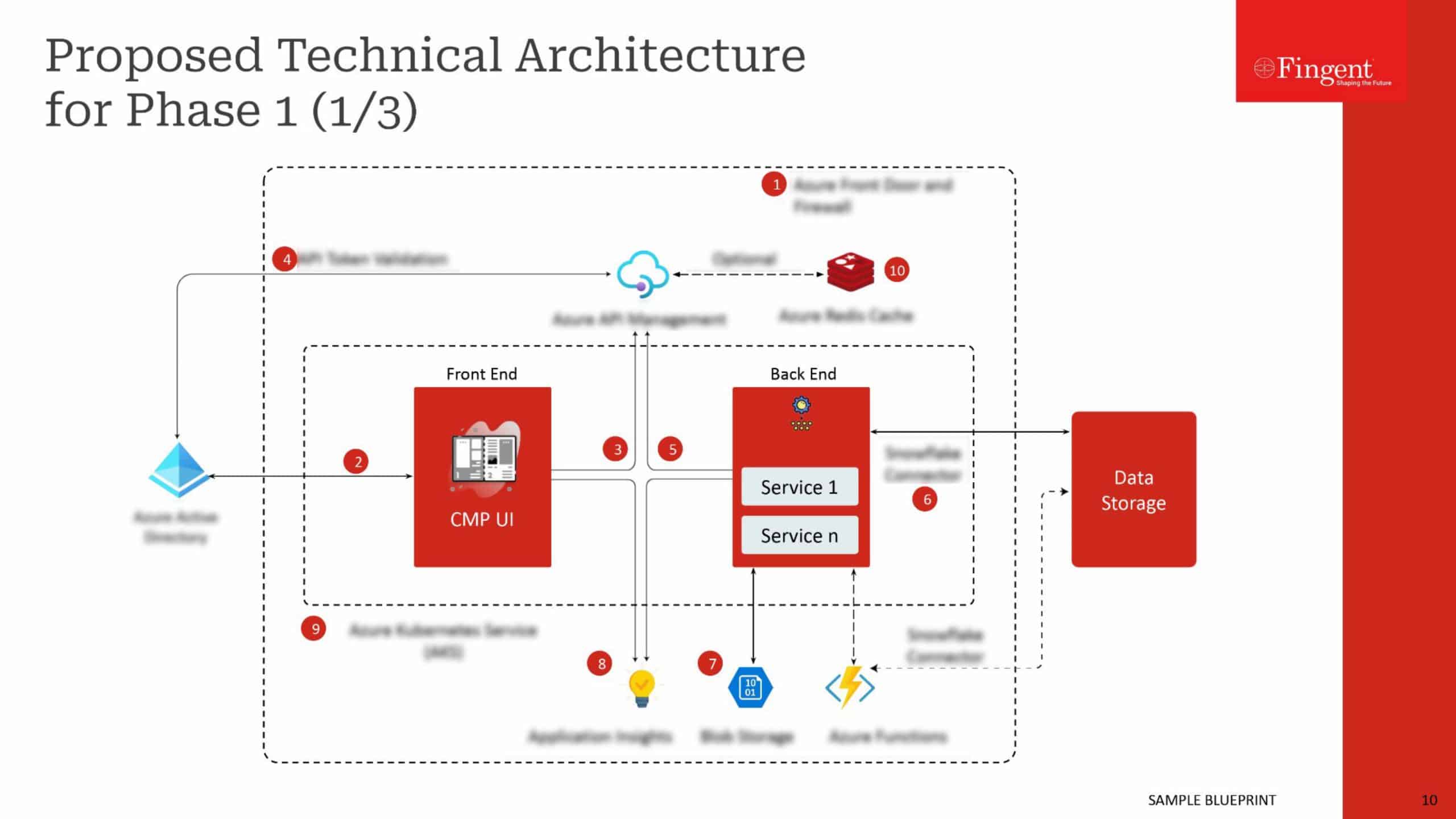
                            About the Author

                            ...
                            Tony Joseph

                            Tony believes in building technology around processes, rather than building processes around technology. At Fingent, he specializes in custom software development, especially in analyzing processes, refining them, and then building technology around it. He works with clients on a daily basis to understand and analyze their operational structure, discover (and not invent) key improvement areas, and come up with technology solutions to deliver an efficient process. You can reach him at [email protected], Skype: tony_fingent

                            Talk To Our Experts

                              Software development has a well-documented cost problem. McKinsey reports that large-scale IT projects run an average of 45% over budget and 7% behind schedule, and that’s when they survive at all. Developers spend nearly half their time not writing new code, but untangling the old: reading, debugging, and reworking what’s already there.

                              The business case for change is urgent. Missed deadlines erode competitive advantage. Late-stage bug fixes cost up to 15 times more than defects caught during requirements. And with senior developer rates running $150–$250 per hour, every inefficiency compounds fast.

                              It is here that AI can make a difference in software development. It brings tangible business benefits that your business cannot turn a blind eye to.

                              55% faster task completion
                              with AI-assisted coding
                              30% reduction in QA and testing costs
                              via AI automation
                              $300B in global dev cost savings projected by 2030
                              (Gartner)

                              Why Does Manual Software Development No Longer Cut it?

                              Three forces make software delivery chronically difficult:

                              1. Timeline overruns driven by shifting requirements and review bottlenecks;
                              2. Rising costs fueled by scarce talent and late-discovered defects; and
                              3. A talent crunch that makes hiring your way out of capacity gaps a losing strategy.

                              Organizations that rely solely on manual development practices don’t just move slower, they have to pay more for it, at every stage of the software development lifecycle.

                              ⚠️The Hard Truth:
                              AI-enabled competitors are already shipping faster and spending less. Every quarter without an AI development strategy widens the gap.

                              The Solution: AI as a Force Multiplier for Your Dev Team

                              Let’s break this misconception forever. AI doesn’t replace developers. Instead, it amplifies what they can do.

                              When embedded across the software development lifecycle, AI tools can accelerate requirements gathering, generate and review code in real time, automate testing, and keep CI/CD pipelines running without manual intervention.

                              The result: software development teams ship faster, spend less, and catch bugs earlier before they snowball into full-fledged production issues.

                              This blog breaks down exactly where AI drives cost savings and time compression, what the data says, and how to build a practical adoption roadmap for your organization.

                              Understanding AI in Software Development: Roles, Tools, and Impact

                              We know for a fact that AI in software development has moved way past the experimentation stage and has become a mainstream tech stack. Today, it operates as an active participant across the software development lifecycle involving in writing code, reviewing it, testing it, and keeping it running in production. Far from a single tool, AI in development is a layered set of capabilities, each targeting a specific source of delay or cost.

                              Here is where AI is making its mark.

                              How AI Is Being Used Across the Development Lifecycle

                              AI Code Generation

                              AI code generation tools like GitHub Copilot and Amazon CodeWhisperer suggest entire functions, complete boilerplate, and generate code from natural language prompts in real time. Developers spend less time on repetitive tasks and stay focused on higher-order problem solving.

                              Automated Testing and QA

                              AI generates test cases, identifies high-risk code paths, and runs regression suites automatically without the need for manual scripting. Defects surface earlier in the cycle, where resolving them costs a fraction of what production fixes demand.

                              Intelligent Code Review

                              AI continuously scans code for bugs, security vulnerabilities, and style inconsistencies as developers write. This eliminates the back-and-forth of manual peer reviews and prevents technical debt from accumulating unnoticed.

                              NLP-Driven Requirements Analysis

                              Natural language processing models parse user stories and business requirements, flag ambiguities, and generate structured specifications. Misunderstood requirements, which is one of the leading causes of rework can be caught before a single line of code is written.

                              AI-Assisted Documentation

                              AI auto-generates API documentation, changelogs, and onboarding guides directly from the codebase. This helps developers save time and effort in what is considered to be one of the most time-consuming and often neglected tasks in software development.

                              AIOps and Deployment Automation

                              AI monitors CI/CD pipelines, predicts failures before they cascade, and auto-remediates common deployment issues. Release cycles shorten, rollbacks decrease, and engineering teams reclaim hours previously lost to firefighting.

                              Predictive Project Management

                              AI analyzes historical software delivery data to produce accurate effort estimates, flag scope creep early, and predict which sprints are at risk. This helps project managers gain visibility and the ability to act well before timelines collapse.

                              The Fingent Approach: AI-Augmented Development by Design

                              Fingent has embedded AI across its software development practice, not as an add-on, but as a core methodology. From the first requirements workshop to post-launch support, AI tools work alongside Fingent’s engineers at every stage, compressing timelines without compromising quality.

                              For clients, this translates into tangible outcomes: faster time to market, lower development spend, higher-quality releases, and fewer nasty surprises. It’s the same engineering rigor Fingent has always applied, now with the velocity that only AI-augmented teams can deliver.

                              Fingent’s AI-Augmented practice delivers:
                              • Accelerated delivery cycles across web, mobile, and enterprise platforms
                              • Reduced QA overhead through automated, AI-driven testing frameworks
                              • Proactive risk detection in code quality, project scope, and deployment health
                              • A senior-level AI co-pilot working alongside every development team
                              Ready to get started with AI-Augmented Software Development?
                              Fingent’s team can walk you through an AI readiness assessment and identify the highest-ROI integration points for your development practice.
                              Schedule a free consultation

                              How AI Cuts Software Development Costs

                              Cost overruns in software development rarely come from one source, they often snowball across every phase. AI attacks this problem at each stage, eliminating low-value work, catching expensive mistakes early, and ensuring teams spend their hours on what actually moves the needle.

                              55% reduction in coding
                              task time
                              80% of repetitive test cases automated
                              with AI-driven QA tools
                              15× cheaper to fix a bug at requirements stage
                              vs. in production

                              Where the Savings Actually Are

                              Less Time Spent Writing Code

                              AI code-generation tools cut the time developers spend on boilerplate, scaffolding, and repetitive patterns by more than half. That directly reduces billable hours without reducing output.

                              Cheaper, Faster Quality Assurance

                              Manual QA is one of the largest line items in a software budget. AI generates and executes test cases automatically, running regression suites continuously in the background.

                              Fewer Costly Late-Stage Bug Fixes

                              IBM’s research is unambiguous: a defect found in production costs up to 15 times more to fix than one caught during requirements (Source). AI code review and static analysis catch vulnerabilities continuously before they reach QA, let alone users.

                              Fewer production incidents mean fewer emergency patches, fewer rollbacks, and no unplanned engineering sprints derailing the roadmap.

                              Smarter Resource and Effort Estimation

                              Inaccurate cost estimates are a root cause of budget overruns. AI analyzes historical project data to generate effort forecasts that are measurably more accurate than human estimates alone.

                              Reduced Technical Debt Accumulation

                              Technical debt is a hidden cost that compounds silently. AI continuously flags code quality issues, anti-patterns, and security gaps as they emerge. Addressing debt in real time is far cheaper than scheduling a dedicated cleanup sprint months later.

                              Taken together, these savings don’t just reduce individual line items, they change the unit economics of software development entirely. Organizations working with Fingent’s AI-augmented teams consistently see development budgets stretch further, with higher-quality output at the end of every cycle.

                              What to Watch For: Challenges and How to Navigate Them

                              AI delivers real, measurable benefits in software development but it isn’t without friction. Adopting it uncritically is as risky as ignoring it entirely. Understanding where AI falls short, and how to manage those gaps, separates teams that get lasting value from those that get burned.

                              AI Hallucinations and Code Quality Risks

                              AI code-generation tools sound confident even when they’re wrong. They can produce syntactically valid code that contains logical errors, outdated API calls, or subtle security vulnerabilities. Developers who accept suggestions without review introduce risk faster than they resolve it.

                              How to navigate it:
                              Treat AI-generated code as a first draft, not a final answer. Pair AI tooling with mandatory code review practices and static analysis checks. The goal is augmented speed, not unreviewed output.

                              Integration Complexity with Legacy Systems

                              AI tools don’t always slot neatly into existing infrastructure. Older codebases, proprietary frameworks, and fragmented data environments can limit how effectively AI assistants operate. They might require significant setup before they deliver value.

                              How to navigate it:
                              Start with a targeted audit of your current stack before selecting AI tooling. The right partner will assess compatibility first and recommend intelligence integration that fits your architecture, not the other way around.

                              The Human-in-the-Loop Imperative

                              AI accelerates development, but it doesn’t replace the judgment, creativity, and accountability that experienced human engineers bring. Teams that over-automate without maintaining skilled oversight end up with faster pipelines producing lower-quality outcomes.

                              How to navigate it:
                              Design your AI adoption around human oversight, not around removing it. AI handles the repetitive and the predictable; your engineers handle the ambiguous and the critical. That division is where the real productivity gains live.

                              None of these challenges are reasons to slow down AI adoption. They’re reasons to approach it with a clear plan and the right partner. Fingent’s AI-augmented development practice is built on guardrails: structured code review, compatibility assessments before implementation, and engineering teams who treat AI as a collaborator, not a substitute.

                              How to Get Started: A Practical Roadmap for Teams

                              AI adoption in software development doesn’t require a big-bang transformation. The teams that see the fastest returns start small, measure rigorously, and scale what works.

                              Here’s a four-step roadmap to get you there.

                              1

                              Audit Your Current Development Bottlenecks

                              Before selecting any tool, identify where time and money are leaking most. Is it in QA cycles that stretch for weeks? Rework from misunderstood requirements? Deployment failures that eat engineering hours? Your highest-friction points are your highest-ROI AI integration targets.

                              2

                              Identify High-ROI AI Integration Points

                              Not all AI tools are equal and not every team needs the same ones. A software development team bottlenecked in testing needs a different solution than one struggling with code review latency. Prioritize integrations based on where AI delivers the most measurable impact for your specific development profile and team size.

                              3

                              Choose the Right Tools and Tech Partner

                              The AI tooling landscape is crowded and fast-moving. Evaluate options against your existing stack, team skill level, and security requirements. For most organizations, partnering with an experienced software development firm that already operates AI-natively is faster and lower-risk than building internal capability from scratch.

                              4

                              Pilot, Measure, and Scale

                              Run a focused pilot on one team or one project phase. Define clear KPIs upfront for delivery velocity, defect rates, QA cycle time, and cost per sprint. Use those results to make the business case for broader rollout. Agile AI adoption mirrors agile development: iterate, measure, and expand what delivers value.

                              Fingent helps organizations move through this roadmap without the guesswork. Our AI AI-augmented development teams demonstrate the model in practice on your projects, from day one.

                              Ready to get started with AI-Augmented Software Development?

                              Fingent’s team can walk you through an AI readiness assessment and identify the highest-ROI integration points for your development practice.

                              Schedule a free consultation

                              AI Adoption Is Now a Competitive Imperative

                              The economics of software development are being rewritten and the gap between AI-enabled teams and those still working manually is widening with every release cycle. This is no longer an emerging trend. It is the new baseline.

                              Organizations that move now gain compounding advantages: faster time to market, leaner budgets, higher-quality releases, and engineering capacity freed up for the work that actually differentiates their product. Those that wait don’t just fall behind on cost, they fall behind on capability.

                              The question is no longer whether AI belongs in software development. It’s how quickly you can make it work for yours.

                              Fingent’s Commitment: AI-First, Results-Driven

                              Fingent has built AI into the fabric of how it develops software, not as a feature of certain projects, but as a standard of practice across every engagement. From the first requirements conversation to post-launch support, our teams apply AI at every stage where it compresses timelines, reduces cost, or improves quality.

                              For clients, that means a development partner who ships faster, catches problems earlier, and delivers more value per dollar than a conventional team can. It means predictable projects, not perpetually overrun ones.

                              Let’s Build Faster. Together.

                              Discover how Fingent’s AI-augmented development practice can help your business.


                              Schedule a free consultation

                              Stay up to date on what's new
                                About the Author

                                ...
                                Tony Joseph

                                Tony believes in building technology around processes, rather than building processes around technology. At Fingent, he specializes in custom software development, especially in analyzing processes, refining them, and then building technology around it. He works with clients on a daily basis to understand and analyze their operational structure, discover (and not invent) key improvement areas, and come up with technology solutions to deliver an efficient process. You can reach him at [email protected], Skype: tony_fingent

                                Talk To Our Experts

                                  For years, enterprise software has been following the same basic pattern. One system, one workflow, and one decision engine. That model worked when problems were linear and environments were stable. However, it struggles today.

                                  Enterprises now operate across fragmented systems, dynamic markets, and continuous change. Decisions are no longer isolated. They are interconnected, parallel, and time sensitive. That’s why most leaders are asking: How to design systems that can reason, act, and adapt at scale. The answer is one– multi-agent systems.

                                  The goal of a multi-agent system is not to increase the complexity of AI. It involves dissecting intelligence into more manageable, functional units that can operate autonomously, coordinate when necessary, and continue even when components malfunction.

                                  This model appeals to businesses for three reasons: Scalability, resilience, and autonomy.

                                  The challenge is not understanding why multi-agent systems are attractive. It is understanding how to build a multi-agent system that works.

                                  Build Multi-Agent Systems That Work! Take The Right Steps Towards Multi-Agent AI With Experts On Your Side

                                  Contact Us Now!

                                  How to Create Multi-Agent AI?

                                  Many multi-agent initiatives fail for a simple reason. They start with agents before they start with problems. A practical blueprint begins elsewhere. Here is a look:

                                  1. Define the Problem

                                  Before thinking about agents, architectures, or frameworks, step back and think. What problem are you trying to solve? Not in abstract terms but in operational terms.

                                  Is it coordinating supply chain decisions across regions? Is it managing customer support workflows across channels? Is it monitoring risk signals across finance, compliance, and operations?

                                  Multi-agent systems work best when workflows are inherently distributed. Once the workflow is clear, break it down. Identify decision points. Identify handoffs and where delays or inconsistencies occur.

                                  Now assign clear responsibilities.

                                  Each agent should own a specific task or decision. No overlap or no ambiguity. Clarity determines whether the system works together or breaks down. This step is foundational to building a multi-agent system that scales.

                                  2.Design the Multi-Agent Architecture

                                  Architecture is where intent becomes structure. Start by defining agent types.

                                  Some agents observe — continuously monitoring data streams and identifying meaningful signals. Some agents reason — analyzing context, connecting insights, and recommending the right course of action. Some agents act — triggering workflows, executing updates, and sending timely notifications.

                                  Not every agent needs the same level of intelligence. Overengineering agents is a common mistake.
                                  Next comes communication.

                                  How do agents share information? Do they communicate directly? Do they publish to a shared context, or do they rely on an orchestrator? Considering these leads to an important design decision.

                                  Orchestration: central versus decentralized.

                                  Governance is made easier by centralized orchestration. One brain handles conflict resolution and task routing. Although it is simpler to manage, it may become a bottleneck.

                                  Resilience is enhanced by decentralized orchestration. Peer-to-peer coordination is done by agents. Although it requires more rigorous design discipline, it scales better.

                                  Many businesses begin as centralized and, as confidence grows, gradually decentralize.

                                  When learning how to develop a multi-agent system for enterprise use, it is essential to comprehend this tradeoff.

                                  3. Enable Tools

                                  Agents are only as useful as the tools they can access.

                                  In enterprise environments, this means integration. Agents must connect to APIs, enterprise systems, and data sources. Also, to ERP systems, CRM platforms, data lakes, and ticketing tools.

                                  Tool access should be explicit and scoped. An agent that can do everything will eventually do the wrong thing. This is where many proofs of concept fail. Tools are added casually. Permissions are loose. Governance is an afterthought.

                                  In production systems, tool integration must mirror enterprise access policies. If a human cannot act, an agent should not either.

                                  4.Orchestration and Governance

                                  This is where skeptical leaders should lean in. Multi-agent systems without governance are unpredictable. Predictability is non-negotiable in enterprises.

                                  Orchestration defines how tasks flow between agents. Who decides what happens next? What happens when agents disagree?

                                  Conflict resolution logic must be explicit. If two agents recommend different actions, which one wins? Or does a third agent decide? Fallback logic matters even more. What happens when an agent fails? What happens when data is incomplete or when confidence is low?

                                  Having a human in the loop is not a weakness. It is a control mechanism. Security and policy controls must be embedded. Not layered on later.

                                  The real test is simple. If regulators asked you to explain an AI-driven decision, could you? If the answer is no, governance is insufficient. This moment defines how to build a multi-agent system reliably.

                                  5. Testing, Monitoring, and Making the System Better Over Time

                                  Traditional testing assumes predictable flows. Multi-agent systems are dynamic by design.

                                  Testing must cover not just individual agents, but interactions. Testing should focus on how agents respond to load, data shifts, and unexpected behaviour from other agents

                                  Monitoring is equally important. You must observe agent decisions, communication patterns, and outcomes. Drift is real. Behaviour changes over time.

                                  Optimisation is continuous. Agents learn, and workflows evolve. Business priorities shift. Remember, a multi-agent system is never done; rather, it is managed.

                                  6.Scaling From Pilot to Production

                                  Most enterprises face difficulties transitioning from pilot to production. Pilots run in controlled settings with clean data and a narrow scope. Production is different. Data is messy, workflows collide, and edge cases surface fast.

                                  This is where understanding how to build multi-agent systems becomes critical. Scaling demands discipline. Agent interfaces must be standardised, governance formalised, and Integrations hardened. Teams must work with the system, not around it.

                                  And the system must be tied to clear business metrics. If impact cannot be measured, confidence fades.

                                  Read More: what are multi agent systems

                                  FAQ

                                  Q. What are the best 5 frameworks to build multi-agent AI applications?

                                  A. Several frameworks are commonly used to build Multi-Agent AI applications, depending on maturity and needs. The best five frameworks are:

                                  1. LangGraph supports agent workflows and stateful coordination.
                                  2. AutoGen enables conversational multi-agent collaboration.
                                  3. CrewAI focuses on role-based agent teams.
                                  4. Ray provides scalable distributed execution.
                                  5. JADE is a classic framework for agent-based systems.

                                  Frameworks matter less than design discipline. Tools cannot compensate for poor architecture.

                                  Q. What is an example of a multi-agent AI system?

                                  A. common example of a Multi-Agent AI System is intelligent customer support.

                                  One agent classifies intent. Another retrieves customer context. A third proposes responses. A fourth monitors compliance. A fifth escalates when confidence is low.

                                  Each agent has a role. Together, they deliver faster, more consistent outcomes. This pattern appears across finance, supply chain, and IT operations.

                                  Q. How much does multi agent ai system cost?

                                  A. Multi-Agent AI System may costs vary widely.
                                  Factors include infrastructure, model usage, integration complexity, and governance overhead. Small pilots may cost tens of thousands. Enterprise-scale systems can reach millions over time.

                                  The better question is this. What is the cost of not scaling intelligence where decisions matter?

                                  Q. How do you test and monitor multi-agent systems?

                                  A. Simulation, scenario testing, and stress testing of agent interactions are all part of testing. Telemetry across decisions, communications, and results is necessary for monitoring. Dashboards ought to highlight behavior rather than just performance.

                                  Note that if you cannot explain why an outcome occurred, monitoring is incomplete.

                                  What Are Multi-Agent Systems Architecture?

                                  Read More!

                                  Turning Blueprint Into Business Value

                                  Knowing how to build a multi-agent system is only half the journey. The other half is execution. Execution requires process. It requires iteration and restraint.

                                  This is where Fingent focuses. We help enterprises move from concept to capability by applying discipline where it matters most.

                                  • A streamlined process
                                    We cut through complexity early. Use cases are prioritised by impact. Agent roles are sharply defined. Dependencies are addressed upfront. This prevents drift and keeps momentum visible.
                                  • An agile methodology
                                    Multi-agent systems evolve. That’s how we make them. Agents are gradually added, tested in actual workflows, and continuously improved. Hence, the risk stays controlled. Learning stays fast.
                                  • A continuous innovation approach
                                    Deployment is not the finish line. We monitor behaviour, optimise performance, and extend capability as the business changes. Intelligence compounds instead of stagnating.

                                  The outcome is not experimentation. It is execution.

                                  Multi-agent systems reward organisations that act deliberately and consistently. The blueprint shows intent. Fingent helps turn that intent into durable business value.

                                  The leaders must consider: Will your organisation adopt them deliberately, or react to them later?

                                  Stay up to date on what's new
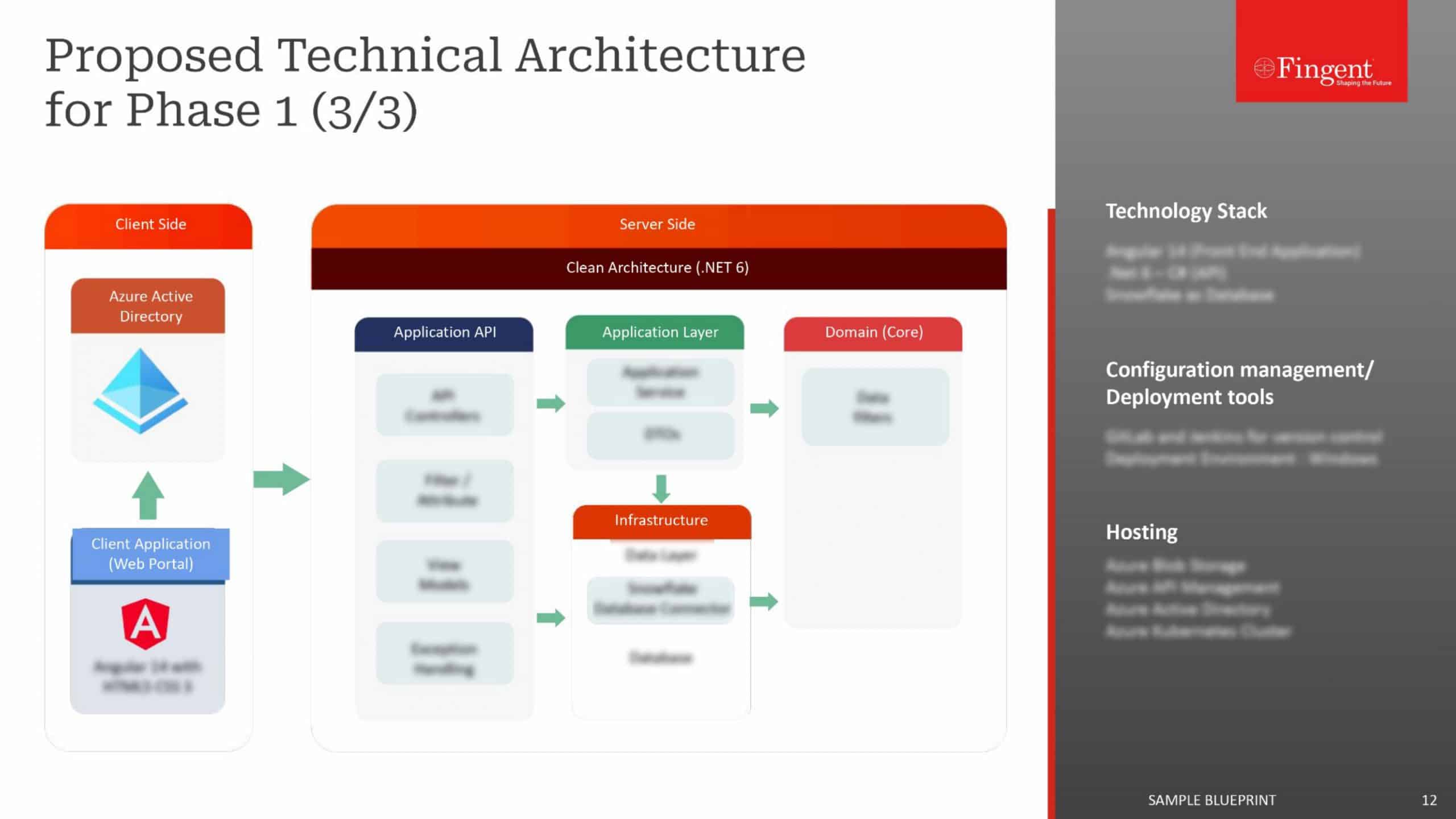
                                    About the Author

                                    ...
                                    Tony Joseph

                                    Tony believes in building technology around processes, rather than building processes around technology. At Fingent, he specializes in custom software development, especially in analyzing processes, refining them, and then building technology around it. He works with clients on a daily basis to understand and analyze their operational structure, discover (and not invent) key improvement areas, and come up with technology solutions to deliver an efficient process. You can reach him at [email protected], Skype: tony_fingent

                                    Talk To Our Experts

                                      AI is everywhere. Most businesses are trying it out. Very few manage to make it work. Fewer succeed in scaling it effectively. You can be one of the few.

                                      How? Bridge the gap between AI ambition and AI impact. This gap isn’t caused by a lack of technology but by a lack of integration. AI cannot thrive in silos. It needs data, workflows, systems, and people working in sync. This is precisely where AI system integrators step in. They turn disjointed AI initiatives into unified, enterprise-grade intelligence, making sure AI doesn’t just exist but actually works, scales, and delivers tangible business results.

                                      What Is an AI System Integrator?

                                      An AI system integrator is a key partner. They help organizations smoothly add AI technologies to their current processes and IT systems. These specialists stand out from traditional IT integrators. They are enabled by science and machine learning, as well as process automation and change management. This is the expertise that allows AI to work at scale, not just in small projects.
                                      AI system integrators:

                                      • Assess business needs and AI readiness
                                      • Build and configure AI models
                                      • Embed AI into your systems and processes
                                      • Make sure data flows smoothly between the systems
                                      • Govern and optimize AI models over time

                                      Many AI projects struggle without the right expertise. They often don’t meet expectations or stay stuck in proof-of-concept stages. AI System Integrators help organizations operationalize AI by turning insights into action and value.

                                      Why Enterprises Need AI System Integrators

                                      A McKinsey Global Survey on AI says that 88% of organizations are trying out AI. But only a few manage to scale it effectively. This limits their ability to generate real value. The rest remain stuck in pilots, proofs of concept, or disconnected tools that fail to deliver ROI.
                                      64% of those who made it work said AI boosted productivity. It also reported a positive ROI within three months of using it. AI System Integrators are needed to make this happen because rolling out AI that can scale is not simple. A few reasons:

                                      • AI projects often need data from different systems. Many of these systems weren’t made for today’s analytics.
                                      • AI affects all departments – from HR to legal, finance, and operations. So, integrating across these functions requires strong technical and business knowledge.
                                      • A lack of AI talent in companies often slows progress. This is especially true when teams lack experience in data engineering, machine learning, and governance.

                                      AI system integrators combine technical skills with a clear strategy. They align AI projects with business goals. This means the adoption is more than just technology adoption; it’s creating real value.

                                      Discover Smarter & Seamless Ways to Integrate AI

                                      Explore Our Services Now!

                                      Key Capabilities of an AI System Integrator

                                      An effective AI system integrator offers more than just coding skills. They connect strategy, execution, and measurement.

                                      1. Strategic AI evaluation and roadmap development

                                      You need to understand what the problem is and how AI creates value. Only then can AI really be of assistance. System integrators

                                      • Assess maturity.
                                      • Identify AI opportunities, and
                                      • Develop roadmaps to achieve strategic objectives.

                                      2. Data Engineering and Integration

                                      AI thrives on quality data. System integrators:

                                      • Gather data from scattered systems
                                      • Ensure quality of data and governance
                                      • Create pipelines to build AI models
                                      • Enable interconnection for previously isolated solutions

                                      This baseline of data integration allows for consistent and reliable AI models

                                      3. Custom Model Development and Deployment

                                      AI System integrators adapt AI models, including machine learning and generative AI, to meet individual business needs. They do this instead of using generic tools that might not suit unique situations. They handle model training, testing, validation, and deployment.

                                      4. Workflow Integration

                                      AI only drives value when it becomes part of standard workflows. Integrators use AI in business processes. They automate HR inquiries, improve claims management, and boost call center performance. This helps ensure that AI is widely adopted and has a strong impact.

                                      5. Change Management and Governance

                                      AI transforms how teams do their work. AI System Integrators assist with training, stakeholder alignment, and governance establishment. That makes sure AI is ethical, safe, and compliant. They also help monitor and retrain models as conditions change.

                                      Business Impact of AI System Integrators

                                      Enterprises that harness AI with expert integration enjoy measurable advantages. This includes benefits in productivity, decision making, operations, and customer experience, to name a few:

                                      1) Improved productivity

                                      Incorporating into workflows means higher productivity. Repetitive tasks are automated, so insights arrive sooner. This impact has been felt in HR, in customer service, and even in IT operations. When you enable AI for predictions and automation experience, you see significant productivity gains.

                                      2) Faster Decision-Making

                                      AI system integrators make real-time analytics and predictive models work for you. What does it mean for your business? Intelligent pattern recognition. Super fast decisions. It empowers a reaction that can mean life or death for a business.

                                      3) Reduced Operational Costs

                                      AI automates manual tasks like document classification and claim processing. This reduces the human effort required, resulting in big cost savings.

                                      4) Improved Customer and Employee Experience

                                      Integrated AI boosts service delivery. Common examples are chatbots and voice agents. They offer instant answers and personalized interactions around the clock.

                                      FAQs

                                      Q. What is Intelligence Integration?

                                      A. Intelligence integration means smoothly adding AI abilities to business systems. This helps speed up the execution of decisions while keeping workflows intact. It uses intelligence in every layer of the enterprise.
                                      In this context, intelligence integration means:

                                      • AI models are woven into operational systems.
                                      • Decision systems and business logic act intelligently, with minimal manual intervention.
                                      • Data flows continuously between systems and models, enabling real-time insights.
                                      • AI outputs directly influence actions, from automated HR support to predictive legal insights. This holistic approach ensures AI doesn’t just sit beside processes but becomes part of them.

                                      Organizations that master this integration separate leaders from followers in the digital age.

                                      Q. How is an AI system integrator different from a traditional IT integrator?

                                      A. While traditional IT integrators are primarily concerned with systems connectivity and infrastructure, AI systems integrators are one level above. They have domain expertise in data science, machine learning, analytics, and governance to help ensure AI solutions are intelligent, adaptive, and value-driven — and not just technically connected.

                                      Q. What is the time frame to begin realizing value from AI Adoption?

                                      A. Enterprises can achieve early value in weeks using the right approach through focused use cases such as automation or analytics. Long-term value compounds as intelligence integration expands across workflows and departments, enabling continuous optimization and innovation.

                                      How Fingent Enables Enterprises to Embrace Intelligence Integration

                                      Fingent is known for its strong reputation as an AI system integrator. We help clients gain value by integrating intelligence. Our focus is on three key strategies: start-small, scale-smart, and transform-bold. These help achieve quick wins and build strong AI ecosystems. Here are a few real case studies that demonstrate how AI integration can change businesses.

                                      #Case Study 1- Lead Response Automation for B2B Services

                                      Fingent automated lead classification and response routing. This cut response times to under an hour. Accuracy improved to 96% and ensured 100% correct sales routing. Client teams also gained valuable operational hours.

                                      #Case Study 2 – AI-enabled Operational Assistant for a Marketing Agency

                                      Fingent helped a leading experiential marketing firm integrate an AI assistant with CRM, project management, and inventory platforms. This helped them eliminate 70% of routine information lookup efforts for client calls. Time taken to generate reports reduced by 40%. Sales productivity increased by 3-5%, and customers were happier with better responses.

                                      #Case Study 3 – Call Centre Quality Assurance Transformation

                                      Fingent helped a major media organization automate call quality evaluation. Now, they process 100% of daily interactions, up from just 3%. This integration boosted analytics capability, sharpened coaching insights, and reduced QA costs.

                                      #Case Study 4 – AI & ML Claims Management Solution

                                      Fingent created an AI-driven claims management system for a legal firm. This system shortened the average case settlement time from years to days. It also boosted accuracy by 30-40%. This is a demonstration case for how smart automated processes can significantly cut down on time and overhead costs.

                                      #Case Study 5 – AI-powered Virtual Assistant for HR and DevOps (MUSA)

                                      Fingent created MUSA, a multi-utility AI assistant. It helps with HR and DevOps questions. This virtual assistant streamlines routine staff requests, reducing workload and response times significantly.

                                      These are just a few examples of how AI system integrators help companies transition from isolated AI trials to weaving intelligence throughout the entire infrastructure.

                                      Accelerate Operational Excellence With AI Enable Seamless Intelligence Integration

                                      Contact Us Now!

                                      Why Integration Defines AI Leaders – How Can Fingent Help

                                      Merely adopting AI isn’t enough. You want a differentiator? Then it’s up to how intelligently you integrate AI into your business ecosystem.

                                      Human interaction, technology, and processes – unlocking this combination is what it’s all about. That’s how you convert the AI buzzword into a strategic benefit. That’s how you define AI leaders.

                                      AI system integrators like Fingent play a crucial role in this transition. We focus on practical results and have deep technical expertise. With our proven history of providing value across different industries, we improve HR efficiency with chatbots, re-imagine claims management, and speed up decision-making. Our intelligence integration approach makes it all possible. Talk to us now!

                                      Stay up to date on what's new
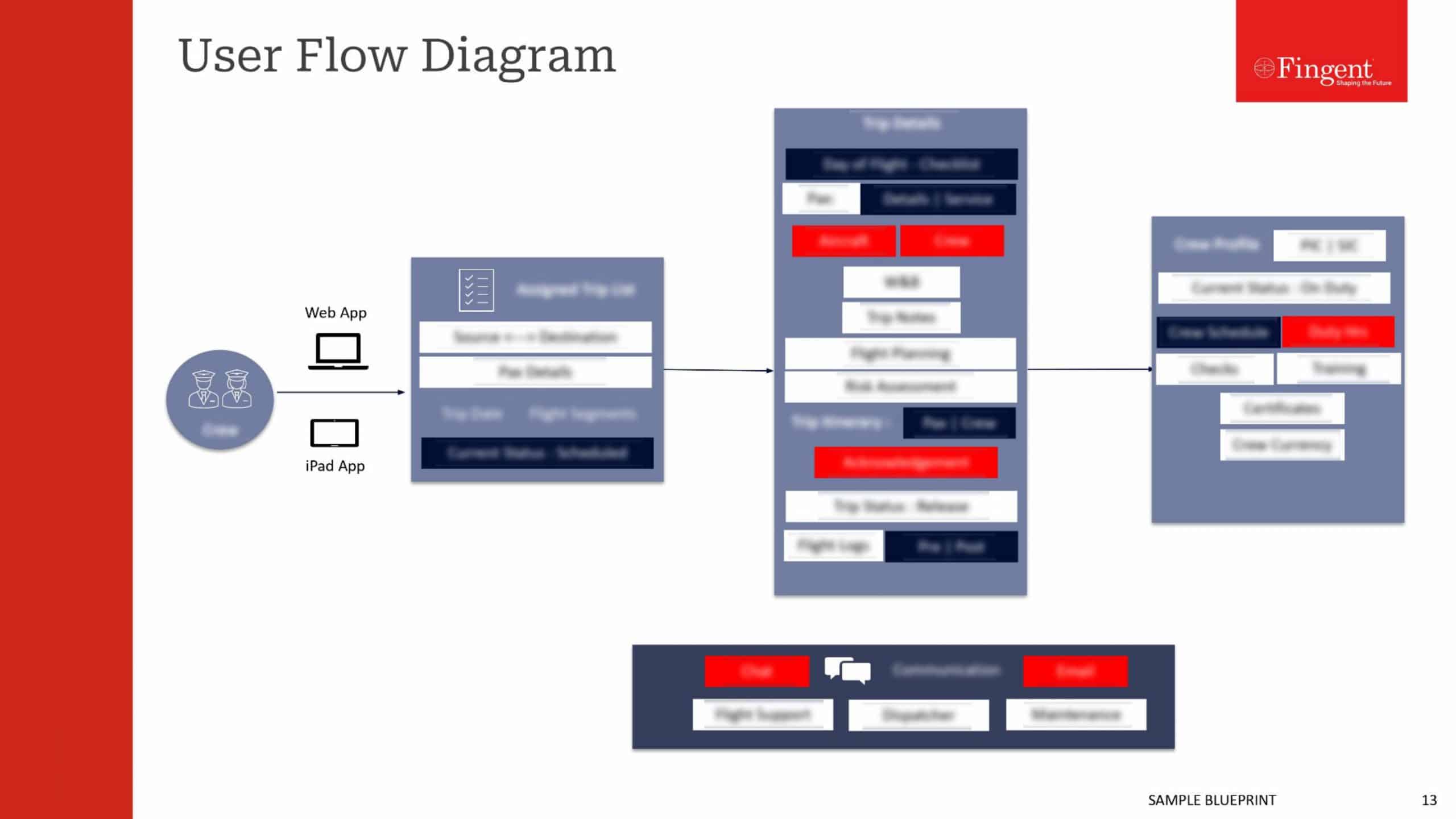
                                        About the Author

                                        ...
                                        Tony Joseph

                                        Tony believes in building technology around processes, rather than building processes around technology. At Fingent, he specializes in custom software development, especially in analyzing processes, refining them, and then building technology around it. He works with clients on a daily basis to understand and analyze their operational structure, discover (and not invent) key improvement areas, and come up with technology solutions to deliver an efficient process. You can reach him at [email protected], Skype: tony_fingent

                                        Talk To Our Experts

                                          ×