Category: Business
- Introduction
- A Brief History Of Metaverse
- A Simple Definition Of Metaverse
- Metaverse And The Future Of Work
- Metaverse Applications In Our Work World
- Potential Concerns Around Metaverse
- Metaverse: What Lies Ahead?
Introduction
Metaverse is the next generation of the internet. Blending the elements of virtual reality, augmented reality, online games, social media, and cryptocurrencies; metaverse ushers in a novel phase of interconnected virtual experience, that reimagines the future of work. This blog will take you through everything you need to know about Metaverse – from history to how it will impact the future of work!
A Brief History Of Metaverse
In his 1992 sci-fi novel Snow Crash, author Neal Stephenson coined the phrase metaverse – probably the first time most of us heard it. The novel portrayed metaverse as a successor to the internet, depicting the author’s vision of how a virtual reality-based Internet might evolve in the immediate future.
Today, the metaverse is moving from hypothetical to real, inspiring enterprise tycoons to rebrand and innovate. The recent rebranding of Facebook, Inc. into Meta Platforms, Inc. was solely inspired by metaverse. In the Founder’s Letter, Mark Zuckerberg underscores that “We are at the beginning of the next chapter for the internet. The next platform will be even more immersive — an embodied internet where you’re in the experience, not just looking at it. We call this the metaverse, and it will touch every product we build.”
Ever since the publication of Snow Crash, the notion of metaverse has enjoyed constant popularity. The concept has highly inspired the creators of online virtual worlds such as Second Life and Active Worlds. The success of Snow Crash was such that it was made a mandatory read for Microsoft’s Xbox development team.
Until recently, the application of metaverse was restricted to internet-based video games and social media. Metaverse was predominantly used to improve the quality of immersion in virtual reality environments. The past two years witnessed a tremendous shift in the work culture, with remote and hybrid workspaces becoming the new normal. The application of metaverse technology in improving work productivity, creating interactive learning environments, and facilitating virtual reality home tours is on the brink and companies like Fingent are already on the track with best-in-class POCs and ace development skills.
Read more: What’s in Store for Real Estate this 2022?

A Simple Definition Of Metaverse
Metaverse is coined by joining two words; “meta” meaning beyond and “verse” referring to the universe. Literally, metaverse stands for a virtual world that lies on top of, or beyond the physical world. Metaverse is an extension of the real world that is amplified by emerging technologies such as extended reality (a combination of VR, AR, and MR), non-fungible tokens (NFTs), cryptocurrencies, AI, IoT, and more.
Metaverse And The Future Of Work
When the COVID-19 pandemic swept industries and stomped economies, the internet, and other work-from-home technologies helped us stay resilient and ensure business continuity. Many industries became technology-intensive, such as education, retail, conferencing & event management, etc. Metaverse will further transform these sectors by implementing virtual reality (VR) based wearables that allow users to experience and/or purchase the services with the help of immersive virtualization (without leaving the premises of their homes).
Imagine you want to go for a movie with a colleague after working hours or hang out with a friend for dinner. With metaverse, you’ll have alternatives for all these social interactions, especially when you want to avoid the hassles of a physical word, such as social distancing.
Metaverse will significantly transform the way we work by leveraging VR:
- Offers multiple choices with respect to work location and ways of working. Employees will no longer be confined to their workstation cubicles.
- Metaverse helps build a centralized digital work environment that will smoothen the transition to remote working.
- Freedom from tedious daily commutes, in-person meetings, expensive business trips, and professional office apparel.
- Guarantees physical safety from getting exposed to harmful viruses like COVID-19 or Omicron. Virtual collaboration reduces the spread of transmittable illnesses.
- Makes idea-sharing and collaboration more effective and accessible than ever. Easy to join virtual meetings and participate actively in discussions by gaining a near-physical experience.
- Eliminates the risks and hazards present in the physical world and makes the workspace safe and convenient for employees.
Case Study: How Fingent enabled a leading educational establishment to innovate their campus visits by leveraging virtual reality. Download now!

Metaverse in real-life: Two leading examples
One of the best examples to demonstrate the impact of metaverse on the future of work is the recently launched Horizon Workrooms. Introduced by Facebook, Horizon Workrooms is a virtual meeting space that allows you to collaborate with your coworkers virtually without feeling isolated or deprived of workplace interactions during remote work. The underlying virtual reality technology will help you join meetings as an avatar or dial into the virtual room using your computer through video call. Powered by VR and delivered via the Oculus Store, the Horizon Workrooms aims to leverage VR as a new computing platform that will reimagine the future of work.
Another notable example of the metaverse in a workplace is the latest Microsoft Mesh app. Mesh leverages a mixed reality experience that allows you to connect, share, and collaborate with your coworkers in immersive, near-natural virtual environments. Using Mesh, you can create AI-enabled 3D avatars that enable you to join meetings, visualize and annotate content, and use 3D objects to explain and point out features. The purpose is to make users feel like they are physically present in the meeting room. Currently, Mesh-enabled experiences are available for HoloLens and AltspaceVR users.
Metaverse Applications In Our Work World
In no time, the COVID-19 pandemic forced corporate employees and industries to shift from physical to virtual. Platforms like Zoom and Slack facilitated remote collaborations far and wide, and across different time zones. Organizations are discovering the new and improved possibilities offered by virtual collaboration tools, making metaverse an inevitable technology in the future of work.
Case Study: Fingent develops a unique mixed reality application for a leading university by combining facial recognition technology. Read more.

Top three industry applications of metaverse:
1. Real estate: In 2020, Upland.me, the leading blockchain-based metaverse tagged to real-world addresses sold a virtual property of the New York Stock Exchange (NYSE) for a mammoth 23,000,000 UPX (US$ 23,000) in their year-end auction. While Upland’s target was to sell the virtual property at a premium of 65%, the deal secured them a massive premium of 368%.
Real estate brokerage firms and property trading companies can leverage metaverse to combine physical and virtual worlds, allowing users to buy, sell, and trade simulated properties that are mapped to real addresses. The application of blockchain-based cryptocurrencies will ensure the safety of transactions and the true possession of digital assets in the world of the metaverse.
2. Commerce: Fashion brand Gucci’s digital-only Dionysus bag was sold at a higher price than its physical version during an auction on Roblox- the leading video game platform. While the bag’s physical retail value was $3,400, it commanded a virtual resale price of $4,115, despite its non-transferability outside the Roblox environment.
Metaverse will offer consumers a more interactive in-store experience that allows them to try new products and explore novel brands using AR and VR sets. It’s a step ahead of the current e-commerce applications that will give way to 3D virtual shopping powered by metaverse.
Read more: Extended Reality: Six ways it is improving customer experience and helping brands grow

3. Education: A recent study reveals that around 91% of the world’s student population have experienced educational disruptions over the past two years. While emerging technologies accelerated the transition to online education, the academic world is still in a constant chase for immersive, inclusive, and interactive learning technology that can improve the educational ecosystem.
Education is a key focus area of the metaverse. Facebook recently announced that it will partner with Coursera and edX to develop a versatile AR curriculum. In the 2021 ASU GSV Summit, the Arizona State University exhibited a VR classroom that allows students to virtually explore a sanctuary of endangered species, which aroused the curiosity of the participants. Subjects like astrophysics, biology, surgery procedures, anthropology, etc. can be taught more effectively by leveraging metaverse.
Read more: How virtual reality improves the standard of medical education and training
Potential Concerns Around Metaverse
Statista reports that an average of 34 million units of VR headsets would be sold by 2024. As industries increasingly embrace VR to meet both enterprise and consumer demands, the universal adoption of full-fledged metaverse applications doesn’t seem fair. However, we still need to overcome a few challenges that slow down metaverse adoption.
- New verification methods should be developed to solve identity theft and reputation loss in the metaverse. This is important to prevent crimes such as facial forging, footage and voice tampering, etc.
- Any online environment isn’t devoid of data and privacy concerns. It’s vital to improve data security and privacy protection methods to keep your data safe in the metaverse world.
- Robust digital currency and payment systems should be developed to ensure the security of transactions in the metaverse virtual marketplace. To ensure safe trading within metaverse, built-in transaction verification systems should be implemented.
- As metaverse is expected to bring more people from different countries together in a virtual collaborative space, it’s important for lawmakers to devise the legislation that governs virtual interactions. Countries need to focus on setting up virtual legal domains and making the digital space safe for users.
- Upgrading the application of metaverse from the realms of gaming, fun, and entertainment to the domains of learning, corporate work, and industries requires careful planning. The progression should be correlated with both the business outcome as well as the demands of customers and employees.
Read more: Reality technology services offered by Fingent
Metaverse: What Lies Ahead?
Though metaverse is advancing to take us to the threshold of a virtual universe, the technology is still at a nascent stage. As more tech giants and startups join the bandwagon, we can expect that metaverse will combine the best of reality technologies like AR, VR, and MR to transform the future of work. John Riccitiello, the CEO of Unity Technologies (developer of Unity game engine) observes that by 2030, Virtual Reality headsets will be as common as today’s gaming consoles.
Amidst the challenges that choke businesses during the pandemic, promising experiments around metaverse prove that remote work is a huge problem that VR could resolve. Industries that were hitherto dependent on on-site and field activities are taking a different path by embracing VR. We can expect that metaverse will soon be the efficiency driver in the new normal of work. If you have any queries on metaverse or need a demo on how VR can help you do business better, write to us.
Experience Next-level Collaboration
Collaborate with your teams like never before using a pool of ready-to-use collaboration apps integrated with InfinCE.
Explore InfinCE
Stay up to date on what's new

About the Author

Venkatesh Alagarsamy

With exceptional expertise in AR, VR, and MR, Venkatesh has worked in the conception, design, development, delivery, and implementation of solutions catering to the needs of industries like Automobile, Oil and Gas, Medical Simulation, Heavy industries, Mining, Archeology, Retail, Soft Skills Development, and Education. Venkatesh has vast experience in developing multiplayer solutions for leading large-scale sectors across the globe. When not working on projects, Venkatesh likes to keep himself updated on the latest technology advancements, because he believes that's what helps him provide top-notch solutions for his customers. Connect with Venkatesh via LinkedIn today, and know more about how your business can benefit from Extended Reality technologies!
Featured Blogs








Stay up to date on
what's new



Talk To Our Experts
The pandemic put business challenges on an amplifier and made it look insurmountable. Here we all are though, crossing that barrier and making things work. Some challenges persist though. One area is the acceleration of the remote working scenario. Besides, sectors like manufacturing and Life Science have the challenge of accomplishing more tasks efficiently in less time.
This intimidating scenario drives the need for an intelligent enterprise. That’s exactly what SAP Business Technology Platform (BTP) empowers enterprises in all sectors. But what is SAP BTP?
This article describes what SAP BTP is. It also explains all that you must know about SAP BTP and how you can leverage it to grow your business and remain resilient.
Read more: It’s time to transform your business for the new digital age: Rise with SAP!
What is SAP BTP?
SAP BTP is an open platform as a service. It can integrate SAP and third-party applications and extend application capabilities. It can empower an organization to exploit data to solve its business problems.
SAP BTP can provide in-memory capabilities, core platform services, and unique microservices. It can help develop the exact application needed quickly, easily, and economically. All this without investing in local infrastructure.
It is a business-oriented technology platform for your SAP and third-party applications. It can unlock value and drive growth for its clients. SAP BTP unifies a plethora of technology stacks.
SAP BTP covers a wide range of functionalities. These range from document management to globalization, to blockchain and ML. Organizations can leverage SAP BTP services to automate business processes, manage decision logic. It also allows them to gain end-to-end process visibility.
But what is SAP BTP made of?
SAP BTP consists of four building blocks:
- Database and data management: This includes SAP HANA and SAP HANA cloud.
- Analytics: Including SAP Data Warehouse Cloud, SAC, and Business Objects BI.
- Application Development and Integration: Includes SAP Integration and Extension suites and SAP Process Orchestration.
- Intelligent Technologies: Including AI, ML, and IoT.
How Is SAP BTP Revolutionizing Business Operations?
SAP BTP can be used to build and extend SAP applications quickly. Here are the top three scenarios:
1. Integration
Most organizations prefer best-of-breed applications. With the journey to the cloud, the system landscapes are increasingly complex and business processes remain disconnected.
Today, most businesses have processes spanning from on-premise to cloud, and across multiple vendors. Plus, to complicate matters, some organizations continue to support their legacy applications along with various platforms and open-source technologies. SAP BTP allows seamless integration by simplifying development and quickening deployment.
Read more: Improve business planning with SAP Analytics Cloud!

These complex environments can only be managed with proper integration. While the value of these landscapes is decreasing, the complexity and cost of such integration are increasing.
SAP BTP can help organizations to refine and enhance their business operations along the entire value chain. It can do this by connecting applications, data, and experiences across SAP and beyond.
SAP Integration Suite uses a set of connectors and APIs to securely connect and integrate business processes. This can accelerate an organization’s time to value in a secure, sustainable, repeatable, and cloud-centric capability.
2. Data management
Today, we live in the age of data. But most organizations fail to get value from it. They gather the data and store it in disparate mediums. This only leads to a disrupted flow of information.
Your business success depends on how you analyze your data and what you do with the results. SAP BTP allows you to transform your data into value quickly and efficiently.
Data management is all about creating value from the data. If a business wants to exceed in today’s global economy, it must act on real-time business data. However, both the structured and unstructured data volumes create challenges for organizations.
Instead of accelerating digital transformation, data has become the anchor that is holding businesses in the old way of working. This has led to data swamps putting them in a worse position than they were ten years ago.
SAP BTP solutions are designed to provide flexible and user-first data management. It allows organizations to discover, connect, orchestrate data with internal and external data flows. This enables business leaders to access near real-time data and drive insight and value back into their businesses.
3. Extensibility
Businesses must continue to innovate rapidly if they want to stay relevant. During the pandemic, most businesses had to innovate their business models to adapt to changed circumstances such as local lockdowns and shortage of distribution chains.
As new businesses emerged with their reduced innovation cycles, they posed a serious threat to established businesses. Organizations must thus be empowered to build, extend, and enhance their application landscape so they can stay relevant while rapidly realizing new opportunities.
SAP Extension Suite allows organizations to access prebuilt extensions through an integrated digital marketplace. SAP BTP empowers businesses to speed up integration, find real business value from data, and extend SAP landscapes to innovate.
For example, let’s discuss the SAP Workflow Service. The SAP Workflow Service is part of the SAP BTP portfolio. This service allows businesses to extend their business processes. These extensions allow organizations to adopt business process changes quickly and in a non-disruptive way.
It provides unique monitoring applications that help monitor deployed workflows and their instances. Additionally, it also allows REST APIs to read, create, modify, or cancel workflow and task instances.
Integrating SAP Workflow Management with SAP Conversational AI allows organizations to leverage digital support for their workflows, process cycle times, recommendations. Plus, it allows them to reconcile both structured and unstructured workflows.
This can increase the level of automation enabling businesses to better manage overall complexity, reduce manual effort, and associated errors.
Read more:Top 7 benefits of adopting SAP Intelligent Robotic Process Automation

How can Fingent help leverage SAP BTP being SAP Silver Partner?
As SAP Silver partner, Fingent can apply design thinking and agile methods to develop industry apps on SAP BTP. We can help deliver innovative solutions with speed and agility.
When we combine our expertise at Fingent with SAP BTP, we can leverage disruptive technologies such as AI and predictive analytics and innovate across industries and business functions. This can help our clients extend capabilities, integrate intelligent technologies, generate actionable insights, and amplify results.
We can help our clients gain the flexibility of public or private cloud infrastructure to create an intelligent enterprise experience. Along with SAP BTP, Fingent can help your intelligent enterprise take a big step forward. Give us a call and let’s discuss how best we can help you.
Stay up to date on what's new
About the Author

Featured Blogs
Stay up to date on
what's new
Talk To Our Experts
Why AI? What Can AI do for me? When? How?
So many questions about AI! Considering that AI has become a revolution that has taken today’s business world by storm, it isn’t surprising that there are so many questions.
Most businesses can testify to the fact that Artificial Intelligence (AI) has improved the way their business operates. Businesses implement AI to increase efficiency, grow their revenue, and improve customer experience. Let’s explore the benefits of AI and get to some of the top questions about AI.
Read more: Artificial Intelligence: Taking the buzz out of the buzz word!

Importance Of AI Implementation in Business Today
According to the 2020 Global AI survey conducted by McKinsey & Co, 44% of the companies reported cost savings from AI adoption in their business. They also reported that AI adoption has decreased business units cost by at least 10% on average. Is this the only benefit of AI implementation? Not in the least. Here is why AI is so important.
1. Efficiency
Artificial Intelligence (AI) handles manual tasks at a pace and scale that is beyond human ability. This allows workers to move to higher-value tasks that AI technology cannot handle.
Such a well-calculated balance helps businesses minimize the costs associated with mundane tasks while maximizing the talent of human capital.
2. Shorter business timeline
Businesses are moving faster in this digital age. However, AI empowers businesses to move faster as it enables shorter development cycles and reduces the time taken to move design to production output. In turn, this shortened timeline delivers better and more immediate ROI.
Read more: How AI Integration Helps Maximize Your Business ROI
3. Improved customer service
Delivering a positive customer experience has become a determining factor between a successful and an unsuccessful way of doing business. Best customer service includes knowing the customer, their needs, and presenting customers what they need when they need it. That is exactly what AI can do constantly.
4. Near-instantaneous monitoring capabilities
AI’s capacity to process massive amounts of data can help businesses stay alert to issues, recommend action, and initiate a response. This prevents costly and disruptive breakdowns and thereby eliminates the cost of maintenance work. AI’s monitoring capabilities can also be effective in enterprise cybersecurity operations.
5. Error-free results
Human employees are prone to mistakes. By adding AI technologies businesses can ensure that errors are minimized as it can automate repetitive, rule-based tasks. This speeds up and enhances the entire process. Plus, it can be trained to improve and take on broader tasks.
Though AI has proven to be important for business success, some hesitate. Why? Let’s find out.
Read more: The future of Artificial Intelligence: A game-changer for industries

Why Do Businesses Still Hesitate?
Some decision-makers remain hesitant because they feel they are venturing into the unknown. Here are some additional reasons:
- Limited AI talent: Larger organizations are more likely to have the necessary technical skillset to understand the business case for AI investment. Some lag behind because they do not understand AI’s value proposition.
- Data issues: Insufficient quantity or quality of data is a common barrier to AI implementation.
- Concerns about responsible AI: Some have concerns about ethical breaches with AI.
- Concerns about AI investment: Many companies are concerned about moonshot investment.
Answering Top Burning Questions On AI Business Application
The rise of the popularity of AI welcomes several questions that must be answered to help businesses make informed decisions.
1. How does my business benefit from AI implementation?
AI cannot do everything. However, it can give your organization the ability to run automated tasks, pull reports and analyze data at the touch of a button. This can give you a strong competitive advantage. AI is capable of processing enormous amounts of data to unlock actionable insights.
2. When should I consider building an in-house AI-powered solution?
- When you are building something that differentiates your core product. If the project is not central to your business mission it probably isn’t the best use of your team’s time and resources.
- When you have a sizeable engineering infrastructure because you will need dedicated resources to build, maintain, train, and improve your solution.
- When no vendors can meet all your requirements. Here’s a tip: when evaluating a vendor, ensure to ask for customer references and case studies of companies where they successfully implemented their AI solutions. Using a vendor can often be faster, cheaper, and provide better results than what a company can build on its own.
3. How to evaluate if a company’s AI is “good?”
Here, “good” depends on human talent, data, algorithms, and computing power. In other words, it depends on the company’s ability to gather the best data and the best skill set to solve the problem at hand. So, it can be helpful to ask companies what is the quantity of data, compare the relevance of their data with yours, and how the system was built.
4. Why is AI relevant to customer service?
The businesses that skillfully weathered the storm caused by the pandemic provided their customers and employees with reassurance, stability, and easily accessible information whenever needed. Deploying bots on websites will increase the use of self-service and provide relief to phone or chat queues.
Read more: 9 Examples of Artificial Intelligence transforming Business Today!

5. How can AI be used for a quick win?
AI bots can handle high volume repetitive tasks as we have already discussed. These tasks include answering questions, scheduling appointments resetting passwords, and more. Automating these tasks can provide quick and economically substantial wins.
6. What are the pitfalls to avoid?
There have been designs that left customers adrift in a sea of endless menu options. To avoid repeating this pitfall, design your bot thoughtfully and within the context of the end-to-end customer journey. This must include a seamless path to agents where customers do not have to repeat the information.
7. How can Fingent help leverage the best of AI?
AI systems require training and Fingent understands that. We are here not just to implement AI solutions. We will train, monitor, and make sure that it works. We have an excellent track record with business cases showing the financial value of implementing AI.
Our experts at Fingent custom software development experts can develop solutions that quickly show financial benefits. We have invested in extensive training, which is why Fingent’s AI specialists can strategically plan data warehousing and cloud computing in their sleep!
We can build on a foundation of open-source software and develop an AI solution that fits your needs on commodity hardware. We can also choose a platform that is simple to deploy and manage. We assure you that Fingent can understand and support the complete lifecycle. Fingent can provide AI applications to solve the previously unsolvable. Let’s discuss your project.
Stay up to date on what's new
About the Author

Featured Blogs
Stay up to date on
what's new
Talk To Our Experts
Enterprise Resource Planning (ERP) software helps keep track of your product, sales, marketing, and other metrics and boosts organizational efficiency. However, finding the right one for your business can be a daunting task. While some are better suited for small companies or large companies, others may not even offer the services you are looking for. In this post, we compare two big-name ERPs- Odoo and Sage so you can decide which one is best suited for your business.
Read more: How Can Odoo Augment Your Company’s Project Management!

All About Sage?
Sage is one of the leading vendors of ERP software with clients across 160 countries. It offers solutions in Accounting, Human Resource Management, and Payments and Payroll. Its solutions include Sage 100, Sage 300, Sage X3, and Sage Intacct.
Sage’s top features include;
- Sage X3 offers a sales, purchasing, inventory, CRM, finance, and manufacturing module
- Sage 300 offers sales order management, finance, and inventory tools and integrated payments.
- Sage Intacct offers six modules such as billing, core financial, dashboard, and reporting, budgeting and planning, and platform to choose from. The sixth module is advanced functionality that you need to discuss with a representative.
- For business insights, paperless card processing, CRM, budgeting, and planning, opt for Sage 100 Essentials. It also offers several add-ons and third-party apps.
Who can use Sage?
Sage offers different programs depending on your business needs.
- Sage 100 can be used by small to medium-sized businesses.
- Medium to large businesses such as process manufacturing, food, and beverage industries can use Sage X3.
- Sage Intacct can be used by companies of all sizes especially healthcare, entertainment, non-profits, and more.
Sage Pricing
Sage offers customized pricing based on your specific business needs and so is subscription-based.
Challenges associated with Sage
While Sage 100 and 300 are not cloud services, Sage X3 and Sage Intacct both offer cloud services. However, Sage X3 uses on-premise hosting while Sage Intacct is browser-based. For Sage 100 and 300 cloud integration is available through Sage Partner Cloud.
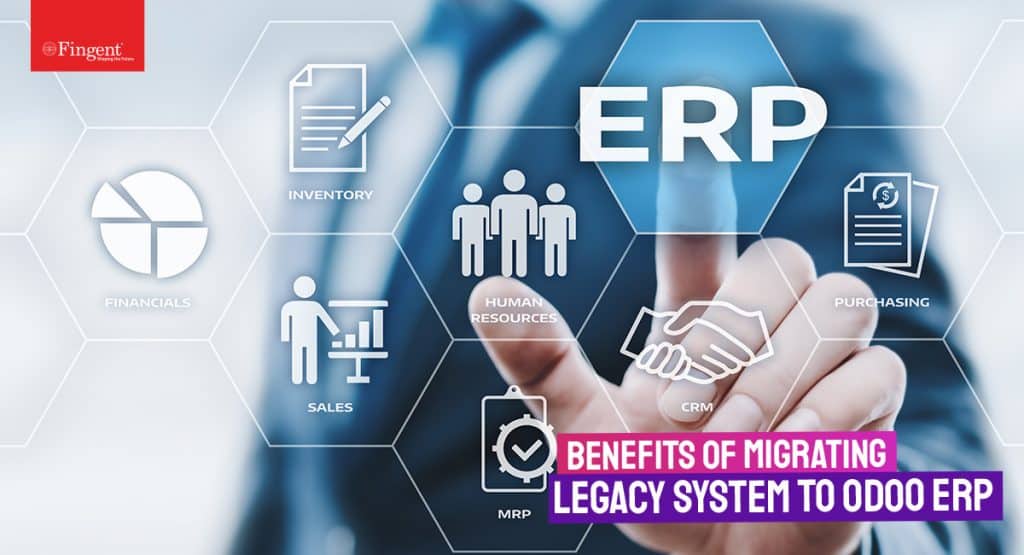
Read more: 4 Ways Legacy Application Migration to Odoo ERP Benefits Your Business!
All About Odoo?
Odoo is a popular open-source ERP that boasts over seven million users. It is a newer ERP software system that is freely available for the management of business processes. Odoo is available in two versions- the Odoo community edition that has limited features and the ability to customize. The other one is the Odoo Enterprise which comes packed with features and customization ability.
Top Features of Odoo are;
- CRM
- Accounting
- Point of Sale (POS)
- Sales Management
- Warehouse Management
- Manufacturing
- Purchase Management
- Project Management
Odoo Pricing
The cost of Odoo depends on the number of users and the apps selected for your business requirements. Also, it is available with SaaS subscription pricing as the Enterprise edition or as the Odoo free Community version. While the Odoo community edition is free of charge, the Odoo Enterprise edition has a license fee.
Who can use Odoo?
Every company, small or big can leverage Odoo as you can choose among its 20 main modules to suit your business needs. It also allows you to add modules as your company and requirements grow. That said, there is no minimum number of users for the cloud base and can be used by both freelancers and solo operators easily.
The main highlight of Odoo is that it does not specialize in any particular industry. So, any company regardless of the industry can use Odoo for their management needs.
Challenges with Odoo ERP Implementation
- You may need to revamp your server and workstation to make sure they are compatible with the Odoo ERP app.
- Another big challenge is that the information formed through the traditional framework may not be compatible with the new Odoo ERP. However, this struggle can be prevented by careful project planning.
- With Odoo, there could be major changes in the business directs, models, and practices. The data entered by a user can be accessed by others in real-time.
- For successful Odoo implementation, you may have to implement new administrative practices and standards or update existing practices.
Which is Better: Sage or Odoo?
As mentioned above, Sage offers an impressive number of products but it is difficult to choose the right one for your needs. Also, as the pricing is quote-based, it becomes difficult to know how much you’ll be paying. That said, Sage is optimized for specific industries such as real estate and construction.
Odoo, on the other hand, is a great option for users looking to personalize the software themselves and want a more hands-on experience.
Read more: Odoo Migration: Why is it crucial and how to do it seamlessly!

Conclusion
Traditional practices are becoming obsolete as newer and more powerful solutions become available. So, selecting an adaptable software solution that can help in the long-term development and growth of your business is crucial.
If you’re looking to find the right ERP for your business or need help with optimization, we’re here to help. We provide the best ERP implementation services to improve your business efficiency. Connect with our experts today!
Stay up to date on what's new
About the Author

Featured Blogs
Stay up to date on
what's new
Talk To Our Experts
In simple terms, EdTech is the practice of leveraging IT tools and technology into the classroom to create an inclusive, more engaging, and personalized learning experience. As per industry research, EdTech is expected to reach $680.1 billion by 2027, growing annually at the rate of 17.9%.
Many EdTech companies are digitizing college and competitive learning. These companies have realized how AR acts as a value-added service and improves engagement. By 2023, Augmented Reality is expected to surpass $5.3 billion opening doors to several opportunities for educational institutions and businesses.
How AR works in education?
AR improves the real-world environment with text, sound effects, graphics, and multimedia. Simply put, it improves our immediate surroundings by layering digital content on top of the graphic representation of the real world. AR includes 25% digital reality and 75% existing reality. It means, AR does not replace your environment with the virtual but it integrates virtual objects into the real world.
Owing to the increased attention span among students and the ability to deliver varied information engagingly, teachers are vouching for the use of AR in classrooms. Going ahead, AR stands to benefit students by inducing a problem-solving attitude, delivering learning gains, providing motivation, improving cognitive skills, enhancing interaction, and enabling collaboration. This results in a positive attitude among students making the investment in AR worth it.
Let’s consider a situation wherein a history lesson, students are being taken through a module on Egypt to understand how the pyramids were built. Digital projections and visualization using AR can have a lasting impact on students that will not only help them learn these concepts but will also help them retain them and avail answers related to them, in their exams. Simply put, AR technology can provide limitless possibilities for students and teachers alike.
Read more: Impact Of Augmented Reality In Education Industry

Benefits of AR in education
Augmented Reality offers several perks in the education sector.
1. Easy access to learning materials
AR helps replace textbooks, physical forms, and printed brochures thereby reducing the cost of learning materials. Augmented Reality makes it easy for everyone to access the material from anywhere.
2. An immersive and effective learning system
Augmented Reality helps students gain knowledge through compelling visuals and immersive content. Additionally, speech technology provides students comprehensive details about a topic in a voice format thereby engaging them. Simply put, AR in education targets a major information-gathering sense in humans.
3. Encourage students and spruce up their interest
AR makes learning interesting, effortless and improves collaboration and capabilities. Additionally, it ensures the classes are less tiring by providing opportunities to implement hands-on learning approaches that can increase engagement, improve the learning experience and help students learn and practice new skills.
4. Memory
Augmented Reality helps bring lessons to life and helps students remember essential details. For example, a teacher can use AR technology to create memorable interactive uses instead of presenting photographs on a projector showcasing life in Colonial America.
5. Cost-effective
While the cost of AR equipment is often cited as a barrier to adoption, most smartphones today are equipped with the hardware needed to run AR apps. AR can lower educational costs by replacing expensive textbooks thereby making them easy to implement.
While AR offers several benefits, some common reasons cited for the slow adoption of the technology in the field of education are;
- Lack of funding
- Bulky AR equipment
- Concerns over AR educational content and its academic value
Read more: E-Learning Taking A New Front: How Can LMS Technology

Use cases of AR in education
Here are the most prominent case uses of AR in the education sector.
- Star Chart is a notable example of AR in education for astronomy students. The app highlights the constellation on the screen when students point their devices at the sky and provides them with a detailed description of the constellation. The app includes information of over 12,000 stars and 88 constellations.
- Complete anatomy is a cross-platform app developed for med students and physicians. The app provides students with over 17,000 human body structures as 3D models. Students can interact with each of them conventionally as well as by projecting body parts on a flat surface.
- The JigSpace app can be a useful AR tool for both education as well as business fields. It helps you create a project demo in a short time. The app allows you to upload 3D models, place them on slides and adjust them according to your needs before presenting them to the audience.
Ways in which AR can be incorporated in the education sector
1. Augmented classrooms
Marker-based AR apps are a popular way of incorporating AR into the conventional classroom. Students can simply scan their textbooks and the app will provide them with illustrations on complicated theoretical explanations. Students can experience first-hand the principles of a subject in a highly fun-filled and interactive way. With AR, the quality of training in critical subjects like science, maths, technology, and engineering could improve vastly.
2. Augmented homework
With AR, teachers can assign students worksheets such that they can explore educational concepts at their own pace and from the comforts of their homes. For example, if the students are unable to crack the answers given in the worksheet, they can simply scan the worksheet with an AR-based app and get pointers towards the right answer.
Dispelling common myths about AR
1. AR is too futuristic
While AR has gained rapid growth in recent years, the term was first coined 25 years ago by Boeing researcher Thomas Caudell. Though many people may not be aware of AR, it is all around us. Interestingly, we don’t need to be technically oriented to experience AR. For instance, say you are watching the live broadcast of a swimming championship. The banners you see with the winners’ names floating on the water surface are nothing but AR.
Simply put, Augmented Reality offers unlimited opportunities and it can be used in many ways to create incredible audience engagement.
2. AR is highly expensive
On the contrary, AR can be cost-efficient compared to other media solutions. Often, in this industry, low price implies low quality especially if it is custom-made. However, in most cases, it could be a one-time investment and the returns can be far higher than what you expect. AR can help achieve a higher level of crowd engagement that is not possible using traditional forms of advertising.
3. AR is difficult to use
Previously, special headsets and programs were required to use AR. However, today, it is not the case. Technology has advanced and users can experience AR by simply pointing their phone’s camera at the source material. They can experience AR with a simple click!
Watch video: Augmented Reality in Education | Transforming Learning Experience
Conclusion
With advances in mobile technologies and hardware, Augmented Reality is becoming a more accessible and widely used technology. As it can be seen, AR has huge potential in the education sector and it is the right time to invest in it.
To get the most out of AR and a comprehensive strategy for your education business, feel free to contact us.
Stay up to date on what's new
About the Author
Venkatesh Alagarsamy
With exceptional expertise in AR, VR, and MR, Venkatesh has worked in the conception, design, development, delivery, and implementation of solutions catering to the needs of industries like Automobile, Oil and Gas, Medical Simulation, Heavy industries, Mining, Archeology, Retail, Soft Skills Development, and Education. Venkatesh has vast experience in developing multiplayer solutions for leading large-scale sectors across the globe. When not working on projects, Venkatesh likes to keep himself updated on the latest technology advancements, because he believes that's what helps him provide top-notch solutions for his customers. Connect with Venkatesh via LinkedIn today, and know more about how your business can benefit from Extended Reality technologies!
Featured Blogs
Stay up to date on
what's new
Talk To Our Experts
The global growth outlook remains uncertain. Companies are forced to operate in an environment characterized by unprecedented technological change and evolving consumer demand. The situation demands decisive action! Companies MUST look for new ways to grow and add value if they are to survive. The obvious solution is old business models must evolve and drive innovation. This is the only way businesses can respond to unexpected risks and opportunities. Sustainability plays a vital role here.
Sustainability can reduce the environmental footprint and deliver significant cost savings through cost avoidance. It can offer new growth opportunities and can build brand equity by creating emotional connections and making consumers feel good about embracing sustainable brands. Let’s get right into it and discuss more how you can drive innovation and business success through sustainability.
Let us first understand what innovation really is.
What is Innovation?
According to Merriam-Webster, innovation is “the introduction of something new.” This includes products and services. However, it also includes improvements in business processes or business models.
But sustainable innovation goes a step further. It is boosted and driven by concern for resources and the environment. It involves using concepts and products that were developed as a result of environmentally-aware designs and practices.
Businesses that have integrated sustainability into their innovation processes have framed their discussions around growth and returns. This helped businesses add measurable value for all stakeholders. Proper planning can help industries develop insights for the future. Such planning can guide their sustainability strategy as they develop sustainable innovation goals.
Read more: Prepare for the Future of Digital Innovation with these 10 Services From Fingent
Why Choose Sustainability-Driven Innovation?
Sustainable innovation results in better business models, newer market segments, improved processes, and so on. It caters to consumer demand for greater sustainability.
As a result, businesses can achieve greater economic performance. On the other hand, it also results in a cleaner, healthier, and more stable world – one that propels economic growth! Here are three core reasons why you must choose sustainable innovation over traditional innovation.
1. Contributes to sustainable businesses
Sustainable innovation meets the needs of the current generation without compromising the needs of the future generation. Businesses must actively incorporate issues such as climate change into their innovation processes.
Companies that go beyond seeking immediate profits think long-term. Such companies invest in technologies and people for the future. Compared to their non-sustainable competitors, companies that rely on sustainable innovation bring in better people with personal ethics and thus contribute to sustainable business.
2. Better innovation and more innovation
Sustainability-oriented businesses produce more patents and more impactful patents. These companies think more broadly and learn from different perspectives welcoming insights and solutions from others. This leads to better innovation and more innovation.
3. More resilient
During these turbulent times, it is critical for businesses to remain resilient. Firms that are sustainability-oriented are more likely to experience less share price volatility. They tend to generate more revenues in the long run and thus survive through any crises compared to their competitors.
Read more: Custom Software Solutions: Ideal Way to Build Business Apps
How To Develop A Sustainability Strategy
Sustainability can be a game-changer. It can drive innovation that shapes how key resources are used in products and services. Focusing on reducing waste or finding substitutes can be a powerful driver for sustainable innovative products and operating models.
Companies that combine environmental, societal, and financial priorities to re-imagine their core business models and stay ahead of the competition. A structured innovative strategy reinforces business advantage and the environmental and societal benefits. Here is a four-step strategy that can drive innovation and business success.
Step 1: Endeavor to understand the broader stakeholder ecosystem
Environmental and societal issues and trends might affect the stakeholder ecosystem. So, explore the potential impacts of ecosystem dynamics. This will help you identify a range of business vulnerabilities and opportunities. These can be excellent starting points to develop a sustainable strategy.
Next, explore scaling up the business. Consider where breaking points arise and how risks and opportunities change.
Step 2: Innovate and develop new aspects
Once you identify opportunity spaces, you can now innovate and develop new aspects.
- Change the production inputs
- Create impact by influencing the product usage cycle from cradle to grave
- Increase the environmental and societal value of your products and services
- Expand the value chain
- Shorten and reconfigure the global value chain to enable accurate and secure data tracking
- Encode, endorse, and monetize the full environmental and societal value of products and services
Step 3: Test, iterate and refine
A business with weak profit margins cannot invest in sustainable innovation to amplify environmental and societal benefits. Continue to assess and re-engineer your business model to improve resilience.
Step 4: Scale the initiative by engaging people in the company and its ecosystems to expand impact and advantage
This can be achieved by leveraging three enablers:
- Partnership with other organizations within or across the sectors
- Digital technology can be leveraged to reach previously unserved or underserved populations
- Develop cultures and leadership values that attract and engage people inside and outside your boundaries
- Keep in mind the future landscape
This four-step sustainability strategy offers companies a way to systematically integrate the social and business value in your business. This strategy will help you take on innovation for both business and social value.
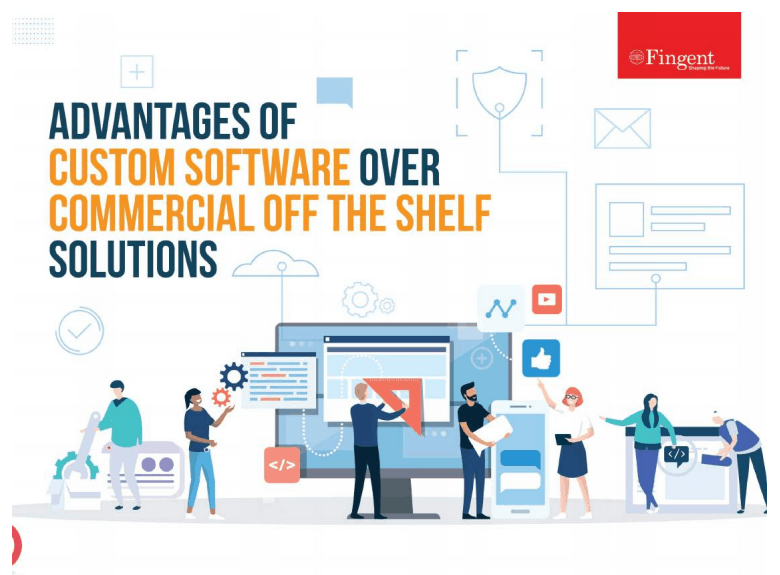
View infographic: What are the advantages of custom software over commercial off-the-shelf solutions?
3 Ps
It is a mistake to look at sustainable innovation as a short-term endeavor. Industry leaders must help their organization develop an effective and reliable strategy for sustainable innovation. The three Ps you will need to know to enable this are as follows:
- Purpose: Have a purpose that goes beyond profit maximization. Such a purpose will guide the sustainable innovation process to success. Industry leaders must weave sustainability into the organization’s DNA. This is only possible when they encourage and nurture out-of-the-box thinking where sustainability becomes an integral part of the business.
- Process: A successful innovation planning process must include specific sustainability requirements and performance targets. Sustainable innovation must be central to the innovation cycle, not just an additional step. Make sure you integrate sustainability into innovation planning.
- Partnership: Build strong external networks. This will bring in fresh innovative ideas. Working collaboratively with your partners can help accelerate existing projects or even kick-start fresh ones.
Fingent, a leading custom software development company, understands that innovation through sustainability is a lasting megatrend. If you’re wondering where to start and how technology can assist you, reach out to us.
Stay up to date on what's new
About the Author

Featured Blogs
Stay up to date on
what's new
Talk To Our Experts
As digitalization is gaining a lot of significance, many enterprises are turning to emerging technologies such as Robotic Process Automation(RPA) to streamline their operations and reduce costs. RPA automates mundane processes allowing organizations to devote more time to serving customers or other important work.
According to Gartner, Inc. , Global RPA software is projected to reach $1.89 billion in 2021, an increase of 19.5% from 2020. Despite the COVID-19 pandemic, the RPA market is estimated to grow two times by 2024.
Read more: How to accelerate your business growth with Robotic Process Automation

What is RPA?
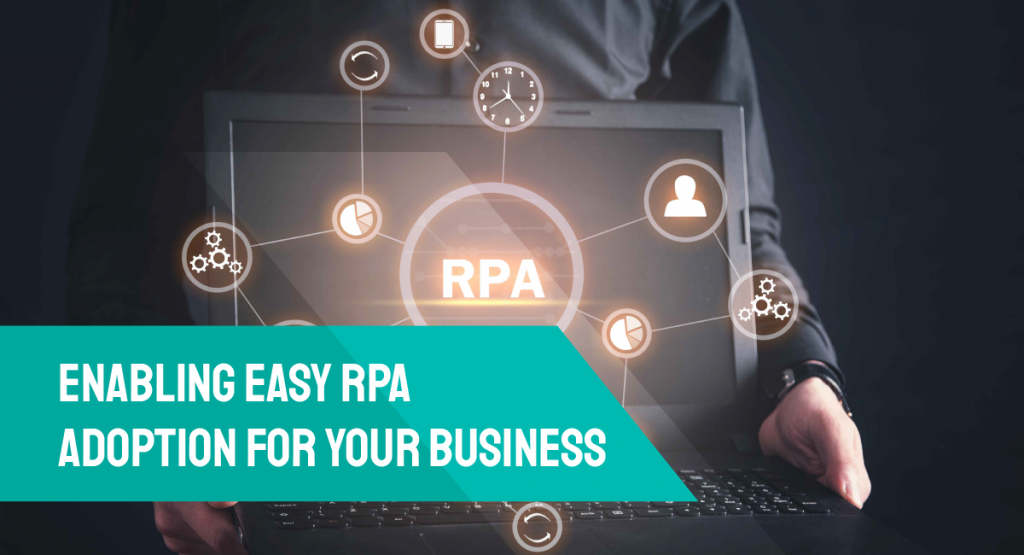
In simple terms, RPA is an application in which a software bot leverages a combination of automation, computer vision, and machine learning technologies to automate repetitive and high-volume tasks.
RPA solutions are best suited for processes that are labor-intensive, repetitive, and have predictable interactions with IT applications. Typically, these processes may be too small in value to be automated via IT transformation. RPA tools help improve the efficiency and effectiveness of such processes without changing the existing infrastructure.
RPA software bots can perform various business processes by mimicking how humans interact with applications through a user interface and simple rules to make decisions. As a result, robots can complete the entire end-to-end process with very little human interaction.
Benefits of RPA include;
- Improved accuracy
- Flexibility and scalability
- Speeds up the processing time
- Better employee morale
- Reduces manual and repetitive tasks
- Enables better customer care
- As per Forrester, projects see a 15-month payback, 229% ROI on average
Key business challenges RPA helps address are;
- Login automatically into a system as a user
- Helps navigate around the software, using menus and shortcut keys just like a human moving the mouse or typing on the keyboard
- Interpret labels to read values from the screen. If the screen content or web page is dynamic, RPA can help find the right value on the screen.
- Read values and data from PDF reports automatically and add them to data tables.
- Inputs values into a capture screen automatically by mimicking the user’s actions. However, it can process it several times over with different values for each pass.
- Read emails and messages to understand the information they contain. For example, is the sender placing an order, making a booking, looking for information, or sending an invoice? Based on the intent, RPA will trigger the process with the message.
- Help trigger a process in a system by logging in as a user and clicking buttons.
- Collate different pieces of information and identify the next best action in the process.
Read more: How Can Businesses Overcome The Barriers To RPA Adoption?
Who is using RPA?
RPA can be leveraged by any business, especially if it involves repetitive tasks such as banking, healthcare, finance, insurance, and telecommunications. For example, RPA can be used in finance to automate governance, reconcile accounts, or process invoices. Additionally, RPA can help automate processes such as data entry, predictive maintenance, and after-sales service support in the supply chain.
Telecommunication companies utilize RPA solutions to organize new services and all the related billing systems for new accounts. RPA also helps these companies pull data from multiple systems when old equipment outages or predicts problems.
Regardless of the industry, RPA benefits the larger organizations and small and mid-size companies with its ability to streamline business processes and improve efficiency.
Should you invest in RPA?
The pandemic has caused a sudden surge in RPA as businesses are turning to cost-effective solutions to fill the workforce gap due to a shortage of employees. But again, if there is a lack of data or the process is obsolete, opting for RPA may not be a wise decision.
With the RPA market evolving, it is becoming affordable for even small and mid-size businesses who want to stay ahead of their competitors. According to the Grand View Research report, in 2019, the large enterprise segment accounted for over 67% of the global RPA while the BFSI led the market in terms of application with over 29% share of the global revenue. However, from 2020-2027, it is estimated that SMEs will witness the highest CAGR, with the pharma and healthcare sectors leading the way application-wise.
While RPA can fill the gaps in the current system and benefit the organization as a whole, companies that have large volumes of data and time-consuming business processes with well-defined rule-based steps are ideal candidates for RPA implementation.
Once the decision-makers finalize the processes that need automation, assessing ROI for individual processes is essential to quantify the benefits. A successful deployment takes one-two month, and the ROI is approximately three-twelve months.
Read more: An Extensive Whitepaper on How RPA Can Bring a Difference to Your Business
Things to consider before implementing RPA
1. Third-party integration
You will have to redesign the existing Robotic Process Automation processes and ensure they are compliant with third-party tools. It improves the scope of what RPA can achieve for a business process. For example, ERP and CRM integration is something that you must consider.
2. Cost-effective
For RPA to become a cost-effective solution, an organization needs to know which tasks are suitable for automation. Ideally, mundane and repetitive labor-intensive tasks need to be automated to impact a direct bearing on the costs of the RPA deployed. As bots work more efficiently than humans, it results in better productivity, fewer errors, and cost less. All this impacts productivity in a significant way making RPA a worthy investment.
3. Training time
For a smooth roll-out of implementing the RPA system, organizations will have to set aside time to train their employees. Therefore, you will have to be certain about the time required, especially if you plan to implement RPA across functions.
4. Deployment speed
Typically, the speed at which an organization deploys an RPA software depends on how soon it wants to reap its benefits. While some businesses cannot wait to take advantage of the RPA system, others are skeptical about their roll-out plans. In most cases, businesses that wish to implement an RPA system adapt to save costs as quickly as possible.
How can Fingent help?
If you’re looking to improve profitability, productivity, and compliance with Robotic Process Automation, contact our experts today. Our custom software development experts will not just help you strategize an automation process but also get the most out of your investment by identifying the best time to introduce RPA into your business.
Stay up to date on what's new
About the Author
Featured Blogs
Stay up to date on
what's new
Talk To Our Experts
The impact of the pandemic on consumers across the globe has dramatically changed their demands, needs, and behavior. Many of these changes have critical implications for businesses in most sectors. To succeed in the next normal, businesses must respond proactively.
COVID-19 jolted consumer demand in a way that sets it apart from past disruptions. As a result, customer loyalty took a hard hit. Executing the four Ps of marketing (optimization of product, price, place, and promotion) became more complex than ever. Businesses must redouble and broaden their efforts toward meeting ever-changing customer demands and behavior.
As with everything else, it is important for an organization to know and understand its customers. If your company is at crossroads with today’s Ecommerce customers’ needs, this article will help you understand how technology can help satisfy these uprising demands quickly and effectively. So then, let’s first understand how customer behavior, needs, and demands change.
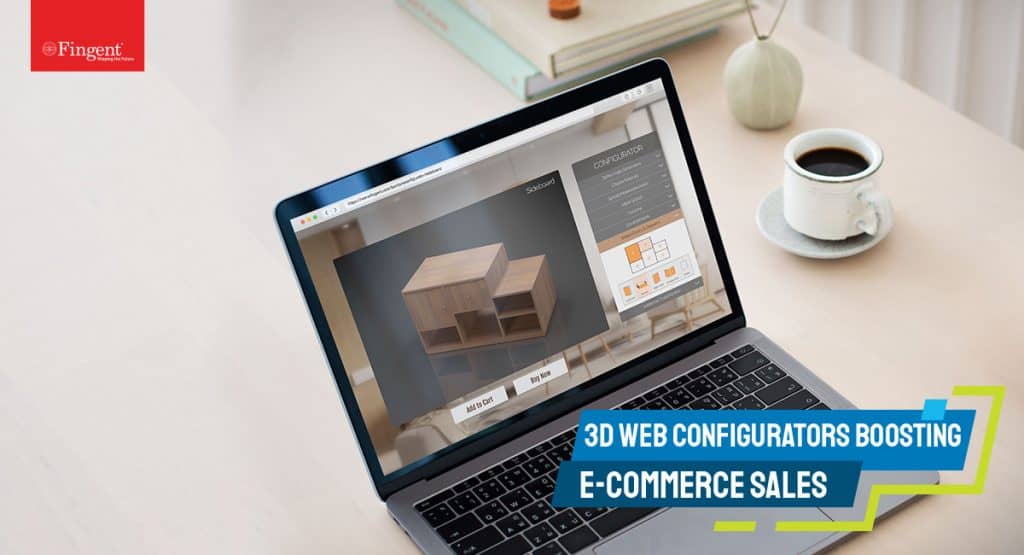
Read more: What are 3D Web Configurators? How do they Boost Ecommerce Sales and Drive Customer Satisfaction?
Ecommerce Customers’ Behavior, Demands, and Needs
Customers are like the moving targets. The key to success is to understand their behavior trends and use technology to help satisfy these uprising needs and demands. Linnworks research pointed to five such trends:
- Convenience is the need of the hour: 76% of consumers feel that convenience is the top priority in choosing a retailer. 90% of shoppers focus on using a trouble-free online store.
- The frictionless shopping experience is most valued: It was noted that 58% of consumers abandoned an online store altogether because they were difficult to use.
- Omnichannel shopping is gaining traction: One in three consumers has purchased an item while on social media. 71% of consumers prefer to complete a purchase on a social site without having to exit to the retailer’s site.
- Consumers demand flexible payment options: Four in five shoppers expect the “buy now, pay later” payment option.
- Delivery convenience: 95% of consumers say that fast and reliable delivery methods play a crucial role in their decision-making.
How Can Technology Help Satisfy these Uprising Needs and Demands of Today’s Consumers?
1. Allow your consumers to experience products before they buy
The biggest roadblock facing Ecommerce businesses has been the inability of consumers to experience products before they buy. Everyone likes to try on clothes they like to buy or see how is their new couch looks in their living room.
This is where AR (Augmented Reality) can help your business. AR can help your consumers try on clothes or closely inspect the components of a mobile device. AR market is expected to reach 2.54 billion by 2023. Online retailers who fail to take full advantage of this technology may likely experience business disruption.
2. Bring your product to life with virtual shopping
Virtual reality shopping can bring your products to life. It helps your customers to have an in-store-like experience, without actually being there. VR technology allows you to tag products so your customers can purchase on the spot. It can instantly connect buyers with customer service executives.
VR can make product recommendations based on customer metrics. It can also cater to both desktop and mobile users. Thus, it provides a better customer experience attracting more customers to your online store.
3. Be omnichannel ready
Todays’ Ecommerce customers like to cross-channel research and purchase. So, they expect smooth interactions across these channels and devices. Technology can help you to provide your customers with what they want, when they want it, and where they want it to. Some of these technologies include video chat, screen sharing, document interaction, e-signature, and more.
Co-browsing is an effective visual engagement system. It can bring your sales executives and customers together on the same page, at the same time. This allows your executive to guide your customers through the complex procedures making their customer journey as smooth as it can be.
Read more: Custom Retail Software Solutions: Everything You Need to Know!

4. Enhance customer communication with chatbots and AI
Artificial Intelligence has a major impact on how we live and work. Voice shopping is expected to jump to $40 billion by 2022, rising from $2 billion today. And 45% of millennials have already been shopping using voice assistants.
Chatbots and AI improve customer experience and boost brand image. These chatbots can be personalized to order food, get recommendations for almost anything, receive details regarding payment or order status, and more.
5. Hassle-free checkout process
Inefficient checkout processes can raise the chances of cart abandonment. However, this problem can be avoided by embracing technology that provides quick and efficient checkout solutions.
Technology enables speedy mobile payment solutions, allows your customers to save card details for repeat purchases. Above all, it proves one-page hassle-free checkouts and offers a range of payment options. All these can alleviate any potential difficulties your customers may face at checkout.
6. Enable m-commerce to enhance Ecommerce
Today many shoppers shop on the go. Hence, mobile platforms have gained greater importance. So much so that m-commerce is emerging as a concept. Given that, providing a mobile-oriented shopping experience will certainly help you win potential customers, maximizing your chances of future success.
Ecommerce mobile apps offer continuous engagement with your brand. It can help them familiarize with new and relevant purchasing opportunities. These apps also allow you to market products relevant to the specific geographical location of your customers.
Read more: 5 Reasons to Integrate Your E-commerce Application with Odoo ERP
How Can Fingent Help Deploy These Evolving Technologies For Ecommerce Businesses?
It is one thing to understand your consumer behavior but another thing entirely to implement technology to satisfy their demands and needs. Fingent is here to help you implement these technologies efficiently. We can help you move the needle and dominate your niche in the Ecommerce industry.
Fingent top software development company, can help you implement those that make sense and put the rest on the back burner. We can aid in the success of your Ecommerce venture by implementing cutting-edge technologies. Our development experts will help you promote your products in new and innovative ways.
Choosing Fingent can help you save a lot of time and money and avoid unnecessary complexity as we can provide all the needed components. Our platforms are easy to manage yet robust enough to house thousands of products. We can handle unique order processes and payment terms for your Ecommerce sales. Let’s get talking.
Stay up to date on what's new
About the Author
Featured Blogs
Stay up to date on
what's new
Talk To Our Experts
Low code/No code is becoming a fierce upcoming contender in today’s digital landscape. For one, its unique capabilities enable collaboration between business stakeholders and IT teams. And it allows for an unprecedented speed of innovation.
Before the pandemic, companies looked to a Low code/No code platform for its unique benefits. Today though, the COVID-19 pandemic has amplified the importance of low code in remote development.
This article will explain what is Low code/No code development with SAP BTP, and will also discuss how it is changing the future of enterprise resilience.
Read more: Rise with SAP – How Fingent Can Help Explore Business Transformation as a Service (BTaaS)

What is Low Code/No Code Development with SAP BTP
Studies confirm the that market landscape for Low code/No code development technologies will remain on a strong trajectory into the future. We can be confident that more organizations will turn to low code platforms to support innovation and digital transformation.
Low code/No code is a software development approach. It enables the delivery of applications faster with little or no coding. Low code/No code platforms are a collection of tools. They enable the visual development of applications via modeling and graphical interface instead of extensive coding languages.
The term “Low code/No code” is a modern alternative for RAD tools (Rapid Application Development). Today, Low code/No code is especially advantageous for enterprises that are looking for ways to streamline all organizational operations such as procurement, production scheduling, customer data, and order processing without the complication of hand-coding.
These tools empower developers to speed up the process of getting an application to production. All without hand coding! These platforms are a fast and easy alternative to traditional software development. Both professional and non-professional developers (citizen developers) can use Low code/No code platforms to develop apps of varying complexities.
Low code/No code development with SAP BTP (Business Technology Platform) empowers non-IT professionals to develop and launch apps with little or no input from IT. This reduces the IT talent gap. It enables transformation in the development and expansion of organizational capabilities.
Low code/No code platforms are built on Platform-as-a-Service cloud environments. This means it employs visual programming interfaces to solve business problems faster. The best part of it is that it does not require deep technical knowledge as it has a simple drag and drop interface.
However, Low code/No code is not just about the user interface. SAP considered this fact while shaping a part of the SAP BTP strategy. Developers and business experts are no longer limited as they are now empowered with integrated Low code/No code automation tools such as SAP Intelligent Robotic Process Automation SAP Business Application studio and more. These tools enable developers to build Intelligent Enterprises.
Read more: A Complete Guide On Software Product Development Stages And Life Cycle
How Low Code/No Code Is Turning The Future Of Enterprise Resilience
The COVID-19 pandemic has propelled the adoption of digital technologies. The goal of these technologies is to allocate human resources wisely to empower the end-user. Low code/No code is faster and more efficient. It frees up professional developers’ or citizen developers’ time for more complex activities.
Most importantly, Low code/No code builds systemic resiliency and responsiveness into the daily functioning of an enterprise. As enterprises aim to become more future-proof, they see Low code/No code as an immediate and effective opportunity.
According to Gartner’s prediction, by the end of 2025, half of all new Low code clients will come from business buyers that are outside IT organizations. Commenting on pricing, Mr. Biscotti said, “Low code capabilities that support remote work function, such as digital forms and workflow automation, will be offered with more elastic pricing since they will be required to keep the lights running.” Given the benefits and the affordability, the Low code/No code market will see commensurate growth.
How does SAP’s Low code development become the future of enterprise resilience? Please consider the following:
1. SAP offers the necessary sophistication to address complex business processes
SAP users often manage processes that involve a large number of applications linked to a single business process. Plus, a business may need an app that can handle complex tasks such as creating work orders offline for field crews. Low code/No code with SAP gives developers the ability to extend their functionality and solve any business problems.
2. Helps in streamlining work and allow employees to work more efficiently
Low code/No code development with SAP is much easier. Hence, it allows developers to manage repetitive tasks and focus on complex activities. Also, it enables them to focus on best practices across their organization to optimize processes and innovate. Thus, it streamlines work, allowing employees to work more efficiently regardless of their location.
3. SAP Low code reduces technical debt
Most organizations that are adopting digital transformation are discovering that they have large amounts of technical debt. This stands in the way of modernization and optimal user experience. Unfortunately, in some cases, the cost of legacy code exceeds its value-creating a debt.
On the other hand, Low code/No code platforms are designed to avoid technical debt. SAP Low code platform enables your team to discover customizations, estimate the cost of modernizing them and then transform them into custom objects on the Low code/No code platform. Furthermore, the right Low code/No code platform will make it simpler to maintain and simplify future upgrades and migrations.
Read more: Answering the Critical Questions Asked by Business Leaders Today on Digital Transformation!
4. SAP Low code can help your business scale
One of the most important aspects of resilience is the ability to scale as needed. While it is true that hand-coding development will lock in and not allow your business to scale, it isn’t so with SAP Low code.
Because Low code/No code development solutions use open-source standards, they allow you to export your raw source code and adapt it as required. Additionally, cloud-based platforms provide virtually unlimited scalability.
Look To A Resilient Future With Low Code/No Code
SAP BTP is in a unique position to assist many organizations to implement digital transformation. It can help businesses achieve significant productivity gains and improve forecast planning. Looking to the future, the digital landscape is changing.
Enterprises must continue to evolve on their mission for greater speed and agility. SAP Low code/No code platform creates a unified, business-centric, open platform for an Intelligent Enterprise. You can count on SAP for future-proofed resilience. As an SAP Silver partner, Fingent top custom software development company is uniquely positioned to open up all the benefits of its features in a way that is tailored for your business. Give us a call and let’s get talking.
Stay up to date on what's new
About the Author
Featured Blogs
Stay up to date on
what's new
Talk To Our Experts
According to a study by Autism Speak and the CDC, 1 in 59 children in the U.S has autism. While children and adults with autism have verbal, behavioral, and social skills challenges, they also have unique identities and preferences like anyone else. Some people with autism who are minimally verbal or non-verbal use iPad and voice apps to speak for them. Also, they use iPads as an educational tool every day. Tech like the iPad has led both parents and the autism support team to embrace virtual reality. Today, more and more counselors, therapists, teachers, and parents are leveraging Virtual Reality as a therapy tool to help autistic people to communicate and connect with the world around them better. For example, the Center for BrainHealth and the Child Study Center at Yale University’s School of Medicine used VR to help young adults with autism achieve economic and social independence.
Additionally, the technology is helping non-autistic people clear some misconceptions about autism and understand the reality of living with the condition.
While VR has been gaining attention recently, it was used for therapy as early as 1996. The studies in the 90s were promising, but VR was expensive, and headsets were bulky and uncomfortable, which was a major hurdle for people with sensory disorders. All these issues prevented VR therapies from becoming a viable option for people with autism.
Today, VR technology is not just cheap and accessible. The VR headsets are lighter and more comfortable too. So, researchers are studying the potential of Virtual Reality as a treatment tool for autism more than ever before.
Read more: How Virtual Reality Improves the Standards of Medical Education and Training

Uses of VR in Autism Care
1. VR Apps
At the University of Haifa, researchers have created a VR app that trains kids to cross a road safely. This app simulates what it would be like to cross the road with cars and traffic lights. The interesting part of the app is that it allows kids to practice crossing the street without the real-world consequence of being hit by a car. Kids can practice each step as long they need and reduce the risk while learning a new skill.
Floreo is a VR learning and social skills app that therapists, parents, schools can use and support staff to help kids with autism. This app helps children learn social skills like reciprocity and planning for unexpected situations through social stories. It also helps them detach emotionally with interactive virtual sensory tools. The app can be installed on a smartphone or tablet with a Google Cardboard headset. It comes with a good data capture system making it easier to track individual goals.
2. VR Games
Teachers recommend that parents play games with autistic kids to help them learn to mimic skills like sharing and back and forth communication. Generally, autistic people can find it difficult to make eye contact or have a two-way conversation between people. This struggle can unintentionally push others away. VR games such as Playground, Astropolis, and non-VR software such as SketchUp use the VR motivator as both play and learning opportunities.
- Astropolis puts players in a spaceship to fly, using resources to ensure space colonies are happy and functioning. Players can collect and manage the resources and defend the colony as well.
- Maritime Defender is yet another mini-game they can practice letting pilots through a wormhole or not allowing them to pass through. This helps with decision-making and control-based skills.
- Stellar Prospector and Starjack improve perception and thinking, and autistic people are encouraged to play this game.
- Sketchup, a 3D architectural and designing software, helps draft objects and structures. It gives autistic kids and adults a creative outlet not found in any school setting.
Other VR games such as Vivecraft, Tilt Brush, and Medium also help build things in 3-D and 360-degrees without the real-world challenges like running out of supplies or messing up, or having to start fresh. These games do not get autistic people direct jobs in coding, architecture, art, and design, but ignite their passion and encourage them to pursue a career in those fields.
3. Tackling Phobias
Virtual reality can tackle phobias in autistic kids, such as fear of classrooms, balloons, animals, and public transport. Cognitive Behavioural Therapy(CBT), along with visualization and imagination, can combat the effects of these phobias.
Using VR, participants enter a “Blue Room” and navigate through a 360-degrees video projection of a scene usually accompanied by audio that replicates the object or experience they fear. Here the participants do not have to wear goggles as the therapist manipulates the scene using iPad controls. Also, the therapist uses CBT techniques to calm the participants when exposed to their phobias.
Read more: Top AR & VR Trends to Transform Ecommerce in 2022!

Conclusion
The VR technology enables therapists, medical professionals, and parents to leverage it to help people with autism learn differently and improve their communication skills.
At Fingent top custom software development company, we have the expertise to create apps, games, and software that can help autistic people connect and communicate with people around them. For more information, reach out to our team.
Stay up to date on what's new
About the Author
Venkatesh Alagarsamy
With exceptional expertise in AR, VR, and MR, Venkatesh has worked in the conception, design, development, delivery, and implementation of solutions catering to the needs of industries like Automobile, Oil and Gas, Medical Simulation, Heavy industries, Mining, Archeology, Retail, Soft Skills Development, and Education. Venkatesh has vast experience in developing multiplayer solutions for leading large-scale sectors across the globe. When not working on projects, Venkatesh likes to keep himself updated on the latest technology advancements, because he believes that's what helps him provide top-notch solutions for his customers. Connect with Venkatesh via LinkedIn today, and know more about how your business can benefit from Extended Reality technologies!
Featured Blogs
Stay up to date on
what's new