Category: Technology
SAP Analytics Cloud: 7 proven ways it can help your business
From manufacturing to marketing, businesses worldwide face unforeseen challenges as they continue to meet the impact of the COVID-19 pandemic. Many organizations are accelerating digital transformation, establishing variable cost structures, and implementing agile operations to emerge from the pandemic stronger.
While most companies believe that the pandemic will negatively impact their business, some businesses feel that the consequences will be short-term. Although most firms have been affected by the pandemic, a survey shows that two-thirds of micro firms are severely affected by the crisis than 42% of the large companies.
Amidst this uncertainty, companies must consider how the pandemic’s continuation or return in different regions will impact their recovery strategies. Businesses must face this uncertainty by reassessing assumptions, re-evaluating scenarios, and strengthening their ability to respond.
Read more: 11 Practices Followed by Leaders to Build Resilience and Ensure Rapid Business Recovery

Simply put, now is the time for businesses to focus on supporting critical areas of their business that will help them stay relevant in the new environment and plan new strategies for what’s next.
Critical areas for businesses to focus presently
- Workforce
- Finances
- Operations and supply chain
- Strategy and branding
- Tax, trade, and regulatory
- Crisis management and response
What can businesses do?
- Leverage their crisis management team to focus on efforts in the wake of the crisis.
- Shift your focus on bringing back employees to work, assess your company’s response efforts to date, and evaluate areas for real-time course corrections.
- Use the insights the crisis has provided to help chalk out better strategies and capitalize on the opportunity for transformation.
SAP Analytics Cloud has changed the way businesses plan their strategies. It is a robust, agile analytics platform that helps firms arrive at faster and improved business decisions. Moreover, it delivers insights that can be used for enhanced decision-making and optimize resources across all processes.
Read more: How SAP Supports Effective Business Continuity Planning
Combining our functional and industry expertise with SAP Analytics Cloud, Fingent top custom software development company, delivers analytics solutions that drive your competitive advantage, reduce costs, and increase revenue.
What is SAP Analytics Cloud?
SAP Analytics Cloud or SAC is one of the best SaaS solutions that combines all the functionalities such as planning, predictive, business intelligence, and more in one user interface. It helps save time and effort while making improved decisions.
SAP Analytics Cloud comes in two modes: Private and Public. As the name suggests, the Private edition hosts only one customer while the Public edition offers multi-tenancy. Also, cost-wise, the public edition is less expensive than the private edition.
Also read: Fingent offers e-Invoicing integration for SAP ERP users in India – Stay compliant with GST India e-Invoicing

Top 7 business challenges solved by SAP Analytics Cloud
1. Planning and consolidating financial strategy in one solution
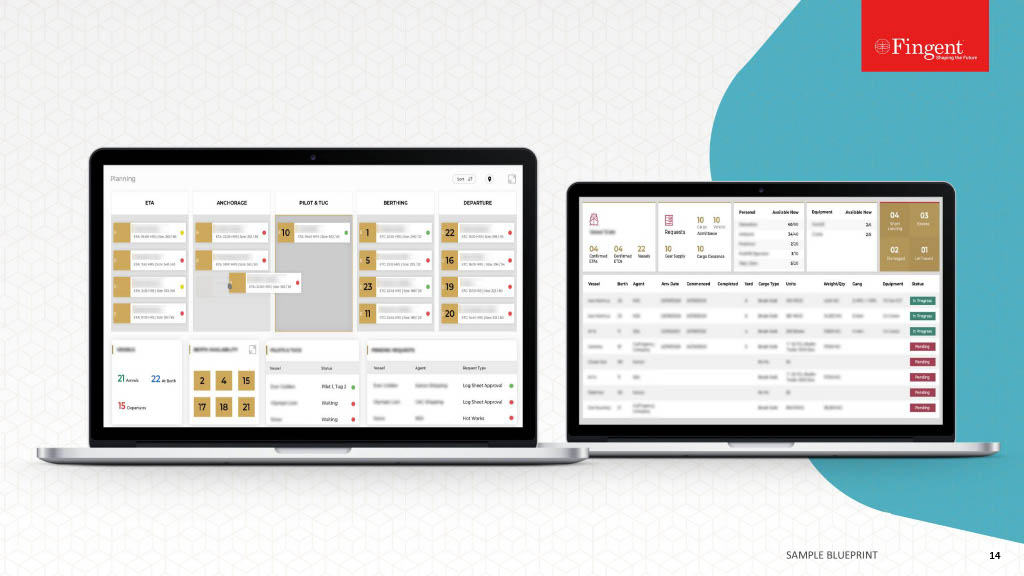
SAP Analytics Cloud puts together- planning, predictive, Business Intelligence, and augmented analytics competencies into a simple cloud environment that allows you to consolidate your finances, expenses, and revenues at a single source across your whole organization.
2. Discovering useful insights
SAP Analytics Cloud joins hands with machine learning and augmented analytics to help convert insights that deliver value across your business.
Augmented Analytics allows you to explore your data automatically, discover cycles and trends, and identify possible ways to effectively chalk-out your expenses and cost plans. These intelligent insights can be turned into an actionable plan using a personal sandbox environment that helps visualize your performance metrics and simulate potential budget outcomes.
3. Aligning plans across your business
There’s no denying that financial and operational planning is a must when working with multiple teams and stakeholders. SAP Analytics Cloud helps you make smart decisions. It comprises several collaborative enterprise planning tools that allow you to link and align your expense and cost plans across departments such as HR, sales, finance, marketing, IT, and supply chain in real-time. These benefits eliminate the need for sending out unnecessary emails enclosed with irrelevant plans and avoid collaborating without context.
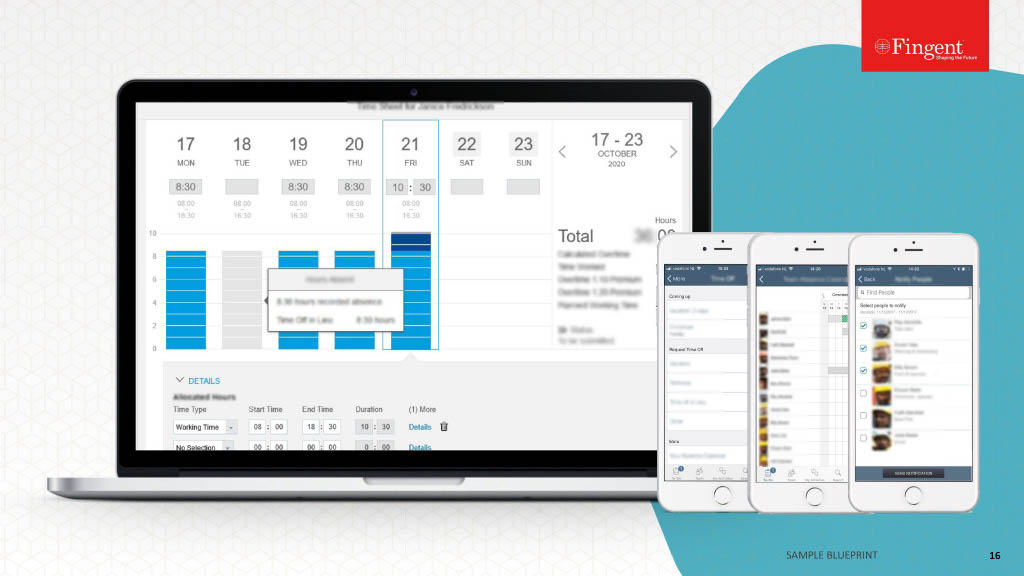
SAP Analytics Cloud allows you to create and assign tasks with the calendar, communicate with your team in real-time with the discussion panel, and collaborate directly on your plans with the data point commenting tool.
4. Improving planning cycles with predictive analysis
Gone are the days of the tedious manual building of your expense forecasts. SAP Analytics Cloud includes exceptional machine learning and predictive analysis technology that can help you build accurate expenses and cost plans much faster.
You can use the predictive features to automate baseline expense planning forecasts based on previous data. You can then monitor plan attainment with real-time, up-to-date predictive forecasts. Its accuracy indicators enable data analysts (without any technical knowledge) to trust the data-driven predictions before including them into their planning process directly.
5. Enhancing strategic business decisions
With SAP Analytics Cloud machine learning technology, you can convert insight into action within seconds. Automated technology helps you avoid agenda-driven and biased decision-making as it provides you with insights that drive your business.
- Search to Insight – Natural language query generates visualizations to answer your questions instantly. Machine learning technology provides you with important trends quickly.
- Smart Insights – Machine learning technology helps you save time and focus more on high-value activities by allowing you to understand the significant contributors of data points without the need to pivot your data manually.
- Smart Discovery – This allows you to identify key influencers and relationships in your data to help you understand how business factors influence performance. Also, it can detect anomalies and help you take corrective measures. With machine learning projection, anyone can simulate the impact of strategic business decisions.
Case study: Automated Integration between SAP SuccessFactors-Employee Central and SAP S/4HANA – Find how Fingent helped the customer gain real-time insights for improved decision-making

6. Data modeling
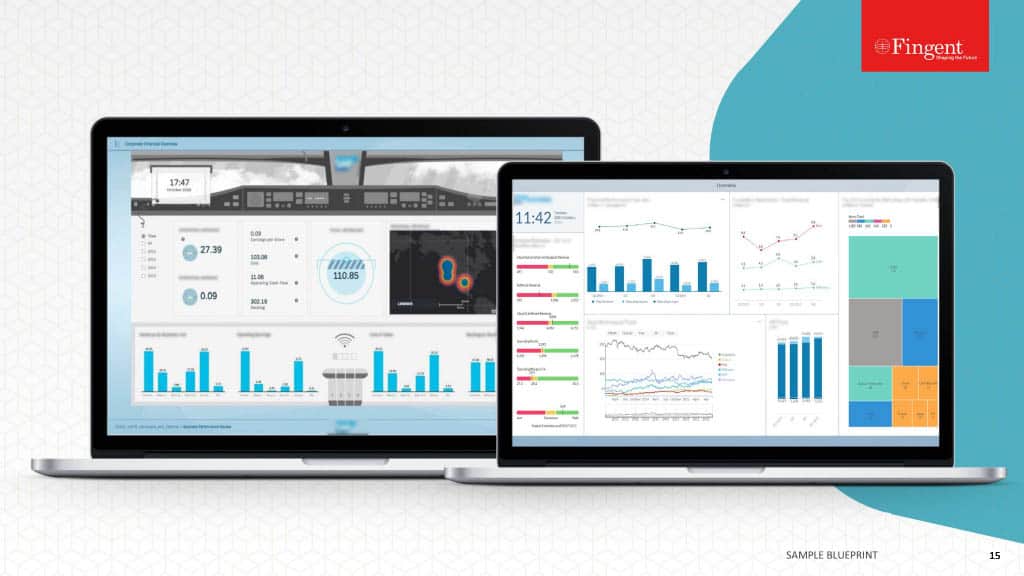
SAP Analytics Cloud helps you plan and build the right model where your data is stored efficiently. With this end-to-end solution, you can immediately take action and start planning. The data modeling feature allows you to prepare your data for analysis. “Models” and “Stories” are the two key components of SAP Analytics Cloud’s BI function. Models allow you to enhance your data by cleansing, wrangling, establishing hierarchies, defining rules and conditions, and adding formulas. Stories give life to your data by letting you visualize your information through charts and graphs, which will help you gain valuable business insights.
7. End-to-end industry dashboards
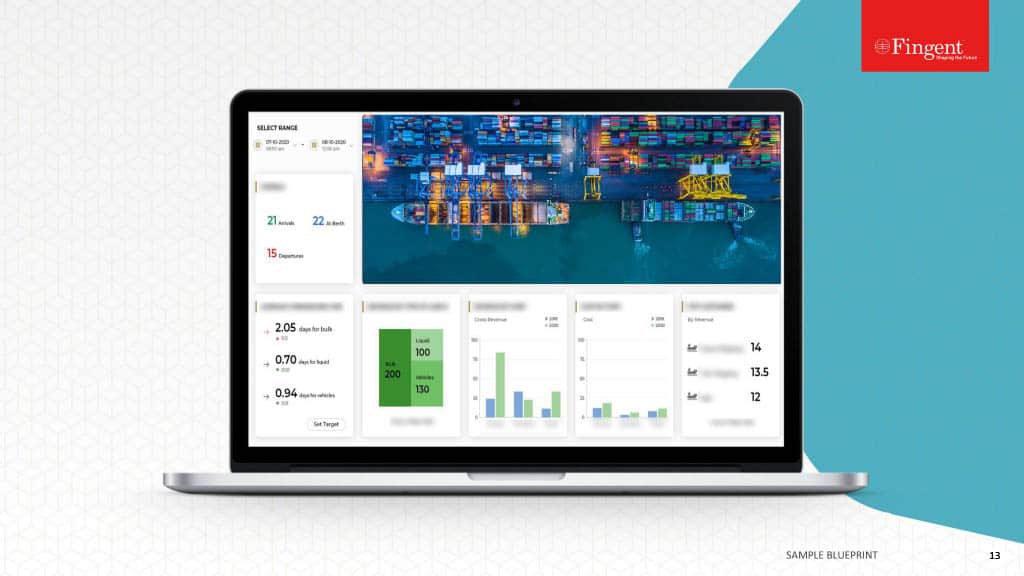
SAP Analytics Cloud offers business content packages tailored to individual analytic scenarios. Each package entails aesthetically built dashboards, stories, and data models carefully designed for specific lines of business and end-to-end business scenarios. Also known as Analytics Content Network, this business content library offers tried and tested best practices for leveraging your available data and accelerating your go-live. The content network is customized to work with existing SAP data sources such as SAP S/4HANA or SAP C/4HANA.
Read more: SAP Focused Industry Templates & Automation Solutions
Today, businesses need to forecast changes ahead of time. SAP Analytics Cloud helps to anticipate and plan for the impact of the crisis on business. How a business responds to challenging situations determines its strength and potential to recover.
Fingent is an SAP Silver Partner. With our expertise in cloud computing and SAP services, we can support you through this critical time and help stabilize your business operations and strategize for the future. Get in touch with our expert to discuss your requirements.
Stay up to date on what's new

About the Author

Featured Blogs








Stay up to date on
what's new



Talk To Our Experts
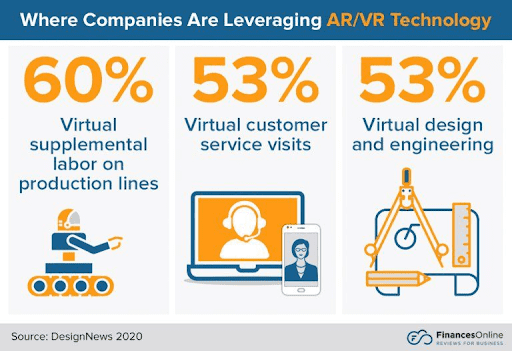
Like AR, VR is also transforming mobile app development today. VR can connect with phones, apps, and wearables to enhance the user experience and content perception of fully functional mobile apps. According to Design News, 29% of manufacturers reported an increase in their productivity and efficiency since they implemented AR/VR technology into their organization.
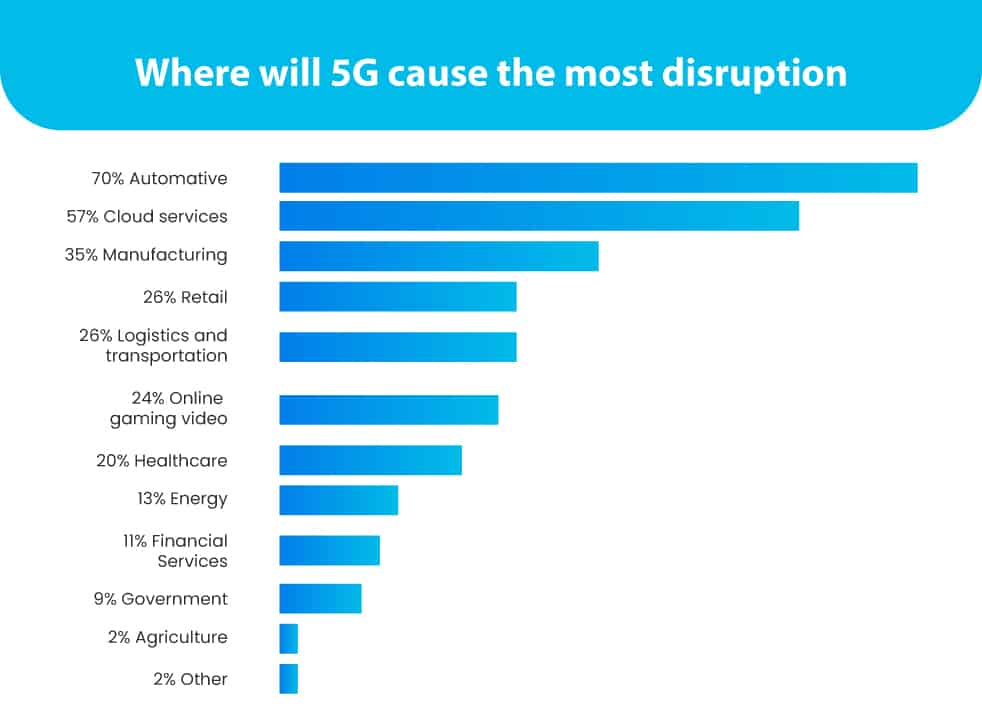
5G, the fifth generation mobile network, is the latest global wireless standard for broadband cellular network that virtually connects machines, devices, and objects to deliver users a uniform user experience loaded with higher data speeds, improved reliability and availability, colossal network capacity, and ultra low latency. 5G will transform the way mobile applications are created and used. Cisco estimates that by 2023, more than 10% of the global mobile devices and connections will be 5G-enabled. 5G will drastically improve the speed and efficiency of mobile apps, allowing developers to add new features without risking the app’s performance. 5G is expected to boost network efficiency and traffic capacity, with an estimated 10x decrease in latency. Source: Business Performance Innovation (BPI) Network Survey, BNI, 2019



Stay up to date on what's new
About the Author

Featured Blogs
Stay up to date on
what's new
Talk To Our Experts
Odoo ERP Implementation for Sales and Revenue Optimization
Pandemic or no pandemic, businesses are facing intense competition in the market. To stay competitive, your organization must think strategically before every move. This is especially true when it comes to sales and marketing. Ask yourselves these questions: Are your projections based on assumptions rather than figures derived from an analytical perspective? Does it take an awfully long time to reconcile your finances at the end of the month? Are you struggling to keep up with a surge in order volumes, which leads to disgruntled and dissatisfied customers? Is your inventory a royal mess? If your answer is yes to any of these questions, then your business needs an ERP system! With its vast suite comprising over 40 business productivity applications, Odoo ERP provides a smoother and simpler way to run your business.
The range of business apps offered by Odoo is highly comprehensive, fully-integrated, easy to use, and supports numerous different industries. Fingent, utilizing its partnership with Odoo ensures their clients are leveraging one or more apps from Odoo to boost their business efficiencies.
This article will highlight the challenges you may be facing in sales and marketing, and help you see if Odoo ERP can be a solution.
Challenges in Marketing and Sales
Sales and Marketing play a vital role in your business, whether you are a B2B or a B2C company. Here are some challenges that could be an indicator that something is amiss and that you need to take action asap.
1. Different processes to handle different tasks
Is your company using different types of software to record, track, and process information? If so, it can result in inaccurate sales data. Not having the accurate and latest accounting information can have an impact on everything from market budgets to payrolls.
The good news is that the Odoo ERP software can integrate these systems so that all business functions stay connected to a single database. This will ensure you get accurate, real-time data when required. This can also free up your staff so they can concentrate on helping the business grow even faster.
2. Finance reconciliation is a laborious process
Perhaps your accounting team is spending hours cross-posting information, rekeying numbers, or reconciling data manually. Odoo ERP can make a big difference here. It can automate process transactions and generate audit trails and financial reports. This can greatly simplify period-end closings.
3. Reconciliation of data takes too long
Finding average sales margins or other metrics might be a daunting task for companies that have isolated systems or work on spreadsheets. Thankfully, the Odoo ERP solution can give a holistic view of your business operations so that your staff can get accurate information to accomplish their jobs more effectively.
Read more: 5 signs which imply that your business needs Odoo ERP
How Can Odoo ERP Assist Your Business Gain?
Odoo ERP provides more than 5000 modules. These can help you accomplish all your business tasks efficiently and successfully. Since it is an open-source ERP platform, it can fulfill all business requirements. Odoo is API-friendly. Hence, it is easy to implement and integrate with your other business applications and modules.
Odoo has a modular structure that allows for phased implementation. Implementing one module at a time helps your organization test the functionality of that module before implementing the rest. This saves a considerable amount of time and resources. Also, with Odoo development, you can avoid licensing costs. Understandably, this enables businesses to invest for future customizations.
Fingent’s new plugin facilitates the scheduling of Zoom meetings from Odoo!
Check out our Odoo Zoom integration module launched in Odoo Apps Store.

With Odoo you can:
- View complete details of sales order and sales management in real-time with the help of a single software application.
- Track the future profitability of your organization based on the analytics of current production and sales.
- Make quick and informed decisions with the help of sales reports. These reports help you forecast the product demand for the future.
- Decrease the time that takes to manage the sales process.
- Manage the entire sales order lifecycle with the help of post-sales activities.
- Minimize the delivery time.
Read more: 5 Salient Features of Odoo that Make it a Reliable ERP for Enterprises
In What Ways Can Odoo ERP Help?
Odoo ERP is a customizable platform. It enhances sales and marketing and thus drives growth. It can help in:
1. Managing Sales
Odoo makes it easy to manage and categorize sales orders into a well-structured and hierarchical system. It allows you to create fresh orders as well as review existing ones.
2. Point of Sale or PoS
Odoo can optimize the Point of Sale management that includes various processes like invoicing, cash registration, and inventory.
3. Customer Relationship Management
The customer relationship module (CRM) of Odoo helps you manage business activities, cash opportunities, solve bug-related issues, and focus on leads. With the help of this module, you can automate most activities like streamlining communication. It also allows you to prioritize your work.
4. Easy Warehouse Management
Odoo can support the management of multiple warehouses and stock locations. You can easily and quickly define inbound, outbound, and stock locations for each of those warehouses.
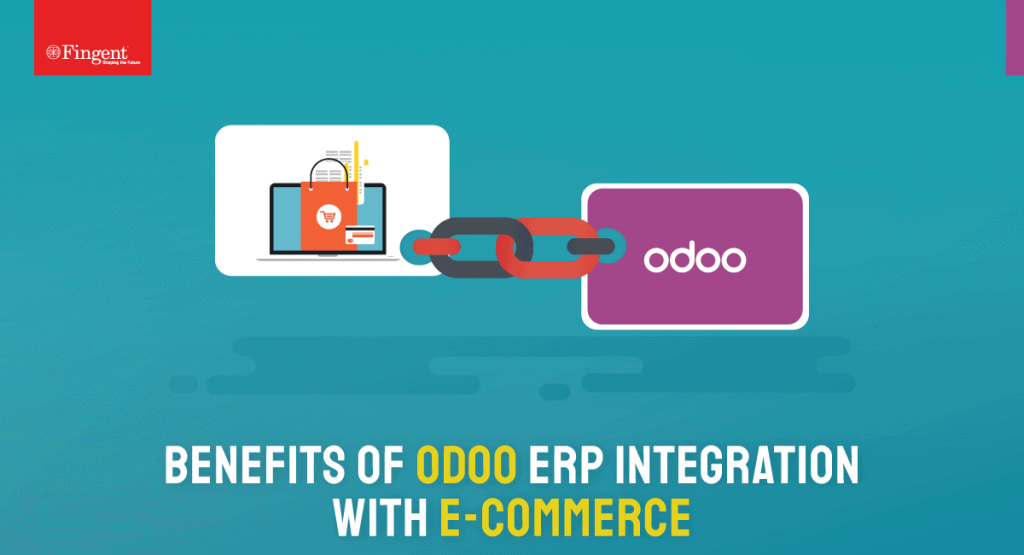
Read more: How your online store can benefit from Odoo ERP integration
5. Purchase Management
Odoo ERP makes it convenient to monitor the quotations from the suppliers. You can effortlessly convert those quotations into purchase orders.
6. Enhance Manufacturing Process
Odoo helps you to streamline the manufacturing process and its management. It can simplify the process of planning and speed up the process of manufacturing.
7. Generate More Leads
Odoo website builder provides a wide range of preferential options. Most importantly, it provides useful features for sales and marketing that include drag-and-drop and call-to-action buttons. Also, a client’s proposal for a project is directly stored into the Odoo sales app which can be retrieved anytime.
8. Project Management
Odoo ERP makes project management simple yet more efficient. You can track the status of the project in real-time. Additionally, it allows you to categorize the project into sub-tasks and assign it to different employees. No longer do you have to worry about missed deadlines because Odoo’s calendar helps you to keep a track of those stringent deadlines.
9. Automation
Tasks such as sales order and invoice generation of Odoo ERP system allows you to automate manual tasks with zero or minimal errors. Such automation lets your staff focus on more important aspects of business growth.
Read more: Top 5 Open-source ERP Systems for Medical Equipment Suppliers

The Bottom-line
Integrating systems and maintaining them with security updates could seem like a herculean task if your business is working on multiple orders. It can become a complicated and costly endeavor to maintain outdated versions of business software. Fortunately, Odoo is being updated continuously for higher performance and improved scalability. It allows you to match the market’s competitive scenario by implementing end-to-end ERP.
In more ways than one, the coronavirus pandemic has pushed us to live and perform without any excuses. We can perform well when we learn to live with technology. Odoo ERP can help your company make profits now and in the future. Fingent has hands-on expertise in the consulting, implementation, and customization of Odoo for clients globally. Give us a call and we will be happy to help you understand and implement this solution for your business.
Stay up to date on what's new
About the Author

Featured Blogs
Stay up to date on
what's new
Talk To Our Experts

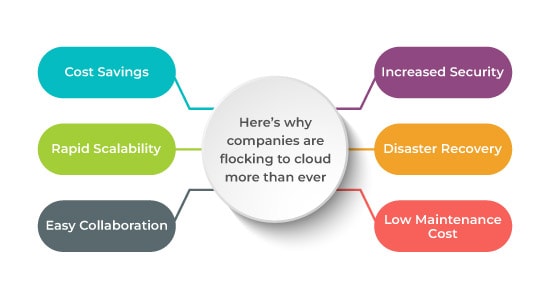
“Cloud computing is not only the future of computing but the present and the entire past of computing.”
– Larry Ellison, Oracle.
Stay up to date on what's new
About the Author

Tony Joseph

Tony believes in building technology around processes, rather than building processes around technology. At Fingent, he specializes in custom software development, especially in analyzing processes, refining them, and then building technology around it. He works with clients on a daily basis to understand and analyze their operational structure, discover (and not invent) key improvement areas, and come up with technology solutions to deliver an efficient process. You can reach him at [email protected], Skype: tony_fingent
Featured Blogs
Stay up to date on
what's new
Talk To Our Experts
All That You Need to Know about Managed Services for IT!
IT requirements evolve continually as the technology undergoes rapid changes. This has led to increased security threats to data and downtimes which can disarm any business. Before you panic however, let’s begin by saying that many companies have been able to successfully handle these challenges. The solution – a good partnership with the right managed IT services provider.
Managed services for IT play an integral role in the modern business field as it is nearly impossible to venture into contemporary services without some form of IT support. Managed IT services can help you smoothen different processes on the cloud while managing security and finance challenges efficiently in a continuous manner. That isn’t all. This article will help you see why managed services for IT is important and how you can implement it to improve your business operations.
Read more: What Is IT Consulting? How Can It Revitalize Your Business?

What do you mean by Managed Services for IT?
Managed services for IT are services that are outsourced to an external IT service provider. That service provider is completely responsible for the day-to-day operations of your specialized applications and business equipment. This allows your in-house IT team to focus on more strategic IT programs and frees up your team to focus on your business’s core competencies.
Managed Application ServicesFingent helps you manage your business-critical applications so that you can pay undivided attention to your core competencies. Learn More!
What is the importance of Managed Services for IT?
Traditionally, IT-related maintenance was done only through the “break-fix” methodology. This meant that a business would call a maintenance expert only when something broke down. This would completely halt all business operations until the problem is fixed. The more your system stays down, the more will be your organization’s money drain. Unresolved IT issues such as security breaches that compromise your data could prove to be costlier than you think. Such data security breaches are devastating for your business.
Thankfully, as the name suggests, Managed services for IT allows smooth management of a business without disrupting the flow of business operations. On your behalf, your IT service provider will manage, monitor, and resolve the problems of your IT systems and functions. Such a partnership allows you to focus on your core business process without any hindrance caused by IT issues.
Read more: Software Development Outsourcing – Why software development outsourcing is a smart move now?
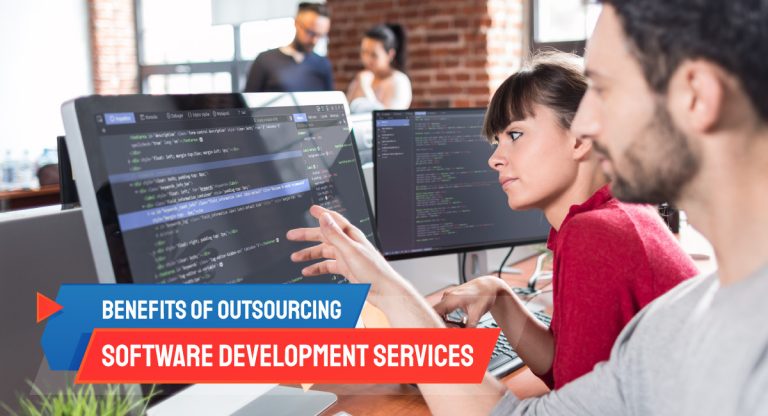
The most important advantages of Managed IT Services
1. Get the expertise you need
New technology might bring in new problems that your IT team may not have the knowledge or experience to solve. Then there is the issue of management. Fortunately, both these problems can be resolved by your managed service provider. A key advantage of the managed service model is that it allows you to either hire an entire team of IT professionals or choose specialists depending on the demands of each project.
2. Cost-effective
Managed services for IT lowers labor costs. Also, it can completely eliminate the cost of hiring and training new IT staff. The best upside is that you won’t ever have to worry about unexpected service costs. This means your organization can now shift from a capital expense model to an operating expense model.
3. Scale your system as needed
Your technology decides whether you need to scale up or down. Managed IT service providers can respond to such changes in real-time.
4. Downtime reduction and recovery
Managed services for IT provide backup solutions to protect critical information. In the event of a disaster, they can also provide avenues for service continuations. For smaller businesses, this can be a lifesaver.
How can you leverage Managed IT Services to improve your business?
Leveraging managed services for IT cannot be done in a one-size-fits-all way because most companies use different options to meet their overall goal. Though the services offered by each provider may vary, they can still be useful when handled properly. There are businesses that use three or more types of IT functions. If yours is one of those businesses these tips below will help you take the most advantage of managed services.
1. Choose your provider wisely
Each business has its own specific requirements. Identifying that requirement will make it easier to choose the right managed services provider. Often, most businesses need a minimum of three IT services (eg: cloud, IT consulting, and data and network security). But you will need to assess your business needs and come to the exact number. Once you have your requirements down, you can go about researching the credentials of the IT partner. Previous clients and case studies is the best place to start. The best way to find a capable managed service provider is through referrals, work colleagues, and reviews on online platforms.
2. Develop a business relationship
The best collaboration is when your managed IT services provider partners with your existing IT team in a seamless way. With that in mind, it is important to build a good working relationship with your provider. This will ensure that your skills complement each other, and resources are effectively used leading to better business outcomes. It will also give your team the opportunity to learn as much as possible from them.
3. Device a reliable data backup and recovery strategy
The most important objective of hiring managed services for IT is to protect data. Your data is under tremendous risk during a virus attack, machine error, unexpected hacking, or improper handling. During such instances, it is critical to have a good back-up strategy. Such a strategy will ensure that your business does not grind to a halt due to lost data. Fortunately, hiring good managed services for IT makes it easier for your company to develop a strategy that can protect existing data and retrieve lost data.
Read more: Digital Innovation – 10 Services Offered by Fingent to Prepare Your Business for the Future of Digital Innovation

What does the future hold for Managed IT Services?
According to Gartner, 56% of business leaders engage with service providers for long-term development and maintenance. This will result in 63% of global managed service providers gaining their revenue through digital business infrastructure operations by 2023. Managed services for IT have kept the business world running and will continue to do so in the future. Are you keeping pace with it?
Digital Transformation Consulting ServicesHow digital transformation solutions redefine businesses with effective digital experiences Learn More!
Survive and thrive
In our current state of extraordinary upheaval brought by the COVID-19 pandemic, managed services for IT may be your company’s greatest hope for surviving and thriving during and after these unprecedented times. Partner with us and see for yourself! First though, take a look at our case studies and feel free to check our credentials. We want you to be sure we are the right fit for you.
Stay up to date on what's new
About the Author

Featured Blogs
Stay up to date on
what's new
Talk To Our Experts
Catch InfinCE on NewsWatch!
InfinCE, the flagship product of Fingent top software development company, will be featured on the award-winning television show NewsWatch on November 30th at 7 AM EST.
NewsWatch is a popular TV show that covers technology, consumer, travel, health, and entertainment news for a broader audience and airs nationwide on the AMC Network and ION Network.
Over the years, InfinCE has transformed into an all-in-one cloud built for the demands of modern businesses. Featuring a unified cloud, InfinCE packs in advanced collaboration and remote working tools to empower the global workforce to work and collaborate from anywhere. Business owners, on the other hand, can easily manage their IT assets and data from a single location via the centralized administration capabilities of InfinCE. Moreover, nascent entrepreneurs can quickly set up their entire IT from email to website and collaboration tools on branded IT infrastructure at an unbeatable price!
Don’t forget to tune in to NewsWatch on your preferred network. To know more on program schedules, visit the NewsWatch website.
Watch this short video to discover how InfinCE transforms enterprise collaboration with its next-gen cloud technology.
Stay up to date on what's new
About the Author

Featured Blogs
Stay up to date on
what's new
Talk To Our Experts
How SAP S/4HANA Helps CFOs to Overcome The Slump and Steer Business Forward!
Unpredictable times such as these call for an “anytime, anywhere” finance function, and CFOs are expected to take the lead in accelerating strategic growth across the enterprise. Therefore, suddenly the CFOs found their organizations in a firefighting mode: gauging risks, preserving cash, and rapidly revising all financial plans and forecasting for the next month, quarter, and year. At this point, most CFOs found technology to be a key driver for improving transparency and efficiency. SAP S/4HANA is ‘the’ technology that supports the evolution of the finance function today and into the future.
However, this journey is not easy. Companies must develop a business case for SAP S/4HANA that will support their strategic vision. By leveraging the right finance technology innovations and partnering with a trusted SAP solutions provider, companies can maintain global regulatory compliance and engage in efficient finance processes.
Technology assists CFOs to control accounting and tax standards and engage with the business to jointly drive value. Having said that, technological trends that have been sitting in incubation mode have now emerged as real working models. This article discusses how SAP S/4HANA can leverage the CFO’s vision of becoming a value creation role model for the business.
Read more: How Fingent Helps CFOs Gain New Insights and Reliably Enable Key Decisions
Typical challenges for the CFO’s vision
Most often, a CFO’s agenda is held back by their organization’s complex technology landscape. This often renders efficient closing and reporting impossible within expected timelines. Such cumbersome systems hamper the management of working capital while making it difficult for finance departments to obtain reliable figures for profit and loss or forecasted budgets.
Perhaps you find yourself in this situation: At the end of the month, you find that you could not meet the deadline for the period closure. To make matters worse, mistakes made during the month must be rectified, data from different systems must be imported randomly into an Excel sheet. That is not all! All this information must be manipulated into a decent report. You take a breath that eventually it all worked well. However, the same thing happens the next month, and this pattern keeps repeating itself month after month. That stress peaks by the year-end. Amidst all this chaos, you are left with little time to proactively steer the company based on those figures. You may wonder, is all this financial data gathering purely an obligation just to satisfy auditors?
Companies can gain much profit by keeping admin up-to-date and proactively adjusting the business based on current financial data. That is the biggest advantage SAP S/4HANA provides. It gives the reins of business into your control.
Read more: How SAP S/4HANA transforms the end-to-end business process
Three focus areas where CFOs can gain more control with SAP S/4HANA
1. Control system landscape
As a CFO, you must deal with various financial systems and programs that contain your financial data. All financial data must be collected continuously and loaded into a reporting tool. Apart from this, data must also be entered into an Excel program. Such a fragmented landscape with a jumbled interface leads to errors, data duplication, and the probability of inconsistent data. This translates into enormous amounts of wasted money and time. Replacing this complex structure with an integrated system saves a lot of time and money. SAP S/4HANA provides CFOs a simplified landscape that leads to more control.
Read more about our Case Study: How Fingent successfully automated the integration between SAP SuccessFactors and SAP S/4HANA. Click here to download!
2. Control over processes
Fragmented processes lead to many errors and waste much time. However, once your system landscape is integrated, you will be able to optimize your processes. This will save time, which you can use to proactively manage the company with critical decision making based on your current financial data. This is where SAP S/4HANA finds value. It offers possibilities to automate and integrate processes. It allows you to add smart KPIs. This, in turn, helps you decide which areas need your attention and avoid those that are less important.
3. Control transactions
Entering data several times on different screens and in various steps leads to incomplete data. Most often, no valuable information can be retrieved from such a system. Nevertheless, S/4HANA can ensure that the transactions are carried out correctly. This will keep the data informative and up to date.
How S/4HANA can transform the landscape to help embrace a CFO’s vision
The challenges faced by CFOs and finance professionals today are complicated, but S/4HANA can simplify them. CFOs can seamlessly unify their information landscape to remove gaps and ease pain-points by leveraging the in-memory data and processing capabilities of SAP S/4HANA architecture, and cloud deployment scenarios.
Instead of grappling with disparate pieces, this approach enables CFOs and financial professionals to see a holistic real-time view that encompasses all operational data sets and analysis capabilities within a single unified architecture.
What is the impact of SAP S/4HANA on CFOs?
SAP S/4HANA improves access to information, and the ability to manipulate that information. Additionally, it can dramatically improve the real-time analytics performance. Thus, with the help of SAP S/4HANA, CFOs have more power to show the management board what they can achieve.
Empowered with SAP S/4HANA, CFOs know that they can respond impromptu to the management board’s questions. With that power, they can just tap for details and input from the live business. Usually, the management board fires off questions after the CFO delivers the company report. Such questions could be linked to newly acquired subsidiaries or similar activities. SAP S/4HANA gives CFOs instant access to all data and processes of the company. Thus, a CFO is now able to include outcomes of the newly acquired business. Also, SAP S/4HANA allows you to model the efficient integration of identical operations and product hierarchies. This allows CFOs to join key drivers in their simulation model with new business planning and get instant combined results. In turn, it will help board members to figure out the impact of global cash flows and financial position.
CFOs can pull real-time cash and liquidity data of all business systems. With the analytics in SAP S/4HANA, they can advise the board confidently if the venture would be profitable. Evidently, CFOs do more than just crunching figures. They give the board a preview of what the business could look like after a merger or with an investment. To that end, SAP S/4HANA enables CFOs and financial professionals to predict potential market growth in addition to current operations.
How can SAP S/4HANA help CFOs achieve their prime objectives in an agile manner?
1. Financial planning, data processing, and analysis
Proper financial planning is a strategic objective for organic business growth. However, proper financial planning depends on the availability of financial data for profitable growth. Financial planning must be aligned with the growth strategies of the organization. It must be analyzed to explore new products, channels, and markets. With an embedded BPC solution for planning, SAP S/4HANA provides agility, flexibility, and accuracy in the planning process. Since it is available in the enterprise core system, no time is wasted in data loads and data reconciliation. It makes previous years actuals available for making plans. Financial data can be churned easily to simulate various growth strategies and help the organization make informed decisions.
2. Support corporate growth
Businesses expect CFOs to support them in driving growth strategies, both organic and inorganic growth. Mergers, acquisitions, and decisions to expand business in various geographies play an important role in growth strategies. To that end, SAP S/4HANA provides real-time financial reporting that reduces the time-consuming reconciliation process. This results in a quick closing. Since it is supported by analytical dashboards with simulations, it can help CFOs make strategic decisions with accuracy and agility.
3. Gain a competitive advantage
CFOs want to keep an eye on regulatory changes and changing domestic and international economic conditions because it gives an opportunity to drive competitive advantage. They can do this with the support of SAP S/4HANA. Since it is an innovation platform it can help CFOs to reimagine and reinvent their processes. Thus, it can bring agility to their decision making.
Seamlessly Migrate to SAP S/4HANAMove from legacy business suite to intelligent automation now! Let’s Discuss Your Project!
SAP S/4HANA upholds agility and accuracy of financial information
An ongoing concern for CFOs is the lack of agility in getting financial reporting. Additionally, manual data reconciliation results in inaccurate data. However, SAP S/4HANA provides financial reports in real-time. Its universal journal feature brings in simplicity and flexibility. Since it allows you to store data in a single table, slicing and dicing the data is made easy. This makes reporting at multiple dimensions simple and real-time.
Most CFOs realize that managing evolving technology such as SAP S/4HANA is not just about streamlining operations. It is also essential for managing fraud detection, regulation, and compliance. Compliance requirements have become stringent globally. SAP S/4HANA provides a comprehensive solution for fraud and risk management.
Laser focus on your core competency
CFOs and finance professionals do not view themselves as bookkeepers. They are business outcome-focused leaders and business partners who are stewards of the company’s profit and resources. They are innovators and strategists. CFOs are those who can overcome economic uncertainty and use financial data for growth. Hence, they must be trusted advisors to the management board while overseeing the job of managing cost and profitability. In short, a CFO must be a multitasker! SAP S/4HANA provides the platform and tools for efficient multitasking. It supercharges a CFO’s vision of becoming a value creation role-model for the business.
As CFOs grapple with new disruptive business models, SAP S/4HANA Finance can help them in their decision-making process at a tactical and strategic level. Being an SAP Silver Partner, we are helping CFOs to gain new insights and reliably enable key decisions.
Talk to an expert to understand how we can enhance your organization’s ability to pivot quickly and adapt to dynamic business scenarios.
Stay up to date on what's new
About the Author
Featured Blogs
Stay up to date on
what's new
Talk To Our Experts
In Conversation with Stephen Cummings, SVP, Infince
Infince represents the next phase of cloud for enterprises. Being a progressive approach to running IT, Infince democratized the cloud enabling businesses of all kind to leverage its possibilities. Unveiled at the 2018 Small Business Expo, Infince marks a shift in “untangling technology”, which simplified how businesses utilize the cloud for refining their processes and operations. Infince delivers a secure cloud model that encompass all the essential IT requirements of enterprises.
As a radically different enterprise cloud system, Infince really invoked my curiosity to know more about its simplified cloud model. Stephen Cummings, the Senior Vice President of Business Development at Fingent Corporation was earnest enough to spare a little time from his busy schedule and give me a firm background about Infince in accordance with the questions that I presented. He elaborated on the features and functionalities of Infince, which got me well informed of the capabilities of this platform.
Thank you, Stephen, for your time. Let us begin this short interview with a brief description of what Infince is about.

So, can you tell us a bit about Infince and who is it aimed at?
Up until now, cloud technology has been structured for use by, and marketed to, a technical audience of developers and IT professionals in large corporations. We developed Infince to both simplify how businesses get the software and related support and to dramatically lower their IT-related costs. By building upon the latest developments in cloud-based systems, and incorporating available open source software, we have been able to pull together the things a small business needs to have a secure, modern IT infrastructure – from a company website and mail server to full-featured enterprise software and desktop tools.
Infince is the new way for small businesses to run IT.
Business owners don’t have time to learn about digital tools or to manage them, and they don’t have money to waste. We give them high-value technology options that are intuitive and affordable. Our concierge support services are at hand whenever there is a technical question or concern.
What led you to develop a cloud platform like Infince?
Survey after survey showed that a large percentage of small businesses were not taking advantage of technology that would help them significantly improve their ability to serve their customers. In today’s internet-focused world, their lack of technology puts them at a serious disadvantage to their more nimble competitors. Many companies were discouraged from using existing open-source software, which, though free of cost, did require technical knowledge to get set up.
At the same time, we knew that new developments in cloud and communications technology were making it possible to deliver solutions for them in a completely new way. For open source specifically, we knew if we could automate the setup process, a further barrier to its use would be eliminated. What we were able to do is to make software set up a “one-click” process and to do the same for support services.
Business owners can not only get up and running easily and quickly, but they can do so without anxiety because they can easily use a “life-line” to have someone knowledgeable lend a hand.
Yes, technical complexity and jargon are preventing businesses from adopting the technology. In view of that, can you elaborate on the challenges that you came across while developing this platform?
To make a system both powerfully featured and easy to use meant we had to meet a number of design challenges. How could we make the setup fast and automatic, even for business owners who may not be very technical themselves? How can we make it easy -whether a business owner is technologically intrepid or not – to leverage the options that make sense for their business?
How can we make application software developed by many independent developers work well together? How can we accommodate a flexible and economical infrastructure that works for simple or complex applications, and for small or large companies?
How can we make the user have a friendly experience, for example with a “single-sign-on” capability across all applications? How can we give users an even more secure system than is typical?
With data privacy and security featured again in the news, how much protection does a business cloud platform like Infince offer to businesses?
We have given a lot of focus on data security as it allows people to build trust within the application and its information – which is one of the most important factors. Every customer’s data is hosted on a separate secure virtual server. Our secure servers and SSL built for applications ensure that there is no information that is being tracked or eavesdropped by any external entities.
How much relevance does cloud computing have in today’s business environment? And where does Infince fit in this environment?
In today’s business environment, a business owner needs to have access to her data right when she needs it, irrespective of her location or geography and the device she is accessing it from. This is what cloud computing provides – an access to one’s business data at any time and anywhere you have an internet connection. Apart from this obvious benefit, cloud computing also improves scalability, business continuity, collaboration efficiency and reduces cost. So yes, cloud computing is going to be here for the foreseeable future.
Cloud computing is an umbrella term for different types of cloud services, that include SaaS, PaaS & IaaS. Infince can be considered as an IaaS service as we provide the servers, storage, and networking hardware, as well as the virtualization layer. On top of that, we also leverage SaaS to offer a plethora of tools and applications that will cover all the technology needs of an SMB. Infince is thus a unique combination of IaaS and SaaS to cater to all the IT needs of a small business.
Read more: Top Trends That Will Transform Cloud Computing in 2020 and Beyond!

Will Infince’s concept of cloud management for businesses lead to a better form of managing and optimizing business processes?
Infince is an IT solution for SMBs. A small or medium business owner needs technological solutions for a variety of business needs, but may not have an IT budget that is large enough to afford the top of the line enterprise software solutions. On the other hand, we have a lot of feature-rich Open Source software that are competitive alternatives to Enterprise Software.
The challenge here is that installing, customizing and setting up an Open Source software requires technology experts in the team. Off the shelf SaaS products will need the employees to access various products through multiple channels with multiple logins, with no single source for all of the business data.
Infince is a solution to this problem. We are constantly integrating good quality Open Source and third-party tools into our App Marketplace. With a few clicks, an Infince customer can add the desired App to his Infince Workplace.
The new software will automatically be integrated through Single Sign-On, becoming part of their IT system. This ease of plugging in business apps on demand makes Infince a powerful IT solution for SMBs.
What are the potential benefits that small and medium businesses can derive from using Infince?
In terms of setting up Small & Medium businesses, the ability to collaborate with their internal team and carrying out business activities has substantially improved and can be managed accurately using Infince — which no platform provides. Going further, different departments within a company can be micromanaged and this increases transparency by also allowing user restrictions across Infince.
Security is another key area that benefits our customers, as nowadays the emails, files that we share travel through various servers before reaching us, and there can be eavesdropping and privacy can be at stake. We provide servers that are managed by us to send emails and fresh dedicated email servers can also be bought at a very less cost.
How do you envision the future of Infince and what new improvements and upgrades will be implemented in this solution in the coming times?
Infince stands for “Infince Cloud for Enterprise” and that’s the vision driving us. By continuously integrating more and more applications in our App Marketplace and innovating our cloud solution, we aim to arm SMBs with the latest technology and tools. The business owners can concentrate on growing the business while we take care of their IT. Our work never stops!

Compared to other enterprise cloud platforms, what specific features have you included in Infince to make it a popular dependable platform?
Compared to other enterprise cloud platforms, we are providing one-of-a-kind platform wherein business can access numerous Open Source applications, with a Single-Sign-On option to effectively run their businesses. Apart from that, all the servers, hosting and basic support for Open Source applications are offered by us and an extremely affordable cost and is secured. Our features, costing, and level of services have been brutally transparent and there have not been any hidden costs involved which sets us apart from our potential competitors.
Does the extended storage options given at Infince come in specific tiers?
We prescribe a minimum of 2GB storage per user. Additional storage can be bought from a minimum of 10GB upwards. The real benefit for Infince customers is that they are in control of how the storage is allocated across the users. The business owner is free to do a differential allocation of the extended storage across users, as per individual requirements.
That indeed provided me with some in-depth information about Infince. In a way, the open accessible cloud model that you envision clearly does have much larger potential in the coming years. Deep down, I do believe in the same thing, which is that all businesses should be given the means to utilize technology to their advantage.
By creating a platform like Infince, Fingent Corp has indeed opened the doors of the cloud to businesses of all kind, so that they could remain technologically competitive and productive. Thank you, Stephen, for granting this interview and wishing the very best for all your ventures.
To learn how your enterprise can benefit from custom-built business applications, get in touch with our experts today!
Stay up to date on what's new
About the Author
Featured Blogs
Stay up to date on
what's new
Talk To Our Experts
The Future of FinTech Looks Promising: Here’s Why!
The COVID-19 pandemic has caused significant disruption and has also cast doubts on the future and growth of the FinTech industry. Despite the devastating impact of the coronavirus pandemic on the global economy, FinTech leaders remain cautiously optimistic about the industry’s growth. They forecast that as people, businesses, and leaders tackle the ongoing outbreak of the pandemic, market fluctuations will experience stability. As soon as the crisis situation is settled, the market is forecasted to start experiencing growth. FinTech solutions are foundational to how we transact in the current scenario and tackle the future market. It is vital for financial institutions to up their game to deliver smarter, quicker, and safer solutions.
What are the upcoming FinTech opportunities that will impact everything in the financial ecosystem?
The ‘Digital-Only’ Era
1. Digital payment services
The coronavirus crisis has brought the significance of cash management to the forefront. There are massive technical and fundamental shifts taking place that are quickly becoming the new normal. Digital-only banks are one of the many such shifts and they increase efficiency and convenience. Nobody is expected to visit the bank physically, stand in long queues, and go through a lot of paperwork. With digital-only banks, you can create an account or transfer money at a location and time convenient for you. Some of the amazing features of digital-only banks are a quick review of account balance, account transaction history, bill payments, and real-time analytics. They offer P2P payments with no transaction fees. They also offer Ethereum and other cryptocurrency transactions. Digital-only banks have a deep connection with technologies such as blockchain.
Read more: How Digital Finance Could Boost Growth in Emerging Economies
2. Digital lending
Digital lending is one of the FinTech opportunities that’s prospering while shutdowns and layoffs across the globe resulted in a cash crunch for most individuals and households. Governments have provided some help. However, it is largely left up to financial institutions to provide loans to individuals and businesses. Fintech companies perform better than their traditional counterparts in the lending segment by leveraging AI technology. They can use AI to screen applicants and rate their credit-worthiness. It allows loan applicants to secure loans quickly and conveniently.
Financial institutions must partner with FinTech application development service providers to leverage self-service, multi-channel digital lending processes. This includes loan processing, screening, collection, and credit scores. As an end-to-end process, it will provide customers with a smooth onboarding and approval lending experience.
3. Digital investing
Retail investors around the world are more active in the stock market now than ever before. Access to information that was previously restricted to more advanced investors, has fueled an exponential increase in retail investing. This trend will continue.
Read more: FinTech Innovation: What Is In-Store?

The Era of Blockchain Technology
Identity theft and fraud have been the bane of financial institutions for many years. Blockchain technology plays a crucial part in saving the industry from these problems. The rapid growth and adoption of blockchain is making it an integral part of financial institutions’ operational infrastructure including digital payments, trading shares, smart contracts, and managing identities. Blockchain features such as global reach, speed, and security are motivating its faster adoption among financial institutions.
Companies must build trust and display transparency in contracts and the supply chain. Using blockchain helps them gain visibility throughout the supply chain. It also takes care of quality control and performance benchmarks. It is crucial that financial services quickly adopt blockchain into their systems and search for opportunities to increase FinTech partnerships.
Read more: Leveraging Blockchain Technology to Transform Supply Chain Industry
Impact of Regulation
Regulators are needed to balance innovation with customer interests. Regulators have been proactive in helping businesses deliver greater customer value by defining data privacy rules. This has fueled a massive shift in how people spend, buy, save, borrow, and invest. Given the enormous innovation in this sector, the FinTech arena is divided into five broad categories:
- Deposit, lending, and capital raising
- Payments, clearing, and settlement
- Investment management
- Insurance
- Market support
We know that compliance with regulations will become mandatory for banks. This makes it important that banks adopt a flexible and robust digital strategy in order to solve regulatory challenges. Leveraging digital transformation and FinTech innovation will help banks to evolve as a modular body that becomes highly responsive to political and social pressures.
Read more: Digital Transformation in Financial Services: All You Need to Know!

Robotic Process Automation
Robotic Process Automation (RPA) can automate repetitive processes in banking, insurance, and other financial services. This will lower the risk of common errors and inefficiencies while increasing productivity and ROI. RPA does not require programming. Efficiently programmed software robots can automate repetitive processes. Intelligent automation technology goes a step ahead to observe human actions and automate directly, the entire process. IA can be effectively used in the administrative section for the customer onboarding process, risk assessment, data analysis, security checks, and more.
Read more: How Robotic Process Automation Is Revolutionizing Industries?
What must you do to take advantage of these opportunities?
Here are a few things you can do to leverage the massive opportunities made possible by the digital-only era:
1. Infrastructure
Financial institutions must invest in the right technical infrastructure. With multiple technology options available in the market today, it is imperative for financial institutions to make the right decision based on the company’s needs and objectives.
2. Market proposition
Develop a clear market proposition. You must partner with FinTech companies to develop robust and scalable apps. Having them as trusted advisors will help you retain your customer base.
3. Partnership
Before partnering up with FinTech companies, you must examine their needs and plan on how they want to execute them. This will help you derive greater benefits from the partnership.
4. Product hierarchies
Incorrect product or service information can damage the good reputation of your company. Have a clear definition of products and services and outline their use and cost. This will minimize reputational risk and maximize the opportunity to retain and acquire customers.
5. Switching
Most bank customers may want to switch their accounts. You must allow switching and help your customers to switch seamlessly between products.
6. Educate your customers
Your customers may not be aware of the digital services you provide. Hence, it is important that you educate your customers regarding the use, safety, and implications of your digital technology.
Read more about our Case Study: How Fingent enabled NEC Financial Services to take advantage of the FinTech revolution?
 Explore FinTech opportunities
Access to data presents new opportunities for growth. With continuous technology penetration, financial services will see steady growth resulting in the expansion of FinTech. In many ways, FinTech contributes to the revolutionization of the financial sector and the way customers interact with your business. It offers your customers a hassle-free experience and helps your employees to be more productive.
Read more: FinTech: Safeguarding customer interest in the post-pandemic world
FinTech will help you keep your focus on customer experience and personalization that can drive user loyalty. For a technology partner who will get you to reach new heights in this new era of Fintech, call us!
Stay up to date on what's new
About the Author

Saheen Najeeb
Saheen is a Business and Tech Savvy Digital Marketing Analyst by profession. He believes Marketing has to be interwoven with Technology. Embracing the role of Marketing Technologist, he helps organizations working closely with the business leaders to prioritize strategies and to put their marketing efforts at the leading edge.
Featured Blogs
Stay up to date on
what's new
Talk To Our Experts
“Information is the lifeblood of medicine and health information technology is destined to be the circulatory system for that information.”
– David Blumenthal








Stay up to date on what's new
About the Author

Featured Blogs
Stay up to date on
what's new